

April 26, 2024

|
Weekly Update  Program Calendar Program Archives SOUNDPRINT Awards Producers Guidelines Carriage Information Subscribe Unsubscribe

|
|
Soundprint programming for Click here to remove program descriptions |
 |
| September 2012 |
| September 14 |
Soundprint Science:P2P1 Pole to Pole: SOUNDPRINT traveled inside the Arctic and Antarctic circles as part of the International Polar Year Media Collaboration, Pole to Pole. HOUR 1 : The Hidden Clues of Climate Change Time Capsule in Siberia A frozen lake in the Arctic Circle is telling us how sensitive the poles are to climate change. Moira Rankin takes us to Lake El'gygytgyn and reports on the 3.6 million year record of climate change that scientists have unearthed from the lake's bottom. When the Snow Melts on Svalbard The Polar Regions may be the "canary in the coal mine" for climate change. Visit the northernmost scientific outpost in the world, with Irene Quaile of Radio Deutsche-Welle, and hear what they're discovering about the polar climate. |
| September 7 |
Soundprint Science:P2P1 Pole to Pole: SOUNDPRINT traveled inside the Arctic and Antarctic circles as part of the International Polar Year Media Collaboration, Pole to Pole. HOUR 1 : The Hidden Clues of Climate Change Time Capsule in Siberia A frozen lake in the Arctic Circle is telling us how sensitive the poles are to climate change. Moira Rankin takes us to Lake El'gygytgyn and reports on the 3.6 million year record of climate change that scientists have unearthed from the lake's bottom. When the Snow Melts on Svalbard The Polar Regions may be the "canary in the coal mine" for climate change. Visit the northernmost scientific outpost in the world, with Irene Quaile of Radio Deutsche-Welle, and hear what they're discovering about the polar climate. |
| August 2012 |
| August 31 |
Soundprint Science:P2P1 Pole to Pole: SOUNDPRINT traveled inside the Arctic and Antarctic circles as part of the International Polar Year Media Collaboration, Pole to Pole. HOUR 1 : The Hidden Clues of Climate Change Time Capsule in Siberia A frozen lake in the Arctic Circle is telling us how sensitive the poles are to climate change. Moira Rankin takes us to Lake El'gygytgyn and reports on the 3.6 million year record of climate change that scientists have unearthed from the lake's bottom. When the Snow Melts on Svalbard The Polar Regions may be the "canary in the coal mine" for climate change. Visit the northernmost scientific outpost in the world, with Irene Quaile of Radio Deutsche-Welle, and hear what they're discovering about the polar climate. |
| August 24 |
Soundprint Science:P2P1 Pole to Pole: SOUNDPRINT traveled inside the Arctic and Antarctic circles as part of the International Polar Year Media Collaboration, Pole to Pole. HOUR 1 : The Hidden Clues of Climate Change Time Capsule in Siberia A frozen lake in the Arctic Circle is telling us how sensitive the poles are to climate change. Moira Rankin takes us to Lake El'gygytgyn and reports on the 3.6 million year record of climate change that scientists have unearthed from the lake's bottom. When the Snow Melts on Svalbard The Polar Regions may be the "canary in the coal mine" for climate change. Visit the northernmost scientific outpost in the world, with Irene Quaile of Radio Deutsche-Welle, and hear what they're discovering about the polar climate. |
| August 17 |
Soundprint Science:P2P1 Pole to Pole: SOUNDPRINT traveled inside the Arctic and Antarctic circles as part of the International Polar Year Media Collaboration, Pole to Pole. HOUR 1 : The Hidden Clues of Climate Change Time Capsule in Siberia A frozen lake in the Arctic Circle is telling us how sensitive the poles are to climate change. Moira Rankin takes us to Lake El'gygytgyn and reports on the 3.6 million year record of climate change that scientists have unearthed from the lake's bottom. When the Snow Melts on Svalbard The Polar Regions may be the "canary in the coal mine" for climate change. Visit the northernmost scientific outpost in the world, with Irene Quaile of Radio Deutsche-Welle, and hear what they're discovering about the polar climate. |
| August 10 |
Soundprint Science:WoV1 WORLD OF VIRUSES Feared by many, and little understood, the world of viruses permeates our lives. Join us as we explore what science is now telling us about viruses from: hospitals in Minnesota to clinics in South Africa; research labs in Nebraska to mosquito haunts in Peru and state fairs in Maryland. Hour 1: Garden Variety Viruses Measles:What's at Stake produced by Barbara Bogaev Measles, once a rite of passage for hundreds of thousands of American children every year, has largely been eliminated in this country. Producer Barbara Bogaev explores why minor outbreaks are becoming more common, and why even small outbreaks have public health officials worried. Mosquitoes in Iquitos produced by Dan Charles The Front Line in the battle against mosquito-borne viruses is a bustling Peruvian metropolis on the Amazon River. |
| August 3 |
Soundprint Science:WoV2 WORLD OF VIRUSES Feared by many, and little understood, the world of viruses permeates our lives. Join us as we explore what science is now telling us about viruses from: hospitals in Minnesota to clinics in South Africa; research labs in Nebraska to mosquito haunts in Peru and state fairs in Maryland. HOUR 2 World of Viruses: The Elusive Viruses HPV - the Shy Virus produced by Jean Snedegar A hidden killer lurks in the shadows -- also in your car, on your keyboard, and even on your kitchen table -- but it attacks very few people. Producer Jean Snedegar tracks the Human Papillomavirus (HPV) - a puzzling, paradoxical virus. The Clinic produced by Gemma Hooley Producer Gemma Hooley follows a determined health-care worker who's field-testing an innovative, ambitious, yet simple weapon in the region's battle against HIV/AIDS. |
| July 2012 |
| July 27 |
Life at McMurdo  The science station called McMurdo has been operating on the southern tip of the continent since 1956. It’s an important research center, attracting geologists, physicists, engineers, hydrologists, pilots, and just plain adventure-seekers. McMurdo Station has grown so much, in fact, that it’s really a town unto itself. It’s got a harbor, three airfields, a heliport, over a hundred buildings, and a bowling alley. After all, if people are going to work in such a bleak outpost, they need some recreation! About a thousand people work at McMurdo in the summer -- 200 in the dead of winter -- and the scientists depend on the non-scientists to keep the place humming. SOUNDPRINT went to McMurdo as part of the International Polar Year Media Collaboration Pole to Pole to cover a scientific project. While we were there, we met the diverse and colorful group of people who constitute LIFE AT MCMURDO. Gibtown Gibsonton, Florida is the retirement and off-season home for hundreds of carnival and circus show people. Called "Gibtown" by many of its residents, the town was at one time considered the oddest place is America. You could walk into any restaurant and find The World's Only Living Half Girl sipping coffee with her 8 foot 4 inch husband, Giant Al. They, along with The Lobster Man, Alligator Skin Man and the Monkey Girl, among others, made their living touring with carnival sideshows. The sideshows are mostly gone. We take a look back at sideshows through the lens of Gibtown. |
| July 20 |
Chickens Producer Adi Gevins presents both a lighthearted and serious examination of chickens and their relationship to humans in historical, cultural, economic and institutional contexts. Life before the Computer Remember the first television set your family got? Or the first transistor radio that was really all your own? Our relationship with technology is oddly intimate, worming its way into even our most evocative memories. Producer Ilene Segalove talks to people with humorous memories of the "latest technologies" of their childhoods, now faded into obscurity in the computer age. |
| July 13 |
Bean Jumping This is the story of the immigration experience of two sister communities: one in the Ecuadorian Mountains, and the other in Suffolk County, on Long Island in New York. A 2008 hate-crime killing brought to light a pattern of abuse, persecution, and violence that shocked the residents of Patchogue, a quiet coastal suburban "Anytown, USA" -- but maybe didn't shock the residents of the community in the shadows, or their family members 3000 miles away. Producer Charles Lane reported on and covered the local story, and now brings us the international story. He found that the meaning of "American Dream" might be changing, and he discovered a Latino Dream. Dream Deferred Each year 5,000 refugee children arrive in the U.S. penniless and alone, seeking asylum and freedom. A third are locked up - some alongside violent offenders. Many are deported back to traumatic home situations. The U.S. government does not provide them with lawyers, yet whether they can stay legally is decided in court. Dream Deferred follows two of these children, Juan Pablo from Honduras and Jimmy from Punjab, India. Why did they leave? What dreams are they chasing? How did they get here and where are they today? |
| July 6 |
Mosquitoes in Iquitos Iquitos, Peru, home to nearly 400,000 people, is a living laboratory. Researchers there are tracing the spread of lethal dengue fever by going door to door in neighborhoods throughout the city. They're mapping the spread of the virus, as well as the mosquitoes that carry it. Producer Dan Charles follows researchers as they try to figure out what people can do to stop it. The Bucket When you lower a bucket into the ocean, from a pier or off the side of a ship, it may well seem to come up containing nothing but clear water. But scientists now know that every teaspoonful of that water can contain a hundred-million tiny viruses. That sounds sinister, but without them the ocean couldn't function. Every day, marine viruses invade bacteria and other organisms, releasing their nutrients to the underwater food chain. Only since the late 1980's have marine biologists been aware of how many viruses are indigenous to the ocean, and how powerful and varied they are. They differ radically in size, shape, and DNA blueprint -- so much so that totally novel DNA keeps being discovered, with implications for anything from anti-aging creams to anti-cancer drugs and evolutionary science. Far from being a bad thing, these amazing marine viruses are useful, dramatic, novel, and dynamic; imagine that all hiding in your bucket of clear water! Producer Judith Kampfner travels from the coast of Plymouth in England to Santa Monica to meet with some of the intrepid pioneers who are on the trail of these new natural marvels. Photograph of algae, Emiliania Huxleyi, was provided with permission by The Natural History Museum, London (Dr. Jeremy Young) and University of Nebraska-Lincoln (Angie Fox) / 2009. |
| June 2012 |
| June 29 |
Measles: What's at Stake Measles, once a rite of passage for thousands of children (and their parents), has largely been eliminated in this country, thanks to the MMR vaccine. How this happened is an illustration of herd immunity: that is, that although not everyone is vaccinated against measles, enough people have so that the virus has a hard time finding a new host. However, recent, small outbreaks in the U.S. have public health officials worried. The outbreaks mean that herd immunity is breaking down. Producer Barbara Bogaev explores why even a minor Measles outbreak can be a major risk, and how some community pressures, social stigmas, and disputed medical reports have lead to the breakdown. Relating to Dad Does Father know best? Some teenagers think Dads are dominating, disciplinarians who don't always have respect for the thoughts of their young minds. Dads dismiss the day-to-day obstacles of peer pressure, school, and for some teens, work. Producer Joe Gill talks with 17 year-old Cristin about "what a father is," or "what a father is supposed to be" or "why a father is important in a woman's life". Blending audio diaries and conversations, Relating to Dad takes a look at one teen's view about "the father of the imagination" who fills in for the absent, real father. |
| June 22 |
The Color of Shakespeare At countless times in America, and for countless groups of citizens, the question has come up: Who "owns" Shakespeare? Who is it meant for, and to whom does it mean what? This is a particularly poignant question in the case of African-Americans, whom some have sought to exclude from the Bard's work. This story looks at minstrel show parodies of Shakespeare, color-blind casting of Shakespeare, and the African-American experience with Shakespeare. Produced by Richard Paul and narrated by Sam Waterston, The Color of Shakespeare was made possible with support from the Folger Library. The Busker and the Diva Margaret Leng Tan and James Graseck were boyfriend and girlfriend while they both attended Julliard in 1970. Margaret was offered a place by a Juilliard scout who came to her native Singapore. At the age of 16, she became a piano major in New York. She loved New York, but James who came from Long Island, found it dirty - hating the streets and the noise. That hasn’t stopped him in his chosen line of work -- for the last 20 years he’s been a busker - a street musician, well known in the subway system. Margaret meanwhile has had a long career as an unconventional pianist as a protege of John Cage and in the words of the New York Times "a diva of the toy piano". While at Julliard, Margaret and James drifted apart because they were studying different instruments and had different courses, and they lost touch when they graduated. Their very different musical lives took them in different directions but recently, their paths crossed again, in the bowels of Grand Central station. Their meeting quickly developed once again into an intimate relationship, physically, emotionally and professionally. Producer Judith Kampfner traces their reunion and the obstacles to their relationship, which lie more in their approaches to music making and their polarized positions in the musical spectrum than their bond as individuals. This is the story of both their personal romance, and their professional lives. |
| June 15 |
War and Forgiveness Memorial Day is a day of remembrance of wars won and lost. Often, we think of the battles and the victories. At times, we consider the inevitable war crimes: the massacres, rapes and other atrocities. Rarely do we consider the perspectives of those who are responsible as well as those who are injured. In a special hour long documentary, War and Forgiveness, we present two sides of the equation: the victims and the perpetrators of wartime atrocities. WNYC, RADIO NETHERLANDS, and SOUNDPRINT have collaborated on a two part program that looks at women in Korea who were commandeered to have sex with Japanese soldiers during World War II and Dutch soldiers who carried out a torture campaign in Indonesia. As different as their stories are, they reach the same conclusion: the need for a moral apology from the government. |
| June 8 |
Birthday Suit Janet Jackson reveals a breast and there is an uproar, a woman breast feeds in a mall and is thrown out, a child of 4 is naked on a beach and the life guard tells him to put his swimsuit on. Around the world there is topless bathing but it is rare in this country. Yet one in four Americans admit to having skinny dipped. Are we hypocrites? We obviously secretly like swimming nude so why don't we do it all the time? The Internaional Naturist Federation says that nudism or naturism is " A way of life in harmony with nature, characterized by the practice of communal nudity with the intent of encouraging self respect, respect for other and the environment". I don't know that going naked makes you respect the environment more but surely it must lead to a greater appreciation of the different shapes and sizes bodies come in and that might conceivably make us less body conscious and phobic about fat and imperfections. Naturist camps are almost always in a mixed social setting. Detractors say that naturist is a code for sex but perhaps men and women start to notice their differences less? And what about naked children? Naturists warmly encourage children. Would being at one of these camps cause psychological harm? And then how hygenic really are these places? At the end of summer, before the chill winds blow, reporter Judith Kampfner visits a naturist camp and yes, complies with the no clothes rule. And that's no clothes when dancing, horsebackriding, kayaking, or in the canteen. It's not something that this reporter relishes. She is short and is used to her everyday weapons of stacked heels. Like most women she uses clother to camoflage faults. Baring all may mean feeling vulnerable and stupid. But the nudists who come year after year find it liberating, relaxing, democratic, wonderfully cheap, wildly romantic. Perhaps our reporter will become comfortable in her birthday suit. Now why do we say 'suit'? Summer Triptych Summer afternoon. The two most beautiful words in the English language, according to Henry James. While away the afternoon at a ballgame. Take your kid to the state fair. Go for a ride on a Ferris wheel. It's the one time of year when nature sets out to amuse us. Of course, it's an illusion. You need only be stuck behind a desk and looking out the office window to get a reality check. But if summer is an illusion, at least it's a grand illusion, and well worth the trouble. Producers David Isay, Dan Collison, and Neenah Ellis take us back stage behind the sets, props, facades, carnivals, games and country fairs. We're going to meet the technicians of summer, the people who work to make it happen. |
| June 1 |
Paris: Heat Wave In August 2003, European suffered the worst heat wave in at least 500 years. Many weather records were set that month. Great Britain reported its hottest day ever. Forest fires raged in much of southern Europe, themselves causing deaths. Crops withered and trees died. One of the cities hit hardest was Paris. Although the high heat started in early August, it was nearly mid-month, after hundreds of people had been killed, before the French government realized that the heat wave had turned deadly in Paris. Before the heat wave was over, the city’s morgues had to requisition refrigerator trucks just to hold the excessive number of dead bodies. More than 1,000 Parisians had died of dehydration, heat stroke and other ailments caused by high heat, a disproportionate fraction of which were single, elderly women. Producer Dan Grossman tells us the story of the Paris Heat Wave, and the signs that other parts of the world, including parts of the U.S. Midwest, could soon face significantly increased climate extremes. Cities of the Plain Urban forests in desert settings -- no, this is not about transferring Central Park to L.A. Arid environments have their own "green" cover, and cities destroy and ignore that vegetation to their peril. Veteran producer Bill Drummond travels out West from mountains to shore to ask: when are trees beneficial and when are they not? This program airs as part of our ongoing series, Tales from Urban Forests. |
| May 2012 |
| May 25 |
Foot and Mouth Disease The virus that causes FMD (Foot and Mouth Disease) is one of the most feared among farmers. It can decimate herds. Even if animals recover, beef and milk production can be severely impacted. FMD is so contagious, and such a dreaded disease, that animal health agencies in outbreak countries fear stigmatization if outbreaks aren't eradicated quickly. Draconian measures such as mass killings and burning of carcasses are often employed, as the effectiveness of vaccines is short-lived, and the FMD virus has seven distinct varieties. As part of our special World of Virus series, producer Judith Kampfner takes us to the UK, where the damage from an FMD outbreak 10 years ago is still fresh in farmers' minds, and to South Korea, which has dealt with 5 outbreaks in the past decade, to show us the devastation of FMD, why it's so hard to eradicate, and the drastic steps taken to keep the US FMD-free. Where the Buffalo Roam Hong Kong is largely known for its sophisticated mix of every thing modern, and its thriving economy, but this island city of over 7 million people also has a thriving animal kingdom. Like their human counterparts, these animals are not native to the land. Sarah Passmore of Radio Television Hong Kong introduces these animals, from "Pui Pui" the celebrity crocodile to the Rhesus Monkeys that terrorize women and children. For our Global Perspective Series on Escape, Sarah Passmore shows us around Hong Kong where the Buffalo roam. |
| May 18 |
Hockey Diaries: Ready to Play At the start of the 2008-2009 hockey season, two Canadian players packed up their gear and headed east to Washington DC, home of the NHL Washington Capitals. Nineteen-year-old British Columbia rookie Karl Alzner was hoping to win a coveted spot on the team. Saskatchewan veteran Brooks Laich had just signed a new 3-year contract and was anxious to get started. Both players carried audio diaries that they would use to document their season. This is the story of that unfolded, from the exhaustion and suspense of training camp all the way to the exhilaration and emotion of the playoffs. The grind of long road-trips, the challenges of injuries and personal setbacks, the politics of the locker room, the expectations of fans, family and self… and the relentless pressure that comes with chasing hockey's biggest prize, the Stanley Cup: with all this, Karl Alzner and Brooks Laich bring us the story of everything it takes to make it as a professional hockey player. Van Gogh and Gauguin Vincent van Gogh and Paul Gauguin were two of the greatest painters of the late 19th century. A brief but intense collaboration occurred between the two artists. They met in Paris in the autumn of 1887. Each man tried to learn from the other and admired the other's work. Their collaboration was marked at first by mutual support and dialogue, but there was also competition and friction. The men differed sharply in their views on art: Gauguin favored working from memory and allowing abstract mental processes to shape his images, while Vincent held an unshakeable reverence for the physical reality of the observable world of models and Nature. This is reflected in the very different techniques each artist used. But toward the end of 1888, a series of violent incidents around Christmas Eve brought a dramatic end to their collaboration. This is the story of their personal and professional relationship. |
| May 11 |
Sam's Story Sam was brought to the United States by his parents as a young child, but his family overstayed their visas. Over the past fourteen years, Sam has grown from a small boy to a young man — taught in American schools and churches, he grew up like any other American kid. But when he was asked to fill in his social security number on a financial aid form, he began to realize the consequences of being undocumented. Long Haul Productions picks up Sam's story as he's graduating from high school in Elkhart, Indiana, and looking to start his first year of college. Citizenship Diary How many stars and how many stripes and what do they mean? You need to know this and many more flag questions to pass the US Naturalization test. Judith Kampfner recorded an audio diary about the process of becoming an American citizen, and about what it was like taking on a second identity. Was it a betrayal of her British roots? Or was it a very logical step to take for someone who thinks of herself as in internationalist? Many more people are becoming dual or multiple citizens today as more countries accept the idea - Mexico, Columbia and the Dominican Republic for instance. Does this dilute the concept of citizenship? Indeed perhaps we are less likely to identify ourselves as citizens today because we are part of a global culture and travel more. Kampfner discovers that going through the paperwork, the test and the ceremony does not help her feel American - that is something she and all the others who are processed have to do for themselves. |
| May 4 |
The President's Mother In 2010 President Barack Obama returned to Indonesia, where he lived for 4 years as a child, and noted how much it had changed. His first experience of that country was when he relocated there with his mother, Ann Dunham, and her second husband. Dunham was an anthropologist, a micro-financier, and an advocate for improving women's lives in developing nations, especially Indonesia. She did this with incredible charm and charisma, qualities some see in the President. Producer Judith Kampfner spoke with Ann's friends and colleagues, along with Obama's half-sister Maya, to learn all about the President's Mother. Children and God The three major monotheistic religions operate from the assumption that: We have the truth, we have a privileged position, we are above others who do not believe as we do, and we are against others who do not believe as we do. This line of thinking creates strong communities of people with deep, abiding faith. But the dark side of these ideas can be seen in Srebrenica, the West Bank and the World Trade Center. The religious person learns concepts like "God" and "My Religion" at the same time as concepts like "Green" and "Family." By preadolescence, these ideas have been planted quite deeply. This program takes a look at the results by following three 12-year olds - an Orthodox Jew, a Muslim and an Evangelical Christian -- as they pursue their religious education. We hear the songs they sing, the prayers they chant, the lessons they read and how their formal and informal training drives them to believe that, because of their religion, they have a special and exclusive relationship with God. |
| April 2012 |
| April 27 |
Totally Hidden Video Through the medium they call 'totally hidden video,' a group of Harlem 7th graders present a disarming perspective on life in their neighborhoods, at school and on the playgrounds, and at home. Producer Mary Beth Kirchner first explained the use of microphones and tape recorders to a small workshop of 7th graders at The Children's Storefront school, and then let them take over. They've selected the subject matter and conducted the interviews for this humorous and touching self-portrait. Revenge It seems we all love to hear revenge stories -- the petty ones and the grand -- even when they are painful or the recipient is blameless. And we seem to love to tell revenge stories about ourselves -- even stories that make us look childish or venal. Revenge visits the unspoken dark place where revenge impulses lie through the stories of people who have planned revenge and those who have carried it out. |
| April 20 |
Upright Grand A document of the poignant moment in the life of Producer Tim Wilson's own mother, a daunting figure and a once-accomplished pianist, now diagnosed with Alzheimer's, when she is forced to leave her apartment, her pearls, and her 'upright grand' to enter 'a home.' Upright Grand turns into a searching examination of the often ambiguous relationship between a mother and son. Hospice Chronicles It's been forty years since St. Christopher's Hospice – the first modern hospice – opened in a suburb of London. Since then, millions of people around the world have chosen hospice at the end of their lives, with many patients choosing to receive care in their homes. Over the course of eight months, team Long Haul followed two hospice volunteers through their training and first assignments in patients' homes. Trained to provide "respite care," the volunteers set out to give family members a break from their caretaking responsibilities. And while one has a chance to reflect on her patient's life in a intimate setting, another gets to explore death in a rather unexpected way – a way that training never could have prepared him for. |
| April 13 |
The Public Green and the Poor Numerous times in American history, reformers have sought to help the poor by putting them amidst nature -- the belief being that physical beauty can make beautiful people. It seems like an odd idea. But Thomas Jefferson believed it fervently. And it's also the reason Central Park exists in New York and the town of Greenbelt exists in Maryland. This program, from Producer Richard Paul, looks at a time in our past when nature was used to uplift the poor. It airs as part of our ongoing series, Tales from Urban Forests. The Evolution Boomerang As humans continue to make their imprint on Earth, they find they are making a noticeable difference in the evolution of different species. The Evolution Boomerang looks at the effect humans are having on insects, fish and certain kinds of bacterium, and how that evolution is in turn affecting humans. Supported in part by the National Science Foundation. |
| April 6 |
The Traveler The monarch butterfly is the greatest marathon runner of the insect world. Each year in May hundreds of millions of them take off from their winter quarters in Morelia, Mexico to begin a perilously delicate 3000 mile journey north. With luck, three months later by the human calendar but three generations later in butterfly time, the Monarchs reach northern United States and southern Canada. In late summer their journey begins again, and they arrive back in their winter roosts around the time of the Mexican Day of the Dead in late November. And while the monarch butterfly is beautiful, it is also mysterious. We don't know how the monarchs know where to go. We have no idea how they navigate the annual route along identical flight paths, right down to nesting on the same trees in the same fields year after year. And we don't know how they pass on the knowledge of those routes to the future generations that make the return trip. Producer Chris Brookes takes us on an in-depth journey with the monarch butterfly, and looks at three factors that may be threatening its existence. The Last Out If you are a baseball junkie, this program is for you. Producers Moira Rankin and Dan Collison explore the baseball fan's addiction to the game as they follow two die-hard enthusiasts to see how they endure the off-season in anticipation of the spring. |
| March 2012 |
| March 30 |
Original Kasper's Hot Dogs During its seventy year tenure, a hot dog stand in Oakland has become an anchor for residents of the city's Temescal neighborhood in good times and bad. This is the story of Kasper's Original Hot Dogs. Rodeo Life Rodeo isn't just a sport, it's a way of life. From youngsters just starting out in junior competitions to seasoned veterans vying for national championships, rodeo cowboys are a dedicated group of athletes. They spend long hours traveling from rodeo to rodeo for the chance to risk injury and court glory atop bucking horses and bulls, or to see who's the fastest to rope a calf or wrestle a steer to the ground, all with no guarantee of a paycheck at days end. Producer Matt McCleskey talked to rodeo cowboys about their rough and tumble sport and prepared this documentary. |
| March 23 |
Every Tree Tells A Story Urban forests provide economic, social and cultural value to neighborhoods and cities. But what are the needs and expectations different ethnic and racial groups have for green space? And how does understanding those needs draw tighter communities? Producer Judith Kampfner compares the cities of New York and London, and the approach new and old ethnic racial and immigrant groups have towards green space. This program airs as part of our ongoing series, Tales from Urban Forests. Photo of Max's cement square from the revitalized New York City park. April in Paris Ever since Ben Franklin fell in love with it and came home with tales of 'Gay Paree', Americans have held to golden images of the city: the capital of eating and drinking, of glamorous night life, of perfume. Even if we haven't been there we can see in our mind's eye the barges gliding along the Seine, the lovers kissing in the streets and on park benches; we can smell the exotic cooking, and over it all we can hear the wistful accordion music. But how much of all this is myth, how much reality? Producer Alice Furlaud explores the question, starting with the myth that Vernon Duke created in his nostalgic song, 'April in Paris'. Don't come in April, she advises, better wait 'til May. |
| March 16 |
Survivor In 1942 a US Navy destroyer was shipwrecked off Newfoundland. Of the few who survived, one man, Lanier Phillips, was black. The rescuers, never having seen a black man before, tried to scrub his skin clean and white. This is a story about growing up with fear in segregated Georgia, enlisting in a segregated navy, facing death in the icy North Atlantic, and a rescue which galvanized a man to fight racial discrimination. Remains of the Sword: Armenian Orphans Ninety years ago, up to 1.5 million Armenians were deported and died at the hands of the Ottoman rulers of Turkey. But it is believed that Turkish families saved thousands of orphaned Armenian children secretly. Some children who had been adopted were then forcibly taken away from their Turkish families by foreign troops and sent to orphanages in Europe. Until now, the very existence of the children has remained largely an untold story, buried along with those who died between 1915 and 1916. But their family members are slowly uncovering the stories of those Armenian orphans. The issue still remains extremely contentious, and the story of Armenian orphans is now becoming one of most sensitive and emotionally charged issues in Turkish society. Producer Dorian Jones exposes how descendants of Armenian orphans are discovering their family histories. |
| March 9 |
The Urban Forest Healing Center From the time he wrote ‘Walden – Life in the Woods’ philosopher Henry David Thoreau understood the restorative value of trees to the human soul. More than 100 years later researchers are discovering that a pleasurable walk among trees and green space can calm an active child, refresh a tired mind, and make all of us feel better. The view of a tree outside a window can make an office worker more productive, a hospital stay shorter, or a prison sentence more bearable. Even in the most deprived inner city, trees and green space around buildings reduce crime and violence as well as promote a sense of community and well-being. In our series, Tales from Urban Forests, Jean Snedegar explores the power of trees to restore us, body and mind. Watershed 263 In urban areas across the country, trees and grass have been replaced with pavement and concrete. Storm water runoff from these paved surfaces in cities can be saturated with harmful substances such as gasoline, oil and trash. We head to the inner city of Baltimore where partners have joined forces to clean up the runoff flowing into the harbor and into the Chesapeake Bay, and at the same time to improve the quality of life for the residents living there. |
| March 2 |
The Music Boat Man Reinier Sijpkens travels around the world making magic and music for children. At home in the Netherlands, he haunts the canals of Amsterdam playing barrel organ, trumpet and conch. Producer Dheera Sujan meets with this illusive magical character who says his day job is "developing his soul." How Do You Get to Carnegie Hall? Practice, practice, practice - and that is what millions of people across the country have done for generations. Piano lessons led to recitals, with dreams of glory dancing in their heads - or at the least their doting parents and relatives. What happened after all of those hours of agonizing scale runs and finger exercises? Did it all go for naught - to be wasted away in parlor entertainment with endless renditions of Heart and Soul? Composer Brenda Hutchinson set out across the U.S. to find out - with a U-Haul truck, a piano and a microphone. |
| February 2012 |
| February 24 |
Touchstones of Reality Having a serious mental illness such as schizophrenia or severe bipolar disorder isn’t easy for patients, or for their families. In the early days of mental illness, the pressures can tear families apart, and many of them don't know where to turn. As patients and caretakers age, things can get even tougher. While mental health services may provide some support, it's often family members who remain the only "touchstones of reality" for the person suffering with a severe mental illness. Producer Jean Snedegar speaks to several families who face the difficult challenge of supporting their mentally ill family members throughout the course of their lives. Lost in America Four people living on the edge--drug addicts, a prostitute and a blind woman--recount their journeys to a new life, revealing the connections between home and homelessness along the way. Producer Helen Borten brings us "Lost in America." This program won an EMMA award from the National Women's Political Caucus for Best Radio Documentary. |
| February 17 |
The Spoken Word Join us on a journey through the rich tradition of performance poetry, set in Washington DC's famous and eclectic U Street corridor. Our program takes you from memories of the live poetry clubs that emerged there in the 1960's, through the D.C. riots that saw venues closing down and artists scattering to the West Coast, to the modern day renaissance of the spoken word tradition. Our story is narrated by performance poets M'wili Yaw Askari, Toni Ashanti Lightfoot and Matthew Payne. Going Home to the Blues People say going down south is like going home. Take a trip to the Mississippi Delta to find the true meaning of the Blues. Everyone has hard times throughout their lives, but does that classify as the Blues? Producers Askia Muhammed and Debra Morris search for an answer while going home. |
| February 10 |
Mother-In-Law The relationship between mother- in –law and daughter/son in law has no rules and it’s easy to take a false step. Producer Judith Kampfner is on her own journey to be, if not the perfect mother-in-law, then at least one that breaks stereotypes and avoids common pitfalls. In the process, she interviews other mother-in-laws, many from different backgrounds, as well as daughter and son in-laws. Far from isolating ourselves in nuclear units, she finds that we work at and care for extended and blended connections more than ever. The United States of Dating A producer's quest for real stories of how people meet each other in the current dating environment, and how they negotiate their dating relationships. Along the way, we'll hear from matchmakers, relationship experts and common-or-garden daters. We'll explore how the written word still rules romance and dating etiquette -- from staccato text-message shorthand to classified ads, postcards and email. We'll meet the Dating Coach who advises clients on putting their best face forward; New York City's own cupid cab driver who tries his hand at amateur matchmaking in Manhattan gridlock; a political activist who runs a booming online dating service for like-minded lefties (motto: "take action, get action"); and a woman who blogs her private dating activities in a public online diary... with some surprising results. This program airs as part of our special international collaboration, Global Perspectives: Romance Series. |
| February 3 |
Sleeping through the Dream In 1963 Dr. Martin Luther King led the March on Washington and spoke the famous words "I have a dream." Then 18 year-old Producer Askia Muhammad was, as he recalls, 'sleeping through the dream.' Growing up in Los Angeles, Muhammad was far away from the civil rights uproar and any self-proclaimed political consciousness. Now 40 years later, Muhammad revisits his youth with two close friends. Join us for the journey of a young man's political awakening during a time of intense social unrest. Keysville, GA: Old Dreams, New South On January 4, 1988, 63-year-old Emma Gresham became the first black mayor - the first mayor in half a century- of Keysville, Georgia. She won the election over her opponent by 10 votes. In the town courthouse, on a trailer mounted on cinderblocks, a banner reads: Justice Knows No Boundaries. It's a constant reminder of both the town's troubled history and the dreams the mayor has for the town. In this small, mostly black, southern town, Emma Gresham employed education, patience, and political action, along with her famous biscuits, to realize her dream of a better life for her constituents. Producer Dan Collison takes us to Keysville for a look at the struggle for survival in the town that time forgot. |
| January 2012 |
| January 27 |
Traffic Islands:Dividing Lines Traffic Islands: Dividing Lines This documentary explores the collective narrative created by people whose lives intersect in different ways with traffic islands and streetscapes. From a scientist trying to rationalize urban wildlife patterns, to a man who makes a living on the street corner, to people who use the streetscape to memorialize loved ones: what they have in common is that they map out private parts of their lives on the public traffic grid. We'll hear about this traffic island life in stories from the medians, as part of the international documentary collaboration, Global Perspectives on Islands. Yellow and Black Talk about taxis as a guilty pleasure! Whether it's riding in style on the streets of New York (avoiding the hustle, bustle, and pain of the Subway), or zipping across London's spiraling maze of cross-streets (never doubting your intrepid guide's sense of direction), producer Judith Kampfner takes us on a tour of Taxi drivers -- the rough-edged New York City cabbies, and the traditional, vintage hacks of London. |
| January 20 |
HPV - the Shy Virus The Human Papillomavirus - or HPV - is a common virus that touches billions of human beings in one way or another - from a tiny wart on the hand to invasive cancer. HPV is a major health threat worldwide, yet mostly harmless. The virus can "hide" for years from a person's immune system - with no apparent ill effects - then awaken and create deadly disease. This is the story of a virus that often doesn't act as scientists expect it to - a puzzling, paradoxical virus. HPV, the Shy Virus is part of the series "World of Viruses". The photograph showing the structure of the Human Papillomavirus (HPV), is provided with permission by the University of Nebraska-Lincoln/ Angie Fox, illustrator/ 2009. The Clinic South Africa’s approach to HIV/AIDS has dramatically changed in recent years. For more than two decades, a combination of government inaction, socio-political conflict, and controversial public health policies led to the situation that South Africa finds itself in today: home to the largest number of people living with HIV. Now the country is trying to make up for lost time, both in prevention and in treatment. The government has launched an ambitious HIV Counseling and Testing campaign that would include 15 million people by 2011, with the goal of reducing the HIV incidence rate by half. At public health clinics across the country, addressing the science of HIV/AIDS means addressing a litany of social problems, too. Producer Gemma Hooley speaks to scientists, researchers, field workers and patients as South Africa fights to slow the march of the virulent disease. Our program today is called The Clinic. The photograph of the Human Immunodeficiency Virus (HIV)was provided with permission from the Nebraska State Museum/ Angie Fox, Ilustrator/ 2005. |
| January 13 |
Mosquitoes in Iquitos Iquitos, Peru, home to nearly 400,000 people, is a living laboratory. Researchers there are tracing the spread of lethal dengue fever by going door to door in neighborhoods throughout the city. They're mapping the spread of the virus, as well as the mosquitoes that carry it. Producer Dan Charles follows researchers as they try to figure out what people can do to stop it. The Bucket When you lower a bucket into the ocean, from a pier or off the side of a ship, it may well seem to come up containing nothing but clear water. But scientists now know that every teaspoonful of that water can contain a hundred-million tiny viruses. That sounds sinister, but without them the ocean couldn't function. Every day, marine viruses invade bacteria and other organisms, releasing their nutrients to the underwater food chain. Only since the late 1980's have marine biologists been aware of how many viruses are indigenous to the ocean, and how powerful and varied they are. They differ radically in size, shape, and DNA blueprint -- so much so that totally novel DNA keeps being discovered, with implications for anything from anti-aging creams to anti-cancer drugs and evolutionary science. Far from being a bad thing, these amazing marine viruses are useful, dramatic, novel, and dynamic; imagine that all hiding in your bucket of clear water! Producer Judith Kampfner travels from the coast of Plymouth in England to Santa Monica to meet with some of the intrepid pioneers who are on the trail of these new natural marvels. Photograph of algae, Emiliania Huxleyi, was provided with permission by The Natural History Museum, London (Dr. Jeremy Young) and University of Nebraska-Lincoln (Angie Fox) / 2009. |
| January 6 |
After the Forgetting This is a story about a Vermont family's experience living with an elderly member's progressive dementia. It is told in a series of interview segments and dinner conversations among the story's three characters, Gregory Sharrow, his husband Bob Hooker, and Greg's mother Marjorie. The story explores the relationship with a son and son-in-law whose names Marjorie can't remember. It addresses the question, what happens to love when there is no more memory? There is no narration in the story. Brooklyn musician Karinne Keithley created music for the story. For more about Karinne Keithley, go to: http://www.fancystitchmachine.org/ Thanks to Rob Rosenthal for his mentorship during the production of this piece. Hospice Chronicles: Joe and Roger In 1967, St. Christopher's Hospice – the first modern hospice – opened in a suburb of London. Since then, millions of people around the world have chosen hospice at the end of their lives, with many patients choosing to receive care in their homes. In Hospice Chronicles: Joe and Roger, team Long Haul follows Joe, a volunteer trained in "respite care", giving family members a break from caretaking responsibilities. As Joe, a Buddhist, engages Roger, a devout Christian, in discussions of death and (im)mortality, he finds himself exploring death in a way for which training could not have prepared him. |
| December 2011 |
| December 30 |
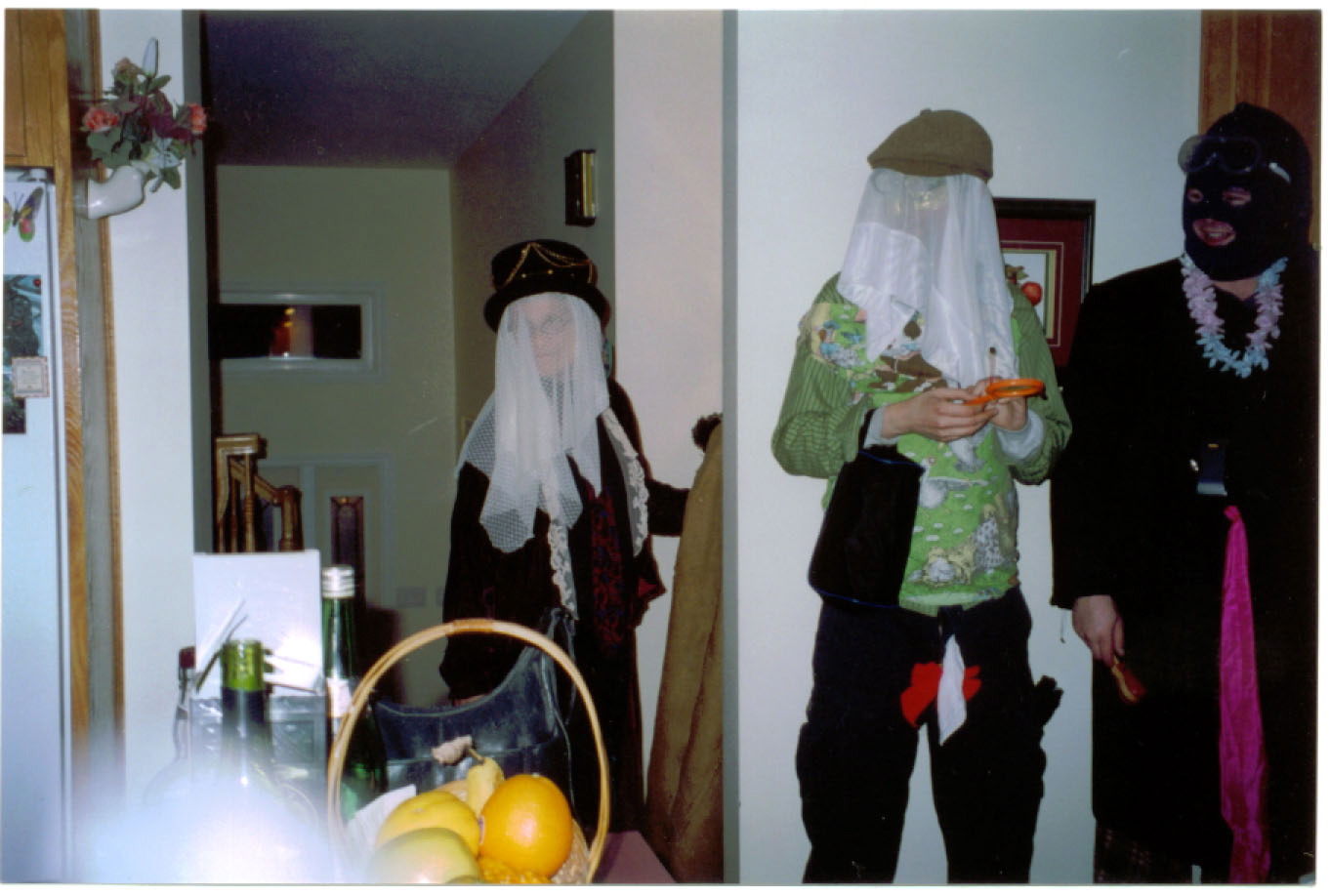
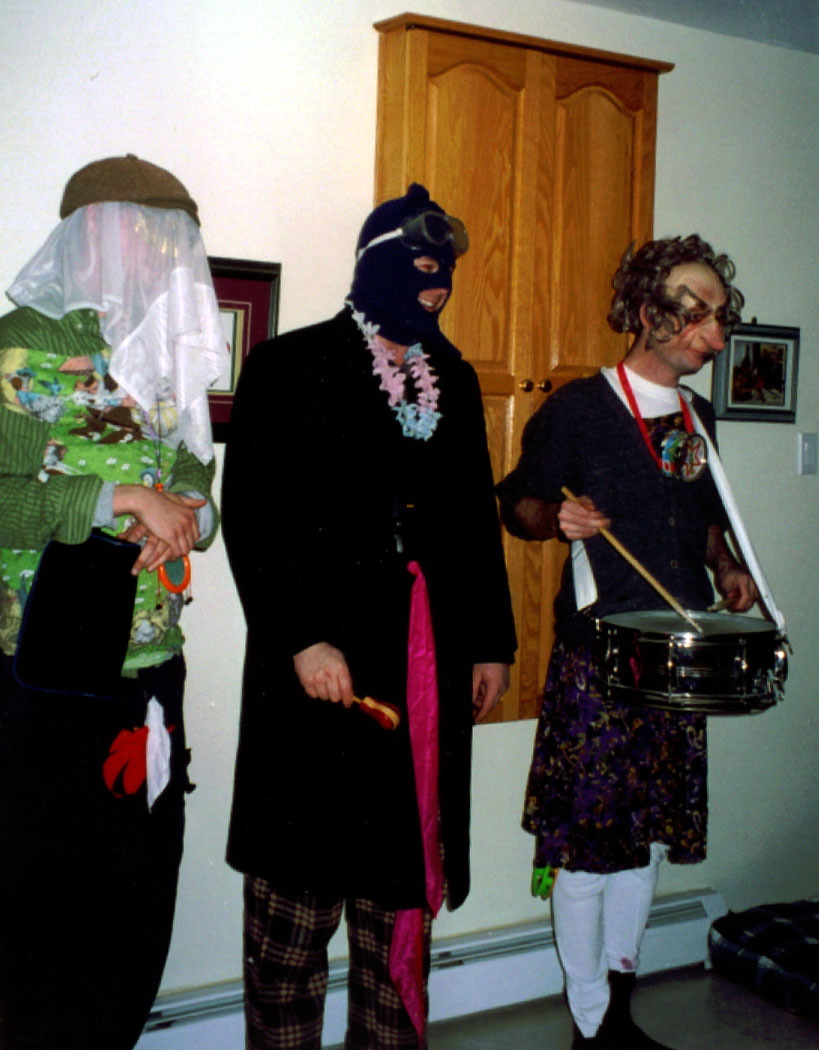
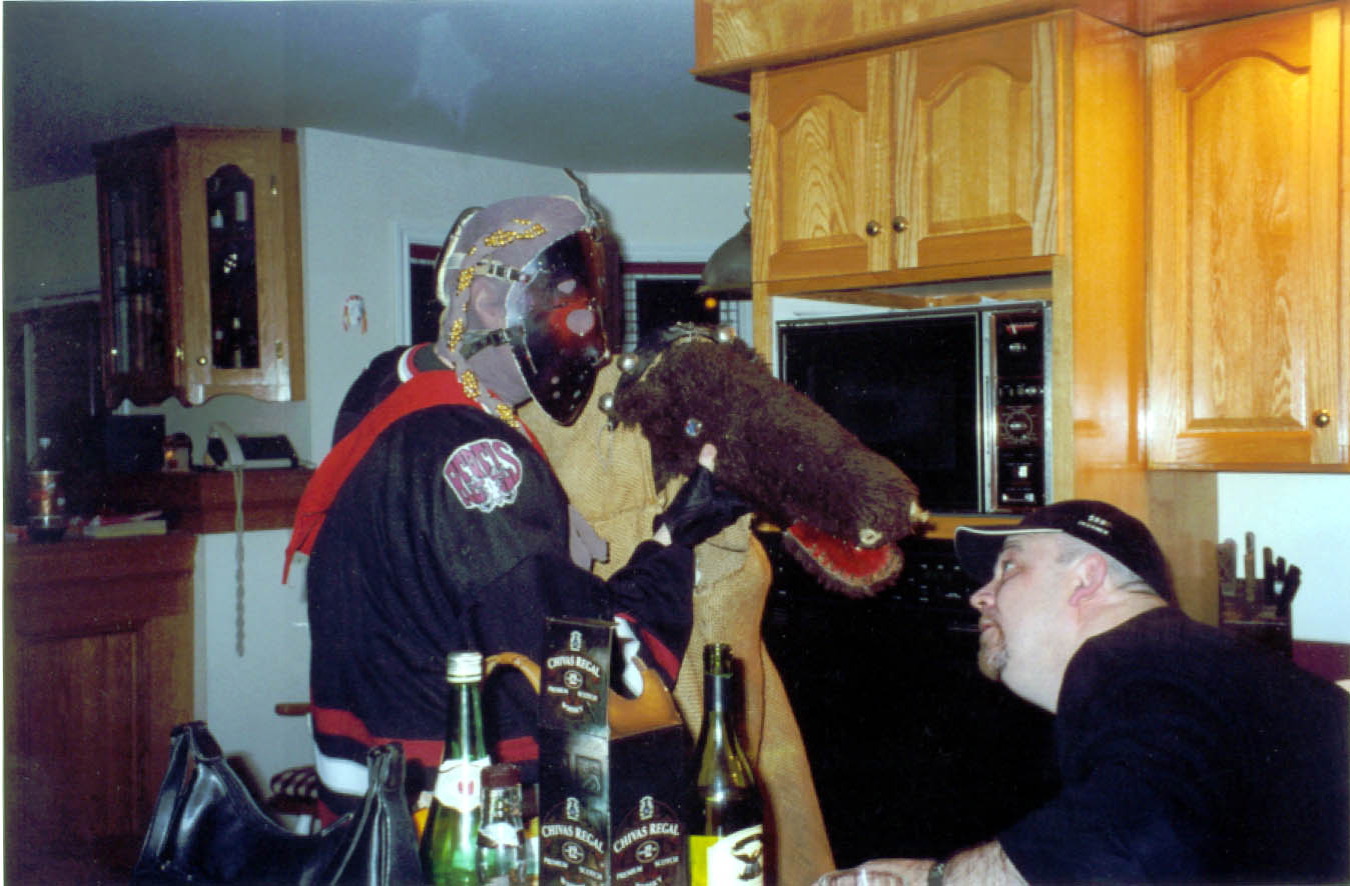
Mummers at the Door Long before Santa, Bing Crosby and the Mattel Toy Company stole the occasion, even before Christianity itself kidnapped it, the Winter Solstice was celebrated with seasonal ritual. One ancient solstice custom is Mummering. Still practiced annually in many parts of England and Ireland, this great-grand-daddy of Halloween masquerade died out in much of Canada and the United States centuries ago. In North America today it is a popular part of Christmas now only in Newfoundland and Pennsylvania. On any night during the twelve days of Christmas you may hear a pounding on your door and strange indrawn voices shouting outside: Any mummers allowed? Whether allowed or not, the mummers will tumble in, loud and masked and rowdy and possibly threatening, turning normal household decorum upside down. They may be friends or complete strangers, and unless you can guess their identities you cannot be sure who is behind the mask or whether their intentions are benign. They are certain to track muddy boots across your carpet, play music, demand drink and act outrageously. All over Newfoundland, these rough-and-tumble spirits of the ancient winter solstice have survived despite the religious and commercial hoopla of modern Christmas.
A Little Before 'Tis Day There is a centuries old caroling tradition that was thought to be lost, but discovered to still exist in a tiny village in Newfoundland. The villagers sing the New Year's carol, brought from Europe with the first settlers, and handed down through the ages in the community's oral tradition. There is no written transcription of the melody or its origin. For generations villagers have walked from house to house, entered darkened kitchens after midnight, and sung the carol as occupants listened in the darkness. Producer Chris Brookes tracks down the village carolers and follows them on their rounds as they sing their medieval melodies. |
||||||
| December 23 |
World of Viruses:Flu Pandemic From pig to farm worker and back to pig – that’s the path of the perfect swine flu virus. Likewise, chickens and turkeys, not to mention geese and birds, are hot zones for pandemic flu viruses. In the past, when governments grew concerned about a particular flu, often they will isolate, quarantine or even kill animals that carry a suspect virus. Now animal health and public health authorities are beginning to collaborate on more extensive bio-security. Producer Lakshmi Singh visits farms, fairs and clinics, to find out how surveillance is preparing for the next pandemic. The illustration, which shows how flu pandemics are spread, is provided with permission from 2006 Albrecht GFX and the Board of Regents of the University of Nebraska. My So Called Lungs Laura Rothenberg is 21 years old, but, as she likes to say, she already had her mid-life crisis a couple of years ago, and even then it was a few years late. Laura has cystic fibrosis, a genetic disorder that affects the lungs and other organs. People with CF live an average of 30 years. Two years ago, we gave Laura a tape recorder. Since that time, Laura has been keeping an audio diary of her battle with the disease and her attempts to lead a normal life with lungs than often betray her. |
||||||
| December 16 |
Time on the Outside: Hope's Story About 2.3 million adults are incarcerated in U.S. jails and prisons. That's almost 1% of the adult population, including the parents of over 1.7 million children. William and Candice are two of those children. Their single-parent father is doing time 9 hours away from home, so they've moved in with their grandmother, Hope. Over the course of a year, two long car trips, multiple moves, and new schools, producer Shannon Heffernan finds out how Hope's family lives while serving Time on the Outside. Survivors (2009)President Obama has declared that “We have banned torture without exception.” However, some would take exception to this claim. The practice of isolating a prisoner in solitary confinement for extended periods of time causes severe sensory deprivation and has been denounced as torture by the United Nations. But tens of thousands of inmates are locked up in solitary confinement in American prisons today. And the number is rapidly growing. Often prisoners spend years – even decades – by themselves in a cell the size of a small bathroom. They don't see anyone. They don't talk to anyone. They don't touch anyone. What does this experience do to a person's mental state? Claire Schoen shows us what solitary confinement looks, sounds and feels like. |
||||||
| December 9 |
Changing Spaces: Hampden, Baltimore Producer Gemma Hooley profiles the neighborhood of Hampden, in Baltimore. It's a pop culture landscape of pink plastic flamingoes, beehive hairdos, vintage clothing, leopard-skin purses, and cat-eye sunglasses. Then there are the annual festivals like the HonFest competition, and Christmas lights that you'll swear are shining through your radio. Join us as we explore the underlying culture of this blue collar community. The Changing Face of Neighborhood Crime A look at how neighborhoods change as new people move in, and when urban dwellers go to the suburbs. Race and class are issues here, with perceptions that crime rates are rising, fuelled by preconceptions about race. The program profiles the town of Laurel, Maryland, a midway point between Washington, D.C. and Baltimore, Maryland, where Governor George C. Wallace of Alabama was shot and paralyzed during his presidency campaign in 1972. The governor was there appealing to the mostly white constituents. However today Laurel is a town better characterized by its growing minority and ethnic populations, and also by crime. We investigate how the town has changed in the past 30 plus years, and whether crime is actually on the increase, or whether the perception of crime is what is changing. This program airs as part of our special international collaboration, Global Perspectives: The World of Crime. |
||||||
| December 2 |
The Battlers This documentary takes us deep into the experience of Australia's urban poor. We accompany the volunteers of the St. Vincent de Paul Society, past the million dollar real estate, the mansions, swimming pools and harbor views of Sydney's eastern suburbs, into the homes and lives of the real battlers - people unable to afford to keep a roof over their heads, or feed and clothe their children. This program comes to us from Producer Sharon Davis of the Australian Broadcasting Corporation, and is part of our ongoing international documentary exchange series, Crossing Boundaries. Our Daily Bread An aural picture of a Baltimore neighborhood soup kitchen created through the stories of the lives of several regular customers. We are surrounded by the sounds of the streets that are their homes, and we share a sense of hope, despite the empty routine of merely getting through another day with a stop at the soup kitchen. |
| November 2011 |
| November 25 |
Life at McMurdo The science station called McMurdo has been operating on the southern tip of the continent since 1956. It’s an important research center, attracting geologists, physicists, engineers, hydrologists, pilots, and just plain adventure-seekers. McMurdo Station has grown so much, in fact, that it’s really a town unto itself. It’s got a harbor, three airfields, a heliport, over a hundred buildings, and a bowling alley. After all, if people are going to work in such a bleak outpost, they need some recreation! About a thousand people work at McMurdo in the summer -- 200 in the dead of winter -- and the scientists depend on the non-scientists to keep the place humming. SOUNDPRINT went to McMurdo as part of the International Polar Year Media Collaboration Pole to Pole to cover a scientific project. While we were there, we met the diverse and colorful group of people who constitute LIFE AT MCMURDO. Gibtown Gibsonton, Florida is the retirement and off-season home for hundreds of carnival and circus show people. Called "Gibtown" by many of its residents, the town was at one time considered the oddest place is America. You could walk into any restaurant and find The World's Only Living Half Girl sipping coffee with her 8 foot 4 inch husband, Giant Al. They, along with The Lobster Man, Alligator Skin Man and the Monkey Girl, among others, made their living touring with carnival sideshows. The sideshows are mostly gone. We take a look back at sideshows through the lens of Gibtown. |
| November 18 |
Gut Reaction There is a disease you've probably never heard of, but chances are you have it or someone you know or love has it and doesn't know. Doctors now believe that one in 133 Americans have Celiac Disease, though only one in 4,700 gets diagnosed. Celiac Disease is an intestinal disorder where, when you eat wheat, barley or rye, your immune system attacks the food as if it were a virus. The results are devastating and painful. Celiac is more common than diabetes and hypertension, but because the means to diagnose it are only two or three years old, the disease is practically unknown in this country -- both to sufferers and their doctors. Producer Richard Paul presents the story of how Celiac Disease played itself out in the lives of 10 people. Sunshine and Darkness Xeroderma Pigmentosum is a genetic mutation with a number of implications. It can be life threatening. It diminishes the body's resistance to UV waves. People with XP can't tolerate sunlight. The older they get, the worse the problem becomes. People with XP have to be completely covered up before they go out, and even inside they live with curtains drawn. The disorder also creates a bubble around the person with XP, their family and friends. Often isolated, even in school, their connection to the world is tenuous. Today, that isolation is breaking down. Producer Marti Covington reports on how schools, families and technology are helping people with this rare disorder (only 125 people in the United States have it) connect with the world. This program is part of our ongoing series on education and technology and is funded in part by the United States Department of Education. |
| November 11 |
The Soybean Wars Soybeans, rows and rows of soybeans all around. In western Paraguay the fields that were once thick rain forests are now soybean plantations. They stretch far into the distance swaying hypnotically back and forth in the wind. This ocean of soy, though, is dotted with small islands--houses, actually, that belong to the subsistence campensinos who once eked out a living farming an array of crops like sugar, cotton, wheat, and maize. But now there is only industrial harvested soy. And pesticides. Soybeans, of course, have a very good reputation in the West (think tofu and biofuels), but the reality is they have damaging repercussions in developing nations where environmental laws are lax and local populations are exploited by multinational corporations. Right now, this is happening in Paraguay, the world's fastest growing soybean producer. The Bourbons, the Wampum and Boodle Boys, and Stalin's Mortimer Snerd In 1948 the Democratic party faced extraordinary challenges: how to forge an alliance between Southern conservatives, Western progressives and big city labor; how to incorporate a civil rights plank; how to quell the rise of a third party. Truman, Dewey and Henry Wallace. It was a year of upsets. Producer Moira Rankin brings us the sense, and sounds, of that pivotol election year. And are there political and social lessons for this year's presidential contest to be learned from the election of '48. |
| November 4 |
IGY:Weather Report Until satellites came along, weather forecasting was either very local (it's raining) or very general (it's going to be warmer tomorrow). When satellites started sending pictures of the Earth and its atmosphere, a remarkable meteorologist named Harry Wexler, saw the opportunity for long range, global forecasting. In the late 1950's, as head of the U.S. Weather Bureau and chief U.S. scientist for the International Geophysical Year, Wexler not only had the vision, but the means to carry it out. Producer Barbara Bogaev looks at how Harry Wexler changed meteorology from weather forecasting to global climate research. When the Snow Melts on Svalbard Snowy peaks, untouched wilderness as far as the eye can see -- the Svalbard archipelago, at 79° North, is a focal point of the world's Arctic research. Polar regions play a key role in regulating our climate. The are also the most sensitive to change. Just 750 miles from the North Pole, scientists from all over the world monitor what's happening to our climate and how changes affect life on our planet. Join Radio Deutsche-Welle producer Irene Quaile, as she tours Koldewey Station in the Svalbard archipelago as part of Pole to Pole, an international media celebration of the International Polar Year, produced with support from the National Science Foundation. |
| October 2011 |
| October 28 |
At Home on Cape Cod In AT HOME ON CAPE COD, reporter Alice Furlaud remembers her childhood and adolescence in summers on the Lower Cape. Furlaud has come back, after 26 years in Paris, to live year-round in the 1829 Truro house which her parents bought in l933. She revisits sites full of memories, and talks to friends who remember her early days on the Cape. Living History in Colonial Williamsburg Step back in time to the eve of the American Revolution, following a woman whose job it is to play an 18th slave character in Colonial Williamsburg; a woman who must learn, in 2004, to interpret and recreate 1770 slave culture for a tourist audience. The story is told through this character's own narration and reflection, her interaction with other historical characters and with the tourist public in Williamsburg, and through documentation of her daily tasks. As she steps in and out of character, we discover what it's like to step in and out of history: re-enacting the mundanities and tensions of 18th century life in the fields and kitchens during the day and negotiating a modern 21st century life after visiting hours. |
| October 21 |
Surviving Extinction Across the United States, ecologists are battling to save endangered species from extinction. Scientists are now joining in the effort with sophisticated models that can be used to predict, and eventually prevent extinction. In this program, we travel to the Florida Everglades to see how the tiny Cape Sable Sparrow is faring despite an over-flooded environment, and to New England to find out how field mice are adapting after their habitat was destroyed. We discover what role scientific models play in the future of these species. Fire and Ice The Eskimos in Alaska have a legend that they call "The year of no summer". One year, summer never came, winter just continued. No one could fish or hunt. And nothing could grow. The story is a creation myth. A few survivors were left to form what is now the Kauwerak tribe. Scientists are now looking at the legend as another piece of evidence for what they believe was a major climate shift in the Northern Hemisphere. Producer Dan Grossman takes on a journey to discover the truth behind the legend. This is part of our special international collaboration called Global Perspective: Nature in the Balance. Click on the following link to find out more. Global Perspective |
| October 14 |
Everest and Beyond A tribute to the extraordinary life and achievements of Sir Edmund Hillary. After his memorable conquest of Everest in 1953, this tall, craggy, modest man, added to his worldwide fame with expeditions to remote corners of the world and his activities serving the Sherpa people of Nepal. This New Zealand legend of the 20th century has lived life to the full – surviving personal tragedy as well as achieving historic triumphs and displaying tireless philanthropy. Produced by Jack Perkins of Radio New Zealand, ‘Everest And Beyond’ draws on the recollections of family, friends and colleagues of Sir Edmund Hillary and also uses audio from films shot in Nepal and India by documentary film maker Michael Dillon. In My Father's Dreams Rob Robins has always wanted to learn to fly, but with five kids to feed the former brewery worker’s budget would not stretch to lessons and running up the required number of flying hours to get his private pilot’s license. Now at 74, and Rob is at last living his dream. He’s learning to fly. Rob is fit. Until recently he’d regularly cycle up the winding hills that lie alongside his home town of Christchurch, and a few months ago, he walked the tough Milford Track through New Zealand's Southern Mountains. Yet, it’s taken him almost a year to pass the physical tests required before he can start flying lessons. There’s also another catch - Rob has been deaf since he was five. This means that he has to learn at an airfield that does not have radio controls. So in mid-March Rob and his wife Glenis, packed up their camper van and headed to an appointment with a vintage Tiger Moth bi-plane and the isolated Mandeville airfield, near Gore Rob’s son , Julian Robins , goes along with a microphone to observe his father's progress |
| October 7 |
Game Over Video games dull the brain and turn children into violence craving delinquents. That apparently is the popular opinion but not one that is entirely factual. Psychologists do see an increase in violent tendencies after game playing but they also note that students who play video games learn new technologies faster in school. What if video games could be educational and improve knowledge of math, science and social studies? That is what some video game developers and educators are working on. Combining curriculum with state of the art game software, they are testing how games can improve education and student participation in the classroom. Game Over takes a look at how video games are making a comeback in the educational world. This program is part of our ongoing series on education and technology and is funded in part by the United States Department of Education. High School Time From 6:00 am to 6:00 pm, a student, teacher, and principal let us in on their world of bells, tests, technology, and teen life. We track what a day is like at Westfield High School in Virginia. With almost 3,000 students, it is one of the largest schools in the Washington, DC area. This program is part of our ongoing series on education and technology. |
| September 2011 |
| September 30 |
Educating Emily Twelve-year-old Emily lives with her mother in a small town in the mountains of West Virginia. Emily has cerebral palsy, and is one of three-quarters of a million children in the United States with developmental disabilities she has impaired hearing, very limited speech and didn't learn to walk until she went to school. Because of Emily's inability to communicate in conventional ways, educators and other professionals initially had little idea of what her mental capabilities were, nor how much she could learn. But advances in communication technology, plus the love and commitment of family, teachers, therapists and community, have meant that Emily is learning not only to communicate, but also to reach her full potential as a human being. This program is part of our ongoing series on education and technology and is funded in part by the United States Department of Education. Teaching: The Next Generation In conversations about the use of technology in schools, what you'll often hear is: Once we have a cadre of young teachers and administrators who've grown up with technology, computer use in schools will take off. This program examines that premise by following a young teacher, Brian Mason (7th grade American History) as he begins his second year in the classroom. The program also explores Mr. Mason's approach to teaching by testing his theories about "what works" against the opinions of education experts. Producer Richard Paul brings us "Teaching: The Next Generation." This program is part of our ongoing series on education and technology and is funded in part by the United States Department of Education. |
| September 23 |
Sneak Out In the 1960's, in California, African American parents set up an elaborate ruse to get their children a better education. Restricted to poor schools in low income East Palo Alto, outside of San Francisco, parents looked across the freeway and devised a way to send their children to wealthy Palo Alto schools. A young mother, barely educated herself, organized the Sneak Out program. Working with white parents, the program was a modern day Underground Railroad. KQED FM's Kathy Baron paints a portrait of conducters and passengers, students and safe houses in the fight to end school segregation. The High Stakes of Today's Testing Standardized tests have been around for years in the United States. What's different now is that schools and teachers are being held accountable for the results of these tests. Add to that new federal legislation, and the stakes are raised even higher, with threats of federal funding being cut off to underachieving school districts. Then there is the question of how and what the children are being tested on. Producer Katie Gott follows the paths of two failing schools, one in Maryland and the other in Virginia, to understand how each state applies its testing policy, and how testing impacts schools, teachers, parents and children. What happens if these schools don't make the grade after the scores are in? This program is part of our ongoing series on education and technology and is funded in part by the United States Department of Education. |
| September 16 |
Foot and Mouth Disease The virus that causes FMD (Foot and Mouth Disease) is one of the most feared among farmers. It can decimate herds. Even if animals recover, beef and milk production can be severely impacted. FMD is so contagious, and such a dreaded disease, that animal health agencies in outbreak countries fear stigmatization if outbreaks aren't eradicated quickly. Draconian measures such as mass killings and burning of carcasses are often employed, as the effectiveness of vaccines is short-lived, and the FMD virus has seven distinct varieties. As part of our special World of Virus series, producer Judith Kampfner takes us to the UK, where the damage from an FMD outbreak 10 years ago is still fresh in farmers' minds, and to South Korea, which has dealt with 5 outbreaks in the past decade, to show us the devastation of FMD, why it's so hard to eradicate, and the drastic steps taken to keep the US FMD-free. Where the Buffalo Roam Hong Kong is largely known for its sophisticated mix of every thing modern, and its thriving economy, but this island city of over 7 million people also has a thriving animal kingdom. Like their human counterparts, these animals are not native to the land. Sarah Passmore of Radio Television Hong Kong introduces these animals, from "Pui Pui" the celebrity crocodile to the Rhesus Monkeys that terrorize women and children. For our Global Perspective Series on Escape, Sarah Passmore shows us around Hong Kong where the Buffalo roam. |
| September 9 |
Face to Face What does it mean to be an American with the face of the enemy? Face to Face connects the experiences of Japanese Americans following the attack on Pearl Harbor on December 7, 1941 with those of Arab and Muslim Americans in the aftermath of September 11, 2001. Visit the Face to Face website  Testing the Alarms Since 9/11, many people have come to view the world through a filter of anxiety. Daily media reports of terror attacks or threats keep us all on heightened alert. But what is the source of that fear? A woman relives her brush with a possible suicide bomber on the London underground. An Iranian man in the Netherlands recalls how he was prepared to attach a bomb to his body to destroy the enemies of Islam. In "Testing the Alarms ", Fiona Stewart and Sassan Saghar Yaghmai offer two very different perspectives on fear and how it shades their lives. Joanna Bourke explores the history of the manipulation of fear. This documentary was produced by Michelle Ernsting of Radio Netherlands as a part of the Crossing Boundaries exchange. |
| September 2 |
The Busker and the Diva Margaret Leng Tan and James Graseck were boyfriend and girlfriend while they both attended Julliard in 1970. Margaret was offered a place by a Juilliard scout who came to her native Singapore. At the age of 16, she became a piano major in New York. She loved New York, but James who came from Long Island, found it dirty - hating the streets and the noise. That hasn’t stopped him in his chosen line of work -- for the last 20 years he’s been a busker - a street musician, well known in the subway system. Margaret meanwhile has had a long career as an unconventional pianist as a protege of John Cage and in the words of the New York Times "a diva of the toy piano". While at Julliard, Margaret and James drifted apart because they were studying different instruments and had different courses, and they lost touch when they graduated. Their very different musical lives took them in different directions but recently, their paths crossed again, in the bowels of Grand Central station. Their meeting quickly developed once again into an intimate relationship, physically, emotionally and professionally. Producer Judith Kampfner traces their reunion and the obstacles to their relationship, which lie more in their approaches to music making and their polarized positions in the musical spectrum than their bond as individuals. This is the story of both their personal romance, and their professional lives. Going Home: Bronx Memories and other Stories A collection of three stories on the mysterious tug that keep us going back home, again and again. Carolyn Hopewell loves going back home to her large extended southern family in Tidewater, Virginia. She likes to hear the old family stories, catch up and keep things centered. For Lynn Neary the Bronx was a mythical place. Childhood memories of her grandparents apartment draw her back on a nostalgic journey, 20 years later. Dan Collison tracks down a memory that runs down generations of his family. It leads him to the Shuffleboard Hall of Fame in Florida. |
| August 2011 |
| August 26 |
After Katrina: Charmaine Neville's Story Born into the third generation of the legendary musical family, jazz singer Charmaine Neville has always called New Orleans ‘home’. And when Hurricane Katrina headed for the Gulf Coast, she stayed in New Orleans because she didn't have a car or money. She also didn't think Hurricane Katrina would be serious. In fact, she was trapped in water for five days, with great fear that she was going to die. But she survived. She witnessed dire events – death, rape, robbery. Overshadowing all of that, she witnessed a community working together to survive – neighbors, elderly people, children. This is Charmaine’s account of Hurricane Katrina, interwoven with her own music. Code Green Code Green explores the impact that hurricanes have on urban greencover, from integrating trees and wetlands into a city's infrastructure and disaster plan, to post-hurricane damage assessment of city trees and coastal marshes, to recovery and rebuilding. Hear from scientists, city planners and urban foresters about their work to establish, protect and restore the green infrastructure in the wake of catastrophic hurricanes, in coastal cities from Charleston to New Orleans. This program, from Producer Gemma Hooley, airs as part of our ongoing series, Tales from Urban Forests. |
| August 19 |
IGY On the Ice During the International Geophysical year, in the late 50's, teams of scientists poured in Antarctica, mining for data: about the weather, the climate and most especially, about the Ice. For some, it was the adventure of a lifetime. For others, the beginning of a long and illustrious career exploring the polar terrain. Producer Barbara Bogaev talks to some of the men who were there. Among them are: John Behrendt, who signed on as a young grad assistant, and went onto author numerous books about the ice; Tony Gow, who thought he was going to study volcanoes, and went onto to become one of the world's leading authorities on the properties of ice; Phil Smith, one of the few who knew how to safely forge a path around crevasses, and became one of the leading architects of international Antarctic policy; and Charlie Bentley, part of the team that made the first measurements of West Antarctic ice sheets, and became a world renown glaciologist. Southern Ocean Voyage Australian Broadcasting Corporation Producer Margot Foster takes us on a voyage aboard the Aurora Australis, Australia's research vessel. The 7-week trip into the Southern Ocean around Antarctica lets scientists sample plants, animals, and ocean water quality and composition, in an attempt to uncover how climate change is affecting, and will be affected by, the ecology of the Southern Ocean. Producer Sarah Castor-Perry talks to scientists after the trip, to try to decipher the data they collected. |
| August 12 |
Trapped on the Wrong Side of History In 1939, California farm girl Mary Kimoto Tomita traveled to Japan to learn Japanese and connect with the culture of her ancestors. She boarded a ship two years later to come back home to America. Two days into the voyage, the Japanese attacked Pearl Harbor. The ship turned around and Mary was trapped in the middle of a bloody war between the country of her birth and the country of her heritage. Mary's story -- told through interviews and letters from the time -- is a rare glimpse at a piece of the World War II experience. A Hiroshima Story On a sunny August morning in 1945, Keijiro Matsushima sat in his math class in Hiroshima. He looked out the window, saw two American bombers in the clear blue sky, and suddenly his world was torn apart. Now a retired English teacher, he fears young people today are no longer interested in his story. On a sunny June morning in 2005, Amsterdam English teacher Kevin Hogan’s 11th grade class are reading a novel about Hiroshima. They are the same age Mr. Matsushima was sixty years ago. How will they react when they hear his story? A Hiroshima Story was produced by David Swatling of Radio Netherlands and airs as part of our international documentary exchange series Crossing Boundaries. |
| August 5 |
Calling Mr. Marconi When Guglielmo Marconi installed a receiving station at St. Johns Newfoundland in November 1901 he probably never realized the full impact of his invention. Radio is now as remarkable as wallpaper. The people of St. Johns are determined to celebrate this most ubiquitous of mediums on the 100th anniversary of the transmission of the first signal across the Atlantic. Producer Chris Brookes from Battery Radio captures the town's enthusiasm as they move through the day. Zoom Black Magic Liberation Radio Mbanna Kantako's pirate radio station, broadcast from a corner of his living room, is heard in a two mile radius of the John Hay Homes housing project in Springfield, Illinois. 'Zoom Black Magic Radio' has attracted a relatively large audience with its mix of rap and reggae music, listener call-ins and political commentary. It has also attracted the attention of the FCC, the local legal system and the Springfield Police, all of whom have attempted to shut the station down. |
| July 2011 |
| July 29 |
The Clinic South Africa’s approach to HIV/AIDS has dramatically changed in recent years. For more than two decades, a combination of government inaction, socio-political conflict, and controversial public health policies led to the situation that South Africa finds itself in today: home to the largest number of people living with HIV. Now the country is trying to make up for lost time, both in prevention and in treatment. The government has launched an ambitious HIV Counseling and Testing campaign that would include 15 million people by 2011, with the goal of reducing the HIV incidence rate by half. At public health clinics across the country, addressing the science of HIV/AIDS means addressing a litany of social problems, too. Producer Gemma Hooley speaks to scientists, researchers, field workers and patients as South Africa fights to slow the march of the virulent disease. Our program today is called The Clinic. The photograph of the Human Immunodeficiency Virus (HIV)was provided with permission from the Nebraska State Museum/ Angie Fox, Ilustrator/ 2005. HPV - the Shy Virus The Human Papillomavirus - or HPV - is a common virus that touches billions of human beings in one way or another - from a tiny wart on the hand to invasive cancer. HPV is a major health threat worldwide, yet mostly harmless. The virus can "hide" for years from a person's immune system - with no apparent ill effects - then awaken and create deadly disease. This is the story of a virus that often doesn't act as scientists expect it to - a puzzling, paradoxical virus. HPV, the Shy Virus is part of the series "World of Viruses". The photograph showing the structure of the Human Papillomavirus (HPV), is provided with permission by the University of Nebraska-Lincoln/ Angie Fox, illustrator/ 2009. |
| July 22 |
Cut and Paste Plagiarism at universities and colleges is rife - 4 out of 10 students admit they copy material from the internet and try to pass it off as their own work. For some it's an easy way out at the last minute; for others it's driven by cut-throat competition to get into the best graduate or professional schools. To deal with the issue, colleges and universities are trying many different approaches, from changing their teaching methods to using online detection filters to promoting a culture of integrity on campus. Producer Jean Snedegar visits faculty and students at Duke, the University of Virginia, and other colleges to discover the underside of higher learning. This program is part of our ongoing series on education and technology and is funded in part by the United States Department of Education. Low Flying Fish A spirited exploration of the culture of extreme motivation in America, from team- and vision- building in the corporate world ... to the multi- million dollar industry of self-improvement books and videos. Along the way, we'll meet Seattle's famous corporate-training fishmongers; hear from someone trying to figure out Who Moved Her Cheese; and be introduced to despair.com's lucrative mockery of the whole motivation business. |
| July 15 |
Chickens Producer Adi Gevins presents both a lighthearted and serious examination of chickens and their relationship to humans in historical, cultural, economic and institutional contexts. Life before the Computer Remember the first television set your family got? Or the first transistor radio that was really all your own? Our relationship with technology is oddly intimate, worming its way into even our most evocative memories. Producer Ilene Segalove talks to people with humorous memories of the "latest technologies" of their childhoods, now faded into obscurity in the computer age. |
| July 8 |
Bean Jumping This is the story of the immigration experience of two sister communities: one in the Ecuadorian Mountains, and the other in Suffolk County, on Long Island in New York. A 2008 hate-crime killing brought to light a pattern of abuse, persecution, and violence that shocked the residents of Patchogue, a quiet coastal suburban "Anytown, USA" -- but maybe didn't shock the residents of the community in the shadows, or their family members 3000 miles away. Producer Charles Lane reported on and covered the local story, and now brings us the international story. He found that the meaning of "American Dream" might be changing, and he discovered a Latino Dream. Running with Atalanta Ten years ago, two young women were studying law – one in The Netherlands and the other in Latvia. Years later their lives would intersect. Ruth Hopkins, researching a European Commission report on the trafficking of women, interviewed Anna Ziverte – a victim who had been forced to work as a prostitute in Rotterdam. The number of women trafficked and exploited in the sex trade annually in Europe is estimated to be as high as 700,000. Nearly a third are trafficked from Eastern and Central European countries. Ziverte escaped her traffickers only to find herself entangled in another nightmare – a Dutch system where victims are perceived as illegal immigrants. Taking matters into her own hands, she founded a support group called Atalantas, inspired by the swift-footed goddess from Greek mythology who could outrun any man. Producer David Swatling of Radio Netherlands follows the journey of two women trying to find the light at the end of a seemingly endless tunnel. This program airs as part of our special international collaboration, Global Perspectives: The World of Crime. |
| July 1 |
Green Tea and Landmines The streets of Mae Sot, on the Thai Burma border, are full of stories of loss and death and flight. About two and a half million Burmese have fled their country for Thailand, Burma remains one of the poorest countries in the world, and the protests against the military dictatorship have done little to change peoples' lives. In this episode, Nicole Steinke of the Australian broadcasting Corporation visits the extraordinary haven of Dr Cynthia Maung's Mae Tao Clinic. Funded mainly by foreign donations, Mae Tao Clinic runs the training center for the Backpack Medical Teams and the Free Burma Rangers, both of whom illegally cross the border back into Burma to help the country's ethnic minorities survive the onslaught of the Burmese military. The Clinic is also where people come to vaccinate their babies, to be treated for malaria or cholera, or to receive a prosthetic -- many of the refugees fleeing the Burmese military have been forced to act as unwilling porters, or even as human landmine detectors. We also meet long-time political prisoners, ethnic Burmese working to help their own people in their struggle against the Burmese military, and children who have crossed the border alone. Holland's Black Page Producer Dheera Sujan from RADIO NETHERLANDS traces the stories of four former soldiers who tortured and killed Indonesian prisoners. Now in their seventies, they remember the details of quieting an open rebellion in the late 1940's. They remember the electrocutions, the torture and the killing. They also remember how they had to live in shame with the secrets. They call for the Dutch government to accept some measure of responsibility for what they say they were ordered to do. Their solace lies in being able to publicly discuss the events. Holland's Black Page originally aired as part of the collaboration War and Forgiveness, produced by Soundprint, WNYC, and Radio Netherlands with support from the National Endowment for the Arts. |
| June 2011 |
| June 24 |
Birthday Suit Janet Jackson reveals a breast and there is an uproar, a woman breast feeds in a mall and is thrown out, a child of 4 is naked on a beach and the life guard tells him to put his swimsuit on. Around the world there is topless bathing but it is rare in this country. Yet one in four Americans admit to having skinny dipped. Are we hypocrites? We obviously secretly like swimming nude so why don't we do it all the time? The Internaional Naturist Federation says that nudism or naturism is " A way of life in harmony with nature, characterized by the practice of communal nudity with the intent of encouraging self respect, respect for other and the environment". I don't know that going naked makes you respect the environment more but surely it must lead to a greater appreciation of the different shapes and sizes bodies come in and that might conceivably make us less body conscious and phobic about fat and imperfections. Naturist camps are almost always in a mixed social setting. Detractors say that naturist is a code for sex but perhaps men and women start to notice their differences less? And what about naked children? Naturists warmly encourage children. Would being at one of these camps cause psychological harm? And then how hygenic really are these places? At the end of summer, before the chill winds blow, reporter Judith Kampfner visits a naturist camp and yes, complies with the no clothes rule. And that's no clothes when dancing, horsebackriding, kayaking, or in the canteen. It's not something that this reporter relishes. She is short and is used to her everyday weapons of stacked heels. Like most women she uses clother to camoflage faults. Baring all may mean feeling vulnerable and stupid. But the nudists who come year after year find it liberating, relaxing, democratic, wonderfully cheap, wildly romantic. Perhaps our reporter will become comfortable in her birthday suit. Now why do we say 'suit'? Summer Triptych Summer afternoon. The two most beautiful words in the English language, according to Henry James. While away the afternoon at a ballgame. Take your kid to the state fair. Go for a ride on a Ferris wheel. It's the one time of year when nature sets out to amuse us. Of course, it's an illusion. You need only be stuck behind a desk and looking out the office window to get a reality check. But if summer is an illusion, at least it's a grand illusion, and well worth the trouble. Producers David Isay, Dan Collison, and Neenah Ellis take us back stage behind the sets, props, facades, carnivals, games and country fairs. We're going to meet the technicians of summer, the people who work to make it happen. |
| June 17 |
Every Tree Tells A Story Urban forests provide economic, social and cultural value to neighborhoods and cities. But what are the needs and expectations different ethnic and racial groups have for green space? And how does understanding those needs draw tighter communities? Producer Judith Kampfner compares the cities of New York and London, and the approach new and old ethnic racial and immigrant groups have towards green space. This program airs as part of our ongoing series, Tales from Urban Forests. Photo of Max's cement square from the revitalized New York City park. The Music Boat Man Reinier Sijpkens travels around the world making magic and music for children. At home in the Netherlands, he haunts the canals of Amsterdam playing barrel organ, trumpet and conch. Producer Dheera Sujan meets with this illusive magical character who says his day job is "developing his soul." |
| June 10 |
Mosquitoes in Iquitos Iquitos, Peru, home to nearly 400,000 people, is a living laboratory. Researchers there are tracing the spread of lethal dengue fever by going door to door in neighborhoods throughout the city. They're mapping the spread of the virus, as well as the mosquitoes that carry it. Producer Dan Charles follows researchers as they try to figure out what people can do to stop it. The Bucket When you lower a bucket into the ocean, from a pier or off the side of a ship, it may well seem to come up containing nothing but clear water. But scientists now know that every teaspoonful of that water can contain a hundred-million tiny viruses. That sounds sinister, but without them the ocean couldn't function. Every day, marine viruses invade bacteria and other organisms, releasing their nutrients to the underwater food chain. Only since the late 1980's have marine biologists been aware of how many viruses are indigenous to the ocean, and how powerful and varied they are. They differ radically in size, shape, and DNA blueprint -- so much so that totally novel DNA keeps being discovered, with implications for anything from anti-aging creams to anti-cancer drugs and evolutionary science. Far from being a bad thing, these amazing marine viruses are useful, dramatic, novel, and dynamic; imagine that all hiding in your bucket of clear water! Producer Judith Kampfner travels from the coast of Plymouth in England to Santa Monica to meet with some of the intrepid pioneers who are on the trail of these new natural marvels. Photograph of algae, Emiliania Huxleyi, was provided with permission by The Natural History Museum, London (Dr. Jeremy Young) and University of Nebraska-Lincoln (Angie Fox) / 2009. |
| June 3 |
Paris: Heat Wave In August 2003, European suffered the worst heat wave in at least 500 years. Many weather records were set that month. Great Britain reported its hottest day ever. Forest fires raged in much of southern Europe, themselves causing deaths. Crops withered and trees died. One of the cities hit hardest was Paris. Although the high heat started in early August, it was nearly mid-month, after hundreds of people had been killed, before the French government realized that the heat wave had turned deadly in Paris. Before the heat wave was over, the city’s morgues had to requisition refrigerator trucks just to hold the excessive number of dead bodies. More than 1,000 Parisians had died of dehydration, heat stroke and other ailments caused by high heat, a disproportionate fraction of which were single, elderly women. Producer Dan Grossman tells us the story of the Paris Heat Wave, and the signs that other parts of the world, including parts of the U.S. Midwest, could soon face significantly increased climate extremes. Cities of the Plain Urban forests in desert settings -- no, this is not about transferring Central Park to L.A. Arid environments have their own "green" cover, and cities destroy and ignore that vegetation to their peril. Veteran producer Bill Drummond travels out West from mountains to shore to ask: when are trees beneficial and when are they not? This program airs as part of our ongoing series, Tales from Urban Forests. |
| May 2011 |
| May 27 |
The Orphan Train "The Orphan Train" is an unnarrated documentary about one of the least known and yet most significant social experiments in American history. In September 1854, the first "orphan train" carried 46 homeless children from New York City to far off homes to become laborers in the pioneer West. It was the first step in what was to become the emigration of as many as 250,000 orphan children to new homes throughout the entire United States. Some children found kind homes and families, others were overworked and abused. Widely duplicated throughout its 75 year history, the original orphan train was the creation and life project of the now forgotten man who was to become the father of American child welfare policy. This documentary features interviews with surviving orphan train riders, as well as readings from historical newspapers, letters and journals, and is laced with classical and folk music. Girls Like Us Marisela and Yadira immigrated illegally to the United States as small children. Marisela, who immigrated when she was 7, remembers crossing over the border while lying in the back of a truck. Yadira, who was 3 when she crossed, remembers nothing of her entry into the U.S. Her first memories are of life in California. After their families moved to Denver, Colorado, the two young women met in middle school. Both went on to become star students in high school – AP classes, top ten percent of their class – and recruiters from Colorado colleges were telling them that they would bend over backwards to snag students like them. But of course they had a big problem, which they were afraid to share: They didn’t have Social Security numbers. This meant that they didn't qualify for any federal aid, or for most private scholarships. “Girls Like Us” is the story of two young girls trying to get into college in a country where they are undocumented. |
| May 20 |
The Bonus Army March In 1932, in the depths of the Depression, thousands of hungry and disgruntled veterans of WW I marched on Washington, D.C. demanding that Congress pay them the bonus for their military service that had been promised years before. Banding together, unemployed Oregon cannery workers marched with Pennsylvania coal miners and Alabama cotton pickers, as more than 20 thousand "bonus marchers" participated in the biggest rally to date in the nation's capital. And they stayed for weeks, setting up tent cities, living in cardboard shanties, and shaking the nerves of President Hoover. Find out how they played a role in defeating Hoover in the fall election, and improving the government's treatment of veterans after WW II. Legacies Sept 11th was a day without parallel. For an older generation that fought and lived through the two world wars, riots, terrorist attacks, the holocaust, the carnage and destruction on the 20th century, it brought back memories. It reminded them not just of war but also the tenacity of the human spirit that enabled them to overcome all odds. Many of them realized that they had to pass on their history of survival and hope to their children and grandchildren. They chose unique and personal ways to tell their story. This is the story of Isadore Scott, Leon Lissek and Ruth LaFevre and their amazing legacies. |
| May 13 |
The Peakist Facing the future, with news bulletins full of daily doom and gloom, can be a dispiriting business. In fact, sometimes it seems easier to turn off the news and do something simple. Something we can control all by ourselves – like going for a walk. Lloyd Morcom knows intuitively that people get sick of too much bad news. But he also feels he must change his life dramatically to survive the challenges of the years ahead, especially the challenges of the global financial crisis, climate change and peak oil. In ‘The Peakist’ – the Australian Broadcasting Corporation’s contribution to the 2009 Global Perspective ‘island’ series, we hear the story of Lloyd, an ex 70’s hippy and former oil man, and how his experiences and the mistakes he made in the past, are helping shape big changes in his life. While John Donne said that no man is an island, Lloyd Morcom sometimes feels like one. An island in his own community and his own country. At the height of the global financial crisis Lloyd, with some misgivings (he knows how people feel about bad news) decides to call a public meeting to outline his fears for the future. More importantly he hopes to convince his fellow locals in this small, conservative, rural community in South Gippsland, Victoria to follow his lead and start changing their lives. The Public Green and the Poor Numerous times in American history, reformers have sought to help the poor by putting them amidst nature -- the belief being that physical beauty can make beautiful people. It seems like an odd idea. But Thomas Jefferson believed it fervently. And it's also the reason Central Park exists in New York and the town of Greenbelt exists in Maryland. This program, from Producer Richard Paul, looks at a time in our past when nature was used to uplift the poor. It airs as part of our ongoing series, Tales from Urban Forests. |
| May 6 |
Life Beyond Death " My son was dead, but six Israelis now have a part of a Palestinian in them, and maybe he is still alive in them" These are the words of the Palestinian father Ismail Khatib who donated his son Ahmed's organs to Israelis after the 12 year old was shot dead by Israeli soldiers while holding a toy gun. This remarkable gesture of humanity is not the first time victims of the conflict have given life to people on the other side of the Arab-Jewish divide. This year is the 5th anniversary of the death of Yoni Jesner, a 19 year old Jewish religious student murdered in the bombing of a Tel-Aviv bus. Part of his body went to save the life of a Palestinian girl from East Jerusalem. Presenter Vera Frankl of the BBC takes a closer look at the generosity and faith of these two families - the Jesners and the Khatibs - and we ask if a person can live on in some way through organ donation - here, in these two stories, part of a Jew alive in an Arab, and part of an Arab alive in a Jew. Epiphany In this program, producer Richard Paul examines the roots of hatred in Christianity, Judaism, and Islam and considers whether people of faith can ever reconcile those divisions. The world’s great monotheistic faiths share centuries-old traditions, but they are also locked in dangerous rivalries that permeate contemporary thought. Through the stories of three men raised to their religion's version of the truth, and distrust of the "other", this program probes that duality and confirms the power of faith to overcome legacies of hostility, illuminating ways that people work beyond hatred and stereotypes. |
| April 2011 |
| April 29 |
Survivors (2009)President Obama has declared that “We have banned torture without exception.” However, some would take exception to this claim. The practice of isolating a prisoner in solitary confinement for extended periods of time causes severe sensory deprivation and has been denounced as torture by the United Nations. But tens of thousands of inmates are locked up in solitary confinement in American prisons today. And the number is rapidly growing. Often prisoners spend years – even decades – by themselves in a cell the size of a small bathroom. They don't see anyone. They don't talk to anyone. They don't touch anyone. What does this experience do to a person's mental state? Claire Schoen shows us what solitary confinement looks, sounds and feels like. Across The Water: Journey to Robben Island South African President Nelson Mandela spent 18 years in prison on Robben Island. Now the prison is closed and the island has become a museum, a fast growing tourist attraction in the new South Africa. Former political prisoners work alongside their former jailers as the new keepers of the island's history. It is perhaps one of the most tangible symbols of South Africa's miraculous transformation from apartheid to a multi-party democracy. But what about the personal transformations of those who continue to work on the island? Hear from some of the former prison wardens who continue to live and work there. |
| April 22 |
Sam's Story Sam was brought to the United States by his parents as a young child, but his family overstayed their visas. Over the past fourteen years, Sam has grown from a small boy to a young man — taught in American schools and churches, he grew up like any other American kid. But when he was asked to fill in his social security number on a financial aid form, he began to realize the consequences of being undocumented. Long Haul Productions picks up Sam's story as he's graduating from high school in Elkhart, Indiana, and looking to start his first year of college. Citizenship Diary How many stars and how many stripes and what do they mean? You need to know this and many more flag questions to pass the US Naturalization test. Judith Kampfner recorded an audio diary about the process of becoming an American citizen, and about what it was like taking on a second identity. Was it a betrayal of her British roots? Or was it a very logical step to take for someone who thinks of herself as in internationalist? Many more people are becoming dual or multiple citizens today as more countries accept the idea - Mexico, Columbia and the Dominican Republic for instance. Does this dilute the concept of citizenship? Indeed perhaps we are less likely to identify ourselves as citizens today because we are part of a global culture and travel more. Kampfner discovers that going through the paperwork, the test and the ceremony does not help her feel American - that is something she and all the others who are processed have to do for themselves. |
| April 15 |
Peanut King's Children Maurice “Peanut” King was a successful drug dealer in East Baltimore and a transitional figure in the drug trade. He bridged the world of the old school gangsters and the kid gangstas of today. He was the first to recruit children to work for him -- ten-, eleven- and twelve-year-olds equipped with mopeds. After the addict gave his money to the “corner man”, one of Peanut’s kids would speed by and toss him the drugs. The kids easily eluded the cops and, if they were caught, didn’t require any outlay in bail or lawyer’s fees. Deborah George tells the story of the Baltimore drug trade 30 years ago, before it was common for children to sell drugs or carry guns. Learning to Live: James' Story "Learning to Live: James' Story" documents the journey of James Robinson, a 38 year old ex-offender, as he makes the transition from repeated prison sentences to life in the free world. After a 7-year prison term, James arrives at St. Leonard's halfway house for ex-offenders in Chicago. He tells the staff that he needs to "learn to live," knowing full well how hard it is to transition back to society on his own. "James' Story" chronicles James' hard work over the course of ensuing three months; job training, drug counseling and 12-step support meetings. During his stay at the halfway house, James also finds his "dream" job and reconnects with family members, including an eighteen-year-old son he hadn't seen since the child was four. |
| April 8 |
The Color of Shakespeare At countless times in America, and for countless groups of citizens, the question has come up: Who "owns" Shakespeare? Who is it meant for, and to whom does it mean what? This is a particularly poignant question in the case of African-Americans, whom some have sought to exclude from the Bard's work. This story looks at minstrel show parodies of Shakespeare, color-blind casting of Shakespeare, and the African-American experience with Shakespeare. Produced by Richard Paul and narrated by Sam Waterston, The Color of Shakespeare was made possible with support from the Folger Library. Living History in Colonial Williamsburg Step back in time to the eve of the American Revolution, following a woman whose job it is to play an 18th slave character in Colonial Williamsburg; a woman who must learn, in 2004, to interpret and recreate 1770 slave culture for a tourist audience. The story is told through this character's own narration and reflection, her interaction with other historical characters and with the tourist public in Williamsburg, and through documentation of her daily tasks. As she steps in and out of character, we discover what it's like to step in and out of history: re-enacting the mundanities and tensions of 18th century life in the fields and kitchens during the day and negotiating a modern 21st century life after visiting hours. |
| April 1 |
War and Forgiveness Memorial Day is a day of remembrance of wars won and lost. Often, we think of the battles and the victories. At times, we consider the inevitable war crimes: the massacres, rapes and other atrocities. Rarely do we consider the perspectives of those who are responsible as well as those who are injured. In a special hour long documentary, War and Forgiveness, we present two sides of the equation: the victims and the perpetrators of wartime atrocities. WNYC, RADIO NETHERLANDS, and SOUNDPRINT have collaborated on a two part program that looks at women in Korea who were commandeered to have sex with Japanese soldiers during World War II and Dutch soldiers who carried out a torture campaign in Indonesia. As different as their stories are, they reach the same conclusion: the need for a moral apology from the government. |
| March 2011 |
| March 25 |
Who's Got the Dog? Divorce has an immediate impact on family and friends beyond the couple and their children. Marcia Sheinberg of the Ackerman Institute for Family Therapy in NY says that the crisis that a divorce creates in the wider network of relationships has been underexplored. It underscores the fact that divorce is more traumatic than we as a society acknowledge. It is not the quick paper solution of a society which discards and moves on all to easily. The program explores the ripple effects of divorce – how divorce has an impact far beyond the immediate family. In part, this is personal reflection from the producer's own divorce -- Kampfner discovered that there were people who were shocked, in pain and grieving about her family break up and that she felt obligated to console and reassure them. It both made her feel guilty and blessed to know that we are more closely bound to a wide orbit of friends and relatives than we realize. Who’s Got the Dog? will look at how we think we live only in nuclear families, but are actually tied to a community and it often takes a crisis to realize this. Picture from a late-1990's Halloween in Chicago of Milo the Bee, with Alex as Toto's human and Max as Dogbert's human. At Home on Cape Cod In AT HOME ON CAPE COD, reporter Alice Furlaud remembers her childhood and adolescence in summers on the Lower Cape. Furlaud has come back, after 26 years in Paris, to live year-round in the 1829 Truro house which her parents bought in l933. She revisits sites full of memories, and talks to friends who remember her early days on the Cape. |
| March 18 |
Tuning into the Enemy Between the mid seventies and the early nineteen nighties, Paul Erasmus was a secret police official in South Africa. His unit was responsible for what he calls dirty tricks, which included arson, sabotage, theft, discrediting people, illegal phone tapping, and firebombing. Then, before apartheid ended, he went in front of the Truth and Reconciliation Commission, to confess to 500 offenses and 80 serious crimes and was granted partial amnesty in 2000. Paul Erasmus attributes his return of conscience, in part, to the realisation that he had destroyed the career of a musician whose work, talent and passion he grew to admire and love. Over time, a strange kind of respect and even friendship has developed between Roger Lucey, a political singer, and his former tormentor. Their new relationship is one example of the reconciliation that was part of the political achievement of post apartheid South Africa. Triads and Film Enter the Hong Kong Triad "Underworld", where actors, directors, and police describe the Triad control of the film industry in the 1990s when a whole series of murders, beatings and dodgy dealings went down. That's when the Triad techniques of persuasion allegedly came into play - extortion, blackmail, beatings, rape - to get actors and stunt men to appear in their flicks. Eventually the actors had enough and campaigned against the violence. In “Triads and Film”, Producer Sarah Passmore of Radio Television Hong Kong looks at the current situation in the Hong Kong film industry to see the extent to which it may have broken free of these groups, and how much Triads are still involved in the entertainment industry. This program airs as part of our special international collaboration, Global Perspectives: The World of Crime. |
| March 11 |
The Spoken Word Join us on a journey through the rich tradition of performance poetry, set in Washington DC's famous and eclectic U Street corridor. Our program takes you from memories of the live poetry clubs that emerged there in the 1960's, through the D.C. riots that saw venues closing down and artists scattering to the West Coast, to the modern day renaissance of the spoken word tradition. Our story is narrated by performance poets M'wili Yaw Askari, Toni Ashanti Lightfoot and Matthew Payne. Going Home to the Blues People say going down south is like going home. Take a trip to the Mississippi Delta to find the true meaning of the Blues. Everyone has hard times throughout their lives, but does that classify as the Blues? Producers Askia Muhammed and Debra Morris search for an answer while going home. |
| March 4 |
Touchstones of Reality Having a serious mental illness such as schizophrenia or severe bipolar disorder isn’t easy for patients, or for their families. In the early days of mental illness, the pressures can tear families apart, and many of them don't know where to turn. As patients and caretakers age, things can get even tougher. While mental health services may provide some support, it's often family members who remain the only "touchstones of reality" for the person suffering with a severe mental illness. Producer Jean Snedegar speaks to several families who face the difficult challenge of supporting their mentally ill family members throughout the course of their lives. Escape from Time "Lost Time is never found again." Benjamin Franklin wrote that, and producer Barbara Bogaev agrees. She tries daily to reconcile her time, "Barbara Time", with "Clock Time"; at the same time, she dreams of a life WITHOUT time. And really, who wouldn¹t like to escape the relentless march of time? In that spirit, we consider various routes people take to Escape From Time. A neuroscientist explains the ways in which the brain stretches time in periods of stress and peak performance; a civil war re-enactor immerses himself so convincingly in the past that he achieves the elusive high known as "period rush"; and then we visit the ten thousand year clock -- a project devoted to looking ten thousand years into the future in order to gain perspective on the present. Escape From Time was produced by Barbara Bogaev, with additional production by Queena Kim. The show was mixed by Jared Weissbrot. “Yew Piney Mountain” was performed by Appalachian Fiddler Lars Prillaman. Special thanks to Wide Awake Films, Alexander Rose of the Long Now Foundation, and Taylor Dupree at 12k for permission to use the song Solang by Sogar, from their album Apikal Blend. This program was produced as part of the international documentary exchange collaboration, Global Perspectives: Escape! |
| February 2011 |
| February 25 |
My World: Officer Candidate School In 1965 and 1966, Producer Askia Muhammad was a star-struck and naive college student who had matriculated from Watts to San Jose State University, while getting college deferments to serve two years active duty in the U.S. Navy Reserve. As Askia began struggles with becoming a Reserve Office Candidate, the country began to struggle with itself with blacks' rights, the hippie movement, the constant protest against the war in Vietnam. In My World: Officer Candidate School, Askia takes us through his path from faithful Naval Officer to conscientious objector. Remembering Kent State 1970 When thirteen students were shot by Ohio National Guard Troops during a war demonstration on the Kent State University Campus on the first week of May 1970, four young lives were ended and a nation was stunned. More than 30 years later, the world at war is a different place. However, those thirteen seconds in May, 1970 still remain scorched into an Ohio hillside. Through archival tape and interviews, Remembering Kent State tracks the events that led up to the shootings. |
| February 18 |
The Clinic South Africa’s approach to HIV/AIDS has dramatically changed in recent years. For more than two decades, a combination of government inaction, socio-political conflict, and controversial public health policies led to the situation that South Africa finds itself in today: home to the largest number of people living with HIV. Now the country is trying to make up for lost time, both in prevention and in treatment. The government has launched an ambitious HIV Counseling and Testing campaign that would include 15 million people by 2011, with the goal of reducing the HIV incidence rate by half. At public health clinics across the country, addressing the science of HIV/AIDS means addressing a litany of social problems, too. Producer Gemma Hooley speaks to scientists, researchers, field workers and patients as South Africa fights to slow the march of the virulent disease. Our program today is called The Clinic. The photograph of the Human Immunodeficiency Virus (HIV)was provided with permission from the Nebraska State Museum/ Angie Fox, Ilustrator/ 2005. World of Viruses:Flu Pandemic From pig to farm worker and back to pig – that’s the path of the perfect swine flu virus. Likewise, chickens and turkeys, not to mention geese and birds, are hot zones for pandemic flu viruses. In the past, when governments grew concerned about a particular flu, often they will isolate, quarantine or even kill animals that carry a suspect virus. Now animal health and public health authorities are beginning to collaborate on more extensive bio-security. Producer Lakshmi Singh visits farms, fairs and clinics, to find out how surveillance is preparing for the next pandemic. The illustration, which shows how flu pandemics are spread, is provided with permission from 2006 Albrecht GFX and the Board of Regents of the University of Nebraska. |
| February 11 |
Traffic Islands:Dividing Lines Traffic Islands: Dividing Lines This documentary explores the collective narrative created by people whose lives intersect in different ways with traffic islands and streetscapes. From a scientist trying to rationalize urban wildlife patterns, to a man who makes a living on the street corner, to people who use the streetscape to memorialize loved ones: what they have in common is that they map out private parts of their lives on the public traffic grid. We'll hear about this traffic island life in stories from the medians, as part of the international documentary collaboration, Global Perspectives on Islands. Yellow and Black Talk about taxis as a guilty pleasure! Whether it's riding in style on the streets of New York (avoiding the hustle, bustle, and pain of the Subway), or zipping across London's spiraling maze of cross-streets (never doubting your intrepid guide's sense of direction), producer Judith Kampfner takes us on a tour of Taxi drivers -- the rough-edged New York City cabbies, and the traditional, vintage hacks of London. |
| February 4 |
Hospice Chronicles: Joe and Roger In 1967, St. Christopher's Hospice – the first modern hospice – opened in a suburb of London. Since then, millions of people around the world have chosen hospice at the end of their lives, with many patients choosing to receive care in their homes. In Hospice Chronicles: Joe and Roger, team Long Haul follows Joe, a volunteer trained in "respite care", giving family members a break from caretaking responsibilities. As Joe, a Buddhist, engages Roger, a devout Christian, in discussions of death and (im)mortality, he finds himself exploring death in a way for which training could not have prepared him. After the Forgetting This is a story about a Vermont family's experience living with an elderly member's progressive dementia. It is told in a series of interview segments and dinner conversations among the story's three characters, Gregory Sharrow, his husband Bob Hooker, and Greg's mother Marjorie. The story explores the relationship with a son and son-in-law whose names Marjorie can't remember. It addresses the question, what happens to love when there is no more memory? There is no narration in the story. Brooklyn musician Karinne Keithley created music for the story. For more about Karinne Keithley, go to: http://www.fancystitchmachine.org/ Thanks to Rob Rosenthal for his mentorship during the production of this piece. |
| January 2011 |
| January 28 |
The Lonely Funeral Every year up to twenty people die completely alone in Amsterdam. There are no friends or family to prepare their funeral or mourn over the body. Sometimes these people are illegal migrants, drug mules, or simply people who for one reason or another, cut-off all social contacts. Poet Frank Starik decided that these people also deserved to be eulogized. He contacted the Amsterdam city services and asked if he could take part in these forgotten funerals. Producer Michele Ernsting of Radio Netherlands Worldwide brings us the story of the Lonely Funeral. It airs as part of the international collaboration, Global Perspectives: At The Edge. Death Comes Home An intimate emotional portrait of three families who have chosen to fore-go the funeral director and proscribed memorial, and instead care for their dead in their own homes. This is not a story about hospice or green burial; producer April Dembosky introduces us to people taking matters into their own hands: washing and dressing the bodies of their loved ones, building coffins, digging graves, and keeping their loved ones closer to home. |
| January 21 |
Time on the Outside: Hope's Story About 2.3 million adults are incarcerated in U.S. jails and prisons. That's almost 1% of the adult population, including the parents of over 1.7 million children. William and Candice are two of those children. Their single-parent father is doing time 9 hours away from home, so they've moved in with their grandmother, Hope. Over the course of a year, two long car trips, multiple moves, and new schools, producer Shannon Heffernan finds out how Hope's family lives while serving Time on the Outside. Living in Limbo Almost weekly there are stories in the British press about backlogs in the UK asylum system, and the pressure this puts on asylum seekers. No-one in the UK is more marginalised than asylum seekers who have not had their applications accepted, but not been asked to go, sometimes for as long as 8 years. Jenny Cuffe meets Collen, who thinks his 4 years of asylum claims and appeals may be at an end, but is too frightened to return to Zimbabwe, and Thomas, who is from Eritrea, who doesn’t know yet if he can stay in the UK after originally claiming asylum as a teenager 7 years ago. In Living in Limbo, Jenny Cuffe investigates the impact of this long wait on their lives, when you don’t know for so long whether you are staying or going. |
| January 14 |
Here and Now New Zealand is renowned for its sweeping natural landscape, safe, clean-green environment, and ready access to adventure sports and tourism. But how does the landscape influence the character and mentality of those who inhabit it? With a population of around 4.1 million, at least 1 in 20 young New Zealanders seek opportunities overseas every year to gain experiences that don’t exist back home. Howard Sly was one of those young people who left New Zealand wanting something more. What he would experience was far beyond anything he could ever imagine. Meanwhile, Cheyne Berry’s love of sports and the outdoors keeps him in New Zealand, but it’s a swim on a summer’s day that brings his life crashing to a halt. Produced by Sonia Yee of Radio New Zealand as part of our special international collaboration Global Perspectives: At The Edge, Here and Now explores the journeys of two New Zealanders whose carefree Kiwi attitudes lead to life-changing experiences. At the Edge in Soweto On the South Western edge of Johannesburg, densely populated Soweto is where Freddy and Sibusiso, both young men in their 20s, live and are looking for work. Unemployment among young people there is over 40%, higher than the national average in South Africa and rising. Hardly surprising then that many of them have become ‘discouraged jobseekers’. They feel that living in Soweto is in itself counted against them. For SAFM radio station in Johannesburg, presenter Anza Dali, who was brought up in Soweto and is looking for a job too, finds out how Freddy and Sibusiso are coping with long-term unemployment and the constant temptation to make a ‘fast buck’ rather than an honest buck. |
| January 7 |
The Traveler The monarch butterfly is the greatest marathon runner of the insect world. Each year in May hundreds of millions of them take off from their winter quarters in Morelia, Mexico to begin a perilously delicate 3000 mile journey north. With luck, three months later by the human calendar but three generations later in butterfly time, the Monarchs reach northern United States and southern Canada. In late summer their journey begins again, and they arrive back in their winter roosts around the time of the Mexican Day of the Dead in late November. And while the monarch butterfly is beautiful, it is also mysterious. We don't know how the monarchs know where to go. We have no idea how they navigate the annual route along identical flight paths, right down to nesting on the same trees in the same fields year after year. And we don't know how they pass on the knowledge of those routes to the future generations that make the return trip. Producer Chris Brookes takes us on an in-depth journey with the monarch butterfly, and looks at three factors that may be threatening its existence. The Evolution Boomerang As humans continue to make their imprint on Earth, they find they are making a noticeable difference in the evolution of different species. The Evolution Boomerang looks at the effect humans are having on insects, fish and certain kinds of bacterium, and how that evolution is in turn affecting humans. Supported in part by the National Science Foundation. |
| December 2010 |
| December 31 |
Mummers at the Door Long before Santa, Bing Crosby and the Mattel Toy Company stole the occasion, even before Christianity itself kidnapped it, the Winter Solstice was celebrated with seasonal ritual. One ancient solstice custom is Mummering. Still practiced annually in many parts of England and Ireland, this great-grand-daddy of Halloween masquerade died out in much of Canada and the United States centuries ago. In North America today it is a popular part of Christmas now only in Newfoundland and Pennsylvania. On any night during the twelve days of Christmas you may hear a pounding on your door and strange indrawn voices shouting outside: Any mummers allowed? Whether allowed or not, the mummers will tumble in, loud and masked and rowdy and possibly threatening, turning normal household decorum upside down. They may be friends or complete strangers, and unless you can guess their identities you cannot be sure who is behind the mask or whether their intentions are benign. They are certain to track muddy boots across your carpet, play music, demand drink and act outrageously. All over Newfoundland, these rough-and-tumble spirits of the ancient winter solstice have survived despite the religious and commercial hoopla of modern Christmas.
A Little Before 'Tis Day There is a centuries old caroling tradition that was thought to be lost, but discovered to still exist in a tiny village in Newfoundland. The villagers sing the New Year's carol, brought from Europe with the first settlers, and handed down through the ages in the community's oral tradition. There is no written transcription of the melody or its origin. For generations villagers have walked from house to house, entered darkened kitchens after midnight, and sung the carol as occupants listened in the darkness. Producer Chris Brookes tracks down the village carolers and follows them on their rounds as they sing their medieval melodies. |
||||||
| December 24 |
Feet First In late August of 2009, an arsonist started a fire that burned more than 160,000 acres in the mountains around Los Angeles County. Known as the Station Fire, it was one of the largest fires in the community's history. Flames reached reported lengths of 300 to 400 feet, and it took more than six weeks to fully contain the blaze. The mountains have long been home to pockets of residents, from miners to nature lovers, but in recent decades neighborhoods like La Canada and Flintridge have boomed with large housing developments. Some residents in the fire zone knew and accepted the risks of living there, but many had no idea they were living so near to danger, or thought they could defend their property. Five months after the Station Fire, residents faced massive mudslides as historic storms washed the unanchored earth down the hills and into their homes. Despite all these troubles, many residents simply won't give up on their properties, and the lifestyle they symbolize. Producer Eve Troeh follows families who evacuate and still return, and the fight they have with public officials who want to shut the neighborhood down. After Katrina: Charmaine Neville's Story Born into the third generation of the legendary musical family, jazz singer Charmaine Neville has always called New Orleans ‘home’. And when Hurricane Katrina headed for the Gulf Coast, she stayed in New Orleans because she didn't have a car or money. She also didn't think Hurricane Katrina would be serious. In fact, she was trapped in water for five days, with great fear that she was going to die. But she survived. She witnessed dire events – death, rape, robbery. Overshadowing all of that, she witnessed a community working together to survive – neighbors, elderly people, children. This is Charmaine’s account of Hurricane Katrina, interwoven with her own music. |
||||||
| December 17 |
Changing Spaces: Hampden, Baltimore Producer Gemma Hooley profiles the neighborhood of Hampden, in Baltimore. It's a pop culture landscape of pink plastic flamingoes, beehive hairdos, vintage clothing, leopard-skin purses, and cat-eye sunglasses. Then there are the annual festivals like the HonFest competition, and Christmas lights that you'll swear are shining through your radio. Join us as we explore the underlying culture of this blue collar community. The Changing Face of Neighborhood Crime A look at how neighborhoods change as new people move in, and when urban dwellers go to the suburbs. Race and class are issues here, with perceptions that crime rates are rising, fuelled by preconceptions about race. The program profiles the town of Laurel, Maryland, a midway point between Washington, D.C. and Baltimore, Maryland, where Governor George C. Wallace of Alabama was shot and paralyzed during his presidency campaign in 1972. The governor was there appealing to the mostly white constituents. However today Laurel is a town better characterized by its growing minority and ethnic populations, and also by crime. We investigate how the town has changed in the past 30 plus years, and whether crime is actually on the increase, or whether the perception of crime is what is changing. This program airs as part of our special international collaboration, Global Perspectives: The World of Crime. |
||||||
| December 10 |
Who needs libraries? As more and more information is available on-line, as Amazon rolls out new software that allows anyone to find any passage in any book, an important question becomes: Who needs libraries anymore? Why does anyone need four walls filled with paper between covers? Surprisingly, they still do and in this program Producer Richard Paul explores why; looking at how university libraries, school libraries and public libraries have adapted to the new information world. This program airs as part of our ongoing series on education and technology, and is funded in part by the U.S. Department of Education. Sneak Out In the 1960's, in California, African American parents set up an elaborate ruse to get their children a better education. Restricted to poor schools in low income East Palo Alto, outside of San Francisco, parents looked across the freeway and devised a way to send their children to wealthy Palo Alto schools. A young mother, barely educated herself, organized the Sneak Out program. Working with white parents, the program was a modern day Underground Railroad. KQED FM's Kathy Baron paints a portrait of conducters and passengers, students and safe houses in the fight to end school segregation. |
||||||
| December 3 |
Educating Emily Twelve-year-old Emily lives with her mother in a small town in the mountains of West Virginia. Emily has cerebral palsy, and is one of three-quarters of a million children in the United States with developmental disabilities she has impaired hearing, very limited speech and didn't learn to walk until she went to school. Because of Emily's inability to communicate in conventional ways, educators and other professionals initially had little idea of what her mental capabilities were, nor how much she could learn. But advances in communication technology, plus the love and commitment of family, teachers, therapists and community, have meant that Emily is learning not only to communicate, but also to reach her full potential as a human being. This program is part of our ongoing series on education and technology and is funded in part by the United States Department of Education. Teaching: The Next Generation In conversations about the use of technology in schools, what you'll often hear is: Once we have a cadre of young teachers and administrators who've grown up with technology, computer use in schools will take off. This program examines that premise by following a young teacher, Brian Mason (7th grade American History) as he begins his second year in the classroom. The program also explores Mr. Mason's approach to teaching by testing his theories about "what works" against the opinions of education experts. Producer Richard Paul brings us "Teaching: The Next Generation." This program is part of our ongoing series on education and technology and is funded in part by the United States Department of Education. |
| November 2010 |
| November 26 |
The President's Mother In 2010 President Barack Obama returned to Indonesia, where he lived for 4 years as a child, and noted how much it had changed. His first experience of that country was when he relocated there with his mother, Ann Dunham, and her second husband. Dunham was an anthropologist, a micro-financier, and an advocate for improving women's lives in developing nations, especially Indonesia. She did this with incredible charm and charisma, qualities some see in the President. Producer Judith Kampfner spoke with Ann's friends and colleagues, along with Obama's half-sister Maya, to learn all about the President's Mother. Children and God The three major monotheistic religions operate from the assumption that: We have the truth, we have a privileged position, we are above others who do not believe as we do, and we are against others who do not believe as we do. This line of thinking creates strong communities of people with deep, abiding faith. But the dark side of these ideas can be seen in Srebrenica, the West Bank and the World Trade Center. The religious person learns concepts like "God" and "My Religion" at the same time as concepts like "Green" and "Family." By preadolescence, these ideas have been planted quite deeply. This program takes a look at the results by following three 12-year olds - an Orthodox Jew, a Muslim and an Evangelical Christian -- as they pursue their religious education. We hear the songs they sing, the prayers they chant, the lessons they read and how their formal and informal training drives them to believe that, because of their religion, they have a special and exclusive relationship with God. |
| November 19 |
Everest and Beyond A tribute to the extraordinary life and achievements of Sir Edmund Hillary. After his memorable conquest of Everest in 1953, this tall, craggy, modest man, added to his worldwide fame with expeditions to remote corners of the world and his activities serving the Sherpa people of Nepal. This New Zealand legend of the 20th century has lived life to the full – surviving personal tragedy as well as achieving historic triumphs and displaying tireless philanthropy. Produced by Jack Perkins of Radio New Zealand, ‘Everest And Beyond’ draws on the recollections of family, friends and colleagues of Sir Edmund Hillary and also uses audio from films shot in Nepal and India by documentary film maker Michael Dillon. In My Father's Dreams Rob Robins has always wanted to learn to fly, but with five kids to feed the former brewery worker’s budget would not stretch to lessons and running up the required number of flying hours to get his private pilot’s license. Now at 74, and Rob is at last living his dream. He’s learning to fly. Rob is fit. Until recently he’d regularly cycle up the winding hills that lie alongside his home town of Christchurch, and a few months ago, he walked the tough Milford Track through New Zealand's Southern Mountains. Yet, it’s taken him almost a year to pass the physical tests required before he can start flying lessons. There’s also another catch - Rob has been deaf since he was five. This means that he has to learn at an airfield that does not have radio controls. So in mid-March Rob and his wife Glenis, packed up their camper van and headed to an appointment with a vintage Tiger Moth bi-plane and the isolated Mandeville airfield, near Gore Rob’s son , Julian Robins , goes along with a microphone to observe his father's progress |
| November 12 |
IGY:Weather Report Until satellites came along, weather forecasting was either very local (it's raining) or very general (it's going to be warmer tomorrow). When satellites started sending pictures of the Earth and its atmosphere, a remarkable meteorologist named Harry Wexler, saw the opportunity for long range, global forecasting. In the late 1950's, as head of the U.S. Weather Bureau and chief U.S. scientist for the International Geophysical Year, Wexler not only had the vision, but the means to carry it out. Producer Barbara Bogaev looks at how Harry Wexler changed meteorology from weather forecasting to global climate research. Calling Mr. Marconi When Guglielmo Marconi installed a receiving station at St. Johns Newfoundland in November 1901 he probably never realized the full impact of his invention. Radio is now as remarkable as wallpaper. The people of St. Johns are determined to celebrate this most ubiquitous of mediums on the 100th anniversary of the transmission of the first signal across the Atlantic. Producer Chris Brookes from Battery Radio captures the town's enthusiasm as they move through the day. |
| November 5 |
Life at McMurdo The science station called McMurdo has been operating on the southern tip of the continent since 1956. It’s an important research center, attracting geologists, physicists, engineers, hydrologists, pilots, and just plain adventure-seekers. McMurdo Station has grown so much, in fact, that it’s really a town unto itself. It’s got a harbor, three airfields, a heliport, over a hundred buildings, and a bowling alley. After all, if people are going to work in such a bleak outpost, they need some recreation! About a thousand people work at McMurdo in the summer -- 200 in the dead of winter -- and the scientists depend on the non-scientists to keep the place humming. SOUNDPRINT went to McMurdo as part of the International Polar Year Media Collaboration Pole to Pole to cover a scientific project. While we were there, we met the diverse and colorful group of people who constitute LIFE AT MCMURDO. Gibtown Gibsonton, Florida is the retirement and off-season home for hundreds of carnival and circus show people. Called "Gibtown" by many of its residents, the town was at one time considered the oddest place is America. You could walk into any restaurant and find The World's Only Living Half Girl sipping coffee with her 8 foot 4 inch husband, Giant Al. They, along with The Lobster Man, Alligator Skin Man and the Monkey Girl, among others, made their living touring with carnival sideshows. The sideshows are mostly gone. We take a look back at sideshows through the lens of Gibtown. |
| October 2010 |
| October 29 |
IGY: On The Ice “Could anything be more terrible than this silent, wind-swept immensity?” That’s a diary entry written by explorer Robert Falcon Scott, on his journey to Antarctica in 1905. It was, in the end, a disastrous journey. Scott wasn’t properly prepared. He had hauled along tractors, ponies, and even hay to feed the ponies, onto the ice. 50 years after Scott’s expedition, another group of explorers, much better prepared, also took a journey to Antarctica as part of a global scientific effort to investigate the continent, called the IGY -- the International Geophysical Year. Producer Barbara Bogaev takes a look at what it was like for those men to live and work on Scott’s “silent, windswept immensity”. Their discoveries lay the basis for what we now understand about the geology, geography and even ice of the Antarctic region. Southern Ocean Voyage Australian Broadcasting Corporation Producer Margot Foster takes us on a voyage aboard the Aurora Australis, Australia's research vessel. The 7-week trip into the Southern Ocean around Antarctica lets scientists sample plants, animals, and ocean water quality and composition, in an attempt to uncover how climate change is affecting, and will be affected by, the ecology of the Southern Ocean. Producer Sarah Castor-Perry talks to scientists after the trip, to try to decipher the data they collected. |
| October 22 |
Hags and Nightmares It's the middle of the night. You wake up with a start. There's a presence in the room watching you. You sense that it is evil. But you are paralyzed and powerless. It's your worst nightmare, or is it? This program looks at a strangely common condition called sleep paralysis in which people are dreaming while they are awake and are unable to move. Psychologist Al Cheyne explores what happens to the body during these episodes and tries to explain why the experience is so terrifying. Sleep paralysis appears to be the source of some of our most terrifying myths and legends, and it has inspired artists through the ages. Hags and Nightmares was produced by Michele Ernsting of Radio Netherlands, and airs as part of our international documentary exchange series, Crossing Boundaries. Halloween: The Time Between Put on your scariest costume and go trick-or-treating again in this portrait of the personal--and cultural--meanings of Halloween. Derived from ancient beliefs about the the dangers of times of transition--the end of October marks the time between the summer and winter seasons,between earth's time of life and death--and this is the theme of the holiday. Incorporating Celtic rituals with Catholic ones, involving the dead coming back to possess the spirit of the living, and the living trying to hide or scare the spirits away, the modern American holiday has developed its own set of strange rituals. Hear a myriad of voices tell about their memories of Halloween--the tricks, but especially the treats. |
| October 15 |
Treasure on Earth Ghana’s charismatic church offers material wealth to its believers. This troubles Kofi Owusu of Joy FM, who while a committed believer in the church, is uncomfortable with the requests for the congregation to make offerings. What is preached is Prosperity Gospel is God will make you rich, but first you must give generously to your church. Some of the pastors in Ghana’s charismatic church are very wealthy. So what is going on here? Is there any control of how the pastor spends the money given to his church? Kofi seeks to learn why the church is emphasising material gain rather than spiritual growth. The resulting program is ‘Treasure on Earth’. This program was produced by Joy FM Ghana and is a part of our special Global Perspective series on belief. Feminism and the Veil Does the act of a Muslim woman wearing the veil affect how she is perceived as well as her family? Does modern feminism and the practice of wearing the hijab conflict with one another? Producer Safaa Faisal returns to her home country, Egypt, to find out why so many women are taking up the veil. |
| October 8 |
HPV - the Shy Virus The Human Papillomavirus - or HPV - is a common virus that touches billions of human beings in one way or another - from a tiny wart on the hand to invasive cancer. HPV is a major health threat worldwide, yet mostly harmless. The virus can "hide" for years from a person's immune system - with no apparent ill effects - then awaken and create deadly disease. This is the story of a virus that often doesn't act as scientists expect it to - a puzzling, paradoxical virus. HPV, the Shy Virus is part of the series "World of Viruses". The photograph showing the structure of the Human Papillomavirus (HPV), is provided with permission by the University of Nebraska-Lincoln/ Angie Fox, illustrator/ 2009. Beyond the Mirror A recent decision in the UK allowed the world’s first full facial transplants. The BBC's Kati Whitaker talks to three people about the impact of severe facial disfigurement and discovers what beliefs have helped them through their despair. The face is our first point of contact with the world. But what happens if you lose your face to injury or disease? Simon Weston suffered from burns in the Falklands war; Michele Simms had her face destroyed by a firework, and Diana Whybrew had half her face removed with a malignant tumor. Their belief in themselves has been challenged to its limits – down to a sense of who they are. This program was produced by the BBC World Service as part of our special Global Perspective series on belief. |
| October 1 |
Fatwas When Ayatollah Khomeini issued a fatwa against Salman Rushdie in 1989 calling for his death, the fatwa became synonymous in the West with extremism and intolerance. And yet for Muslims the fatwa is the bridge between the principles of their faith and modern life. Thousands of fatwas are issued every month in Egypt by religious leaders dealing with everything from divorce to buying a car on an instalment plan to breast-feeding in public. Presenter Eva Dadrian investigates how fatwas are helping Muslims negotiate their faith in their daily lives. Produced by Katy Hickman of the BBC. This program airs as part of the international exchange series, Crossing Boundaries. Durga's Court It's on the verandah of a house in a remote village in West Bengal, India, where one court's sessions are held. Each litigating party comes with a group of supporters who try to outshout each other, and the judge – untrained in formal law – makes her rulings by a potent alchemy of mythology, common sense, a flamboyant personality and a very loud voice. Shabnam Ramaswamy is the only hope for hundreds of people who are too poor to grease palms to make India’s judiciary or police work for them and her court is often the only shot these people have at justice. In Durga’s Court, Dheera Sujan visits what must be one of the more unusual courts of justice in the world. This program is part of our international documentary exchange series, Crossing Boundaries. |
| September 2010 |
| September 24 |
Ode to Josephine Josephine Fernandez was Dheera Sujan's 20-something, bow-legged, horsey faced Goan ayah, or nanny. She was about five and her sister two years younger when Josie came into their lives. She stayed with them until they immigrated to Australia a few years later. When they left India for good to start a new life, it was Josie whom they missed more than anything else they'd left behind. This program comes to us from Radio Netherlands and is part of our international documentary exchange series, Crossing Boundaries. Upright Grand A document of the poignant moment in the life of Producer Tim Wilson's own mother, a daunting figure and a once-accomplished pianist, now diagnosed with Alzheimer's, when she is forced to leave her apartment, her pearls, and her 'upright grand' to enter 'a home.' Upright Grand turns into a searching examination of the often ambiguous relationship between a mother and son. |
| September 17 |
The Battlers This documentary takes us deep into the experience of Australia's urban poor. We accompany the volunteers of the St. Vincent de Paul Society, past the million dollar real estate, the mansions, swimming pools and harbor views of Sydney's eastern suburbs, into the homes and lives of the real battlers - people unable to afford to keep a roof over their heads, or feed and clothe their children. This program comes to us from Producer Sharon Davis of the Australian Broadcasting Corporation, and is part of our ongoing international documentary exchange series, Crossing Boundaries. Our Daily Bread An aural picture of a Baltimore neighborhood soup kitchen created through the stories of the lives of several regular customers. We are surrounded by the sounds of the streets that are their homes, and we share a sense of hope, despite the empty routine of merely getting through another day with a stop at the soup kitchen. |
| September 10 |
The Lonely Funeral Every year up to twenty people die completely alone in Amsterdam. There are no friends or family to prepare their funeral or mourn over the body. Sometimes these people are illegal migrants, drug mules, or simply people who for one reason or another, cut-off all social contacts. Poet Frank Starik decided that these people also deserved to be eulogized. He contacted the Amsterdam city services and asked if he could take part in these forgotten funerals. Producer Michele Ernsting of Radio Netherlands Worldwide brings us the story of the Lonely Funeral. It airs as part of the international collaboration, Global Perspectives: At The Edge. Longhair Leung Kwok Hung, or “Longhair” as he is better known, has been an active Marxist for forty years. His political activism has led him to be jailed on several occasions and yet in recent years he’s found enough support in traditionally conservative Hong Kong to have been elected as Legislator, not just once but twice, the second time increasing his votes. His headline grabbing antics, such as throwing bananas and breaking rice bowls in the Legislative Council, are both frowned upon and cheered by the public and his uncompromising stance on everything, from what he wears (Che Guevara t-shirts) to what he believes, is very far from the norm for a Hong Kong politician, yet not only does his popularity grow, but his campaigns are slowly but surely making a difference. In “Longhair” Radio Television Hong Kong’s Sarah Passmore finds out more about the man who has won the hearts of Hong Kong. |
| September 3 |
Middle C Tristan Whiston performed for the first time as a solo soprano at the tender age of six. Years of hard work led to an accomplished singing career. But two years ago, Tristan decided to give up the most precious thing a singer has - the voice. As part of our Global Perspective Series At The Edge, CBC producer Carma Jolly brings us Tristan's audio diary of the transition from female to male. Here and Now New Zealand is renowned for its sweeping natural landscape, safe, clean-green environment, and ready access to adventure sports and tourism. But how does the landscape influence the character and mentality of those who inhabit it? With a population of around 4.1 million, at least 1 in 20 young New Zealanders seek opportunities overseas every year to gain experiences that don’t exist back home. Howard Sly was one of those young people who left New Zealand wanting something more. What he would experience was far beyond anything he could ever imagine. Meanwhile, Cheyne Berry’s love of sports and the outdoors keeps him in New Zealand, but it’s a swim on a summer’s day that brings his life crashing to a halt. Produced by Sonia Yee of Radio New Zealand as part of our special international collaboration Global Perspectives: At The Edge, Here and Now explores the journeys of two New Zealanders whose carefree Kiwi attitudes lead to life-changing experiences. |
| August 2010 |
| August 27 |
Living in Limbo Almost weekly there are stories in the British press about backlogs in the UK asylum system, and the pressure this puts on asylum seekers. No-one in the UK is more marginalised than asylum seekers who have not had their applications accepted, but not been asked to go, sometimes for as long as 8 years. Jenny Cuffe meets Collen, who thinks his 4 years of asylum claims and appeals may be at an end, but is too frightened to return to Zimbabwe, and Thomas, who is from Eritrea, who doesn’t know yet if he can stay in the UK after originally claiming asylum as a teenager 7 years ago. In Living in Limbo, Jenny Cuffe investigates the impact of this long wait on their lives, when you don’t know for so long whether you are staying or going. At the Edge in Soweto On the South Western edge of Johannesburg, densely populated Soweto is where Freddy and Sibusiso, both young men in their 20s, live and are looking for work. Unemployment among young people there is over 40%, higher than the national average in South Africa and rising. Hardly surprising then that many of them have become ‘discouraged jobseekers’. They feel that living in Soweto is in itself counted against them. For SAFM radio station in Johannesburg, presenter Anza Dali, who was brought up in Soweto and is looking for a job too, finds out how Freddy and Sibusiso are coping with long-term unemployment and the constant temptation to make a ‘fast buck’ rather than an honest buck. |
| August 20 |
Feet First In late August of 2009, an arsonist started a fire that burned more than 160,000 acres in the mountains around Los Angeles County. Known as the Station Fire, it was one of the largest fires in the community's history. Flames reached reported lengths of 300 to 400 feet, and it took more than six weeks to fully contain the blaze. The mountains have long been home to pockets of residents, from miners to nature lovers, but in recent decades neighborhoods like La Canada and Flintridge have boomed with large housing developments. Some residents in the fire zone knew and accepted the risks of living there, but many had no idea they were living so near to danger, or thought they could defend their property. Five months after the Station Fire, residents faced massive mudslides as historic storms washed the unanchored earth down the hills and into their homes. Despite all these troubles, many residents simply won't give up on their properties, and the lifestyle they symbolize. Producer Eve Troeh follows families who evacuate and still return, and the fight they have with public officials who want to shut the neighborhood down. Wedge Island A few hundred kilometres north of Perth, Western Australia...on a rugged and secluded stretch of coastline...is perched a settlement that time forgot. Its shacks are delightfully ramshackle; makeshift creations fashioned out of corrugated iron and furnished with mismatched hand-me-downs. There’s no electricity, no running water, and, until recently, it was accessible only by 4WD. It’s a holiday in the finest of Australian beach shack traditions. But it’s all about to end. Put bluntly, the residents of Wedge Island are squatters. And now, despite lifeline after lifeline, the state’s biggest shack community is about to become victim to the government’s squatter removal policy that has already seen more than 600 shacks demolished. But the shackies are shaping up for the fight of their lives. The Australian Broadcasting Corporation’s Kirsti Melville took the long and bumpy trek north to Wedge Island. |
| August 13 |
Paris: Heat Wave In August 2003, European suffered the worst heat wave in at least 500 years. Many weather records were set that month. Great Britain reported its hottest day ever. Forest fires raged in much of southern Europe, themselves causing deaths. Crops withered and trees died. One of the cities hit hardest was Paris. Although the high heat started in early August, it was nearly mid-month, after hundreds of people had been killed, before the French government realized that the heat wave had turned deadly in Paris. Before the heat wave was over, the city’s morgues had to requisition refrigerator trucks just to hold the excessive number of dead bodies. More than 1,000 Parisians had died of dehydration, heat stroke and other ailments caused by high heat, a disproportionate fraction of which were single, elderly women. Producer Dan Grossman tells us the story of the Paris Heat Wave, and the signs that other parts of the world, including parts of the U.S. Midwest, could soon face significantly increased climate extremes. Cities of the Plain Urban forests in desert settings -- no, this is not about transferring Central Park to L.A. Arid environments have their own "green" cover, and cities destroy and ignore that vegetation to their peril. Veteran producer Bill Drummond travels out West from mountains to shore to ask: when are trees beneficial and when are they not? This program airs as part of our ongoing series, Tales from Urban Forests. |
| August 6 |
The Urban Forest Healing Center From the time he wrote ‘Walden – Life in the Woods’ philosopher Henry David Thoreau understood the restorative value of trees to the human soul. More than 100 years later researchers are discovering that a pleasurable walk among trees and green space can calm an active child, refresh a tired mind, and make all of us feel better. The view of a tree outside a window can make an office worker more productive, a hospital stay shorter, or a prison sentence more bearable. Even in the most deprived inner city, trees and green space around buildings reduce crime and violence as well as promote a sense of community and well-being. In our series, Tales from Urban Forests, Jean Snedegar explores the power of trees to restore us, body and mind. Watershed 263 In urban areas across the country, trees and grass have been replaced with pavement and concrete. Storm water runoff from these paved surfaces in cities can be saturated with harmful substances such as gasoline, oil and trash. We head to the inner city of Baltimore where partners have joined forces to clean up the runoff flowing into the harbor and into the Chesapeake Bay, and at the same time to improve the quality of life for the residents living there. |
| July 2010 |
| July 30 |
Climate Change College In Barrow, Alaska, the northernmost city in the U.S., a group of people are learning firsthand about climate change. They are face to face with it. Some of them live there. Some are only visiting, and hoping to take their newfound knowledge back to the countries from which they came. They see climate change as a big problem, but not an intractable one. Radio Deutsche-Welle Producer Irene Quaille visited their Climate Change College as part of Pole to Pole, our international media celebration of the International Polar Year. Fire and Ice The Eskimos in Alaska have a legend that they call "The year of no summer". One year, summer never came, winter just continued. No one could fish or hunt. And nothing could grow. The story is a creation myth. A few survivors were left to form what is now the Kauwerak tribe. Scientists are now looking at the legend as another piece of evidence for what they believe was a major climate shift in the Northern Hemisphere. Producer Dan Grossman takes on a journey to discover the truth behind the legend. This is part of our special international collaboration called Global Perspective: Nature in the Balance. Click on the following link to find out more. Global Perspective |
| July 23 |
Meltdown Moving at glacier pace once meant to move hardly at all. No longer. Scientists in Greenland and in Peru are watching glaciers rapidly move forward or retreat, and even disappear at historic rates. Producer Dan Grossman follows several teams as they record the meltdown of some of the world's largestt glaciers. When the Snow Melts on Svalbard Snowy peaks, untouched wilderness as far as the eye can see -- the Svalbard archipelago, at 79° North, is a focal point of the world's Arctic research. Polar regions play a key role in regulating our climate. The are also the most sensitive to change. Just 750 miles from the North Pole, scientists from all over the world monitor what's happening to our climate and how changes affect life on our planet. Join Radio Deutsche-Welle producer Irene Quaile, as she tours Koldewey Station in the Svalbard archipelago as part of Pole to Pole, an international media celebration of the International Polar Year, produced with support from the National Science Foundation. |
| July 16 |
Mixed Blessings Elsie Tu came to Hong Kong from Britain in the 1950s as a married missionary. She fell in love with one of her Chinese converts, controversially divorced her husband and married her Chinese love. She later became a very vocal activist in Hong Kong politics, and wrote a book about her relationship called "Shouting at the Mountain". In Mixed Blessings, Producers Sarah Passmore and Clarence Yang from Radio Television Hong Kong compare Elsie's experiences with modern East/West relationships, and they take a look at why, in the 21st century, Asian men marrying Western women is still relatively rare. This program airs as part of our special international collaboration, Global Perspectives: Romance Series. The United States of Dating A producer's quest for real stories of how people meet each other in the current dating environment, and how they negotiate their dating relationships. Along the way, we'll hear from matchmakers, relationship experts and common-or-garden daters. We'll explore how the written word still rules romance and dating etiquette -- from staccato text-message shorthand to classified ads, postcards and email. We'll meet the Dating Coach who advises clients on putting their best face forward; New York City's own cupid cab driver who tries his hand at amateur matchmaking in Manhattan gridlock; a political activist who runs a booming online dating service for like-minded lefties (motto: "take action, get action"); and a woman who blogs her private dating activities in a public online diary... with some surprising results. This program airs as part of our special international collaboration, Global Perspectives: Romance Series. |
| July 9 |
Bean Jumping This is the story of the immigration experience of two sister communities: one in the Ecuadorian Mountains, and the other in Suffolk County, on Long Island in New York. A 2008 hate-crime killing brought to light a pattern of abuse, persecution, and violence that shocked the residents of Patchogue, a quiet coastal suburban "Anytown, USA" -- but maybe didn't shock the residents of the community in the shadows, or their family members 3000 miles away. Producer Charles Lane reported on and covered the local story, and now brings us the international story. He found that the meaning of "American Dream" might be changing, and he discovered a Latino Dream. Running with Atalanta Ten years ago, two young women were studying law – one in The Netherlands and the other in Latvia. Years later their lives would intersect. Ruth Hopkins, researching a European Commission report on the trafficking of women, interviewed Anna Ziverte – a victim who had been forced to work as a prostitute in Rotterdam. The number of women trafficked and exploited in the sex trade annually in Europe is estimated to be as high as 700,000. Nearly a third are trafficked from Eastern and Central European countries. Ziverte escaped her traffickers only to find herself entangled in another nightmare – a Dutch system where victims are perceived as illegal immigrants. Taking matters into her own hands, she founded a support group called Atalantas, inspired by the swift-footed goddess from Greek mythology who could outrun any man. Producer David Swatling of Radio Netherlands follows the journey of two women trying to find the light at the end of a seemingly endless tunnel. This program airs as part of our special international collaboration, Global Perspectives: The World of Crime. |
| July 2 |
The Busker and the Diva Margaret Leng Tan and James Graseck were boyfriend and girlfriend while they both attended Julliard in 1970. Margaret was offered a place by a Juilliard scout who came to her native Singapore. At the age of 16, she became a piano major in New York. She loved New York, but James who came from Long Island, found it dirty - hating the streets and the noise. That hasn’t stopped him in his chosen line of work -- for the last 20 years he’s been a busker - a street musician, well known in the subway system. Margaret meanwhile has had a long career as an unconventional pianist as a protege of John Cage and in the words of the New York Times "a diva of the toy piano". While at Julliard, Margaret and James drifted apart because they were studying different instruments and had different courses, and they lost touch when they graduated. Their very different musical lives took them in different directions but recently, their paths crossed again, in the bowels of Grand Central station. Their meeting quickly developed once again into an intimate relationship, physically, emotionally and professionally. Producer Judith Kampfner traces their reunion and the obstacles to their relationship, which lie more in their approaches to music making and their polarized positions in the musical spectrum than their bond as individuals. This is the story of both their personal romance, and their professional lives. Kinshasa Story Head off to one of the great music capitals of the world, Kinshasa, on the banks of the mighty Congo River in Central West Africa. This Kinshasa Story is all about music and music makers - from well established stars, to hopeful wannabes with nothing more than a set of empty cans as drums. Our guide is Melbourne musician and some time disc jockey, Miriam Abud. This program comes to us from the Australian Broadcasting Corporation, and airs as part of our ongoing international documentary exchange series, Crossing Boundaries. |
| June 2010 |
| June 25 |
Vietnam Blues Vince Gabriel is a Maine-based blues musician who's written an album of songs chronicling his experience in the Vietnam War. In this program, Vince takes listeners chronologically through his time in Vietnam, with his music leading us into stories about getting drafted, arriving in the jungle, what combat was like, the loss of his closest friend, the relief of finally returning home, and his reflections on the legacy of Vietnam today. Vince's stories give listeners an almost visceral sense of what it's like for those on the front lines. Though it is an account of a war that took place years ago, Vince's observations feel disturbingly immediate and poignant. Producer Christina Antolini brings us the "Vietnam Blues." D-Day Diaries June 6th, 1944 dawned unlike any other day in history. Three million Allied soldiers prepared for months to cross the English Channel and liberate Europe. All along the coast of Normandy machine guns, mines, booby traps and obstacles awaited the invading army. Thousands lost their lives that day. Many more were wounded. The story of D-Day is best told in the words of the soldiers who lived through the landing, words gathered from letters, books and diaries. These are their memories. |
| June 18 |
Longhair Leung Kwok Hung, or “Longhair” as he is better known, has been an active Marxist for forty years. His political activism has led him to be jailed on several occasions and yet in recent years he’s found enough support in traditionally conservative Hong Kong to have been elected as Legislator, not just once but twice, the second time increasing his votes. His headline grabbing antics, such as throwing bananas and breaking rice bowls in the Legislative Council, are both frowned upon and cheered by the public and his uncompromising stance on everything, from what he wears (Che Guevara t-shirts) to what he believes, is very far from the norm for a Hong Kong politician, yet not only does his popularity grow, but his campaigns are slowly but surely making a difference. In “Longhair” Radio Television Hong Kong’s Sarah Passmore finds out more about the man who has won the hearts of Hong Kong. Keysville, GA: Old Dreams, New South On January 4, 1988, 63-year-old Emma Gresham became the first black mayor - the first mayor in half a century- of Keysville, Georgia. She won the election over her opponent by 10 votes. In the town courthouse, on a trailer mounted on cinderblocks, a banner reads: Justice Knows No Boundaries. It's a constant reminder of both the town's troubled history and the dreams the mayor has for the town. In this small, mostly black, southern town, Emma Gresham employed education, patience, and political action, along with her famous biscuits, to realize her dream of a better life for her constituents. Producer Dan Collison takes us to Keysville for a look at the struggle for survival in the town that time forgot. |
| June 11 |
Birthday Suit Janet Jackson reveals a breast and there is an uproar, a woman breast feeds in a mall and is thrown out, a child of 4 is naked on a beach and the life guard tells him to put his swimsuit on. Around the world there is topless bathing but it is rare in this country. Yet one in four Americans admit to having skinny dipped. Are we hypocrites? We obviously secretly like swimming nude so why don't we do it all the time? The Internaional Naturist Federation says that nudism or naturism is " A way of life in harmony with nature, characterized by the practice of communal nudity with the intent of encouraging self respect, respect for other and the environment". I don't know that going naked makes you respect the environment more but surely it must lead to a greater appreciation of the different shapes and sizes bodies come in and that might conceivably make us less body conscious and phobic about fat and imperfections. Naturist camps are almost always in a mixed social setting. Detractors say that naturist is a code for sex but perhaps men and women start to notice their differences less? And what about naked children? Naturists warmly encourage children. Would being at one of these camps cause psychological harm? And then how hygenic really are these places? At the end of summer, before the chill winds blow, reporter Judith Kampfner visits a naturist camp and yes, complies with the no clothes rule. And that's no clothes when dancing, horsebackriding, kayaking, or in the canteen. It's not something that this reporter relishes. She is short and is used to her everyday weapons of stacked heels. Like most women she uses clother to camoflage faults. Baring all may mean feeling vulnerable and stupid. But the nudists who come year after year find it liberating, relaxing, democratic, wonderfully cheap, wildly romantic. Perhaps our reporter will become comfortable in her birthday suit. Now why do we say 'suit'? Summer Triptych Summer afternoon. The two most beautiful words in the English language, according to Henry James. While away the afternoon at a ballgame. Take your kid to the state fair. Go for a ride on a Ferris wheel. It's the one time of year when nature sets out to amuse us. Of course, it's an illusion. You need only be stuck behind a desk and looking out the office window to get a reality check. But if summer is an illusion, at least it's a grand illusion, and well worth the trouble. Producers David Isay, Dan Collison, and Neenah Ellis take us back stage behind the sets, props, facades, carnivals, games and country fairs. We're going to meet the technicians of summer, the people who work to make it happen. |
| June 4 |
Every Tree Tells A Story Urban forests provide economic, social and cultural value to neighborhoods and cities. But what are the needs and expectations different ethnic and racial groups have for green space? And how does understanding those needs draw tighter communities? Producer Judith Kampfner compares the cities of New York and London, and the approach new and old ethnic racial and immigrant groups have towards green space. This program airs as part of our ongoing series, Tales from Urban Forests. Photo of Max's cement square from the revitalized New York City park. The Music Boat Man Reinier Sijpkens travels around the world making magic and music for children. At home in the Netherlands, he haunts the canals of Amsterdam playing barrel organ, trumpet and conch. Producer Dheera Sujan meets with this illusive magical character who says his day job is "developing his soul." |
| May 2010 |
| May 28 |
Fatwas When Ayatollah Khomeini issued a fatwa against Salman Rushdie in 1989 calling for his death, the fatwa became synonymous in the West with extremism and intolerance. And yet for Muslims the fatwa is the bridge between the principles of their faith and modern life. Thousands of fatwas are issued every month in Egypt by religious leaders dealing with everything from divorce to buying a car on an instalment plan to breast-feeding in public. Presenter Eva Dadrian investigates how fatwas are helping Muslims negotiate their faith in their daily lives. Produced by Katy Hickman of the BBC. This program airs as part of the international exchange series, Crossing Boundaries. Durga's Court It's on the verandah of a house in a remote village in West Bengal, India, where one court's sessions are held. Each litigating party comes with a group of supporters who try to outshout each other, and the judge – untrained in formal law – makes her rulings by a potent alchemy of mythology, common sense, a flamboyant personality and a very loud voice. Shabnam Ramaswamy is the only hope for hundreds of people who are too poor to grease palms to make India’s judiciary or police work for them and her court is often the only shot these people have at justice. In Durga’s Court, Dheera Sujan visits what must be one of the more unusual courts of justice in the world. This program is part of our international documentary exchange series, Crossing Boundaries. |
| May 21 |
Gut Reaction There is a disease you've probably never heard of, but chances are you have it or someone you know or love has it and doesn't know. Doctors now believe that one in 133 Americans have Celiac Disease, though only one in 4,700 gets diagnosed. Celiac Disease is an intestinal disorder where, when you eat wheat, barley or rye, your immune system attacks the food as if it were a virus. The results are devastating and painful. Celiac is more common than diabetes and hypertension, but because the means to diagnose it are only two or three years old, the disease is practically unknown in this country -- both to sufferers and their doctors. Producer Richard Paul presents the story of how Celiac Disease played itself out in the lives of 10 people. Sunshine and Darkness Xeroderma Pigmentosum is a genetic mutation with a number of implications. It can be life threatening. It diminishes the body's resistance to UV waves. People with XP can't tolerate sunlight. The older they get, the worse the problem becomes. People with XP have to be completely covered up before they go out, and even inside they live with curtains drawn. The disorder also creates a bubble around the person with XP, their family and friends. Often isolated, even in school, their connection to the world is tenuous. Today, that isolation is breaking down. Producer Marti Covington reports on how schools, families and technology are helping people with this rare disorder (only 125 people in the United States have it) connect with the world. This program is part of our ongoing series on education and technology and is funded in part by the United States Department of Education. |
| May 14 |
Remains of the Sword: Armenian Orphans Ninety years ago, up to 1.5 million Armenians were deported and died at the hands of the Ottoman rulers of Turkey. But it is believed that Turkish families saved thousands of orphaned Armenian children secretly. Some children who had been adopted were then forcibly taken away from their Turkish families by foreign troops and sent to orphanages in Europe. Until now, the very existence of the children has remained largely an untold story, buried along with those who died between 1915 and 1916. But their family members are slowly uncovering the stories of those Armenian orphans. The issue still remains extremely contentious, and the story of Armenian orphans is now becoming one of most sensitive and emotionally charged issues in Turkish society. Producer Dorian Jones exposes how descendants of Armenian orphans are discovering their family histories. The Long Road Home With no choice other than to leave their home, Chandra and Roy fled to India from Pakistan. They left behind their friends, jobs, and their house. Living in India for the past decade, producer Shivani Sharma takes them back to Pakistan to see if there's anything left coming home to. |
| May 7 |
Wedge Island A few hundred kilometres north of Perth, Western Australia...on a rugged and secluded stretch of coastline...is perched a settlement that time forgot. Its shacks are delightfully ramshackle; makeshift creations fashioned out of corrugated iron and furnished with mismatched hand-me-downs. There’s no electricity, no running water, and, until recently, it was accessible only by 4WD. It’s a holiday in the finest of Australian beach shack traditions. But it’s all about to end. Put bluntly, the residents of Wedge Island are squatters. And now, despite lifeline after lifeline, the state’s biggest shack community is about to become victim to the government’s squatter removal policy that has already seen more than 600 shacks demolished. But the shackies are shaping up for the fight of their lives. The Australian Broadcasting Corporation’s Kirsti Melville took the long and bumpy trek north to Wedge Island. Escape To New Zealand Warnings of global warming and climate instability are widespread in 2008. Issues relating to the human influences on the global climate and the imminent likelihood of rising sea levels, the death of ancient forests, droughts, widespread agricultural failure, the melting of the Greenland ice sheet and the West Antarctic have set many on a path to find ways to escape these changes. For some, the dire planetary predictions have influenced them to become active environmental refugees, seeking a home on some part of the planet where the global changes can, perhaps, be weathered. In Escape to New Zealand, Radio NZ's Halina Ogonowska-Coates talks to four environmental refugees about their experiences in dealing with the issues facing our planet. This program airs as part of the international documentary collaboration, Global Perspectives: Escape! |
| April 2010 |
| April 30 |
The Intriguing Theremin People fainted when the Theremin was first performed onstage in Paris in 1928. Its haunting sound resembled voices from beyond the grave. It was the first electronic instrument, and at that time, the only one which is played without actually touching it. Its ingenious maker, the charismatic Russian Leon Theremin, was in many ways as mysterious as his invention. Producer Michele Ernsting from Radio Netherlands brings us The Intriguing Theremin. This program airs as part of the international documentary exchange series, Crossing Boundaries. Van Gogh and Gauguin Vincent van Gogh and Paul Gauguin were two of the greatest painters of the late 19th century. A brief but intense collaboration occurred between the two artists. They met in Paris in the autumn of 1887. Each man tried to learn from the other and admired the other's work. Their collaboration was marked at first by mutual support and dialogue, but there was also competition and friction. The men differed sharply in their views on art: Gauguin favored working from memory and allowing abstract mental processes to shape his images, while Vincent held an unshakeable reverence for the physical reality of the observable world of models and Nature. This is reflected in the very different techniques each artist used. But toward the end of 1888, a series of violent incidents around Christmas Eve brought a dramatic end to their collaboration. This is the story of their personal and professional relationship. |
| April 23 |
Living in Limbo Almost weekly there are stories in the British press about backlogs in the UK asylum system, and the pressure this puts on asylum seekers. No-one in the UK is more marginalised than asylum seekers who have not had their applications accepted, but not been asked to go, sometimes for as long as 8 years. Jenny Cuffe meets Collen, who thinks his 4 years of asylum claims and appeals may be at an end, but is too frightened to return to Zimbabwe, and Thomas, who is from Eritrea, who doesn’t know yet if he can stay in the UK after originally claiming asylum as a teenager 7 years ago. In Living in Limbo, Jenny Cuffe investigates the impact of this long wait on their lives, when you don’t know for so long whether you are staying or going. The Grass is Greener Ghana is an African country that is comparatively stable politically and economically, and yet large numbers of the population want to escape overseas to where they think ‘The Grass is Greener’. Ghanaians come back from working overseas and build grand houses and flaunt their wealth with new cars and the latest mobile phones, which makes the poor Ghanaians at home long to get a slice of a better paid job than they can hope for at home. Presenter Kojo Oppong-Nkrumah, of Joy FM radio station in Accra, has had his own taste of study and menial work in the UK, and is now content to be back in Ghana. But he meets young people who are still desperate to travel outside the country. This program airs as part of the special international collaboration, Global Perspectives:Escape. |
| April 16 |
Here and Now New Zealand is renowned for its sweeping natural landscape, safe, clean-green environment, and ready access to adventure sports and tourism. But how does the landscape influence the character and mentality of those who inhabit it? With a population of around 4.1 million, at least 1 in 20 young New Zealanders seek opportunities overseas every year to gain experiences that don’t exist back home. Howard Sly was one of those young people who left New Zealand wanting something more. What he would experience was far beyond anything he could ever imagine. Meanwhile, Cheyne Berry’s love of sports and the outdoors keeps him in New Zealand, but it’s a swim on a summer’s day that brings his life crashing to a halt. Produced by Sonia Yee of Radio New Zealand as part of our special international collaboration Global Perspectives: At The Edge, Here and Now explores the journeys of two New Zealanders whose carefree Kiwi attitudes lead to life-changing experiences. Survivor In 1942 a US Navy destroyer was shipwrecked off Newfoundland. Of the few who survived, one man, Lanier Phillips, was black. The rescuers, never having seen a black man before, tried to scrub his skin clean and white. This is a story about growing up with fear in segregated Georgia, enlisting in a segregated navy, facing death in the icy North Atlantic, and a rescue which galvanized a man to fight racial discrimination. |
| April 9 |
At the Edge in Soweto On the South Western edge of Johannesburg, densely populated Soweto is where Freddy and Sibusiso, both young men in their 20s, live and are looking for work. Unemployment among young people there is over 40%, higher than the national average in South Africa and rising. Hardly surprising then that many of them have become ‘discouraged jobseekers’. They feel that living in Soweto is in itself counted against them. For SAFM radio station in Johannesburg, presenter Anza Dali, who was brought up in Soweto and is looking for a job too, finds out how Freddy and Sibusiso are coping with long-term unemployment and the constant temptation to make a ‘fast buck’ rather than an honest buck. Lost in America Four people living on the edge--drug addicts, a prostitute and a blind woman--recount their journeys to a new life, revealing the connections between home and homelessness along the way. Producer Helen Borten brings us "Lost in America." This program won an EMMA award from the National Women's Political Caucus for Best Radio Documentary. |
| April 2 |
Survivors (2009)President Obama has declared that “We have banned torture without exception.” However, some would take exception to this claim. The practice of isolating a prisoner in solitary confinement for extended periods of time causes severe sensory deprivation and has been denounced as torture by the United Nations. But tens of thousands of inmates are locked up in solitary confinement in American prisons today. And the number is rapidly growing. Often prisoners spend years – even decades – by themselves in a cell the size of a small bathroom. They don't see anyone. They don't talk to anyone. They don't touch anyone. What does this experience do to a person's mental state? Claire Schoen shows us what solitary confinement looks, sounds and feels like. The Convict Streak Bernie Matthews was a ‘serial escapee’ - the thought of incarceration too much to bear. Yet every time he escaped (6 in all), his sentence (for armed robbery) was extended, and the punishment made more severe. Until he escaped through the pen. Bernie likens himself to the convict George Howe – one of the thousands of criminals transported to New South Wales between 1819 and 1848. ‘Happy George’, with no formal eduction became the first editor of The Sydney Gazette. But these two men are the exceptions of their times. The life of a convict in early C19 Australia was gruelling and desperate, as it is for those incarcerated today. Punishment for Escaping included solitary confinement and being sent to the harshest of prison environments –Van Diemen’s land then and the Super max prisons now. Yet some still managed to get away… The Convict Streak was produced by Roz Bluett of the Australian Broadcasting Corporation, as part of the 2008 international documentary collaboration, Global Perspectives: Escape! |
| March 2010 |
| March 26 |
Feet First In late August of 2009, an arsonist started a fire that burned more than 160,000 acres in the mountains around Los Angeles County. Known as the Station Fire, it was one of the largest fires in the community's history. Flames reached reported lengths of 300 to 400 feet, and it took more than six weeks to fully contain the blaze. The mountains have long been home to pockets of residents, from miners to nature lovers, but in recent decades neighborhoods like La Canada and Flintridge have boomed with large housing developments. Some residents in the fire zone knew and accepted the risks of living there, but many had no idea they were living so near to danger, or thought they could defend their property. Five months after the Station Fire, residents faced massive mudslides as historic storms washed the unanchored earth down the hills and into their homes. Despite all these troubles, many residents simply won't give up on their properties, and the lifestyle they symbolize. Producer Eve Troeh follows families who evacuate and still return, and the fight they have with public officials who want to shut the neighborhood down. After Katrina: Charmaine Neville's Story Born into the third generation of the legendary musical family, jazz singer Charmaine Neville has always called New Orleans ‘home’. And when Hurricane Katrina headed for the Gulf Coast, she stayed in New Orleans because she didn't have a car or money. She also didn't think Hurricane Katrina would be serious. In fact, she was trapped in water for five days, with great fear that she was going to die. But she survived. She witnessed dire events – death, rape, robbery. Overshadowing all of that, she witnessed a community working together to survive – neighbors, elderly people, children. This is Charmaine’s account of Hurricane Katrina, interwoven with her own music. |
| March 19 |
Chung King Mansions: a Work in Progress Hong Kong’s Chung King Mansions is an infamous tenament building, which has a colourful past, present and who knows what future. Built as residential flats in the early 60s, these days it is a haven for immigrants, refugees, travellers and anyone else who needs a cheap place to stay. It is an extraordinary place and stands out as a rather shabby island in its more luxurious surroundings. With a thousand owners and bad past management it has been almost impossible to ever get consensus on what to do with it. Meanwhile it thrives as a business community, appears to be self-sufficient and it is an international melting pot somewhat a law unto itself. But change is afoot with two determined managers trying to tame this apparently unmanageable building and community and its reputation growing as an international business hub. “In Chung King Mansions: A Work in Progress” RTHK’s Sarah Passmore takes a step inside. This program airs as part of the international documentary collaboration, Global Perspectives on Islands. Little Fish in a Multiculti Pond Not very far from Amsterdam is a neighborhood called the Baarsjes, or “little fish”. The area covers less than one square mile, and houses 35,000 residents from 126 countries. Such multicultural diversity in such a small area has not been without serious problems. Controversy and discrimination are not uncommon in the area. The most recent debate surrounds plans to build a new Turkish mosque. But residents believe they can make a difference by taking initiatives to bring these diverse communities together - through meetings, sport and cultural events. Producer David Swatling of Radio Netherlands takes to the streets of his neighborhood to find out just how much is changing for the “Little Fish in a Multiculti Pond.” This program was produced by Radio Netherlands Worldwide as part of our special Global Perspective series on belief. |
| March 12 |
The Lonely Funeral Every year up to twenty people die completely alone in Amsterdam. There are no friends or family to prepare their funeral or mourn over the body. Sometimes these people are illegal migrants, drug mules, or simply people who for one reason or another, cut-off all social contacts. Poet Frank Starik decided that these people also deserved to be eulogized. He contacted the Amsterdam city services and asked if he could take part in these forgotten funerals. Producer Michele Ernsting of Radio Netherlands Worldwide brings us the story of the Lonely Funeral. It airs as part of the international collaboration, Global Perspectives: At The Edge. Death Comes Home An intimate emotional portrait of three families who have chosen to fore-go the funeral director and proscribed memorial, and instead care for their dead in their own homes. This is not a story about hospice or green burial; producer April Dembosky introduces us to people taking matters into their own hands: washing and dressing the bodies of their loved ones, building coffins, digging graves, and keeping their loved ones closer to home. |
| March 5 |
Middle C Tristan Whiston performed for the first time as a solo soprano at the tender age of six. Years of hard work led to an accomplished singing career. But two years ago, Tristan decided to give up the most precious thing a singer has - the voice. As part of our Global Perspective Series At The Edge, CBC producer Carma Jolly brings us Tristan's audio diary of the transition from female to male. Wrapping Dreams in Lavender Gregory was only five when he knew he should have been born a girl. But it took till his mid-50s to harness the courage to become Susan. The gender he knew he was in his brain was different to the sex of his genitals. This is now known to be a medical rather than psychological condition but is still commonly confused with cross-dressing - where people dress as the opposite sex to fulfil a psychological need. For Susan this diagnosis of transsexualism was a godsend. But for Mary, his wife, it was devastating. This program was a finalist in the Australian Human Rights Media Awards for Radio. |
| February 2010 |
| February 26 |
Sleeping through the Dream In 1963 Dr. Martin Luther King led the March on Washington and spoke the famous words "I have a dream." Then 18 year-old Producer Askia Muhammad was, as he recalls, 'sleeping through the dream.' Growing up in Los Angeles, Muhammad was far away from the civil rights uproar and any self-proclaimed political consciousness. Now 40 years later, Muhammad revisits his youth with two close friends. Join us for the journey of a young man's political awakening during a time of intense social unrest. Remembering Kent State 1970 When thirteen students were shot by Ohio National Guard Troops during a war demonstration on the Kent State University Campus on the first week of May 1970, four young lives were ended and a nation was stunned. More than 30 years later, the world at war is a different place. However, those thirteen seconds in May, 1970 still remain scorched into an Ohio hillside. Through archival tape and interviews, Remembering Kent State tracks the events that led up to the shootings. |
| February 19 |
My World: Officer Candidate School In 1965 and 1966, Producer Askia Muhammad was a star-struck and naive college student who had matriculated from Watts to San Jose State University, while getting college deferments to serve two years active duty in the U.S. Navy Reserve. As Askia began struggles with becoming a Reserve Office Candidate, the country began to struggle with itself with blacks' rights, the hippie movement, the constant protest against the war in Vietnam. In My World: Officer Candidate School, Askia takes us through his path from faithful Naval Officer to conscientious objector. At Home on Cape Cod In AT HOME ON CAPE COD, reporter Alice Furlaud remembers her childhood and adolescence in summers on the Lower Cape. Furlaud has come back, after 26 years in Paris, to live year-round in the 1829 Truro house which her parents bought in l933. She revisits sites full of memories, and talks to friends who remember her early days on the Cape. |
| February 12 |
Sam's Story Sam was brought to the United States by his parents as a young child, but his family overstayed their visas. Over the past fourteen years, Sam has grown from a small boy to a young man — taught in American schools and churches, he grew up like any other American kid. But when he was asked to fill in his social security number on a financial aid form, he began to realize the consequences of being undocumented. Long Haul Productions picks up Sam's story as he's graduating from high school in Elkhart, Indiana, and looking to start his first year of college. Citizenship Diary How many stars and how many stripes and what do they mean? You need to know this and many more flag questions to pass the US Naturalization test. Judith Kampfner recorded an audio diary about the process of becoming an American citizen, and about what it was like taking on a second identity. Was it a betrayal of her British roots? Or was it a very logical step to take for someone who thinks of herself as in internationalist? Many more people are becoming dual or multiple citizens today as more countries accept the idea - Mexico, Columbia and the Dominican Republic for instance. Does this dilute the concept of citizenship? Indeed perhaps we are less likely to identify ourselves as citizens today because we are part of a global culture and travel more. Kampfner discovers that going through the paperwork, the test and the ceremony does not help her feel American - that is something she and all the others who are processed have to do for themselves. |
| February 5 |
After the Shot On the night of April 14th 1865, in front of a thousand people at Ford’s Theatre in Washington, DC, John Wilkes Booth assassinated President Abraham Lincoln. Shouting ‘Sic semper tyrannis’ – ‘thus always to tyrants’, Booth believed that he was striking down a tyrant as surely as Brutus struck down Julius Caesar. Twelve days later Booth himself was shot dead in a barn in Virginia. From the moment Booth shot Lincoln, conspiracy theories surrounding the assassination have flourished – and 140 years later, for both historians and ordinary people, they are still very much alive. Some believe Booth was the ring leader of a small group; others are convinced he was simply a pawn in a grand conspiracy plot. While still others believe it wasn’t really Booth who died in that Virginia barn. Jean Snedegar tries to unravel the truth – and a myriad of legends - about the assassination of a great American president. New Norcia: The Monastery and the Observatory In Western Australia, there's a small and somewhat surreal town called New Norcia. It's Australia's only Monastic town - with a surprising and imposing collection of Spanish style buildings. New Norcia was established in the 1850s as a 'Spanish Benedictine Monastery.' Today, a handful of monks continue the ancient tradition of prayer, work and service in their search for God. Now, New Norcia is also the home to one of the European Space Agency's largest tracking stations. A monastery next to an observatory might seem incongruous, however these neighbors have forged an unlikely understanding. Both groups are exploring the riddle of existence and space, in different ways. This program was produced by Roz Bluett of the Australian Broadcasting Corporation, and is part of our international documentary exchange series, Crossing Boundaries. |
| January 2010 |
| January 29 |
From Brooklyn to Banja Luka An interesting cross cultural relationship that spans New York, Banja Luka and Amsterdam. Jonathan is a loud New Yorker, a Brooklyn Jew who has been living in Holland for 13 years. He has joint Dutch US nationality, speaks fluent Dutch, and yet remains essentially his boisterous loud American self. He is married to Dragana, a Serbian from Banja Luka, who came here in the midst of the Bosnian war and remains deeply affected by the war and its after effects in her country. They met at a party in Amsterdam ten years ago and have been together ever since. They now have a young trilingual son. The two have much in common - they're clever, loud, extravagant people from musical backgrounds. But she has a Slavic melancholia that contrasts with his wisecracking Jewish humour. In this program, they discuss their different cultures, how they feel being such big personalities living in a country that doesn't seem at first glance particularly suited to their ethnic backgrounds and character, and also the nature of their tempestuous relationship. This program was produced by Dheera Sujan of Radio Netherlands and airs as part of our special international collaboration, Global Perspectives: Romance Series. The Sobbing Celebrant Australian Broadcasting Corporation producer Natalie Kestecher thought it might be useful to have a few options up her sleeve if she ever decides to stop making radio documentary features. So she decided to become a Marriage Celebrant. Natalie enrolled in the first ever training course which, under new Australian legislation, all intending Celebrants must complete in order to be accredited. Being a Celebrant is not just about saying the necessary words (which must always include 'I do') and ensuring the right forms are correctly filled in; it's also about devising meaningful ceremonies for a secular society. Theme weddings, butterfly releases, and quotes from 'The Prophet' are all popular. So what happens if you don't do themes, you hate 'The Prophet' and you think butterfly releases are yucky? Natalie spent a week coming to terms with the modern wedding. It turned out to be a week of introspection. 'The Sobbing Celebrant' offers an entertaining insight into the process that confers upon regular (or not so regular) citizens the right to officiate at the most significant moments in our lives. This program airs as part of our special international collaboration, Global Perspectives: Romance Series. |
| January 22 |
Treasure Isle This year the international documentary series Global Perspective has the theme of Islands, and for BBC World Service Radio Nick Rankin travels to Fair Isle, one of the most remote inhabited islands in the British Isles, to see how newcomers find their place in a small and tight-knit community. Fair Isle is rocky and too windy for trees to grow on, one of the Shetland Islands way north of the Scottish mainland, where the Atlantic Ocean meets the North Sea. At times in the last century Fair Isle’s population became so low that there was talk of evacuation, as happened on the island of St Kilda. But Fair Isle is an outward looking island which has always traded things like its famous patterned knitware, and its community has survived because of its capacity to absorb newcomers and make them its own. In Sepember 2005 the Fair Isle community of around 65 people advertised for a family to join them, and after interest from all over the world, Tommy Hyndman, a hat-maker from Saratoga Springs, New York, his wife Lis Musser and their young son Henry were the successful applicants. Nick Rankin talks to them and other incomers of different generations to Fair Isle about creating a life there, as well as to the ‘indigenous’ islanders they have joined. My Life So Far The story told by the young people of Alert Bay, a remote island on the west coast of Canada, is both familiar and unique. Like most people who come of age in a small community, Alert Bay’s youth is torn between staying and venturing into the bigger world. What’s unique about their story is the struggle to keep their culture alive. Alert Bay is the home of the Namgis First Nation. At one time it was Canadian government policy to assimilate its aboriginal people, and suppress their language and culture. St. Michael’s Indian Residential School, now derelict, serves as painful reminder of the past, as do the stories of the community’s elders. My Life So Far was created from tape gathered by five young people from Alert Bay, aged 11 to 17. Two CBC producers loaned them recording equipment, gave them some training, and a simple task. They were asked, tell us about where you live. Tell us about your life. |
| January 15 |
IGY: On The Ice “Could anything be more terrible than this silent, wind-swept immensity?” That’s a diary entry written by explorer Robert Falcon Scott, on his journey to Antarctica in 1905. It was, in the end, a disastrous journey. Scott wasn’t properly prepared. He had hauled along tractors, ponies, and even hay to feed the ponies, onto the ice. 50 years after Scott’s expedition, another group of explorers, much better prepared, also took a journey to Antarctica as part of a global scientific effort to investigate the continent, called the IGY -- the International Geophysical Year. Producer Barbara Bogaev takes a look at what it was like for those men to live and work on Scott’s “silent, windswept immensity”. Their discoveries lay the basis for what we now understand about the geology, geography and even ice of the Antarctic region. Southern Ocean Voyage Australian Broadcasting Corporation Producer Margot Foster takes us on a voyage aboard the Aurora Australis, Australia's research vessel. The 7-week trip into the Southern Ocean around Antarctica lets scientists sample plants, animals, and ocean water quality and composition, in an attempt to uncover how climate change is affecting, and will be affected by, the ecology of the Southern Ocean. Producer Sarah Castor-Perry talks to scientists after the trip, to try to decipher the data they collected. |
| January 8 |
The Bucket When you lower a bucket into the ocean, from a pier or off the side of a ship, it may well seem to come up containing nothing but clear water. But scientists now know that every teaspoonful of that water can contain a hundred-million tiny viruses. That sounds sinister, but without them the ocean couldn't function. Every day, marine viruses invade bacteria and other organisms, releasing their nutrients to the underwater food chain. Only since the late 1980's have marine biologists been aware of how many viruses are indigenous to the ocean, and how powerful and varied they are. They differ radically in size, shape, and DNA blueprint -- so much so that totally novel DNA keeps being discovered, with implications for anything from anti-aging creams to anti-cancer drugs and evolutionary science. Far from being a bad thing, these amazing marine viruses are useful, dramatic, novel, and dynamic; imagine that all hiding in your bucket of clear water! Producer Judith Kampfner travels from the coast of Plymouth in England to Santa Monica to meet with some of the intrepid pioneers who are on the trail of these new natural marvels. Photograph of algae, Emiliania Huxleyi, was provided with permission by The Natural History Museum, London (Dr. Jeremy Young) and University of Nebraska-Lincoln (Angie Fox) / 2009. Surviving Extinction Across the United States, ecologists are battling to save endangered species from extinction. Scientists are now joining in the effort with sophisticated models that can be used to predict, and eventually prevent extinction. In this program, we travel to the Florida Everglades to see how the tiny Cape Sable Sparrow is faring despite an over-flooded environment, and to New England to find out how field mice are adapting after their habitat was destroyed. We discover what role scientific models play in the future of these species. |
| January 1 |
Changing Spaces: Hampden, Baltimore Producer Gemma Hooley profiles the neighborhood of Hampden, in Baltimore. It's a pop culture landscape of pink plastic flamingoes, beehive hairdos, vintage clothing, leopard-skin purses, and cat-eye sunglasses. Then there are the annual festivals like the HonFest competition, and Christmas lights that you'll swear are shining through your radio. Join us as we explore the underlying culture of this blue collar community. The Changing Face of Neighborhood Crime A look at how neighborhoods change as new people move in, and when urban dwellers go to the suburbs. Race and class are issues here, with perceptions that crime rates are rising, fuelled by preconceptions about race. The program profiles the town of Laurel, Maryland, a midway point between Washington, D.C. and Baltimore, Maryland, where Governor George C. Wallace of Alabama was shot and paralyzed during his presidency campaign in 1972. The governor was there appealing to the mostly white constituents. However today Laurel is a town better characterized by its growing minority and ethnic populations, and also by crime. We investigate how the town has changed in the past 30 plus years, and whether crime is actually on the increase, or whether the perception of crime is what is changing. This program airs as part of our special international collaboration, Global Perspectives: The World of Crime. |
| December 2009 |
| December 25 |
Mummers at the Door Long before Santa, Bing Crosby and the Mattel Toy Company stole the occasion, even before Christianity itself kidnapped it, the Winter Solstice was celebrated with seasonal ritual. One ancient solstice custom is Mummering. Still practiced annually in many parts of England and Ireland, this great-grand-daddy of Halloween masquerade died out in much of Canada and the United States centuries ago. In North America today it is a popular part of Christmas now only in Newfoundland and Pennsylvania. On any night during the twelve days of Christmas you may hear a pounding on your door and strange indrawn voices shouting outside: Any mummers allowed? Whether allowed or not, the mummers will tumble in, loud and masked and rowdy and possibly threatening, turning normal household decorum upside down. They may be friends or complete strangers, and unless you can guess their identities you cannot be sure who is behind the mask or whether their intentions are benign. They are certain to track muddy boots across your carpet, play music, demand drink and act outrageously. All over Newfoundland, these rough-and-tumble spirits of the ancient winter solstice have survived despite the religious and commercial hoopla of modern Christmas.
A Little Before 'Tis Day There is a centuries old caroling tradition that was thought to be lost, but discovered to still exist in a tiny village in Newfoundland. The villagers sing the New Year's carol, brought from Europe with the first settlers, and handed down through the ages in the community's oral tradition. There is no written transcription of the melody or its origin. For generations villagers have walked from house to house, entered darkened kitchens after midnight, and sung the carol as occupants listened in the darkness. Producer Chris Brookes tracks down the village carolers and follows them on their rounds as they sing their medieval melodies. |
||||||
| December 18 |
Life at McMurdo The science station called McMurdo has been operating on the southern tip of the continent since 1956. It’s an important research center, attracting geologists, physicists, engineers, hydrologists, pilots, and just plain adventure-seekers. McMurdo Station has grown so much, in fact, that it’s really a town unto itself. It’s got a harbor, three airfields, a heliport, over a hundred buildings, and a bowling alley. After all, if people are going to work in such a bleak outpost, they need some recreation! About a thousand people work at McMurdo in the summer -- 200 in the dead of winter -- and the scientists depend on the non-scientists to keep the place humming. SOUNDPRINT went to McMurdo as part of the International Polar Year Media Collaboration Pole to Pole to cover a scientific project. While we were there, we met the diverse and colorful group of people who constitute LIFE AT MCMURDO. Gibtown Gibsonton, Florida is the retirement and off-season home for hundreds of carnival and circus show people. Called "Gibtown" by many of its residents, the town was at one time considered the oddest place is America. You could walk into any restaurant and find The World's Only Living Half Girl sipping coffee with her 8 foot 4 inch husband, Giant Al. They, along with The Lobster Man, Alligator Skin Man and the Monkey Girl, among others, made their living touring with carnival sideshows. The sideshows are mostly gone. We take a look back at sideshows through the lens of Gibtown. |
||||||
| December 11 |
God Indifferent According to the 2006 census, more than a third of all New Zealanders claim to have no religion. Few, however, would agree to being called an atheist. For some, calling yourself an atheist is a certain path to derision. But for many, the term atheist just doesn’t accurately reflect their particular version of disbelief. Instead, they often opt for a different term: God Indifferent. Producer Justin Gregory talks to three different people about their take on disbelief. Academic and unashamed atheist Dr. Bill Cooke, radical theologian and Presbyterian minister Professor Lloyd Geering (the only person to have been tried for heresy in New Zealand), and “constructive skeptic” Arch Thompson speak to the tradition and variety of atheism, the emerging trends of fundamentalism and indifference, and the possibilities for new forms of belief, free from gods or dogma. God Indifferent was produced by Radio New Zealand as a part of the Global Perspective series on belief. Violet Flame Producer Brenda Hutchinson's sister has been a member of the Church Universal and Triumphant in Corwin Springs, Montana for several years. As a result, Brenda became interested in finding out more about the church, and has spent time there talking with the people and discovering how the church involves her sister. This religious community includes families and single people from all walks of life. Sound plays an important role in the Church from chanting and singing to teachings and services. The Violet Flame is a portrait of this group and an exploration of the issue of faith. |
||||||
| December 4 |
Climate Change College In Barrow, Alaska, the northernmost city in the U.S., a group of people are learning firsthand about climate change. They are face to face with it. Some of them live there. Some are only visiting, and hoping to take their newfound knowledge back to the countries from which they came. They see climate change as a big problem, but not an intractable one. Radio Deutsche-Welle Producer Irene Quaille visited their Climate Change College as part of Pole to Pole, our international media celebration of the International Polar Year. Fire and Ice The Eskimos in Alaska have a legend that they call "The year of no summer". One year, summer never came, winter just continued. No one could fish or hunt. And nothing could grow. The story is a creation myth. A few survivors were left to form what is now the Kauwerak tribe. Scientists are now looking at the legend as another piece of evidence for what they believe was a major climate shift in the Northern Hemisphere. Producer Dan Grossman takes on a journey to discover the truth behind the legend. This is part of our special international collaboration called Global Perspective: Nature in the Balance. Click on the following link to find out more. Global Perspective |
| November 2009 |
| November 27 |
World of Viruses:Flu Pandemic From pig to farm worker and back to pig – that’s the path of the perfect swine flu virus. Likewise, chickens and turkeys, not to mention geese and birds, are hot zones for pandemic flu viruses. In the past, when governments grew concerned about a particular flu, often they will isolate, quarantine or even kill animals that carry a suspect virus. Now animal health and public health authorities are beginning to collaborate on more extensive bio-security. Producer Lakshmi Singh visits farms, fairs and clinics, to find out how surveillance is preparing for the next pandemic. The illustration, which shows how flu pandemics are spread, is provided with permission from 2006 Albrecht GFX and the Board of Regents of the University of Nebraska. HPV - the Shy Virus The Human Papillomavirus - or HPV - is a common virus that touches billions of human beings in one way or another - from a tiny wart on the hand to invasive cancer. HPV is a major health threat worldwide, yet mostly harmless. The virus can "hide" for years from a person's immune system - with no apparent ill effects - then awaken and create deadly disease. This is the story of a virus that often doesn't act as scientists expect it to - a puzzling, paradoxical virus. HPV, the Shy Virus is part of the series "World of Viruses". The photograph showing the structure of the Human Papillomavirus (HPV), is provided with permission by the University of Nebraska-Lincoln/ Angie Fox, illustrator/ 2009. |
| November 20 |
Meltdown Moving at glacier pace once meant to move hardly at all. No longer. Scientists in Greenland and in Peru are watching glaciers rapidly move forward or retreat, and even disappear at historic rates. Producer Dan Grossman follows several teams as they record the meltdown of some of the world's largestt glaciers. When the Snow Melts on Svalbard Snowy peaks, untouched wilderness as far as the eye can see -- the Svalbard archipelago, at 79° North, is a focal point of the world's Arctic research. Polar regions play a key role in regulating our climate. The are also the most sensitive to change. Just 750 miles from the North Pole, scientists from all over the world monitor what's happening to our climate and how changes affect life on our planet. Join Radio Deutsche-Welle producer Irene Quaile, as she tours Koldewey Station in the Svalbard archipelago as part of Pole to Pole, an international media celebration of the International Polar Year, produced with support from the National Science Foundation. |
| November 13 |
Who needs libraries? As more and more information is available on-line, as Amazon rolls out new software that allows anyone to find any passage in any book, an important question becomes: Who needs libraries anymore? Why does anyone need four walls filled with paper between covers? Surprisingly, they still do and in this program Producer Richard Paul explores why; looking at how university libraries, school libraries and public libraries have adapted to the new information world. This program airs as part of our ongoing series on education and technology, and is funded in part by the U.S. Department of Education. Sneak Out In the 1960's, in California, African American parents set up an elaborate ruse to get their children a better education. Restricted to poor schools in low income East Palo Alto, outside of San Francisco, parents looked across the freeway and devised a way to send their children to wealthy Palo Alto schools. A young mother, barely educated herself, organized the Sneak Out program. Working with white parents, the program was a modern day Underground Railroad. KQED FM's Kathy Baron paints a portrait of conducters and passengers, students and safe houses in the fight to end school segregation. |
| November 6 |
Yellow and Black Talk about taxis as a guilty pleasure! Whether it's riding in style on the streets of New York (avoiding the hustle, bustle, and pain of the Subway), or zipping across London's spiraling maze of cross-streets (never doubting your intrepid guide's sense of direction), producer Judith Kampfner takes us on a tour of Taxi drivers -- the rough-edged New York City cabbies, and the traditional, vintage hacks of London. In My Father's Dreams Rob Robins has always wanted to learn to fly, but with five kids to feed the former brewery worker’s budget would not stretch to lessons and running up the required number of flying hours to get his private pilot’s license. Now at 74, and Rob is at last living his dream. He’s learning to fly. Rob is fit. Until recently he’d regularly cycle up the winding hills that lie alongside his home town of Christchurch, and a few months ago, he walked the tough Milford Track through New Zealand's Southern Mountains. Yet, it’s taken him almost a year to pass the physical tests required before he can start flying lessons. There’s also another catch - Rob has been deaf since he was five. This means that he has to learn at an airfield that does not have radio controls. So in mid-March Rob and his wife Glenis, packed up their camper van and headed to an appointment with a vintage Tiger Moth bi-plane and the isolated Mandeville airfield, near Gore Rob’s son , Julian Robins , goes along with a microphone to observe his father's progress |
| October 2009 |
| October 30 |
Treasure on Earth Ghana’s charismatic church offers material wealth to its believers. This troubles Kofi Owusu of Joy FM, who while a committed believer in the church, is uncomfortable with the requests for the congregation to make offerings. What is preached is Prosperity Gospel is God will make you rich, but first you must give generously to your church. Some of the pastors in Ghana’s charismatic church are very wealthy. So what is going on here? Is there any control of how the pastor spends the money given to his church? Kofi seeks to learn why the church is emphasising material gain rather than spiritual growth. The resulting program is ‘Treasure on Earth’. This program was produced by Joy FM Ghana and is a part of our special Global Perspective series on belief. Feminism and the Veil Does the act of a Muslim woman wearing the veil affect how she is perceived as well as her family? Does modern feminism and the practice of wearing the hijab conflict with one another? Producer Safaa Faisal returns to her home country, Egypt, to find out why so many women are taking up the veil. |
| October 23 |
Hags and Nightmares It's the middle of the night. You wake up with a start. There's a presence in the room watching you. You sense that it is evil. But you are paralyzed and powerless. It's your worst nightmare, or is it? This program looks at a strangely common condition called sleep paralysis in which people are dreaming while they are awake and are unable to move. Psychologist Al Cheyne explores what happens to the body during these episodes and tries to explain why the experience is so terrifying. Sleep paralysis appears to be the source of some of our most terrifying myths and legends, and it has inspired artists through the ages. Hags and Nightmares was produced by Michele Ernsting of Radio Netherlands, and airs as part of our international documentary exchange series, Crossing Boundaries. Halloween: The Time Between Put on your scariest costume and go trick-or-treating again in this portrait of the personal--and cultural--meanings of Halloween. Derived from ancient beliefs about the the dangers of times of transition--the end of October marks the time between the summer and winter seasons,between earth's time of life and death--and this is the theme of the holiday. Incorporating Celtic rituals with Catholic ones, involving the dead coming back to possess the spirit of the living, and the living trying to hide or scare the spirits away, the modern American holiday has developed its own set of strange rituals. Hear a myriad of voices tell about their memories of Halloween--the tricks, but especially the treats. |
| October 16 |
Death Comes Home An intimate emotional portrait of three families who have chosen to fore-go the funeral director and proscribed memorial, and instead care for their dead in their own homes. This is not a story about hospice or green burial; producer April Dembosky introduces us to people taking matters into their own hands: washing and dressing the bodies of their loved ones, building coffins, digging graves, and keeping their loved ones closer to home. Hospice Chronicles It's been forty years since St. Christopher's Hospice – the first modern hospice – opened in a suburb of London. Since then, millions of people around the world have chosen hospice at the end of their lives, with many patients choosing to receive care in their homes. Over the course of eight months, team Long Haul followed two hospice volunteers through their training and first assignments in patients' homes. Trained to provide "respite care," the volunteers set out to give family members a break from their caretaking responsibilities. And while one has a chance to reflect on her patient's life in a intimate setting, another gets to explore death in a rather unexpected way – a way that training never could have prepared him for. |
| October 9 |
Game Over Video games dull the brain and turn children into violence craving delinquents. That apparently is the popular opinion but not one that is entirely factual. Psychologists do see an increase in violent tendencies after game playing but they also note that students who play video games learn new technologies faster in school. What if video games could be educational and improve knowledge of math, science and social studies? That is what some video game developers and educators are working on. Combining curriculum with state of the art game software, they are testing how games can improve education and student participation in the classroom. Game Over takes a look at how video games are making a comeback in the educational world. This program is part of our ongoing series on education and technology and is funded in part by the United States Department of Education. High School Time From 6:00 am to 6:00 pm, a student, teacher, and principal let us in on their world of bells, tests, technology, and teen life. We track what a day is like at Westfield High School in Virginia. With almost 3,000 students, it is one of the largest schools in the Washington, DC area. This program is part of our ongoing series on education and technology. |
| October 2 |
Deaf and Proud This story focuses on people who choose to live inside the very powerful deaf culture and have no desire to be "fixed" so that they can be more like hearing people. It's a world most hearing people are unlikely to ever reach without the bridge of sign language. It might come as a surprise to learn that deaf parents don't grieve, but rather celebrate the birth of a deaf child. (And that one of the most important lessons they must teach them is that passing wind in public makes noise!) After Graduation: Meeting Special Needs Many learning disabled students are finding that they learn more readily with a variety of technology assistance and human support in their classrooms. But what happens once they leave school? Whether moving into the workforce, or on to higher education, most high school graduates discover they must adjust to new environments on their own and learn to advocate for themselves. Alyne Ellis takes a look at how some schools and universities are trying to ease the transition of learning disabled students to a life after graduation. This program is part of our ongoing series on education and technology and is funded in part by the United States Department of Education. |
| September 2009 |
| September 25 |
Hockey Diaries: Ready to Play At the start of the 2008-2009 hockey season, two Canadian players packed up their gear and headed east to Washington DC, home of the NHL Washington Capitals. Nineteen-year-old British Columbia rookie Karl Alzner was hoping to win a coveted spot on the team. Saskatchewan veteran Brooks Laich had just signed a new 3-year contract and was anxious to get started. Both players carried audio diaries that they would use to document their season. This is the story of that unfolded, from the exhaustion and suspense of training camp all the way to the exhilaration and emotion of the playoffs. The grind of long road-trips, the challenges of injuries and personal setbacks, the politics of the locker room, the expectations of fans, family and self… and the relentless pressure that comes with chasing hockey's biggest prize, the Stanley Cup: with all this, Karl Alzner and Brooks Laich bring us the story of everything it takes to make it as a professional hockey player. Everest and Beyond A tribute to the extraordinary life and achievements of Sir Edmund Hillary. After his memorable conquest of Everest in 1953, this tall, craggy, modest man, added to his worldwide fame with expeditions to remote corners of the world and his activities serving the Sherpa people of Nepal. This New Zealand legend of the 20th century has lived life to the full – surviving personal tragedy as well as achieving historic triumphs and displaying tireless philanthropy. Produced by Jack Perkins of Radio New Zealand, ‘Everest And Beyond’ draws on the recollections of family, friends and colleagues of Sir Edmund Hillary and also uses audio from films shot in Nepal and India by documentary film maker Michael Dillon. |
| September 18 |
Beyond the Mirror A recent decision in the UK allowed the world’s first full facial transplants. The BBC's Kati Whitaker talks to three people about the impact of severe facial disfigurement and discovers what beliefs have helped them through their despair. The face is our first point of contact with the world. But what happens if you lose your face to injury or disease? Simon Weston suffered from burns in the Falklands war; Michele Simms had her face destroyed by a firework, and Diana Whybrew had half her face removed with a malignant tumor. Their belief in themselves has been challenged to its limits – down to a sense of who they are. This program was produced by the BBC World Service as part of our special Global Perspective series on belief. Leaving a Mark: The Story of An Auschwitz Survivor This documentary features the story of Eva Schloss whose life bore remarkable parallels to that of Anne Frank. Eva Schloss was also 15 years old when she and her family were transported to Auschwitz. Like Anne Frank she also lost beloved family members in the death camp. However, unlike Anne Frank, she lived to tell the tale. After their liberation, Eva’s mother married Otto Frank, Anne’s father. Eva’s story takes up where the Anne Frank diary left off. This program was produced by Dheera Sujan of Radio Netherlands and airs as part of the international documentary exchange series Crossing Boundaries. |
| September 11 |
Bird Safe Much of the bush (the NZ-English term for natural forest) in New Zealand is under the protection of conservation authorities and hunters must have bird-safe dogs before they can get a permit to hunt pig or deer in the East Coast Hawkes Bay Conservancy. Producer Jack Perkins joins hunting dogs and their owners as they attend a training course near Hastings, which teaches the dogs to avoid kiwis in the bush. This program airs as part of the international documentary exchange series, Crossing Boundaries. Under the Canopy A very delicately nuanced and richly atmospheric story of a group of young protesters who've been camping at the end of a logging road deep in old growth forest for almost a year. They've built a tree-sit village and a full sized pirate ship to stop construction of the road. Producer Judy Rapley of the Australian Broadcasting Corporation joins them at the beginning of a cold, wet winter. This story airs as part of the international documentary exchange series, Crossing Boundaries. |
| September 4 |
Cut and Paste Plagiarism at universities and colleges is rife - 4 out of 10 students admit they copy material from the internet and try to pass it off as their own work. For some it's an easy way out at the last minute; for others it's driven by cut-throat competition to get into the best graduate or professional schools. To deal with the issue, colleges and universities are trying many different approaches, from changing their teaching methods to using online detection filters to promoting a culture of integrity on campus. Producer Jean Snedegar visits faculty and students at Duke, the University of Virginia, and other colleges to discover the underside of higher learning. This program is part of our ongoing series on education and technology and is funded in part by the United States Department of Education. The High Stakes of Today's Testing Standardized tests have been around for years in the United States. What's different now is that schools and teachers are being held accountable for the results of these tests. Add to that new federal legislation, and the stakes are raised even higher, with threats of federal funding being cut off to underachieving school districts. Then there is the question of how and what the children are being tested on. Producer Katie Gott follows the paths of two failing schools, one in Maryland and the other in Virginia, to understand how each state applies its testing policy, and how testing impacts schools, teachers, parents and children. What happens if these schools don't make the grade after the scores are in? This program is part of our ongoing series on education and technology and is funded in part by the United States Department of Education. |
| August 2009 |
| August 28 |
The Grass is Greener Ghana is an African country that is comparatively stable politically and economically, and yet large numbers of the population want to escape overseas to where they think ‘The Grass is Greener’. Ghanaians come back from working overseas and build grand houses and flaunt their wealth with new cars and the latest mobile phones, which makes the poor Ghanaians at home long to get a slice of a better paid job than they can hope for at home. Presenter Kojo Oppong-Nkrumah, of Joy FM radio station in Accra, has had his own taste of study and menial work in the UK, and is now content to be back in Ghana. But he meets young people who are still desperate to travel outside the country. This program airs as part of the special international collaboration, Global Perspectives:Escape. The Wendy Workers and the Chicken Catchers Leonisa Rubis is a very happy young woman these days. She's homesick for the Philippines, but she's making more money than she ever thought possible. She's working at Wendy's, serving combo meals and diet cokes, in Gibson's Landing on the Sunshine Coast of BC. That's why she came to Canada. That's why she was allowed to come to Canada. The first thing she said when she got off the plane - "I am Wendy Worker". But - if things go badly at Wendy's - she can't quit or go to work anywhere else and, at the end of 2 years, she'll be shipped back to the Philippines. She is one of a new breed - unskilled men and women - cleaning hotel rooms, working construction and flipping burgers - who are here as Temporary Foreign Workers. Canada didn't used to do this. When they needed hired hands to break the soil on the prairies, sawmill workers in BC, factory workers in Ontario – they took immigrants who came for life. Not any more. When it comes to sweat work, Canada will give you two years and then send you back where you came from. They call this being a guest worker. British Columbia will bring in at least 45,000 guest workers this year. That's the highest per capita number in Canada. They come in on nearly every plane at the Vancouver airport. The Wendy Workers and the Chicken Catchers was produced by Karin Wells of the Canadian Broadcasting Corporation, and airs as part of the international documentary exchange series, Crossing Boundaries. |
| August 21 |
Educating Emily Twelve-year-old Emily lives with her mother in a small town in the mountains of West Virginia. Emily has cerebral palsy, and is one of three-quarters of a million children in the United States with developmental disabilities she has impaired hearing, very limited speech and didn't learn to walk until she went to school. Because of Emily's inability to communicate in conventional ways, educators and other professionals initially had little idea of what her mental capabilities were, nor how much she could learn. But advances in communication technology, plus the love and commitment of family, teachers, therapists and community, have meant that Emily is learning not only to communicate, but also to reach her full potential as a human being. This program is part of our ongoing series on education and technology and is funded in part by the United States Department of Education. Teaching: The Next Generation In conversations about the use of technology in schools, what you'll often hear is: Once we have a cadre of young teachers and administrators who've grown up with technology, computer use in schools will take off. This program examines that premise by following a young teacher, Brian Mason (7th grade American History) as he begins his second year in the classroom. The program also explores Mr. Mason's approach to teaching by testing his theories about "what works" against the opinions of education experts. Producer Richard Paul brings us "Teaching: The Next Generation." This program is part of our ongoing series on education and technology and is funded in part by the United States Department of Education. |
| August 14 |
Fishing for My Master: Slavery in Ghana All along Ghana's Cape coast, the old granite fortresses are now museums, bitter reminders of the colonial slave trade. Grim-faced tourists pay to see the musty dungeons, rattle the rusting chains, and open the doors that led to the slave ships. But just down the road from the Cape Coast museums, slavery isn't about roots and it isn't about history. Today in Ghana, somewhere between five and seven thousand children ply the waters of Lake Volta, fishing. They have masters. They don't get paid. They don't go to school. And if they try to escape they are beaten. The going rate to buy a five-year-old child is ten dollars - cheaper now than it was 200 years ago when people were being loaded onto ships. The story of modern child slavery in Ghana isn't straightforward or simple. Even the villains of the piece have a case. It's a story of trade-offs between development and grinding poverty, between school and food, between children and parents and police. There is no quick-fix and no easy ending here. In the middle of it, an unassuming man named Jack Dawson uses whatever transportation he can find - rusty van, old bicycle, strong feet - to take him to where the child slaves are. So he can begin the extremely delicate process of trying to save at least a few of them. It's in the bustling marketplace of Yeji, a city on the shores of the man-made Lake Volta, that the children are first sold. And that's where CBC producer David Gutnick begins his documentary, called: Fishing for My Master. The Orphan Train "The Orphan Train" is an unnarrated documentary about one of the least known and yet most significant social experiments in American history. In September 1854, the first "orphan train" carried 46 homeless children from New York City to far off homes to become laborers in the pioneer West. It was the first step in what was to become the emigration of as many as 250,000 orphan children to new homes throughout the entire United States. Some children found kind homes and families, others were overworked and abused. Widely duplicated throughout its 75 year history, the original orphan train was the creation and life project of the now forgotten man who was to become the father of American child welfare policy. This documentary features interviews with surviving orphan train riders, as well as readings from historical newspapers, letters and journals, and is laced with classical and folk music. |
| August 7 |
Call me Nana It's a job they never expected. A club they never wanted to join. According to the Statistics Canada census released this week, there are more than 65,000 grandparents in Canada raising grandchildren on their own, without the parents present. They're called skipped generation families. And their number is growing by about a thousand every year. Most of the grandparents - more than two thirds - are actually grandmothers and step-grandmothers. Women who have turned their lives upside down to parent for a second time. They do it because their grandchildren are at risk - abandoned or neglected, and destined to become wards of the state. Theirs are stories of love and devotion. But also of real struggle - physical, emotional and financial. These grandmothers are the subject of Alisa Siegel's documentary this morning called Call Me Nana. Call Me Nana was produced by Alisa Siegel of the Canadian Broadcasting Corporation, and airs as part of the international documentary collaboration, Global Perspectives: Escape! Ode to Josephine Josephine Fernandez was Dheera Sujan's 20-something, bow-legged, horsey faced Goan ayah, or nanny. She was about five and her sister two years younger when Josie came into their lives. She stayed with them until they immigrated to Australia a few years later. When they left India for good to start a new life, it was Josie whom they missed more than anything else they'd left behind. This program comes to us from Radio Netherlands and is part of our international documentary exchange series, Crossing Boundaries. |
| July 2009 |
| July 31 |
Survivors (2009)President Obama has declared that “We have banned torture without exception.” However, some would take exception to this claim. The practice of isolating a prisoner in solitary confinement for extended periods of time causes severe sensory deprivation and has been denounced as torture by the United Nations. But tens of thousands of inmates are locked up in solitary confinement in American prisons today. And the number is rapidly growing. Often prisoners spend years – even decades – by themselves in a cell the size of a small bathroom. They don't see anyone. They don't talk to anyone. They don't touch anyone. What does this experience do to a person's mental state? Claire Schoen shows us what solitary confinement looks, sounds and feels like. The Convict Streak Bernie Matthews was a ‘serial escapee’ - the thought of incarceration too much to bear. Yet every time he escaped (6 in all), his sentence (for armed robbery) was extended, and the punishment made more severe. Until he escaped through the pen. Bernie likens himself to the convict George Howe – one of the thousands of criminals transported to New South Wales between 1819 and 1848. ‘Happy George’, with no formal eduction became the first editor of The Sydney Gazette. But these two men are the exceptions of their times. The life of a convict in early C19 Australia was gruelling and desperate, as it is for those incarcerated today. Punishment for Escaping included solitary confinement and being sent to the harshest of prison environments –Van Diemen’s land then and the Super max prisons now. Yet some still managed to get away… The Convict Streak was produced by Roz Bluett of the Australian Broadcasting Corporation, as part of the 2008 international documentary collaboration, Global Perspectives: Escape! |
| July 24 |
Green Tea and Landmines The streets of Mae Sot, on the Thai Burma border, are full of stories of loss and death and flight. About two and a half million Burmese have fled their country for Thailand, Burma remains one of the poorest countries in the world, and the protests against the military dictatorship have done little to change peoples' lives. In this episode, Nicole Steinke of the Australian broadcasting Corporation visits the extraordinary haven of Dr Cynthia Maung's Mae Tao Clinic. Funded mainly by foreign donations, Mae Tao Clinic runs the training center for the Backpack Medical Teams and the Free Burma Rangers, both of whom illegally cross the border back into Burma to help the country's ethnic minorities survive the onslaught of the Burmese military. The Clinic is also where people come to vaccinate their babies, to be treated for malaria or cholera, or to receive a prosthetic -- many of the refugees fleeing the Burmese military have been forced to act as unwilling porters, or even as human landmine detectors. We also meet long-time political prisoners, ethnic Burmese working to help their own people in their struggle against the Burmese military, and children who have crossed the border alone. Holland's Black Page Producer Dheera Sujan from RADIO NETHERLANDS traces the stories of four former soldiers who tortured and killed Indonesian prisoners. Now in their seventies, they remember the details of quieting an open rebellion in the late 1940's. They remember the electrocutions, the torture and the killing. They also remember how they had to live in shame with the secrets. They call for the Dutch government to accept some measure of responsibility for what they say they were ordered to do. Their solace lies in being able to publicly discuss the events. Holland's Black Page originally aired as part of the collaboration War and Forgiveness, produced by Soundprint, WNYC, and Radio Netherlands with support from the National Endowment for the Arts. |
| July 17 |
Practicing Emptiness 'Women sell themselves short doing things they hate in search of money or security or emotional fulfillment,' says writer Carmen Delzell. For some this means staying in a bad marriage, to keep a roof overhead or for the children's sake; for some it means prostitution. Delzell shares conversations with women of diverse backgrounds -- a former prostitute, a woman who has suffered an abusive marriage, an exotic dancer -- and reveals the threads that bind their experiences, and those of all women, together. Temple Prostitutes Temple Prostitutes A group of former devadasis - or Temple Prostitutes - are fighting to eradicate a centuries-old Hindu tradition which turns them into prostitutes. Originally, devadasi were celibate dancing girls used in temple ceremonies and they entertained members of the ruling class. But sometime around the 6th Century, the practice of "dedicating" girls to Hindu gods became prevalent in a practise that developed into ritualised prostitution. The girls are mainly of the lowest class, 'untouchables,' and their fight is the ultimate clash of ancient and modern culture in India. The prevalence of the devadasi tradition in parts of Southern India, in particular, means that social acceptance of sex work in Karnataka State is common with devastating consequences for the spread of HIV/AIDS. Hear the heart-wrenching story of Joythi, a young 'devadasi' or temple prostitute. Joythi, her two small children, and her entire family depend on the income she receives from bestowing her divine gift on her clients. But the truth is that she is no more than a common prostitute, and as such is in a very dangerous profession. Award-winning documentary-maker Kati Whitaker travels to the south of India to meet Joythi - and the small group of former devadasis who are trying to persuade her to leave the profession. |
| July 10 |
Sycamore Tree Fiona was randomly and violently sexually assaulted at the age of seven; Helen was sexually abused by her father, and later her stepfather. Both are sick and tired of sleepless nights and living in fear, and have turned to the Sycamore Tree Project in an attempt to move on. The Sycamore Tree Project is a faith based, restorative justice program, where victims visit unrelated offenders in prison over a period of months to discuss crime and its ongoing effect on victims. Victims are given a platform to describe their pain, fear and loss. Offenders are encouraged to share their stories, to accept responsibility for their crime and to consider ways in which they might make restitution to their particular victims. Sycamore Tree was produced by Kirsti Melville of the Australian Broadcasting Corporation, and airs as part of the international documentary exchange series, Crossing Boundaries. The Goalkeepers of Sierra Leone The United Nations has labeled Sierra Leone the worst place on earth to live. The final peace accord in an 11-year civil war was signed two years ago. There is a Truth and Reconciliation Commission, often traveling the country in rowboats and on foot, and an internationally funded Special Court has been built in Sierra Leone's capital, Freetown. One of the hallmarks of the civil war there was the practice of amputating the limbs of your enemy. There is, in fact, now an entire soccer team in Freetown made up of amputees. Those who had a leg cut off play on the field; men who kept their legs but lost their arms play goal. The team has more in common than missing limbs; they are all intensely interested in the ongoing trials at the Special Court. They want to know what happens to the people ultimately responsible for their missing limbs. In Karin Wells' documentary “The Goalkeepers of Sierra Leone", part of the CBC's "Africa After the Wars" series, she travels to a town where thousands of people have been the victims of amputations. This program airs as part of the international documentary exchange series, Crossing Boundaries. It won a Gold Medal at the 2005 New York Festivals. |
| July 3 |
Where the Buffalo Roam Hong Kong is largely known for its sophisticated mix of every thing modern, and its thriving economy, but this island city of over 7 million people also has a thriving animal kingdom. Like their human counterparts, these animals are not native to the land. Sarah Passmore of Radio Television Hong Kong introduces these animals, from "Pui Pui" the celebrity crocodile to the Rhesus Monkeys that terrorize women and children. For our Global Perspective Series on Escape, Sarah Passmore shows us around Hong Kong where the Buffalo roam. Born Free Built on the site of a colonial era estate, the John Morony Correctional Complex in Sydney’s outer suburban fringe covers 300 acres and all the bases. There are minimum and maximum-security prisons for men, and a women’s prison. There is also accommodation for a seized crocodile, smuggled parrots, endangered snakes, crippled kangaroos and wounded wombats. In the middle of an Australian summer the sprawling prison grounds are dry, bare and flat, and the whole complex is surrounded by high chain link fences topped with razor wire. Within this forbidding environment there lies an unlikely refuge, a literal sanctuary of green, with a lush garden, shady trees and plenty of water. The wildlife center is part animal hospital, part educational facility – and a congenial workplace for three correctional officers and ten minimum security male inmates. Producer Natalie Kestecher of the Australian Broadcasting Corporation takes listeners inside a jail to meet up with a group of men for whom working in a cage might even be fun. This program airs as part of our special international collaboration, Global Perspectives: The World of Crime. |
| June 2009 |
| June 26 |
Birthday Suit Janet Jackson reveals a breast and there is an uproar, a woman breast feeds in a mall and is thrown out, a child of 4 is naked on a beach and the life guard tells him to put his swimsuit on. Around the world there is topless bathing but it is rare in this country. Yet one in four Americans admit to having skinny dipped. Are we hypocrites? We obviously secretly like swimming nude so why don't we do it all the time? The Internaional Naturist Federation says that nudism or naturism is " A way of life in harmony with nature, characterized by the practice of communal nudity with the intent of encouraging self respect, respect for other and the environment". I don't know that going naked makes you respect the environment more but surely it must lead to a greater appreciation of the different shapes and sizes bodies come in and that might conceivably make us less body conscious and phobic about fat and imperfections. Naturist camps are almost always in a mixed social setting. Detractors say that naturist is a code for sex but perhaps men and women start to notice their differences less? And what about naked children? Naturists warmly encourage children. Would being at one of these camps cause psychological harm? And then how hygenic really are these places? At the end of summer, before the chill winds blow, reporter Judith Kampfner visits a naturist camp and yes, complies with the no clothes rule. And that's no clothes when dancing, horsebackriding, kayaking, or in the canteen. It's not something that this reporter relishes. She is short and is used to her everyday weapons of stacked heels. Like most women she uses clother to camoflage faults. Baring all may mean feeling vulnerable and stupid. But the nudists who come year after year find it liberating, relaxing, democratic, wonderfully cheap, wildly romantic. Perhaps our reporter will become comfortable in her birthday suit. Now why do we say 'suit'? Brazilian Beauty In a world where just about everyone is concerned about their different shapes, sizes and colors producer Ilana Rehavia takes us from the beaches to the countryside of Brazil to see what the people have to say. |
| June 19 |
Mediums, not Rare It's a small village in the rolling hills of southwestern New York. Perched on the edge of a tranquil lake, it's a place where a stranger is made to feel welcome. The friendly people who live here are doctors, teachers, accountants, artists. Plain folks -- who talk to the dead. Welcome to Lily Dale, the home base of Spiritualism -- a uniquely "made-in-America" religion in which communication with the dead is both possible and desirable. Founded in 1879, Lily Dale is North America's oldest community of Spiritualists and Mediums. With its roots in the radical and socially progressive movements of the late 19th century, it began as a summer campsite for all who shared the Spiritualist vision of universal equality and harmony. The tents and temporary shelters that dotted the grounds soon gave way to permanent homes, and today Lily Dale has a population of over 400. During the summer months, Lily Dale attracts over 20,000 visitors. They come for workshops, seminars, and lectures on communicating with the dead. It was a natural for Canadian Broadcasting Corporation producer Frank Faulk. His documentary is called Mediums, Not Rare. The Lucky Secret to Success Many Hong Kongers believe that a person’s success is governed by five factors. These are, in order of importance: fate/destiny, luck, feng shui, good deeds/virtues, and hard work/study. For the city that’s known for its competitive business culture, assiduous students, and industrious people; it seems surprising that hard work comes at the bottom of the list and more importance is attributed to external factors facilitating success. So are Hong Kongers successfully lucky or luckily successful? Erin Bowland of Radio Television Hong Kong explores the culture that is full of superstitions, rituals and beliefs revolving around the pursuit of success. This program was produced by Radio Television Hong Kong as part of our Global Perspective series on belief. |
| June 12 |
Touchstones of Reality Having a serious mental illness such as schizophrenia or severe bipolar disorder isn’t easy for patients, or for their families. In the early days of mental illness, the pressures can tear families apart, and many of them don't know where to turn. As patients and caretakers age, things can get even tougher. While mental health services may provide some support, it's often family members who remain the only "touchstones of reality" for the person suffering with a severe mental illness. Producer Jean Snedegar speaks to several families who face the difficult challenge of supporting their mentally ill family members throughout the course of their lives. Lost in America Four people living on the edge--drug addicts, a prostitute and a blind woman--recount their journeys to a new life, revealing the connections between home and homelessness along the way. Producer Helen Borten brings us "Lost in America." This program won an EMMA award from the National Women's Political Caucus for Best Radio Documentary. |
| June 5 |
The Color of Shakespeare At countless times in America, and for countless groups of citizens, the question has come up: Who "owns" Shakespeare? Who is it meant for, and to whom does it mean what? This is a particularly poignant question in the case of African-Americans, whom some have sought to exclude from the Bard's work. This story looks at minstrel show parodies of Shakespeare, color-blind casting of Shakespeare, and the African-American experience with Shakespeare. Produced by Richard Paul and narrated by Sam Waterston, The Color of Shakespeare was made possible with support from the Folger Library. Living History in Colonial Williamsburg Step back in time to the eve of the American Revolution, following a woman whose job it is to play an 18th slave character in Colonial Williamsburg; a woman who must learn, in 2004, to interpret and recreate 1770 slave culture for a tourist audience. The story is told through this character's own narration and reflection, her interaction with other historical characters and with the tourist public in Williamsburg, and through documentation of her daily tasks. As she steps in and out of character, we discover what it's like to step in and out of history: re-enacting the mundanities and tensions of 18th century life in the fields and kitchens during the day and negotiating a modern 21st century life after visiting hours. |
| May 2009 |
| May 29 |
The Peakist Facing the future, with news bulletins full of daily doom and gloom, can be a dispiriting business. In fact, sometimes it seems easier to turn off the news and do something simple. Something we can control all by ourselves – like going for a walk. Lloyd Morcom knows intuitively that people get sick of too much bad news. But he also feels he must change his life dramatically to survive the challenges of the years ahead, especially the challenges of the global financial crisis, climate change and peak oil. In ‘The Peakist’ – the Australian Broadcasting Corporation’s contribution to the 2009 Global Perspective ‘island’ series, we hear the story of Lloyd, an ex 70’s hippy and former oil man, and how his experiences and the mistakes he made in the past, are helping shape big changes in his life. While John Donne said that no man is an island, Lloyd Morcom sometimes feels like one. An island in his own community and his own country. At the height of the global financial crisis Lloyd, with some misgivings (he knows how people feel about bad news) decides to call a public meeting to outline his fears for the future. More importantly he hopes to convince his fellow locals in this small, conservative, rural community in South Gippsland, Victoria to follow his lead and start changing their lives. The Public Green and the Poor Numerous times in American history, reformers have sought to help the poor by putting them amidst nature -- the belief being that physical beauty can make beautiful people. It seems like an odd idea. But Thomas Jefferson believed it fervently. And it's also the reason Central Park exists in New York and the town of Greenbelt exists in Maryland. This program, from Producer Richard Paul, looks at a time in our past when nature was used to uplift the poor. It airs as part of our ongoing series, Tales from Urban Forests. |
| May 22 |
A Hiroshima Story On a sunny August morning in 1945, Keijiro Matsushima sat in his math class in Hiroshima. He looked out the window, saw two American bombers in the clear blue sky, and suddenly his world was torn apart. Now a retired English teacher, he fears young people today are no longer interested in his story. On a sunny June morning in 2005, Amsterdam English teacher Kevin Hogan’s 11th grade class are reading a novel about Hiroshima. They are the same age Mr. Matsushima was sixty years ago. How will they react when they hear his story? A Hiroshima Story was produced by David Swatling of Radio Netherlands and airs as part of our international documentary exchange series Crossing Boundaries. The Bonus Army March In 1932, in the depths of the Depression, thousands of hungry and disgruntled veterans of WW I marched on Washington, D.C. demanding that Congress pay them the bonus for their military service that had been promised years before. Banding together, unemployed Oregon cannery workers marched with Pennsylvania coal miners and Alabama cotton pickers, as more than 20 thousand "bonus marchers" participated in the biggest rally to date in the nation's capital. And they stayed for weeks, setting up tent cities, living in cardboard shanties, and shaking the nerves of President Hoover. Find out how they played a role in defeating Hoover in the fall election, and improving the government's treatment of veterans after WW II. |
| May 15 |
Life Beyond Death " My son was dead, but six Israelis now have a part of a Palestinian in them, and maybe he is still alive in them" These are the words of the Palestinian father Ismail Khatib who donated his son Ahmed's organs to Israelis after the 12 year old was shot dead by Israeli soldiers while holding a toy gun. This remarkable gesture of humanity is not the first time victims of the conflict have given life to people on the other side of the Arab-Jewish divide. This year is the 5th anniversary of the death of Yoni Jesner, a 19 year old Jewish religious student murdered in the bombing of a Tel-Aviv bus. Part of his body went to save the life of a Palestinian girl from East Jerusalem. Presenter Vera Frankl of the BBC takes a closer look at the generosity and faith of these two families - the Jesners and the Khatibs - and we ask if a person can live on in some way through organ donation - here, in these two stories, part of a Jew alive in an Arab, and part of an Arab alive in a Jew. Epiphany In this program, producer Richard Paul examines the roots of hatred in Christianity, Judaism, and Islam and considers whether people of faith can ever reconcile those divisions. The world’s great monotheistic faiths share centuries-old traditions, but they are also locked in dangerous rivalries that permeate contemporary thought. Through the stories of three men raised to their religion's version of the truth, and distrust of the "other", this program probes that duality and confirms the power of faith to overcome legacies of hostility, illuminating ways that people work beyond hatred and stereotypes. |
| May 8 |
Death Diminishes Me When John Donne hopefully asserted that no man is an island, he couldn’t have foreseen the agony of isolation suffered by those living with the HIV virus. Add guilt, abandonment, memory, anger and the wearing effects of a serious illness, and the sufferer can feel less like an island, and more like an abandoned leper colony . In Death Diminishes Me, six New Zealand men who have been HIV positive for more than 20 years and lost both lovers and friends to the disease are now isolated by the same things that connect them - infection, guilt, loss and hope. The Darker Side of Romance Having a boyfriend or a girlfriend is the dream of teenagers everywhere but, in Britain there’s a bleak side to the story. The UK has the highest rate of teenage pregnancies in Western Europe, and there’s been a steady rise in Sexually Transmitted Infections amongst young people. Although having sex is illegal under the age of 16, increasing numbers of young people are sexually active. Producer Esther Armah of the BBC visits a unique drop-in centre, that offers young people the chance to discuss sex and emotional problems, and gives them the means to protect themselves. We hear from teenagers in Britain today about the mixed messages they are getting and their concern that they are not getting enough sex education in schools. This program airs as part of our special international collaboration, Global Perspectives: Romance Series. |
| May 1 |
The Traveler The monarch butterfly is the greatest marathon runner of the insect world. Each year in May hundreds of millions of them take off from their winter quarters in Morelia, Mexico to begin a perilously delicate 3000 mile journey north. With luck, three months later by the human calendar but three generations later in butterfly time, the Monarchs reach northern United States and southern Canada. In late summer their journey begins again, and they arrive back in their winter roosts around the time of the Mexican Day of the Dead in late November. And while the monarch butterfly is beautiful, it is also mysterious. We don't know how the monarchs know where to go. We have no idea how they navigate the annual route along identical flight paths, right down to nesting on the same trees in the same fields year after year. And we don't know how they pass on the knowledge of those routes to the future generations that make the return trip. Producer Chris Brookes takes us on an in-depth journey with the monarch butterfly, and looks at three factors that may be threatening its existence. The Evolution Boomerang As humans continue to make their imprint on Earth, they find they are making a noticeable difference in the evolution of different species. The Evolution Boomerang looks at the effect humans are having on insects, fish and certain kinds of bacterium, and how that evolution is in turn affecting humans. Supported in part by the National Science Foundation. |
| April 2009 |
| April 24 |
A Prison within a Prison When one thinks of prison islands many names spring to mind – Devil’s Island, Robben Island, Alcatraz Island, to name a few. Gaza may not be an island or a prison but it feels like both to many residents – especially since an Israeli blockade has isolated them from the rest of the world. Fouzan Saleh, an unemployed businessman, suffers from depression. He's had to close his small textile factory and one by one sell off the sewing machines to support his family. He lives in a small apartment with his wife, three children and his 60 year old mother who came to Gaza as a refugee in 1948. The family has been threatened with eviction and depend on aid for food and basic necessities. To "escape" the pressure of not being able to support his family, Saleh sleeps in the garden or walks to the beach. The eldest daughter, age 14, dreams of becoming a psychiatrist to help people like her parents. In October 2008, Radio Netherlands producer Eric Beauchemin travelled to Gaza for a mental health conference and spent time with the Saleh family. He left just before the borders were closed to foreign journalists – two months before Israel began another bombing assault on Gaza. A Life of Ashes There are more than 40 million widows in India today – and for a large proportion of these women, their lives are what some have referred to as a living sati – a reference to the now outlawed practice of widow burning. A woman’s diet, dress, and even sexuality all suddenly become part of the public realm the moment her husband dies. Producer Dheera Sujan is an Indian herself and the daughter of a widow. In A Life of Ashes she weaves her own experiences with those of the women she met. |
| April 17 |
Children and God The three major monotheistic religions operate from the assumption that: We have the truth, we have a privileged position, we are above others who do not believe as we do, and we are against others who do not believe as we do. This line of thinking creates strong communities of people with deep, abiding faith. But the dark side of these ideas can be seen in Srebrenica, the West Bank and the World Trade Center. The religious person learns concepts like "God" and "My Religion" at the same time as concepts like "Green" and "Family." By preadolescence, these ideas have been planted quite deeply. This program takes a look at the results by following three 12-year olds - an Orthodox Jew, a Muslim and an Evangelical Christian -- as they pursue their religious education. We hear the songs they sing, the prayers they chant, the lessons they read and how their formal and informal training drives them to believe that, because of their religion, they have a special and exclusive relationship with God. Biblically Correct Tours If you walk through a natural history museum these days, you might see signs that reflect our more "politically correct" reality. For instance, the word "humankind" often replaces "mankind" on the placards. But a Christian movement aims to take museums beyond politically correct to what they refer to as "biblically correct". CBC’s Frank Faulk explores "Biblically Correct Tours" which offer a literal, Biblical interpretation of everything from what fossils tell us about evolution, to the disappearance of the dinosaurs. One of the guides teaches children that evolution is "bad science" and that answers to questions concerning where we came from can be found in the book of Genesis. This program was produced by the Canadian Broadcasting Corporation as part of our Global Perspective series about belief. |
| April 10 |
Chung King Mansions: a Work in Progress Hong Kong’s Chung King Mansions is an infamous tenament building, which has a colourful past, present and who knows what future. Built as residential flats in the early 60s, these days it is a haven for immigrants, refugees, travellers and anyone else who needs a cheap place to stay. It is an extraordinary place and stands out as a rather shabby island in its more luxurious surroundings. With a thousand owners and bad past management it has been almost impossible to ever get consensus on what to do with it. Meanwhile it thrives as a business community, appears to be self-sufficient and it is an international melting pot somewhat a law unto itself. But change is afoot with two determined managers trying to tame this apparently unmanageable building and community and its reputation growing as an international business hub. “In Chung King Mansions: A Work in Progress” RTHK’s Sarah Passmore takes a step inside. This program airs as part of the international documentary collaboration, Global Perspectives on Islands. Little Fish in a Multiculti Pond Not very far from Amsterdam is a neighborhood called the Baarsjes, or “little fish”. The area covers less than one square mile, and houses 35,000 residents from 126 countries. Such multicultural diversity in such a small area has not been without serious problems. Controversy and discrimination are not uncommon in the area. The most recent debate surrounds plans to build a new Turkish mosque. But residents believe they can make a difference by taking initiatives to bring these diverse communities together - through meetings, sport and cultural events. Producer David Swatling of Radio Netherlands takes to the streets of his neighborhood to find out just how much is changing for the “Little Fish in a Multiculti Pond.” This program was produced by Radio Netherlands Worldwide as part of our special Global Perspective series on belief. |
| April 3 |
My Life So Far The story told by the young people of Alert Bay, a remote island on the west coast of Canada, is both familiar and unique. Like most people who come of age in a small community, Alert Bay’s youth is torn between staying and venturing into the bigger world. What’s unique about their story is the struggle to keep their culture alive. Alert Bay is the home of the Namgis First Nation. At one time it was Canadian government policy to assimilate its aboriginal people, and suppress their language and culture. St. Michael’s Indian Residential School, now derelict, serves as painful reminder of the past, as do the stories of the community’s elders. My Life So Far was created from tape gathered by five young people from Alert Bay, aged 11 to 17. Two CBC producers loaned them recording equipment, gave them some training, and a simple task. They were asked, tell us about where you live. Tell us about your life. A Whisper from the Past In Australia, the world's driest continent, the north eastern state of Queensland is in the grip of the worst drought in 100 years, and the state government is pushing hard for one of the country's most beautiful valleys to be dammed. However, the Mary River is one of the last breeding places for a strange and ancient fish held sacred by the Gubbi Gubbi people, who were brought up to believe they must do everything they can to protect the fish. In 'A Whisper from the Past' the ABC's Nick Franklin explores how an indigenous elder is pursuing her belief in the Queensland lung fish', known to her people as 'Dala', to save the valley. This program was produced by the Australian Broadcasting Corporation as part of our Global Perspective series about belief. |
| March 2009 |
| March 27 |
Islands of Security In South Africa’s not so distant past the word ‘Island’ would have immediately conjured up Robben Island off Cape Town, the prison for decades of Nelson Mandela and his fellow political prisoners during apartheid. But in a country of very high levels of violent crime, with a murder rate around 7 times that of the USA, other ‘islands’ are springing up inland – the gated and guarded residential estates which are becoming a refuge for the wealthy. Gated communities are a form of living spreading widely in all continents, especially where the difference between rich and poor is greatest, but in South Africa with its history of apartheid and exclusion on racial grounds, the subject of privatisation of space and keeping people out is a particularly sensitive one. In ‘Islands of Security’ for SAFM radio station in Johannesburg Sibahle Malinga visits Dainfern security estate in Johannesburg’s northern suburbs, a gated community with a 7.5 km perimeter, protected by a high electrified double fence, guarded gateways, and armed security guards. Sibahle’s journey takes her to the nearby township of Diepsloot to find out how its residents feel about being outside the fence, and the outskirts of Soweto where a wealthy man living without high fences or gates describes how his feeling of security comes from being known by his neighbours. The Changing Face of Neighborhood Crime A look at how neighborhoods change as new people move in, and when urban dwellers go to the suburbs. Race and class are issues here, with perceptions that crime rates are rising, fuelled by preconceptions about race. The program profiles the town of Laurel, Maryland, a midway point between Washington, D.C. and Baltimore, Maryland, where Governor George C. Wallace of Alabama was shot and paralyzed during his presidency campaign in 1972. The governor was there appealing to the mostly white constituents. However today Laurel is a town better characterized by its growing minority and ethnic populations, and also by crime. We investigate how the town has changed in the past 30 plus years, and whether crime is actually on the increase, or whether the perception of crime is what is changing. This program airs as part of our special international collaboration, Global Perspectives: The World of Crime. |
| March 20 |
Short Circuit Literally synaesthesia means "a crossing of the senses." In practice synaesthetes may see colors when they hear music, or experience taste when they are touched. Letters and numbers have individual colors and words can appear as paintings. For a long time it was thought that synaesthetes were fabricating their experiences, but recent neurological studies show that they do in fact perceive things like music or words with several senses. In Short Circuit, people with synaesthesia talk about the difficulties of explaining what they see, hear and taste. We also hear from two artists, Carol Steen and Ans Salz, who use their work to translate the complex landscape of their minds. This program was produced by Michele Ernsting of Radio Netherlands as part of our international documentary exchange series, Crossing Boundaries. Betwitched Until recently, little was known about the unusual neurological disorder that compels people to make strange noises, utterances and movements, otherwise known as tourette's syndrome. On today’s Program, producer Natalie Kestecher of the ABC helps us get a glimpse into the worlds of several people living with, and struggling through, Tourette’s Syndrome. This program airs as part of the international documentary exchange series, Crossing Boundaries. |
| March 13 |
Treasure Isle This year the international documentary series Global Perspective has the theme of Islands, and for BBC World Service Radio Nick Rankin travels to Fair Isle, one of the most remote inhabited islands in the British Isles, to see how newcomers find their place in a small and tight-knit community. Fair Isle is rocky and too windy for trees to grow on, one of the Shetland Islands way north of the Scottish mainland, where the Atlantic Ocean meets the North Sea. At times in the last century Fair Isle’s population became so low that there was talk of evacuation, as happened on the island of St Kilda. But Fair Isle is an outward looking island which has always traded things like its famous patterned knitware, and its community has survived because of its capacity to absorb newcomers and make them its own. In Sepember 2005 the Fair Isle community of around 65 people advertised for a family to join them, and after interest from all over the world, Tommy Hyndman, a hat-maker from Saratoga Springs, New York, his wife Lis Musser and their young son Henry were the successful applicants. Nick Rankin talks to them and other incomers of different generations to Fair Isle about creating a life there, as well as to the ‘indigenous’ islanders they have joined. At Home on Cape Cod In AT HOME ON CAPE COD, reporter Alice Furlaud remembers her childhood and adolescence in summers on the Lower Cape. Furlaud has come back, after 26 years in Paris, to live year-round in the 1829 Truro house which her parents bought in l933. She revisits sites full of memories, and talks to friends who remember her early days on the Cape. |
| March 6 |
Traffic Islands:Dividing Lines Traffic Islands: Dividing Lines This documentary explores the collective narrative created by people whose lives intersect in different ways with traffic islands and streetscapes. From a scientist trying to rationalize urban wildlife patterns, to a man who makes a living on the street corner, to people who use the streetscape to memorialize loved ones: what they have in common is that they map out private parts of their lives on the public traffic grid. We'll hear about this traffic island life in stories from the medians, as part of the international documentary collaboration, Global Perspectives on Islands. Every Tree Tells A Story Urban forests provide economic, social and cultural value to neighborhoods and cities. But what are the needs and expectations different ethnic and racial groups have for green space? And how does understanding those needs draw tighter communities? Producer Judith Kampfner compares the cities of New York and London, and the approach new and old ethnic racial and immigrant groups have towards green space. This program airs as part of our ongoing series, Tales from Urban Forests. Photo of Max's cement square from the revitalized New York City park. |
| February 2009 |
| February 27 |
Fatwas When Ayatollah Khomeini issued a fatwa against Salman Rushdie in 1989 calling for his death, the fatwa became synonymous in the West with extremism and intolerance. And yet for Muslims the fatwa is the bridge between the principles of their faith and modern life. Thousands of fatwas are issued every month in Egypt by religious leaders dealing with everything from divorce to buying a car on an instalment plan to breast-feeding in public. Presenter Eva Dadrian investigates how fatwas are helping Muslims negotiate their faith in their daily lives. Produced by Katy Hickman of the BBC. This program airs as part of the international exchange series, Crossing Boundaries. Durga's Court It's on the verandah of a house in a remote village in West Bengal, India, where one court's sessions are held. Each litigating party comes with a group of supporters who try to outshout each other, and the judge – untrained in formal law – makes her rulings by a potent alchemy of mythology, common sense, a flamboyant personality and a very loud voice. Shabnam Ramaswamy is the only hope for hundreds of people who are too poor to grease palms to make India’s judiciary or police work for them and her court is often the only shot these people have at justice. In Durga’s Court, Dheera Sujan visits what must be one of the more unusual courts of justice in the world. This program is part of our international documentary exchange series, Crossing Boundaries. |
| February 20 |
When the Siren Sounds The Volunteer Fire Brigade in Akaroa has been putting out fires, rescuing horses, and prying survivors out of mangled vehicles for over 100 years. It’s the backbone of this tiny community with 25 trained members on call twenty-four hours a day. When the siren sounds, they drop everything – and race to the station and into the trucks. Sometimes it’s a car over the edge of a bank on one of the many treacherously windy roads in the region, sometimes a house fire where the occupants are personal friends. Nowadays, there are women on the brigade, and a disabled man who fought hard to get behind the wheel of the truck. What hasn’t changed is the camaraderie and friendships formed from years of risking their lives to save others. Trauma This program is a portrait of the ebb and flow of life within the Alfred Hospital's Trauma and Emergency Department in Melbourne, Australia. In a kaleidoscopic style, Mark Fitzgerald, the Director of Emergency Services takes us into the heart of his department a place where dramatic, life-changing events occur with relentless regularity against a background of routine order. As staff and patients share their experiences of either unexpectedly arriving at the hospital or coming home from it every day, we discover what place the big questions about life, society and human nature have in an environment that by definition strives to maintain the mechanics of life from one moment to the next. This program is part of our special international collaboration, Global Perspectives: Check-up on World Health. |
| February 13 |
Gay Ballroom Dancing Ian and his partner had no experience dancing in competition. Yet they decided to enter the ballroom event at the International Gay Games held in Australia. They kept an audio diary of their training in the Waltz, the Quick Step and the Tango. They also recorded how they learned to glide around the dance floor with confident smiles, even when shaking with nerves and, on one memorable occasion, with Ian's trousers falling down. Ian Poitier steps out onto the dance floor and takes us into the world of ballroom dancing. This program was produced by Louise Swan of the BBC and is part of our international documentary exchange series, Crossing Boundaries. The United States of Dating A producer's quest for real stories of how people meet each other in the current dating environment, and how they negotiate their dating relationships. Along the way, we'll hear from matchmakers, relationship experts and common-or-garden daters. We'll explore how the written word still rules romance and dating etiquette -- from staccato text-message shorthand to classified ads, postcards and email. We'll meet the Dating Coach who advises clients on putting their best face forward; New York City's own cupid cab driver who tries his hand at amateur matchmaking in Manhattan gridlock; a political activist who runs a booming online dating service for like-minded lefties (motto: "take action, get action"); and a woman who blogs her private dating activities in a public online diary... with some surprising results. This program airs as part of our special international collaboration, Global Perspectives: Romance Series. |
| February 6 |
Sleeping through the Dream In 1963 Dr. Martin Luther King led the March on Washington and spoke the famous words "I have a dream." Then 18 year-old Producer Askia Muhammad was, as he recalls, 'sleeping through the dream.' Growing up in Los Angeles, Muhammad was far away from the civil rights uproar and any self-proclaimed political consciousness. Now 40 years later, Muhammad revisits his youth with two close friends. Join us for the journey of a young man's political awakening during a time of intense social unrest. Go Tell it on the Mountain It was born in the oral culture of African slaves in the American south. It was embraced by the civil rights movement in the 1960's. Today it is a perennial favorite at Christmas concerts and church services across North America. The spiritual Go Tell It on the Mountain has come to mean many things depending on the time and place in which it is sung - freedom anthem, hymn of faith, a simple song of Christmas. As is the case with most spirituals, its music and lyrics cannot be attributed to any one person. African American composer John Wesley Work is credited with formally adapting the song and including it in a songbook in 1907. But the versions of Go Tell it on the Mountain are as varied and distinctive as the people performing it. But it is always, at its heart, a song of joy. This program comes to us from Producer Jean Dalrymple of the Canadian Broadcasting Corporation, and is part of our ongoing international documentary exchange series, Crossing Boundaries. |
| January 2009 |
| January 30 |
Through Glass Walls: The Three Lives of Howard Buten Fifty-four-year-old Howard Buten has a very strange CV. Successful writer. Psychologist. Internationally recognized expert on autism. And award-winning clown. Ever since he was a little boy growing up in Detroit in the 1950's, Howard Buten has juggled his need to act, write stories, and help people with disabilities. His 8 books have earned him the title of Chevalier and France's most prestigious arts award. He is the founder of a day center for profoundly autistic young adults in Paris. And as Buffo the white-faced clown, he performs his one-man-show on stages all over the world. On a recent tour of Quebec, CBC producer David Gutnick hooked up with Buffo - and the other guys. Here's his documentary - "Through Glass Walls: The Three Lives of Howard Buten." This program airs as part of the international documentary exchange series, Crossing Boundaries. The Music Boat Man Reinier Sijpkens travels around the world making magic and music for children. At home in the Netherlands, he haunts the canals of Amsterdam playing barrel organ, trumpet and conch. Producer Dheera Sujan meets with this illusive magical character who says his day job is "developing his soul." |
| January 23 |
After the Forgetting This is a story about a Vermont family's experience living with an elderly member's progressive dementia. It is told in a series of interview segments and dinner conversations among the story's three characters, Gregory Sharrow, his husband Bob Hooker, and Greg's mother Marjorie. The story explores the relationship with a son and son-in-law whose names Marjorie can't remember. It addresses the question, what happens to love when there is no more memory? There is no narration in the story. Brooklyn musician Karinne Keithley created music for the story. For more about Karinne Keithley, go to: http://www.fancystitchmachine.org/ Thanks to Rob Rosenthal for his mentorship during the production of this piece. Blindness and Insight They say that you can never go home again, but journalist David Stewart proves otherwise. With the advent of an eye condition called RP and the imminent loss of his vision, David returns to his home town of Galion, Ohio, to test his memory against the truth. He reunites with old friends and finds out that much has changed and still more has stayed the same. Producer Susan Davis presents this portrait of blindness and insight. |
| January 16 |
The Busker and the Diva Margaret Leng Tan and James Graseck were boyfriend and girlfriend while they both attended Julliard in 1970. Margaret was offered a place by a Juilliard scout who came to her native Singapore. At the age of 16, she became a piano major in New York. She loved New York, but James who came from Long Island, found it dirty - hating the streets and the noise. That hasn’t stopped him in his chosen line of work -- for the last 20 years he’s been a busker - a street musician, well known in the subway system. Margaret meanwhile has had a long career as an unconventional pianist as a protege of John Cage and in the words of the New York Times "a diva of the toy piano". While at Julliard, Margaret and James drifted apart because they were studying different instruments and had different courses, and they lost touch when they graduated. Their very different musical lives took them in different directions but recently, their paths crossed again, in the bowels of Grand Central station. Their meeting quickly developed once again into an intimate relationship, physically, emotionally and professionally. Producer Judith Kampfner traces their reunion and the obstacles to their relationship, which lie more in their approaches to music making and their polarized positions in the musical spectrum than their bond as individuals. This is the story of both their personal romance, and their professional lives. Kinshasa Story Head off to one of the great music capitals of the world, Kinshasa, on the banks of the mighty Congo River in Central West Africa. This Kinshasa Story is all about music and music makers - from well established stars, to hopeful wannabes with nothing more than a set of empty cans as drums. Our guide is Melbourne musician and some time disc jockey, Miriam Abud. This program comes to us from the Australian Broadcasting Corporation, and airs as part of our ongoing international documentary exchange series, Crossing Boundaries. |
| January 9 |
Trapped on the Wrong Side of History In 1939, California farm girl Mary Kimoto Tomita traveled to Japan to learn Japanese and connect with the culture of her ancestors. She boarded a ship two years later to come back home to America. Two days into the voyage, the Japanese attacked Pearl Harbor. The ship turned around and Mary was trapped in the middle of a bloody war between the country of her birth and the country of her heritage. Mary's story -- told through interviews and letters from the time -- is a rare glimpse at a piece of the World War II experience. Remains of the Sword: Armenian Orphans Ninety years ago, up to 1.5 million Armenians were deported and died at the hands of the Ottoman rulers of Turkey. But it is believed that Turkish families saved thousands of orphaned Armenian children secretly. Some children who had been adopted were then forcibly taken away from their Turkish families by foreign troops and sent to orphanages in Europe. Until now, the very existence of the children has remained largely an untold story, buried along with those who died between 1915 and 1916. But their family members are slowly uncovering the stories of those Armenian orphans. The issue still remains extremely contentious, and the story of Armenian orphans is now becoming one of most sensitive and emotionally charged issues in Turkish society. Producer Dorian Jones exposes how descendants of Armenian orphans are discovering their family histories. |
| January 2 |
Hospice Chronicles: Joe and Roger In 1967, St. Christopher's Hospice – the first modern hospice – opened in a suburb of London. Since then, millions of people around the world have chosen hospice at the end of their lives, with many patients choosing to receive care in their homes. In Hospice Chronicles: Joe and Roger, team Long Haul follows Joe, a volunteer trained in "respite care", giving family members a break from caretaking responsibilities. As Joe, a Buddhist, engages Roger, a devout Christian, in discussions of death and (im)mortality, he finds himself exploring death in a way for which training could not have prepared him. A Complicated Friendship Canadian producer Frank Faulk has an unusual - but long running - friendship with a fundamentalist preacher in Kentucky. They may disagree on just about everything, but their friendship is solid. This program comes to us from the CBC and airs as part of the international documentary exchange series Crossing Boundaries. It won a Silver Medal at the 2005 New York Festivals. |
| December 2008 |
| December 26 |
A Little Before 'Tis Day There is a centuries old caroling tradition that was thought to be lost, but discovered to still exist in a tiny village in Newfoundland. The villagers sing the New Year's carol, brought from Europe with the first settlers, and handed down through the ages in the community's oral tradition. There is no written transcription of the melody or its origin. For generations villagers have walked from house to house, entered darkened kitchens after midnight, and sung the carol as occupants listened in the darkness. Producer Chris Brookes tracks down the village carolers and follows them on their rounds as they sing their medieval melodies. A Trilogy of Holiday Traditions The holiday season is a time of traditions sometimes nostalgic, sometimes quirky. In this program, three public radio listeners share their holiday stories. Cameron Phillips takes us inside the wonderful and horrible world of craft shows. Cathy De Rubeis tests out a special fruitcake recipe to see if she can reverse the backlash to the holiday dessert. And all her life, in all the places she's lived, Caroline Woodward has found a way to sing - from anxiously performing Christmas carol solos on stage as a young girl to feeling joy and zest today with her choir. This program was produced by Iris Yudai and Steve Wadhams from the Canadian Broadcasting Corporation series Outfront. This program is part of the international documentary exchange series Crossing Boundaries. |
| December 19 |
Meltdown Moving at glacier pace once meant to move hardly at all. No longer. Scientists in Greenland and in Peru are watching glaciers rapidly move forward or retreat, and even disappear at historic rates. Producer Dan Grossman follows several teams as they record the meltdown of some of the world's largestt glaciers. Watershed 263 In urban areas across the country, trees and grass have been replaced with pavement and concrete. Storm water runoff from these paved surfaces in cities can be saturated with harmful substances such as gasoline, oil and trash. We head to the inner city of Baltimore where partners have joined forces to clean up the runoff flowing into the harbor and into the Chesapeake Bay, and at the same time to improve the quality of life for the residents living there. |
| December 12 |
Who's Got the Dog? Divorce has an immediate impact on family and friends beyond the couple and their children. Marcia Sheinberg of the Ackerman Institute for Family Therapy in NY says that the crisis that a divorce creates in the wider network of relationships has been underexplored. It underscores the fact that divorce is more traumatic than we as a society acknowledge. It is not the quick paper solution of a society which discards and moves on all to easily. The program explores the ripple effects of divorce – how divorce has an impact far beyond the immediate family. In part, this is personal reflection from the producer's own divorce -- Kampfner discovered that there were people who were shocked, in pain and grieving about her family break up and that she felt obligated to console and reassure them. It both made her feel guilty and blessed to know that we are more closely bound to a wide orbit of friends and relatives than we realize. Who’s Got the Dog? will look at how we think we live only in nuclear families, but are actually tied to a community and it often takes a crisis to realize this. Picture from a late-1990's Halloween in Chicago of Milo the Bee, with Alex as Toto's human and Max as Dogbert's human. From Brooklyn to Banja Luka An interesting cross cultural relationship that spans New York, Banja Luka and Amsterdam. Jonathan is a loud New Yorker, a Brooklyn Jew who has been living in Holland for 13 years. He has joint Dutch US nationality, speaks fluent Dutch, and yet remains essentially his boisterous loud American self. He is married to Dragana, a Serbian from Banja Luka, who came here in the midst of the Bosnian war and remains deeply affected by the war and its after effects in her country. They met at a party in Amsterdam ten years ago and have been together ever since. They now have a young trilingual son. The two have much in common - they're clever, loud, extravagant people from musical backgrounds. But she has a Slavic melancholia that contrasts with his wisecracking Jewish humour. In this program, they discuss their different cultures, how they feel being such big personalities living in a country that doesn't seem at first glance particularly suited to their ethnic backgrounds and character, and also the nature of their tempestuous relationship. This program was produced by Dheera Sujan of Radio Netherlands and airs as part of our special international collaboration, Global Perspectives: Romance Series. |
| December 6 |
HPV and Men Human papillomavirus, or HPV, is the cause of most cervical cancer in women, and many girls are being vaccinated against the virus. Now researchers for new vaccines are targeting men. Sarah McCammon, of NET Radio in Nebraska, explains how easily men can pass the virus to their sexual partners even if they themselves remain healthy, and why vaccinating young people of both genders could be beneficial in reducing the spread of the virus. The photograph showing the DNA of the Human Papillomavirus (HPV) was provided, with permission, from the University of Nebraska-Lincoln/ Angie Fox, illustrator/ 2010. |
| December 5 |
HPV - the Shy Virus The Human Papillomavirus - or HPV - is a common virus that touches billions of human beings in one way or another - from a tiny wart on the hand to invasive cancer. HPV is a major health threat worldwide, yet mostly harmless. The virus can "hide" for years from a person's immune system - with no apparent ill effects - then awaken and create deadly disease. This is the story of a virus that often doesn't act as scientists expect it to - a puzzling, paradoxical virus. HPV, the Shy Virus is part of the series "World of Viruses". The photograph showing the structure of the Human Papillomavirus (HPV), is provided with permission by the University of Nebraska-Lincoln/ Angie Fox, illustrator/ 2009. AIDS in Haiti In Haiti, it's not hard to find people who have been touched by HIV. Over 30,000 people died from the disease in 2002. The stories of those who survive draw a portrait of a country in turmoil a mother in a rural countryside already overwhelmed by poverty and disease; sex workers who must decide every night whether to risk condom free sex; and HIV positive family members who still feel a lingering stigma. The prognosis for Haiti's response to the disease still remains elusive. Yet doctors firmly believe that the tide is turning on the AIDS battle in Haiti. We visit centers where community-based work, such as research and treatment, is carried out daily. This program is part of our special international collaboration, Global Perspectives: Check-up on World Health. |
| November 2008 |
| November 28 |
Wrapping Dreams in Lavender Gregory was only five when he knew he should have been born a girl. But it took till his mid-50s to harness the courage to become Susan. The gender he knew he was in his brain was different to the sex of his genitals. This is now known to be a medical rather than psychological condition but is still commonly confused with cross-dressing - where people dress as the opposite sex to fulfil a psychological need. For Susan this diagnosis of transsexualism was a godsend. But for Mary, his wife, it was devastating. This program was a finalist in the Australian Human Rights Media Awards for Radio. God Knows Why Why does a woman give up her life to enter a world that many of us cannot comprehend, the closed order of the Carmelites? Outgoing, attractive Aunty Janny knew 42 years ago, at the age of twenty, that she had a special calling, to lock herself away from the modern world and leave all that she knew behind. She entered the closed order of the Catholic Carmelite nuns where she swore herself to three vows, Chastity, Poverty and Obedience, and never to live in the outside world again. Janny has physically hugged her brothers once in 42 years and her sister on only a couple of occasions. Aunty Janny or Sister Johanna of the Cross, as she is formally known, has chosen a world that many of us cannot comprehend, a world totally devoted to God in which she prays for the salvation of us all. Her brother Denver struggles with his sister's decision and feels she could have been the head of any corporation had she, in his eyes, not wasted her life behind those walls. However, her younger sister Maryanne understands the faith that drove her sister to do what she has done and believes the power of prayer could be the salvation of us all. |
| November 21 |
When the Snow Melts on Svalbard Snowy peaks, untouched wilderness as far as the eye can see -- the Svalbard archipelago, at 79° North, is a focal point of the world's Arctic research. Polar regions play a key role in regulating our climate. The are also the most sensitive to change. Just 750 miles from the North Pole, scientists from all over the world monitor what's happening to our climate and how changes affect life on our planet. Join Radio Deutsche-Welle producer Irene Quaile, as she tours Koldewey Station in the Svalbard archipelago as part of Pole to Pole, an international media celebration of the International Polar Year, produced with support from the National Science Foundation. New Norcia: The Monastery and the Observatory In Western Australia, there's a small and somewhat surreal town called New Norcia. It's Australia's only Monastic town - with a surprising and imposing collection of Spanish style buildings. New Norcia was established in the 1850s as a 'Spanish Benedictine Monastery.' Today, a handful of monks continue the ancient tradition of prayer, work and service in their search for God. Now, New Norcia is also the home to one of the European Space Agency's largest tracking stations. A monastery next to an observatory might seem incongruous, however these neighbors have forged an unlikely understanding. Both groups are exploring the riddle of existence and space, in different ways. This program was produced by Roz Bluett of the Australian Broadcasting Corporation, and is part of our international documentary exchange series, Crossing Boundaries. |
| November 14 |
The Music House Music is the life-blood of the Baka Pygmies, the rainforest people of the Cameroon. They use music to enchant the animals of the forest before the hunt, to cure illnesses and to overcome disputes. Everyone sings and plays and there is no sense of performer and audience. The Euro-African band 'Baka Beyond' have been making music inspired by their visits to the Baka for over ten years. On this visit, at the request of the Baka, the band are taking an English timber-frame specialist to build a music house for them, paid for with royalties from Baka Beyond's recordings. In this program, Producer Eka Morgan travels to the forest to meet the Baka and members of the band while they build the music house. Gore's Great Art Coup The small rural town of Gore on New Zealand's South Island, recently managed to secure the art collection of the renowned sexologist and academic John Money. John Money gained international recognition for his ground-breaking work at Johns Hopkins University and for his early championing of the New Zealand 20th century author, the late Janet Frame. This program, from Radio New Zealand, tells the story of how the director of a tiny regional art gallery managed to convince a town, known mainly for its sheep and gold mining past, to accept a renowned art collection and have it relocated from Money's flat in a rundown area of Baltimore. Gore's Great Art Coup airs as part of our international documentary exchange series, Crossing Boundaries. |
| November 7 |
Watching the Trees I'm siting in a park looking at the trees. Above me attached to a lamp post there's a camera watching trees. Another camera is pointed at other people who also may be looking at trees. The cameras are running 24/7. I know this because there's a council sign near the camera telling me so. Behind me there's another larger council sign warning that tree killers face a fine of $1 million . I read that a couple of times: $1 million? Yes, they really mean $1 million. In Sydney, a city with some of the highest real estate prices in the world, a tree blocking a water view can reduce the value of a property by $200,000. Against a background of increasingly desperate council measures to stop tree poisoning, "Watching the Trees" explores how humans' relationships with trees continues to evolve as the green movement engages with real estate in the 21st century. Cities of the Plain Urban forests in desert settings -- no, this is not about transferring Central Park to L.A. Arid environments have their own "green" cover, and cities destroy and ignore that vegetation to their peril. Veteran producer Bill Drummond travels out West from mountains to shore to ask: when are trees beneficial and when are they not? This program airs as part of our ongoing series, Tales from Urban Forests. |
| October 2008 |
| October 31 |
The Battlers This documentary takes us deep into the experience of Australia's urban poor. We accompany the volunteers of the St. Vincent de Paul Society, past the million dollar real estate, the mansions, swimming pools and harbor views of Sydney's eastern suburbs, into the homes and lives of the real battlers - people unable to afford to keep a roof over their heads, or feed and clothe their children. This program comes to us from Producer Sharon Davis of the Australian Broadcasting Corporation, and is part of our ongoing international documentary exchange series, Crossing Boundaries. Our Daily Bread An aural picture of a Baltimore neighborhood soup kitchen created through the stories of the lives of several regular customers. We are surrounded by the sounds of the streets that are their homes, and we share a sense of hope, despite the empty routine of merely getting through another day with a stop at the soup kitchen. |
| October 24 |
First Do No Harm First Do No Harm is a cautionary tale of two countries, two doctors, and two families. The story surrounds families who lost children, only to have their lives torn apart by criminal investigations, accusing them of murdering their children. The cases involved Dr. Charles Smith, then head of the pediatric forensic pathology unit at Sick Kids hospital in Toronto and a so-called expert witness in those children's deaths in Canada. And in the UK, Dr. Sir Roy Meadow, a former president of the British Pediatric Association, also a distinguished expert witness. A look at what went wrong and what's being done to right them in both countries. This program was produced by Karin Wells of the Canadian Broadcasting Corporation, and airs as part of our international documentary exchange series Crossing Boundaries. Intersex A group of women talk of their experiences with a rare condition - intersexuality. They are women who have the male XY chromosome. One was forcibly raised as a boy. One only found out about her condition accidentally when she was a teenager. And one was kept in the dark about it deliberately by doctors. About one baby in 20,000 infants is born intersex. Often these infants can be clearly seen to belong to one sex, but a small percentage of them are born with ambiguous genitalia and in the past, doctors made a unilateral decision about which sex they thought the child belonged to. Sometimes they even performed surgery without properly consulting or informing the parents. That practice has been banned in the Netherlands but although medical personnel and lay people are more open to variations in sexuality these days, people with an intersex condition still find the subject very difficult to bring up. This program was produced by Dheera Sujan of Radio Netherlands and airs as part of our international documentary exchange series, Crossing Boundaries. |
| October 17 |
Citizenship Diary How many stars and how many stripes and what do they mean? You need to know this and many more flag questions to pass the US Naturalization test. Judith Kampfner recorded an audio diary about the process of becoming an American citizen, and about what it was like taking on a second identity. Was it a betrayal of her British roots? Or was it a very logical step to take for someone who thinks of herself as in internationalist? Many more people are becoming dual or multiple citizens today as more countries accept the idea - Mexico, Columbia and the Dominican Republic for instance. Does this dilute the concept of citizenship? Indeed perhaps we are less likely to identify ourselves as citizens today because we are part of a global culture and travel more. Kampfner discovers that going through the paperwork, the test and the ceremony does not help her feel American - that is something she and all the others who are processed have to do for themselves. Girls Like Us Marisela and Yadira immigrated illegally to the United States as small children. Marisela, who immigrated when she was 7, remembers crossing over the border while lying in the back of a truck. Yadira, who was 3 when she crossed, remembers nothing of her entry into the U.S. Her first memories are of life in California. After their families moved to Denver, Colorado, the two young women met in middle school. Both went on to become star students in high school – AP classes, top ten percent of their class – and recruiters from Colorado colleges were telling them that they would bend over backwards to snag students like them. But of course they had a big problem, which they were afraid to share: They didn’t have Social Security numbers. This meant that they didn't qualify for any federal aid, or for most private scholarships. “Girls Like Us” is the story of two young girls trying to get into college in a country where they are undocumented. |
| October 10 |
For the Glory of the Game Producer Sam Levene of the Canadian Broadcasting Corporation presents this documentary about a league of base ball (that's 2 words) enthusiasts who play the game the way it was first devised in the mid 19th century. Across the U.S. and Canada, teams regularly meet in period costume, and without gloves to play a polite, very gentlemanly (and womanly) version of the game that's become America's favorite sport. This program is part of our international documentary exchange series, Crossing Boundaries. The Last Out If you are a baseball junkie, this program is for you. Producers Moira Rankin and Dan Collison explore the baseball fan's addiction to the game as they follow two die-hard enthusiasts to see how they endure the off-season in anticipation of the spring. |
| October 3 |
Tuning into the Enemy Between the mid seventies and the early nineteen nighties, Paul Erasmus was a secret police official in South Africa. His unit was responsible for what he calls dirty tricks, which included arson, sabotage, theft, discrediting people, illegal phone tapping, and firebombing. Then, before apartheid ended, he went in front of the Truth and Reconciliation Commission, to confess to 500 offenses and 80 serious crimes and was granted partial amnesty in 2000. Paul Erasmus attributes his return of conscience, in part, to the realisation that he had destroyed the career of a musician whose work, talent and passion he grew to admire and love. Over time, a strange kind of respect and even friendship has developed between Roger Lucey, a political singer, and his former tormentor. Their new relationship is one example of the reconciliation that was part of the political achievement of post apartheid South Africa. Triads and Film Enter the Hong Kong Triad "Underworld", where actors, directors, and police describe the Triad control of the film industry in the 1990s when a whole series of murders, beatings and dodgy dealings went down. That's when the Triad techniques of persuasion allegedly came into play - extortion, blackmail, beatings, rape - to get actors and stunt men to appear in their flicks. Eventually the actors had enough and campaigned against the violence. In “Triads and Film”, Producer Sarah Passmore of Radio Television Hong Kong looks at the current situation in the Hong Kong film industry to see the extent to which it may have broken free of these groups, and how much Triads are still involved in the entertainment industry. This program airs as part of our special international collaboration, Global Perspectives: The World of Crime. |
| September 2008 |
| September 26 |
Educating Emily Twelve-year-old Emily lives with her mother in a small town in the mountains of West Virginia. Emily has cerebral palsy, and is one of three-quarters of a million children in the United States with developmental disabilities she has impaired hearing, very limited speech and didn't learn to walk until she went to school. Because of Emily's inability to communicate in conventional ways, educators and other professionals initially had little idea of what her mental capabilities were, nor how much she could learn. But advances in communication technology, plus the love and commitment of family, teachers, therapists and community, have meant that Emily is learning not only to communicate, but also to reach her full potential as a human being. This program is part of our ongoing series on education and technology and is funded in part by the United States Department of Education. Teaching: The Next Generation In conversations about the use of technology in schools, what you'll often hear is: Once we have a cadre of young teachers and administrators who've grown up with technology, computer use in schools will take off. This program examines that premise by following a young teacher, Brian Mason (7th grade American History) as he begins his second year in the classroom. The program also explores Mr. Mason's approach to teaching by testing his theories about "what works" against the opinions of education experts. Producer Richard Paul brings us "Teaching: The Next Generation." This program is part of our ongoing series on education and technology and is funded in part by the United States Department of Education. |
| September 19 |
Fishing for My Master: Slavery in Ghana All along Ghana's Cape coast, the old granite fortresses are now museums, bitter reminders of the colonial slave trade. Grim-faced tourists pay to see the musty dungeons, rattle the rusting chains, and open the doors that led to the slave ships. But just down the road from the Cape Coast museums, slavery isn't about roots and it isn't about history. Today in Ghana, somewhere between five and seven thousand children ply the waters of Lake Volta, fishing. They have masters. They don't get paid. They don't go to school. And if they try to escape they are beaten. The going rate to buy a five-year-old child is ten dollars - cheaper now than it was 200 years ago when people were being loaded onto ships. The story of modern child slavery in Ghana isn't straightforward or simple. Even the villains of the piece have a case. It's a story of trade-offs between development and grinding poverty, between school and food, between children and parents and police. There is no quick-fix and no easy ending here. In the middle of it, an unassuming man named Jack Dawson uses whatever transportation he can find - rusty van, old bicycle, strong feet - to take him to where the child slaves are. So he can begin the extremely delicate process of trying to save at least a few of them. It's in the bustling marketplace of Yeji, a city on the shores of the man-made Lake Volta, that the children are first sold. And that's where CBC producer David Gutnick begins his documentary, called: Fishing for My Master. The Orphan Train "The Orphan Train" is an unnarrated documentary about one of the least known and yet most significant social experiments in American history. In September 1854, the first "orphan train" carried 46 homeless children from New York City to far off homes to become laborers in the pioneer West. It was the first step in what was to become the emigration of as many as 250,000 orphan children to new homes throughout the entire United States. Some children found kind homes and families, others were overworked and abused. Widely duplicated throughout its 75 year history, the original orphan train was the creation and life project of the now forgotten man who was to become the father of American child welfare policy. This documentary features interviews with surviving orphan train riders, as well as readings from historical newspapers, letters and journals, and is laced with classical and folk music. |
| September 12 |
Running with Atalanta Ten years ago, two young women were studying law – one in The Netherlands and the other in Latvia. Years later their lives would intersect. Ruth Hopkins, researching a European Commission report on the trafficking of women, interviewed Anna Ziverte – a victim who had been forced to work as a prostitute in Rotterdam. The number of women trafficked and exploited in the sex trade annually in Europe is estimated to be as high as 700,000. Nearly a third are trafficked from Eastern and Central European countries. Ziverte escaped her traffickers only to find herself entangled in another nightmare – a Dutch system where victims are perceived as illegal immigrants. Taking matters into her own hands, she founded a support group called Atalantas, inspired by the swift-footed goddess from Greek mythology who could outrun any man. Producer David Swatling of Radio Netherlands follows the journey of two women trying to find the light at the end of a seemingly endless tunnel. This program airs as part of our special international collaboration, Global Perspectives: The World of Crime. Try Not to Breathe It happens more than once, but you can't quite see his face. Sometimes, the sound of the wind outside your bedroom window turns into a tuneless but determined whistle. Then the robberies start. Therese (not her real name) takes it very seriously. She reports each incident to the police, and investigates herself. She comes to the conclusion that she is being stalked. Months later, the man she suspects is in court - and irrefutably linked to her break-ins - but do the charges reflect his crimes? Producer Lea Redfern of the Australian Broadcasting Corporation follows this complex story, interviewing several women who are watching this case carefully, and hoping for justice. This program is part of our international documentary series, Crossing Boundaries. |
| September 5 |
The Wendy Workers and the Chicken Catchers Leonisa Rubis is a very happy young woman these days. She's homesick for the Philippines, but she's making more money than she ever thought possible. She's working at Wendy's, serving combo meals and diet cokes, in Gibson's Landing on the Sunshine Coast of BC. That's why she came to Canada. That's why she was allowed to come to Canada. The first thing she said when she got off the plane - "I am Wendy Worker". But - if things go badly at Wendy's - she can't quit or go to work anywhere else and, at the end of 2 years, she'll be shipped back to the Philippines. She is one of a new breed - unskilled men and women - cleaning hotel rooms, working construction and flipping burgers - who are here as Temporary Foreign Workers. Canada didn't used to do this. When they needed hired hands to break the soil on the prairies, sawmill workers in BC, factory workers in Ontario – they took immigrants who came for life. Not any more. When it comes to sweat work, Canada will give you two years and then send you back where you came from. They call this being a guest worker. British Columbia will bring in at least 45,000 guest workers this year. That's the highest per capita number in Canada. They come in on nearly every plane at the Vancouver airport. The Wendy Workers and the Chicken Catchers was produced by Karin Wells of the Canadian Broadcasting Corporation, and airs as part of the international documentary exchange series, Crossing Boundaries. Something's Happening Here A trickle of humanity is showing up at Canadian border crossings: U.S. military deserters who don't want to fight in Iraq. And they are asking Canada for refuge, as it once was during the Vietnam War. Over the decades, many things have changed; there was a draft then, none now---at least not yet. But today's war resisters are not that different from the ones who came before. Their stories are wrapped up in the politics of Canada-US relations - in soul-wrenching deliberations and life-changing decisions - in the intense interplay of the forces of love, and family and country. This program comes to us from Bob Carty of the Canadian Broadcasting Corporation, and airs as part of our ongoing international documentary exchange series, Crossing Boundaries. |
| August 2008 |
| August 29 |
Sneak Out In the 1960's, in California, African American parents set up an elaborate ruse to get their children a better education. Restricted to poor schools in low income East Palo Alto, outside of San Francisco, parents looked across the freeway and devised a way to send their children to wealthy Palo Alto schools. A young mother, barely educated herself, organized the Sneak Out program. Working with white parents, the program was a modern day Underground Railroad. KQED FM's Kathy Baron paints a portrait of conducters and passengers, students and safe houses in the fight to end school segregation. The High Stakes of Today's Testing Standardized tests have been around for years in the United States. What's different now is that schools and teachers are being held accountable for the results of these tests. Add to that new federal legislation, and the stakes are raised even higher, with threats of federal funding being cut off to underachieving school districts. Then there is the question of how and what the children are being tested on. Producer Katie Gott follows the paths of two failing schools, one in Maryland and the other in Virginia, to understand how each state applies its testing policy, and how testing impacts schools, teachers, parents and children. What happens if these schools don't make the grade after the scores are in? This program is part of our ongoing series on education and technology and is funded in part by the United States Department of Education. |
| August 22 |
Gut Reaction There is a disease you've probably never heard of, but chances are you have it or someone you know or love has it and doesn't know. Doctors now believe that one in 133 Americans have Celiac Disease, though only one in 4,700 gets diagnosed. Celiac Disease is an intestinal disorder where, when you eat wheat, barley or rye, your immune system attacks the food as if it were a virus. The results are devastating and painful. Celiac is more common than diabetes and hypertension, but because the means to diagnose it are only two or three years old, the disease is practically unknown in this country -- both to sufferers and their doctors. Producer Richard Paul presents the story of how Celiac Disease played itself out in the lives of 10 people. Sunshine and Darkness Xeroderma Pigmentosum is a genetic mutation with a number of implications. It can be life threatening. It diminishes the body's resistance to UV waves. People with XP can't tolerate sunlight. The older they get, the worse the problem becomes. People with XP have to be completely covered up before they go out, and even inside they live with curtains drawn. The disorder also creates a bubble around the person with XP, their family and friends. Often isolated, even in school, their connection to the world is tenuous. Today, that isolation is breaking down. Producer Marti Covington reports on how schools, families and technology are helping people with this rare disorder (only 125 people in the United States have it) connect with the world. This program is part of our ongoing series on education and technology and is funded in part by the United States Department of Education. |
| August 15 |
Children of the Hated During the Second World War, an estimated 10,000 children were born in Norway out of liaisons between occupying German soldiers and local women. The Nazis had set up special Lebensborn homes where these liaisons could take place and where single mothers and their babies could stay. After the war life became hell for most of these Norwegian women and their children. Producer Dheera Sujan of Radio Netherlands brings us Children of the Hated. This program is part of our international documentary exchange series, Crossing Boundaries. My Father's Island In the 1930s, five German brothers fled Nazi Germany and set sail for the Galapagos to live a Robinson Crusoe lifestyle. The Angermeyers were exotic and eccentric, and among the first permanent settlers. Through the memories of Joanna and other family members, Producer Ruth Evans of the BBC uncovers the family history and their links with the Galapagos. This program is part of our international documentary exchange series, Crossing Boundaries. |
| August 8 |
The Long Road Home With no choice other than to leave their home, Chandra and Roy fled to India from Pakistan. They left behind their friends, jobs, and their house. Living in India for the past decade, producer Shivani Sharma takes them back to Pakistan to see if there's anything left coming home to. Making a Home for Refugees In 'Making a Home for Refugees' BBC producer Esther Armah reports from Hull in the north east of England. Traditionally Hull has had only a very small ethnic community numbering some 300 Chinese, so there was considerable suspicion when the local council agreed to accept around 250 Iraqi Kurds, under the British government's dispersal programme. In fact between 1,500 and 3,000 arrived in the city, as a result of a deal done by private landlords. Initially there were incidents of violence and racial abuse, even today there are occasional attacks. But as Esther discovered, despite lingering prejudice, there is a growing acceptance of these refugees and asylum-seekers. This program airs as part of the special international collaboration series Global Perspectives: Looking for Home. |
| August 1 |
The Colony The Colony began as a hostel in Jerusalem in 1902 during the Ottoman empire. Later on it became a hotel on the advice of Baron Von Ustinov. The history of the colony is inextricably linked to the history of the city itself. It was here in room 16 that the secret talks leading to Oslo accords were held. Over the years the hotel became a place where Christians, Jews and Arabs could sit together in peace, away from the tensions of the violent city. Producer Mandy Cunningham of the BBC presents The Colony, as part of our international documentary exchange series, Crossing Boundaries. Detroit Dialogue Like many American cities, Detroit has survived cycles of decay and renewal. Producer Susan Davis invites you to lunch with a group of long-time friends and former neighbors--six local women, spanning two generations, three of them African-American, three of them Jewish. Listen as they share their memories of neighborhoods and a time when the city's racial divide could be conquered over a backyard fence or a kitchen table. They talk about what it means to build a real sense of community, and how easily it can be lost, as well as their hopes and dreams for the city's future. |
| July 2008 |
| July 25 |
Temple Prostitutes Temple Prostitutes A group of former devadasis - or Temple Prostitutes - are fighting to eradicate a centuries-old Hindu tradition which turns them into prostitutes. Originally, devadasi were celibate dancing girls used in temple ceremonies and they entertained members of the ruling class. But sometime around the 6th Century, the practice of "dedicating" girls to Hindu gods became prevalent in a practise that developed into ritualised prostitution. The girls are mainly of the lowest class, 'untouchables,' and their fight is the ultimate clash of ancient and modern culture in India. The prevalence of the devadasi tradition in parts of Southern India, in particular, means that social acceptance of sex work in Karnataka State is common with devastating consequences for the spread of HIV/AIDS. Hear the heart-wrenching story of Joythi, a young 'devadasi' or temple prostitute. Joythi, her two small children, and her entire family depend on the income she receives from bestowing her divine gift on her clients. But the truth is that she is no more than a common prostitute, and as such is in a very dangerous profession. Award-winning documentary-maker Kati Whitaker travels to the south of India to meet Joythi - and the small group of former devadasis who are trying to persuade her to leave the profession. Practicing Emptiness 'Women sell themselves short doing things they hate in search of money or security or emotional fulfillment,' says writer Carmen Delzell. For some this means staying in a bad marriage, to keep a roof overhead or for the children's sake; for some it means prostitution. Delzell shares conversations with women of diverse backgrounds -- a former prostitute, a woman who has suffered an abusive marriage, an exotic dancer -- and reveals the threads that bind their experiences, and those of all women, together. |
| July 18 |
Sycamore Tree Fiona was randomly and violently sexually assaulted at the age of seven; Helen was sexually abused by her father, and later her stepfather. Both are sick and tired of sleepless nights and living in fear, and have turned to the Sycamore Tree Project in an attempt to move on. The Sycamore Tree Project is a faith based, restorative justice program, where victims visit unrelated offenders in prison over a period of months to discuss crime and its ongoing effect on victims. Victims are given a platform to describe their pain, fear and loss. Offenders are encouraged to share their stories, to accept responsibility for their crime and to consider ways in which they might make restitution to their particular victims. Sycamore Tree was produced by Kirsti Melville of the Australian Broadcasting Corporation, and airs as part of the international documentary exchange series, Crossing Boundaries. The Goalkeepers of Sierra Leone The United Nations has labeled Sierra Leone the worst place on earth to live. The final peace accord in an 11-year civil war was signed two years ago. There is a Truth and Reconciliation Commission, often traveling the country in rowboats and on foot, and an internationally funded Special Court has been built in Sierra Leone's capital, Freetown. One of the hallmarks of the civil war there was the practice of amputating the limbs of your enemy. There is, in fact, now an entire soccer team in Freetown made up of amputees. Those who had a leg cut off play on the field; men who kept their legs but lost their arms play goal. The team has more in common than missing limbs; they are all intensely interested in the ongoing trials at the Special Court. They want to know what happens to the people ultimately responsible for their missing limbs. In Karin Wells' documentary “The Goalkeepers of Sierra Leone", part of the CBC's "Africa After the Wars" series, she travels to a town where thousands of people have been the victims of amputations. This program airs as part of the international documentary exchange series, Crossing Boundaries. It won a Gold Medal at the 2005 New York Festivals. |
| July 11 |
Green Tea and Landmines The streets of Mae Sot, on the Thai Burma border, are full of stories of loss and death and flight. About two and a half million Burmese have fled their country for Thailand, Burma remains one of the poorest countries in the world, and the protests against the military dictatorship have done little to change peoples' lives. In this episode, Nicole Steinke of the Australian broadcasting Corporation visits the extraordinary haven of Dr Cynthia Maung's Mae Tao Clinic. Funded mainly by foreign donations, Mae Tao Clinic runs the training center for the Backpack Medical Teams and the Free Burma Rangers, both of whom illegally cross the border back into Burma to help the country's ethnic minorities survive the onslaught of the Burmese military. The Clinic is also where people come to vaccinate their babies, to be treated for malaria or cholera, or to receive a prosthetic -- many of the refugees fleeing the Burmese military have been forced to act as unwilling porters, or even as human landmine detectors. We also meet long-time political prisoners, ethnic Burmese working to help their own people in their struggle against the Burmese military, and children who have crossed the border alone. Before the War it Was the War In the recent Middle Eastern conflict between the Lebanese guerilla organization Hezbollah and the state of Israel, one man took it upon himself to 'resist with his pen', to bear witness for his people and bring the world 'the real news from Beirut.' His name is Mazen Kerbaj, a young musician and comic illustrator whose impromptu blog site reached tens of thousands of people. The bombing of Lebanon has ceased but his blog-site continues. Producers Anna Burns and Nicole Steinke of the Australian Broadcasting Corporation give a vivid audio recreation of Mazen’s blog-site and of everyday life inside a war zone. This program airs as part of the international documentary exchange series, Crossing Boundaries. |
| July 4 |
Birthday Suit Janet Jackson reveals a breast and there is an uproar, a woman breast feeds in a mall and is thrown out, a child of 4 is naked on a beach and the life guard tells him to put his swimsuit on. Around the world there is topless bathing but it is rare in this country. Yet one in four Americans admit to having skinny dipped. Are we hypocrites? We obviously secretly like swimming nude so why don't we do it all the time? The Internaional Naturist Federation says that nudism or naturism is " A way of life in harmony with nature, characterized by the practice of communal nudity with the intent of encouraging self respect, respect for other and the environment". I don't know that going naked makes you respect the environment more but surely it must lead to a greater appreciation of the different shapes and sizes bodies come in and that might conceivably make us less body conscious and phobic about fat and imperfections. Naturist camps are almost always in a mixed social setting. Detractors say that naturist is a code for sex but perhaps men and women start to notice their differences less? And what about naked children? Naturists warmly encourage children. Would being at one of these camps cause psychological harm? And then how hygenic really are these places? At the end of summer, before the chill winds blow, reporter Judith Kampfner visits a naturist camp and yes, complies with the no clothes rule. And that's no clothes when dancing, horsebackriding, kayaking, or in the canteen. It's not something that this reporter relishes. She is short and is used to her everyday weapons of stacked heels. Like most women she uses clother to camoflage faults. Baring all may mean feeling vulnerable and stupid. But the nudists who come year after year find it liberating, relaxing, democratic, wonderfully cheap, wildly romantic. Perhaps our reporter will become comfortable in her birthday suit. Now why do we say 'suit'? Brazilian Beauty In a world where just about everyone is concerned about their different shapes, sizes and colors producer Ilana Rehavia takes us from the beaches to the countryside of Brazil to see what the people have to say. |
| June 2008 |
| June 27 |
Mediums, not Rare It's a small village in the rolling hills of southwestern New York. Perched on the edge of a tranquil lake, it's a place where a stranger is made to feel welcome. The friendly people who live here are doctors, teachers, accountants, artists. Plain folks -- who talk to the dead. Welcome to Lily Dale, the home base of Spiritualism -- a uniquely "made-in-America" religion in which communication with the dead is both possible and desirable. Founded in 1879, Lily Dale is North America's oldest community of Spiritualists and Mediums. With its roots in the radical and socially progressive movements of the late 19th century, it began as a summer campsite for all who shared the Spiritualist vision of universal equality and harmony. The tents and temporary shelters that dotted the grounds soon gave way to permanent homes, and today Lily Dale has a population of over 400. During the summer months, Lily Dale attracts over 20,000 visitors. They come for workshops, seminars, and lectures on communicating with the dead. It was a natural for Canadian Broadcasting Corporation producer Frank Faulk. His documentary is called Mediums, Not Rare. The Lucky Secret to Success Many Hong Kongers believe that a person’s success is governed by five factors. These are, in order of importance: fate/destiny, luck, feng shui, good deeds/virtues, and hard work/study. For the city that’s known for its competitive business culture, assiduous students, and industrious people; it seems surprising that hard work comes at the bottom of the list and more importance is attributed to external factors facilitating success. So are Hong Kongers successfully lucky or luckily successful? Erin Bowland of Radio Television Hong Kong explores the culture that is full of superstitions, rituals and beliefs revolving around the pursuit of success. This program was produced by Radio Television Hong Kong as part of our Global Perspective series on belief. |
| June 20 |
Touchstones of Reality Having a serious mental illness such as schizophrenia or severe bipolar disorder isn’t easy for patients, or for their families. In the early days of mental illness, the pressures can tear families apart, and many of them don't know where to turn. As patients and caretakers age, things can get even tougher. While mental health services may provide some support, it's often family members who remain the only "touchstones of reality" for the person suffering with a severe mental illness. Producer Jean Snedegar speaks to several families who face the difficult challenge of supporting their mentally ill family members throughout the course of their lives. Lost in America Four people living on the edge--drug addicts, a prostitute and a blind woman--recount their journeys to a new life, revealing the connections between home and homelessness along the way. Producer Helen Borten brings us "Lost in America." This program won an EMMA award from the National Women's Political Caucus for Best Radio Documentary. |
| June 13 |
A Bird in the Hand Avian Flu has hit many Asian countries, but Hong Kong, where the disease first spread to humans, has not been affected. Still, there are increasing calls to end the sale of live chickens which are chosen and killed at markets and shops across the city. Should Hong Kong stop the sale of freshly slaughtered chicken? Scientists agree this simple public health measure would reduce the risk of a worldwide pandemic which has killed tens of millions. But what if that measure goes against habit, culture and tradition; and what if no one can calculate the risk? How much is a bird in the hand really worth? Producers Hugh Chiverton and Sophia Yow of Radio Television Hong Kong present A Bird in the Hand as part of our special international collaboration, Global Perspectives: Check-up on World Health. Will The Banana Split? Producer Bob Carty of the Canadian Broadcasting Corporation takes us on a lively and hilarious, but informative examination of the banana. Its history (it could soon be extinct), its biology(it is sexless), its myths (you CAN keep bananas in the refrigerator), and its impact on popular culture, everything from Chiquita Banana, and Monty Python to The Simpsons. This program is part of our international documentary exchange series, Crossing Boundaries. |
| June 6 |
The Color of Shakespeare At countless times in America, and for countless groups of citizens, the question has come up: Who "owns" Shakespeare? Who is it meant for, and to whom does it mean what? This is a particularly poignant question in the case of African-Americans, whom some have sought to exclude from the Bard's work. This story looks at minstrel show parodies of Shakespeare, color-blind casting of Shakespeare, and the African-American experience with Shakespeare. Produced by Richard Paul and narrated by Sam Waterston, The Color of Shakespeare was made possible with support from the Folger Library. Living History in Colonial Williamsburg Step back in time to the eve of the American Revolution, following a woman whose job it is to play an 18th slave character in Colonial Williamsburg; a woman who must learn, in 2004, to interpret and recreate 1770 slave culture for a tourist audience. The story is told through this character's own narration and reflection, her interaction with other historical characters and with the tourist public in Williamsburg, and through documentation of her daily tasks. As she steps in and out of character, we discover what it's like to step in and out of history: re-enacting the mundanities and tensions of 18th century life in the fields and kitchens during the day and negotiating a modern 21st century life after visiting hours. |
| May 2008 |
| May 30 |
Epiphany In this program, producer Richard Paul examines the roots of hatred in Christianity, Judaism, and Islam and considers whether people of faith can ever reconcile those divisions. The world’s great monotheistic faiths share centuries-old traditions, but they are also locked in dangerous rivalries that permeate contemporary thought. Through the stories of three men raised to their religion's version of the truth, and distrust of the "other", this program probes that duality and confirms the power of faith to overcome legacies of hostility, illuminating ways that people work beyond hatred and stereotypes. God Indifferent According to the 2006 census, more than a third of all New Zealanders claim to have no religion. Few, however, would agree to being called an atheist. For some, calling yourself an atheist is a certain path to derision. But for many, the term atheist just doesn’t accurately reflect their particular version of disbelief. Instead, they often opt for a different term: God Indifferent. Producer Justin Gregory talks to three different people about their take on disbelief. Academic and unashamed atheist Dr. Bill Cooke, radical theologian and Presbyterian minister Professor Lloyd Geering (the only person to have been tried for heresy in New Zealand), and “constructive skeptic” Arch Thompson speak to the tradition and variety of atheism, the emerging trends of fundamentalism and indifference, and the possibilities for new forms of belief, free from gods or dogma. God Indifferent was produced by Radio New Zealand as a part of the Global Perspective series on belief. |
| May 23 |
War and Forgiveness Memorial Day is a day of remembrance of wars won and lost. Often, we think of the battles and the victories. At times, we consider the inevitable war crimes: the massacres, rapes and other atrocities. Rarely do we consider the perspectives of those who are responsible as well as those who are injured. In a special hour long documentary, War and Forgiveness, we present two sides of the equation: the victims and the perpetrators of wartime atrocities. WNYC, RADIO NETHERLANDS, and SOUNDPRINT have collaborated on a two part program that looks at women in Korea who were commandeered to have sex with Japanese soldiers during World War II and Dutch soldiers who carried out a torture campaign in Indonesia. As different as their stories are, they reach the same conclusion: the need for a moral apology from the government. |
| May 16 |
Living with the WaterWolf After Hurricane Katrina hit New Orleans, other populations living at or below sea-level have expressed heightened concern for their safety. In the Netherlands, much of the land is below sea level, and despite the complex system of pumps and levies, there's a long history of mass flooding. Michele Ernsting from Radio Netherlands Worldwide went in search of answers in preventing another national disaster. This program airs as part of the special international documentary collaboration, Global Perspectives: Escape! Code Green Code Green explores the impact that hurricanes have on urban greencover, from integrating trees and wetlands into a city's infrastructure and disaster plan, to post-hurricane damage assessment of city trees and coastal marshes, to recovery and rebuilding. Hear from scientists, city planners and urban foresters about their work to establish, protect and restore the green infrastructure in the wake of catastrophic hurricanes, in coastal cities from Charleston to New Orleans. This program, from Producer Gemma Hooley, airs as part of our ongoing series, Tales from Urban Forests. |
| May 9 |
Leaving a Mark: The Story of An Auschwitz Survivor This documentary features the story of Eva Schloss whose life bore remarkable parallels to that of Anne Frank. Eva Schloss was also 15 years old when she and her family were transported to Auschwitz. Like Anne Frank she also lost beloved family members in the death camp. However, unlike Anne Frank, she lived to tell the tale. After their liberation, Eva’s mother married Otto Frank, Anne’s father. Eva’s story takes up where the Anne Frank diary left off. This program was produced by Dheera Sujan of Radio Netherlands and airs as part of the international documentary exchange series Crossing Boundaries. Silver Umbrella Losing, searching, not always wanting to find what we thought we were looking for. Hemingway's lost manuscripts, a father's lost childhood, lost talent, lost opportunities and a mysterious silver umbrella. Stories of loss and memory are played out on the European rail system and interwoven in this feature by Natalie Kestecher of the Australian Broadcasting Corporation. This program airs as part of the international documentary exchange series Crossing Boundaries. |
| May 2 |
Call me Nana It's a job they never expected. A club they never wanted to join. According to the Statistics Canada census released this week, there are more than 65,000 grandparents in Canada raising grandchildren on their own, without the parents present. They're called skipped generation families. And their number is growing by about a thousand every year. Most of the grandparents - more than two thirds - are actually grandmothers and step-grandmothers. Women who have turned their lives upside down to parent for a second time. They do it because their grandchildren are at risk - abandoned or neglected, and destined to become wards of the state. Theirs are stories of love and devotion. But also of real struggle - physical, emotional and financial. These grandmothers are the subject of Alisa Siegel's documentary this morning called Call Me Nana. Call Me Nana was produced by Alisa Siegel of the Canadian Broadcasting Corporation, and airs as part of the international documentary collaboration, Global Perspectives: Escape! Dear Birth Mother After waiting for Mr. Right (who has yet to arrive) – and after years of fertility treatments – Suzanne, a single woman in her forties, decided to adopt. She chose transracial adoption. We follow her through workshops designed to "teach white people to raise kids of color," baby-shopping trips with Mom at Target, a critical rendezvous with a young mother at a pancake house, and, finally, a magical night at a suburban restaurant chain. We followed Suzanne for several months as she waited to see if she would become a parent; she offered extraordinary access into her home, and really, into every aspect of her life. |
| April 2008 |
| April 25 |
The Soybean Wars Soybeans, rows and rows of soybeans all around. In western Paraguay the fields that were once thick rain forests are now soybean plantations. They stretch far into the distance swaying hypnotically back and forth in the wind. This ocean of soy, though, is dotted with small islands--houses, actually, that belong to the subsistence campensinos who once eked out a living farming an array of crops like sugar, cotton, wheat, and maize. But now there is only industrial harvested soy. And pesticides. Soybeans, of course, have a very good reputation in the West (think tofu and biofuels), but the reality is they have damaging repercussions in developing nations where environmental laws are lax and local populations are exploited by multinational corporations. Right now, this is happening in Paraguay, the world's fastest growing soybean producer. The Bourbons, the Wampum and Boodle Boys, and Stalin's Mortimer Snerd In 1948 the Democratic party faced extraordinary challenges: how to forge an alliance between Southern conservatives, Western progressives and big city labor; how to incorporate a civil rights plank; how to quell the rise of a third party. Truman, Dewey and Henry Wallace. It was a year of upsets. Producer Moira Rankin brings us the sense, and sounds, of that pivotol election year. And are there political and social lessons for this year's presidential contest to be learned from the election of '48. |
| April 18 |
Escape To New Zealand Warnings of global warming and climate instability are widespread in 2008. Issues relating to the human influences on the global climate and the imminent likelihood of rising sea levels, the death of ancient forests, droughts, widespread agricultural failure, the melting of the Greenland ice sheet and the West Antarctic have set many on a path to find ways to escape these changes. For some, the dire planetary predictions have influenced them to become active environmental refugees, seeking a home on some part of the planet where the global changes can, perhaps, be weathered. In Escape to New Zealand, Radio NZ's Halina Ogonowska-Coates talks to four environmental refugees about their experiences in dealing with the issues facing our planet. This program airs as part of the international documentary collaboration, Global Perspectives: Escape! April in Paris Ever since Ben Franklin fell in love with it and came home with tales of 'Gay Paree', Americans have held to golden images of the city: the capital of eating and drinking, of glamorous night life, of perfume. Even if we haven't been there we can see in our mind's eye the barges gliding along the Seine, the lovers kissing in the streets and on park benches; we can smell the exotic cooking, and over it all we can hear the wistful accordion music. But how much of all this is myth, how much reality? Producer Alice Furlaud explores the question, starting with the myth that Vernon Duke created in his nostalgic song, 'April in Paris'. Don't come in April, she advises, better wait 'til May. |
| April 11 |
Escape from Time "Lost Time is never found again." Benjamin Franklin wrote that, and producer Barbara Bogaev agrees. She tries daily to reconcile her time, "Barbara Time", with "Clock Time"; at the same time, she dreams of a life WITHOUT time. And really, who wouldn¹t like to escape the relentless march of time? In that spirit, we consider various routes people take to Escape From Time. A neuroscientist explains the ways in which the brain stretches time in periods of stress and peak performance; a civil war re-enactor immerses himself so convincingly in the past that he achieves the elusive high known as "period rush"; and then we visit the ten thousand year clock -- a project devoted to looking ten thousand years into the future in order to gain perspective on the present. Escape From Time was produced by Barbara Bogaev, with additional production by Queena Kim. The show was mixed by Jared Weissbrot. “Yew Piney Mountain” was performed by Appalachian Fiddler Lars Prillaman. Special thanks to Wide Awake Films, Alexander Rose of the Long Now Foundation, and Taylor Dupree at 12k for permission to use the song Solang by Sogar, from their album Apikal Blend. This program was produced as part of the international documentary exchange collaboration, Global Perspectives: Escape! After the Shot On the night of April 14th 1865, in front of a thousand people at Ford’s Theatre in Washington, DC, John Wilkes Booth assassinated President Abraham Lincoln. Shouting ‘Sic semper tyrannis’ – ‘thus always to tyrants’, Booth believed that he was striking down a tyrant as surely as Brutus struck down Julius Caesar. Twelve days later Booth himself was shot dead in a barn in Virginia. From the moment Booth shot Lincoln, conspiracy theories surrounding the assassination have flourished – and 140 years later, for both historians and ordinary people, they are still very much alive. Some believe Booth was the ring leader of a small group; others are convinced he was simply a pawn in a grand conspiracy plot. While still others believe it wasn’t really Booth who died in that Virginia barn. Jean Snedegar tries to unravel the truth – and a myriad of legends - about the assassination of a great American president. |
| April 4 |
Knitting with Dog Hair An entertaining and informative look at knitting with dog hair, from its alleged origins in Catalonia to contemporary practice in Australia. This program will encourage listeners to look at their four legged friends in a new and creative light. Knitting with Dog Hair was produced by Natalie Kestecher of the Australian Broadcasting Corporation, and airs as part of our international exchange series, Crossing Boundaries. Revenge It seems we all love to hear revenge stories -- the petty ones and the grand -- even when they are painful or the recipient is blameless. And we seem to love to tell revenge stories about ourselves -- even stories that make us look childish or venal. Revenge visits the unspoken dark place where revenge impulses lie through the stories of people who have planned revenge and those who have carried it out. |
| March 2008 |
| March 28 |
After Graduation: Meeting Special Needs Many learning disabled students are finding that they learn more readily with a variety of technology assistance and human support in their classrooms. But what happens once they leave school? Whether moving into the workforce, or on to higher education, most high school graduates discover they must adjust to new environments on their own and learn to advocate for themselves. Alyne Ellis takes a look at how some schools and universities are trying to ease the transition of learning disabled students to a life after graduation. This program is part of our ongoing series on education and technology and is funded in part by the United States Department of Education. Equity in Education Brown vs. the Board of Education was the 1954 Supreme Court decision that declared the old "separate but equal" policies of many school boards unconstitutional. Producer Kathy Baron takes a look at how far school systems have come over the past 50+ years in assuring equality for all students and whether technology plays a role in giving these students access. The Brown case triggered numerous court mediated desegregation policies around the country. Some school systems are only now emerging from court orders. Are schools for minority students now equal to those of primarily white students? And many higher education systems are facing a grim reality. In California university systems are not able to admit everyone who is eligible and a large percentage of incoming freshman are enrolled in remedial classes. Another major court case found that K-12 students in the state were not getting equal access to education. What, in fact, does an equal education look like? This program is part of our ongoing series on education and technology and is funded in part by the United States Department of Education. |
| March 21 |
No Way Out According to official statistics, one woman a month is killed in the UK by her family in the name of honour, usually because she has rejected or tried to escape from a forced marriage, or has found a partner to love of her own choosing. But campaigners suspect that the figures are much higher, with women being driven to kill themselves out of desperation, or murders being disguised to look like suicide. Though honour killing is sometimes thought to be a Muslim problem, it occurs in many patriarchal communities around the world, including Hindu, Sikh and Christian too. Presenter Shazia Khan, talks to three women, one of them in hiding in fear of her life, about why they have become targets of such rage and threatened violence. And how the very people who they would have hoped would protect them have turned on them. For the women who have challenged their family’s expectations there is a life-long price to pay, they can never relax, ‘No Way Out’. This program airs as part of our international documentary exchange series, Global Perspectives: Escape! The Reason I'm Here Over a four year period from 1988 to 1992, a serial rapist terrorized Calgary, Alberta. He was known as the Hemlock rapist. On June 20th, 2005, the rapist pled guilty, almost 17 years after the first attack. It was on that day, too, that his four victims met and spoke with each other for the first time. In Canadian courts, the names of sexual assault victims are kept secret for two reasons: To encourage women to step forward freely, and to shield them from public scrutiny and judgment. But in the Hemlock case, two women insisted that the publication ban on their names be lifted. In so doing, they join a mere handful of victims of sexual assault who have chosen to go public with their stories. The two other victims chose to maintain the ban. One is too traumatized to speak at all. Producer Jane Farrow of the Canadian Broadcasting Corporation presents a story about three women, raped by the same man. Three women who made very different decisions - privately and publicly - about how to deal with the attack on their bodies and their lives. This program airs as part of our special international collaboration, Global Perspectives: The World of Crime. |
| March 14 |
The Grass is Greener Ghana is an African country that is comparatively stable politically and economically, and yet large numbers of the population want to escape overseas to where they think ‘The Grass is Greener’. Ghanaians come back from working overseas and build grand houses and flaunt their wealth with new cars and the latest mobile phones, which makes the poor Ghanaians at home long to get a slice of a better paid job than they can hope for at home. Presenter Kojo Oppong-Nkrumah, of Joy FM radio station in Accra, has had his own taste of study and menial work in the UK, and is now content to be back in Ghana. But he meets young people who are still desperate to travel outside the country. This program airs as part of the special international collaboration, Global Perspectives:Escape. Loida and Johanna go to Flin Flon Welcome to the small mining town of Flin Flon in Manitoba, Canada, founded in 1915 and swept by a wave of immigration a decade later with the arrival of the Canadian railway and miners from around the world. Eighty-five years later, the mine is mechanized. Wal-Mart has come to town. The wave of immigrants has been replaced by the arrival of the occasional foreigner. Now Flin Flon's immigrants are people the town desperately needs: doctors from South Africa, an accountant from Pakistan. This is the story of Loida and Johanna, two young Filipino nurses who come to Flin Flon. This program was produced by Karin Wells of the Canadian Broadcasting Corporation, and airs as part of our special international collaboration, Global Perspectives: Looking for Home. |
| March 7 |
The Convict Streak Bernie Matthews was a ‘serial escapee’ - the thought of incarceration too much to bear. Yet every time he escaped (6 in all), his sentence (for armed robbery) was extended, and the punishment made more severe. Until he escaped through the pen. Bernie likens himself to the convict George Howe – one of the thousands of criminals transported to New South Wales between 1819 and 1848. ‘Happy George’, with no formal eduction became the first editor of The Sydney Gazette. But these two men are the exceptions of their times. The life of a convict in early C19 Australia was gruelling and desperate, as it is for those incarcerated today. Punishment for Escaping included solitary confinement and being sent to the harshest of prison environments –Van Diemen’s land then and the Super max prisons now. Yet some still managed to get away… The Convict Streak was produced by Roz Bluett of the Australian Broadcasting Corporation, as part of the 2008 international documentary collaboration, Global Perspectives: Escape! Across The Water: Journey to Robben Island South African President Nelson Mandela spent 18 years in prison on Robben Island. Now the prison is closed and the island has become a museum, a fast growing tourist attraction in the new South Africa. Former political prisoners work alongside their former jailers as the new keepers of the island's history. It is perhaps one of the most tangible symbols of South Africa's miraculous transformation from apartheid to a multi-party democracy. But what about the personal transformations of those who continue to work on the island? Hear from some of the former prison wardens who continue to live and work there. |
| February 2008 |
| February 29 |
Yellow and Black Talk about taxis as a guilty pleasure! Whether it's riding in style on the streets of New York (avoiding the hustle, bustle, and pain of the Subway), or zipping across London's spiraling maze of cross-streets (never doubting your intrepid guide's sense of direction), producer Judith Kampfner takes us on a tour of Taxi drivers -- the rough-edged New York City cabbies, and the traditional, vintage hacks of London. Songs of the Automobile Songs of the Automobile explores U.S. culture through the national love affair with the car. Travel from coast to coast to visit hot-rodder enthusiasts, auto show junkies, and everyone else in between on this musical journey of unfolding car tales and anecdotes. From stories of that first purchase, to dating in the backseat, to the beloved car full of nostalgia rusting in the driveway, BBC producers Judith Kampfner and Roger Fenby take you on this lyrical cross-country radio road trip. This program is part of our international documentary exchange series, Crossing Boundaries. |
| February 22 |
Survivor In 1942 a US Navy destroyer was shipwrecked off Newfoundland. Of the few who survived, one man, Lanier Phillips, was black. The rescuers, never having seen a black man before, tried to scrub his skin clean and white. This is a story about growing up with fear in segregated Georgia, enlisting in a segregated navy, facing death in the icy North Atlantic, and a rescue which galvanized a man to fight racial discrimination. A True Brother A cautionary note to homophobes everywhere: Whoever you hate will end up in your family. This according to comedian Chris Rock, who points to real life for the evidence. Take Paul Burke. He's an Evangelical pastor with the Cornerstone Urban Church, in downtown Toronto. Paul Burke was fourteen when he learned that his older brother Timothy was a homosexual. Shocked and disgusted, Paul barely spoke to Timothy for fifteen years. And though he felt called by his faith to work with the poor, the outcasts, the marginalized in society, Paul felt only shame at having a gay brother. Then something shifted. Paul decided to call his brother, and ask for his forgiveness. Since that day, Paul and Timothy Burke have tried hard to build a relationship. In this documentary from the Canadian Broadcasting Corporation, Paul and Timothy tell their story - from childhood in a religious white family in Jamaica, to the painful falling out and the struggle for reconciliation. This program was produced by Frank Faulk, and airs as part of our international documentary exchange series Crossing Boundaries. |
| February 15 |
The Spoken Word Join us on a journey through the rich tradition of performance poetry, set in Washington DC's famous and eclectic U Street corridor. Our program takes you from memories of the live poetry clubs that emerged there in the 1960's, through the D.C. riots that saw venues closing down and artists scattering to the West Coast, to the modern day renaissance of the spoken word tradition. Our story is narrated by performance poets M'wili Yaw Askari, Toni Ashanti Lightfoot and Matthew Payne. Going Home to the Blues People say going down south is like going home. Take a trip to the Mississippi Delta to find the true meaning of the Blues. Everyone has hard times throughout their lives, but does that classify as the Blues? Producers Askia Muhammed and Debra Morris search for an answer while going home. |
| February 8 |
Burning Embers In these days of big sticks, harsh words and war-talk, who couldn't use a little romance, a little love. Isn't that, as the song goes, what the world needs now. Well, in that spirit, we bring you the story of Sherman Hickey and Marie O'Toole. Theirs is a tale of innocence and desire that began almost seventy years ago. It's also a tale of unrequited passion and enduring devotion that only recently found its happy ending. This program comes to us from Bob Carty of the Canadian Broadcasting Corporation and airs as part of our special international collaboration, Global Perspectives: Romance Series. The Sobbing Celebrant Australian Broadcasting Corporation producer Natalie Kestecher thought it might be useful to have a few options up her sleeve if she ever decides to stop making radio documentary features. So she decided to become a Marriage Celebrant. Natalie enrolled in the first ever training course which, under new Australian legislation, all intending Celebrants must complete in order to be accredited. Being a Celebrant is not just about saying the necessary words (which must always include 'I do') and ensuring the right forms are correctly filled in; it's also about devising meaningful ceremonies for a secular society. Theme weddings, butterfly releases, and quotes from 'The Prophet' are all popular. So what happens if you don't do themes, you hate 'The Prophet' and you think butterfly releases are yucky? Natalie spent a week coming to terms with the modern wedding. It turned out to be a week of introspection. 'The Sobbing Celebrant' offers an entertaining insight into the process that confers upon regular (or not so regular) citizens the right to officiate at the most significant moments in our lives. This program airs as part of our special international collaboration, Global Perspectives: Romance Series. |
| February 1 |
Body Bazaar A few months ago, police in New York City announced that they had shut down a ring of body snatchers. The police alleged that criminals had been secretly using corpses bound for the cemetery or cremation, and removing bones, skin, tendons and veins for sale in a booming business of body parts. Many of the body parts were aged and riddled with disease. Possibly tainted tissues were implanted in people with dental problems, back pain, and burns. As many as ten thousand North Americans, maybe more, could be affected. How could this happen in a sector of the medical industry that we assume to be tightly regulated? We asked Bob Carty to find out. He found an industry that for many years, has been in fact lightly regulated. And he found the stories of two women - a daughter of one of the defiled corpses, and a Canadian recipient of such body parts - who have found themselves strangely connected in a macabre nightmare. Beyond the Mirror A recent decision in the UK allowed the world’s first full facial transplants. The BBC's Kati Whitaker talks to three people about the impact of severe facial disfigurement and discovers what beliefs have helped them through their despair. The face is our first point of contact with the world. But what happens if you lose your face to injury or disease? Simon Weston suffered from burns in the Falklands war; Michele Simms had her face destroyed by a firework, and Diana Whybrew had half her face removed with a malignant tumor. Their belief in themselves has been challenged to its limits – down to a sense of who they are. This program was produced by the BBC World Service as part of our special Global Perspective series on belief. |
| January 2008 |
| January 25 |
Who needs libraries? As more and more information is available on-line, as Amazon rolls out new software that allows anyone to find any passage in any book, an important question becomes: Who needs libraries anymore? Why does anyone need four walls filled with paper between covers? Surprisingly, they still do and in this program Producer Richard Paul explores why; looking at how university libraries, school libraries and public libraries have adapted to the new information world. This program airs as part of our ongoing series on education and technology, and is funded in part by the U.S. Department of Education. Snacktime, Naptime, Computer Time Computers in classrooms are a given in elementary schools across the nation. Now new technology initiatives are bringing computers into preschools, driven by the assumption that if children don't begin early, they fall behind. But is this really true? And are computers essential learning tools for very young minds? How do very young children learn, how do their brains develop, and does pointing, clicking and hyperlinking affect their neurological and social development? Early childhood education specialists weigh in on a government funded statewide program that aims to make toddlers computer literate. This program is part of our ongoing series on education and technology and is funded in part by the United States Department of Education. |
| January 18 |
Everest and Beyond A tribute to the extraordinary life and achievements of Sir Edmund Hillary. After his memorable conquest of Everest in 1953, this tall, craggy, modest man, added to his worldwide fame with expeditions to remote corners of the world and his activities serving the Sherpa people of Nepal. This New Zealand legend of the 20th century has lived life to the full – surviving personal tragedy as well as achieving historic triumphs and displaying tireless philanthropy. Produced by Jack Perkins of Radio New Zealand, ‘Everest And Beyond’ draws on the recollections of family, friends and colleagues of Sir Edmund Hillary and also uses audio from films shot in Nepal and India by documentary film maker Michael Dillon. Throne of St.James In a Washington, D.C. garage, James Hampton, a non- descript janitor by trade, started work on the Throne of the Third Heaven of the Nations Millennium General Assembly. Built entirely out of discarded objects, this 180 piece sculpture was discovered after James' death in 1964. Considered by some to be one of the finest examples of American visionary religious art, the Throne resides at the Smithsonian. This is the story of The Throne of St. James. This program comes to us from Radio New Zealand and airs as part of the international documentary exchange series, Crossing Boundaries. |
| January 11 |
Deaf and Proud This story focuses on people who choose to live inside the very powerful deaf culture and have no desire to be "fixed" so that they can be more like hearing people. It's a world most hearing people are unlikely to ever reach without the bridge of sign language. It might come as a surprise to learn that deaf parents don't grieve, but rather celebrate the birth of a deaf child. (And that one of the most important lessons they must teach them is that passing wind in public makes noise!) The World at Your Fingertips Helen Keller said that blindness separates a person from objects, and deafness separates that person from people. Without support, encouragement and education, the world of a deaf-blind person can be an isolated one of darkness and silence. In the documentary "The World at Your Fingertips" produced by Anna Yeadell of Radio Netherlands, we visit India where more than half a million people are deaf-blind. But with the help of Sense International and the Helen Keller Institute in Mumbai, many deaf-blind children and young adults are reaching out to the world around them, widening their horizons, and fulfilling their potential. This program airs as part of the international documentary exchange series, Crossing Boundaries. |
| January 4 |
Learning to Live: James' Story "Learning to Live: James' Story" documents the journey of James Robinson, a 38 year old ex-offender, as he makes the transition from repeated prison sentences to life in the free world. After a 7-year prison term, James arrives at St. Leonard's halfway house for ex-offenders in Chicago. He tells the staff that he needs to "learn to live," knowing full well how hard it is to transition back to society on his own. "James' Story" chronicles James' hard work over the course of ensuing three months; job training, drug counseling and 12-step support meetings. During his stay at the halfway house, James also finds his "dream" job and reconnects with family members, including an eighteen-year-old son he hadn't seen since the child was four. Out of their hands Twenty five years ago, four stunned mothers who'd lost their children, one an adult, one a teenager, the others younger, were introduced at a Toronto hospital by a chaplain. They found they could talk to each other with more ease than to other people. Their friendship grew to an organization, Bereaved Parents of Ontario, that now has hundreds of members. Producer Teresa Goff of the CBC brings us their stories and what the organization has done for them. This program is part of our international documentary exchange series, Crossing Boundaries. |
| December 2007 |
| December 28 |
Changing Spaces: Hampden, Baltimore Producer Gemma Hooley profiles the neighborhood of Hampden, in Baltimore. It's a pop culture landscape of pink plastic flamingoes, beehive hairdos, vintage clothing, leopard-skin purses, and cat-eye sunglasses. Then there are the annual festivals like the HonFest competition, and Christmas lights that you'll swear are shining through your radio. Join us as we explore the underlying culture of this blue collar community. The Changing Face of Neighborhood Crime A look at how neighborhoods change as new people move in, and when urban dwellers go to the suburbs. Race and class are issues here, with perceptions that crime rates are rising, fuelled by preconceptions about race. The program profiles the town of Laurel, Maryland, a midway point between Washington, D.C. and Baltimore, Maryland, where Governor George C. Wallace of Alabama was shot and paralyzed during his presidency campaign in 1972. The governor was there appealing to the mostly white constituents. However today Laurel is a town better characterized by its growing minority and ethnic populations, and also by crime. We investigate how the town has changed in the past 30 plus years, and whether crime is actually on the increase, or whether the perception of crime is what is changing. This program airs as part of our special international collaboration, Global Perspectives: The World of Crime. |
||||||
| December 21 |
Mummers at the Door Long before Santa, Bing Crosby and the Mattel Toy Company stole the occasion, even before Christianity itself kidnapped it, the Winter Solstice was celebrated with seasonal ritual. One ancient solstice custom is Mummering. Still practiced annually in many parts of England and Ireland, this great-grand-daddy of Halloween masquerade died out in much of Canada and the United States centuries ago. In North America today it is a popular part of Christmas now only in Newfoundland and Pennsylvania. On any night during the twelve days of Christmas you may hear a pounding on your door and strange indrawn voices shouting outside: Any mummers allowed? Whether allowed or not, the mummers will tumble in, loud and masked and rowdy and possibly threatening, turning normal household decorum upside down. They may be friends or complete strangers, and unless you can guess their identities you cannot be sure who is behind the mask or whether their intentions are benign. They are certain to track muddy boots across your carpet, play music, demand drink and act outrageously. All over Newfoundland, these rough-and-tumble spirits of the ancient winter solstice have survived despite the religious and commercial hoopla of modern Christmas.
Go Tell it on the Mountain It was born in the oral culture of African slaves in the American south. It was embraced by the civil rights movement in the 1960's. Today it is a perennial favorite at Christmas concerts and church services across North America. The spiritual Go Tell It on the Mountain has come to mean many things depending on the time and place in which it is sung - freedom anthem, hymn of faith, a simple song of Christmas. As is the case with most spirituals, its music and lyrics cannot be attributed to any one person. African American composer John Wesley Work is credited with formally adapting the song and including it in a songbook in 1907. But the versions of Go Tell it on the Mountain are as varied and distinctive as the people performing it. But it is always, at its heart, a song of joy. This program comes to us from Producer Jean Dalrymple of the Canadian Broadcasting Corporation, and is part of our ongoing international documentary exchange series, Crossing Boundaries. |
||||||
| December 14 |
Bird Safe Much of the bush (the NZ-English term for natural forest) in New Zealand is under the protection of conservation authorities and hunters must have bird-safe dogs before they can get a permit to hunt pig or deer in the East Coast Hawkes Bay Conservancy. Producer Jack Perkins joins hunting dogs and their owners as they attend a training course near Hastings, which teaches the dogs to avoid kiwis in the bush. This program airs as part of the international documentary exchange series, Crossing Boundaries. Born Free Built on the site of a colonial era estate, the John Morony Correctional Complex in Sydney’s outer suburban fringe covers 300 acres and all the bases. There are minimum and maximum-security prisons for men, and a women’s prison. There is also accommodation for a seized crocodile, smuggled parrots, endangered snakes, crippled kangaroos and wounded wombats. In the middle of an Australian summer the sprawling prison grounds are dry, bare and flat, and the whole complex is surrounded by high chain link fences topped with razor wire. Within this forbidding environment there lies an unlikely refuge, a literal sanctuary of green, with a lush garden, shady trees and plenty of water. The wildlife center is part animal hospital, part educational facility – and a congenial workplace for three correctional officers and ten minimum security male inmates. Producer Natalie Kestecher of the Australian Broadcasting Corporation takes listeners inside a jail to meet up with a group of men for whom working in a cage might even be fun. This program airs as part of our special international collaboration, Global Perspectives: The World of Crime. |
||||||
| December 7 |
A Life of Ashes There are more than 40 million widows in India today – and for a large proportion of these women, their lives are what some have referred to as a living sati – a reference to the now outlawed practice of widow burning. A woman’s diet, dress, and even sexuality all suddenly become part of the public realm the moment her husband dies. Producer Dheera Sujan is an Indian herself and the daughter of a widow. In A Life of Ashes she weaves her own experiences with those of the women she met. Trapped on the Wrong Side of History In 1939, California farm girl Mary Kimoto Tomita traveled to Japan to learn Japanese and connect with the culture of her ancestors. She boarded a ship two years later to come back home to America. Two days into the voyage, the Japanese attacked Pearl Harbor. The ship turned around and Mary was trapped in the middle of a bloody war between the country of her birth and the country of her heritage. Mary's story -- told through interviews and letters from the time -- is a rare glimpse at a piece of the World War II experience. |
| November 2007 |
| November 30 |
The Village that Got too Old BBC Producer David Stenhouse visits a dwindling village in Japan where the only remaining inhabitants are all over age 60. Unable to maintain their homes, the residents must decide on the fate of their village and their future as a community. Shades of Grey: Shell vs. Nigeria's Ogoni People In Nigeria, the Ogoni people have been at war with the giant Anglo-Dutch petroleum company, Shell, for nearly a decade. It has been a bitter conflict between David and Goliath, a conflict full of recriminations, deceit and politics. Radio Netherlands producer Eric Beauchemin reports from both sides of the conflict. This program airs as part of the international documentary exchange series Crossing Boundaries. |
| November 23 |
At Home on Cape Cod In AT HOME ON CAPE COD, reporter Alice Furlaud remembers her childhood and adolescence in summers on the Lower Cape. Furlaud has come back, after 26 years in Paris, to live year-round in the 1829 Truro house which her parents bought in l933. She revisits sites full of memories, and talks to friends who remember her early days on the Cape. My World: Officer Candidate School In 1965 and 1966, Producer Askia Muhammad was a star-struck and naive college student who had matriculated from Watts to San Jose State University, while getting college deferments to serve two years active duty in the U.S. Navy Reserve. As Askia began struggles with becoming a Reserve Office Candidate, the country began to struggle with itself with blacks' rights, the hippie movement, the constant protest against the war in Vietnam. In My World: Officer Candidate School, Askia takes us through his path from faithful Naval Officer to conscientious objector. |
| November 16 |
Wives of the Gods According to the Trokosi custom practised in Ghana, a family must offer a virgin daughter to a fetish priest as a way of appeasing the gods for a relative's transgression, past or present. The tradition, which has been part of the Ewe culture for centuries, requires a girl to spend the rest of her life as a 'wife of the gods' through their medium, the Trokosi priest. Angela Robson talks to priests, girls who want to stay in the shrines as 'wives,' and activists fighting for the end of this traditional practice. Running with Atalanta Ten years ago, two young women were studying law – one in The Netherlands and the other in Latvia. Years later their lives would intersect. Ruth Hopkins, researching a European Commission report on the trafficking of women, interviewed Anna Ziverte – a victim who had been forced to work as a prostitute in Rotterdam. The number of women trafficked and exploited in the sex trade annually in Europe is estimated to be as high as 700,000. Nearly a third are trafficked from Eastern and Central European countries. Ziverte escaped her traffickers only to find herself entangled in another nightmare – a Dutch system where victims are perceived as illegal immigrants. Taking matters into her own hands, she founded a support group called Atalantas, inspired by the swift-footed goddess from Greek mythology who could outrun any man. Producer David Swatling of Radio Netherlands follows the journey of two women trying to find the light at the end of a seemingly endless tunnel. This program airs as part of our special international collaboration, Global Perspectives: The World of Crime. |
| November 9 |
Vietnam Blues Vince Gabriel is a Maine-based blues musician who's written an album of songs chronicling his experience in the Vietnam War. In this program, Vince takes listeners chronologically through his time in Vietnam, with his music leading us into stories about getting drafted, arriving in the jungle, what combat was like, the loss of his closest friend, the relief of finally returning home, and his reflections on the legacy of Vietnam today. Vince's stories give listeners an almost visceral sense of what it's like for those on the front lines. Though it is an account of a war that took place years ago, Vince's observations feel disturbingly immediate and poignant. Producer Christina Antolini brings us the "Vietnam Blues." D-Day Diaries June 6th, 1944 dawned unlike any other day in history. Three million Allied soldiers prepared for months to cross the English Channel and liberate Europe. All along the coast of Normandy machine guns, mines, booby traps and obstacles awaited the invading army. Thousands lost their lives that day. Many more were wounded. The story of D-Day is best told in the words of the soldiers who lived through the landing, words gathered from letters, books and diaries. These are their memories. |
| November 2 |
The Return of the Breaksea Rat Busters 3 hours by sea out from Doubtful Sound on the uninhabited south west coast of New Zealand, The wild Breaksea Island, was identified back in the late 1970’s as an ideal refuge for endangered birds, if it were not for it’s ever-growing population of rats. When DSIR Ecologist Rowley Taylor came up with a method to eradicate the vermin from this steep 170 hectare area, everyone thought he was mad. But with the help of Bruce Thomas and support from the Fiordland National Park, the invasive Norway rat population was successfully removed, first from Hawea Island in 1986 and then Breaksea, two years later. Rowley and Bruce became pioneers for the eradication of pests from islands, and forerunners to the establishment of sanctuaries on mainland and off shore islands. Almost twenty years on from their pioneering project, the two return to see the fruits of their labour, and to relive the gory glory of their battle against the rat. Songs of the Humpback Whales They are among the largest mammals on earth, but also among the most invisible: humpback whales are an enigma to scientists who can't observe much of their underwater activities. To unlock the secrets of humpback behavior, researchers have turned to sound to hear what they cannot see. Join us on an underwater visit to the whales on their feeding grounds near Sitka, Alaska. The remarkable sounds discovered there are causing scientists to forge new theories about whales and why they sing. |
| October 2007 |
| October 26 |
Hags and Nightmares It's the middle of the night. You wake up with a start. There's a presence in the room watching you. You sense that it is evil. But you are paralyzed and powerless. It's your worst nightmare, or is it? This program looks at a strangely common condition called sleep paralysis in which people are dreaming while they are awake and are unable to move. Psychologist Al Cheyne explores what happens to the body during these episodes and tries to explain why the experience is so terrifying. Sleep paralysis appears to be the source of some of our most terrifying myths and legends, and it has inspired artists through the ages. Hags and Nightmares was produced by Michele Ernsting of Radio Netherlands, and airs as part of our international documentary exchange series, Crossing Boundaries. Betwitched Until recently, little was known about the unusual neurological disorder that compels people to make strange noises, utterances and movements, otherwise known as tourette's syndrome. On today’s Program, producer Natalie Kestecher of the ABC helps us get a glimpse into the worlds of several people living with, and struggling through, Tourette’s Syndrome. This program airs as part of the international documentary exchange series, Crossing Boundaries. |
| October 19 |
Live at the Apollo According to the Oxford English dictionary, the word "outsourcing" first showed up in 1981, to describe how car companies were sending skilled jobs abroad. Today, "outsourcing" is part of our daily vocabulary. Just about everything that we used to do here is being done much more cheaply somewhere else. India, for instance, is teeming with educated workers who now take care of our textiles, our call centres and our computers. And now they're starting to take care of our bodies. In early February, six Canadians made their way to the V.I.P. ward in the Apollo Hospital in Chennai - formerly Madras - in southern India. They're what we call "medical tourists." They're frustrated with their country's waiting lists, and scared off by the high price of private care in the United States. At the Apollo Hospital they're welcomed with open arms and in high style. Chennai's steamy crowded streets, the motorized rickshaws and ox-drawn wagons are floors down and a world away. Producer David Gutnick follows a woman from Kenora, Ontario who chose to go to India rather than wait five years for the gastric bypass surgery she wanted. While there David met a man who was told by Canadian doctors he would never walk without pain again, and that surgery was useless. He refused to believe them. Live at the Apollo will make you think again about the future direction of Canadian healthcare. This program is part of our international documentary exchange series, Crossing Boundaries. Korle-Bu Hospital In the Children's Block of the Korle-Bu Teaching Hospital in Ghana's capital, Accra, the dedicated staff struggle to do their best for their young patients. It's a tough and stressful job. They face a lack of equipment, staff shortages, and patients who are often unable to pay for medical care. Ghana's current health system requires that all medical bills must be paid before the patient leaves the hospital; hospitals actually employ security guards to make sure no one leaves without paying their bills. But now the Ghanaian government is introducing a health insurance scheme, to make health care more affordable for all the country's citizens. Joy FM's Akwasi Sarpong speaks with Korle-Bu's staff and patients about the challenges facing them and the future prospects for change. This program is part of our special international collaboration, Global Perspectives: Check-up on World Health. |
| October 12 |
Cut and Paste Plagiarism at universities and colleges is rife - 4 out of 10 students admit they copy material from the internet and try to pass it off as their own work. For some it's an easy way out at the last minute; for others it's driven by cut-throat competition to get into the best graduate or professional schools. To deal with the issue, colleges and universities are trying many different approaches, from changing their teaching methods to using online detection filters to promoting a culture of integrity on campus. Producer Jean Snedegar visits faculty and students at Duke, the University of Virginia, and other colleges to discover the underside of higher learning. This program is part of our ongoing series on education and technology and is funded in part by the United States Department of Education. Sick at Heart The Netherlands is statistically the sickest country in Europe. One in 6 people of working age are on a disability pension, and most of them are younger than their counterparts around the world. In recent years, more and more young highly educated women have been going onto long term disability leave for various kinds of stress related disorders. Radio Netherlands Producer Dheera Sujan looks at a disability system that is unique in the world. A system which allows its beneficiaries to earn a salary as well as receive sick benefits, a system which rates illness on a percentage basis, and a system which until fairly recently no politician was allowed to overhaul although its financial drain to the economy was almost too much to bear. This program is part of our special international collaboration, Global Perspectives: Check-up on World Health. |
| October 5 |
Run for your Life It was a Friday. A sunny fall day, one year ago. Francine Mailly got up very early. She had taken the day off from her job as a clerk at the National Research Council and told her kids they wouldn't be going to school. She filled garbage bags with clothes as quickly as she could and tossed them in the trunk of her sister's car. Francine had to move fast because her husband Frank would be back from his shift at the post office at any time. And if he caught her trying to leave, she was doomed. Frank had warned Francine many times before: If you leave me, I'll kill you. On September 30th, 2005, a desperate Francine Mailly and her three children sped away from their Cumberland, Ontario home. But Francine didn't run far enough. Francine left behind two sisters who had tried desperately - over a number of years and in the best way they knew how - to help her get out of a violent marriage. Producer Alisa Siegel talks with them as they struggle to come to terms with the nightmare of Francine's life - and of her death. This program is part of our international documentary exchange series, Crossing Boundaries. Fear on the Inside: Diary of Domestic Violence Producer Dan Collison documents a week in the life of "Anna," a battered woman in Chicago. The documentary begins three days after Anna's estranged husband has threatened to kill her and their baby at gunpoint. Anna keeps an audio journal of her attempt to have her husband, who she says beat her repeatedly before they separated, arrested. She tells of her frustration with the police and legal system and of her attempt to live a "normal life." |
| September 2007 |
| September 28 |
Durga's Court It's on the verandah of a house in a remote village in West Bengal, India, where one court's sessions are held. Each litigating party comes with a group of supporters who try to outshout each other, and the judge – untrained in formal law – makes her rulings by a potent alchemy of mythology, common sense, a flamboyant personality and a very loud voice. Shabnam Ramaswamy is the only hope for hundreds of people who are too poor to grease palms to make India’s judiciary or police work for them and her court is often the only shot these people have at justice. In Durga’s Court, Dheera Sujan visits what must be one of the more unusual courts of justice in the world. This program is part of our international documentary exchange series, Crossing Boundaries. Ode to Josephine Josephine Fernandez was Dheera Sujan's 20-something, bow-legged, horsey faced Goan ayah, or nanny. She was about five and her sister two years younger when Josie came into their lives. She stayed with them until they immigrated to Australia a few years later. When they left India for good to start a new life, it was Josie whom they missed more than anything else they'd left behind. This program comes to us from Radio Netherlands and is part of our international documentary exchange series, Crossing Boundaries. |
| September 21 |
Hospice Chronicles It's been forty years since St. Christopher's Hospice – the first modern hospice – opened in a suburb of London. Since then, millions of people around the world have chosen hospice at the end of their lives, with many patients choosing to receive care in their homes. Over the course of eight months, team Long Haul followed two hospice volunteers through their training and first assignments in patients' homes. Trained to provide "respite care," the volunteers set out to give family members a break from their caretaking responsibilities. And while one has a chance to reflect on her patient's life in a intimate setting, another gets to explore death in a rather unexpected way – a way that training never could have prepared him for. Upright Grand A document of the poignant moment in the life of Producer Tim Wilson's own mother, a daunting figure and a once-accomplished pianist, now diagnosed with Alzheimer's, when she is forced to leave her apartment, her pearls, and her 'upright grand' to enter 'a home.' Upright Grand turns into a searching examination of the often ambiguous relationship between a mother and son. |
| September 14 |
The United States of Dating A producer's quest for real stories of how people meet each other in the current dating environment, and how they negotiate their dating relationships. Along the way, we'll hear from matchmakers, relationship experts and common-or-garden daters. We'll explore how the written word still rules romance and dating etiquette -- from staccato text-message shorthand to classified ads, postcards and email. We'll meet the Dating Coach who advises clients on putting their best face forward; New York City's own cupid cab driver who tries his hand at amateur matchmaking in Manhattan gridlock; a political activist who runs a booming online dating service for like-minded lefties (motto: "take action, get action"); and a woman who blogs her private dating activities in a public online diary... with some surprising results. This program airs as part of our special international collaboration, Global Perspectives: Romance Series. A Complicated Friendship Canadian producer Frank Faulk has an unusual - but long running - friendship with a fundamentalist preacher in Kentucky. They may disagree on just about everything, but their friendship is solid. This program comes to us from the CBC and airs as part of the international documentary exchange series Crossing Boundaries. It won a Silver Medal at the 2005 New York Festivals. |
| September 7 |
Wildfire! With thousands of sheep and cattle burned alive this year, hundreds of houses destroyed and a number of human deaths, Australia is pouring millions of Australian dollars into wildfire research and many other countries are turning to Australia for advice and help. Are these fires malicious? Part of the complex system of global warming? Just natural phenomena that will die down again? Producer Sharon Mascall puts on fireman's helmet and overalls and heads for the Australian Bush where the frequency and intensity of wildfires seems to be increasing. This program is part of our international documentary exchange series, Crossing Boundaries. Cities of the Plain Urban forests in desert settings -- no, this is not about transferring Central Park to L.A. Arid environments have their own "green" cover, and cities destroy and ignore that vegetation to their peril. Veteran producer Bill Drummond travels out West from mountains to shore to ask: when are trees beneficial and when are they not? This program airs as part of our ongoing series, Tales from Urban Forests. |
| August 2007 |
| August 31 |
High School Time From 6:00 am to 6:00 pm, a student, teacher, and principal let us in on their world of bells, tests, technology, and teen life. We track what a day is like at Westfield High School in Virginia. With almost 3,000 students, it is one of the largest schools in the Washington, DC area. This program is part of our ongoing series on education and technology. Home Schools Imagine that your parent is your teacher, your siblings are your classmates, and your kitchen is your classroom. Plus, you get to study outside, choose your areas of interest, and do your classwork online. The image of home schooling is changing from detached and reclusive, to engaged and mainstream. And not all homeschooling is alike. Home school parent and producer Heather Gattucio examines very different approaches to this alternative educational regime. |
| August 24 |
The Orphan Train "The Orphan Train" is an unnarrated documentary about one of the least known and yet most significant social experiments in American history. In September 1854, the first "orphan train" carried 46 homeless children from New York City to far off homes to become laborers in the pioneer West. It was the first step in what was to become the emigration of as many as 250,000 orphan children to new homes throughout the entire United States. Some children found kind homes and families, others were overworked and abused. Widely duplicated throughout its 75 year history, the original orphan train was the creation and life project of the now forgotten man who was to become the father of American child welfare policy. This documentary features interviews with surviving orphan train riders, as well as readings from historical newspapers, letters and journals, and is laced with classical and folk music. Girls Like Us Marisela and Yadira immigrated illegally to the United States as small children. Marisela, who immigrated when she was 7, remembers crossing over the border while lying in the back of a truck. Yadira, who was 3 when she crossed, remembers nothing of her entry into the U.S. Her first memories are of life in California. After their families moved to Denver, Colorado, the two young women met in middle school. Both went on to become star students in high school – AP classes, top ten percent of their class – and recruiters from Colorado colleges were telling them that they would bend over backwards to snag students like them. But of course they had a big problem, which they were afraid to share: They didn’t have Social Security numbers. This meant that they didn't qualify for any federal aid, or for most private scholarships. “Girls Like Us” is the story of two young girls trying to get into college in a country where they are undocumented. |
| August 17 |
Touched by Fire Madness and genius have often been linked. And studies show that there is a greatly increased rate of depression, manic-depressive illness, bi-polar disorder, and suicide in writers and artists. In "Touched by Fire," Producer Dheera Sujan of Radio Netherlands explores the connections between creativity and mental illness. We meet Kay Redfield Jamison, Professor of Medicine at Johns Hopkins University, one of the world's leading experts on manic-depressive illness. She herself suffers from manic depression and she believes that people who have experienced the highs of mania and the depths of depression have a unique insight into the human condition. We also meet Stella, Edward, and Carrie-Anne, who provide an intimate portrait of what it's like to live with bi-polar disorder. This program is part of our international documentary exchange series, Crossing Boundaries. Islands of Genius How can a 20 year old man who is blind, autistic and still believes in Santa Claus play the most sophisticated improvisational jazz piano? How can a child who appears withdrawn and retarded gaze at a building for only a minute then draw an exact reproduction on paper? Producer Stephan Smith explores the mysterious powers of savants -- people with profound mental disabilities who develop an island of genius in music, mathematics or art. Contemporary research on Savant Syndrome is producing new insights on how the human brain works, and how personal intelligence can outwit the IQ test. |
| August 10 |
Calling Mr. Marconi When Guglielmo Marconi installed a receiving station at St. Johns Newfoundland in November 1901 he probably never realized the full impact of his invention. Radio is now as remarkable as wallpaper. The people of St. Johns are determined to celebrate this most ubiquitous of mediums on the 100th anniversary of the transmission of the first signal across the Atlantic. Producer Chris Brookes from Battery Radio captures the town's enthusiasm as they move through the day. Zoom Black Magic Liberation Radio Mbanna Kantako's pirate radio station, broadcast from a corner of his living room, is heard in a two mile radius of the John Hay Homes housing project in Springfield, Illinois. 'Zoom Black Magic Radio' has attracted a relatively large audience with its mix of rap and reggae music, listener call-ins and political commentary. It has also attracted the attention of the FCC, the local legal system and the Springfield Police, all of whom have attempted to shut the station down. |
| August 3 |
Face to Face What does it mean to be an American with the face of the enemy? Face to Face connects the experiences of Japanese Americans following the attack on Pearl Harbor on December 7, 1941 with those of Arab and Muslim Americans in the aftermath of September 11, 2001. Visit the Face to Face website Children of the Hated During the Second World War, an estimated 10,000 children were born in Norway out of liaisons between occupying German soldiers and local women. The Nazis had set up special Lebensborn homes where these liaisons could take place and where single mothers and their babies could stay. After the war life became hell for most of these Norwegian women and their children. Producer Dheera Sujan of Radio Netherlands brings us Children of the Hated. This program is part of our international documentary exchange series, Crossing Boundaries. |
| July 2007 |
| July 27 |
Before the War it Was the War In the recent Middle Eastern conflict between the Lebanese guerilla organization Hezbollah and the state of Israel, one man took it upon himself to 'resist with his pen', to bear witness for his people and bring the world 'the real news from Beirut.' His name is Mazen Kerbaj, a young musician and comic illustrator whose impromptu blog site reached tens of thousands of people. The bombing of Lebanon has ceased but his blog-site continues. Producers Anna Burns and Nicole Steinke of the Australian Broadcasting Corporation give a vivid audio recreation of Mazen’s blog-site and of everyday life inside a war zone. This program airs as part of the international documentary exchange series, Crossing Boundaries. After Katrina: Charmaine Neville's Story Born into the third generation of the legendary musical family, jazz singer Charmaine Neville has always called New Orleans ‘home’. And when Hurricane Katrina headed for the Gulf Coast, she stayed in New Orleans because she didn't have a car or money. She also didn't think Hurricane Katrina would be serious. In fact, she was trapped in water for five days, with great fear that she was going to die. But she survived. She witnessed dire events – death, rape, robbery. Overshadowing all of that, she witnessed a community working together to survive – neighbors, elderly people, children. This is Charmaine’s account of Hurricane Katrina, interwoven with her own music. |
| July 20 |
Under the Canopy A very delicately nuanced and richly atmospheric story of a group of young protesters who've been camping at the end of a logging road deep in old growth forest for almost a year. They've built a tree-sit village and a full sized pirate ship to stop construction of the road. Producer Judy Rapley of the Australian Broadcasting Corporation joins them at the beginning of a cold, wet winter. This story airs as part of the international documentary exchange series, Crossing Boundaries. Every Tree Tells A Story Urban forests provide economic, social and cultural value to neighborhoods and cities. But what are the needs and expectations different ethnic and racial groups have for green space? And how does understanding those needs draw tighter communities? Producer Judith Kampfner compares the cities of New York and London, and the approach new and old ethnic racial and immigrant groups have towards green space. This program airs as part of our ongoing series, Tales from Urban Forests. Photo of Max's cement square from the revitalized New York City park. |
| July 13 |
The Urban Forest Healing Center From the time he wrote ‘Walden – Life in the Woods’ philosopher Henry David Thoreau understood the restorative value of trees to the human soul. More than 100 years later researchers are discovering that a pleasurable walk among trees and green space can calm an active child, refresh a tired mind, and make all of us feel better. The view of a tree outside a window can make an office worker more productive, a hospital stay shorter, or a prison sentence more bearable. Even in the most deprived inner city, trees and green space around buildings reduce crime and violence as well as promote a sense of community and well-being. In our series, Tales from Urban Forests, Jean Snedegar explores the power of trees to restore us, body and mind. Watershed 263 In urban areas across the country, trees and grass have been replaced with pavement and concrete. Storm water runoff from these paved surfaces in cities can be saturated with harmful substances such as gasoline, oil and trash. We head to the inner city of Baltimore where partners have joined forces to clean up the runoff flowing into the harbor and into the Chesapeake Bay, and at the same time to improve the quality of life for the residents living there. |
| July 6 |
The Music Boat Man Reinier Sijpkens travels around the world making magic and music for children. At home in the Netherlands, he haunts the canals of Amsterdam playing barrel organ, trumpet and conch. Producer Dheera Sujan meets with this illusive magical character who says his day job is "developing his soul." How Do You Get to Carnegie Hall? Practice, practice, practice - and that is what millions of people across the country have done for generations. Piano lessons led to recitals, with dreams of glory dancing in their heads - or at the least their doting parents and relatives. What happened after all of those hours of agonizing scale runs and finger exercises? Did it all go for naught - to be wasted away in parlor entertainment with endless renditions of Heart and Soul? Composer Brenda Hutchinson set out across the U.S. to find out - with a U-Haul truck, a piano and a microphone. |
| June 2007 |
| June 29 |
Game Over Video games dull the brain and turn children into violence craving delinquents. That apparently is the popular opinion but not one that is entirely factual. Psychologists do see an increase in violent tendencies after game playing but they also note that students who play video games learn new technologies faster in school. What if video games could be educational and improve knowledge of math, science and social studies? That is what some video game developers and educators are working on. Combining curriculum with state of the art game software, they are testing how games can improve education and student participation in the classroom. Game Over takes a look at how video games are making a comeback in the educational world. This program is part of our ongoing series on education and technology and is funded in part by the United States Department of Education. Building Blocks Several years ago at Long Creek juvenile detention center in Maine, one MIT professor revolutionized the existing school system. He instituted a learning-by-doing program where young offenders spend their day using Legos to build programmable robots - clocks, vehicles and moving fantasy figures. Teens photograph their creations and write diaries proudly chronicling their progress. Can incarcerated youth gain important skills and confidence from such a program or should they be learning discipline in a conventional schoolroom? Producer Judith Kampfner takes us inside the classroom to find out. This program is part of our ongoing series on education and technology. |
| June 22 |
God Indifferent According to the 2006 census, more than a third of all New Zealanders claim to have no religion. Few, however, would agree to being called an atheist. For some, calling yourself an atheist is a certain path to derision. But for many, the term atheist just doesn’t accurately reflect their particular version of disbelief. Instead, they often opt for a different term: God Indifferent. Producer Justin Gregory talks to three different people about their take on disbelief. Academic and unashamed atheist Dr. Bill Cooke, radical theologian and Presbyterian minister Professor Lloyd Geering (the only person to have been tried for heresy in New Zealand), and “constructive skeptic” Arch Thompson speak to the tradition and variety of atheism, the emerging trends of fundamentalism and indifference, and the possibilities for new forms of belief, free from gods or dogma. God Indifferent was produced by Radio New Zealand as a part of the Global Perspective series on belief. A Visit to Sedona Just two hours south of the Grand Canyon, the scenic remote village of Sedona, Arizona, has gone from being an isolated haven for visual artists and retirees to a bustling center of New Age activity. Sedona is now home to an increasing number of young seekers who claim that the land has powerful healing energies. The population has doubled in recent times and longtime residents and local Native tribesmembers are concerned about the destruction of the land and the removal of sacred artifacts from the ruins, as well as the misappropriation of traditional culture by well meaning New Age seekers. Producer Njemile Rollins talks with members of local tribes, longtime residents, and new arrivals to Sedona who come seeking inner peace, fulfillment and new cultural identities. |
| June 15 |
Biblically Correct Tours If you walk through a natural history museum these days, you might see signs that reflect our more "politically correct" reality. For instance, the word "humankind" often replaces "mankind" on the placards. But a Christian movement aims to take museums beyond politically correct to what they refer to as "biblically correct". CBC’s Frank Faulk explores "Biblically Correct Tours" which offer a literal, Biblical interpretation of everything from what fossils tell us about evolution, to the disappearance of the dinosaurs. One of the guides teaches children that evolution is "bad science" and that answers to questions concerning where we came from can be found in the book of Genesis. This program was produced by the Canadian Broadcasting Corporation as part of our Global Perspective series about belief. New Norcia: The Monastery and the Observatory In Western Australia, there's a small and somewhat surreal town called New Norcia. It's Australia's only Monastic town - with a surprising and imposing collection of Spanish style buildings. New Norcia was established in the 1850s as a 'Spanish Benedictine Monastery.' Today, a handful of monks continue the ancient tradition of prayer, work and service in their search for God. Now, New Norcia is also the home to one of the European Space Agency's largest tracking stations. A monastery next to an observatory might seem incongruous, however these neighbors have forged an unlikely understanding. Both groups are exploring the riddle of existence and space, in different ways. This program was produced by Roz Bluett of the Australian Broadcasting Corporation, and is part of our international documentary exchange series, Crossing Boundaries. |
| June 8 |
Tale of 2 computer labs This program takes a look at the digital divide between two schools, Herndon High School in wealthy Fairfax County, Virginia which has 800 computers, and the Cesar Chavez Public Charter High School for Public Policy in the District of Columbia which has only 42 computers for the entire school. Based solely on these numbers, one might wonder if Herndon High School offers more opportunities for its students, but can computers alone give students a successful education? Producer Richard Paul discovers how these schools use this technology to aid their classrooms. Life before the Computer Remember the first television set your family got? Or the first transistor radio that was really all your own? Our relationship with technology is oddly intimate, worming its way into even our most evocative memories. Producer Ilene Segalove talks to people with humorous memories of the "latest technologies" of their childhoods, now faded into obscurity in the computer age. |
| June 1 |
When the Siren Sounds The Volunteer Fire Brigade in Akaroa has been putting out fires, rescuing horses, and prying survivors out of mangled vehicles for over 100 years. It’s the backbone of this tiny community with 25 trained members on call twenty-four hours a day. When the siren sounds, they drop everything – and race to the station and into the trucks. Sometimes it’s a car over the edge of a bank on one of the many treacherously windy roads in the region, sometimes a house fire where the occupants are personal friends. Nowadays, there are women on the brigade, and a disabled man who fought hard to get behind the wheel of the truck. What hasn’t changed is the camaraderie and friendships formed from years of risking their lives to save others. Trauma This program is a portrait of the ebb and flow of life within the Alfred Hospital's Trauma and Emergency Department in Melbourne, Australia. In a kaleidoscopic style, Mark Fitzgerald, the Director of Emergency Services takes us into the heart of his department a place where dramatic, life-changing events occur with relentless regularity against a background of routine order. As staff and patients share their experiences of either unexpectedly arriving at the hospital or coming home from it every day, we discover what place the big questions about life, society and human nature have in an environment that by definition strives to maintain the mechanics of life from one moment to the next. This program is part of our special international collaboration, Global Perspectives: Check-up on World Health. |
| May 2007 |
| May 25 |
The Public Green and the Poor Numerous times in American history, reformers have sought to help the poor by putting them amidst nature -- the belief being that physical beauty can make beautiful people. It seems like an odd idea. But Thomas Jefferson believed it fervently. And it's also the reason Central Park exists in New York and the town of Greenbelt exists in Maryland. This program, from Producer Richard Paul, looks at a time in our past when nature was used to uplift the poor. It airs as part of our ongoing series, Tales from Urban Forests. Fierce for Change: Meridel Le Sueur A portrait of writer Meridel Le Sueur, whose works for over 60 years have been informed by her political history and beliefs, and colored by her connectedness to the midwestern land and environment. |
| May 18 |
Testing the Alarms Since 9/11, many people have come to view the world through a filter of anxiety. Daily media reports of terror attacks or threats keep us all on heightened alert. But what is the source of that fear? A woman relives her brush with a possible suicide bomber on the London underground. An Iranian man in the Netherlands recalls how he was prepared to attach a bomb to his body to destroy the enemies of Islam. In "Testing the Alarms ", Fiona Stewart and Sassan Saghar Yaghmai offer two very different perspectives on fear and how it shades their lives. Joanna Bourke explores the history of the manipulation of fear. This documentary was produced by Michelle Ernsting of Radio Netherlands as a part of the Crossing Boundaries exchange. Legacies Sept 11th was a day without parallel. For an older generation that fought and lived through the two world wars, riots, terrorist attacks, the holocaust, the carnage and destruction on the 20th century, it brought back memories. It reminded them not just of war but also the tenacity of the human spirit that enabled them to overcome all odds. Many of them realized that they had to pass on their history of survival and hope to their children and grandchildren. They chose unique and personal ways to tell their story. This is the story of Isadore Scott, Leon Lissek and Ruth LaFevre and their amazing legacies. |
| May 11 |
Van Gogh and Gauguin Vincent van Gogh and Paul Gauguin were two of the greatest painters of the late 19th century. A brief but intense collaboration occurred between the two artists. They met in Paris in the autumn of 1887. Each man tried to learn from the other and admired the other's work. Their collaboration was marked at first by mutual support and dialogue, but there was also competition and friction. The men differed sharply in their views on art: Gauguin favored working from memory and allowing abstract mental processes to shape his images, while Vincent held an unshakeable reverence for the physical reality of the observable world of models and Nature. This is reflected in the very different techniques each artist used. But toward the end of 1888, a series of violent incidents around Christmas Eve brought a dramatic end to their collaboration. This is the story of their personal and professional relationship. My Monets Writer David Stewart has a collection of valuable paintings by the impressionist painter Claude Monet. And he has a team of international curators taking care of them. That's because they're stored not in Stewart's private gallery, but in museums all over the world. Wherever he travels, he visits one of "his Monets", personal favorites that he makes a point of spending time with on each trip. That way, he comes to know them intimately, in his gallery of the mind. Stewart suffers with retinitis pigmentosa, a degenerative eye disease that renders him increasingly blind. When he visits his Monets, he is remembering them rather than seeing them, and using other people's observations to keep his memories fresh. In pursuit of his passion, Stewart writes essays, journeys to some of his favorite museums, and explains how it feels to take visual ownership of a painting. |
| May 4 |
Remains of the Sword: Armenian Orphans Ninety years ago, up to 1.5 million Armenians were deported and died at the hands of the Ottoman rulers of Turkey. But it is believed that Turkish families saved thousands of orphaned Armenian children secretly. Some children who had been adopted were then forcibly taken away from their Turkish families by foreign troops and sent to orphanages in Europe. Until now, the very existence of the children has remained largely an untold story, buried along with those who died between 1915 and 1916. But their family members are slowly uncovering the stories of those Armenian orphans. The issue still remains extremely contentious, and the story of Armenian orphans is now becoming one of most sensitive and emotionally charged issues in Turkish society. Producer Dorian Jones exposes how descendants of Armenian orphans are discovering their family histories. My Father's Island In the 1930s, five German brothers fled Nazi Germany and set sail for the Galapagos to live a Robinson Crusoe lifestyle. The Angermeyers were exotic and eccentric, and among the first permanent settlers. Through the memories of Joanna and other family members, Producer Ruth Evans of the BBC uncovers the family history and their links with the Galapagos. This program is part of our international documentary exchange series, Crossing Boundaries. |
| April 2007 |
| April 27 |
A Whisper from the Past In Australia, the world's driest continent, the north eastern state of Queensland is in the grip of the worst drought in 100 years, and the state government is pushing hard for one of the country's most beautiful valleys to be dammed. However, the Mary River is one of the last breeding places for a strange and ancient fish held sacred by the Gubbi Gubbi people, who were brought up to believe they must do everything they can to protect the fish. In 'A Whisper from the Past' the ABC's Nick Franklin explores how an indigenous elder is pursuing her belief in the Queensland lung fish', known to her people as 'Dala', to save the valley. This program was produced by the Australian Broadcasting Corporation as part of our Global Perspective series about belief. The Traveler The monarch butterfly is the greatest marathon runner of the insect world. Each year in May hundreds of millions of them take off from their winter quarters in Morelia, Mexico to begin a perilously delicate 3000 mile journey north. With luck, three months later by the human calendar but three generations later in butterfly time, the Monarchs reach northern United States and southern Canada. In late summer their journey begins again, and they arrive back in their winter roosts around the time of the Mexican Day of the Dead in late November. And while the monarch butterfly is beautiful, it is also mysterious. We don't know how the monarchs know where to go. We have no idea how they navigate the annual route along identical flight paths, right down to nesting on the same trees in the same fields year after year. And we don't know how they pass on the knowledge of those routes to the future generations that make the return trip. Producer Chris Brookes takes us on an in-depth journey with the monarch butterfly, and looks at three factors that may be threatening its existence. |
| April 20 |
Von Trapped A dark tale about a woman obsessed with 'The Sound of Music' and the Von Trapp Family as well as other things Austrian. That is, until she realizes Austria's recent history is not just about apple strudel, singing nuns and happy blond children. The producer is Natalie Kestecher of the Australian Broadcasting Corporation. This feature was awarded the bronze medal at the inaugural Chicago Third Coast International Audio Festival in 2001. Chickens Producer Adi Gevins presents both a lighthearted and serious examination of chickens and their relationship to humans in historical, cultural, economic and institutional contexts. |
| April 13 |
The Lucky Secret to Success Many Hong Kongers believe that a person’s success is governed by five factors. These are, in order of importance: fate/destiny, luck, feng shui, good deeds/virtues, and hard work/study. For the city that’s known for its competitive business culture, assiduous students, and industrious people; it seems surprising that hard work comes at the bottom of the list and more importance is attributed to external factors facilitating success. So are Hong Kongers successfully lucky or luckily successful? Erin Bowland of Radio Television Hong Kong explores the culture that is full of superstitions, rituals and beliefs revolving around the pursuit of success. This program was produced by Radio Television Hong Kong as part of our Global Perspective series on belief. Low Flying Fish A spirited exploration of the culture of extreme motivation in America, from team- and vision- building in the corporate world ... to the multi- million dollar industry of self-improvement books and videos. Along the way, we'll meet Seattle's famous corporate-training fishmongers; hear from someone trying to figure out Who Moved Her Cheese; and be introduced to despair.com's lucrative mockery of the whole motivation business. |
| April 6 |
After the Shot On the night of April 14th 1865, in front of a thousand people at Ford’s Theatre in Washington, DC, John Wilkes Booth assassinated President Abraham Lincoln. Shouting ‘Sic semper tyrannis’ – ‘thus always to tyrants’, Booth believed that he was striking down a tyrant as surely as Brutus struck down Julius Caesar. Twelve days later Booth himself was shot dead in a barn in Virginia. From the moment Booth shot Lincoln, conspiracy theories surrounding the assassination have flourished – and 140 years later, for both historians and ordinary people, they are still very much alive. Some believe Booth was the ring leader of a small group; others are convinced he was simply a pawn in a grand conspiracy plot. While still others believe it wasn’t really Booth who died in that Virginia barn. Jean Snedegar tries to unravel the truth – and a myriad of legends - about the assassination of a great American president. Remembering Kent State 1970 When thirteen students were shot by Ohio National Guard Troops during a war demonstration on the Kent State University Campus on the first week of May 1970, four young lives were ended and a nation was stunned. More than 30 years later, the world at war is a different place. However, those thirteen seconds in May, 1970 still remain scorched into an Ohio hillside. Through archival tape and interviews, Remembering Kent State tracks the events that led up to the shootings. |
| March 2007 |
| March 30 |
The Music House Music is the life-blood of the Baka Pygmies, the rainforest people of the Cameroon. They use music to enchant the animals of the forest before the hunt, to cure illnesses and to overcome disputes. Everyone sings and plays and there is no sense of performer and audience. The Euro-African band 'Baka Beyond' have been making music inspired by their visits to the Baka for over ten years. On this visit, at the request of the Baka, the band are taking an English timber-frame specialist to build a music house for them, paid for with royalties from Baka Beyond's recordings. In this program, Producer Eka Morgan travels to the forest to meet the Baka and members of the band while they build the music house. Kinshasa Story Head off to one of the great music capitals of the world, Kinshasa, on the banks of the mighty Congo River in Central West Africa. This Kinshasa Story is all about music and music makers - from well established stars, to hopeful wannabes with nothing more than a set of empty cans as drums. Our guide is Melbourne musician and some time disc jockey, Miriam Abud. This program comes to us from the Australian Broadcasting Corporation, and airs as part of our ongoing international documentary exchange series, Crossing Boundaries. |
| March 23 |
Heavy Petting Americans will do anything for their pets -- from cemetaries to beauty salons to day camp. There are tv and radio shows aimed at pets, cooking shows for pet food, and pet therapists. There's no fluff here...pets are big business and very important to people. Producer Gemma Hooley explores the psychology behind this singularly American phenomenon. A Big Affair Producer Deborah Nation of Radio New Zealand brings us a heartwarming romance between man (Tony Ratcliffe) and elephant (Jumbo). This is the backdrop for some reflections on the sometimes troubled relationships between men and women. This program is part of our international documentary exchange series, Crossing Boundaries. |
| March 16 |
Little Fish in a Multiculti Pond Not very far from Amsterdam is a neighborhood called the Baarsjes, or “little fish”. The area covers less than one square mile, and houses 35,000 residents from 126 countries. Such multicultural diversity in such a small area has not been without serious problems. Controversy and discrimination are not uncommon in the area. The most recent debate surrounds plans to build a new Turkish mosque. But residents believe they can make a difference by taking initiatives to bring these diverse communities together - through meetings, sport and cultural events. Producer David Swatling of Radio Netherlands takes to the streets of his neighborhood to find out just how much is changing for the “Little Fish in a Multiculti Pond.” This program was produced by Radio Netherlands Worldwide as part of our special Global Perspective series on belief. Making a Home for Refugees In 'Making a Home for Refugees' BBC producer Esther Armah reports from Hull in the north east of England. Traditionally Hull has had only a very small ethnic community numbering some 300 Chinese, so there was considerable suspicion when the local council agreed to accept around 250 Iraqi Kurds, under the British government's dispersal programme. In fact between 1,500 and 3,000 arrived in the city, as a result of a deal done by private landlords. Initially there were incidents of violence and racial abuse, even today there are occasional attacks. But as Esther discovered, despite lingering prejudice, there is a growing acceptance of these refugees and asylum-seekers. This program airs as part of the special international collaboration series Global Perspectives: Looking for Home. |
| March 9 |
Treasure on Earth Ghana’s charismatic church offers material wealth to its believers. This troubles Kofi Owusu of Joy FM, who while a committed believer in the church, is uncomfortable with the requests for the congregation to make offerings. What is preached is Prosperity Gospel is God will make you rich, but first you must give generously to your church. Some of the pastors in Ghana’s charismatic church are very wealthy. So what is going on here? Is there any control of how the pastor spends the money given to his church? Kofi seeks to learn why the church is emphasising material gain rather than spiritual growth. The resulting program is ‘Treasure on Earth’. This program was produced by Joy FM Ghana and is a part of our special Global Perspective series on belief. Missionaries Not more than 25 years ago, they were the first outsiders to come to Irian Jaya. Outsiders who will never become insiders, the missionaries of Irian Jaya introduced the twentieth century to the native peoples. Although they came to educate, offer health care and save souls, ultimately, as this portrait by producer Moira Rankin reveals, the greatest effect of their work is on their own personal development. |
| March 2 |
Beyond the Mirror A recent decision in the UK allowed the world’s first full facial transplants. The BBC's Kati Whitaker talks to three people about the impact of severe facial disfigurement and discovers what beliefs have helped them through their despair. The face is our first point of contact with the world. But what happens if you lose your face to injury or disease? Simon Weston suffered from burns in the Falklands war; Michele Simms had her face destroyed by a firework, and Diana Whybrew had half her face removed with a malignant tumor. Their belief in themselves has been challenged to its limits – down to a sense of who they are. This program was produced by the BBC World Service as part of our special Global Perspective series on belief. Caitie's Story Winner of a 2001 Gracie Allen Award. 12-year old Caitie Gattucio was born with the stunningly rare genetic skin disease ichthyosis. It affects every inch of her body, and is profoundly disfiguring. In this documentary essay, produced when Caitie was 9 years old, Caitie and her mother Heather discuss the disorder: how it has affected them physically and mentally; how it has impacted their entire family. |
| February 2007 |
| February 23 |
Birthday Suit Janet Jackson reveals a breast and there is an uproar, a woman breast feeds in a mall and is thrown out, a child of 4 is naked on a beach and the life guard tells him to put his swimsuit on. Around the world there is topless bathing but it is rare in this country. Yet one in four Americans admit to having skinny dipped. Are we hypocrites? We obviously secretly like swimming nude so why don't we do it all the time? The Internaional Naturist Federation says that nudism or naturism is " A way of life in harmony with nature, characterized by the practice of communal nudity with the intent of encouraging self respect, respect for other and the environment". I don't know that going naked makes you respect the environment more but surely it must lead to a greater appreciation of the different shapes and sizes bodies come in and that might conceivably make us less body conscious and phobic about fat and imperfections. Naturist camps are almost always in a mixed social setting. Detractors say that naturist is a code for sex but perhaps men and women start to notice their differences less? And what about naked children? Naturists warmly encourage children. Would being at one of these camps cause psychological harm? And then how hygenic really are these places? At the end of summer, before the chill winds blow, reporter Judith Kampfner visits a naturist camp and yes, complies with the no clothes rule. And that's no clothes when dancing, horsebackriding, kayaking, or in the canteen. It's not something that this reporter relishes. She is short and is used to her everyday weapons of stacked heels. Like most women she uses clother to camoflage faults. Baring all may mean feeling vulnerable and stupid. But the nudists who come year after year find it liberating, relaxing, democratic, wonderfully cheap, wildly romantic. Perhaps our reporter will become comfortable in her birthday suit. Now why do we say 'suit'? Summer Triptych Summer afternoon. The two most beautiful words in the English language, according to Henry James. While away the afternoon at a ballgame. Take your kid to the state fair. Go for a ride on a Ferris wheel. It's the one time of year when nature sets out to amuse us. Of course, it's an illusion. You need only be stuck behind a desk and looking out the office window to get a reality check. But if summer is an illusion, at least it's a grand illusion, and well worth the trouble. Producers David Isay, Dan Collison, and Neenah Ellis take us back stage behind the sets, props, facades, carnivals, games and country fairs. We're going to meet the technicians of summer, the people who work to make it happen. |
| February 16 |
The High Stakes of Today's Testing Standardized tests have been around for years in the United States. What's different now is that schools and teachers are being held accountable for the results of these tests. Add to that new federal legislation, and the stakes are raised even higher, with threats of federal funding being cut off to underachieving school districts. Then there is the question of how and what the children are being tested on. Producer Katie Gott follows the paths of two failing schools, one in Maryland and the other in Virginia, to understand how each state applies its testing policy, and how testing impacts schools, teachers, parents and children. What happens if these schools don't make the grade after the scores are in? This program is part of our ongoing series on education and technology and is funded in part by the United States Department of Education. One More Chance for P.S. 123 A principal, parents and students who believe in themselves and their New York City middle school are determined to raise it from a grade 'F' and threatened closure to its new motto, 'Superior in Every Way.' Producer Steven Mencher returns to his childhood school to look at the effect of 20 years of social changes in the neighborhood on the spirit and student body there. |
| February 9 |
The Busker and the Diva Margaret Leng Tan and James Graseck were boyfriend and girlfriend while they both attended Julliard in 1970. Margaret was offered a place by a Juilliard scout who came to her native Singapore. At the age of 16, she became a piano major in New York. She loved New York, but James who came from Long Island, found it dirty - hating the streets and the noise. That hasn’t stopped him in his chosen line of work -- for the last 20 years he’s been a busker - a street musician, well known in the subway system. Margaret meanwhile has had a long career as an unconventional pianist as a protege of John Cage and in the words of the New York Times "a diva of the toy piano". While at Julliard, Margaret and James drifted apart because they were studying different instruments and had different courses, and they lost touch when they graduated. Their very different musical lives took them in different directions but recently, their paths crossed again, in the bowels of Grand Central station. Their meeting quickly developed once again into an intimate relationship, physically, emotionally and professionally. Producer Judith Kampfner traces their reunion and the obstacles to their relationship, which lie more in their approaches to music making and their polarized positions in the musical spectrum than their bond as individuals. This is the story of both their personal romance, and their professional lives. Attachments Love, the universal emotion. From the first crush, to the worst heartbreak, to a long-lasting marriage, people young and old share with us their stories of passion and pain. Producer Ginna Allison presents us with snapshots of love in "Attachments." |
| February 2 |
The Long Road Home With no choice other than to leave their home, Chandra and Roy fled to India from Pakistan. They left behind their friends, jobs, and their house. Living in India for the past decade, producer Shivani Sharma takes them back to Pakistan to see if there's anything left coming home to. The Place You Cannot Imagine Gyzele Osmani is an Albanian woman who fled East Kosovo in 1999 with her husband and five children to find refuge in Australia. When the Australian Government decided that Kosovo was safe, they refused to go back. The family reasoned that nowhere could be worse than their village, which was still without the protection of the United Nations. They was arrested and taken into the infamous and isolated Port Hedland Detention Centre. Gyzele and her family spent seven months there. Gyzele's story is contextualised by Marion Le, a migration agent and human rights spokesperson, who intervened to have the family released from detention, and by Melanie Poole, an 18-year-old school student who interviewed Gyzele and wrote a prize-winning account of her story. |
| January 2007 |
| January 26 |
Magic Box Today, the computer in the classroom is ubiquitous. But how did it get there? Was it an organic process, or was it driven by manufacturers looking for a new place to push their machines? Turns out it was a little of both - altruism and profit. Hear from the people who started it all; the teachers who were the very first to use computers in the American classroom, and the salespeople who put them there. Web of Letters Children who don't learn to read by the fourth grade are likely to be plagued by reading problems their entire life. Research has shown that learning to read is complex, involving neurological and sociological processes. Despite these insights, reading averages in schools continue to drop. But some educators believe that the trend can be reversed, with the help of technology. Producer Gemma Hooley looks at some of these interactive technologies and the role they play in today's schools by helping the students and the teachers. Tune in to the A, B, C's in Web of Letters. |
| January 19 |
Educating Emily Twelve-year-old Emily lives with her mother in a small town in the mountains of West Virginia. Emily has cerebral palsy, and is one of three-quarters of a million children in the United States with developmental disabilities she has impaired hearing, very limited speech and didn't learn to walk until she went to school. Because of Emily's inability to communicate in conventional ways, educators and other professionals initially had little idea of what her mental capabilities were, nor how much she could learn. But advances in communication technology, plus the love and commitment of family, teachers, therapists and community, have meant that Emily is learning not only to communicate, but also to reach her full potential as a human being. This program is part of our ongoing series on education and technology and is funded in part by the United States Department of Education. The Enabled Classroom How can technology help students with learning disabilities? From academics and hardware manufacturers to teachers in the field, hear about the technological advances for teaching everyone from elementary to university students grappling with learning disabilities, deafness, blindness, motor problems and speech disorders. Producer Alyne Ellis delves into the advantages, controversies and problems of these merging technologies. |
| January 12 |
Brazilian Beauty In a world where just about everyone is concerned about their different shapes, sizes and colors producer Ilana Rehavia takes us from the beaches to the countryside of Brazil to see what the people have to say. The Male Order Business For Colette Sinclair, finding Mr. Right in her spare time just wasn't working, so she made it a full-time job. Using personal ads from several newspapers in and out of the UK, Colette ran her Male Order Business for over 2 years. Along the way, she made a LOT of dates, a TV appearance, a book deal, and a radio program -- BBC producer Katherine Mahoney was with her every step of the way. |
| January 5 |
Feminism and the Veil Does the act of a Muslim woman wearing the veil affect how she is perceived as well as her family? Does modern feminism and the practice of wearing the hijab conflict with one another? Producer Safaa Faisal returns to her home country, Egypt, to find out why so many women are taking up the veil. The Colony The Colony began as a hostel in Jerusalem in 1902 during the Ottoman empire. Later on it became a hotel on the advice of Baron Von Ustinov. The history of the colony is inextricably linked to the history of the city itself. It was here in room 16 that the secret talks leading to Oslo accords were held. Over the years the hotel became a place where Christians, Jews and Arabs could sit together in peace, away from the tensions of the violent city. Producer Mandy Cunningham of the BBC presents The Colony, as part of our international documentary exchange series, Crossing Boundaries. |
| January 1 |
Rocket Girls and Astronettes This program is the story of women in the ultimate Man’s World – the labs and Shuttle crew cabins of NASA. Told in the first person, these stories explore the experiences of NASA’s first woman engineers and scientists and its first astronauts. It also tells the fascinating story of a group of women pilots who – in the early 1960s – were led to believe that they would be America’s first women astronauts and were given the exact same physical tests are the Mercury astronauts. The program is narrated by Eileen Collins, the first woman commander of a Space Shuttle. Race and the Space Race The Space Age began when America was going through a wrenching battle over Civil Rights. And because the heart of the old Confederacy was chosen as its base, NASA played an unintended role in Civil Rights history. In this program, we hear how this happened and we hear the stories of the people who broke the color line at NASA. Their stories of frustration and their stories of perseverance. Produced by Richard Paul with Soundprint and narrated by Mae Jemison, the first African-American woman in Space, “Race and the Space Race” tells the unlikely story of Civil Rights and the Space Program. |
| December 2006 |
| December 29 |
A Little Before 'Tis Day There is a centuries old caroling tradition that was thought to be lost, but discovered to still exist in a tiny village in Newfoundland. The villagers sing the New Year's carol, brought from Europe with the first settlers, and handed down through the ages in the community's oral tradition. There is no written transcription of the melody or its origin. For generations villagers have walked from house to house, entered darkened kitchens after midnight, and sung the carol as occupants listened in the darkness. Producer Chris Brookes tracks down the village carolers and follows them on their rounds as they sing their medieval melodies. A Trilogy of Holiday Traditions The holiday season is a time of traditions sometimes nostalgic, sometimes quirky. In this program, three public radio listeners share their holiday stories. Cameron Phillips takes us inside the wonderful and horrible world of craft shows. Cathy De Rubeis tests out a special fruitcake recipe to see if she can reverse the backlash to the holiday dessert. And all her life, in all the places she's lived, Caroline Woodward has found a way to sing - from anxiously performing Christmas carol solos on stage as a young girl to feeling joy and zest today with her choir. This program was produced by Iris Yudai and Steve Wadhams from the Canadian Broadcasting Corporation series Outfront. This program is part of the international documentary exchange series Crossing Boundaries. |
| December 22 |
Children and God The three major monotheistic religions operate from the assumption that: We have the truth, we have a privileged position, we are above others who do not believe as we do, and we are against others who do not believe as we do. This line of thinking creates strong communities of people with deep, abiding faith. But the dark side of these ideas can be seen in Srebrenica, the West Bank and the World Trade Center. The religious person learns concepts like "God" and "My Religion" at the same time as concepts like "Green" and "Family." By preadolescence, these ideas have been planted quite deeply. This program takes a look at the results by following three 12-year olds - an Orthodox Jew, a Muslim and an Evangelical Christian -- as they pursue their religious education. We hear the songs they sing, the prayers they chant, the lessons they read and how their formal and informal training drives them to believe that, because of their religion, they have a special and exclusive relationship with God. Throne of St.James In a Washington, D.C. garage, James Hampton, a non- descript janitor by trade, started work on the Throne of the Third Heaven of the Nations Millennium General Assembly. Built entirely out of discarded objects, this 180 piece sculpture was discovered after James' death in 1964. Considered by some to be one of the finest examples of American visionary religious art, the Throne resides at the Smithsonian. This is the story of The Throne of St. James. This program comes to us from Radio New Zealand and airs as part of the international documentary exchange series, Crossing Boundaries. |
| December 15 |
Original Kasper's Hot Dogs During its seventy year tenure, a hot dog stand in Oakland has become an anchor for residents of the city's Temescal neighborhood in good times and bad. This is the story of Kasper's Original Hot Dogs. The Last Out If you are a baseball junkie, this program is for you. Producers Moira Rankin and Dan Collison explore the baseball fan's addiction to the game as they follow two die-hard enthusiasts to see how they endure the off-season in anticipation of the spring. |
| December 8 |
God Knows Why Why does a woman give up her life to enter a world that many of us cannot comprehend, the closed order of the Carmelites? Outgoing, attractive Aunty Janny knew 42 years ago, at the age of twenty, that she had a special calling, to lock herself away from the modern world and leave all that she knew behind. She entered the closed order of the Catholic Carmelite nuns where she swore herself to three vows, Chastity, Poverty and Obedience, and never to live in the outside world again. Janny has physically hugged her brothers once in 42 years and her sister on only a couple of occasions. Aunty Janny or Sister Johanna of the Cross, as she is formally known, has chosen a world that many of us cannot comprehend, a world totally devoted to God in which she prays for the salvation of us all. Her brother Denver struggles with his sister's decision and feels she could have been the head of any corporation had she, in his eyes, not wasted her life behind those walls. However, her younger sister Maryanne understands the faith that drove her sister to do what she has done and believes the power of prayer could be the salvation of us all. Violet Flame Producer Brenda Hutchinson's sister has been a member of the Church Universal and Triumphant in Corwin Springs, Montana for several years. As a result, Brenda became interested in finding out more about the church, and has spent time there talking with the people and discovering how the church involves her sister. This religious community includes families and single people from all walks of life. Sound plays an important role in the Church from chanting and singing to teachings and services. The Violet Flame is a portrait of this group and an exploration of the issue of faith. |
| December 1 |
In My Father's Dreams Rob Robins has always wanted to learn to fly, but with five kids to feed the former brewery worker’s budget would not stretch to lessons and running up the required number of flying hours to get his private pilot’s license. Now at 74, and Rob is at last living his dream. He’s learning to fly. Rob is fit. Until recently he’d regularly cycle up the winding hills that lie alongside his home town of Christchurch, and a few months ago, he walked the tough Milford Track through New Zealand's Southern Mountains. Yet, it’s taken him almost a year to pass the physical tests required before he can start flying lessons. There’s also another catch - Rob has been deaf since he was five. This means that he has to learn at an airfield that does not have radio controls. So in mid-March Rob and his wife Glenis, packed up their camper van and headed to an appointment with a vintage Tiger Moth bi-plane and the isolated Mandeville airfield, near Gore Rob’s son , Julian Robins , goes along with a microphone to observe his father's progress Burning Embers In these days of big sticks, harsh words and war-talk, who couldn't use a little romance, a little love. Isn't that, as the song goes, what the world needs now. Well, in that spirit, we bring you the story of Sherman Hickey and Marie O'Toole. Theirs is a tale of innocence and desire that began almost seventy years ago. It's also a tale of unrequited passion and enduring devotion that only recently found its happy ending. This program comes to us from Bob Carty of the Canadian Broadcasting Corporation and airs as part of our special international collaboration, Global Perspectives: Romance Series. |
| November 2006 |
| November 24 |
Washington Goes to the Moon: The Day That Changed Everything Americans have no trouble recalling where they were when the Challenger exploded. But outside the aerospace community, you'd be hard-pressed to find people who remember the fire on-board Apollo One which killed three astronauts. Nevertheless, the loss, the tragedy and the impact of that fire were as bad, if not worse, than Challenger: the Apollo One fire called into question the most fundamental aspects of NASA's management structure. In this program, NASA, upon experiencing its worst catastrophe ever, attempts to respond to the Apollo One fire just like every other accident they'd ever had. Those efforts are thrown into turmoil when frightening information about the company that built the Apollo One capsule is leaked to a Member of Congress. Washington Goes to the Moon: Climbing the Hill Following the fire on Apollo One, NASA tried, for various reasons, to keep the investigation in-house. But Members of Congress had other ideas. NASA had gathered, and then kept secret, highly critical information about the company that built the Apollo One capsule. When that information was leaked, it threw the agency open to suspicion for the first time in its history. This program looks at the nearly devastating impact of Congressional investigations into the Apollo One fire on NASA's way of doing business. |
| November 17 |
The Avega Widows Winner of the 2002 New Media Award for Best Radio Documentary. The l994 genocide in Rwanda was one of the worst the world has known. In the space of one hundred days, nearly one million people were killed in an attempt by the Hutu dominated government and its militia to exterminate the Tutsi population. The killings left a land of widows and orphans. Now these widows are courageously trying to rebuild their lives and care for some of the orphans, helped by Avega Agahosa, a group they have set up. Kati Whitaker of the BBC travels to Rwanda to bring their story. Nigerian Closet As in many countries homosexuality remains an enormous taboo in Nigeria. Many gay men face intense social and family pressure. Homosexuality is regarded as a Western import but activists point out that it has always been an integral part of the culture. There are no laws regarding same sex relations between women, but lesbians have also suffered persecution. Producer Eric Beauchemin reports on the perils of being gay in Africa's most populous nation. |
| November 10 |
Daughter of Family G One day in 1895, a Michigan seamstress named Pauline Gross confided her worst fears to the doctor who employed her. "I'm healthy now," she said, "but I fully expect to die an early death from cancer. Most of my relatives are sick, and many in my family have already passed on." The doctor decided to investigate. His work was the first step in the discovery - one hundred years later - of a gene mutation that causes colon cancer, known as Family "G". Ami Mackay is a writer in Scott's Bay, Nova Scotia. The seamstress was her great grandmother's sister. With a test for the gene mutation now available, Ami Mackay is a woman with some very hard decisions to make. This program comes to us from the CBC as part of our international documentary exchange series, Crossing Boundaries. My Dinner With Menopause Record numbers of women worlwide are entering menopause, facing numerous health and psychological questions. In the absence of clear science, women often turn to the long-whispered world of menopausal gossip to learn how to salvage their marriages, what can save their libido, and what value society will give them now that they are considered post-procreative. This piece addresses the emotional underpinnings of menopause among a variety of women. |
| November 3 |
Wrapping Dreams in Lavender Gregory was only five when he knew he should have been born a girl. But it took till his mid-50s to harness the courage to become Susan. The gender he knew he was in his brain was different to the sex of his genitals. This is now known to be a medical rather than psychological condition but is still commonly confused with cross-dressing - where people dress as the opposite sex to fulfil a psychological need. For Susan this diagnosis of transsexualism was a godsend. But for Mary, his wife, it was devastating. This program was a finalist in the Australian Human Rights Media Awards for Radio. Intersex A group of women talk of their experiences with a rare condition - intersexuality. They are women who have the male XY chromosome. One was forcibly raised as a boy. One only found out about her condition accidentally when she was a teenager. And one was kept in the dark about it deliberately by doctors. About one baby in 20,000 infants is born intersex. Often these infants can be clearly seen to belong to one sex, but a small percentage of them are born with ambiguous genitalia and in the past, doctors made a unilateral decision about which sex they thought the child belonged to. Sometimes they even performed surgery without properly consulting or informing the parents. That practice has been banned in the Netherlands but although medical personnel and lay people are more open to variations in sexuality these days, people with an intersex condition still find the subject very difficult to bring up. This program was produced by Dheera Sujan of Radio Netherlands and airs as part of our international documentary exchange series, Crossing Boundaries. |
| October 2006 |
| October 27 |
The Day of the Dead Accompany a Mexican family to the town cemetery on November First to celebrate the sacred holiday of the Day of the Dead. Join them as they spend the day and night at their loved one?s graves-honoring them by bring their favorite foods, perhaps a drink of tequila, toting their favorite songs. The holiday combines ancient Aztec and Indian rituals with Christian beliefs, but it also holds important philosophical, sociological, and political meaning for today's Mexicans. What does the holiday reveal about the national character, and how has this quinticentially Mexican approach to life and death been manipulated by cynical rulers over the centuries to excuse poor health care, horrendous labor conditions, and even violent political repression. Frida Kahlo: Viva La Vida Surrealist Andre Breton called the work of Mexican artist Frida Kahlo " a bomb with a ribbon around it." And Isanu Noguchi describes it as a private diary of herself. The epic work of muralist Diego Rivera, to whom she was married, often overshadowed its miniature detail. Kahlo said she simply painted her life. This week we present the story of that life, delving into Kahlo's work borne of the color of Mexico's popular culture, the political legacy of Villa, Zapata and the Revolution of 1910, the violence of a debilitating spinal injury, the pain of lost motherhood and the desperation of immobility. |
| October 20 |
My World: Officer Candidate School In 1965 and 1966, Producer Askia Muhammad was a star-struck and naive college student who had matriculated from Watts to San Jose State University, while getting college deferments to serve two years active duty in the U.S. Navy Reserve. As Askia began struggles with becoming a Reserve Office Candidate, the country began to struggle with itself with blacks' rights, the hippie movement, the constant protest against the war in Vietnam. In My World: Officer Candidate School, Askia takes us through his path from faithful Naval Officer to conscientious objector. Sleeping through the Dream In 1963 Dr. Martin Luther King led the March on Washington and spoke the famous words "I have a dream." Then 18 year-old Producer Askia Muhammad was, as he recalls, 'sleeping through the dream.' Growing up in Los Angeles, Muhammad was far away from the civil rights uproar and any self-proclaimed political consciousness. Now 40 years later, Muhammad revisits his youth with two close friends. Join us for the journey of a young man's political awakening during a time of intense social unrest. |
| October 13 |
The World at Your Fingertips Helen Keller said that blindness separates a person from objects, and deafness separates that person from people. Without support, encouragement and education, the world of a deaf-blind person can be an isolated one of darkness and silence. In the documentary "The World at Your Fingertips" produced by Anna Yeadell of Radio Netherlands, we visit India where more than half a million people are deaf-blind. But with the help of Sense International and the Helen Keller Institute in Mumbai, many deaf-blind children and young adults are reaching out to the world around them, widening their horizons, and fulfilling their potential. This program airs as part of the international documentary exchange series, Crossing Boundaries. A View From the Bridge Thecla Mitchell is a triple amputee. For her, running in a marathon means finding complete physical existence within one wrist, one elbow and one set of fingers. Henry Butler is a blind jazz pianist, but through photography, Henry has found a meeting ground for the sighted and the sightless. Producer John Hockenberry, who is himself mobile in a wheelchair, has been a war correspondent, reporting from the field. He and associate producer Joe Richman show us what the disabled learn from living in a fundamentally different way -- where daily adventure is a part of life. |
| October 6 |
At Home on Cape Cod In AT HOME ON CAPE COD, reporter Alice Furlaud remembers her childhood and adolescence in summers on the Lower Cape. Furlaud has come back, after 26 years in Paris, to live year-round in the 1829 Truro house which her parents bought in l933. She revisits sites full of memories, and talks to friends who remember her early days on the Cape. April in Paris Ever since Ben Franklin fell in love with it and came home with tales of 'Gay Paree', Americans have held to golden images of the city: the capital of eating and drinking, of glamorous night life, of perfume. Even if we haven't been there we can see in our mind's eye the barges gliding along the Seine, the lovers kissing in the streets and on park benches; we can smell the exotic cooking, and over it all we can hear the wistful accordion music. But how much of all this is myth, how much reality? Producer Alice Furlaud explores the question, starting with the myth that Vernon Duke created in his nostalgic song, 'April in Paris'. Don't come in April, she advises, better wait 'til May. |
| September 2006 |
| September 29 |
Finding Alpha On February 1 this year, sometime after 10 o'clock at night, on a section of the CPR tracks in midtown Toronto, a young man was struck by an oncoming train. His name was Bardia Bryan Zargham. He was eighteen years old and he died a few hours later. Zargham was a graffiti artist and he was writing his tag- his graffiti name- on the side of a stationary freight car when the train hit him. His tag was Alpha, the beginning of everything. Alpha was known as the king of the Bombers. He was that good at writing his name in big letters in a few short minutes and then moving on to it again and again and again. Hard core graffiti is not about painting pretty murals on easy-to-reach surfaces. It is about writing your name artfully against the law where everyone can see it at great personal risk. Alpha tags are still everywhere in the city. And since his death, a companion graffiti has begun to appear, even on the wall of a police station, huge defiant letters spelling "RIP Alpha." Young People Against Heavy Metal T-shirts This program is a parody, listen to it before you complainYoung People Against Heavy Metal T-shirts (YPAHMTS) is a grass roots organization determined to fight the perception of young people's moral decline as epitomized by Heavy Metal T-shirts...Or is it? In 1992, Matthew Thompson decided it was time to fight back. He aimed to give the media a different image of youth, one that was disciplined, ordered and strong. From a single letter to a tabloid newsletter, YPAHMTS was born. However, when YPAHMPTS developed into a media juggernaut that threatened to run him over, Matthew discovered how difficult it could be to argue a sophisticated message in an era of sound bites. |
| September 22 |
Leaving a Mark: The Story of An Auschwitz Survivor This documentary features the story of Eva Schloss whose life bore remarkable parallels to that of Anne Frank. Eva Schloss was also 15 years old when she and her family were transported to Auschwitz. Like Anne Frank she also lost beloved family members in the death camp. However, unlike Anne Frank, she lived to tell the tale. After their liberation, Eva’s mother married Otto Frank, Anne’s father. Eva’s story takes up where the Anne Frank diary left off. This program was produced by Dheera Sujan of Radio Netherlands and airs as part of the international documentary exchange series Crossing Boundaries. Hana's Suitcase At the Children's Holocaust Education Center in Tokyo, children - flocks of them - come to see a suitcase, sitting in a glass case. The owner of the suitcase was Hana Brady. She died in Auschwitz in 1944 at age 13. The museum acquired the suitcase a few years ago and since then the director, Fumiko Ishioka, has made it her mission to find out more about Hana. Her search leads to George Brady, Hana's older brother. This program comes to us from the Canadian Broadcasting Corporation and airs as part of the international documentary exchange series, Crossing Boundaries. |
| September 15 |
Traffic Jam Across the United States, construction on new freeways, lane additions, and bridges clog traffic. With more people and vehicles on the road, the rush hour is now three hours long. So what are city planners doing about it? In the nation's capital, home to some of the worst congestion, traffic modelers are working on solutions to the problem. From understanding human behavior to designing intelligent highways, the modelers are working to make your commute easier. Producer Richard Paul reports. Working Nights We're all animals, and like the bears and deer, our bodies are governed by Circadian rhythms -- biological imperatives to sleep and to wake. So what happens if your job is in conflict with those rhythms? Producer Stephen Smith stays up late with some night workers and some biological experts to examine the effects of the graveyard shift on the human body and mind. |
| September 8 |
America's Journey Americans ended 2001 struggling to understand a dramatically changed world. Since September the 11th, they have been on an emotional voyage that is at once profoundly personal, and yet shared by all. It's a voyage of reflection, pain, fear, and hope. And in many ways it's embodied by one man. He is a New York truck driver who was one of the first to race to Ground Zero to clear the rubble and witness the devastation. On America's Journey we hear his voice, and the voices of others from all over the United States. War Comes to Twin Peaks War Comes to Twin Peaks explores the rumblings of protest at home during the 1991 Persian Gulf War. From a priest who takes up the anti-war protests, disillusioned war veterans, and a mother who fears for her son as he departs for service, War Comes to Twin Peaks shows us the varied human faces affected by administration policy. Their stories strike a familiar chord as the United States again confronts the possibility of war with Iraq more than a decade later. |
| September 1 |
Who's Got the Dog? Divorce has an immediate impact on family and friends beyond the couple and their children. Marcia Sheinberg of the Ackerman Institute for Family Therapy in NY says that the crisis that a divorce creates in the wider network of relationships has been underexplored. It underscores the fact that divorce is more traumatic than we as a society acknowledge. It is not the quick paper solution of a society which discards and moves on all to easily. The program explores the ripple effects of divorce – how divorce has an impact far beyond the immediate family. In part, this is personal reflection from the producer's own divorce -- Kampfner discovered that there were people who were shocked, in pain and grieving about her family break up and that she felt obligated to console and reassure them. It both made her feel guilty and blessed to know that we are more closely bound to a wide orbit of friends and relatives than we realize. Who’s Got the Dog? will look at how we think we live only in nuclear families, but are actually tied to a community and it often takes a crisis to realize this. Picture from a late-1990's Halloween in Chicago of Milo the Bee, with Alex as Toto's human and Max as Dogbert's human. Mixed Blessings Elsie Tu came to Hong Kong from Britain in the 1950s as a married missionary. She fell in love with one of her Chinese converts, controversially divorced her husband and married her Chinese love. She later became a very vocal activist in Hong Kong politics, and wrote a book about her relationship called "Shouting at the Mountain". In Mixed Blessings, Producers Sarah Passmore and Clarence Yang from Radio Television Hong Kong compare Elsie's experiences with modern East/West relationships, and they take a look at why, in the 21st century, Asian men marrying Western women is still relatively rare. This program airs as part of our special international collaboration, Global Perspectives: Romance Series. |
| August 2006 |
| August 25 |
Hungry for Justice A small group of citizens attempts to help 18 men who are on a hunger strike in a New Zealand prison. The men from Pakistan, India and Iran arrived in the country seeking refugee status, but have been jailed pending resolution of their claims. Join producer Allan Coukell of Radio New Zealand for their story. Meccano Set Between 1951 and 1957, the New Zealand government hanged eight men for murder. Of the fifty or so witnesses present at the executions, only a handful remain. Weaving first hand accounts of police officers and journalists, with the rummagings of a curator working on material evidence of the gallows and a sociologist's recordings on the colonial judiciary, the Meccano Set, tells a thought proving story that resonates even today. |
| August 18 |
McDonaldization of Hong Kong Hong Kong is know as a city where time is money and money is everything. But it's also, arguably, home to the best Chinese food in the world, the origin of a cuisine as rich and subtle as that of France or Japan; so why do so many locals choose burgers, pizza and fried chicken when they want a meal out? Does that mean they're becoming more like Sydney-siders, New Yorkers and Parisians? Radio Hong Kong's Hugh Chiverton talks to the man who brought fast food (and queueing) to Hong Kong, and hears how Hong Kong is selling it right back to America. Big in Japan Every year thousands of Americans pack their bags and move to Japan. They go in hopes of making it big in one of Japan's most lucrative industries... English. Desperate to learn the language, Japanese schools, businesses and government agencies offer small fortunes to just about anyone who can help teach English. No experience necessary. The Americans who flock to Japan each year make up one of the more eclectic if not strange and often comical subcultures of our nation's social landscape. While many are well-educated with the best intentions, a large number are complete misfits drawn to Japan by the low qualifications and high pay of the English teaching industry. Our documentary profiles this unique subculture and explores the surreal world that surrounds them in Japan. |
| August 11 |
The Dragon that Slew St. George In the early 1950's, life was peaceful in the almost exclusively Mormon community in the small town of St. George, Utah. But then, radiation linked illnesses began to appear. Families lost mothers and husbands, children died. St. George and its people were the victims of radioactive dust, drifting over from atmospheric atomic tests, carried out in the Nevada desert. Only in recent years has the government acknowledged weapons testing as the likely cause of killing or sickening civilians downwind. The Justice Department started a compensation program that requires victims to prove they have a qualifying type of cancer and that they were residents of counties in southern Utah, Nevada, or Arizona. Many victims have been compensated, but the money has run out and an estimated $70 million worth of claims are still unfulfilled. Producer Wayne Brittenden of the British Broadcasting Corporation, talked to the 'downwinders' and reports on the official cover-up by the U.S. government and the Mormon church. The Cold Walk Home Chances are you've encountered a drunken man, staggering around in the streets. Occasionally, the local police may take the louder ones to the station, clap them in the drunk tank, and do the paperwork. Unofficially, there's the "midnight ride" or the "starlight tour", as they call it in Saskatoon. Drive the guy to the outskirts of town and leave him to find his way back. When two men were found frozen to death on a winter's night, two years ago, it opened an investigation and divided a town. CBC producer Bob Carty reports from Saskatoon |
| August 4 |
A Hiroshima Story On a sunny August morning in 1945, Keijiro Matsushima sat in his math class in Hiroshima. He looked out the window, saw two American bombers in the clear blue sky, and suddenly his world was torn apart. Now a retired English teacher, he fears young people today are no longer interested in his story. On a sunny June morning in 2005, Amsterdam English teacher Kevin Hogan’s 11th grade class are reading a novel about Hiroshima. They are the same age Mr. Matsushima was sixty years ago. How will they react when they hear his story? A Hiroshima Story was produced by David Swatling of Radio Netherlands and airs as part of our international documentary exchange series Crossing Boundaries. Flight from Kosovo The war in Serbia and the subsequent displacement of Albanians has become a savage epilogue to the 20th century. Tens of thousands fled their homes for the refugee camps in neighboring countries. The camps, giant tent cities, housed twenty to thirty thousand people in overcrowded conditions. Heat, starvation, long lines and fatigue epitomized the tragedy of their nation. As NATO troops entered Kosovo, Operation Safe Haven was launched as a humanitarian effort, to evacuate thousands of refugees from the war zone to safe havens until the situation stabilized. This is the story of 19-year old Tony and his flight from the refugee camp to Australia. This program comes to us from the Australian Broadcasting Corporation and airs as part of the international documentary exchange series, Crossing Boundaries. |
| July 2006 |
| July 28 |
Residence Elsewhere Settling down. It's a term that's associated with maturity, with being well-adjusted. The converse-- a person drifting from place to place-- is usually regarded with some suspicion and wariness. If, in the act of settling down, we join mainstream society, then the documentary, "Residence Elsewhere," is about someone living on the margins. His name is Doug Alan and he's a musician. His chosen life- style is that of urban nomad. Alan moves from city to city in a self-crafted mobile home--a life on wheels. He is in Chicago at the moment, making improvements to his rolling home. His story is layered with a chorus of three other Chicago nomads in varying stages of arrival and departure. All of them are trying to define the meaning of "home," when you're constantly on the move. The Haircut A tale of love lost, a haircut, and romantic redemption. Producer Ira Glass shares the trauma of breaking off a relationship, and the healing process that began when he cut off his hair. We hear from those affected by his haircut -- his new girlfriend, his mother -- and the change of heart it brings. |
| July 21 |
The Gulag and The Garden of Eden The apple may have originated not in Mesopotamia, but in Alma Ata, Kazikstan. There Frank Browning discovers that one of the world's oldest apple breeding programs is still on-going. Frank tells us about current efforts to hybridize better apples, and the place the program has in the global picture. Grandmother's Seeds Thousands of varieties of plants are rapidly disappearing in the United States, especially non-hybrid types of garden vegetables. These are called heirloom varieties, and they're difficult, if not impossible, to buy from commercial sources. The seeds are instead often passed from gardener to gardener, often in families, and they represent an irreplaceable genetic heritage that is being lost. Producer Neenah Ellis examines the reasons these seeds are disappearing and the efforts underway to preserve them. |
| July 14 |
First Do No Harm First Do No Harm is a cautionary tale of two countries, two doctors, and two families. The story surrounds families who lost children, only to have their lives torn apart by criminal investigations, accusing them of murdering their children. The cases involved Dr. Charles Smith, then head of the pediatric forensic pathology unit at Sick Kids hospital in Toronto and a so-called expert witness in those children's deaths in Canada. And in the UK, Dr. Sir Roy Meadow, a former president of the British Pediatric Association, also a distinguished expert witness. A look at what went wrong and what's being done to right them in both countries. This program was produced by Karin Wells of the Canadian Broadcasting Corporation, and airs as part of our international documentary exchange series Crossing Boundaries. First Words Prompted by the early efforts of her son, Kate Howells of the British Broadcasting Corporation set out to discover how we go about learning to talk. Do all babies start off with the ability to speak any language? Why are the words 'Mummy' and 'Daddy' so similar in every language? What goes on in a baby's mind and mouth before he is able to produce his first words? Linguists and psychologists share their experiences. |
| July 7 |
A True Brother A cautionary note to homophobes everywhere: Whoever you hate will end up in your family. This according to comedian Chris Rock, who points to real life for the evidence. Take Paul Burke. He's an Evangelical pastor with the Cornerstone Urban Church, in downtown Toronto. Paul Burke was fourteen when he learned that his older brother Timothy was a homosexual. Shocked and disgusted, Paul barely spoke to Timothy for fifteen years. And though he felt called by his faith to work with the poor, the outcasts, the marginalized in society, Paul felt only shame at having a gay brother. Then something shifted. Paul decided to call his brother, and ask for his forgiveness. Since that day, Paul and Timothy Burke have tried hard to build a relationship. In this documentary from the Canadian Broadcasting Corporation, Paul and Timothy tell their story - from childhood in a religious white family in Jamaica, to the painful falling out and the struggle for reconciliation. This program was produced by Frank Faulk, and airs as part of our international documentary exchange series Crossing Boundaries. Gay Ballroom Dancing Ian and his partner had no experience dancing in competition. Yet they decided to enter the ballroom event at the International Gay Games held in Australia. They kept an audio diary of their training in the Waltz, the Quick Step and the Tango. They also recorded how they learned to glide around the dance floor with confident smiles, even when shaking with nerves and, on one memorable occasion, with Ian's trousers falling down. Ian Poitier steps out onto the dance floor and takes us into the world of ballroom dancing. This program was produced by Louise Swan of the BBC and is part of our international documentary exchange series, Crossing Boundaries. |
| June 2006 |
| June 30 |
For the Glory of the Game Producer Sam Levene of the Canadian Broadcasting Corporation presents this documentary about a league of base ball (that's 2 words) enthusiasts who play the game the way it was first devised in the mid 19th century. Across the U.S. and Canada, teams regularly meet in period costume, and without gloves to play a polite, very gentlemanly (and womanly) version of the game that's become America's favorite sport. This program is part of our international documentary exchange series, Crossing Boundaries. The Baseball Plantation It's a story about big business, modern colonialism and people struggling to survive; it's also a story about hope, and dreams coming true. In the Dominican Republic, where political corruption and poverty run rampant, baseball is a respite from economic struggle; it is also a way out to a new life in a new country. Baseball is also big business for North American Leagues. Since the '50s, recruitment of young players has been relatively cheap and easy. Now the Japanese have decided to enter the market, bringing new styles of acculturation and baseball. Producer Kathy McAnally looks at the issues with Stan Javier of the Oakland A's; Luis Polonia of the New York Yankees; Epy Guerrero, scout for the Toronto Blue Jays; the retired pitcher Joaquin Andujar; and others. |
| June 23 |
Grace to a Stranger They are the worst of the worse - men who sexually attack children. Their crime revolts everyone. In prison, they are often kept seperate from other inmates for their own protection. But what happens once they are released? Once their crime becomes known, they are the subject of threats, vandalism, and made into pariahs. But in Canada, a small group of Mennonites is trying to change that. Hundreds of ordinary Canadians are now reaching out to pedophiles - trying to reintegrate them into the community. The CBC's Elizabeth Gray has a profile of these neighbors. Her program is called Grace to A Stranger. This program is part of our international documentary exchange series, Crossing Boundaries. Serial Killers Producer Bill Drummond examines the shadowy world of serial killers with Dr. Janice Morrison, a psychiatrist and psychoanalyst who has extensively interviewed most of Americas known serial killers. In the course of analyzing the thousands of hours of interviews with these notorious killers, she has developed intriguing theories about the reasons serial murderers like John Wayne Gacy or Ted Bundy are compelled to kill. |
| June 16 |
Making Faces Michael Williams-Stark gives comedy improv workshops to a special group of children. Like Michael, they're kids who have cleft palates, or no palates. They meet regularly, and through comedy and performing, they learn to stand up for themselves, to gain confidence and feel less alone. Producer Cate Cochran of the Canadian Broadcasting Corporation presents this program as part of our international documentary exchange series, Crossing Boundaries. Life Outside The closure of the last great institution for the intellectually disabled in New Zealand has raised a host of questions about the ongoing process of deinstitutionalization. For decades, citizens with intellectually disabled children relied on these specialist facilities to provide for their needs. These former 'havens', have come to be seen as sites of neglect, abuse, and dehumanizing rigidity. They became dumping grounds for a whole range of people who fell through the gaps in social welfare. Often isolated, the institutions were also seen as a metaphor for the way in which society itself chose to deal with the issue. Producer Matthew Leonard of Radio New Zealand shares the story of the patients and families, whose lives have been affected. This program is part of our international documentary exchange series, Crossing Boundaries. |
| June 9 |
Every Tree Tells A Story Urban forests provide economic, social and cultural value to neighborhoods and cities. But what are the needs and expectations different ethnic and racial groups have for green space? And how does understanding those needs draw tighter communities? Producer Judith Kampfner compares the cities of New York and London, and the approach new and old ethnic racial and immigrant groups have towards green space. This program airs as part of our ongoing series, Tales from Urban Forests. Photo of Max's cement square from the revitalized New York City park. From Brooklyn to Banja Luka An interesting cross cultural relationship that spans New York, Banja Luka and Amsterdam. Jonathan is a loud New Yorker, a Brooklyn Jew who has been living in Holland for 13 years. He has joint Dutch US nationality, speaks fluent Dutch, and yet remains essentially his boisterous loud American self. He is married to Dragana, a Serbian from Banja Luka, who came here in the midst of the Bosnian war and remains deeply affected by the war and its after effects in her country. They met at a party in Amsterdam ten years ago and have been together ever since. They now have a young trilingual son. The two have much in common - they're clever, loud, extravagant people from musical backgrounds. But she has a Slavic melancholia that contrasts with his wisecracking Jewish humour. In this program, they discuss their different cultures, how they feel being such big personalities living in a country that doesn't seem at first glance particularly suited to their ethnic backgrounds and character, and also the nature of their tempestuous relationship. This program was produced by Dheera Sujan of Radio Netherlands and airs as part of our special international collaboration, Global Perspectives: Romance Series. |
| June 2 |
Cities of the Plain Urban forests in desert settings -- no, this is not about transferring Central Park to L.A. Arid environments have their own "green" cover, and cities destroy and ignore that vegetation to their peril. Veteran producer Bill Drummond travels out West from mountains to shore to ask: when are trees beneficial and when are they not? This program airs as part of our ongoing series, Tales from Urban Forests. Water is Gold Multi-year droughts are an accepted part of life in the Southwest. The summer of 2002 was the worst drought in Arizona in nearly a century. Will the next year be any different? Water is Gold explores the role of climate modeling and the effects of the extreme drought on people, livestock, policy makers and the economy. Find out, if modelers can predict future droughts? Why is the tropical Pacific Ocean important in understanding the droughts in the Southwest? What role do long-range climate models play in assessing drought conditions? Learn how modelers are constantly improving their understanding of the forces and conditions that create climatic and weather events. Producer Lex Gillespie brings the science of climate modeling, in a language you will understand. |
| May 2006 |
| May 26 |
Knitting with Dog Hair An entertaining and informative look at knitting with dog hair, from its alleged origins in Catalonia to contemporary practice in Australia. This program will encourage listeners to look at their four legged friends in a new and creative light. Knitting with Dog Hair was produced by Natalie Kestecher of the Australian Broadcasting Corporation, and airs as part of our international exchange series, Crossing Boundaries. Dog Day Afternoons The arrival of the dog days of summer is marked by the appearance of the Dog Star, Sirius. The Romans believed that Sirius added to the heat of the sun and made dogs more prone to madness. The Romans weren't the only ones fascinated with dogs, add to that list writers, artists, historians and every dog owner today. Radio Netherlands producer and dog lover, David Swatling embarks on a humorous tribute to dogs. This program is part of our international documentary exchange series, Crossing Boundaries. |
| May 19 |
The Reason I'm Here Over a four year period from 1988 to 1992, a serial rapist terrorized Calgary, Alberta. He was known as the Hemlock rapist. On June 20th, 2005, the rapist pled guilty, almost 17 years after the first attack. It was on that day, too, that his four victims met and spoke with each other for the first time. In Canadian courts, the names of sexual assault victims are kept secret for two reasons: To encourage women to step forward freely, and to shield them from public scrutiny and judgment. But in the Hemlock case, two women insisted that the publication ban on their names be lifted. In so doing, they join a mere handful of victims of sexual assault who have chosen to go public with their stories. The two other victims chose to maintain the ban. One is too traumatized to speak at all. Producer Jane Farrow of the Canadian Broadcasting Corporation presents a story about three women, raped by the same man. Three women who made very different decisions - privately and publicly - about how to deal with the attack on their bodies and their lives. This program airs as part of our special international collaboration, Global Perspectives: The World of Crime. Try Not to Breathe It happens more than once, but you can't quite see his face. Sometimes, the sound of the wind outside your bedroom window turns into a tuneless but determined whistle. Then the robberies start. Therese (not her real name) takes it very seriously. She reports each incident to the police, and investigates herself. She comes to the conclusion that she is being stalked. Months later, the man she suspects is in court - and irrefutably linked to her break-ins - but do the charges reflect his crimes? Producer Lea Redfern of the Australian Broadcasting Corporation follows this complex story, interviewing several women who are watching this case carefully, and hoping for justice. This program is part of our international documentary series, Crossing Boundaries. |
| May 12 |
Born Free Built on the site of a colonial era estate, the John Morony Correctional Complex in Sydney’s outer suburban fringe covers 300 acres and all the bases. There are minimum and maximum-security prisons for men, and a women’s prison. There is also accommodation for a seized crocodile, smuggled parrots, endangered snakes, crippled kangaroos and wounded wombats. In the middle of an Australian summer the sprawling prison grounds are dry, bare and flat, and the whole complex is surrounded by high chain link fences topped with razor wire. Within this forbidding environment there lies an unlikely refuge, a literal sanctuary of green, with a lush garden, shady trees and plenty of water. The wildlife center is part animal hospital, part educational facility – and a congenial workplace for three correctional officers and ten minimum security male inmates. Producer Natalie Kestecher of the Australian Broadcasting Corporation takes listeners inside a jail to meet up with a group of men for whom working in a cage might even be fun. This program airs as part of our special international collaboration, Global Perspectives: The World of Crime. Building Blocks Several years ago at Long Creek juvenile detention center in Maine, one MIT professor revolutionized the existing school system. He instituted a learning-by-doing program where young offenders spend their day using Legos to build programmable robots - clocks, vehicles and moving fantasy figures. Teens photograph their creations and write diaries proudly chronicling their progress. Can incarcerated youth gain important skills and confidence from such a program or should they be learning discipline in a conventional schoolroom? Producer Judith Kampfner takes us inside the classroom to find out. This program is part of our ongoing series on education and technology. |
| May 5 |
Mobile Phone Theft On the streets of Accra, everyone seems to be shouting into a mobile phone. Heading down Tiptoe Lane, which has a reputation for illegal business, there’s a huge selection of second hand phones and business is brisk. The international circulation of stolen mobile phones is hugely profitable. Phones taken in Britain have been traced to Ghana, and London police now run the world’s only dedicated mobile phone unit. In this program from radio station Joy FM, Reporter Sena Atoklo goes on the trail of mobile phone thieves in Ghana, where stealing a phone is the fastest means of making money, much better than taking a wallet that might turn out to be empty. This program airs as part of our special international collaboration, Global Perspectives: The World of Crime. Trading in Tulips Trading in Tulips has been a Dutch mainstay since the 1500's, when the first tulip bulb arrived from Turkey. Since then the Dutch have created a multi-billion dollar industry. Now, scarcity of land, new pesticide regulations and vastly improved air transportation are pushing the Dutch to grow their bulbs elsewhere, including Turkey and China. Producer Michelle Ernsting of Radio Netherlands, brings you the story of one family, who has almost completely moved their operations overseas. This will be the last year they grow their tulips in Holland. |
| April 2006 |
| April 28 |
Triads and Film Enter the Hong Kong Triad "Underworld", where actors, directors, and police describe the Triad control of the film industry in the 1990s when a whole series of murders, beatings and dodgy dealings went down. That's when the Triad techniques of persuasion allegedly came into play - extortion, blackmail, beatings, rape - to get actors and stunt men to appear in their flicks. Eventually the actors had enough and campaigned against the violence. In “Triads and Film”, Producer Sarah Passmore of Radio Television Hong Kong looks at the current situation in the Hong Kong film industry to see the extent to which it may have broken free of these groups, and how much Triads are still involved in the entertainment industry. This program airs as part of our special international collaboration, Global Perspectives: The World of Crime. Japan is a safer place to be a fish With the shooting deaths of two Japanese students in the U.S. in the early 90's, crime in America has been of great concern in Japan. Producer Mary Beth Kirchner interviews Americans and Japanese about the subject of safety and compares the lifestyles of the two countries. |
| April 21 |
Kiribati in Crisis As global warming creates rising sea levels, no one is perhaps more vulnerable than people who live on small islands. Expecting to find a country battling to keep the sea back, Radio New Zealand's environmental reporter, Bryan Crump, traveled to the atoll nation of Kiribati, which straddles the equator in the middle of the Pacific. This thirty-three island nation lies no more than thirteen feet above sea level. But Crump found a nation already in an environmental crisis of a different sort: overcrowded, polluted, running out of water, affected by coastal erosion and disease. And while much of that is the result of outside influences, Kiribati is failing to find solutions. Schokland - The Island on Dry Land In the middle of Dutch wheat fields, miles away from the sea rises the little island of Schokland. In the never-ending tug of war with the sea, the Dutch rescued the island from the sea by building one of their famous polder dikes. The island soon bustled as a farming community and a tourist spot. Now the island is sinking, and Radio Netherlands producer Michele Ernsting reports that in a dramatic reversal of their old policy, the Dutch have decided to flood the land around it - to keep Schokland afloat. This is part of our special international collaboration called Global Perspective: Nature in the Balance. |
| April 14 |
Code Green Code Green explores the impact that hurricanes have on urban greencover, from integrating trees and wetlands into a city's infrastructure and disaster plan, to post-hurricane damage assessment of city trees and coastal marshes, to recovery and rebuilding. Hear from scientists, city planners and urban foresters about their work to establish, protect and restore the green infrastructure in the wake of catastrophic hurricanes, in coastal cities from Charleston to New Orleans. This program, from Producer Gemma Hooley, airs as part of our ongoing series, Tales from Urban Forests. Carving the Coastline New meteorology tools like satellite data are helping scientists to keep environmental disasters from being a surprise. Measuring coastal changes - from disasters, to rising sea levels caused by global warming, or even the daily pounding of waves upon the seashore - is laborious if done on the ground, and is better done by air. Compounding the problem is that the coastline is forever changing - mostly because of human development. Our program looks at how scientists are mapping coastal erosion patterns using a variety of techniques, including planes, satellites and infrared detection, then using that information to predict impact. We take you up in a small plane with a laser as it maps the North Carolina coast post-hurricane season, then to a town on the West Coast that is literally sliding into the Pacific Ocean. |
| April 7 |
Girls Like Us Marisela and Yadira immigrated illegally to the United States as small children. Marisela, who immigrated when she was 7, remembers crossing over the border while lying in the back of a truck. Yadira, who was 3 when she crossed, remembers nothing of her entry into the U.S. Her first memories are of life in California. After their families moved to Denver, Colorado, the two young women met in middle school. Both went on to become star students in high school – AP classes, top ten percent of their class – and recruiters from Colorado colleges were telling them that they would bend over backwards to snag students like them. But of course they had a big problem, which they were afraid to share: They didn’t have Social Security numbers. This meant that they didn't qualify for any federal aid, or for most private scholarships. “Girls Like Us” is the story of two young girls trying to get into college in a country where they are undocumented. Dream Deferred Each year 5,000 refugee children arrive in the U.S. penniless and alone, seeking asylum and freedom. A third are locked up - some alongside violent offenders. Many are deported back to traumatic home situations. The U.S. government does not provide them with lawyers, yet whether they can stay legally is decided in court. Dream Deferred follows two of these children, Juan Pablo from Honduras and Jimmy from Punjab, India. Why did they leave? What dreams are they chasing? How did they get here and where are they today? |
| March 2006 |
| March 31 |
Ana Grows Up "Ana" is Anastasia Bendus, a 13 year-old girl who lives in Ottawa. She uses a wheelchair and has done so all her life She was born when her mother, Pat Erb, was in her 6th month of pregnancy. She weighed just over a kilogram, 2lb 4oz, and could fit in her father's hand. What happens to such a tiny baby? Will she grow up like any other kid? What are the challenges that face the family? Ana went through years of surgery, doctors visits and all sorts of physio and occupational therapy. Now, l0 years later, Ana Grows Up picks up the story as Ana, her mother, two of Ana's friends and their mother go camping in Fitzroy Harbor Provincial Park. This was their summer vacation and producer Karin Wells of the Canadian Broadcasting Corporation went with them. This program is part of the international exchange series, Crossing Boundaries. Eric and Milena We often hear amazing stories of people risking or sacrificing themselves for loved ones. Perhaps you've often wondered what you would do in a similar situation. Radio Netherlands producer Dheera Sujan meets a remarkable couple. One a young American man, who met the woman of his dreams, a Dutch student. Shortly after they married, Eric contracted a form of Multiple Sclerosis that left him debilitated, paralyzed from the neck down. Told in first person, Eric and Milena is an incredible love story. This program is part of the international exchange series, Crossing Boundaries. |
| March 24 |
Totally Hidden Video Through the medium they call 'totally hidden video,' a group of Harlem 7th graders present a disarming perspective on life in their neighborhoods, at school and on the playgrounds, and at home. Producer Mary Beth Kirchner first explained the use of microphones and tape recorders to a small workshop of 7th graders at The Children's Storefront school, and then let them take over. They've selected the subject matter and conducted the interviews for this humorous and touching self-portrait. My So Called Lungs Laura Rothenberg is 21 years old, but, as she likes to say, she already had her mid-life crisis a couple of years ago, and even then it was a few years late. Laura has cystic fibrosis, a genetic disorder that affects the lungs and other organs. People with CF live an average of 30 years. Two years ago, we gave Laura a tape recorder. Since that time, Laura has been keeping an audio diary of her battle with the disease and her attempts to lead a normal life with lungs than often betray her. |
| March 17 |
Identity Fraud Identity theft is the fastest growing crime in Britain, but most people are still unaware of how vulnerable they are. Even the smallest piece of information about any one of us – an envelope with a name and address, for example – could be the first piece of the jigsaw the fraudster needs to start building up a picture. And it’s an increasingly sophisticated crime, with identities stolen not just to get money or credit, but also for use by organized gangs involved in prostitution, drug and people trafficking. It’s the so-called ‘victimless crime’, because it’s the banks and credit card companies who eventually have to pay out. But as the victims explain, convincing the financial institutions that your identity has been stolen, and that you know nothing about the debt they insist you owe them, is a long and worrying process. Producer Simon Cox of the BBC demonstrates how easy it is to be duped by plausible individuals determined to get personal information, how the contents of our trash bins provide clues that can easily be followed up, and hears how victims, police and criminals regard Identity Fraud. This program airs as part of our special international collaboration, Global Perspectives: The World of Crime. Revenge It seems we all love to hear revenge stories -- the petty ones and the grand -- even when they are painful or the recipient is blameless. And we seem to love to tell revenge stories about ourselves -- even stories that make us look childish or venal. Revenge visits the unspoken dark place where revenge impulses lie through the stories of people who have planned revenge and those who have carried it out. |
| March 10 |
Running with Atalanta Ten years ago, two young women were studying law – one in The Netherlands and the other in Latvia. Years later their lives would intersect. Ruth Hopkins, researching a European Commission report on the trafficking of women, interviewed Anna Ziverte – a victim who had been forced to work as a prostitute in Rotterdam. The number of women trafficked and exploited in the sex trade annually in Europe is estimated to be as high as 700,000. Nearly a third are trafficked from Eastern and Central European countries. Ziverte escaped her traffickers only to find herself entangled in another nightmare – a Dutch system where victims are perceived as illegal immigrants. Taking matters into her own hands, she founded a support group called Atalantas, inspired by the swift-footed goddess from Greek mythology who could outrun any man. Producer David Swatling of Radio Netherlands follows the journey of two women trying to find the light at the end of a seemingly endless tunnel. This program airs as part of our special international collaboration, Global Perspectives: The World of Crime. Fear on the Inside: Diary of Domestic Violence Producer Dan Collison documents a week in the life of "Anna," a battered woman in Chicago. The documentary begins three days after Anna's estranged husband has threatened to kill her and their baby at gunpoint. Anna keeps an audio journal of her attempt to have her husband, who she says beat her repeatedly before they separated, arrested. She tells of her frustration with the police and legal system and of her attempt to live a "normal life." |
| March 3 |
The Changing Face of Neighborhood Crime A look at how neighborhoods change as new people move in, and when urban dwellers go to the suburbs. Race and class are issues here, with perceptions that crime rates are rising, fuelled by preconceptions about race. The program profiles the town of Laurel, Maryland, a midway point between Washington, D.C. and Baltimore, Maryland, where Governor George C. Wallace of Alabama was shot and paralyzed during his presidency campaign in 1972. The governor was there appealing to the mostly white constituents. However today Laurel is a town better characterized by its growing minority and ethnic populations, and also by crime. We investigate how the town has changed in the past 30 plus years, and whether crime is actually on the increase, or whether the perception of crime is what is changing. This program airs as part of our special international collaboration, Global Perspectives: The World of Crime. Detroit Dialogue Like many American cities, Detroit has survived cycles of decay and renewal. Producer Susan Davis invites you to lunch with a group of long-time friends and former neighbors--six local women, spanning two generations, three of them African-American, three of them Jewish. Listen as they share their memories of neighborhoods and a time when the city's racial divide could be conquered over a backyard fence or a kitchen table. They talk about what it means to build a real sense of community, and how easily it can be lost, as well as their hopes and dreams for the city's future. |
| February 2006 |
| February 24 |
Short Circuit Literally synaesthesia means "a crossing of the senses." In practice synaesthetes may see colors when they hear music, or experience taste when they are touched. Letters and numbers have individual colors and words can appear as paintings. For a long time it was thought that synaesthetes were fabricating their experiences, but recent neurological studies show that they do in fact perceive things like music or words with several senses. In Short Circuit, people with synaesthesia talk about the difficulties of explaining what they see, hear and taste. We also hear from two artists, Carol Steen and Ans Salz, who use their work to translate the complex landscape of their minds. This program was produced by Michele Ernsting of Radio Netherlands as part of our international documentary exchange series, Crossing Boundaries. Upright Grand A document of the poignant moment in the life of Producer Tim Wilson's own mother, a daunting figure and a once-accomplished pianist, now diagnosed with Alzheimer's, when she is forced to leave her apartment, her pearls, and her 'upright grand' to enter 'a home.' Upright Grand turns into a searching examination of the often ambiguous relationship between a mother and son. |
| February 17 |
After Katrina: Charmaine Neville's Story Born into the third generation of the legendary musical family, jazz singer Charmaine Neville has always called New Orleans ‘home’. And when Hurricane Katrina headed for the Gulf Coast, she stayed in New Orleans because she didn't have a car or money. She also didn't think Hurricane Katrina would be serious. In fact, she was trapped in water for five days, with great fear that she was going to die. But she survived. She witnessed dire events – death, rape, robbery. Overshadowing all of that, she witnessed a community working together to survive – neighbors, elderly people, children. This is Charmaine’s account of Hurricane Katrina, interwoven with her own music. Vietnam Blues Vince Gabriel is a Maine-based blues musician who's written an album of songs chronicling his experience in the Vietnam War. In this program, Vince takes listeners chronologically through his time in Vietnam, with his music leading us into stories about getting drafted, arriving in the jungle, what combat was like, the loss of his closest friend, the relief of finally returning home, and his reflections on the legacy of Vietnam today. Vince's stories give listeners an almost visceral sense of what it's like for those on the front lines. Though it is an account of a war that took place years ago, Vince's observations feel disturbingly immediate and poignant. Producer Christina Antolini brings us the "Vietnam Blues." |
| February 10 |
The Education of Charles 67x The political philosophy of Black Nationalism, which maintains that African Americans can govern themselves in their own nation, has deep roots in Chicago. Journalist Askia Muhammad returns to Chicago to explore his grounding in Black Nationalism. As editor of the Nation of Islam's newspaper 20 years ago, he learned a great deal about Black Nationalism at Elijah Muhammad's dinner table in Hyde Park. Conversations in a Black Barbershop Join us as we spend an afternoon in a barbershop in Washington DC run by black Muslims. The conversation runs from issues of religion and family, to school, sports and the political system, all set against the buzz of the hairclippers and the busy neighborhood ambience of this informal gathering place. |
| February 3 |
Survivor In 1942 a US Navy destroyer was shipwrecked off Newfoundland. Of the few who survived, one man, Lanier Phillips, was black. The rescuers, never having seen a black man before, tried to scrub his skin clean and white. This is a story about growing up with fear in segregated Georgia, enlisting in a segregated navy, facing death in the icy North Atlantic, and a rescue which galvanized a man to fight racial discrimination. The Homeboy and the Hurricane Rubin "Hurricane" Carter, the number one contender for the middleweight crown and outspoken civil rights advocate, was convicted of a triple murder in 1966 and was sentenced to three life terms. Lazarus Martin was fifteen, essentially illiterate, and trying to survive a violent ghetto in Brooklyn. Both their lives were changed through the efforts of a group of aging Canadian hippies who took in Lazarus and took on Carter's legal cause. Producer Jon Kalish brings us the fascinating story of the friendship between Carter and Lazarus, and the struggle to earn Carter's release. |
| January 2006 |
| January 27 |
The Urban Forest Healing Center From the time he wrote ‘Walden – Life in the Woods’ philosopher Henry David Thoreau understood the restorative value of trees to the human soul. More than 100 years later researchers are discovering that a pleasurable walk among trees and green space can calm an active child, refresh a tired mind, and make all of us feel better. The view of a tree outside a window can make an office worker more productive, a hospital stay shorter, or a prison sentence more bearable. Even in the most deprived inner city, trees and green space around buildings reduce crime and violence as well as promote a sense of community and well-being. In our series, Tales from Urban Forests, Jean Snedegar explores the power of trees to restore us, body and mind. Curanderismo: Folk Healing in the Southwest In an age of high-tech, highly specialized medicine, the ancient healing arts of Curanderismo are an attractive alternative. When they are ill, Mexican-Americans in the southwestern states often prefer to visit the curandero-- the traditional healer-- who uses herbs, aromas, and rituals to treat the ills of their body, mind and spirit. It is a much more personal approach to treating illness -complex, but not necessarily scientific- and one that modern health care professionals in the region are now exploring, and in some cases embracing as a healing tool. |
| January 20 |
The Public Green and the Poor Numerous times in American history, reformers have sought to help the poor by putting them amidst nature -- the belief being that physical beauty can make beautiful people. It seems like an odd idea. But Thomas Jefferson believed it fervently. And it's also the reason Central Park exists in New York and the town of Greenbelt exists in Maryland. This program, from Producer Richard Paul, looks at a time in our past when nature was used to uplift the poor. It airs as part of our ongoing series, Tales from Urban Forests. Roads From reckless taxi drivers to women who are digging ditches and breaking rock by hand, roads are a buzzword in South Africa. Driving cattle is tough under any circumstances. But try crossing a six-lane highway every day - now that is real trouble. When it's your livelihood, you improvise with a daring plan. In South Africa, where everything is political and much is symbolic, rebuilding the country's road infrastructure requires an inventive philosophy, a ground-breaking plan, and hands willing to implement it at every level. |
| January 13 |
The Evolution Boomerang As humans continue to make their imprint on Earth, they find they are making a noticeable difference in the evolution of different species. The Evolution Boomerang looks at the effect humans are having on insects, fish and certain kinds of bacterium, and how that evolution is in turn affecting humans. Supported in part by the National Science Foundation. Sanctuary Our series Global Perspectives: Nature in the Balance continues with a visit to Australia. In one small corner of Australia, just off one of the country's busiest expressways, the Cohen family is cultivating 80 acres of natural bush land, with the aim of reintroducing vulnerable native animals. Australian Broadcasting Corporation Producer Nick Franklin explores the legacy of Australia's early acclimatizers, the reality of modern 'nature' as opposed to romantic notions of 'wilderness,' and one family's expensive experiment in nature conservation. |
| January 6 |
A Visit to Sedona Just two hours south of the Grand Canyon, the scenic remote village of Sedona, Arizona, has gone from being an isolated haven for visual artists and retirees to a bustling center of New Age activity. Sedona is now home to an increasing number of young seekers who claim that the land has powerful healing energies. The population has doubled in recent times and longtime residents and local Native tribesmembers are concerned about the destruction of the land and the removal of sacred artifacts from the ruins, as well as the misappropriation of traditional culture by well meaning New Age seekers. Producer Njemile Rollins talks with members of local tribes, longtime residents, and new arrivals to Sedona who come seeking inner peace, fulfillment and new cultural identities. Greetings from White Australia In the closets of many suburban homes lurk some of the strangest representations of Aboriginal people and culture - chubby piccaninnies, reclining dusky nudes, bearded warriors - on everything from tea towels to ashtrays. This mass-produced Aboriginalia we now call kitsch. Producer Lorena Allam was content to let these souvenirs of white Australia gather dust in op shops ... until she found a hoard of them in her grandmother's house. Greetings from White Australia was produced by Lorena Allam of the Australian Broadcasting Corporation, and airs as part of our international documentary exchange series, Crossing Boundaries. |
| December 2005 |
| December 30 |
Songs of the Humpback Whales They are among the largest mammals on earth, but also among the most invisible: humpback whales are an enigma to scientists who can't observe much of their underwater activities. To unlock the secrets of humpback behavior, researchers have turned to sound to hear what they cannot see. Join us on an underwater visit to the whales on their feeding grounds near Sitka, Alaska. The remarkable sounds discovered there are causing scientists to forge new theories about whales and why they sing. There's No Word for Robin In Canada, the warning signs that global warming may be having a long-term effect on the climate are subtle. In the far north of Canada, where the land is defined by ice, ice is slowly melting - and for the first time, people who live in Northern Canada are seeing plants and animals much more familiar to those of us in the South. Producer Bob Carty of the CBC travels north to see how people are adapting to the changes. This is part of our special international collaboration called Global Perspectives: Nature in the Balance. |
||||||
| December 23 |
A Bird in the Hand Avian Flu has hit many Asian countries, but Hong Kong, where the disease first spread to humans, has not been affected. Still, there are increasing calls to end the sale of live chickens which are chosen and killed at markets and shops across the city. Should Hong Kong stop the sale of freshly slaughtered chicken? Scientists agree this simple public health measure would reduce the risk of a worldwide pandemic which has killed tens of millions. But what if that measure goes against habit, culture and tradition; and what if no one can calculate the risk? How much is a bird in the hand really worth? Producers Hugh Chiverton and Sophia Yow of Radio Television Hong Kong present A Bird in the Hand as part of our special international collaboration, Global Perspectives: Check-up on World Health. Chickens Producer Adi Gevins presents both a lighthearted and serious examination of chickens and their relationship to humans in historical, cultural, economic and institutional contexts. |
||||||
| December 16 |
Mummers at the Door Long before Santa, Bing Crosby and the Mattel Toy Company stole the occasion, even before Christianity itself kidnapped it, the Winter Solstice was celebrated with seasonal ritual. One ancient solstice custom is Mummering. Still practiced annually in many parts of England and Ireland, this great-grand-daddy of Halloween masquerade died out in much of Canada and the United States centuries ago. In North America today it is a popular part of Christmas now only in Newfoundland and Pennsylvania. On any night during the twelve days of Christmas you may hear a pounding on your door and strange indrawn voices shouting outside: Any mummers allowed? Whether allowed or not, the mummers will tumble in, loud and masked and rowdy and possibly threatening, turning normal household decorum upside down. They may be friends or complete strangers, and unless you can guess their identities you cannot be sure who is behind the mask or whether their intentions are benign. They are certain to track muddy boots across your carpet, play music, demand drink and act outrageously. All over Newfoundland, these rough-and-tumble spirits of the ancient winter solstice have survived despite the religious and commercial hoopla of modern Christmas.
Changing Spaces: Hampden, Baltimore Producer Gemma Hooley profiles the neighborhood of Hampden, in Baltimore. It's a pop culture landscape of pink plastic flamingoes, beehive hairdos, vintage clothing, leopard-skin purses, and cat-eye sunglasses. Then there are the annual festivals like the HonFest competition, and Christmas lights that you'll swear are shining through your radio. Join us as we explore the underlying culture of this blue collar community. |
||||||
| December 9 |
The Busker and the Diva Margaret Leng Tan and James Graseck were boyfriend and girlfriend while they both attended Julliard in 1970. Margaret was offered a place by a Juilliard scout who came to her native Singapore. At the age of 16, she became a piano major in New York. She loved New York, but James who came from Long Island, found it dirty - hating the streets and the noise. That hasn’t stopped him in his chosen line of work -- for the last 20 years he’s been a busker - a street musician, well known in the subway system. Margaret meanwhile has had a long career as an unconventional pianist as a protege of John Cage and in the words of the New York Times "a diva of the toy piano". While at Julliard, Margaret and James drifted apart because they were studying different instruments and had different courses, and they lost touch when they graduated. Their very different musical lives took them in different directions but recently, their paths crossed again, in the bowels of Grand Central station. Their meeting quickly developed once again into an intimate relationship, physically, emotionally and professionally. Producer Judith Kampfner traces their reunion and the obstacles to their relationship, which lie more in their approaches to music making and their polarized positions in the musical spectrum than their bond as individuals. This is the story of both their personal romance, and their professional lives. Van Gogh and Gauguin Vincent van Gogh and Paul Gauguin were two of the greatest painters of the late 19th century. A brief but intense collaboration occurred between the two artists. They met in Paris in the autumn of 1887. Each man tried to learn from the other and admired the other's work. Their collaboration was marked at first by mutual support and dialogue, but there was also competition and friction. The men differed sharply in their views on art: Gauguin favored working from memory and allowing abstract mental processes to shape his images, while Vincent held an unshakeable reverence for the physical reality of the observable world of models and Nature. This is reflected in the very different techniques each artist used. But toward the end of 1888, a series of violent incidents around Christmas Eve brought a dramatic end to their collaboration. This is the story of their personal and professional relationship. |
||||||
| December 2 |
Gut Reaction There is a disease you've probably never heard of, but chances are you have it or someone you know or love has it and doesn't know. Doctors now believe that one in 133 Americans have Celiac Disease, though only one in 4,700 gets diagnosed. Celiac Disease is an intestinal disorder where, when you eat wheat, barley or rye, your immune system attacks the food as if it were a virus. The results are devastating and painful. Celiac is more common than diabetes and hypertension, but because the means to diagnose it are only two or three years old, the disease is practically unknown in this country -- both to sufferers and their doctors. Producer Richard Paul presents the story of how Celiac Disease played itself out in the lives of 10 people. London: The Superbug Capital of the World? Newspaper headlines have dubbed London "the superbug capital of the world" because of the number of deadly infections, such as MRSA, in the city's hospitals. But across Britain there has been an alarming rise in infections caused by bugs resistant to antibiotics and poor standards of cleanliness have been identified as a major cause. Many people are genuinely scared at the prospect of hospital treatment and the National Health Service is taking steps to improve hospital hygiene, including setting up the post of Ward Housekeeper. In this program, we meet patients and staff in the Lane Fox Respiratory Unit at St. Thomas' Hospital on the banks of the River Thames. Here an infection control initiative has been launched that's a model for the rest of Britain. We spend a day on Lane Fox ward, following Ward Housekeeper Charles Bell and Ward Sister Hazel Chisholm, as they work, often against the odds, to ensure that a stay in hospital does not leave their patients in a worse state than when they arrived. This program was produced by Gillian Gray of the BBC and airs as part of our special international collaboration, Global Perspectives: Check-up on World Health. |
| November 2005 |
| November 25 |
Inside Art A swirling soundscape of music, storytelling, and tall tales, created by producer Tom Skelly, testifies to the role art plays as a tool for survival in prison. As the multi-art director of the California Institute for Men in Chino, Skelly is able to collect sounds that capture the real importance of art in the lives of the incarcerated. Learning to Live: James' Story "Learning to Live: James' Story" documents the journey of James Robinson, a 38 year old ex-offender, as he makes the transition from repeated prison sentences to life in the free world. After a 7-year prison term, James arrives at St. Leonard's halfway house for ex-offenders in Chicago. He tells the staff that he needs to "learn to live," knowing full well how hard it is to transition back to society on his own. "James' Story" chronicles James' hard work over the course of ensuing three months; job training, drug counseling and 12-step support meetings. During his stay at the halfway house, James also finds his "dream" job and reconnects with family members, including an eighteen-year-old son he hadn't seen since the child was four. |
| November 18 |
Go Tell it on the Mountain It was born in the oral culture of African slaves in the American south. It was embraced by the civil rights movement in the 1960's. Today it is a perennial favorite at Christmas concerts and church services across North America. The spiritual Go Tell It on the Mountain has come to mean many things depending on the time and place in which it is sung - freedom anthem, hymn of faith, a simple song of Christmas. As is the case with most spirituals, its music and lyrics cannot be attributed to any one person. African American composer John Wesley Work is credited with formally adapting the song and including it in a songbook in 1907. But the versions of Go Tell it on the Mountain are as varied and distinctive as the people performing it. But it is always, at its heart, a song of joy. This program comes to us from Producer Jean Dalrymple of the Canadian Broadcasting Corporation, and is part of our ongoing international documentary exchange series, Crossing Boundaries. Living History in Colonial Williamsburg Step back in time to the eve of the American Revolution, following a woman whose job it is to play an 18th slave character in Colonial Williamsburg; a woman who must learn, in 2004, to interpret and recreate 1770 slave culture for a tourist audience. The story is told through this character's own narration and reflection, her interaction with other historical characters and with the tourist public in Williamsburg, and through documentation of her daily tasks. As she steps in and out of character, we discover what it's like to step in and out of history: re-enacting the mundanities and tensions of 18th century life in the fields and kitchens during the day and negotiating a modern 21st century life after visiting hours. |
| November 11 |
Footprints When archeologist Dave Roberts stumbled across a set of small indentations in a sandstone boulder on South Africa's remote West Coast, he knew they were ancient human footprints. What he did not anticipate, though, was the series of events that his discovery would set in motion. In a country where the social, political and cultural history is being rewritten, the footprints represent more than just scientific evidence of human evolution. From those with a vested interest in challenging that evidence, to those who embrace the footprints as an affirmation of the past, this is a story of perspective and policy in the new South Africa. Fire and Ice The Eskimos in Alaska have a legend that they call "The year of no summer". One year, summer never came, winter just continued. No one could fish or hunt. And nothing could grow. The story is a creation myth. A few survivors were left to form what is now the Kauwerak tribe. Scientists are now looking at the legend as another piece of evidence for what they believe was a major climate shift in the Northern Hemisphere. Producer Dan Grossman takes on a journey to discover the truth behind the legend. This is part of our special international collaboration called Global Perspective: Nature in the Balance. Click on the following link to find out more. Global Perspective |
| November 4 |
New Norcia: The Monastery and the Observatory In Western Australia, there's a small and somewhat surreal town called New Norcia. It's Australia's only Monastic town - with a surprising and imposing collection of Spanish style buildings. New Norcia was established in the 1850s as a 'Spanish Benedictine Monastery.' Today, a handful of monks continue the ancient tradition of prayer, work and service in their search for God. Now, New Norcia is also the home to one of the European Space Agency's largest tracking stations. A monastery next to an observatory might seem incongruous, however these neighbors have forged an unlikely understanding. Both groups are exploring the riddle of existence and space, in different ways. This program was produced by Roz Bluett of the Australian Broadcasting Corporation, and is part of our international documentary exchange series, Crossing Boundaries. Gamma Ray Skies Thirty years ago, a U.S. spy satellite searching for clandestine nuclear weapons tests detected frequent, but brief, bursts of powerful gamma-rays. Fortunately for world peace, they came from space, not from the Earth. Astronomers have puzzled over the origin of these bursts ever since. For close to twenty years after their discovery, gamma-ray bursts remained so mysterious that astronomers could not decide whether they came from nearby stars or galaxies on the far edge of the Universe. Only in the last few years has it become clear that they do, in fact, come from galaxies tens of billions of light-years away. To appear so bright at Earth, and yet come from such distant sources, the explosions that generate these gamma-rays must be truly enormous. |
| October 2005 |
| October 28 |
Hags and Nightmares It's the middle of the night. You wake up with a start. There's a presence in the room watching you. You sense that it is evil. But you are paralyzed and powerless. It's your worst nightmare, or is it? This program looks at a strangely common condition called sleep paralysis in which people are dreaming while they are awake and are unable to move. Psychologist Al Cheyne explores what happens to the body during these episodes and tries to explain why the experience is so terrifying. Sleep paralysis appears to be the source of some of our most terrifying myths and legends, and it has inspired artists through the ages. Hags and Nightmares was produced by Michele Ernsting of Radio Netherlands, and airs as part of our international documentary exchange series, Crossing Boundaries. Halloween: The Time Between Put on your scariest costume and go trick-or-treating again in this portrait of the personal--and cultural--meanings of Halloween. Derived from ancient beliefs about the the dangers of times of transition--the end of October marks the time between the summer and winter seasons,between earth's time of life and death--and this is the theme of the holiday. Incorporating Celtic rituals with Catholic ones, involving the dead coming back to possess the spirit of the living, and the living trying to hide or scare the spirits away, the modern American holiday has developed its own set of strange rituals. Hear a myriad of voices tell about their memories of Halloween--the tricks, but especially the treats. |
| October 21 |
The Battlers This documentary takes us deep into the experience of Australia's urban poor. We accompany the volunteers of the St. Vincent de Paul Society, past the million dollar real estate, the mansions, swimming pools and harbor views of Sydney's eastern suburbs, into the homes and lives of the real battlers - people unable to afford to keep a roof over their heads, or feed and clothe their children. This program comes to us from Producer Sharon Davis of the Australian Broadcasting Corporation, and is part of our ongoing international documentary exchange series, Crossing Boundaries. The Power of the Unemployed Pierce Power was a charismatic man who stood up to Newfoundland's Commission government and fought for the rights of the poor and unemployed in the 1930s. To some, he was a hero; others called him a fraud. Producer Chris Brooks brings us the chronicles of Powers little-known life. |
| October 14 |
Watershed 263 In urban areas across the country, trees and grass have been replaced with pavement and concrete. Storm water runoff from these paved surfaces in cities can be saturated with harmful substances such as gasoline, oil and trash. We head to the inner city of Baltimore where partners have joined forces to clean up the runoff flowing into the harbor and into the Chesapeake Bay, and at the same time to improve the quality of life for the residents living there. The Blackwater Estuary Over the centuries the south and southeast of England have been tipping into the sea, the legacy of the last Ice Age. In fact, concrete walls to keep the sea out surround the entire Essex coast. But now environmental managers are beginning to rethink that fortress policy. Maintaining the defenses is expensive, especially when the walls must constantly be repaired and rebuilt. And to what end? Britain is no longer a farming nation, in need of all the land it can get. On the banks of the Blackwater Estuary, there's a 700-acre farm that's become an experiment in coastal management. The walls are going to come down and the farm will be returned to the sea - becoming a system of soft defenses, like marshes and mudflats. As the BBC's Stephen Beards reports, the farm could become a model of managed retreat from the battle with the sea. This is part of our special international collaboration called Global Perspectives: Nature in the Balance. |
| October 7 |
Sleeping through the Dream In 1963 Dr. Martin Luther King led the March on Washington and spoke the famous words "I have a dream." Then 18 year-old Producer Askia Muhammad was, as he recalls, 'sleeping through the dream.' Growing up in Los Angeles, Muhammad was far away from the civil rights uproar and any self-proclaimed political consciousness. Now 40 years later, Muhammad revisits his youth with two close friends. Join us for the journey of a young man's political awakening during a time of intense social unrest. Keysville, GA: Old Dreams, New South On January 4, 1988, 63-year-old Emma Gresham became the first black mayor - the first mayor in half a century- of Keysville, Georgia. She won the election over her opponent by 10 votes. In the town courthouse, on a trailer mounted on cinderblocks, a banner reads: Justice Knows No Boundaries. It's a constant reminder of both the town's troubled history and the dreams the mayor has for the town. In this small, mostly black, southern town, Emma Gresham employed education, patience, and political action, along with her famous biscuits, to realize her dream of a better life for her constituents. Producer Dan Collison takes us to Keysville for a look at the struggle for survival in the town that time forgot. |
| September 2005 |
| September 30 |
Dear Birth Mother After waiting for Mr. Right (who has yet to arrive) – and after years of fertility treatments – Suzanne, a single woman in her forties, decided to adopt. She chose transracial adoption. We follow her through workshops designed to "teach white people to raise kids of color," baby-shopping trips with Mom at Target, a critical rendezvous with a young mother at a pancake house, and, finally, a magical night at a suburban restaurant chain. We followed Suzanne for several months as she waited to see if she would become a parent; she offered extraordinary access into her home, and really, into every aspect of her life. The Orphan Train "The Orphan Train" is an unnarrated documentary about one of the least known and yet most significant social experiments in American history. In September 1854, the first "orphan train" carried 46 homeless children from New York City to far off homes to become laborers in the pioneer West. It was the first step in what was to become the emigration of as many as 250,000 orphan children to new homes throughout the entire United States. Some children found kind homes and families, others were overworked and abused. Widely duplicated throughout its 75 year history, the original orphan train was the creation and life project of the now forgotten man who was to become the father of American child welfare policy. This documentary features interviews with surviving orphan train riders, as well as readings from historical newspapers, letters and journals, and is laced with classical and folk music. |
| September 23 |
Kinshasa Story Head off to one of the great music capitals of the world, Kinshasa, on the banks of the mighty Congo River in Central West Africa. This Kinshasa Story is all about music and music makers - from well established stars, to hopeful wannabes with nothing more than a set of empty cans as drums. Our guide is Melbourne musician and some time disc jockey, Miriam Abud. This program comes to us from the Australian Broadcasting Corporation, and airs as part of our ongoing international documentary exchange series, Crossing Boundaries. The Music House Music is the life-blood of the Baka Pygmies, the rainforest people of the Cameroon. They use music to enchant the animals of the forest before the hunt, to cure illnesses and to overcome disputes. Everyone sings and plays and there is no sense of performer and audience. The Euro-African band 'Baka Beyond' have been making music inspired by their visits to the Baka for over ten years. On this visit, at the request of the Baka, the band are taking an English timber-frame specialist to build a music house for them, paid for with royalties from Baka Beyond's recordings. In this program, Producer Eka Morgan travels to the forest to meet the Baka and members of the band while they build the music house. |
| September 16 |
Something's Happening Here A trickle of humanity is showing up at Canadian border crossings: U.S. military deserters who don't want to fight in Iraq. And they are asking Canada for refuge, as it once was during the Vietnam War. Over the decades, many things have changed; there was a draft then, none now---at least not yet. But today's war resisters are not that different from the ones who came before. Their stories are wrapped up in the politics of Canada-US relations - in soul-wrenching deliberations and life-changing decisions - in the intense interplay of the forces of love, and family and country. This program comes to us from Bob Carty of the Canadian Broadcasting Corporation, and airs as part of our ongoing international documentary exchange series, Crossing Boundaries. Remembering Kent State 1970 When thirteen students were shot by Ohio National Guard Troops during a war demonstration on the Kent State University Campus on the first week of May 1970, four young lives were ended and a nation was stunned. More than 30 years later, the world at war is a different place. However, those thirteen seconds in May, 1970 still remain scorched into an Ohio hillside. Through archival tape and interviews, Remembering Kent State tracks the events that led up to the shootings. |
| September 9 |
24 hours on the Edge of Ground Zero What was life like around the perimeter of Ground Zero in the months following September 11th? Beginning at 7 am on December 12th, 2001, Jad Abumrad and Sesh Kannan collected conversations, stories and sounds between the perimeter and Nino's restaurant, a 24 hour eatery open only to rescue workers. 24 Hours on the Edge of Ground Zero explores the landscape that has become disaster area, tourist attraction and shrine. The program paints a compelling portrait: the rescue workers as they take a break, the visitors and tourists who come to stare and take photographs, the evangelicals, the street vendors, the police officers and those who were left behind. As you travel through the 24 hours, it becomes clear that the situation itself resists summary. Legacies Sept 11th was a day without parallel. For an older generation that fought and lived through the two world wars, riots, terrorist attacks, the holocaust, the carnage and destruction on the 20th century, it brought back memories. It reminded them not just of war but also the tenacity of the human spirit that enabled them to overcome all odds. Many of them realized that they had to pass on their history of survival and hope to their children and grandchildren. They chose unique and personal ways to tell their story. This is the story of Isadore Scott, Leon Lissek and Ruth LaFevre and their amazing legacies. |
| September 2 |
Einstein's Blunder When Albert Einstein told us about the relationship between mass, energy, space and time, he assumed that the universe was static. Even though his first equations showed that in fact the cosmos was moving apart from some source, he thought that was a mistake: so he added a fudge factor - what he called the cosmological constant, a way of balancing the force of gravity. Later, he was to call the cosmological constant the biggest mistake of his life. Astronomers started to prove, almost before the ink dried on his equations, that galaxies were flying apart, and the cosmos was in fact expanding from some point in space. But now there's new evidence about that expansion rate - one that shows that Einstein may have been right after all. The Fate of the Universe For virtually all of human history, the study of cosmology has been an exercise in either mythology or guesswork. Remarkably, in large part due to advances in observing capability provided by the space program, we are on the verge of obtaining quantitative answers to some of the most basic questions about the nature of the Universe: How old is it now? Will it live forever? How did its basic structures form? Recent work combining observations from the Hubble Space Telescope and a number of ground-based telescopes has substantially reduced the uncertainty in our measurement of the rate of cosmic expansion, and hence in our estimate of the Universe's age. These efforts also have placed looser constraints on the two cosmological parameters governing whether the Universe will expand forever, or will ultimately turn around and collapse. Now there is evidence that the rate of the universe's expansion is actually growing. The cosmos is accelerating. Future observations to pin down the acceleration of the universe along with figuring out what the cosmological constant is, will help determine the ultimate fate of the universe. |
| August 2005 |
| August 26 |
Shades of Grey: Shell vs. Nigeria's Ogoni People In Nigeria, the Ogoni people have been at war with the giant Anglo-Dutch petroleum company, Shell, for nearly a decade. It has been a bitter conflict between David and Goliath, a conflict full of recriminations, deceit and politics. Radio Netherlands producer Eric Beauchemin reports from both sides of the conflict. This program airs as part of the international documentary exchange series Crossing Boundaries. Fishing in Troubled Waters Scottish fishermen are facing an uncertain future as their market opens up to international fishing companies. Combined with falling world prices and rising fuel costs, these global factors threaten the viability of the industry. The British Broadcasting Corporation's Susie Emmett reports on how the small fishing port of Eyemouth adapts to the changes. This program is part of the international radio exchange Series, "Global Perspectives: Faces of Globalization." |
| August 19 |
Zoom Black Magic Liberation Radio Mbanna Kantako's pirate radio station, broadcast from a corner of his living room, is heard in a two mile radius of the John Hay Homes housing project in Springfield, Illinois. 'Zoom Black Magic Radio' has attracted a relatively large audience with its mix of rap and reggae music, listener call-ins and political commentary. It has also attracted the attention of the FCC, the local legal system and the Springfield Police, all of whom have attempted to shut the station down. Calling Mr. Marconi When Guglielmo Marconi installed a receiving station at St. Johns Newfoundland in November 1901 he probably never realized the full impact of his invention. Radio is now as remarkable as wallpaper. The people of St. Johns are determined to celebrate this most ubiquitous of mediums on the 100th anniversary of the transmission of the first signal across the Atlantic. Producer Chris Brookes from Battery Radio captures the town's enthusiasm as they move through the day. |
| August 12 |
Flight from Kosovo The war in Serbia and the subsequent displacement of Albanians has become a savage epilogue to the 20th century. Tens of thousands fled their homes for the refugee camps in neighboring countries. The camps, giant tent cities, housed twenty to thirty thousand people in overcrowded conditions. Heat, starvation, long lines and fatigue epitomized the tragedy of their nation. As NATO troops entered Kosovo, Operation Safe Haven was launched as a humanitarian effort, to evacuate thousands of refugees from the war zone to safe havens until the situation stabilized. This is the story of 19-year old Tony and his flight from the refugee camp to Australia. This program comes to us from the Australian Broadcasting Corporation and airs as part of the international documentary exchange series, Crossing Boundaries. A Refugee Returns A Refugee Returns examines the Vietnam War's bitter legacy for one divided family. For many Vietnamese the war remains an open wound. Though Vietnam is now unified, there is still a gulf between the North and the South. So too, many families remain divided by the decisions they made during the war. This is the story of one such family and Hung Le, a Toronto businessman, as he returns to Vietnam for the first time since his escape in 1979. This program comes to us from the Canadian Broadcasting Corporation and airs as part of the international documentary exchange series, Crossing Boundaries. |
| August 5 |
Get A Life Coach When Alan was told to get a life, he decided to go one better. He got a Life Coach. What exactly is a Life Coach, this new kind of ultimate personal trainer? As one coach describes it: "Coaching is not therapy. In therapy you talk about how to throw the ball. In coaching, you throw it." We'll join Alan as he works with his Life Coach-to improve his flirting skills-and meet other coaches and their satisfied clients. We'll even learn how to become a coach and sit in on a telephone training session. And producer Natalie Kestecher just might convince us, in this sly production from the Australian Broadcasting Company, that it's time to sack that shrink and get a Life Coach instead. This program is part of our ongoing international documentary exchange series, Crossing Boundaries. Deeper and Deeper It's a form of therapy experiencing a late 20th century revival. It's become pervasive, fashionable and acceptable in countries around the world, from the United States, to Great Britain, to Australia. It's not a drug and it's not a diagnosis. It's hypnotherapy, and it's gaining ground in mainstream culture as both a therapy and a form of entertainment. What are some of the secrets, the methods and the attractions? Join us and the hypnotists as they take you ... deeper and deeper. |
| July 2005 |
| July 29 |
Wannabes Why would anybody want, even choose, to be disabled in order to feel whole and secure? In this fascinating and challenging report from the Australian Broadcasting Corporation, producer Kath Duncan, who herself was born without one arm and one leg, tries to understand why some people actually aspire to be like her. These "wannabes" are physically complete and able, but wish they weren't and will go to great lengths, even amputation, to achieve the body image they hold of themselves. Duncan brings us a moving portrait of her journey into a strange subculture. This program is part of our international documentary exchange series, Crossing Boundaries. Practicing Emptiness 'Women sell themselves short doing things they hate in search of money or security or emotional fulfillment,' says writer Carmen Delzell. For some this means staying in a bad marriage, to keep a roof overhead or for the children's sake; for some it means prostitution. Delzell shares conversations with women of diverse backgrounds -- a former prostitute, a woman who has suffered an abusive marriage, an exotic dancer -- and reveals the threads that bind their experiences, and those of all women, together. |
| July 22 |
Ode to Josephine Josephine Fernandez was Dheera Sujan's 20-something, bow-legged, horsey faced Goan ayah, or nanny. She was about five and her sister two years younger when Josie came into their lives. She stayed with them until they immigrated to Australia a few years later. When they left India for good to start a new life, it was Josie whom they missed more than anything else they'd left behind. This program comes to us from Radio Netherlands and is part of our international documentary exchange series, Crossing Boundaries. Von Trapped A dark tale about a woman obsessed with 'The Sound of Music' and the Von Trapp Family as well as other things Austrian. That is, until she realizes Austria's recent history is not just about apple strudel, singing nuns and happy blond children. The producer is Natalie Kestecher of the Australian Broadcasting Corporation. This feature was awarded the bronze medal at the inaugural Chicago Third Coast International Audio Festival in 2001. |
| July 15 |
Funeral in Irian Jaya With SOUNDPRINT producer Moira Rankin and reporter Vicki Monks, we travel to one of the most inaccessible parts of Indonesia, the mountainous area of Irian Jaya, which shares a peninsula with Papua, New Guinea. Here in Irian, development is forcing some of the most rapid cultural, environmental and social changes occurring in any part of the world. As tribal peoples leave the Stone Age and leapfrog into the 20th century, tourist dollars turn tribal rituals into kitsch. To capitalize on vast natural resources, the government is building roads to connect the interior to the coastline. Thousands of immigrants from Indonesia's other islands are crowding in, hoping for a share of the new economic pie. And in the middle of the development, the government is experimenting with a revolutionary program to engage indigenous peoples in the preservation of their land. Missionaries Not more than 25 years ago, they were the first outsiders to come to Irian Jaya. Outsiders who will never become insiders, the missionaries of Irian Jaya introduced the twentieth century to the native peoples. Although they came to educate, offer health care and save souls, ultimately, as this portrait by producer Moira Rankin reveals, the greatest effect of their work is on their own personal development. |
| July 8 |
Through Glass Walls: The Three Lives of Howard Buten Fifty-four-year-old Howard Buten has a very strange CV. Successful writer. Psychologist. Internationally recognized expert on autism. And award-winning clown. Ever since he was a little boy growing up in Detroit in the 1950's, Howard Buten has juggled his need to act, write stories, and help people with disabilities. His 8 books have earned him the title of Chevalier and France's most prestigious arts award. He is the founder of a day center for profoundly autistic young adults in Paris. And as Buffo the white-faced clown, he performs his one-man-show on stages all over the world. On a recent tour of Quebec, CBC producer David Gutnick hooked up with Buffo - and the other guys. Here's his documentary - "Through Glass Walls: The Three Lives of Howard Buten." This program airs as part of the international documentary exchange series, Crossing Boundaries. Islands of Genius How can a 20 year old man who is blind, autistic and still believes in Santa Claus play the most sophisticated improvisational jazz piano? How can a child who appears withdrawn and retarded gaze at a building for only a minute then draw an exact reproduction on paper? Producer Stephan Smith explores the mysterious powers of savants -- people with profound mental disabilities who develop an island of genius in music, mathematics or art. Contemporary research on Savant Syndrome is producing new insights on how the human brain works, and how personal intelligence can outwit the IQ test. |
| July 1 |
My Father's Island In the 1930s, five German brothers fled Nazi Germany and set sail for the Galapagos to live a Robinson Crusoe lifestyle. The Angermeyers were exotic and eccentric, and among the first permanent settlers. Through the memories of Joanna and other family members, Producer Ruth Evans of the BBC uncovers the family history and their links with the Galapagos. This program is part of our international documentary exchange series, Crossing Boundaries. One Family in a Kansas Town In 1990, Smith County, Kansas, where Lebanon is located, was a thriving region. By the late 1990s the population had dwindled to 4,500, having suffered a drop of 150% in 100 years. If this trend continued, Smith County and Lebanon would essentially disappear. When Jim Rightner and his wife, Christine, came to town, they planned to retire there, ready for small town life. During his first day in town, Jim decided to change things. Before long it became a perfect model of small town America. Lebanon proved to be a town willing, in part, to accept this man's dream if it meant surviving. As we learn more about his grand plan, we begin to learn more about what drives him, and what's really behind his dream to rebuild Lebanon, Kansas. |
| June 2005 |
| June 24 |
The Goalkeepers of Sierra Leone The United Nations has labeled Sierra Leone the worst place on earth to live. The final peace accord in an 11-year civil war was signed two years ago. There is a Truth and Reconciliation Commission, often traveling the country in rowboats and on foot, and an internationally funded Special Court has been built in Sierra Leone's capital, Freetown. One of the hallmarks of the civil war there was the practice of amputating the limbs of your enemy. There is, in fact, now an entire soccer team in Freetown made up of amputees. Those who had a leg cut off play on the field; men who kept their legs but lost their arms play goal. The team has more in common than missing limbs; they are all intensely interested in the ongoing trials at the Special Court. They want to know what happens to the people ultimately responsible for their missing limbs. In Karin Wells' documentary “The Goalkeepers of Sierra Leone", part of the CBC's "Africa After the Wars" series, she travels to a town where thousands of people have been the victims of amputations. This program airs as part of the international documentary exchange series, Crossing Boundaries. It won a Gold Medal at the 2005 New York Festivals. Across The Water: Journey to Robben Island South African President Nelson Mandela spent 18 years in prison on Robben Island. Now the prison is closed and the island has become a museum, a fast growing tourist attraction in the new South Africa. Former political prisoners work alongside their former jailers as the new keepers of the island's history. It is perhaps one of the most tangible symbols of South Africa's miraculous transformation from apartheid to a multi-party democracy. But what about the personal transformations of those who continue to work on the island? Hear from some of the former prison wardens who continue to live and work there. |
| June 17 |
Writers on War Every war produces its own literature. The novels, memoirs, poetry and essays from the soldiers who fought are often the most poignant reflections on moments of personal tragedy or banality that make the reality of war only too real for those who stayed behind. Producer Neenah Ellis brings us the stories and memories of three writers: Eugene Sledge on battles in the South Pacific during World War II; Rolando Hinojosa on the fight to take Seoul in the Korean War; and James Webb on the landscape of the Vietnam War. Fierce for Change: Meridel Le Sueur A portrait of writer Meridel Le Sueur, whose works for over 60 years have been informed by her political history and beliefs, and colored by her connectedness to the midwestern land and environment. |
| June 10 |
A Complicated Friendship Canadian producer Frank Faulk has an unusual - but long running - friendship with a fundamentalist preacher in Kentucky. They may disagree on just about everything, but their friendship is solid. This program comes to us from the CBC and airs as part of the international documentary exchange series Crossing Boundaries. It won a Silver Medal at the 2005 New York Festivals. Detroit Dialogue Like many American cities, Detroit has survived cycles of decay and renewal. Producer Susan Davis invites you to lunch with a group of long-time friends and former neighbors--six local women, spanning two generations, three of them African-American, three of them Jewish. Listen as they share their memories of neighborhoods and a time when the city's racial divide could be conquered over a backyard fence or a kitchen table. They talk about what it means to build a real sense of community, and how easily it can be lost, as well as their hopes and dreams for the city's future. |
| June 3 |
Silver Umbrella Losing, searching, not always wanting to find what we thought we were looking for. Hemingway's lost manuscripts, a father's lost childhood, lost talent, lost opportunities and a mysterious silver umbrella. Stories of loss and memory are played out on the European rail system and interwoven in this feature by Natalie Kestecher of the Australian Broadcasting Corporation. This program airs as part of the international documentary exchange series Crossing Boundaries. Exits and Entrances The Japanese composer Toru Takemitsu has taken poetry and folk songs and arranged them for choir and orchestra. In themselves they chart a journey from birth to death. They are interwoven with recordings from Tokyo maternity wards and in funeral parlours: a moving exposition of the ways that the Japanese make their exits and entrances. This program was produced by Roger Fenby for the BBC World Service, and airs as part of the international documentary exchange series Crossing Boundaries. |
| May 2005 |
| May 27 |
Summer Camp Producer Sam Levene returns to the summer camp of his boyhood and takes us on a fascinating exploration of contrasts. We actually visit two camps: the camp he attended and remembers, filled with middle- class Jewish kids, and the one that exists now on the same wooded site, attended by less privileged, inner-city kids from many different cultures. The faces have changed, the fun is the same. And we also meet the adults that Levene’s bunk-mates have become, and the one who became the love of his life. This documentary from the Canadian Broadcasting Corporation, goes deeper than any ordinary, nostalgic look at days gone by. This program airs as part of the international radio documentary exchange series Crossing Boundaries. Rodeo Life Rodeo isn't just a sport, it's a way of life. From youngsters just starting out in junior competitions to seasoned veterans vying for national championships, rodeo cowboys are a dedicated group of athletes. They spend long hours traveling from rodeo to rodeo for the chance to risk injury and court glory atop bucking horses and bulls, or to see who's the fastest to rope a calf or wrestle a steer to the ground, all with no guarantee of a paycheck at days end. Producer Matt McCleskey talked to rodeo cowboys about their rough and tumble sport and prepared this documentary. |
| May 20 |
Lost in America Four people living on the edge--drug addicts, a prostitute and a blind woman--recount their journeys to a new life, revealing the connections between home and homelessness along the way. Producer Helen Borten brings us "Lost in America." This program won an EMMA award from the National Women's Political Caucus for Best Radio Documentary. The Bonus Army March In 1932, in the depths of the Depression, thousands of hungry and disgruntled veterans of WW I marched on Washington, D.C. demanding that Congress pay them the bonus for their military service that had been promised years before. Banding together, unemployed Oregon cannery workers marched with Pennsylvania coal miners and Alabama cotton pickers, as more than 20 thousand "bonus marchers" participated in the biggest rally to date in the nation's capital. And they stayed for weeks, setting up tent cities, living in cardboard shanties, and shaking the nerves of President Hoover. Find out how they played a role in defeating Hoover in the fall election, and improving the government's treatment of veterans after WW II. |
| May 13 |
War and Forgiveness Memorial Day is a day of remembrance of wars won and lost. Often, we think of the battles and the victories. At times, we consider the inevitable war crimes: the massacres, rapes and other atrocities. Rarely do we consider the perspectives of those who are responsible as well as those who are injured. In a special hour long documentary, War and Forgiveness, we present two sides of the equation: the victims and the perpetrators of wartime atrocities. WNYC, RADIO NETHERLANDS, and SOUNDPRINT have collaborated on a two part program that looks at women in Korea who were commandeered to have sex with Japanese soldiers during World War II and Dutch soldiers who carried out a torture campaign in Indonesia. As different as their stories are, they reach the same conclusion: the need for a moral apology from the government. |
| May 6 |
Children and God The three major monotheistic religions operate from the assumption that: We have the truth, we have a privileged position, we are above others who do not believe as we do, and we are against others who do not believe as we do. This line of thinking creates strong communities of people with deep, abiding faith. But the dark side of these ideas can be seen in Srebrenica, the West Bank and the World Trade Center. The religious person learns concepts like "God" and "My Religion" at the same time as concepts like "Green" and "Family." By preadolescence, these ideas have been planted quite deeply. This program takes a look at the results by following three 12-year olds - an Orthodox Jew, a Muslim and an Evangelical Christian -- as they pursue their religious education. We hear the songs they sing, the prayers they chant, the lessons they read and how their formal and informal training drives them to believe that, because of their religion, they have a special and exclusive relationship with God. Relating to Dad Does Father know best? Some teenagers think Dads are dominating, disciplinarians who don't always have respect for the thoughts of their young minds. Dads dismiss the day-to-day obstacles of peer pressure, school, and for some teens, work. Producer Joe Gill talks with 17 year-old Cristin about "what a father is," or "what a father is supposed to be" or "why a father is important in a woman's life". Blending audio diaries and conversations, Relating to Dad takes a look at one teen's view about "the father of the imagination" who fills in for the absent, real father. |
| April 2005 |
| April 29 |
Mixed Blessings Elsie Tu came to Hong Kong from Britain in the 1950s as a married missionary. She fell in love with one of her Chinese converts, controversially divorced her husband and married her Chinese love. She later became a very vocal activist in Hong Kong politics, and wrote a book about her relationship called "Shouting at the Mountain". In Mixed Blessings, Producers Sarah Passmore and Clarence Yang from Radio Television Hong Kong compare Elsie's experiences with modern East/West relationships, and they take a look at why, in the 21st century, Asian men marrying Western women is still relatively rare. This program airs as part of our special international collaboration, Global Perspectives: Romance Series. The Last Good Sari A woman's life in modern India-- bound as it is by traditional cultural and religious strictures-is prescribed by her caste and her sex in ways most Westerners might findhard to understand. From girlhood through adolescence, marriage to widowhood, an Indian woman is not supposed to ask questions about her body, about her husband, or about society s expectations of her. But this is slowly changing. In this documentary, filmmaker T. Jayashree weaves her own story of growing up in India while introducing us to women in Southern India. These stories reveal the power and strength of women helping each other break ancient molds and celebrate their own identity. |
| April 22 |
The Sobbing Celebrant Australian Broadcasting Corporation producer Natalie Kestecher thought it might be useful to have a few options up her sleeve if she ever decides to stop making radio documentary features. So she decided to become a Marriage Celebrant. Natalie enrolled in the first ever training course which, under new Australian legislation, all intending Celebrants must complete in order to be accredited. Being a Celebrant is not just about saying the necessary words (which must always include 'I do') and ensuring the right forms are correctly filled in; it's also about devising meaningful ceremonies for a secular society. Theme weddings, butterfly releases, and quotes from 'The Prophet' are all popular. So what happens if you don't do themes, you hate 'The Prophet' and you think butterfly releases are yucky? Natalie spent a week coming to terms with the modern wedding. It turned out to be a week of introspection. 'The Sobbing Celebrant' offers an entertaining insight into the process that confers upon regular (or not so regular) citizens the right to officiate at the most significant moments in our lives. This program airs as part of our special international collaboration, Global Perspectives: Romance Series. The Red Deere Museum In the summer of 1998, a museum in central Alberta mounted an exhibit of wedding dresses. The dresses had been sewn over the course of a lifetime by a woman who worked from her basement, creating gowns for the brides of her community. The exhibit was organized by the seamstress's daughter, as a tribute to her mother and to the uncelebrated work of rural women. But there was a lot going on behind the scenes at this exhibit. The daughter, an urban feminist with a doctorate in sociology, was trying to come to terms with what she saw as her mother's sacrifices and unfulfilled life. And the mother was trying to understand the daughter's anger and pain, and wrestling with her own pain at her daughter's harsh judgment. Producer Linda Shorten of the Canadian Broadcasting Corporation shares a story of the forces that have driven generations of women apart, and how those women have struggled to find their way back to each other again. This program is part of our international documentary exchange series, Crossing Boundaries. |
| April 15 |
Life Outside The closure of the last great institution for the intellectually disabled in New Zealand has raised a host of questions about the ongoing process of deinstitutionalization. For decades, citizens with intellectually disabled children relied on these specialist facilities to provide for their needs. These former 'havens', have come to be seen as sites of neglect, abuse, and dehumanizing rigidity. They became dumping grounds for a whole range of people who fell through the gaps in social welfare. Often isolated, the institutions were also seen as a metaphor for the way in which society itself chose to deal with the issue. Producer Matthew Leonard of Radio New Zealand shares the story of the patients and families, whose lives have been affected. This program is part of our international documentary exchange series, Crossing Boundaries. Grace to a Stranger They are the worst of the worse - men who sexually attack children. Their crime revolts everyone. In prison, they are often kept seperate from other inmates for their own protection. But what happens once they are released? Once their crime becomes known, they are the subject of threats, vandalism, and made into pariahs. But in Canada, a small group of Mennonites is trying to change that. Hundreds of ordinary Canadians are now reaching out to pedophiles - trying to reintegrate them into the community. The CBC's Elizabeth Gray has a profile of these neighbors. Her program is called Grace to A Stranger. This program is part of our international documentary exchange series, Crossing Boundaries. |
| April 8 |
Songs of the Automobile Songs of the Automobile explores U.S. culture through the national love affair with the car. Travel from coast to coast to visit hot-rodder enthusiasts, auto show junkies, and everyone else in between on this musical journey of unfolding car tales and anecdotes. From stories of that first purchase, to dating in the backseat, to the beloved car full of nostalgia rusting in the driveway, BBC producers Judith Kampfner and Roger Fenby take you on this lyrical cross-country radio road trip. This program is part of our international documentary exchange series, Crossing Boundaries. Low Flying Fish A spirited exploration of the culture of extreme motivation in America, from team- and vision- building in the corporate world ... to the multi- million dollar industry of self-improvement books and videos. Along the way, we'll meet Seattle's famous corporate-training fishmongers; hear from someone trying to figure out Who Moved Her Cheese; and be introduced to despair.com's lucrative mockery of the whole motivation business. |
| April 1 |
Cut and Paste Plagiarism at universities and colleges is rife - 4 out of 10 students admit they copy material from the internet and try to pass it off as their own work. For some it's an easy way out at the last minute; for others it's driven by cut-throat competition to get into the best graduate or professional schools. To deal with the issue, colleges and universities are trying many different approaches, from changing their teaching methods to using online detection filters to promoting a culture of integrity on campus. Producer Jean Snedegar visits faculty and students at Duke, the University of Virginia, and other colleges to discover the underside of higher learning. This program is part of our ongoing series on education and technology and is funded in part by the United States Department of Education. Revenge It seems we all love to hear revenge stories -- the petty ones and the grand -- even when they are painful or the recipient is blameless. And we seem to love to tell revenge stories about ourselves -- even stories that make us look childish or venal. Revenge visits the unspoken dark place where revenge impulses lie through the stories of people who have planned revenge and those who have carried it out. |
| March 2005 |
| March 25 |
Reconsidering the Fifties Producer Alice Furlaud lived in New York City with her husband Max through the 1950s. Her memories - of Union Square, the Lower East Side, 17th Street, Irving Place, the Village - evoke a time when dinner parties had to have an equal number of men and women, when you could get a full course dinner for 75 cents, when the gap between rich and poor was not nearly as visible as now, when the city was much more accessible to poor, starving artists and writers. Winner of 2004 Gracie Award from The National Women in Radio and Television Foundation. |
| March 18 |
From Brooklyn to Banja Luka An interesting cross cultural relationship that spans New York, Banja Luka and Amsterdam. Jonathan is a loud New Yorker, a Brooklyn Jew who has been living in Holland for 13 years. He has joint Dutch US nationality, speaks fluent Dutch, and yet remains essentially his boisterous loud American self. He is married to Dragana, a Serbian from Banja Luka, who came here in the midst of the Bosnian war and remains deeply affected by the war and its after effects in her country. They met at a party in Amsterdam ten years ago and have been together ever since. They now have a young trilingual son. The two have much in common - they're clever, loud, extravagant people from musical backgrounds. But she has a Slavic melancholia that contrasts with his wisecracking Jewish humour. In this program, they discuss their different cultures, how they feel being such big personalities living in a country that doesn't seem at first glance particularly suited to their ethnic backgrounds and character, and also the nature of their tempestuous relationship. This program was produced by Dheera Sujan of Radio Netherlands and airs as part of our special international collaboration, Global Perspectives: Romance Series. Gay Ballroom Dancing Ian and his partner had no experience dancing in competition. Yet they decided to enter the ballroom event at the International Gay Games held in Australia. They kept an audio diary of their training in the Waltz, the Quick Step and the Tango. They also recorded how they learned to glide around the dance floor with confident smiles, even when shaking with nerves and, on one memorable occasion, with Ian's trousers falling down. Ian Poitier steps out onto the dance floor and takes us into the world of ballroom dancing. This program was produced by Louise Swan of the BBC and is part of our international documentary exchange series, Crossing Boundaries. |
| March 11 |
The Darker Side of Romance Having a boyfriend or a girlfriend is the dream of teenagers everywhere but, in Britain there’s a bleak side to the story. The UK has the highest rate of teenage pregnancies in Western Europe, and there’s been a steady rise in Sexually Transmitted Infections amongst young people. Although having sex is illegal under the age of 16, increasing numbers of young people are sexually active. Producer Esther Armah of the BBC visits a unique drop-in centre, that offers young people the chance to discuss sex and emotional problems, and gives them the means to protect themselves. We hear from teenagers in Britain today about the mixed messages they are getting and their concern that they are not getting enough sex education in schools. This program airs as part of our special international collaboration, Global Perspectives: Romance Series. High School Time From 6:00 am to 6:00 pm, a student, teacher, and principal let us in on their world of bells, tests, technology, and teen life. We track what a day is like at Westfield High School in Virginia. With almost 3,000 students, it is one of the largest schools in the Washington, DC area. This program is part of our ongoing series on education and technology. |
| March 4 |
Burning Embers In these days of big sticks, harsh words and war-talk, who couldn't use a little romance, a little love. Isn't that, as the song goes, what the world needs now. Well, in that spirit, we bring you the story of Sherman Hickey and Marie O'Toole. Theirs is a tale of innocence and desire that began almost seventy years ago. It's also a tale of unrequited passion and enduring devotion that only recently found its happy ending. This program comes to us from Bob Carty of the Canadian Broadcasting Corporation and airs as part of our special international collaboration, Global Perspectives: Romance Series. Attachments Love, the universal emotion. From the first crush, to the worst heartbreak, to a long-lasting marriage, people young and old share with us their stories of passion and pain. Producer Ginna Allison presents us with snapshots of love in "Attachments." |
| February 2005 |
| February 25 |
Sunshine and Darkness Xeroderma Pigmentosum is a genetic mutation with a number of implications. It can be life threatening. It diminishes the body's resistance to UV waves. People with XP can't tolerate sunlight. The older they get, the worse the problem becomes. People with XP have to be completely covered up before they go out, and even inside they live with curtains drawn. The disorder also creates a bubble around the person with XP, their family and friends. Often isolated, even in school, their connection to the world is tenuous. Today, that isolation is breaking down. Producer Marti Covington reports on how schools, families and technology are helping people with this rare disorder (only 125 people in the United States have it) connect with the world. This program is part of our ongoing series on education and technology and is funded in part by the United States Department of Education. My Monets Writer David Stewart has a collection of valuable paintings by the impressionist painter Claude Monet. And he has a team of international curators taking care of them. That's because they're stored not in Stewart's private gallery, but in museums all over the world. Wherever he travels, he visits one of "his Monets", personal favorites that he makes a point of spending time with on each trip. That way, he comes to know them intimately, in his gallery of the mind. Stewart suffers with retinitis pigmentosa, a degenerative eye disease that renders him increasingly blind. When he visits his Monets, he is remembering them rather than seeing them, and using other people's observations to keep his memories fresh. In pursuit of his passion, Stewart writes essays, journeys to some of his favorite museums, and explains how it feels to take visual ownership of a painting. |
| February 18 |
Teaching: The Next Generation In conversations about the use of technology in schools, what you'll often hear is: Once we have a cadre of young teachers and administrators who've grown up with technology, computer use in schools will take off. This program examines that premise by following a young teacher, Brian Mason (7th grade American History) as he begins his second year in the classroom. The program also explores Mr. Mason's approach to teaching by testing his theories about "what works" against the opinions of education experts. Producer Richard Paul brings us "Teaching: The Next Generation." This program is part of our ongoing series on education and technology and is funded in part by the United States Department of Education. Classroom Cool: Training Teachers in Using Technology Faced with the challenge of improving student performance, many schools turned to the widespread use of computers and the Internet. The trend has caught many veteran teachers unawares. Now they have to make use of the latest technology, while in their hearts they remain uncomfortable with the new wave. Though hard data is lacking on whether classroom high tech helps students learn, teachers feel the hot breath of urgency to adapt. Veteran teacher and producer Bill Drummond explores the rush to get America's teachers wired. This program is part of our ongoing series on education and technology and is funded in part by the United States Department of Education. |
| February 11 |
The United States of Dating A producer's quest for real stories of how people meet each other in the current dating environment, and how they negotiate their dating relationships. Along the way, we'll hear from matchmakers, relationship experts and common-or-garden daters. We'll explore how the written word still rules romance and dating etiquette -- from staccato text-message shorthand to classified ads, postcards and email. We'll meet the Dating Coach who advises clients on putting their best face forward; New York City's own cupid cab driver who tries his hand at amateur matchmaking in Manhattan gridlock; a political activist who runs a booming online dating service for like-minded lefties (motto: "take action, get action"); and a woman who blogs her private dating activities in a public online diary... with some surprising results. This program airs as part of our special international collaboration, Global Perspectives: Romance Series. A Big Affair Producer Deborah Nation of Radio New Zealand brings us a heartwarming romance between man (Tony Ratcliffe) and elephant (Jumbo). This is the backdrop for some reflections on the sometimes troubled relationships between men and women. This program is part of our international documentary exchange series, Crossing Boundaries. |
| February 4 |
Loida and Johanna go to Flin Flon Welcome to the small mining town of Flin Flon in Manitoba, Canada, founded in 1915 and swept by a wave of immigration a decade later with the arrival of the Canadian railway and miners from around the world. Eighty-five years later, the mine is mechanized. Wal-Mart has come to town. The wave of immigrants has been replaced by the arrival of the occasional foreigner. Now Flin Flon's immigrants are people the town desperately needs: doctors from South Africa, an accountant from Pakistan. This is the story of Loida and Johanna, two young Filipino nurses who come to Flin Flon. This program was produced by Karin Wells of the Canadian Broadcasting Corporation, and airs as part of our special international collaboration, Global Perspectives: Looking for Home. After Sorrow "After war, the people you meet differ so from former times," wrote the Vietnamese poet Nguyen Trai in the early 15th century. Americans are still searching for answers to the Vietnam conflict, and the conflict that lives on in the collective mind and soul of this country. American writer Lady Borton is one of the few who has explored the North Vietnamese point of view in trying to reach an understanding of what happened and why. Borton was the first American journalist given permission by Vietnamese officials to speak with ordinary villagers and to live with a village family. During her time there, she met Vietnamese peasant women who played crucial and heretofore unrecognized roles in the Vietnamese victory; women who, like American veterans, "did what they had to do." |
| January 2005 |
| January 28 |
Vietnam Blues Vince Gabriel is a Maine-based blues musician who's written an album of songs chronicling his experience in the Vietnam War. In this program, Vince takes listeners chronologically through his time in Vietnam, with his music leading us into stories about getting drafted, arriving in the jungle, what combat was like, the loss of his closest friend, the relief of finally returning home, and his reflections on the legacy of Vietnam today. Vince's stories give listeners an almost visceral sense of what it's like for those on the front lines. Though it is an account of a war that took place years ago, Vince's observations feel disturbingly immediate and poignant. Producer Christina Antolini brings us the "Vietnam Blues." Going Home to the Blues People say going down south is like going home. Take a trip to the Mississippi Delta to find the true meaning of the Blues. Everyone has hard times throughout their lives, but does that classify as the Blues? Producers Askia Muhammed and Debra Morris search for an answer while going home. |
| January 21 |
The Evolution Boomerang As humans continue to make their imprint on Earth, they find they are making a noticeable difference in the evolution of different species. The Evolution Boomerang looks at the effect humans are having on insects, fish and certain kinds of bacterium, and how that evolution is in turn affecting humans. Supported in part by the National Science Foundation. London: The Superbug Capital of the World? Newspaper headlines have dubbed London "the superbug capital of the world" because of the number of deadly infections, such as MRSA, in the city's hospitals. But across Britain there has been an alarming rise in infections caused by bugs resistant to antibiotics and poor standards of cleanliness have been identified as a major cause. Many people are genuinely scared at the prospect of hospital treatment and the National Health Service is taking steps to improve hospital hygiene, including setting up the post of Ward Housekeeper. In this program, we meet patients and staff in the Lane Fox Respiratory Unit at St. Thomas' Hospital on the banks of the River Thames. Here an infection control initiative has been launched that's a model for the rest of Britain. We spend a day on Lane Fox ward, following Ward Housekeeper Charles Bell and Ward Sister Hazel Chisholm, as they work, often against the odds, to ensure that a stay in hospital does not leave their patients in a worse state than when they arrived. This program was produced by Gillian Gray of the BBC and airs as part of our special international collaboration, Global Perspectives: Check-up on World Health. |
| January 14 |
The Intriguing Theremin People fainted when the Theremin was first performed onstage in Paris in 1928. Its haunting sound resembled voices from beyond the grave. It was the first electronic instrument, and at that time, the only one which is played without actually touching it. Its ingenious maker, the charismatic Russian Leon Theremin, was in many ways as mysterious as his invention. Producer Michele Ernsting from Radio Netherlands brings us The Intriguing Theremin. This program airs as part of the international documentary exchange series, Crossing Boundaries. Violet Flame Producer Brenda Hutchinson's sister has been a member of the Church Universal and Triumphant in Corwin Springs, Montana for several years. As a result, Brenda became interested in finding out more about the church, and has spent time there talking with the people and discovering how the church involves her sister. This religious community includes families and single people from all walks of life. Sound plays an important role in the Church from chanting and singing to teachings and services. The Violet Flame is a portrait of this group and an exploration of the issue of faith. |
| January 7 |
Korle-Bu Hospital In the Children's Block of the Korle-Bu Teaching Hospital in Ghana's capital, Accra, the dedicated staff struggle to do their best for their young patients. It's a tough and stressful job. They face a lack of equipment, staff shortages, and patients who are often unable to pay for medical care. Ghana's current health system requires that all medical bills must be paid before the patient leaves the hospital; hospitals actually employ security guards to make sure no one leaves without paying their bills. But now the Ghanaian government is introducing a health insurance scheme, to make health care more affordable for all the country's citizens. Joy FM's Akwasi Sarpong speaks with Korle-Bu's staff and patients about the challenges facing them and the future prospects for change. This program is part of our special international collaboration, Global Perspectives: Check-up on World Health. Sick at Heart The Netherlands is statistically the sickest country in Europe. One in 6 people of working age are on a disability pension, and most of them are younger than their counterparts around the world. In recent years, more and more young highly educated women have been going onto long term disability leave for various kinds of stress related disorders. Radio Netherlands Producer Dheera Sujan looks at a disability system that is unique in the world. A system which allows its beneficiaries to earn a salary as well as receive sick benefits, a system which rates illness on a percentage basis, and a system which until fairly recently no politician was allowed to overhaul although its financial drain to the economy was almost too much to bear. This program is part of our special international collaboration, Global Perspectives: Check-up on World Health. |
| December 2004 |
| December 31 |
Knitting with Dog Hair An entertaining and informative look at knitting with dog hair, from its alleged origins in Catalonia to contemporary practice in Australia. This program will encourage listeners to look at their four legged friends in a new and creative light. Knitting with Dog Hair was produced by Natalie Kestecher of the Australian Broadcasting Corporation, and airs as part of our international exchange series, Crossing Boundaries. Young People Against Heavy Metal T-shirts This program is a parody, listen to it before you complainYoung People Against Heavy Metal T-shirts (YPAHMTS) is a grass roots organization determined to fight the perception of young people's moral decline as epitomized by Heavy Metal T-shirts...Or is it? In 1992, Matthew Thompson decided it was time to fight back. He aimed to give the media a different image of youth, one that was disciplined, ordered and strong. From a single letter to a tabloid newsletter, YPAHMTS was born. However, when YPAHMPTS developed into a media juggernaut that threatened to run him over, Matthew discovered how difficult it could be to argue a sophisticated message in an era of sound bites. |
| December 24 |
How Do You Get to Carnegie Hall? Practice, practice, practice - and that is what millions of people across the country have done for generations. Piano lessons led to recitals, with dreams of glory dancing in their heads - or at the least their doting parents and relatives. What happened after all of those hours of agonizing scale runs and finger exercises? Did it all go for naught - to be wasted away in parlor entertainment with endless renditions of Heart and Soul? Composer Brenda Hutchinson set out across the U.S. to find out - with a U-Haul truck, a piano and a microphone. The Spanish Room This is not a Big Important Story. It's a small whimsical story about finding the unexpected in your own backyard - in this case the existence of a Spanish dance company pulling standing-room-only crowds in a place more often known for its Celtic music and dance traditions. Producer Chris Brookes presents a portrait of El Viento Flamenco, Newfoundland's only professional flamenco troupe. |
| December 17 |
The Traveler The monarch butterfly is the greatest marathon runner of the insect world. Each year in May hundreds of millions of them take off from their winter quarters in Morelia, Mexico to begin a perilously delicate 3000 mile journey north. With luck, three months later by the human calendar but three generations later in butterfly time, the Monarchs reach northern United States and southern Canada. In late summer their journey begins again, and they arrive back in their winter roosts around the time of the Mexican Day of the Dead in late November. And while the monarch butterfly is beautiful, it is also mysterious. We don't know how the monarchs know where to go. We have no idea how they navigate the annual route along identical flight paths, right down to nesting on the same trees in the same fields year after year. And we don't know how they pass on the knowledge of those routes to the future generations that make the return trip. Producer Chris Brookes takes us on an in-depth journey with the monarch butterfly, and looks at three factors that may be threatening its existence. Residence Elsewhere Settling down. It's a term that's associated with maturity, with being well-adjusted. The converse-- a person drifting from place to place-- is usually regarded with some suspicion and wariness. If, in the act of settling down, we join mainstream society, then the documentary, "Residence Elsewhere," is about someone living on the margins. His name is Doug Alan and he's a musician. His chosen life- style is that of urban nomad. Alan moves from city to city in a self-crafted mobile home--a life on wheels. He is in Chicago at the moment, making improvements to his rolling home. His story is layered with a chorus of three other Chicago nomads in varying stages of arrival and departure. All of them are trying to define the meaning of "home," when you're constantly on the move. |
| December 10 |
The Orphan Train "The Orphan Train" is an unnarrated documentary about one of the least known and yet most significant social experiments in American history. In September 1854, the first "orphan train" carried 46 homeless children from New York City to far off homes to become laborers in the pioneer West. It was the first step in what was to become the emigration of as many as 250,000 orphan children to new homes throughout the entire United States. Some children found kind homes and families, others were overworked and abused. Widely duplicated throughout its 75 year history, the original orphan train was the creation and life project of the now forgotten man who was to become the father of American child welfare policy. This documentary features interviews with surviving orphan train riders, as well as readings from historical newspapers, letters and journals, and is laced with classical and folk music. Dream Deferred Each year 5,000 refugee children arrive in the U.S. penniless and alone, seeking asylum and freedom. A third are locked up - some alongside violent offenders. Many are deported back to traumatic home situations. The U.S. government does not provide them with lawyers, yet whether they can stay legally is decided in court. Dream Deferred follows two of these children, Juan Pablo from Honduras and Jimmy from Punjab, India. Why did they leave? What dreams are they chasing? How did they get here and where are they today? |
| December 3 |
Trapped on the Wrong Side of History In 1939, California farm girl Mary Kimoto Tomita traveled to Japan to learn Japanese and connect with the culture of her ancestors. She boarded a ship two years later to come back home to America. Two days into the voyage, the Japanese attacked Pearl Harbor. The ship turned around and Mary was trapped in the middle of a bloody war between the country of her birth and the country of her heritage. Mary's story -- told through interviews and letters from the time -- is a rare glimpse at a piece of the World War II experience. Face to Face What does it mean to be an American with the face of the enemy? Face to Face connects the experiences of Japanese Americans following the attack on Pearl Harbor on December 7, 1941 with those of Arab and Muslim Americans in the aftermath of September 11, 2001. Visit the Face to Face website |
| November 2004 |
| November 26 |
Money in the Family Peter and Lauren Roberts have three children and a dog. They are all intelligent, animated, thoughtful, and unafraid to disagree with each other. As Canadians who have lived in Africa and in the United States, they are in the unique position of being outside observers of the American scene as well as participants in it. For financial reasons, they have decided to move back to Canada this year. We'll follow them through the Spring in America as they prepare to leave, documenting how they face particular financial burdens and decisions -- paying for music lessons for one of the kids, throwing a birthday party for another, deciding on schools, finding tuition fees, getting glasses for their daughter, selling their house. They have a lot to say about how they've been spending money and about how Americans spend money in general. The Marathon Story Andy Clark is a 31- year-old guy, a father and a journalist, who considers himself moderately sane. But in the course of training for his first marathon race, he begins to question his sanity -- as well as his muscles, lungs and joints. Running for exercise was a joy compared to this. Training for a marathon is tough, grueling and painful. So why do people do it? Why in the world is Andy doing it? Find out as we accompany marathon man Andy Clark from the start of his four month training to the finish line at the Rotterdam marathon. |
| November 19 |
The World at Your Fingertips Helen Keller said that blindness separates a person from objects, and deafness separates that person from people. Without support, encouragement and education, the world of a deaf-blind person can be an isolated one of darkness and silence. In the documentary "The World at Your Fingertips" produced by Anna Yeadell of Radio Netherlands, we visit India where more than half a million people are deaf-blind. But with the help of Sense International and the Helen Keller Institute in Mumbai, many deaf-blind children and young adults are reaching out to the world around them, widening their horizons, and fulfilling their potential. This program airs as part of the international documentary exchange series, Crossing Boundaries. A View From the Bridge Thecla Mitchell is a triple amputee. For her, running in a marathon means finding complete physical existence within one wrist, one elbow and one set of fingers. Henry Butler is a blind jazz pianist, but through photography, Henry has found a meeting ground for the sighted and the sightless. Producer John Hockenberry, who is himself mobile in a wheelchair, has been a war correspondent, reporting from the field. He and associate producer Joe Richman show us what the disabled learn from living in a fundamentally different way -- where daily adventure is a part of life. |
| November 12 |
After Graduation: Meeting Special Needs Many learning disabled students are finding that they learn more readily with a variety of technology assistance and human support in their classrooms. But what happens once they leave school? Whether moving into the workforce, or on to higher education, most high school graduates discover they must adjust to new environments on their own and learn to advocate for themselves. Alyne Ellis takes a look at how some schools and universities are trying to ease the transition of learning disabled students to a life after graduation. This program is part of our ongoing series on education and technology and is funded in part by the United States Department of Education. Snacktime, Naptime, Computer Time Computers in classrooms are a given in elementary schools across the nation. Now new technology initiatives are bringing computers into preschools, driven by the assumption that if children don't begin early, they fall behind. But is this really true? And are computers essential learning tools for very young minds? How do very young children learn, how do their brains develop, and does pointing, clicking and hyperlinking affect their neurological and social development? Early childhood education specialists weigh in on a government funded statewide program that aims to make toddlers computer literate. This program is part of our ongoing series on education and technology and is funded in part by the United States Department of Education. |
| November 5 |
Who needs libraries? As more and more information is available on-line, as Amazon rolls out new software that allows anyone to find any passage in any book, an important question becomes: Who needs libraries anymore? Why does anyone need four walls filled with paper between covers? Surprisingly, they still do and in this program Producer Richard Paul explores why; looking at how university libraries, school libraries and public libraries have adapted to the new information world. This program airs as part of our ongoing series on education and technology, and is funded in part by the U.S. Department of Education. Life before the Computer Remember the first television set your family got? Or the first transistor radio that was really all your own? Our relationship with technology is oddly intimate, worming its way into even our most evocative memories. Producer Ilene Segalove talks to people with humorous memories of the "latest technologies" of their childhoods, now faded into obscurity in the computer age. |
| October 2004 |
| October 29 |
Surviving Extinction Across the United States, ecologists are battling to save endangered species from extinction. Scientists are now joining in the effort with sophisticated models that can be used to predict, and eventually prevent extinction. In this program, we travel to the Florida Everglades to see how the tiny Cape Sable Sparrow is faring despite an over-flooded environment, and to New England to find out how field mice are adapting after their habitat was destroyed. We discover what role scientific models play in the future of these species. The Goldilocks Story Mars, Earth and Venus are sibling planets with huge similarities and even bigger differences. Starting from the same primordial material , the climates of each planet diverged, until you have the Goldilocks scenario --one that is too hot, another that's too cold and Earth which is just right. Our program will look at what processes affect the evolution of planetary atmospheres, and what Mars and Venus can tell us about the future of our own climate. |
| October 22 |
Three Women of East Timor On May 20, 2002, East Timor finally got what it had struggled for. The road to independence was long and difficult; a journey that was reflected in the fortunes of its national radio station. From colonization to independence - each wave of occupation brought a new language for broadcast. When Filomena Soares was growing up on the outskirts of the capital Dili, fifty years ago, her country was still a Portuguese colony and she remembers dancing on the veranda to the folk songs on the Portuguese Radio, and dreaming of working in radio one day herself. When she finally did, it wasn't a dream come true. By then the Indonesians had taken over and replaced the Portugese Radio with Radio Republik Indonesia (RRI),and when they asked her to join the station, she had to obey. Meanwhile, in the mountains, another Timorese woman, Carmen da Cruz, was working for Radio Falintil, the voice of the resistance. It was after the Santa Cruz massacre in 1991 -- that placed enormous international pressure on the Indonesian government and forced them, eight years later, into accepting a referendum -- that the fate of Carmen and Lourdes became intertwined, and a third woman, Maria, joined in. Listen to their stories and hear how they put the jigsaw of East Timor's history together. The Three Women of East Timor was produced by Radio New Zealand and airs as part of our international documentary exchange series, Crossing Boundaries. In India Saathin Means Friend Indian filmmaker T. Jayashree presents the impact of cultural and social traditions on the lives and destinies of Indian women. She begins with the story of Bhanwari, who was gang-raped by five men in her village when she tried to stop a child marriage. Bhanwari's case and other stories illustrate the tensions in a society resistant to change in its centuries-old traditions and customs. |
| October 15 |
Hana's Suitcase At the Children's Holocaust Education Center in Tokyo, children - flocks of them - come to see a suitcase, sitting in a glass case. The owner of the suitcase was Hana Brady. She died in Auschwitz in 1944 at age 13. The museum acquired the suitcase a few years ago and since then the director, Fumiko Ishioka, has made it her mission to find out more about Hana. Her search leads to George Brady, Hana's older brother. This program comes to us from the Canadian Broadcasting Corporation and airs as part of the international documentary exchange series, Crossing Boundaries. The Colony The Colony began as a hostel in Jerusalem in 1902 during the Ottoman empire. Later on it became a hotel on the advice of Baron Von Ustinov. The history of the colony is inextricably linked to the history of the city itself. It was here in room 16 that the secret talks leading to Oslo accords were held. Over the years the hotel became a place where Christians, Jews and Arabs could sit together in peace, away from the tensions of the violent city. Producer Mandy Cunningham of the BBC presents The Colony, as part of our international documentary exchange series, Crossing Boundaries. |
| October 8 |
Gore's Great Art Coup The small rural town of Gore on New Zealand's South Island, recently managed to secure the art collection of the renowned sexologist and academic John Money. John Money gained international recognition for his ground-breaking work at Johns Hopkins University and for his early championing of the New Zealand 20th century author, the late Janet Frame. This program, from Radio New Zealand, tells the story of how the director of a tiny regional art gallery managed to convince a town, known mainly for its sheep and gold mining past, to accept a renowned art collection and have it relocated from Money's flat in a rundown area of Baltimore. Gore's Great Art Coup airs as part of our international documentary exchange series, Crossing Boundaries. Throne of St.James In a Washington, D.C. garage, James Hampton, a non- descript janitor by trade, started work on the Throne of the Third Heaven of the Nations Millennium General Assembly. Built entirely out of discarded objects, this 180 piece sculpture was discovered after James' death in 1964. Considered by some to be one of the finest examples of American visionary religious art, the Throne resides at the Smithsonian. This is the story of The Throne of St. James. This program comes to us from Radio New Zealand and airs as part of the international documentary exchange series, Crossing Boundaries. |
| October 1 |
Sanctuary Our series Global Perspectives: Nature in the Balance continues with a visit to Australia. In one small corner of Australia, just off one of the country's busiest expressways, the Cohen family is cultivating 80 acres of natural bush land, with the aim of reintroducing vulnerable native animals. Australian Broadcasting Corporation Producer Nick Franklin explores the legacy of Australia's early acclimatizers, the reality of modern 'nature' as opposed to romantic notions of 'wilderness,' and one family's expensive experiment in nature conservation. There's No Word for Robin In Canada, the warning signs that global warming may be having a long-term effect on the climate are subtle. In the far north of Canada, where the land is defined by ice, ice is slowly melting - and for the first time, people who live in Northern Canada are seeing plants and animals much more familiar to those of us in the South. Producer Bob Carty of the CBC travels north to see how people are adapting to the changes. This is part of our special international collaboration called Global Perspectives: Nature in the Balance. |
| September 2004 |
| September 24 |
Living History in Colonial Williamsburg Step back in time to the eve of the American Revolution, following a woman whose job it is to play an 18th slave character in Colonial Williamsburg; a woman who must learn, in 2004, to interpret and recreate 1770 slave culture for a tourist audience. The story is told through this character's own narration and reflection, her interaction with other historical characters and with the tourist public in Williamsburg, and through documentation of her daily tasks. As she steps in and out of character, we discover what it's like to step in and out of history: re-enacting the mundanities and tensions of 18th century life in the fields and kitchens during the day and negotiating a modern 21st century life after visiting hours. Making a Home for Refugees In 'Making a Home for Refugees' BBC producer Esther Armah reports from Hull in the north east of England. Traditionally Hull has had only a very small ethnic community numbering some 300 Chinese, so there was considerable suspicion when the local council agreed to accept around 250 Iraqi Kurds, under the British government's dispersal programme. In fact between 1,500 and 3,000 arrived in the city, as a result of a deal done by private landlords. Initially there were incidents of violence and racial abuse, even today there are occasional attacks. But as Esther discovered, despite lingering prejudice, there is a growing acceptance of these refugees and asylum-seekers. This program airs as part of the special international collaboration series Global Perspectives: Looking for Home. |
| September 17 |
The Music House Music is the life-blood of the Baka Pygmies, the rainforest people of the Cameroon. They use music to enchant the animals of the forest before the hunt, to cure illnesses and to overcome disputes. Everyone sings and plays and there is no sense of performer and audience. The Euro-African band 'Baka Beyond' have been making music inspired by their visits to the Baka for over ten years. On this visit, at the request of the Baka, the band are taking an English timber-frame specialist to build a music house for them, paid for with royalties from Baka Beyond's recordings. In this program, Producer Eka Morgan travels to the forest to meet the Baka and members of the band while they build the music house. Missionaries Not more than 25 years ago, they were the first outsiders to come to Irian Jaya. Outsiders who will never become insiders, the missionaries of Irian Jaya introduced the twentieth century to the native peoples. Although they came to educate, offer health care and save souls, ultimately, as this portrait by producer Moira Rankin reveals, the greatest effect of their work is on their own personal development. |
| September 10 |
We Were on Duty One Hundred Eighty Four people died at the Pentagon while hundreds more crawled through choking smoke and over burning wreckage to safety. Hear the stories of the valiance and tenaciousness of the Pentagon employees; about the horrendous physical and psychological toll the attack has taken on them and their families -- and about how they have overcome and are moving on. This hour-long program tells these stories in the voices of the people who lived them. Without narration. Many of these survivor stories are devastating. Many are inspirational. From career officers to accountants, computer technicians to security personnel, We Were on Duty paints a sobering, yet inspiring portrait of people whose lives were forever changed. Purchase a CD |
| September 3 |
Intersex A group of women talk of their experiences with a rare condition - intersexuality. They are women who have the male XY chromosome. One was forcibly raised as a boy. One only found out about her condition accidentally when she was a teenager. And one was kept in the dark about it deliberately by doctors. About one baby in 20,000 infants is born intersex. Often these infants can be clearly seen to belong to one sex, but a small percentage of them are born with ambiguous genitalia and in the past, doctors made a unilateral decision about which sex they thought the child belonged to. Sometimes they even performed surgery without properly consulting or informing the parents. That practice has been banned in the Netherlands but although medical personnel and lay people are more open to variations in sexuality these days, people with an intersex condition still find the subject very difficult to bring up. This program was produced by Dheera Sujan of Radio Netherlands and airs as part of our international documentary exchange series, Crossing Boundaries. Whom they Fear they Hate Hate crimes are a persistent problem in America, even in seemingly quiet, politically tolerant communities. Producers Stephen Smith and Dan Olson focus on two such communities, Minneapolis/St. Paul and Portland, Oregon, each of which face disturbing levels of assault, vandalism, harassment and even murder committed on the basis of the victim's race, religion, sexual preference, or gender. The program examines why a country that is becoming more culturally diverse may be growing less tolerant. |
| August 2004 |
| August 27 |
Ana Grows Up "Ana" is Anastasia Bendus, a 13 year-old girl who lives in Ottawa. She uses a wheelchair and has done so all her life She was born when her mother, Pat Erb, was in her 6th month of pregnancy. She weighed just over a kilogram, 2lb 4oz, and could fit in her father's hand. What happens to such a tiny baby? Will she grow up like any other kid? What are the challenges that face the family? Ana went through years of surgery, doctors visits and all sorts of physio and occupational therapy. Now, l0 years later, Ana Grows Up picks up the story as Ana, her mother, two of Ana's friends and their mother go camping in Fitzroy Harbor Provincial Park. This was their summer vacation and producer Karin Wells of the Canadian Broadcasting Corporation went with them. This program is part of the international exchange series, Crossing Boundaries. Eric and Milena We often hear amazing stories of people risking or sacrificing themselves for loved ones. Perhaps you've often wondered what you would do in a similar situation. Radio Netherlands producer Dheera Sujan meets a remarkable couple. One a young American man, who met the woman of his dreams, a Dutch student. Shortly after they married, Eric contracted a form of Multiple Sclerosis that left him debilitated, paralyzed from the neck down. Told in first person, Eric and Milena is an incredible love story. This program is part of the international exchange series, Crossing Boundaries. |
| August 20 |
The Long Distance Patient In the high tech world of NASA and the military, the concept of remote medical consultations from the isolation of an orbiting space craft or a ship on international patrol has been accepted and well-known for some time. But telemedicine also plays an increasingly important role in the lives of ordinary people. This program explores the increasingly common use of video links and telemetry to treat patients in isolated or difficult locations, where ordinary consultations with specialists would require long expensive journeys to far away cities. From the original Flying Doctors in Australia to the treatment of inmates in high security jails, telemedicine has dramatically changed the way many of us interact with our physicians. Life Support Dying is no longer something that simply happens. More often, it's something someone decides to let happen. Patients and their families and doctors are forced to answer questions they didn't even consider before. Is being kept alive the same as living? When have we crossed the line from prolonging life, to extending death? We follow a woman struggling with these questions and her father's life. |
| August 13 |
Kiribati in Crisis As global warming creates rising sea levels, no one is perhaps more vulnerable than people who live on small islands. Expecting to find a country battling to keep the sea back, Radio New Zealand's environmental reporter, Bryan Crump, traveled to the atoll nation of Kiribati, which straddles the equator in the middle of the Pacific. This thirty-three island nation lies no more than thirteen feet above sea level. But Crump found a nation already in an environmental crisis of a different sort: overcrowded, polluted, running out of water, affected by coastal erosion and disease. And while much of that is the result of outside influences, Kiribati is failing to find solutions. Schokland - The Island on Dry Land In the middle of Dutch wheat fields, miles away from the sea rises the little island of Schokland. In the never-ending tug of war with the sea, the Dutch rescued the island from the sea by building one of their famous polder dikes. The island soon bustled as a farming community and a tourist spot. Now the island is sinking, and Radio Netherlands producer Michele Ernsting reports that in a dramatic reversal of their old policy, the Dutch have decided to flood the land around it - to keep Schokland afloat. This is part of our special international collaboration called Global Perspective: Nature in the Balance. |
| August 6 |
One Potato More The Tasmanian potato farmers in Australia now sell their produce to McDonalds. Once they made a decent living selling to open air markets in Sydney. Now they barely get by. Australian Broadcasting Corporation's Roz Bluett reports how one man is trying to change that. This program is part of our special international collaboration called Global Perspectives: Faces of Globalization. Cafe Culture Gone are the days of the simple cup of coffee. Now, you can choose -- lattes, cappuccino or macchiato while filling up at the local coffee bar. But any way you drink it, all coffee started out the same way -- as a bean. Producer Judith Kampfner journeys with the sacred substance from a plantation in Costa Rica to your local Starbucks. |
| July 2004 |
| July 30 |
For the Glory of the Game Producer Sam Levene of the Canadian Broadcasting Corporation presents this documentary about a league of base ball (that's 2 words) enthusiasts who play the game the way it was first devised in the mid 19th century. Across the U.S. and Canada, teams regularly meet in period costume, and without gloves to play a polite, very gentlemanly (and womanly) version of the game that's become America's favorite sport. This program is part of our international documentary exchange series, Crossing Boundaries. Spinning the Tour The Tour de France is the ultimate event in cycling - and a metaphor for all the crisis and controversy that surrounds a big-time sport. In this documentary Producer Ian Austen of the Canadian Broadcasting Corporation, an amateur cyclist himself, delves into the race to expose the drug scandals, superhuman physical effort, sleazy sponsorships and yet somehow the thrill of the race. This program airs as part of the international documentary exchange series, Crossing Boundaries. |
| July 23 |
Mississippi Becomes a Democracy Mississippi Becomes a Democracy, produced by Askia Muhammad, tells the story of the 1960's voter registration drive in Mississippi that culminated in Freedom Summer and the Mississippi Freedom Democratic Party's move to unseat the regular delegation to the Democratic Convention in Atlantic City in 1964. Provocative, fascinating and fast-moving - the hour long documentary is a reminder that the fight for civil rights was tumultuous and complex, with ramifications still felt today. Mississippi Becomes a Democracy transports listeners back to the sixties in Mississippi and then brings them to Mississippi today. The documentary brings the story to life through a combination of archive tape and recent interviews with legendary civil rights activists. Interviews with some of the major organizers, including Bob Moses and Fannie Lou Hamer, show how the events of that year set the stage for sweeping reforms. Interviews with today's generation of black politicians in Mississippi show the fruit of those struggles and what remains to be accomplished. |
| July 16 |
Moonlanding It's been 35 years since the Apollo 11 moonlanding, and the lingering effect of that journey on the collective American psyche is remarkable. Anyone over 40 can tell you what they were doing on the warm July day when the flickering images of footsteps and moondust filtered down into living rooms around the nation. SOUNDPRINT presents some personal memories of the moonlanding, and snapshots from that historic day. Washington Goes to the Moon: Against the Tide Thirty and forty years removed now from the debate over Apollo, we look back to a time when American public support of the space program was uncertain. Skeptics came at their opposition from varying perspectives. This program looks and talks (with and about) the opponents of the space program, those who chose to swim against the pro-Apollo tide. |
| July 9 |
Voices of the Dust Bowl Many of the Oakies and Arkies who poured into California at the height of the Dust Bowl ended up in migrant camps set up by the federal government. Using Library of Congress recorded interviews with the 1935-40 farm worker emigrants, our program tells their stories - about why they left, conditions along the way, life in the camps, and what life was like for a rural farmer back home. Forecasters of Farming How do farmers, futures traders, scientists and policy makers forecast production? What have they relied on in the past, and how are the new tools, including satellite technology, creating better models? How is the science of prediction evolving? Forecasters of Farming looks at the history, art and science of predicting agricultural production using space technology and climate modeling. |
| July 2 |
Will The Banana Split? Producer Bob Carty of the Canadian Broadcasting Corporation takes us on a lively and hilarious, but informative examination of the banana. Its history (it could soon be extinct), its biology(it is sexless), its myths (you CAN keep bananas in the refrigerator), and its impact on popular culture, everything from Chiquita Banana, and Monty Python to The Simpsons. This program is part of our international documentary exchange series, Crossing Boundaries. Let's Call the Whole Thing Off How do you buy tomatoes in a grocery store? Do you choose by taste, or price, or shape, or because the recipe you inherited from your grandmother calls for Roma and no other? No matter the reason, Americans are probably the largest consumers of tomatoes in the world. On average, they consume 16 pounds a year of fresh tomatoes. Most of these fresh tomatoes are grown in Florida and California. But a significant percent of the market now comes from Canada, thanks to free trade agreements struck in 1994. This intrusion has led to a good old fashioned trade war. In October of 2001 the U.S slapped heavy antidumping tariffs on Canadian tomatoes. The Canadians have answered with their own charges. Growers on both sides claim grievous injury. The greenhouse growers in Canada, who ship 50% of their production to the U.S., claim American protectionism is keeping the better tasting tomatoes off the shelf. In the U.S, the fresh tomato growers, both field and greenhouse, say that local markets are being undermined. And furthermore, local buyers now must make a Hobson' choice, between their own homegrown tomato and a nefarious import. Producer Chris Brookes explores the tomato war on both sides of the border. This program aired as part of the international radio exchange series, Global Perspectives: Faces of Globalization. |
| June 2004 |
| June 25 |
Software Is Elementary There's an unusual phenomenon popping up in schools across the country-- educational software is almost never used in a classroom beyond the 8th grade. From pre-school to 8th grade, there is widespread use of specially-designed software to teach math, reading, grammar, and languages, but you'd be hard-pressed to find any of it in high school. Producer Richard Paul talks to professors, teachers, psychologists and software developers on his quest to find out why educational software disappears after middle school. This program is part of our ongoing series on education and technology and is funded in part by the United States Department of Education. The High Stakes of Today's Testing Standardized tests have been around for years in the United States. What's different now is that schools and teachers are being held accountable for the results of these tests. Add to that new federal legislation, and the stakes are raised even higher, with threats of federal funding being cut off to underachieving school districts. Then there is the question of how and what the children are being tested on. Producer Katie Gott follows the paths of two failing schools, one in Maryland and the other in Virginia, to understand how each state applies its testing policy, and how testing impacts schools, teachers, parents and children. What happens if these schools don't make the grade after the scores are in? This program is part of our ongoing series on education and technology and is funded in part by the United States Department of Education. |
| June 18 |
A Bird in the Hand Avian Flu has hit many Asian countries, but Hong Kong, where the disease first spread to humans, has not been affected. Still, there are increasing calls to end the sale of live chickens which are chosen and killed at markets and shops across the city. Should Hong Kong stop the sale of freshly slaughtered chicken? Scientists agree this simple public health measure would reduce the risk of a worldwide pandemic which has killed tens of millions. But what if that measure goes against habit, culture and tradition; and what if no one can calculate the risk? How much is a bird in the hand really worth? Producers Hugh Chiverton and Sophia Yow of Radio Television Hong Kong present A Bird in the Hand as part of our special international collaboration, Global Perspectives: Check-up on World Health. Chickens Producer Adi Gevins presents both a lighthearted and serious examination of chickens and their relationship to humans in historical, cultural, economic and institutional contexts. |
| June 11 |
Korle-Bu Hospital In the Children's Block of the Korle-Bu Teaching Hospital in Ghana's capital, Accra, the dedicated staff struggle to do their best for their young patients. It's a tough and stressful job. They face a lack of equipment, staff shortages, and patients who are often unable to pay for medical care. Ghana's current health system requires that all medical bills must be paid before the patient leaves the hospital; hospitals actually employ security guards to make sure no one leaves without paying their bills. But now the Ghanaian government is introducing a health insurance scheme, to make health care more affordable for all the country's citizens. Joy FM's Akwasi Sarpong speaks with Korle-Bu's staff and patients about the challenges facing them and the future prospects for change. This program is part of our special international collaboration, Global Perspectives: Check-up on World Health. Soweto: In Hector's Path June 16, 1976 - Hector Petersen, a 13-year old South African student is shot and killed during a massive demonstration to protest apartheid laws in South Africa. The photograph of the fatally wounded Petersen being carried from the scene appeared throughout the world and he became a symbol of the anti-apartheid movement. A generation later, June 16 is still a day of remembrance, particularly in Soweto, where Petersen was killed. |
| June 4 |
Summer Triptych Summer afternoon. The two most beautiful words in the English language, according to Henry James. While away the afternoon at a ballgame. Take your kid to the state fair. Go for a ride on a Ferris wheel. It's the one time of year when nature sets out to amuse us. Of course, it's an illusion. You need only be stuck behind a desk and looking out the office window to get a reality check. But if summer is an illusion, at least it's a grand illusion, and well worth the trouble. Producers David Isay, Dan Collison, and Neenah Ellis take us back stage behind the sets, props, facades, carnivals, games and country fairs. We're going to meet the technicians of summer, the people who work to make it happen. Songs of the Automobile Songs of the Automobile explores U.S. culture through the national love affair with the car. Travel from coast to coast to visit hot-rodder enthusiasts, auto show junkies, and everyone else in between on this musical journey of unfolding car tales and anecdotes. From stories of that first purchase, to dating in the backseat, to the beloved car full of nostalgia rusting in the driveway, BBC producers Judith Kampfner and Roger Fenby take you on this lyrical cross-country radio road trip. This program is part of our international documentary exchange series, Crossing Boundaries. |
| May 2004 |
| May 28 |
War and Forgiveness Memorial Day is a day of remembrance of wars won and lost. Often, we think of the battles and the victories. At times, we consider the inevitable war crimes: the massacres, rapes and other atrocities. Rarely do we consider the perspectives of those who are responsible as well as those who are injured. In a special hour long documentary, War and Forgiveness, we present two sides of the equation: the victims and the perpetrators of wartime atrocities. WNYC, RADIO NETHERLANDS, and SOUNDPRINT have collaborated on a two part program that looks at women in Korea who were commandeered to have sex with Japanese soldiers during World War II and Dutch soldiers who carried out a torture campaign in Indonesia. As different as their stories are, they reach the same conclusion: the need for a moral apology from the government. |
| May 21 |
People and Software There are hundreds of software programs being pitched every day to teachers and administrators. But the reality is that many of the latest programs are not what students are using when they use computers in schools. What they're using is software like Word, PowerPoint and email. What is keeping the wiz-bang software out of the classroom? Producer Richard Paul test drives some of the hot new applications and investigates the gap between the promise and reality of educational software. This program is part of our ongoing series on education and technology and is funded in part by the United States Department of Education. Game Over Video games dull the brain and turn children into violence craving delinquents. That apparently is the popular opinion but not one that is entirely factual. Psychologists do see an increase in violent tendencies after game playing but they also note that students who play video games learn new technologies faster in school. What if video games could be educational and improve knowledge of math, science and social studies? That is what some video game developers and educators are working on. Combining curriculum with state of the art game software, they are testing how games can improve education and student participation in the classroom. Game Over takes a look at how video games are making a comeback in the educational world. This program is part of our ongoing series on education and technology and is funded in part by the United States Department of Education. |
| May 14 |
Equity in Education Brown vs. the Board of Education was the 1954 Supreme Court decision that declared the old "separate but equal" policies of many school boards unconstitutional. Producer Kathy Baron takes a look at how far school systems have come over the past 50+ years in assuring equality for all students and whether technology plays a role in giving these students access. The Brown case triggered numerous court mediated desegregation policies around the country. Some school systems are only now emerging from court orders. Are schools for minority students now equal to those of primarily white students? And many higher education systems are facing a grim reality. In California university systems are not able to admit everyone who is eligible and a large percentage of incoming freshman are enrolled in remedial classes. Another major court case found that K-12 students in the state were not getting equal access to education. What, in fact, does an equal education look like? This program is part of our ongoing series on education and technology and is funded in part by the United States Department of Education. Click Here for College Remember the dot-com craze? Then perhaps you recollect the mad dash by universities and others to ring in the virtual university. The bubble may have burst but is the online university just another bad idea? Some say yes but others say no. But before you sign up for that virtual course, click along with Producer Richard Paul as he investigates the state of the online university. This program is part of our ongoing series on education and technology and is funded in part by the United States Department of Education. |
| May 7 |
Educating Emily Twelve-year-old Emily lives with her mother in a small town in the mountains of West Virginia. Emily has cerebral palsy, and is one of three-quarters of a million children in the United States with developmental disabilities she has impaired hearing, very limited speech and didn't learn to walk until she went to school. Because of Emily's inability to communicate in conventional ways, educators and other professionals initially had little idea of what her mental capabilities were, nor how much she could learn. But advances in communication technology, plus the love and commitment of family, teachers, therapists and community, have meant that Emily is learning not only to communicate, but also to reach her full potential as a human being. This program is part of our ongoing series on education and technology and is funded in part by the United States Department of Education. Making Faces Michael Williams-Stark gives comedy improv workshops to a special group of children. Like Michael, they're kids who have cleft palates, or no palates. They meet regularly, and through comedy and performing, they learn to stand up for themselves, to gain confidence and feel less alone. Producer Cate Cochran of the Canadian Broadcasting Corporation presents this program as part of our international documentary exchange series, Crossing Boundaries. |
| April 2004 |
| April 30 |
Touched by Fire Madness and genius have often been linked. And studies show that there is a greatly increased rate of depression, manic-depressive illness, bi-polar disorder, and suicide in writers and artists. In "Touched by Fire," Producer Dheera Sujan of Radio Netherlands explores the connections between creativity and mental illness. We meet Kay Redfield Jamison, Professor of Medicine at Johns Hopkins University, one of the world's leading experts on manic-depressive illness. She herself suffers from manic depression and she believes that people who have experienced the highs of mania and the depths of depression have a unique insight into the human condition. We also meet Stella, Edward, and Carrie-Anne, who provide an intimate portrait of what it's like to live with bi-polar disorder. This program is part of our international documentary exchange series, Crossing Boundaries. Wannabes Why would anybody want, even choose, to be disabled in order to feel whole and secure? In this fascinating and challenging report from the Australian Broadcasting Corporation, producer Kath Duncan, who herself was born without one arm and one leg, tries to understand why some people actually aspire to be like her. These "wannabes" are physically complete and able, but wish they weren't and will go to great lengths, even amputation, to achieve the body image they hold of themselves. Duncan brings us a moving portrait of her journey into a strange subculture. This program is part of our international documentary exchange series, Crossing Boundaries. |
| April 23 |
Betwitched Until recently, little was known about the unusual neurological disorder that compels people to make strange noises, utterances and movements, otherwise known as tourette's syndrome. On today’s Program, producer Natalie Kestecher of the ABC helps us get a glimpse into the worlds of several people living with, and struggling through, Tourette’s Syndrome. This program airs as part of the international documentary exchange series, Crossing Boundaries. My So Called Lungs Laura Rothenberg is 21 years old, but, as she likes to say, she already had her mid-life crisis a couple of years ago, and even then it was a few years late. Laura has cystic fibrosis, a genetic disorder that affects the lungs and other organs. People with CF live an average of 30 years. Two years ago, we gave Laura a tape recorder. Since that time, Laura has been keeping an audio diary of her battle with the disease and her attempts to lead a normal life with lungs than often betray her. |
| April 16 |
Space Aging SOUNDPRINT takes a look at new frontiers in space research: the ways scientists are linking space research and biomedical research; the discoveries that are being made in areas of bone loss, cardiovascular disease and muscle atrophy; the thinking on how these conditions affect astronauts on extended space missions; and new ways in which applications from this research may benefit the population on earth, particularly the growing aging population. We'll take you to Boston, Washington, DC and Baltimore to hear from scientists, doctors and astronauts on the cutting edge. RP: Through A Tunnel Darkly Retinitis Pigmentosa (RP) is an eye disease that causes someone to lose his or her vision gradually. It's as if the lens of the eye gets smaller and smaller. It's not uncommon; yet it has no single cure. Producer Susan Davis joins writer David Stewart, who suffers from the disease, to investigate the latest advances in treating RP, including the possibility of implanting a computer chip into the eye. |
| April 9 |
Sick at Heart The Netherlands is statistically the sickest country in Europe. One in 6 people of working age are on a disability pension, and most of them are younger than their counterparts around the world. In recent years, more and more young highly educated women have been going onto long term disability leave for various kinds of stress related disorders. Radio Netherlands Producer Dheera Sujan looks at a disability system that is unique in the world. A system which allows its beneficiaries to earn a salary as well as receive sick benefits, a system which rates illness on a percentage basis, and a system which until fairly recently no politician was allowed to overhaul although its financial drain to the economy was almost too much to bear. This program is part of our special international collaboration, Global Perspectives: Check-up on World Health. Health Over the Horizon Distance medicine has been around for awhile. The flying doctors in Australia, for example, work with isolated communities on remote sites. Research ships visit the polar ice caps for months at a time and medical emergencies have to be dealt with on board. In the early days, it was done with wireless radio communication, sending samples of diagnostics and medical investigations through the mail. Nowadays, it's done digitally and it's called telemedicine. This need to consult, diagnose and deliver effective medical care from far-off, when the doctor is away from the patient, is very crucial on an extended space flight. Scientists are looking at developing hardware and software to facilitate this, and much of this technology is micro-sized, whether it's a case of storing blood samples so they will be fresh when a person arrives back three years later from a trip to Mars, or installing a pill inside the body to take measurements of body temperature. Producer Judith Kampfner takes a look at Health Over the Horizon. |
| April 2 |
The Last Out If you are a baseball junkie, this program is for you. Producers Moira Rankin and Dan Collison explore the baseball fan's addiction to the game as they follow two die-hard enthusiasts to see how they endure the off-season in anticipation of the spring. Original Kasper's Hot Dogs During its seventy year tenure, a hot dog stand in Oakland has become an anchor for residents of the city's Temescal neighborhood in good times and bad. This is the story of Kasper's Original Hot Dogs. |
| March 2004 |
| March 26 |
London: The Superbug Capital of the World? Newspaper headlines have dubbed London "the superbug capital of the world" because of the number of deadly infections, such as MRSA, in the city's hospitals. But across Britain there has been an alarming rise in infections caused by bugs resistant to antibiotics and poor standards of cleanliness have been identified as a major cause. Many people are genuinely scared at the prospect of hospital treatment and the National Health Service is taking steps to improve hospital hygiene, including setting up the post of Ward Housekeeper. In this program, we meet patients and staff in the Lane Fox Respiratory Unit at St. Thomas' Hospital on the banks of the River Thames. Here an infection control initiative has been launched that's a model for the rest of Britain. We spend a day on Lane Fox ward, following Ward Housekeeper Charles Bell and Ward Sister Hazel Chisholm, as they work, often against the odds, to ensure that a stay in hospital does not leave their patients in a worse state than when they arrived. This program was produced by Gillian Gray of the BBC and airs as part of our special international collaboration, Global Perspectives: Check-up on World Health. Out of their hands Twenty five years ago, four stunned mothers who'd lost their children, one an adult, one a teenager, the others younger, were introduced at a Toronto hospital by a chaplain. They found they could talk to each other with more ease than to other people. Their friendship grew to an organization, Bereaved Parents of Ontario, that now has hundreds of members. Producer Teresa Goff of the CBC brings us their stories and what the organization has done for them. This program is part of our international documentary exchange series, Crossing Boundaries. |
| March 19 |
Trauma This program is a portrait of the ebb and flow of life within the Alfred Hospital's Trauma and Emergency Department in Melbourne, Australia. In a kaleidoscopic style, Mark Fitzgerald, the Director of Emergency Services takes us into the heart of his department a place where dramatic, life-changing events occur with relentless regularity against a background of routine order. As staff and patients share their experiences of either unexpectedly arriving at the hospital or coming home from it every day, we discover what place the big questions about life, society and human nature have in an environment that by definition strives to maintain the mechanics of life from one moment to the next. This program is part of our special international collaboration, Global Perspectives: Check-up on World Health. The Human Clock Does your body clock say "sleep" when it's only two o'clock in the afternoon? According to the experts, most of us are simply not getting enough sleep. If we want to add years to our lives and maintain good health, there is no excuse for not keeping to a set number of sleep hours. We need to respect the normal biological timing for sleep and wakefulness. |
| March 12 |
Hot Flash This program deals with the issue of menopausal women who took Hormone Replacement Therapy (HRT) and then were told - in glaring headlines in July 2002 that HRT increases the risk of heart disease, stroke and breast cancer. The news was crushing for the huge number of women who have managed a big chunk of their lives with these drugs. Drugs that for decades promised stronger bones, sharper memories, healthier hearts, an energy boost, and the relief of some of the most unpleasant symptoms of menopause. Now, many women are finding it almost impossible to live without the drugs. And they are having to make grueling choices. This documentary is about seven women, many of whom have gone back on HRT in spite of the risks. Two doctors talk about how they counsel their patients about this difficult matter. Hot Flash is about taking charge of your own health, making informed decisions, and the dilemma of doctors who know one thing scientifically but see another in a suffering patient. This program is part of our special international collaboration, Global Perspectives: Check-up on World Health. Getting Your Bearings Losing your balance and feeling dizzy? It happens as we grow older, and astronauts are trying to help us figure out why. Why do we get seasick? Why do we get any kind of motion sickness? What is going on in our bodies that so disturbs our equilibrium? The effects of motion sickness--disorientation, maladjustment to environment, and human flexibility to adapt--are the same effects experienced by astronauts in outer space. |
| March 5 |
AIDS in Haiti In Haiti, it's not hard to find people who have been touched by HIV. Over 30,000 people died from the disease in 2002. The stories of those who survive draw a portrait of a country in turmoil a mother in a rural countryside already overwhelmed by poverty and disease; sex workers who must decide every night whether to risk condom free sex; and HIV positive family members who still feel a lingering stigma. The prognosis for Haiti's response to the disease still remains elusive. Yet doctors firmly believe that the tide is turning on the AIDS battle in Haiti. We visit centers where community-based work, such as research and treatment, is carried out daily. This program is part of our special international collaboration, Global Perspectives: Check-up on World Health. Curanderismo: Folk Healing in the Southwest In an age of high-tech, highly specialized medicine, the ancient healing arts of Curanderismo are an attractive alternative. When they are ill, Mexican-Americans in the southwestern states often prefer to visit the curandero-- the traditional healer-- who uses herbs, aromas, and rituals to treat the ills of their body, mind and spirit. It is a much more personal approach to treating illness -complex, but not necessarily scientific- and one that modern health care professionals in the region are now exploring, and in some cases embracing as a healing tool. |
| February 2004 |
| February 27 |
What's New at School? American education is prone to fads, such as New Math, Roberts English, Denelian Handwriting. These fads sweep the country and then disappear. Why are these fads so readily accepted and then so quickly abandoned? Producer Richard Paul looks into the trend of educational fads. This program is part of our ongoing series on education and technology, and is funded in part by the United States Department of Education. Get A Life Coach When Alan was told to get a life, he decided to go one better. He got a Life Coach. What exactly is a Life Coach, this new kind of ultimate personal trainer? As one coach describes it: "Coaching is not therapy. In therapy you talk about how to throw the ball. In coaching, you throw it." We'll join Alan as he works with his Life Coach-to improve his flirting skills-and meet other coaches and their satisfied clients. We'll even learn how to become a coach and sit in on a telephone training session. And producer Natalie Kestecher just might convince us, in this sly production from the Australian Broadcasting Company, that it's time to sack that shrink and get a Life Coach instead. This program is part of our ongoing international documentary exchange series, Crossing Boundaries. |
| February 20 |
New Songs from an Old Mountain A personal journey through the contemporary literary landscape of Appalachia, guided by some of the new young poets and fiction writers in the region. We explore issues of identity, stereotypes, dialects, and how a new generation defines "home." This diverse group of young writers reflects on these issues in conversation, and they read to us from their recent poems and stories. The Spoken Word Join us on a journey through the rich tradition of performance poetry, set in Washington DC's famous and eclectic U Street corridor. Our program takes you from memories of the live poetry clubs that emerged there in the 1960's, through the D.C. riots that saw venues closing down and artists scattering to the West Coast, to the modern day renaissance of the spoken word tradition. Our story is narrated by performance poets M'wili Yaw Askari, Toni Ashanti Lightfoot and Matthew Payne. |
| February 13 |
Gay Ballroom Dancing Ian and his partner had no experience dancing in competition. Yet they decided to enter the ballroom event at the International Gay Games held in Australia. They kept an audio diary of their training in the Waltz, the Quick Step and the Tango. They also recorded how they learned to glide around the dance floor with confident smiles, even when shaking with nerves and, on one memorable occasion, with Ian's trousers falling down. Ian Poitier steps out onto the dance floor and takes us into the world of ballroom dancing. This program was produced by Louise Swan of the BBC and is part of our international documentary exchange series, Crossing Boundaries. Attachments Love, the universal emotion. From the first crush, to the worst heartbreak, to a long-lasting marriage, people young and old share with us their stories of passion and pain. Producer Ginna Allison presents us with snapshots of love in "Attachments." |
| February 6 |
High School Time From 6:00 am to 6:00 pm, a student, teacher, and principal let us in on their world of bells, tests, technology, and teen life. We track what a day is like at Westfield High School in Virginia. With almost 3,000 students, it is one of the largest schools in the Washington, DC area. This program is part of our ongoing series on education and technology. Building Blocks Several years ago at Long Creek juvenile detention center in Maine, one MIT professor revolutionized the existing school system. He instituted a learning-by-doing program where young offenders spend their day using Legos to build programmable robots - clocks, vehicles and moving fantasy figures. Teens photograph their creations and write diaries proudly chronicling their progress. Can incarcerated youth gain important skills and confidence from such a program or should they be learning discipline in a conventional schoolroom? Producer Judith Kampfner takes us inside the classroom to find out. This program is part of our ongoing series on education and technology. |
| January 2004 |
| January 30 |
Water is Gold Multi-year droughts are an accepted part of life in the Southwest. The summer of 2002 was the worst drought in Arizona in nearly a century. Will the next year be any different? Water is Gold explores the role of climate modeling and the effects of the extreme drought on people, livestock, policy makers and the economy. Find out, if modelers can predict future droughts? Why is the tropical Pacific Ocean important in understanding the droughts in the Southwest? What role do long-range climate models play in assessing drought conditions? Learn how modelers are constantly improving their understanding of the forces and conditions that create climatic and weather events. Producer Lex Gillespie brings the science of climate modeling, in a language you will understand. The Blackwater Estuary Over the centuries the south and southeast of England have been tipping into the sea, the legacy of the last Ice Age. In fact, concrete walls to keep the sea out surround the entire Essex coast. But now environmental managers are beginning to rethink that fortress policy. Maintaining the defenses is expensive, especially when the walls must constantly be repaired and rebuilt. And to what end? Britain is no longer a farming nation, in need of all the land it can get. On the banks of the Blackwater Estuary, there's a 700-acre farm that's become an experiment in coastal management. The walls are going to come down and the farm will be returned to the sea - becoming a system of soft defenses, like marshes and mudflats. As the BBC's Stephen Beards reports, the farm could become a model of managed retreat from the battle with the sea. This is part of our special international collaboration called Global Perspectives: Nature in the Balance. |
| January 23 |
Art Gallery Blockbuster Thronging crowds, ticket lines, competitive scalpers, strict security, frayed tempers... no, it's not the Superbowl or some millennial extravaganza. It's the National Gallery of Art. Producer Joe Gill takes you back behind the scenes at Washington D.C.'s legendary Van Gogh exhibit. Our Daily Bread An aural picture of a Baltimore neighborhood soup kitchen created through the stories of the lives of several regular customers. We are surrounded by the sounds of the streets that are their homes, and we share a sense of hope, despite the empty routine of merely getting through another day with a stop at the soup kitchen. |
| January 16 |
A Big Affair Producer Deborah Nation of Radio New Zealand brings us a heartwarming romance between man (Tony Ratcliffe) and elephant (Jumbo). This is the backdrop for some reflections on the sometimes troubled relationships between men and women. This program is part of our international documentary exchange series, Crossing Boundaries. Dog Day Afternoons The arrival of the dog days of summer is marked by the appearance of the Dog Star, Sirius. The Romans believed that Sirius added to the heat of the sun and made dogs more prone to madness. The Romans weren't the only ones fascinated with dogs, add to that list writers, artists, historians and every dog owner today. Radio Netherlands producer and dog lover, David Swatling embarks on a humorous tribute to dogs. This program is part of our international documentary exchange series, Crossing Boundaries. |
| January 9 |
Short Circuit Literally synaesthesia means "a crossing of the senses." In practice synaesthetes may see colors when they hear music, or experience taste when they are touched. Letters and numbers have individual colors and words can appear as paintings. For a long time it was thought that synaesthetes were fabricating their experiences, but recent neurological studies show that they do in fact perceive things like music or words with several senses. In Short Circuit, people with synaesthesia talk about the difficulties of explaining what they see, hear and taste. We also hear from two artists, Carol Steen and Ans Salz, who use their work to translate the complex landscape of their minds. This program was produced by Michele Ernsting of Radio Netherlands as part of our international documentary exchange series, Crossing Boundaries. Upright Grand A document of the poignant moment in the life of Producer Tim Wilson's own mother, a daunting figure and a once-accomplished pianist, now diagnosed with Alzheimer's, when she is forced to leave her apartment, her pearls, and her 'upright grand' to enter 'a home.' Upright Grand turns into a searching examination of the often ambiguous relationship between a mother and son. |
| January 2 |
A Little Before 'Tis Day There is a centuries old caroling tradition that was thought to be lost, but discovered to still exist in a tiny village in Newfoundland. The villagers sing the New Year's carol, brought from Europe with the first settlers, and handed down through the ages in the community's oral tradition. There is no written transcription of the melody or its origin. For generations villagers have walked from house to house, entered darkened kitchens after midnight, and sung the carol as occupants listened in the darkness. Producer Chris Brookes tracks down the village carolers and follows them on their rounds as they sing their medieval melodies. Blindness and Insight They say that you can never go home again, but journalist David Stewart proves otherwise. With the advent of an eye condition called RP and the imminent loss of his vision, David returns to his home town of Galion, Ohio, to test his memory against the truth. He reunites with old friends and finds out that much has changed and still more has stayed the same. Producer Susan Davis presents this portrait of blindness and insight. |
| December 2003 |
| December 26 |
A Trilogy of Holiday Traditions The holiday season is a time of traditions sometimes nostalgic, sometimes quirky. In this program, three public radio listeners share their holiday stories. Cameron Phillips takes us inside the wonderful and horrible world of craft shows. Cathy De Rubeis tests out a special fruitcake recipe to see if she can reverse the backlash to the holiday dessert. And all her life, in all the places she's lived, Caroline Woodward has found a way to sing - from anxiously performing Christmas carol solos on stage as a young girl to feeling joy and zest today with her choir. This program was produced by Iris Yudai and Steve Wadhams from the Canadian Broadcasting Corporation series Outfront. This program is part of the international documentary exchange series Crossing Boundaries. The Three Lives of J. Krishnamurti "Truth is a pathless land" said the Indian spiritual leader and iconoclast J. Krishnamurti. He taught pacifism and harmony; he sought freedom through a transformation of the human psyche. And people flocked to follow him as he moved across continents and through much of the twentieth century, spreading his word. Join us for the extraordinary story of the three lives of J. Krishnamurti. |
| December 19 |
Guns and Butter In times of economic uncertainty - say, when war looms - we naturally want to know where things are headed. Economic forecasters say they have a good idea that they can tell you with considerable accuracy which way the economy is headed. Is it more than guesswork more than something you or I could do on our own? And while we often hear sweeping economic forecasts, we rarely find out or understand what really happened. Producer Richard Paul dissects the science of economic modeling and gives an update on how last year's economic predictions for the holiday season fared and what's in store for the coming year. Money in the Family Peter and Lauren Roberts have three children and a dog. They are all intelligent, animated, thoughtful, and unafraid to disagree with each other. As Canadians who have lived in Africa and in the United States, they are in the unique position of being outside observers of the American scene as well as participants in it. For financial reasons, they have decided to move back to Canada this year. We'll follow them through the Spring in America as they prepare to leave, documenting how they face particular financial burdens and decisions -- paying for music lessons for one of the kids, throwing a birthday party for another, deciding on schools, finding tuition fees, getting glasses for their daughter, selling their house. They have a lot to say about how they've been spending money and about how Americans spend money in general. |
| December 12 |
Changing Spaces: Hampden, Baltimore Producer Gemma Hooley profiles the neighborhood of Hampden, in Baltimore. It's a pop culture landscape of pink plastic flamingoes, beehive hairdos, vintage clothing, leopard-skin purses, and cat-eye sunglasses. Then there are the annual festivals like the HonFest competition, and Christmas lights that you'll swear are shining through your radio. Join us as we explore the underlying culture of this blue collar community. Throne of St.James In a Washington, D.C. garage, James Hampton, a non- descript janitor by trade, started work on the Throne of the Third Heaven of the Nations Millennium General Assembly. Built entirely out of discarded objects, this 180 piece sculpture was discovered after James' death in 1964. Considered by some to be one of the finest examples of American visionary religious art, the Throne resides at the Smithsonian. This is the story of The Throne of St. James. This program comes to us from Radio New Zealand and airs as part of the international documentary exchange series, Crossing Boundaries. |
| December 5 |
Whispers Today the airwaves buzz with voices from cell phones, radio, television, and more. Yet, over one hundred years ago the air was strangely empty. Then on Signal Hill in Newfoundland, a young Italian inventor threw a kite antenna into the air and changed the world forever. The man was Guglielmo Marconi and his reception of the first trans-Atlantic wireless signal on December 12, 1901 has made possible almost every communication device we use today. How did it all happen, find out from producer Chris Brookes. Gamma Ray Skies Thirty years ago, a U.S. spy satellite searching for clandestine nuclear weapons tests detected frequent, but brief, bursts of powerful gamma-rays. Fortunately for world peace, they came from space, not from the Earth. Astronomers have puzzled over the origin of these bursts ever since. For close to twenty years after their discovery, gamma-ray bursts remained so mysterious that astronomers could not decide whether they came from nearby stars or galaxies on the far edge of the Universe. Only in the last few years has it become clear that they do, in fact, come from galaxies tens of billions of light-years away. To appear so bright at Earth, and yet come from such distant sources, the explosions that generate these gamma-rays must be truly enormous. |
| November 2003 |
| November 28 |
After Graduation: Meeting Special Needs Many learning disabled students are finding that they learn more readily with a variety of technology assistance and human support in their classrooms. But what happens once they leave school? Whether moving into the workforce, or on to higher education, most high school graduates discover they must adjust to new environments on their own and learn to advocate for themselves. Alyne Ellis takes a look at how some schools and universities are trying to ease the transition of learning disabled students to a life after graduation. This program is part of our ongoing series on education and technology and is funded in part by the United States Department of Education. Web of Letters Children who don't learn to read by the fourth grade are likely to be plagued by reading problems their entire life. Research has shown that learning to read is complex, involving neurological and sociological processes. Despite these insights, reading averages in schools continue to drop. But some educators believe that the trend can be reversed, with the help of technology. Producer Gemma Hooley looks at some of these interactive technologies and the role they play in today's schools by helping the students and the teachers. Tune in to the A, B, C's in Web of Letters. |
| November 21 |
The Enabled Classroom How can technology help students with learning disabilities? From academics and hardware manufacturers to teachers in the field, hear about the technological advances for teaching everyone from elementary to university students grappling with learning disabilities, deafness, blindness, motor problems and speech disorders. Producer Alyne Ellis delves into the advantages, controversies and problems of these merging technologies. Speak Easy, Speak Not A technological marvel -- the cochlear implant -- can give partial hearing to many profoundly deaf people. But the implant has sparked a surprising debate. Many in the deaf community view deafness as a culture with its own distinct language and identity, not a medical problem in need of remedy. Deaf people ask, why fix something if it isn't broken? The question disturbs many hearing parents of deaf children who see the implant as the only hope for their child to participate in the hearing/speaking world. Producer Loretta Williams explores the culture of deafness. |
| November 14 |
The High Stakes of Today's Testing Standardized tests have been around for years in the United States. What's different now is that schools and teachers are being held accountable for the results of these tests. Add to that new federal legislation, and the stakes are raised even higher, with threats of federal funding being cut off to underachieving school districts. Then there is the question of how and what the children are being tested on. Producer Katie Gott follows the paths of two failing schools, one in Maryland and the other in Virginia, to understand how each state applies its testing policy, and how testing impacts schools, teachers, parents and children. What happens if these schools don't make the grade after the scores are in? This program is part of our ongoing series on education and technology and is funded in part by the United States Department of Education. Tale of 2 computer labs This program takes a look at the digital divide between two schools, Herndon High School in wealthy Fairfax County, Virginia which has 800 computers, and the Cesar Chavez Public Charter High School for Public Policy in the District of Columbia which has only 42 computers for the entire school. Based solely on these numbers, one might wonder if Herndon High School offers more opportunities for its students, but can computers alone give students a successful education? Producer Richard Paul discovers how these schools use this technology to aid their classrooms. |
| November 7 |
Mississippi Becomes a Democracy Mississippi Becomes a Democracy, produced by Askia Muhammad, tells the story of the 1960's voter registration drive in Mississippi that culminated in Freedom Summer and the Mississippi Freedom Democratic Party's move to unseat the regular delegation to the Democratic Convention in Atlantic City in 1964. Provocative, fascinating and fast-moving - the hour long documentary is a reminder that the fight for civil rights was tumultuous and complex, with ramifications still felt today. Mississippi Becomes a Democracy transports listeners back to the sixties in Mississippi and then brings them to Mississippi today. The documentary brings the story to life through a combination of archive tape and recent interviews with legendary civil rights activists. Interviews with some of the major organizers, including Bob Moses and Fannie Lou Hamer, show how the events of that year set the stage for sweeping reforms. Interviews with today's generation of black politicians in Mississippi show the fruit of those struggles and what remains to be accomplished. |
| October 2003 |
| October 31 |
The Time Between Put on your scariest costume and go trick-or-treating again in this portrait of the personal--and cultural--meanings of Halloween. Derived from ancient beliefs about the the dangers of times of transition--the end of October marks the time between the summer and winter seasons,between earth's time of life and death--and this is the theme of the holiday. Incorporating Celtic rituals with Catholic ones, involving the dead coming back to possess the spirit of the living, and the living trying to hide or scare the spirits away, the modern American holiday has developed its own set of strange rituals. Hear a myriad of voices tell about their memories of Halloween--the tricks, but especially the treats. Death Unsolved In Chicago, two well-known mystery writers are found dead with no apparent explanation. One was ruled a suicide, the other a murder. Both cases remain a mystery to the police, as well as to the victims' loved ones. Producer Judith Kampfner wonders if there's a blueprint for understanding the deaths inside the writers' works. |
| October 24 |
Try Not to Breathe It happens more than once, but you can't quite see his face. Sometimes, the sound of the wind outside your bedroom window turns into a tuneless but determined whistle. Then the robberies start. Therese (not her real name) takes it very seriously. She reports each incident to the police, and investigates herself. She comes to the conclusion that she is being stalked. Months later, the man she suspects is in court - and irrefutably linked to her break-ins - but do the charges reflect his crimes? Producer Lea Redfern of the Australian Broadcasting Corporation follows this complex story, interviewing several women who are watching this case carefully, and hoping for justice. This program is part of our international documentary series, Crossing Boundaries. The Disappearing Act The facts are chilling. "Statistics Canada" tells us that a sixth of all murders committed in Canada in any given year are committed by a spouse. Of those, three quarters of the victims are women. We'll never know many women live in fear of their partners or are living in abusive relationships. So what can a woman do to protect herself? Some women decide that the only way is to disappear and then start over as someone else. Produced by Barbara Saxberg of the CBC. |
| October 17 |
The Goldilocks Story Mars, Earth and Venus are sibling planets with huge similarities and even bigger differences. Starting from the same primordial material , the climates of each planet diverged, until you have the Goldilocks scenario --one that is too hot, another that's too cold and Earth which is just right. Our program will look at what processes affect the evolution of planetary atmospheres, and what Mars and Venus can tell us about the future of our own climate. Digital Darwinism A new breed of creatures is populating our planet. Like other Earthly life forms, they evolve from a few simple cells into higher beings capable of competition, cooperation, and sexual relations. Unlike other critters, their habitat is a computer's memory and they are, in fact, just computer programs. In "Digital Darwinism," producers John Keefe and Samantha Beres explore this new world of self-evolving computer organisms. They also show how a bunch of independent computer programs, or even little robots, can develop community behavior. Like ants at a picnic, each program or robot just fends for itself: moving around, looking for food, and collecting food. But when enough of them get together, computer societies akin to ant colonies "emerge" with little or no human intervention. |
| October 10 |
Daughter of Family G One day in 1895, a Michigan seamstress named Pauline Gross confided her worst fears to the doctor who employed her. "I'm healthy now," she said, "but I fully expect to die an early death from cancer. Most of my relatives are sick, and many in my family have already passed on." The doctor decided to investigate. His work was the first step in the discovery - one hundred years later - of a gene mutation that causes colon cancer, known as Family "G". Ami Mackay is a writer in Scott's Bay, Nova Scotia. The seamstress was her great grandmother's sister. With a test for the gene mutation now available, Ami Mackay is a woman with some very hard decisions to make. This program comes to us from the CBC as part of our international documentary exchange series, Crossing Boundaries. Caitie's Story Winner of a 2001 Gracie Allen Award. 12-year old Caitie Gattucio was born with the stunningly rare genetic skin disease ichthyosis. It affects every inch of her body, and is profoundly disfiguring. In this documentary essay, produced when Caitie was 9 years old, Caitie and her mother Heather discuss the disorder: how it has affected them physically and mentally; how it has impacted their entire family. |
| October 3 |
Von Trapped A dark tale about a woman obsessed with 'The Sound of Music' and the Von Trapp Family as well as other things Austrian. That is, until she realizes Austria's recent history is not just about apple strudel, singing nuns and happy blond children. The producer is Natalie Kestecher of the Australian Broadcasting Corporation. This feature was awarded the bronze medal at the inaugural Chicago Third Coast International Audio Festival in 2001. Flights of Fancy SOUNDPRINT joins forces with Marketplace this week to bring you the story of a family business with a difference. Three generations of the Lacey-Scott family lived and work together on a property in Oregon that sustains a restaurant, catering and rental apartment business. The late family patriarch, Art Lacey, was a risk-taking dare-devil who bought an old World War II bomber airplane on a bet and parked it on business property as billboard. Today, everyone in Milwaukee, Oregon, knows "The Bomber" restaurant. And the family embarked on an effort to restore the airplane ... at a cost of two million dollars! We document the first stage of this ambitious plan -- restoration of the B-17's nose section. |
| September 2003 |
| September 26 |
Children of the Hated During the Second World War, an estimated 10,000 children were born in Norway out of liaisons between occupying German soldiers and local women. The Nazis had set up special Lebensborn homes where these liaisons could take place and where single mothers and their babies could stay. After the war life became hell for most of these Norwegian women and their children. Producer Dheera Sujan of Radio Netherlands brings us Children of the Hated. This program is part of our international documentary exchange series, Crossing Boundaries. Life Outside The closure of the last great institution for the intellectually disabled in New Zealand has raised a host of questions about the ongoing process of deinstitutionalization. For decades, citizens with intellectually disabled children relied on these specialist facilities to provide for their needs. These former 'havens', have come to be seen as sites of neglect, abuse, and dehumanizing rigidity. They became dumping grounds for a whole range of people who fell through the gaps in social welfare. Often isolated, the institutions were also seen as a metaphor for the way in which society itself chose to deal with the issue. Producer Matthew Leonard of Radio New Zealand shares the story of the patients and families, whose lives have been affected. This program is part of our international documentary exchange series, Crossing Boundaries. |
| September 19 |
Trapped on the Wrong Side of History In 1939, California farm girl Mary Kimoto Tomita traveled to Japan to learn Japanese and connect with the culture of her ancestors. She boarded a ship two years later to come back home to America. Two days into the voyage, the Japanese attacked Pearl Harbor. The ship turned around and Mary was trapped in the middle of a bloody war between the country of her birth and the country of her heritage. Mary's story -- told through interviews and letters from the time -- is a rare glimpse at a piece of the World War II experience. Face to Face What does it mean to be an American with the face of the enemy? Face to Face connects the experiences of Japanese Americans following the attack on Pearl Harbor on December 7, 1941 with those of Arab and Muslim Americans in the aftermath of September 11, 2001. Visit the Face to Face website |
| September 12 |
Reconsidering the Fifties Producer Alice Furlaud lived in New York City with her husband Max through the 1950s. Her memories - of Union Square, the Lower East Side, 17th Street, Irving Place, the Village - evoke a time when dinner parties had to have an equal number of men and women, when you could get a full course dinner for 75 cents, when the gap between rich and poor was not nearly as visible as now, when the city was much more accessible to poor, starving artists and writers. Winner of 2004 Gracie Award from The National Women in Radio and Television Foundation. |
| September 5 |
The Colony The Colony began as a hostel in Jerusalem in 1902 during the Ottoman empire. Later on it became a hotel on the advice of Baron Von Ustinov. The history of the colony is inextricably linked to the history of the city itself. It was here in room 16 that the secret talks leading to Oslo accords were held. Over the years the hotel became a place where Christians, Jews and Arabs could sit together in peace, away from the tensions of the violent city. Producer Mandy Cunningham of the BBC presents The Colony, as part of our international documentary exchange series, Crossing Boundaries. Exits and Entrances The Japanese composer Toru Takemitsu has taken poetry and folk songs and arranged them for choir and orchestra. In themselves they chart a journey from birth to death. They are interwoven with recordings from Tokyo maternity wards and in funeral parlours: a moving exposition of the ways that the Japanese make their exits and entrances. This program was produced by Roger Fenby for the BBC World Service, and airs as part of the international documentary exchange series Crossing Boundaries. |
| August 2003 |
| August 29 |
Low Flying Fish A spirited exploration of the culture of extreme motivation in America, from team- and vision- building in the corporate world ... to the multi- million dollar industry of self-improvement books and videos. Along the way, we'll meet Seattle's famous corporate-training fishmongers; hear from someone trying to figure out Who Moved Her Cheese; and be introduced to despair.com's lucrative mockery of the whole motivation business. Deeper and Deeper It's a form of therapy experiencing a late 20th century revival. It's become pervasive, fashionable and acceptable in countries around the world, from the United States, to Great Britain, to Australia. It's not a drug and it's not a diagnosis. It's hypnotherapy, and it's gaining ground in mainstream culture as both a therapy and a form of entertainment. What are some of the secrets, the methods and the attractions? Join us and the hypnotists as they take you ... deeper and deeper. |
| August 22 |
Sleeping through the Dream In 1963 Dr. Martin Luther King led the March on Washington and spoke the famous words "I have a dream." Then 18 year-old Producer Askia Muhammad was, as he recalls, 'sleeping through the dream.' Growing up in Los Angeles, Muhammad was far away from the civil rights uproar and any self-proclaimed political consciousness. Now 40 years later, Muhammad revisits his youth with two close friends. Join us for the journey of a young man's political awakening during a time of intense social unrest. The Education of Charles 67x The political philosophy of Black Nationalism, which maintains that African Americans can govern themselves in their own nation, has deep roots in Chicago. Journalist Askia Muhammad returns to Chicago to explore his grounding in Black Nationalism. As editor of the Nation of Islam's newspaper 20 years ago, he learned a great deal about Black Nationalism at Elijah Muhammad's dinner table in Hyde Park. |
| August 15 |
The Spanish Room This is not a Big Important Story. It's a small whimsical story about finding the unexpected in your own backyard - in this case the existence of a Spanish dance company pulling standing-room-only crowds in a place more often known for its Celtic music and dance traditions. Producer Chris Brookes presents a portrait of El Viento Flamenco, Newfoundland's only professional flamenco troupe. Shackleton A small cairn of stones on a hill above the harbour of the South Georgia Island marks the resting place of the Antarctic explorer Sir Ernest Shackleton. His Edwardian-era exploits are currently being celebrated again with much of the same enthusiasm as they were over 80 years ago. Shackleton and two others completed one of the most astonishing feats of seamanship - a 16-day voyage from Elephant Island to South Georgia in an open boat, a distance of 800 nautical miles through the worst seas in the world. We visit the sites of Shackleton's achievements with a group of Shackleton fans, and attempt to understand his continuing allure. |
| August 8 |
Out of their hands Twenty five years ago, four stunned mothers who'd lost their children, one an adult, one a teenager, the others younger, were introduced at a Toronto hospital by a chaplain. They found they could talk to each other with more ease than to other people. Their friendship grew to an organization, Bereaved Parents of Ontario, that now has hundreds of members. Producer Teresa Goff of the CBC brings us their stories and what the organization has done for them. This program is part of our international documentary exchange series, Crossing Boundaries. For the Love of Your Own Mother Clara Jackamarra vivdly remembers and describes the day a man in black persuaded her to go for a ride in a boat. She never saw her mother again. After the age of nine, she was to spend forty years on missions in Western Australia, where separation of children of mixed marriages from their parents was official government policy until the late 1950s. The same happened to her children and her grandchildren. Clara's granddaughter and great-grandson trace the story of the generations of children who grew up without the love of their mothers. |
| August 1 |
My Father's Island In the 1930s, five German brothers fled Nazi Germany and set sail for the Galapagos to live a Robinson Crusoe lifestyle. The Angermeyers were exotic and eccentric, and among the first permanent settlers. Through the memories of Joanna and other family members, Producer Ruth Evans of the BBC uncovers the family history and their links with the Galapagos. This program is part of our international documentary exchange series, Crossing Boundaries. Relating to Dad Does Father know best? Some teenagers think Dads are dominating, disciplinarians who don't always have respect for the thoughts of their young minds. Dads dismiss the day-to-day obstacles of peer pressure, school, and for some teens, work. Producer Joe Gill talks with 17 year-old Cristin about "what a father is," or "what a father is supposed to be" or "why a father is important in a woman's life". Blending audio diaries and conversations, Relating to Dad takes a look at one teen's view about "the father of the imagination" who fills in for the absent, real father. |
| July 2003 |
| July 25 |
Islands of Genius How can a 20 year old man who is blind, autistic and still believes in Santa Claus play the most sophisticated improvisational jazz piano? How can a child who appears withdrawn and retarded gaze at a building for only a minute then draw an exact reproduction on paper? Producer Stephan Smith explores the mysterious powers of savants -- people with profound mental disabilities who develop an island of genius in music, mathematics or art. Contemporary research on Savant Syndrome is producing new insights on how the human brain works, and how personal intelligence can outwit the IQ test. Gamma Ray Skies Thirty years ago, a U.S. spy satellite searching for clandestine nuclear weapons tests detected frequent, but brief, bursts of powerful gamma-rays. Fortunately for world peace, they came from space, not from the Earth. Astronomers have puzzled over the origin of these bursts ever since. For close to twenty years after their discovery, gamma-ray bursts remained so mysterious that astronomers could not decide whether they came from nearby stars or galaxies on the far edge of the Universe. Only in the last few years has it become clear that they do, in fact, come from galaxies tens of billions of light-years away. To appear so bright at Earth, and yet come from such distant sources, the explosions that generate these gamma-rays must be truly enormous. |
| July 18 |
Revenge It seems we all love to hear revenge stories -- the petty ones and the grand -- even when they are painful or the recipient is blameless. And we seem to love to tell revenge stories about ourselves -- even stories that make us look childish or venal. Revenge visits the unspoken dark place where revenge impulses lie through the stories of people who have planned revenge and those who have carried it out. Summer Camp Producer Sam Levene returns to the summer camp of his boyhood and takes us on a fascinating exploration of contrasts. We actually visit two camps: the camp he attended and remembers, filled with middle- class Jewish kids, and the one that exists now on the same wooded site, attended by less privileged, inner-city kids from many different cultures. The faces have changed, the fun is the same. And we also meet the adults that Levene’s bunk-mates have become, and the one who became the love of his life. This documentary from the Canadian Broadcasting Corporation, goes deeper than any ordinary, nostalgic look at days gone by. This program airs as part of the international radio documentary exchange series Crossing Boundaries. |
| July 11 |
Let's Call the Whole Thing Off How do you buy tomatoes in a grocery store? Do you choose by taste, or price, or shape, or because the recipe you inherited from your grandmother calls for Roma and no other? No matter the reason, Americans are probably the largest consumers of tomatoes in the world. On average, they consume 16 pounds a year of fresh tomatoes. Most of these fresh tomatoes are grown in Florida and California. But a significant percent of the market now comes from Canada, thanks to free trade agreements struck in 1994. This intrusion has led to a good old fashioned trade war. In October of 2001 the U.S slapped heavy antidumping tariffs on Canadian tomatoes. The Canadians have answered with their own charges. Growers on both sides claim grievous injury. The greenhouse growers in Canada, who ship 50% of their production to the U.S., claim American protectionism is keeping the better tasting tomatoes off the shelf. In the U.S, the fresh tomato growers, both field and greenhouse, say that local markets are being undermined. And furthermore, local buyers now must make a Hobson' choice, between their own homegrown tomato and a nefarious import. Producer Chris Brookes explores the tomato war on both sides of the border. This program aired as part of the international radio exchange series, Global Perspectives: Faces of Globalization. Trading in Tulips Trading in Tulips has been a Dutch mainstay since the 1500's, when the first tulip bulb arrived from Turkey. Since then the Dutch have created a multi-billion dollar industry. Now, scarcity of land, new pesticide regulations and vastly improved air transportation are pushing the Dutch to grow their bulbs elsewhere, including Turkey and China. Producer Michelle Ernsting of Radio Netherlands, brings you the story of one family, who has almost completely moved their operations overseas. This will be the last year they grow their tulips in Holland. |
| July 4 |
Songs of the Automobile Songs of the Automobile explores U.S. culture through the national love affair with the car. Travel from coast to coast to visit hot-rodder enthusiasts, auto show junkies, and everyone else in between on this musical journey of unfolding car tales and anecdotes. From stories of that first purchase, to dating in the backseat, to the beloved car full of nostalgia rusting in the driveway, BBC producers Judith Kampfner and Roger Fenby take you on this lyrical cross-country radio road trip. This program is part of our international documentary exchange series, Crossing Boundaries. Star Spangled Independence What do 'America, freedom and democracy' mean to you? And if someone had asked you that question a decade ago, how would your answer have changed? At this time of parades, picnics and patriotism, SOUNDPRINT brings you stories that describe some of the signs, symbols, myths and personal meanings that define the American experience in our changing world. |
| June 2003 |
| June 27 |
Violet Flame Producer Brenda Hutchinson's sister has been a member of the Church Universal and Triumphant in Corwin Springs, Montana for several years. As a result, Brenda became interested in finding out more about the church, and has spent time there talking with the people and discovering how the church involves her sister. This religious community includes families and single people from all walks of life. Sound plays an important role in the Church from chanting and singing to teachings and services. The Violet Flame is a portrait of this group and an exploration of the issue of faith. Missionaries Not more than 25 years ago, they were the first outsiders to come to Irian Jaya. Outsiders who will never become insiders, the missionaries of Irian Jaya introduced the twentieth century to the native peoples. Although they came to educate, offer health care and save souls, ultimately, as this portrait by producer Moira Rankin reveals, the greatest effect of their work is on their own personal development. |
| June 20 |
Surviving Extinction Across the United States, ecologists are battling to save endangered species from extinction. Scientists are now joining in the effort with sophisticated models that can be used to predict, and eventually prevent extinction. In this program, we travel to the Florida Everglades to see how the tiny Cape Sable Sparrow is faring despite an over-flooded environment, and to New England to find out how field mice are adapting after their habitat was destroyed. We discover what role scientific models play in the future of these species. Fire and Ice The Eskimos in Alaska have a legend that they call "The year of no summer". One year, summer never came, winter just continued. No one could fish or hunt. And nothing could grow. The story is a creation myth. A few survivors were left to form what is now the Kauwerak tribe. Scientists are now looking at the legend as another piece of evidence for what they believe was a major climate shift in the Northern Hemisphere. Producer Dan Grossman takes on a journey to discover the truth behind the legend. This is part of our special international collaboration called Global Perspective: Nature in the Balance. Click on the following link to find out more. Global Perspective |
| June 13 |
Knitting with Dog Hair An entertaining and informative look at knitting with dog hair, from its alleged origins in Catalonia to contemporary practice in Australia. This program will encourage listeners to look at their four legged friends in a new and creative light. Knitting with Dog Hair was produced by Natalie Kestecher of the Australian Broadcasting Corporation, and airs as part of our international exchange series, Crossing Boundaries. Young People Against Heavy Metal T-shirts This program is a parody, listen to it before you complainYoung People Against Heavy Metal T-shirts (YPAHMTS) is a grass roots organization determined to fight the perception of young people's moral decline as epitomized by Heavy Metal T-shirts...Or is it? In 1992, Matthew Thompson decided it was time to fight back. He aimed to give the media a different image of youth, one that was disciplined, ordered and strong. From a single letter to a tabloid newsletter, YPAHMTS was born. However, when YPAHMPTS developed into a media juggernaut that threatened to run him over, Matthew discovered how difficult it could be to argue a sophisticated message in an era of sound bites. |
| June 6 |
Original Kasper's Hot Dogs During its seventy year tenure, a hot dog stand in Oakland has become an anchor for residents of the city's Temescal neighborhood in good times and bad. This is the story of Kasper's Original Hot Dogs. Rodeo Life Rodeo isn't just a sport, it's a way of life. From youngsters just starting out in junior competitions to seasoned veterans vying for national championships, rodeo cowboys are a dedicated group of athletes. They spend long hours traveling from rodeo to rodeo for the chance to risk injury and court glory atop bucking horses and bulls, or to see who's the fastest to rope a calf or wrestle a steer to the ground, all with no guarantee of a paycheck at days end. Producer Matt McCleskey talked to rodeo cowboys about their rough and tumble sport and prepared this documentary. |
| May 2003 |
| May 30 |
Game Over Video games dull the brain and turn children into violence craving delinquents. That apparently is the popular opinion but not one that is entirely factual. Psychologists do see an increase in violent tendencies after game playing but they also note that students who play video games learn new technologies faster in school. What if video games could be educational and improve knowledge of math, science and social studies? That is what some video game developers and educators are working on. Combining curriculum with state of the art game software, they are testing how games can improve education and student participation in the classroom. Game Over takes a look at how video games are making a comeback in the educational world. This program is part of our ongoing series on education and technology and is funded in part by the United States Department of Education. Digital Equity Whether it's a one room schoolhouse, a bilingual high school, or a magnet school, technology plays a significant role in the 21st century classroom.... And therein lies a story about an unequal playing field and a process that isn't as simple as it seems. Districts not only grapple with obtaining the technology but they have to figure out what to do with it once it enters the classroom. Access, support, training and vision now become pieces of the classroom technology puzzle. Producer Kathy Baron examines the issues in Digital Equity. |
| May 23 |
Snacktime, Naptime, Computer Time Computers in classrooms are a given in elementary schools across the nation. Now new technology initiatives are bringing computers into preschools, driven by the assumption that if children don't begin early, they fall behind. But is this really true? And are computers essential learning tools for very young minds? How do very young children learn, how do their brains develop, and does pointing, clicking and hyperlinking affect their neurological and social development? Early childhood education specialists weigh in on a government funded statewide program that aims to make toddlers computer literate. This program is part of our ongoing series on education and technology and is funded in part by the United States Department of Education. First Words Prompted by the early efforts of her son, Kate Howells of the British Broadcasting Corporation set out to discover how we go about learning to talk. Do all babies start off with the ability to speak any language? Why are the words 'Mummy' and 'Daddy' so similar in every language? What goes on in a baby's mind and mouth before he is able to produce his first words? Linguists and psychologists share their experiences. |
| May 16 |
Chickens Producer Adi Gevins presents both a lighthearted and serious examination of chickens and their relationship to humans in historical, cultural, economic and institutional contexts. Heavy Petting Americans will do anything for their pets -- from cemetaries to beauty salons to day camp. There are tv and radio shows aimed at pets, cooking shows for pet food, and pet therapists. There's no fluff here...pets are big business and very important to people. Producer Gemma Hooley explores the psychology behind this singularly American phenomenon. |
| May 9 |
Silver Umbrella Losing, searching, not always wanting to find what we thought we were looking for. Hemingway's lost manuscripts, a father's lost childhood, lost talent, lost opportunities and a mysterious silver umbrella. Stories of loss and memory are played out on the European rail system and interwoven in this feature by Natalie Kestecher of the Australian Broadcasting Corporation. This program airs as part of the international documentary exchange series Crossing Boundaries. Grandmother's Seeds Thousands of varieties of plants are rapidly disappearing in the United States, especially non-hybrid types of garden vegetables. These are called heirloom varieties, and they're difficult, if not impossible, to buy from commercial sources. The seeds are instead often passed from gardener to gardener, often in families, and they represent an irreplaceable genetic heritage that is being lost. Producer Neenah Ellis examines the reasons these seeds are disappearing and the efforts underway to preserve them. |
| May 2 |
My So Called Lungs Laura Rothenberg is 21 years old, but, as she likes to say, she already had her mid-life crisis a couple of years ago, and even then it was a few years late. Laura has cystic fibrosis, a genetic disorder that affects the lungs and other organs. People with CF live an average of 30 years. Two years ago, we gave Laura a tape recorder. Since that time, Laura has been keeping an audio diary of her battle with the disease and her attempts to lead a normal life with lungs than often betray her. Making Faces Michael Williams-Stark gives comedy improv workshops to a special group of children. Like Michael, they're kids who have cleft palates, or no palates. They meet regularly, and through comedy and performing, they learn to stand up for themselves, to gain confidence and feel less alone. Producer Cate Cochran of the Canadian Broadcasting Corporation presents this program as part of our international documentary exchange series, Crossing Boundaries. |
| April 2003 |
| April 25 |
Upright Grand A document of the poignant moment in the life of Producer Tim Wilson's own mother, a daunting figure and a once-accomplished pianist, now diagnosed with Alzheimer's, when she is forced to leave her apartment, her pearls, and her 'upright grand' to enter 'a home.' Upright Grand turns into a searching examination of the often ambiguous relationship between a mother and son. John Hull: Roof of Thunder John Hull was born sighted and underwent the slow inexorable loss of vision, until he became totally blind in his mid-forties. He takes us inside the world of blindness, where "a hand suddenly grabs you. A voice addresses you. There is no anticipation or preparation." This program presents a moving portrait of the man, and this world beyond ordinary experience. |
| April 18 |
Residence Elsewhere Settling down. It's a term that's associated with maturity, with being well-adjusted. The converse-- a person drifting from place to place-- is usually regarded with some suspicion and wariness. If, in the act of settling down, we join mainstream society, then the documentary, "Residence Elsewhere," is about someone living on the margins. His name is Doug Alan and he's a musician. His chosen life- style is that of urban nomad. Alan moves from city to city in a self-crafted mobile home--a life on wheels. He is in Chicago at the moment, making improvements to his rolling home. His story is layered with a chorus of three other Chicago nomads in varying stages of arrival and departure. All of them are trying to define the meaning of "home," when you're constantly on the move. Wannabes Why would anybody want, even choose, to be disabled in order to feel whole and secure? In this fascinating and challenging report from the Australian Broadcasting Corporation, producer Kath Duncan, who herself was born without one arm and one leg, tries to understand why some people actually aspire to be like her. These "wannabes" are physically complete and able, but wish they weren't and will go to great lengths, even amputation, to achieve the body image they hold of themselves. Duncan brings us a moving portrait of her journey into a strange subculture. This program is part of our international documentary exchange series, Crossing Boundaries. |
| April 11 |
Throne of St.James In a Washington, D.C. garage, James Hampton, a non- descript janitor by trade, started work on the Throne of the Third Heaven of the Nations Millennium General Assembly. Built entirely out of discarded objects, this 180 piece sculpture was discovered after James' death in 1964. Considered by some to be one of the finest examples of American visionary religious art, the Throne resides at the Smithsonian. This is the story of The Throne of St. James. This program comes to us from Radio New Zealand and airs as part of the international documentary exchange series, Crossing Boundaries. Conversations in a Black Barbershop Join us as we spend an afternoon in a barbershop in Washington DC run by black Muslims. The conversation runs from issues of religion and family, to school, sports and the political system, all set against the buzz of the hairclippers and the busy neighborhood ambience of this informal gathering place. |
| April 4 |
Making a Home for Refugees In 'Making a Home for Refugees' BBC producer Esther Armah reports from Hull in the north east of England. Traditionally Hull has had only a very small ethnic community numbering some 300 Chinese, so there was considerable suspicion when the local council agreed to accept around 250 Iraqi Kurds, under the British government's dispersal programme. In fact between 1,500 and 3,000 arrived in the city, as a result of a deal done by private landlords. Initially there were incidents of violence and racial abuse, even today there are occasional attacks. But as Esther discovered, despite lingering prejudice, there is a growing acceptance of these refugees and asylum-seekers. This program airs as part of the special international collaboration series Global Perspectives: Looking for Home. Greetings from White Australia In the closets of many suburban homes lurk some of the strangest representations of Aboriginal people and culture - chubby piccaninnies, reclining dusky nudes, bearded warriors - on everything from tea towels to ashtrays. This mass-produced Aboriginalia we now call kitsch. Producer Lorena Allam was content to let these souvenirs of white Australia gather dust in op shops ... until she found a hoard of them in her grandmother's house. Greetings from White Australia was produced by Lorena Allam of the Australian Broadcasting Corporation, and airs as part of our international documentary exchange series, Crossing Boundaries. |
| March 2003 |
| March 28 |
The Place You Cannot Imagine Gyzele Osmani is an Albanian woman who fled East Kosovo in 1999 with her husband and five children to find refuge in Australia. When the Australian Government decided that Kosovo was safe, they refused to go back. The family reasoned that nowhere could be worse than their village, which was still without the protection of the United Nations. They was arrested and taken into the infamous and isolated Port Hedland Detention Centre. Gyzele and her family spent seven months there. Gyzele's story is contextualised by Marion Le, a migration agent and human rights spokesperson, who intervened to have the family released from detention, and by Melanie Poole, an 18-year-old school student who interviewed Gyzele and wrote a prize-winning account of her story. Flight from Kosovo The war in Serbia and the subsequent displacement of Albanians has become a savage epilogue to the 20th century. Tens of thousands fled their homes for the refugee camps in neighboring countries. The camps, giant tent cities, housed twenty to thirty thousand people in overcrowded conditions. Heat, starvation, long lines and fatigue epitomized the tragedy of their nation. As NATO troops entered Kosovo, Operation Safe Haven was launched as a humanitarian effort, to evacuate thousands of refugees from the war zone to safe havens until the situation stabilized. This is the story of 19-year old Tony and his flight from the refugee camp to Australia. This program comes to us from the Australian Broadcasting Corporation and airs as part of the international documentary exchange series, Crossing Boundaries. |
| March 21 |
28 Days Immigration issues currently dominate discussions in the Dutch Parliament and media. The assassination of the anti-immigration politician Pym Fortuin led to sweeping changes in the way requests for asylum are handled. The result is that the Netherlands now turns away thousands of applicants for asylum - many of them children. Last year 6,000 unaccompanied minor refugees requested asylum in Holland. In the past, most of these arrivals were integrated into society and given citizenship. Now 80 percent will be returned to their home countries. On their 18th birthday, they have 28 days to leave the Netherlands. In the meantime, they wait out their time in asylum centers where they are discouraged from taking part in Dutch society. In this program we tell the stories of two Rwandan girls in the midst of their 28 days. The Avega Widows Winner of the 2002 New Media Award for Best Radio Documentary. The l994 genocide in Rwanda was one of the worst the world has known. In the space of one hundred days, nearly one million people were killed in an attempt by the Hutu dominated government and its militia to exterminate the Tutsi population. The killings left a land of widows and orphans. Now these widows are courageously trying to rebuild their lives and care for some of the orphans, helped by Avega Agahosa, a group they have set up. Kati Whitaker of the BBC travels to Rwanda to bring their story. |
| March 14 |
Loida and Johanna go to Flin Flon Welcome to the small mining town of Flin Flon in Manitoba, Canada, founded in 1915 and swept by a wave of immigration a decade later with the arrival of the Canadian railway and miners from around the world. Eighty-five years later, the mine is mechanized. Wal-Mart has come to town. The wave of immigrants has been replaced by the arrival of the occasional foreigner. Now Flin Flon's immigrants are people the town desperately needs: doctors from South Africa, an accountant from Pakistan. This is the story of Loida and Johanna, two young Filipino nurses who come to Flin Flon. This program was produced by Karin Wells of the Canadian Broadcasting Corporation, and airs as part of our special international collaboration, Global Perspectives: Looking for Home. After Sorrow "After war, the people you meet differ so from former times," wrote the Vietnamese poet Nguyen Trai in the early 15th century. Americans are still searching for answers to the Vietnam conflict, and the conflict that lives on in the collective mind and soul of this country. American writer Lady Borton is one of the few who has explored the North Vietnamese point of view in trying to reach an understanding of what happened and why. Borton was the first American journalist given permission by Vietnamese officials to speak with ordinary villagers and to live with a village family. During her time there, she met Vietnamese peasant women who played crucial and heretofore unrecognized roles in the Vietnamese victory; women who, like American veterans, "did what they had to do." |
| March 7 |
Dream Deferred Each year 5,000 refugee children arrive in the U.S. penniless and alone, seeking asylum and freedom. A third are locked up - some alongside violent offenders. Many are deported back to traumatic home situations. The U.S. government does not provide them with lawyers, yet whether they can stay legally is decided in court. Dream Deferred follows two of these children, Juan Pablo from Honduras and Jimmy from Punjab, India. Why did they leave? What dreams are they chasing? How did they get here and where are they today? A Refugee Returns A Refugee Returns examines the Vietnam War's bitter legacy for one divided family. For many Vietnamese the war remains an open wound. Though Vietnam is now unified, there is still a gulf between the North and the South. So too, many families remain divided by the decisions they made during the war. This is the story of one such family and Hung Le, a Toronto businessman, as he returns to Vietnam for the first time since his escape in 1979. This program comes to us from the Canadian Broadcasting Corporation and airs as part of the international documentary exchange series, Crossing Boundaries. |
| February 2003 |
| February 28 |
Common Ground Scotland ... the land that brought us the steam engine, the thermos flask, the pneumatic tyre, and the vacuum cleaner - to say nothing of single malt whisky. But few people know that Scotland is also in the vanguard of a bold experiment in social justice and economic equality. As producer Bob Carty found out, the Scots are not only enmeshed in explosive debates about power, and wealth and privilege, but also about how to revive the economy and culture of rural Scotland. Fishing in Troubled Waters Scottish fishermen are facing an uncertain future as their market opens up to international fishing companies. Combined with falling world prices and rising fuel costs, these global factors threaten the viability of the industry. The British Broadcasting Corporation's Susie Emmett reports on how the small fishing port of Eyemouth adapts to the changes. This program is part of the international radio exchange Series, "Global Perspectives: Faces of Globalization." |
| February 21 |
Tale of 2 computer labs This program takes a look at the digital divide between two schools, Herndon High School in wealthy Fairfax County, Virginia which has 800 computers, and the Cesar Chavez Public Charter High School for Public Policy in the District of Columbia which has only 42 computers for the entire school. Based solely on these numbers, one might wonder if Herndon High School offers more opportunities for its students, but can computers alone give students a successful education? Producer Richard Paul discovers how these schools use this technology to aid their classrooms. Life before the Computer Remember the first television set your family got? Or the first transistor radio that was really all your own? Our relationship with technology is oddly intimate, worming its way into even our most evocative memories. Producer Ilene Segalove talks to people with humorous memories of the "latest technologies" of their childhoods, now faded into obscurity in the computer age. |
| February 14 |
The Enabled Classroom How can technology help students with learning disabilities? From academics and hardware manufacturers to teachers in the field, hear about the technological advances for teaching everyone from elementary to university students grappling with learning disabilities, deafness, blindness, motor problems and speech disorders. Producer Alyne Ellis delves into the advantages, controversies and problems of these merging technologies. Home Schools Imagine that your parent is your teacher, your siblings are your classmates, and your kitchen is your classroom. Plus, you get to study outside, choose your areas of interest, and do your classwork online. The image of home schooling is changing from detached and reclusive, to engaged and mainstream. And not all homeschooling is alike. Home school parent and producer Heather Gattucio examines very different approaches to this alternative educational regime. |
| February 7 |
Building Blocks Several years ago at Long Creek juvenile detention center in Maine, one MIT professor revolutionized the existing school system. He instituted a learning-by-doing program where young offenders spend their day using Legos to build programmable robots - clocks, vehicles and moving fantasy figures. Teens photograph their creations and write diaries proudly chronicling their progress. Can incarcerated youth gain important skills and confidence from such a program or should they be learning discipline in a conventional schoolroom? Producer Judith Kampfner takes us inside the classroom to find out. This program is part of our ongoing series on education and technology. Classroom Cool: Training Teachers in Using Technology Faced with the challenge of improving student performance, many schools turned to the widespread use of computers and the Internet. The trend has caught many veteran teachers unawares. Now they have to make use of the latest technology, while in their hearts they remain uncomfortable with the new wave. Though hard data is lacking on whether classroom high tech helps students learn, teachers feel the hot breath of urgency to adapt. Veteran teacher and producer Bill Drummond explores the rush to get America's teachers wired. This program is part of our ongoing series on education and technology and is funded in part by the United States Department of Education. |
| January 2003 |
| January 31 |
Remembering Kent State 1970 When thirteen students were shot by Ohio National Guard Troops during a war demonstration on the Kent State University Campus on the first week of May 1970, four young lives were ended and a nation was stunned. More than 30 years later, the world at war is a different place. However, those thirteen seconds in May, 1970 still remain scorched into an Ohio hillside. Through archival tape and interviews, Remembering Kent State tracks the events that led up to the shootings. War Comes to Twin Peaks War Comes to Twin Peaks explores the rumblings of protest at home during the 1991 Persian Gulf War. From a priest who takes up the anti-war protests, disillusioned war veterans, and a mother who fears for her son as he departs for service, War Comes to Twin Peaks shows us the varied human faces affected by administration policy. Their stories strike a familiar chord as the United States again confronts the possibility of war with Iraq more than a decade later. |
| January 24 |
Learning to Live: James' Story "Learning to Live: James' Story" documents the journey of James Robinson, a 38 year old ex-offender, as he makes the transition from repeated prison sentences to life in the free world. After a 7-year prison term, James arrives at St. Leonard's halfway house for ex-offenders in Chicago. He tells the staff that he needs to "learn to live," knowing full well how hard it is to transition back to society on his own. "James' Story" chronicles James' hard work over the course of ensuing three months; job training, drug counseling and 12-step support meetings. During his stay at the halfway house, James also finds his "dream" job and reconnects with family members, including an eighteen-year-old son he hadn't seen since the child was four. Shackleton A small cairn of stones on a hill above the harbour of the South Georgia Island marks the resting place of the Antarctic explorer Sir Ernest Shackleton. His Edwardian-era exploits are currently being celebrated again with much of the same enthusiasm as they were over 80 years ago. Shackleton and two others completed one of the most astonishing feats of seamanship - a 16-day voyage from Elephant Island to South Georgia in an open boat, a distance of 800 nautical miles through the worst seas in the world. We visit the sites of Shackleton's achievements with a group of Shackleton fans, and attempt to understand his continuing allure. |
| January 17 |
Shades of Grey: Shell vs. Nigeria's Ogoni People In Nigeria, the Ogoni people have been at war with the giant Anglo-Dutch petroleum company, Shell, for nearly a decade. It has been a bitter conflict between David and Goliath, a conflict full of recriminations, deceit and politics. Radio Netherlands producer Eric Beauchemin reports from both sides of the conflict. This program airs as part of the international documentary exchange series Crossing Boundaries. Innocence Lost During Sierra Leone's recent civil war thousands of children-some less than 10 years old-- were forced into combat. One rebel group involved in the conflict admitted that 30% of its soldiers were children. These child soldiers witnessed, and committed, acts of atrocity, they were often turned into vicious killing machines by manipulative warlords who used drugs, alcohol and fear to keep them in their ranks. Now de-mobilized, these child veterans remain traumatized by war. Eric Beauchemin for Radio Netherlands brings us their stories. |
| January 10 |
McDonaldization of Hong Kong Hong Kong is know as a city where time is money and money is everything. But it's also, arguably, home to the best Chinese food in the world, the origin of a cuisine as rich and subtle as that of France or Japan; so why do so many locals choose burgers, pizza and fried chicken when they want a meal out? Does that mean they're becoming more like Sydney-siders, New Yorkers and Parisians? Radio Hong Kong's Hugh Chiverton talks to the man who brought fast food (and queueing) to Hong Kong, and hears how Hong Kong is selling it right back to America. One Potato More The Tasmanian potato farmers in Australia now sell their produce to McDonalds. Once they made a decent living selling to open air markets in Sydney. Now they barely get by. Australian Broadcasting Corporation's Roz Bluett reports how one man is trying to change that. This program is part of our special international collaboration called Global Perspectives: Faces of Globalization. |
| January 3 |
Dog Day Afternoons The arrival of the dog days of summer is marked by the appearance of the Dog Star, Sirius. The Romans believed that Sirius added to the heat of the sun and made dogs more prone to madness. The Romans weren't the only ones fascinated with dogs, add to that list writers, artists, historians and every dog owner today. Radio Netherlands producer and dog lover, David Swatling embarks on a humorous tribute to dogs. This program is part of our international documentary exchange series, Crossing Boundaries. Sanctuary Our series Global Perspectives: Nature in the Balance continues with a visit to Australia. In one small corner of Australia, just off one of the country's busiest expressways, the Cohen family is cultivating 80 acres of natural bush land, with the aim of reintroducing vulnerable native animals. Australian Broadcasting Corporation Producer Nick Franklin explores the legacy of Australia's early acclimatizers, the reality of modern 'nature' as opposed to romantic notions of 'wilderness,' and one family's expensive experiment in nature conservation. |
| December 2002 |
| December 27 |
Get A Life Coach When Alan was told to get a life, he decided to go one better. He got a Life Coach. What exactly is a Life Coach, this new kind of ultimate personal trainer? As one coach describes it: "Coaching is not therapy. In therapy you talk about how to throw the ball. In coaching, you throw it." We'll join Alan as he works with his Life Coach-to improve his flirting skills-and meet other coaches and their satisfied clients. We'll even learn how to become a coach and sit in on a telephone training session. And producer Natalie Kestecher just might convince us, in this sly production from the Australian Broadcasting Company, that it's time to sack that shrink and get a Life Coach instead. This program is part of our ongoing international documentary exchange series, Crossing Boundaries. The Marathon Story Andy Clark is a 31- year-old guy, a father and a journalist, who considers himself moderately sane. But in the course of training for his first marathon race, he begins to question his sanity -- as well as his muscles, lungs and joints. Running for exercise was a joy compared to this. Training for a marathon is tough, grueling and painful. So why do people do it? Why in the world is Andy doing it? Find out as we accompany marathon man Andy Clark from the start of his four month training to the finish line at the Rotterdam marathon. |
| December 20 |
Whispers Today the airwaves buzz with voices from cell phones, radio, television, and more. Yet, over one hundred years ago the air was strangely empty. Then on Signal Hill in Newfoundland, a young Italian inventor threw a kite antenna into the air and changed the world forever. The man was Guglielmo Marconi and his reception of the first trans-Atlantic wireless signal on December 12, 1901 has made possible almost every communication device we use today. How did it all happen, find out from producer Chris Brookes. Calling Mr. Marconi When Guglielmo Marconi installed a receiving station at St. Johns Newfoundland in November 1901 he probably never realized the full impact of his invention. Radio is now as remarkable as wallpaper. The people of St. Johns are determined to celebrate this most ubiquitous of mediums on the 100th anniversary of the transmission of the first signal across the Atlantic. Producer Chris Brookes from Battery Radio captures the town's enthusiasm as they move through the day. |
| December 13 |
Life Outside The closure of the last great institution for the intellectually disabled in New Zealand has raised a host of questions about the ongoing process of deinstitutionalization. For decades, citizens with intellectually disabled children relied on these specialist facilities to provide for their needs. These former 'havens', have come to be seen as sites of neglect, abuse, and dehumanizing rigidity. They became dumping grounds for a whole range of people who fell through the gaps in social welfare. Often isolated, the institutions were also seen as a metaphor for the way in which society itself chose to deal with the issue. Producer Matthew Leonard of Radio New Zealand shares the story of the patients and families, whose lives have been affected. This program is part of our international documentary exchange series, Crossing Boundaries. Tho' the Body May Be Frail Most of the men and women at the Woodview Nursing Home didn't plan to move there. They became ill, or broke a hip, and when they recovered, found themselves not living at home anymore. The home serves a rural tobacco and mill region of southern Virginia. Residents, black, white, wealthy, poor, college educated, illiterate, suddenly find themselves roommates. The common experience of being unable to take care of themselves binds them together. Residents share with producer Linda Mack their thoughts about surviving loss, learning to forgive, preparing for death and reconciling the past. |
| December 6 |
Face to Face What does it mean to be an American with the face of the enemy? Face to Face connects the experiences of Japanese Americans following the attack on Pearl Harbor on December 7, 1941 with those of Arab and Muslim Americans in the aftermath of September 11, 2001. Visit the Face to Face website The Cold Walk Home Chances are you've encountered a drunken man, staggering around in the streets. Occasionally, the local police may take the louder ones to the station, clap them in the drunk tank, and do the paperwork. Unofficially, there's the "midnight ride" or the "starlight tour", as they call it in Saskatoon. Drive the guy to the outskirts of town and leave him to find his way back. When two men were found frozen to death on a winter's night, two years ago, it opened an investigation and divided a town. CBC producer Bob Carty reports from Saskatoon |
| November 2002 |
| November 29 |
A Big Affair Producer Deborah Nation of Radio New Zealand brings us a heartwarming romance between man (Tony Ratcliffe) and elephant (Jumbo). This is the backdrop for some reflections on the sometimes troubled relationships between men and women. This program is part of our international documentary exchange series, Crossing Boundaries. Sitting on a Goldmine Helen and Dave Stewart knew that their deer farm at the settlement of Woodstock, home to a few dozen farmers and a scattering of potters and possum hunters, was on gold-rich land they could still see the old mining tunnels and pick marks left by the original miners more that a century ago. So they sold their deer and bought a battery of earth moving machinery. Ten years later they had removed about eight million dollars of gold from the seam. Helen and Dave tell their story to Producer Jack Perkins of Radio New Zealand. |
| November 22 |
Guns and Butter In times of economic uncertainty - say, when war looms - we naturally want to know where things are headed. Economic forecasters say they have a good idea that they can tell you with considerable accuracy which way the economy is headed. Is it more than guesswork more than something you or I could do on our own? And while we often hear sweeping economic forecasts, we rarely find out or understand what really happened. Producer Richard Paul dissects the science of economic modeling and gives an update on how last year's economic predictions for the holiday season fared and what's in store for the coming year. The Power of the Unemployed Pierce Power was a charismatic man who stood up to Newfoundland's Commission government and fought for the rights of the poor and unemployed in the 1930s. To some, he was a hero; others called him a fraud. Producer Chris Brooks brings us the chronicles of Powers little-known life. |
| November 15 |
Relating to Dad Does Father know best? Some teenagers think Dads are dominating, disciplinarians who don't always have respect for the thoughts of their young minds. Dads dismiss the day-to-day obstacles of peer pressure, school, and for some teens, work. Producer Joe Gill talks with 17 year-old Cristin about "what a father is," or "what a father is supposed to be" or "why a father is important in a woman's life". Blending audio diaries and conversations, Relating to Dad takes a look at one teen's view about "the father of the imagination" who fills in for the absent, real father. Totally Hidden Video Through the medium they call 'totally hidden video,' a group of Harlem 7th graders present a disarming perspective on life in their neighborhoods, at school and on the playgrounds, and at home. Producer Mary Beth Kirchner first explained the use of microphones and tape recorders to a small workshop of 7th graders at The Children's Storefront school, and then let them take over. They've selected the subject matter and conducted the interviews for this humorous and touching self-portrait. |
| November 8 |
D-Day Diaries June 6th, 1944 dawned unlike any other day in history. Three million Allied soldiers prepared for months to cross the English Channel and liberate Europe. All along the coast of Normandy machine guns, mines, booby traps and obstacles awaited the invading army. Thousands lost their lives that day. Many more were wounded. The story of D-Day is best told in the words of the soldiers who lived through the landing, words gathered from letters, books and diaries. These are their memories. The Bonus Army March In 1932, in the depths of the Depression, thousands of hungry and disgruntled veterans of WW I marched on Washington, D.C. demanding that Congress pay them the bonus for their military service that had been promised years before. Banding together, unemployed Oregon cannery workers marched with Pennsylvania coal miners and Alabama cotton pickers, as more than 20 thousand "bonus marchers" participated in the biggest rally to date in the nation's capital. And they stayed for weeks, setting up tent cities, living in cardboard shanties, and shaking the nerves of President Hoover. Find out how they played a role in defeating Hoover in the fall election, and improving the government's treatment of veterans after WW II. |
| November 1 |
Nigerian Closet As in many countries homosexuality remains an enormous taboo in Nigeria. Many gay men face intense social and family pressure. Homosexuality is regarded as a Western import but activists point out that it has always been an integral part of the culture. There are no laws regarding same sex relations between women, but lesbians have also suffered persecution. Producer Eric Beauchemin reports on the perils of being gay in Africa's most populous nation. Grace to a Stranger They are the worst of the worse - men who sexually attack children. Their crime revolts everyone. In prison, they are often kept seperate from other inmates for their own protection. But what happens once they are released? Once their crime becomes known, they are the subject of threats, vandalism, and made into pariahs. But in Canada, a small group of Mennonites is trying to change that. Hundreds of ordinary Canadians are now reaching out to pedophiles - trying to reintegrate them into the community. The CBC's Elizabeth Gray has a profile of these neighbors. Her program is called Grace to A Stranger. This program is part of our international documentary exchange series, Crossing Boundaries. |
| October 2002 |
| October 25 |
The Dragon that Slew St. George In the early 1950's, life was peaceful in the almost exclusively Mormon community in the small town of St. George, Utah. But then, radiation linked illnesses began to appear. Families lost mothers and husbands, children died. St. George and its people were the victims of radioactive dust, drifting over from atmospheric atomic tests, carried out in the Nevada desert. Only in recent years has the government acknowledged weapons testing as the likely cause of killing or sickening civilians downwind. The Justice Department started a compensation program that requires victims to prove they have a qualifying type of cancer and that they were residents of counties in southern Utah, Nevada, or Arizona. Many victims have been compensated, but the money has run out and an estimated $70 million worth of claims are still unfulfilled. Producer Wayne Brittenden of the British Broadcasting Corporation, talked to the 'downwinders' and reports on the official cover-up by the U.S. government and the Mormon church. Tokyo's Burning The most devastating civic fire in history occurred near the end of World War II in Tokyo. In just a few hours on the night of March 10, 1945, about 100,000 people died and a million homes were destroyed. Like the atomic attacks on Hiroshima and Nagasaki, the United States raid on Tokyo was designed to bring the country to its knees, to end the war quickly, without the need for an invasion. Therefore, it is still claimed, it "saved lives." The award winning "Tokyo's Burning" examines an argument that will probably never be resolved. Australian producer Tony Barrell talks to eyewitnesses, victims, participants and observers in Japan and the USA. |
| October 18 |
How Do You Get to Carnegie Hall? Practice, practice, practice - and that is what millions of people across the country have done for generations. Piano lessons led to recitals, with dreams of glory dancing in their heads - or at the least their doting parents and relatives. What happened after all of those hours of agonizing scale runs and finger exercises? Did it all go for naught - to be wasted away in parlor entertainment with endless renditions of Heart and Soul? Composer Brenda Hutchinson set out across the U.S. to find out - with a U-Haul truck, a piano and a microphone. Mucho Corazon In the early 1800s, unique European street organs found their way to Cuba from France, via Haiti. Local composers began writing music for these organs, boleros and salsas instead of the waltzes and polkas traditionally played on their keys. More than a century later, Dutch organ-builder Leon Perlee traveled to Cuba to repair some of these ancient instruments, and began a remarkable life story of his own. He fell in love with his translator Milades, the niece of a famed Cuban organ-maker. The strict immigration laws in Holland, combined with restrictive visa laws in Cuba and the added complications of the U.S. embargo, have kept Leon and Milades physically apart. But the old organs that brought them together have kept them together: they share music across the oceans, writing and playing for each other and mailing the melodies back and forth. But nobody, least of all Leon and Milades, is sure of a happy ending. |
| October 11 |
Magic Box Today, the computer in the classroom is ubiquitous. But how did it get there? Was it an organic process, or was it driven by manufacturers looking for a new place to push their machines? Turns out it was a little of both - altruism and profit. Hear from the people who started it all; the teachers who were the very first to use computers in the American classroom, and the salespeople who put them there. Web of Letters Children who don't learn to read by the fourth grade are likely to be plagued by reading problems their entire life. Research has shown that learning to read is complex, involving neurological and sociological processes. Despite these insights, reading averages in schools continue to drop. But some educators believe that the trend can be reversed, with the help of technology. Producer Gemma Hooley looks at some of these interactive technologies and the role they play in today's schools by helping the students and the teachers. Tune in to the A, B, C's in Web of Letters. |
| October 4 |
Afghanistan's Forgotten Children Disabled people in Afghanistan have tended to be hidden by their families. They have been regarded as a source of shame. But Afghan society is beginning to change its attitudes, if only because so many people have become disabled or lost limbs over the past two decades of war. The Comprehensive Disabled Afghan Programme assists about 20,000 disabled people a year. The group's rehabilitation workers, who are volunteers and paid workers, identify disabled people, decide what kind of help can be offered and then arrange for services such as orthopedic workshops, physiotherapy, job placement, micro-credit, job training and integrating disabled children in schools. Produced by Eric Beauchemin of Radio Netherlands. The Arc of Crisis: Bringing context to journalism The September 11 terrorist attacks affected the United States in ways beyond the obvious concerns of airport safety and security. To William Drummond, a professor of journalism at the University of California, Berkeley, the terrorist attacks exposed a weakness in the way news media had been presenting the world to the American public. In the last two decades, the growth of 24- hour cable news has dramatically increased the amount of information, but reduced the amount of context, explanation and understanding. The public was seeing more, but understanding it less. Drummond decided to change this by teaching a course that would train a new breed of techno savvy journalists who could bring more context and meaning in reporting. He titled the course 'The Arc of Crisis.' |
| September 2002 |
| September 27 |
Einstein's Blunder When Albert Einstein told us about the relationship between mass, energy, space and time, he assumed that the universe was static. Even though his first equations showed that in fact the cosmos was moving apart from some source, he thought that was a mistake: so he added a fudge factor - what he called the cosmological constant, a way of balancing the force of gravity. Later, he was to call the cosmological constant the biggest mistake of his life. Astronomers started to prove, almost before the ink dried on his equations, that galaxies were flying apart, and the cosmos was in fact expanding from some point in space. But now there's new evidence about that expansion rate - one that shows that Einstein may have been right after all. The Fate of the Universe For virtually all of human history, the study of cosmology has been an exercise in either mythology or guesswork. Remarkably, in large part due to advances in observing capability provided by the space program, we are on the verge of obtaining quantitative answers to some of the most basic questions about the nature of the Universe: How old is it now? Will it live forever? How did its basic structures form? Recent work combining observations from the Hubble Space Telescope and a number of ground-based telescopes has substantially reduced the uncertainty in our measurement of the rate of cosmic expansion, and hence in our estimate of the Universe's age. These efforts also have placed looser constraints on the two cosmological parameters governing whether the Universe will expand forever, or will ultimately turn around and collapse. Now there is evidence that the rate of the universe's expansion is actually growing. The cosmos is accelerating. Future observations to pin down the acceleration of the universe along with figuring out what the cosmological constant is, will help determine the ultimate fate of the universe. |
| September 20 |
Water is Gold Multi-year droughts are an accepted part of life in the Southwest. The summer of 2002 was the worst drought in Arizona in nearly a century. Will the next year be any different? Water is Gold explores the role of climate modeling and the effects of the extreme drought on people, livestock, policy makers and the economy. Find out, if modelers can predict future droughts? Why is the tropical Pacific Ocean important in understanding the droughts in the Southwest? What role do long-range climate models play in assessing drought conditions? Learn how modelers are constantly improving their understanding of the forces and conditions that create climatic and weather events. Producer Lex Gillespie brings the science of climate modeling, in a language you will understand. Forecasters of Farming How do farmers, futures traders, scientists and policy makers forecast production? What have they relied on in the past, and how are the new tools, including satellite technology, creating better models? How is the science of prediction evolving? Forecasters of Farming looks at the history, art and science of predicting agricultural production using space technology and climate modeling. |
| September 13 |
Defending The Future What does the Bush administration's first-strike initiative mean, not only for the U.S., but also for its allies and its enemies? How has September 11 affected not only the business of war, but also the human beings who fight? Listen as the wives of fighter pilots talk about the long, painful months of separation, and young recruits confront the likelihood that they will see combat. Drill Instructors talk about how they view their jobs post 9-11, and veterans of the air campaign in Afghanistan share the frustrations of pursuing an enemy with no face and a war with no end. |
| September 6 |
We Were on Duty One Hundred Eighty Four people died at the Pentagon while hundreds more crawled through choking smoke and over burning wreckage to safety. Hear the stories of the valiance and tenaciousness of the Pentagon employees; about the horrendous physical and psychological toll the attack has taken on them and their families -- and about how they have overcome and are moving on. This hour-long program tells these stories in the voices of the people who lived them. Without narration. Many of these survivor stories are devastating. Many are inspirational. From career officers to accountants, computer technicians to security personnel, We Were on Duty paints a sobering, yet inspiring portrait of people whose lives were forever changed. Purchase a CD |
| August 2002 |
| August 30 |
America's Journey Americans ended 2001 struggling to understand a dramatically changed world. Since September the 11th, they have been on an emotional voyage that is at once profoundly personal, and yet shared by all. It's a voyage of reflection, pain, fear, and hope. And in many ways it's embodied by one man. He is a New York truck driver who was one of the first to race to Ground Zero to clear the rubble and witness the devastation. On America's Journey we hear his voice, and the voices of others from all over the United States. Legacies Sept 11th was a day without parallel. For an older generation that fought and lived through the two world wars, riots, terrorist attacks, the holocaust, the carnage and destruction on the 20th century, it brought back memories. It reminded them not just of war but also the tenacity of the human spirit that enabled them to overcome all odds. Many of them realized that they had to pass on their history of survival and hope to their children and grandchildren. They chose unique and personal ways to tell their story. This is the story of Isadore Scott, Leon Lissek and Ruth LaFevre and their amazing legacies. |
| August 23 |
The Avega Widows Winner of the 2002 New Media Award for Best Radio Documentary. The l994 genocide in Rwanda was one of the worst the world has known. In the space of one hundred days, nearly one million people were killed in an attempt by the Hutu dominated government and its militia to exterminate the Tutsi population. The killings left a land of widows and orphans. Now these widows are courageously trying to rebuild their lives and care for some of the orphans, helped by Avega Agahosa, a group they have set up. Kati Whitaker of the BBC travels to Rwanda to bring their story. The Disappearing Act The facts are chilling. "Statistics Canada" tells us that a sixth of all murders committed in Canada in any given year are committed by a spouse. Of those, three quarters of the victims are women. We'll never know many women live in fear of their partners or are living in abusive relationships. So what can a woman do to protect herself? Some women decide that the only way is to disappear and then start over as someone else. Produced by Barbara Saxberg of the CBC. |
| August 16 |
Rodeo Life Rodeo isn't just a sport, it's a way of life. From youngsters just starting out in junior competitions to seasoned veterans vying for national championships, rodeo cowboys are a dedicated group of athletes. They spend long hours traveling from rodeo to rodeo for the chance to risk injury and court glory atop bucking horses and bulls, or to see who's the fastest to rope a calf or wrestle a steer to the ground, all with no guarantee of a paycheck at days end. Producer Matt McCleskey talked to rodeo cowboys about their rough and tumble sport and prepared this documentary. Bitten by the Bone Bug There were no witnesses, no one left alive to drop hints. Paleontology is a science where the trail has long been cold and the evidence buried. Did dinosaurs care for their young? Were they warm-blooded? Were they more like birds or more like lizards? Paleontology is a contentious science that some say can never be proven, yet scientists and lay people alike are drawn to pick through dirt and rocks to uncover clues. Producer Loretta Williams digs into the debate over the lives of dinosaurs. |
| August 9 |
Hana's Suitcase At the Children's Holocaust Education Center in Tokyo, children - flocks of them - come to see a suitcase, sitting in a glass case. The owner of the suitcase was Hana Brady. She died in Auschwitz in 1944 at age 13. The museum acquired the suitcase a few years ago and since then the director, Fumiko Ishioka, has made it her mission to find out more about Hana. Her search leads to George Brady, Hana's older brother. This program comes to us from the Canadian Broadcasting Corporation and airs as part of the international documentary exchange series, Crossing Boundaries. A Refugee Returns A Refugee Returns examines the Vietnam War's bitter legacy for one divided family. For many Vietnamese the war remains an open wound. Though Vietnam is now unified, there is still a gulf between the North and the South. So too, many families remain divided by the decisions they made during the war. This is the story of one such family and Hung Le, a Toronto businessman, as he returns to Vietnam for the first time since his escape in 1979. This program comes to us from the Canadian Broadcasting Corporation and airs as part of the international documentary exchange series, Crossing Boundaries. |
| August 2 |
Making Faces Michael Williams-Stark gives comedy improv workshops to a special group of children. Like Michael, they're kids who have cleft palates, or no palates. They meet regularly, and through comedy and performing, they learn to stand up for themselves, to gain confidence and feel less alone. Producer Cate Cochran of the Canadian Broadcasting Corporation presents this program as part of our international documentary exchange series, Crossing Boundaries. Caitie's Story Winner of a 2001 Gracie Allen Award. 12-year old Caitie Gattucio was born with the stunningly rare genetic skin disease ichthyosis. It affects every inch of her body, and is profoundly disfiguring. In this documentary essay, produced when Caitie was 9 years old, Caitie and her mother Heather discuss the disorder: how it has affected them physically and mentally; how it has impacted their entire family. |
| July 2002 |
| July 26 |
Life Support Dying is no longer something that simply happens. More often, it's something someone decides to let happen. Patients and their families and doctors are forced to answer questions they didn't even consider before. Is being kept alive the same as living? When have we crossed the line from prolonging life, to extending death? We follow a woman struggling with these questions and her father's life. Exits and Entrances The Japanese composer Toru Takemitsu has taken poetry and folk songs and arranged them for choir and orchestra. In themselves they chart a journey from birth to death. They are interwoven with recordings from Tokyo maternity wards and in funeral parlours: a moving exposition of the ways that the Japanese make their exits and entrances. This program was produced by Roger Fenby for the BBC World Service, and airs as part of the international documentary exchange series Crossing Boundaries. |
| July 19 |
Meccano Set Between 1951 and 1957, the New Zealand government hanged eight men for murder. Of the fifty or so witnesses present at the executions, only a handful remain. Weaving first hand accounts of police officers and journalists, with the rummagings of a curator working on material evidence of the gallows and a sociologist's recordings on the colonial judiciary, the Meccano Set, tells a thought proving story that resonates even today. Inside Art A swirling soundscape of music, storytelling, and tall tales, created by producer Tom Skelly, testifies to the role art plays as a tool for survival in prison. As the multi-art director of the California Institute for Men in Chino, Skelly is able to collect sounds that capture the real importance of art in the lives of the incarcerated. |
| July 12 |
Residence Elsewhere Settling down. It's a term that's associated with maturity, with being well-adjusted. The converse-- a person drifting from place to place-- is usually regarded with some suspicion and wariness. If, in the act of settling down, we join mainstream society, then the documentary, "Residence Elsewhere," is about someone living on the margins. His name is Doug Alan and he's a musician. His chosen life- style is that of urban nomad. Alan moves from city to city in a self-crafted mobile home--a life on wheels. He is in Chicago at the moment, making improvements to his rolling home. His story is layered with a chorus of three other Chicago nomads in varying stages of arrival and departure. All of them are trying to define the meaning of "home," when you're constantly on the move. Dispossessed The United States has always had a class of people who work as hard or harder than most other people, but live in poverty with little chance of escape. Some economists blame unrestrained capitalism. Others see this economic turmoil as a simple transition away from a manufacturing economy towards a new information economy. Producer John Biewen follows two low-income families, who talk about their hopes, fears, and frustrations as they slip further and further behind. |
| July 5 |
Spinning the Tour The Tour de France is the ultimate event in cycling - and a metaphor for all the crisis and controversy that surrounds a big-time sport. In this documentary Producer Ian Austen of the Canadian Broadcasting Corporation, an amateur cyclist himself, delves into the race to expose the drug scandals, superhuman physical effort, sleazy sponsorships and yet somehow the thrill of the race. This program airs as part of the international documentary exchange series, Crossing Boundaries. Skydiving How far would you go to cure yourself of a phobia? Producer Rick Pluta has decided to jump out of a plane in order to conquer his fear of heights. But why do other people do it? Join Rick Pluta while he takes his skydiving lessons, tells his family and friends about his decision to jump, and talks to skydiving experts and fellow novices. |
| June 2002 |
| June 28 |
Young People Against Heavy Metal T-shirts This program is a parody, listen to it before you complainYoung People Against Heavy Metal T-shirts (YPAHMTS) is a grass roots organization determined to fight the perception of young people's moral decline as epitomized by Heavy Metal T-shirts...Or is it? In 1992, Matthew Thompson decided it was time to fight back. He aimed to give the media a different image of youth, one that was disciplined, ordered and strong. From a single letter to a tabloid newsletter, YPAHMTS was born. However, when YPAHMPTS developed into a media juggernaut that threatened to run him over, Matthew discovered how difficult it could be to argue a sophisticated message in an era of sound bites.The Truth Behind the Liar How good are you at detecting lies? Lying is pervasive in everyday life, and researchers are learning fascinating things about how and why humans practice deception, and why lies can be hard to detect. Producer Judith Kampfner takes us into the lab to learn about the scientific detection of lying, the psychological reasons why people lie, and why some people are afraid to lie. |
| June 21 |
Traffic Jam Across the United States, construction on new freeways, lane additions, and bridges clog traffic. With more people and vehicles on the road, the rush hour is now three hours long. So what are city planners doing about it? In the nation's capital, home to some of the worst congestion, traffic modelers are working on solutions to the problem. From understanding human behavior to designing intelligent highways, the modelers are working to make your commute easier. Producer Richard Paul reports. Beyond City Limits Mexico City ranks as one of the top ten largest cities in the world. It suffers densely crowded ghettos, snarled traffic, a looming water crisis, faulty or non-existent sewage systems, and a smog- filled atmosphere that is slowly killing its citizens. Daily, it faces crises never before imagined -- without the resources to deal with them. Canadian journalist Bob Carty takes us to Mexico City, a living laboratory of what happens when an immense population lives with intense pollution. |
| June 14 |
Survivor In 1942 a US Navy destroyer was shipwrecked off Newfoundland. Of the few who survived, one man, Lanier Phillips, was black. The rescuers, never having seen a black man before, tried to scrub his skin clean and white. This is a story about growing up with fear in segregated Georgia, enlisting in a segregated navy, facing death in the icy North Atlantic, and a rescue which galvanized a man to fight racial discrimination. Soweto: In Hector's Path June 16, 1976 - Hector Petersen, a 13-year old South African student is shot and killed during a massive demonstration to protest apartheid laws in South Africa. The photograph of the fatally wounded Petersen being carried from the scene appeared throughout the world and he became a symbol of the anti-apartheid movement. A generation later, June 16 is still a day of remembrance, particularly in Soweto, where Petersen was killed. |
| June 7 |
Dog Day Afternoons The arrival of the dog days of summer is marked by the appearance of the Dog Star, Sirius. The Romans believed that Sirius added to the heat of the sun and made dogs more prone to madness. The Romans weren't the only ones fascinated with dogs, add to that list writers, artists, historians and every dog owner today. Radio Netherlands producer and dog lover, David Swatling embarks on a humorous tribute to dogs. This program is part of our international documentary exchange series, Crossing Boundaries. Eric and Milena We often hear amazing stories of people risking or sacrificing themselves for loved ones. Perhaps you've often wondered what you would do in a similar situation. Radio Netherlands producer Dheera Sujan meets a remarkable couple. One a young American man, who met the woman of his dreams, a Dutch student. Shortly after they married, Eric contracted a form of Multiple Sclerosis that left him debilitated, paralyzed from the neck down. Told in first person, Eric and Milena is an incredible love story. This program is part of the international exchange series, Crossing Boundaries. |
| May 2002 |
| May 31 |
There's No Word for Robin In Canada, the warning signs that global warming may be having a long-term effect on the climate are subtle. In the far north of Canada, where the land is defined by ice, ice is slowly melting - and for the first time, people who live in Northern Canada are seeing plants and animals much more familiar to those of us in the South. Producer Bob Carty of the CBC travels north to see how people are adapting to the changes. This is part of our special international collaboration called Global Perspectives: Nature in the Balance. Fire and Ice The Eskimos in Alaska have a legend that they call "The year of no summer". One year, summer never came, winter just continued. No one could fish or hunt. And nothing could grow. The story is a creation myth. A few survivors were left to form what is now the Kauwerak tribe. Scientists are now looking at the legend as another piece of evidence for what they believe was a major climate shift in the Northern Hemisphere. Producer Dan Grossman takes on a journey to discover the truth behind the legend. This is part of our special international collaboration called Global Perspective: Nature in the Balance. Click on the following link to find out more. Global Perspective |
| May 24 |
Greetings from White Australia In the closets of many suburban homes lurk some of the strangest representations of Aboriginal people and culture - chubby piccaninnies, reclining dusky nudes, bearded warriors - on everything from tea towels to ashtrays. This mass-produced Aboriginalia we now call kitsch. Producer Lorena Allam was content to let these souvenirs of white Australia gather dust in op shops ... until she found a hoard of them in her grandmother's house. Greetings from White Australia was produced by Lorena Allam of the Australian Broadcasting Corporation, and airs as part of our international documentary exchange series, Crossing Boundaries. Hungry for Justice A small group of citizens attempts to help 18 men who are on a hunger strike in a New Zealand prison. The men from Pakistan, India and Iran arrived in the country seeking refugee status, but have been jailed pending resolution of their claims. Join producer Allan Coukell of Radio New Zealand for their story. |
| May 17 |
Home Schools Imagine that your parent is your teacher, your siblings are your classmates, and your kitchen is your classroom. Plus, you get to study outside, choose your areas of interest, and do your classwork online. The image of home schooling is changing from detached and reclusive, to engaged and mainstream. And not all homeschooling is alike. Home school parent and producer Heather Gattucio examines very different approaches to this alternative educational regime. The Flight of the Virtual Butterfly In Mexico in the early spring, millions of monarch butterflies are readying for their journey north to the eastern Rockies. This year, a group of lucky schoolteachers are witnessing the preparation. They'll take their findings home to their classrooms where students participate in an Internet-based curriculum called |
| May 10 |
Digital Equity Whether it's a one room schoolhouse, a bilingual high school, or a magnet school, technology plays a significant role in the 21st century classroom.... And therein lies a story about an unequal playing field and a process that isn't as simple as it seems. Districts not only grapple with obtaining the technology but they have to figure out what to do with it once it enters the classroom. Access, support, training and vision now become pieces of the classroom technology puzzle. Producer Kathy Baron examines the issues in Digital Equity. Speak Easy, Speak Not A technological marvel -- the cochlear implant -- can give partial hearing to many profoundly deaf people. But the implant has sparked a surprising debate. Many in the deaf community view deafness as a culture with its own distinct language and identity, not a medical problem in need of remedy. Deaf people ask, why fix something if it isn't broken? The question disturbs many hearing parents of deaf children who see the implant as the only hope for their child to participate in the hearing/speaking world. Producer Loretta Williams explores the culture of deafness. |
| May 3 |
Click Here for College Remember the dot-com craze? Then perhaps you recollect the mad dash by universities and others to ring in the virtual university. The bubble may have burst but is the online university just another bad idea? Some say yes but others say no. But before you sign up for that virtual course, click along with Producer Richard Paul as he investigates the state of the online university. This program is part of our ongoing series on education and technology and is funded in part by the United States Department of Education. Classroom Cool: Training Teachers in Using Technology Faced with the challenge of improving student performance, many schools turned to the widespread use of computers and the Internet. The trend has caught many veteran teachers unawares. Now they have to make use of the latest technology, while in their hearts they remain uncomfortable with the new wave. Though hard data is lacking on whether classroom high tech helps students learn, teachers feel the hot breath of urgency to adapt. Veteran teacher and producer Bill Drummond explores the rush to get America's teachers wired. This program is part of our ongoing series on education and technology and is funded in part by the United States Department of Education. |
| April 2002 |
| April 26 |
Whispers Today the airwaves buzz with voices from cell phones, radio, television, and more. Yet, over one hundred years ago the air was strangely empty. Then on Signal Hill in Newfoundland, a young Italian inventor threw a kite antenna into the air and changed the world forever. The man was Guglielmo Marconi and his reception of the first trans-Atlantic wireless signal on December 12, 1901 has made possible almost every communication device we use today. How did it all happen, find out from producer Chris Brookes. Calling Mr. Marconi When Guglielmo Marconi installed a receiving station at St. Johns Newfoundland in November 1901 he probably never realized the full impact of his invention. Radio is now as remarkable as wallpaper. The people of St. Johns are determined to celebrate this most ubiquitous of mediums on the 100th anniversary of the transmission of the first signal across the Atlantic. Producer Chris Brookes from Battery Radio captures the town's enthusiasm as they move through the day. |
| April 19 |
Alberta Sterilization In 1923, the newly created Eugenics Board met in an innocuous classroom in Alberta, Canada. For the next fifty years, nearly all of the young men and women who appeared before the Board was declared mentally incompetent, and then sterilized. By 1973, when a new government finally shut the Board down, about 5,000 people had been sterilized. In 1998, many of them filed lawsuits against the Alberta government. On Soundprint, four victims tell their story after years of silence. This program was produced by Lynda Shorten of the CBC. Innocence Lost During Sierra Leone's recent civil war thousands of children-some less than 10 years old-- were forced into combat. One rebel group involved in the conflict admitted that 30% of its soldiers were children. These child soldiers witnessed, and committed, acts of atrocity, they were often turned into vicious killing machines by manipulative warlords who used drugs, alcohol and fear to keep them in their ranks. Now de-mobilized, these child veterans remain traumatized by war. Eric Beauchemin for Radio Netherlands brings us their stories. |
| April 12 |
Von Trapped A dark tale about a woman obsessed with 'The Sound of Music' and the Von Trapp Family as well as other things Austrian. That is, until she realizes Austria's recent history is not just about apple strudel, singing nuns and happy blond children. The producer is Natalie Kestecher of the Australian Broadcasting Corporation. This feature was awarded the bronze medal at the inaugural Chicago Third Coast International Audio Festival in 2001. Wannabes Why would anybody want, even choose, to be disabled in order to feel whole and secure? In this fascinating and challenging report from the Australian Broadcasting Corporation, producer Kath Duncan, who herself was born without one arm and one leg, tries to understand why some people actually aspire to be like her. These "wannabes" are physically complete and able, but wish they weren't and will go to great lengths, even amputation, to achieve the body image they hold of themselves. Duncan brings us a moving portrait of her journey into a strange subculture. This program is part of our international documentary exchange series, Crossing Boundaries. |
| April 5 |
Fishing in Troubled Waters Scottish fishermen are facing an uncertain future as their market opens up to international fishing companies. Combined with falling world prices and rising fuel costs, these global factors threaten the viability of the industry. The British Broadcasting Corporation's Susie Emmett reports on how the small fishing port of Eyemouth adapts to the changes. This program is part of the international radio exchange Series, "Global Perspectives: Faces of Globalization." Schokland - The Island on Dry Land In the middle of Dutch wheat fields, miles away from the sea rises the little island of Schokland. In the never-ending tug of war with the sea, the Dutch rescued the island from the sea by building one of their famous polder dikes. The island soon bustled as a farming community and a tourist spot. Now the island is sinking, and Radio Netherlands producer Michele Ernsting reports that in a dramatic reversal of their old policy, the Dutch have decided to flood the land around it - to keep Schokland afloat. This is part of our special international collaboration called Global Perspective: Nature in the Balance. |
| March 2002 |
| March 29 |
Big in Japan Every year thousands of Americans pack their bags and move to Japan. They go in hopes of making it big in one of Japan's most lucrative industries... English. Desperate to learn the language, Japanese schools, businesses and government agencies offer small fortunes to just about anyone who can help teach English. No experience necessary. The Americans who flock to Japan each year make up one of the more eclectic if not strange and often comical subcultures of our nation's social landscape. While many are well-educated with the best intentions, a large number are complete misfits drawn to Japan by the low qualifications and high pay of the English teaching industry. Our documentary profiles this unique subculture and explores the surreal world that surrounds them in Japan. Josh is Filming Joshua Gray is a film producer. In this program from Czech producer, Zdenek Boucek, we follow Josh as he is filming his final project for the FAMU Film Academy in Prague. His film is about the influx of Americans coming to the Czech Republic and to Prague in particular. It explores their feelings about being there during a time of turbulent change in 1994. |
| March 22 |
One Potato More The Tasmanian potato farmers in Australia now sell their produce to McDonalds. Once they made a decent living selling to open air markets in Sydney. Now they barely get by. Australian Broadcasting Corporation's Roz Bluett reports how one man is trying to change that. This program is part of our special international collaboration called Global Perspectives: Faces of Globalization. I Married the Masons 'There is friendship in the brotherhood...' wrote Mozart in one of his Masonic songs. The suburban landscape of Australia is littered with Masonic halls, yet their closely guarded rituals encourage distrust and paranoia. What conspiracy theory would be complete without a link somewhere to Masonry? In this docu-fiction, Australian Broadcasting Corporation producer Natalie Kestecher uncovers aspects of modern Masonry as she chases men in aprons through her dreams... |
| March 15 |
McDonaldization of Hong Kong Hong Kong is know as a city where time is money and money is everything. But it's also, arguably, home to the best Chinese food in the world, the origin of a cuisine as rich and subtle as that of France or Japan; so why do so many locals choose burgers, pizza and fried chicken when they want a meal out? Does that mean they're becoming more like Sydney-siders, New Yorkers and Parisians? Radio Hong Kong's Hugh Chiverton talks to the man who brought fast food (and queueing) to Hong Kong, and hears how Hong Kong is selling it right back to America. Cafe Culture Gone are the days of the simple cup of coffee. Now, you can choose -- lattes, cappuccino or macchiato while filling up at the local coffee bar. But any way you drink it, all coffee started out the same way -- as a bean. Producer Judith Kampfner journeys with the sacred substance from a plantation in Costa Rica to your local Starbucks. |
| March 8 |
Trading in Tulips Trading in Tulips has been a Dutch mainstay since the 1500's, when the first tulip bulb arrived from Turkey. Since then the Dutch have created a multi-billion dollar industry. Now, scarcity of land, new pesticide regulations and vastly improved air transportation are pushing the Dutch to grow their bulbs elsewhere, including Turkey and China. Producer Michelle Ernsting of Radio Netherlands, brings you the story of one family, who has almost completely moved their operations overseas. This will be the last year they grow their tulips in Holland. The Marathon Story Andy Clark is a 31- year-old guy, a father and a journalist, who considers himself moderately sane. But in the course of training for his first marathon race, he begins to question his sanity -- as well as his muscles, lungs and joints. Running for exercise was a joy compared to this. Training for a marathon is tough, grueling and painful. So why do people do it? Why in the world is Andy doing it? Find out as we accompany marathon man Andy Clark from the start of his four month training to the finish line at the Rotterdam marathon. |
| March 1 |
Let's Call the Whole Thing Off How do you buy tomatoes in a grocery store? Do you choose by taste, or price, or shape, or because the recipe you inherited from your grandmother calls for Roma and no other? No matter the reason, Americans are probably the largest consumers of tomatoes in the world. On average, they consume 16 pounds a year of fresh tomatoes. Most of these fresh tomatoes are grown in Florida and California. But a significant percent of the market now comes from Canada, thanks to free trade agreements struck in 1994. This intrusion has led to a good old fashioned trade war. In October of 2001 the U.S slapped heavy antidumping tariffs on Canadian tomatoes. The Canadians have answered with their own charges. Growers on both sides claim grievous injury. The greenhouse growers in Canada, who ship 50% of their production to the U.S., claim American protectionism is keeping the better tasting tomatoes off the shelf. In the U.S, the fresh tomato growers, both field and greenhouse, say that local markets are being undermined. And furthermore, local buyers now must make a Hobson' choice, between their own homegrown tomato and a nefarious import. Producer Chris Brookes explores the tomato war on both sides of the border. This program aired as part of the international radio exchange series, Global Perspectives: Faces of Globalization. Money in the Family Peter and Lauren Roberts have three children and a dog. They are all intelligent, animated, thoughtful, and unafraid to disagree with each other. As Canadians who have lived in Africa and in the United States, they are in the unique position of being outside observers of the American scene as well as participants in it. For financial reasons, they have decided to move back to Canada this year. We'll follow them through the Spring in America as they prepare to leave, documenting how they face particular financial burdens and decisions -- paying for music lessons for one of the kids, throwing a birthday party for another, deciding on schools, finding tuition fees, getting glasses for their daughter, selling their house. They have a lot to say about how they've been spending money and about how Americans spend money in general. |
| February 2002 |
| February 22 |
24 hours on the Edge of Ground Zero What was life like around the perimeter of Ground Zero in the months following September 11th? Beginning at 7 am on December 12th, 2001, Jad Abumrad and Sesh Kannan collected conversations, stories and sounds between the perimeter and Nino's restaurant, a 24 hour eatery open only to rescue workers. 24 Hours on the Edge of Ground Zero explores the landscape that has become disaster area, tourist attraction and shrine. The program paints a compelling portrait: the rescue workers as they take a break, the visitors and tourists who come to stare and take photographs, the evangelicals, the street vendors, the police officers and those who were left behind. As you travel through the 24 hours, it becomes clear that the situation itself resists summary. Sand Hogs Take a tour of the tunnels of New York with the Sand Hogs. These construction workers, whose tradition goes back 100 years, build all the tunnels there. Their work is grueling and dangerous, but they have formed a brotherhood who rely on one another for survival. "Sand Hogs" is part of producer Dan Collison's "American Workers" series. |
| February 15 |
Sitting on a Goldmine Helen and Dave Stewart knew that their deer farm at the settlement of Woodstock, home to a few dozen farmers and a scattering of potters and possum hunters, was on gold-rich land they could still see the old mining tunnels and pick marks left by the original miners more that a century ago. So they sold their deer and bought a battery of earth moving machinery. Ten years later they had removed about eight million dollars of gold from the seam. Helen and Dave tell their story to Producer Jack Perkins of Radio New Zealand. One Family in a Kansas Town In 1990, Smith County, Kansas, where Lebanon is located, was a thriving region. By the late 1990s the population had dwindled to 4,500, having suffered a drop of 150% in 100 years. If this trend continued, Smith County and Lebanon would essentially disappear. When Jim Rightner and his wife, Christine, came to town, they planned to retire there, ready for small town life. During his first day in town, Jim decided to change things. Before long it became a perfect model of small town America. Lebanon proved to be a town willing, in part, to accept this man's dream if it meant surviving. As we learn more about his grand plan, we begin to learn more about what drives him, and what's really behind his dream to rebuild Lebanon, Kansas. |
| February 8 |
A Big Affair Producer Deborah Nation of Radio New Zealand brings us a heartwarming romance between man (Tony Ratcliffe) and elephant (Jumbo). This is the backdrop for some reflections on the sometimes troubled relationships between men and women. This program is part of our international documentary exchange series, Crossing Boundaries. Heavy Petting Americans will do anything for their pets -- from cemetaries to beauty salons to day camp. There are tv and radio shows aimed at pets, cooking shows for pet food, and pet therapists. There's no fluff here...pets are big business and very important to people. Producer Gemma Hooley explores the psychology behind this singularly American phenomenon. |
| February 1 |
The Cold Walk Home Chances are you've encountered a drunken man, staggering around in the streets. Occasionally, the local police may take the louder ones to the station, clap them in the drunk tank, and do the paperwork. Unofficially, there's the "midnight ride" or the "starlight tour", as they call it in Saskatoon. Drive the guy to the outskirts of town and leave him to find his way back. When two men were found frozen to death on a winter's night, two years ago, it opened an investigation and divided a town. CBC producer Bob Carty reports from Saskatoon Whom they Fear they Hate Hate crimes are a persistent problem in America, even in seemingly quiet, politically tolerant communities. Producers Stephen Smith and Dan Olson focus on two such communities, Minneapolis/St. Paul and Portland, Oregon, each of which face disturbing levels of assault, vandalism, harassment and even murder committed on the basis of the victim's race, religion, sexual preference, or gender. The program examines why a country that is becoming more culturally diverse may be growing less tolerant. |
| January 2002 |
| January 25 |
Web of Letters Children who don't learn to read by the fourth grade are likely to be plagued by reading problems their entire life. Research has shown that learning to read is complex, involving neurological and sociological processes. Despite these insights, reading averages in schools continue to drop. But some educators believe that the trend can be reversed, with the help of technology. Producer Gemma Hooley looks at some of these interactive technologies and the role they play in today's schools by helping the students and the teachers. Tune in to the A, B, C's in Web of Letters. First Words Prompted by the early efforts of her son, Kate Howells of the British Broadcasting Corporation set out to discover how we go about learning to talk. Do all babies start off with the ability to speak any language? Why are the words 'Mummy' and 'Daddy' so similar in every language? What goes on in a baby's mind and mouth before he is able to produce his first words? Linguists and psychologists share their experiences. |
| January 18 |
Violet Flame Producer Brenda Hutchinson's sister has been a member of the Church Universal and Triumphant in Corwin Springs, Montana for several years. As a result, Brenda became interested in finding out more about the church, and has spent time there talking with the people and discovering how the church involves her sister. This religious community includes families and single people from all walks of life. Sound plays an important role in the Church from chanting and singing to teachings and services. The Violet Flame is a portrait of this group and an exploration of the issue of faith. Missionaries Not more than 25 years ago, they were the first outsiders to come to Irian Jaya. Outsiders who will never become insiders, the missionaries of Irian Jaya introduced the twentieth century to the native peoples. Although they came to educate, offer health care and save souls, ultimately, as this portrait by producer Moira Rankin reveals, the greatest effect of their work is on their own personal development. |
| January 11 |
David If you flip through the pages of RTE Producer Ann-Marie Power's family photo album, it looks like she came from a normal, loving, Irish Catholic family. There are photos of her playing with her younger brother in the back yard; visiting the elephants at the zoo; a family portrait with smiles all around. Explore how her relationship and feelings changed towards her family as she grew older and realized there was in fact something very different about her younger brother, David. Ana Grows Up "Ana" is Anastasia Bendus, a 13 year-old girl who lives in Ottawa. She uses a wheelchair and has done so all her life She was born when her mother, Pat Erb, was in her 6th month of pregnancy. She weighed just over a kilogram, 2lb 4oz, and could fit in her father's hand. What happens to such a tiny baby? Will she grow up like any other kid? What are the challenges that face the family? Ana went through years of surgery, doctors visits and all sorts of physio and occupational therapy. Now, l0 years later, Ana Grows Up picks up the story as Ana, her mother, two of Ana's friends and their mother go camping in Fitzroy Harbor Provincial Park. This was their summer vacation and producer Karin Wells of the Canadian Broadcasting Corporation went with them. This program is part of the international exchange series, Crossing Boundaries. |
| January 4 |
The Red Deere Museum In the summer of 1998, a museum in central Alberta mounted an exhibit of wedding dresses. The dresses had been sewn over the course of a lifetime by a woman who worked from her basement, creating gowns for the brides of her community. The exhibit was organized by the seamstress's daughter, as a tribute to her mother and to the uncelebrated work of rural women. But there was a lot going on behind the scenes at this exhibit. The daughter, an urban feminist with a doctorate in sociology, was trying to come to terms with what she saw as her mother's sacrifices and unfulfilled life. And the mother was trying to understand the daughter's anger and pain, and wrestling with her own pain at her daughter's harsh judgment. Producer Linda Shorten of the Canadian Broadcasting Corporation shares a story of the forces that have driven generations of women apart, and how those women have struggled to find their way back to each other again. This program is part of our international documentary exchange series, Crossing Boundaries. Quilting Long cherished as a vital American folk art, quilting is fast becoming a contemporary form of documentation. For instance, "The Names Project," the mile-long quilt designed to memorialize victims of AIDS, often includes bits of photographs, handwriting, personal momentos and even artifacts like hair and teeth. Producer Judith Kempfner talks to a group of quilters about issues like gender, art vs. craft and healing. |
| December 2001 |
| December 28 |
Get A Life Coach When Alan was told to get a life, he decided to go one better. He got a Life Coach. What exactly is a Life Coach, this new kind of ultimate personal trainer? As one coach describes it: "Coaching is not therapy. In therapy you talk about how to throw the ball. In coaching, you throw it." We'll join Alan as he works with his Life Coach-to improve his flirting skills-and meet other coaches and their satisfied clients. We'll even learn how to become a coach and sit in on a telephone training session. And producer Natalie Kestecher just might convince us, in this sly production from the Australian Broadcasting Company, that it's time to sack that shrink and get a Life Coach instead. This program is part of our ongoing international documentary exchange series, Crossing Boundaries. Deeper and Deeper It's a form of therapy experiencing a late 20th century revival. It's become pervasive, fashionable and acceptable in countries around the world, from the United States, to Great Britain, to Australia. It's not a drug and it's not a diagnosis. It's hypnotherapy, and it's gaining ground in mainstream culture as both a therapy and a form of entertainment. What are some of the secrets, the methods and the attractions? Join us and the hypnotists as they take you ... deeper and deeper. |
| December 21 |
The Spoken Word Join us on a journey through the rich tradition of performance poetry, set in Washington DC's famous and eclectic U Street corridor. Our program takes you from memories of the live poetry clubs that emerged there in the 1960's, through the D.C. riots that saw venues closing down and artists scattering to the West Coast, to the modern day renaissance of the spoken word tradition. Our story is narrated by performance poets M'wili Yaw Askari, Toni Ashanti Lightfoot and Matthew Payne. New Songs from an Old Mountain A personal journey through the contemporary literary landscape of Appalachia, guided by some of the new young poets and fiction writers in the region. We explore issues of identity, stereotypes, dialects, and how a new generation defines "home." This diverse group of young writers reflects on these issues in conversation, and they read to us from their recent poems and stories. |
| December 14 |
Life Outside The closure of the last great institution for the intellectually disabled in New Zealand has raised a host of questions about the ongoing process of deinstitutionalization. For decades, citizens with intellectually disabled children relied on these specialist facilities to provide for their needs. These former 'havens', have come to be seen as sites of neglect, abuse, and dehumanizing rigidity. They became dumping grounds for a whole range of people who fell through the gaps in social welfare. Often isolated, the institutions were also seen as a metaphor for the way in which society itself chose to deal with the issue. Producer Matthew Leonard of Radio New Zealand shares the story of the patients and families, whose lives have been affected. This program is part of our international documentary exchange series, Crossing Boundaries. Tho' the Body May Be Frail Most of the men and women at the Woodview Nursing Home didn't plan to move there. They became ill, or broke a hip, and when they recovered, found themselves not living at home anymore. The home serves a rural tobacco and mill region of southern Virginia. Residents, black, white, wealthy, poor, college educated, illiterate, suddenly find themselves roommates. The common experience of being unable to take care of themselves binds them together. Residents share with producer Linda Mack their thoughts about surviving loss, learning to forgive, preparing for death and reconciling the past. |
| December 7 |
Afghanistan's Forgotten Children Disabled people in Afghanistan have tended to be hidden by their families. They have been regarded as a source of shame. But Afghan society is beginning to change its attitudes, if only because so many people have become disabled or lost limbs over the past two decades of war. The Comprehensive Disabled Afghan Programme assists about 20,000 disabled people a year. The group's rehabilitation workers, who are volunteers and paid workers, identify disabled people, decide what kind of help can be offered and then arrange for services such as orthopedic workshops, physiotherapy, job placement, micro-credit, job training and integrating disabled children in schools. Produced by Eric Beauchemin of Radio Netherlands. Hearts and Minds: The Burden of Truth The government of South Africa has decided that justice--in this case, prosecuting people for terrorism and other crimes during the apartheid era--is not as important as a full airing of the facts. Producer Gemma Hooley listens as the Truth and Reconciliation Commission hears testimony from both the victims of crimes and those who committed the crimes. The TRC is offering amnesty from prosecution to those who tell the truth. The aim is social healing; the question is, will it work? |
| November 2001 |
| November 30 |
Smallpox: Weapon of Terror For years experts have been warning that discontents of all stripes might make disease part of the arsenal of terror. Of all the deadly germs that might be used by terrorists there is one more that experts worry about. It is smallpox. Once a major scourge of humanity, the killer smallpox was vanquished in 1977. But some experts worry that cultures of the smallpox could have fallen, or someday could fall, into the hands of terrorists. If this material was used to infect a single human, it could launch a plague. Producer Daniel Grossman takes a look at the deadly disease and talks to the people who might combat it should it return. Washington Goes to the Moon: The Early Years With 30 years' hindsight, Apollo 11's trip to the moon seems inevitable. But it was, in fact, an incredibly bumpy ride. And we're not talking about mechanical failures or the scientific and engineering challenges -- which were enormous. This is the other story of the Apollo program. Producer Richard Paul tells of the seven-year battle to balance politics and priorities inside the Capitol Beltway to land an American on the moon. |
| November 23 |
Sanctuary Our series Global Perspectives: Nature in the Balance continues with a visit to Australia. In one small corner of Australia, just off one of the country's busiest expressways, the Cohen family is cultivating 80 acres of natural bush land, with the aim of reintroducing vulnerable native animals. Australian Broadcasting Corporation Producer Nick Franklin explores the legacy of Australia's early acclimatizers, the reality of modern 'nature' as opposed to romantic notions of 'wilderness,' and one family's expensive experiment in nature conservation. Grandmother's Seeds Thousands of varieties of plants are rapidly disappearing in the United States, especially non-hybrid types of garden vegetables. These are called heirloom varieties, and they're difficult, if not impossible, to buy from commercial sources. The seeds are instead often passed from gardener to gardener, often in families, and they represent an irreplaceable genetic heritage that is being lost. Producer Neenah Ellis examines the reasons these seeds are disappearing and the efforts underway to preserve them. |
| November 16 |
Legacies Sept 11th was a day without parallel. For an older generation that fought and lived through the two world wars, riots, terrorist attacks, the holocaust, the carnage and destruction on the 20th century, it brought back memories. It reminded them not just of war but also the tenacity of the human spirit that enabled them to overcome all odds. Many of them realized that they had to pass on their history of survival and hope to their children and grandchildren. They chose unique and personal ways to tell their story. This is the story of Isadore Scott, Leon Lissek and Ruth LaFevre and their amazing legacies. D-Day Diaries June 6th, 1944 dawned unlike any other day in history. Three million Allied soldiers prepared for months to cross the English Channel and liberate Europe. All along the coast of Normandy machine guns, mines, booby traps and obstacles awaited the invading army. Thousands lost their lives that day. Many more were wounded. The story of D-Day is best told in the words of the soldiers who lived through the landing, words gathered from letters, books and diaries. These are their memories. |
| November 9 |
My Only Wish Much has been said and written about the situation today in Afghanistan. Since the ruling Taliban movement conquered the capital in 1996, women have been subjected to what the West regards as draconian measures. Radio Netherlands producer Eric Beauchemin spoke to four Afghan women who live as refugees in Pakistan. They're among the 1.5 million Afghans who have fled the war and poverty in their own country and taken refuge there. These women all lived under Taliban rule, but even before women's rights were being curtailed. Flight from Kosovo The war in Serbia and the subsequent displacement of Albanians has become a savage epilogue to the 20th century. Tens of thousands fled their homes for the refugee camps in neighboring countries. The camps, giant tent cities, housed twenty to thirty thousand people in overcrowded conditions. Heat, starvation, long lines and fatigue epitomized the tragedy of their nation. As NATO troops entered Kosovo, Operation Safe Haven was launched as a humanitarian effort, to evacuate thousands of refugees from the war zone to safe havens until the situation stabilized. This is the story of 19-year old Tony and his flight from the refugee camp to Australia. This program comes to us from the Australian Broadcasting Corporation and airs as part of the international documentary exchange series, Crossing Boundaries. |
| November 2 |
Exits and Entrances The Japanese composer Toru Takemitsu has taken poetry and folk songs and arranged them for choir and orchestra. In themselves they chart a journey from birth to death. They are interwoven with recordings from Tokyo maternity wards and in funeral parlours: a moving exposition of the ways that the Japanese make their exits and entrances. This program was produced by Roger Fenby for the BBC World Service, and airs as part of the international documentary exchange series Crossing Boundaries. Life Support Dying is no longer something that simply happens. More often, it's something someone decides to let happen. Patients and their families and doctors are forced to answer questions they didn't even consider before. Is being kept alive the same as living? When have we crossed the line from prolonging life, to extending death? We follow a woman struggling with these questions and her father's life. |
| October 2001 |
| October 26 |
The Human Clock Does your body clock say "sleep" when it's only two o'clock in the afternoon? According to the experts, most of us are simply not getting enough sleep. If we want to add years to our lives and maintain good health, there is no excuse for not keeping to a set number of sleep hours. We need to respect the normal biological timing for sleep and wakefulness. Working Nights We're all animals, and like the bears and deer, our bodies are governed by Circadian rhythms -- biological imperatives to sleep and to wake. So what happens if your job is in conflict with those rhythms? Producer Stephen Smith stays up late with some night workers and some biological experts to examine the effects of the graveyard shift on the human body and mind. |
| October 19 |
How Do You Get to Carnegie Hall? Practice, practice, practice - and that is what millions of people across the country have done for generations. Piano lessons led to recitals, with dreams of glory dancing in their heads - or at the least their doting parents and relatives. What happened after all of those hours of agonizing scale runs and finger exercises? Did it all go for naught - to be wasted away in parlor entertainment with endless renditions of Heart and Soul? Composer Brenda Hutchinson set out across the U.S. to find out - with a U-Haul truck, a piano and a microphone. Slithery, Slippery, Scaly Things Unsightly they may be, but some of the slippery things of this world have a message for us. Creatures like toads,iguanas and sea turtles survived what made the dinosaurs extinct, but now many of them face extinction. Canadian Broadcasting Company producer Robert Carty takes us on a tour of the slimy side of Costa Rica where turtles are dying from plastic garbage in the oceans, where frogs have a mysterious warning about global environmental change, and iguanas themselves may provide an edible alternative to the cattle ranching that's razing the rainforests. |
| October 12 |
Eric and Milena We often hear amazing stories of people risking or sacrificing themselves for loved ones. Perhaps you've often wondered what you would do in a similar situation. Radio Netherlands producer Dheera Sujan meets a remarkable couple. One a young American man, who met the woman of his dreams, a Dutch student. Shortly after they married, Eric contracted a form of Multiple Sclerosis that left him debilitated, paralyzed from the neck down. Told in first person, Eric and Milena is an incredible love story. This program is part of the international exchange series, Crossing Boundaries. My Monets Writer David Stewart has a collection of valuable paintings by the impressionist painter Claude Monet. And he has a team of international curators taking care of them. That's because they're stored not in Stewart's private gallery, but in museums all over the world. Wherever he travels, he visits one of "his Monets", personal favorites that he makes a point of spending time with on each trip. That way, he comes to know them intimately, in his gallery of the mind. Stewart suffers with retinitis pigmentosa, a degenerative eye disease that renders him increasingly blind. When he visits his Monets, he is remembering them rather than seeing them, and using other people's observations to keep his memories fresh. In pursuit of his passion, Stewart writes essays, journeys to some of his favorite museums, and explains how it feels to take visual ownership of a painting. |
| October 5 |
The Dragon that Slew St. George In the early 1950's, life was peaceful in the almost exclusively Mormon community in the small town of St. George, Utah. But then, radiation linked illnesses began to appear. Families lost mothers and husbands, children died. St. George and its people were the victims of radioactive dust, drifting over from atmospheric atomic tests, carried out in the Nevada desert. Only in recent years has the government acknowledged weapons testing as the likely cause of killing or sickening civilians downwind. The Justice Department started a compensation program that requires victims to prove they have a qualifying type of cancer and that they were residents of counties in southern Utah, Nevada, or Arizona. Many victims have been compensated, but the money has run out and an estimated $70 million worth of claims are still unfulfilled. Producer Wayne Brittenden of the British Broadcasting Corporation, talked to the 'downwinders' and reports on the official cover-up by the U.S. government and the Mormon church. This is the Way the World Ends Pesticides, toxins, and even naturally occurring hormones are now showing a more lasting impact on mortality and fertility than had been suspected. Producer Larry Massett is worried enough that he interviewed a number of scientists, including Theo Colborn. Colborn at the World Wildlife Fund suspects that chemicals --perhaps in low doses over a long period of time, possibly interacting with other chemicals at crucial moments in the development of human embryos-- may be disrupting our bodies' "messenger" systems--especially the hormone systems that influence reproduction and development. Several recent studies suggest that human sperm count is declining world-wide. Other scientists, like Devra Davis of the World Resources Institute, believe that synthetic chemicals may be damaging our immune systems, and may even play a role in breast cancer. But---other scientists aren't so sure. They think the evidence so far is inconclusive or has been misinterpreted |
| September 2001 |
| September 29 |
A Refugee Returns A Refugee Returns examines the Vietnam War's bitter legacy for one divided family. For many Vietnamese the war remains an open wound. Though Vietnam is now unified, there is still a gulf between the North and the South. So too, many families remain divided by the decisions they made during the war. This is the story of one such family and Hung Le, a Toronto businessman, as he returns to Vietnam for the first time since his escape in 1979. This program comes to us from the Canadian Broadcasting Corporation and airs as part of the international documentary exchange series, Crossing Boundaries. The Vanished and the Banished Since the troubles started in Northern Ireland, almost 300 people have been ordered out of the country by the paramilitaries -- on pain of death. Other people have been intimidated and coerced by security forces and they have decided it would be in their best interests to leave the North. People who were ordered to leave were told to go and "keep their mouths shut." Radio Ireland producer Frances Shanahan talks to individuals who were banished from the North. |
| September 21 |
John Hull: Roof of Thunder John Hull was born sighted and underwent the slow inexorable loss of vision, until he became totally blind in his mid-forties. He takes us inside the world of blindness, where "a hand suddenly grabs you. A voice addresses you. There is no anticipation or preparation." This program presents a moving portrait of the man, and this world beyond ordinary experience. Hearts of Gold Producer Larry Massett takes us to visit with three people who react in dramatically different ways to the suffering they see around them: a college student brings homeless people to his dormitory room; a Brooklyn housewife, who at age nine had a mystical insight, is recognized as the reincarnation of a Tibetan saint; and a man in Los Angeles who just can't stop picking up stray animals. |
| September 14 |
Grace to a Stranger They are the worst of the worse - men who sexually attack children. Their crime revolts everyone. In prison, they are often kept seperate from other inmates for their own protection. But what happens once they are released? Once their crime becomes known, they are the subject of threats, vandalism, and made into pariahs. But in Canada, a small group of Mennonites is trying to change that. Hundreds of ordinary Canadians are now reaching out to pedophiles - trying to reintegrate them into the community. The CBC's Elizabeth Gray has a profile of these neighbors. Her program is called Grace to A Stranger. This program is part of our international documentary exchange series, Crossing Boundaries. Second Chances Juvenile crime is plaguing America, from its inner cities to its rural counties. While experts nationwide debate the multitude of possible socio-political reasons for this increase in youth crime, some dedicated professionals are making bold new strides toward a solution. In Ohio, young offenders are participating in creative writing programs to teach them the value of self-expression and noncombative conflict resolution. Producer Sandra Sleight-Brennan reports on the educational program that sets out to offer juveniles a second chance. |
| September 7 |
Young Hacker Produced by the BBC's Mairi Russell, "The Young Hacker" presents a profile of computer hacker Nicholas Whiteley. Whiteley was the first in Britain to be jailed for computer transgressions, and he is a study in teenage rebellion and obsession, a complex combination of wit and emotion. Cynic in Cyberspace Five years ago, a generation or two in cyberspace, the Internet was a brave new world. And poet and commentator Andrei Codrescu went to Seattle, to the heart of the industry, to investiagte. In a de Tocqueville journey through Microsoft, amazon.com, and other ether hubs, Codrescu mulls the future of virtual reality. Did it come true? Tune in. |
| August 2001 |
| August 31 |
New York in Black and White In the fall 1968 the teachers union of New York City went on strike for seven weeks-and altered the racial and political landscape of the city forever. Using historic recordings as well as new interviews, New York in Black and White tells the story of this tense period, when an experiment to transfer control of the public schools to the residents of black and Hispanic neighborhoods met opposition from the mostly white and Jewish teachers union . precipitated the strike, leaving one million children out of school. Set against a backdrop of riots in other major American cities, the racially-charged atmosphere surrounding the strike shakes traditional political alliances, and its effects reverberate to this day. John Rudolph of WNYC brings you this story. Heirs to A Dream A group of teenagers--black, white, Asian, Hispanic--from the inner city and the suburbs of Boston journey together to the sites of the civil rights movement of the sixties. We travel with them as they visit the motel where Martin Luther King was shot, the sites of marches and sit-ins, the graves of civil rights workers. The teens also meet veterans of the movement. Producer Tovia Smith takes a trip into the past with these young people as they discover the state of race relations today, what role their generation may play in continuing the struggle for civil rights and how others disagree with their views. |
| August 24 |
Totally Hidden Video Through the medium they call 'totally hidden video,' a group of Harlem 7th graders present a disarming perspective on life in their neighborhoods, at school and on the playgrounds, and at home. Producer Mary Beth Kirchner first explained the use of microphones and tape recorders to a small workshop of 7th graders at The Children's Storefront school, and then let them take over. They've selected the subject matter and conducted the interviews for this humorous and touching self-portrait. Waiting for the Great Leap Forward At the beginning of the '90's, young teens on the brink of adulthood in small-town Eugene, Oregon and city-wise San Francisco had a range of hot button issues that sound a lot like the issues of kids today. Only the music has changed in this portrait of teens and their attitudes, concerns, hopes and dreams as they are Waiting for the Great Leap Forward, produced by Dmae Roberts. |
| August 17 |
Flights of Fancy SOUNDPRINT joins forces with Marketplace this week to bring you the story of a family business with a difference. Three generations of the Lacey-Scott family lived and work together on a property in Oregon that sustains a restaurant, catering and rental apartment business. The late family patriarch, Art Lacey, was a risk-taking dare-devil who bought an old World War II bomber airplane on a bet and parked it on business property as billboard. Today, everyone in Milwaukee, Oregon, knows "The Bomber" restaurant. And the family embarked on an effort to restore the airplane ... at a cost of two million dollars! We document the first stage of this ambitious plan -- restoration of the B-17's nose section. The Waltonsteins Franny Sheridan, a playwright who grew up Catholic in Ottawa, learns that her parents had been Jewish Holocaust survivors who converted out of fear for anti-semitism. Franny tries to reconcile her childhood memories by returning to Ottawa to perform her one-woman monologue about her childhood. Her Ottawa performance was a special one for Franny Sheridan: it was co-sponsored by the Catholic church her family had attended, and by a local synagogue. In the audience were her brothers and sisters, together for the first time in years. This is a documentary about that performance, about this family, and about the redemptive power of truth. Produced for the Canadian Broadcasting Corporation. |
| August 10 |
Hungry for Justice A small group of citizens attempts to help 18 men who are on a hunger strike in a New Zealand prison. The men from Pakistan, India and Iran arrived in the country seeking refugee status, but have been jailed pending resolution of their claims. Join producer Allan Coukell of Radio New Zealand for their story. A Second Language Producer Larry Masset follows a group of actors from different ethnic backgrounds - white, Zulu, Indian, "coloured" - as they try to develop a radio drama in English, which to most of them is a second language. At the same time they are trying to come to terms with ideas of social equality, and democracy -- another second language. |
| August 3 |
Hana's Suitcase At the Children's Holocaust Education Center in Tokyo, children - flocks of them - come to see a suitcase, sitting in a glass case. The owner of the suitcase was Hana Brady. She died in Auschwitz in 1944 at age 13. The museum acquired the suitcase a few years ago and since then the director, Fumiko Ishioka, has made it her mission to find out more about Hana. Her search leads to George Brady, Hana's older brother. This program comes to us from the Canadian Broadcasting Corporation and airs as part of the international documentary exchange series, Crossing Boundaries. Tokyo's Burning The most devastating civic fire in history occurred near the end of World War II in Tokyo. In just a few hours on the night of March 10, 1945, about 100,000 people died and a million homes were destroyed. Like the atomic attacks on Hiroshima and Nagasaki, the United States raid on Tokyo was designed to bring the country to its knees, to end the war quickly, without the need for an invasion. Therefore, it is still claimed, it "saved lives." The award winning "Tokyo's Burning" examines an argument that will probably never be resolved. Australian producer Tony Barrell talks to eyewitnesses, victims, participants and observers in Japan and the USA. |
| July 2001 |
| July 27 |
August Wilson's Sacred Book The shattering of a culture, a sense of separation, a loss of identity -- all too-constant patterns in black American history -- emerge in questions of self worth, images of severed ties, things broken, a fractured reality, in the works of playwright August Wilson. In language is identity, and in speech the tool to tell one's history, to name and define the world in order to make it one's own; his characters' struggle against the alienation of immersion into the language of a world which denies them their own is a common element of Wilson's plays. August Wilson looks to the rhythms and patterns of the music and sound of the blues to provide a link for disparate words and world views. In this portrait of the playwright, August Wilson shows how the rhythms and patterns from the 'sacred book of blues' are transformed into words and movement in his plays. Produced by Stephen Smith of Minnesota Public Radio. Fierce for Change: Meridel Le Sueur A portrait of writer Meridel Le Sueur, whose works for over 60 years have been informed by her political history and beliefs, and colored by her connectedness to the midwestern land and environment. |
| July 20 |
Baywatch Unplugged The show Baywatch has commanded audiences for years, its concept was simple and entertaining. Its successor has followed suit consisting of Californian actors as lifeguards saving lives on an Australian beach. But since the shows creation, there has been as much, if not more drama behind the camera as there is in front of it. Unfortunately the makers of Baywatch never asked the residents of Sydney's Avalon beach to share their beloved property and learned one of life's most valuable lessons: never mess with a surfer's turf. Producer Nick Franklin of the Australian Broadcasting Corporation shows, BAYWATCH UNPLUGGED reveals how a divided community overthrew Hollywood and survived each other. Key West: A Troubled Paradise Key West has become a Mecca for characters and eccentrics. Its colorful nature draws newcomers, but their attempts at gentrification are rapidly causing the island to lose its color. Producer Lars Hoel talks to writers who make their homes there, fishermen, historians, and natives about what Key West is and what it should become. |
| July 13 |
Another Country England, once an empire that colonized much of the world, today experiences the fact that many former colonials are becoming Brits. They may not wear Harris tweeds and riding boots, but, as they're quick to tell you, they're still English. Producer Nick Franklin visits the Indian community in Leicester to report for the Australian Broadcasting Corporation. Can I Borrow A Corkscrew? From the Caribbean takeaway via the Lebanese deli, past the Mosque to the Greek restaurant, BBC producer Eka Morgan -- newly arrived in London's multicultural Uxbridge Road -- searches for a corkscrew, and explores what it means to "belong". |
| July 6 |
Call of the Wild A visit to Yellowstone at the height of the tourist season raises questions, not only about the way we manage our national parks, but about the nature of wilderness itself. Is the wilderness anypiece of land that doesn't feature a Burger King? Or is it, as some people argue, an illusion, a romantic myth of innocence and self-sufficiency that no longer exists anywhere in America? Larry Massett is the producer. Croc Crocodiles, both salt and freshwater varieties, are a part of life for people who live in the northern parts of Australia. Indeed, during catastrophic floods earlier this year in the Northern Territory town of Katherine, their presence floating in the main street only added to the troubles of the embattled residents. The Crocodile has also become an essential aspect of the economy of northern Australia, replacing the water buffalo. This new, fiscal role for the Croc contrasts with their traditional role as an important totem for the indigneous Yolgnu (Yol-Noo) people of Arnhem Land. |
| June 2001 |
| June 29 |
The Spanish Room This is not a Big Important Story. It's a small whimsical story about finding the unexpected in your own backyard - in this case the existence of a Spanish dance company pulling standing-room-only crowds in a place more often known for its Celtic music and dance traditions. Producer Chris Brookes presents a portrait of El Viento Flamenco, Newfoundland's only professional flamenco troupe. Going Home to the Blues People say going down south is like going home. Take a trip to the Mississippi Delta to find the true meaning of the Blues. Everyone has hard times throughout their lives, but does that classify as the Blues? Producers Askia Muhammed and Debra Morris search for an answer while going home. |
| June 22 |
Summer Camp Producer Sam Levene returns to the summer camp of his boyhood and takes us on a fascinating exploration of contrasts. We actually visit two camps: the camp he attended and remembers, filled with middle- class Jewish kids, and the one that exists now on the same wooded site, attended by less privileged, inner-city kids from many different cultures. The faces have changed, the fun is the same. And we also meet the adults that Levene’s bunk-mates have become, and the one who became the love of his life. This documentary from the Canadian Broadcasting Corporation, goes deeper than any ordinary, nostalgic look at days gone by. This program airs as part of the international radio documentary exchange series Crossing Boundaries. Branson Missouri You may have heard of Branson, Missouri -- the small town that calls itself the country music capital of the world. Branson is home base for such aging country and pop stars as Mickey Gilley, Roy Clark, Wayne Newton, Tony Orlando, Charlie Pride and Box Car Willie. With a population of 5,000, Branson boasts over 50,000 theater seats more than on Broadway), four times more motel rooms than residents, and scores of restaurants. The "Branson Boom," as it is called, happened virtually overnight. But the "boom" has not been without casualties. We travel to Branson to discover how and why the town went from relative obscurity to entertainment mecca and the social and economic implications of such rapid growth for the community and ts residents. |
| June 15 |
Cave People Although they pre-date the Ice Age,it's only been a dozen years since geologists identified a vast cave system tunneling through south east Alaska. The caves serve as the sewer system for the timber lands around them, providing an outlet for an enormous amount of rain, up to 150 inches a year. But as loggers continue to move in, the caves may be destroyed. And with them disappear the clues archeologists seek to better understand early humans. In fact, some archeologists think humans used the caves to move up and down the coastline in small boats. Producers Lisa Busch and Robert Woolsey of the Writer's Block look at the evidence these caves provide to our prehistoric past. Footprints When archeologist Dave Roberts stumbled across a set of small indentations in a sandstone boulder on South Africa's remote West Coast, he knew they were ancient human footprints. What he did not anticipate, though, was the series of events that his discovery would set in motion. In a country where the social, political and cultural history is being rewritten, the footprints represent more than just scientific evidence of human evolution. From those with a vested interest in challenging that evidence, to those who embrace the footprints as an affirmation of the past, this is a story of perspective and policy in the new South Africa. |
| June 8 |
Classroom Cool: Training Teachers in Using Technology Faced with the challenge of improving student performance, many schools turned to the widespread use of computers and the Internet. The trend has caught many veteran teachers unawares. Now they have to make use of the latest technology, while in their hearts they remain uncomfortable with the new wave. Though hard data is lacking on whether classroom high tech helps students learn, teachers feel the hot breath of urgency to adapt. Veteran teacher and producer Bill Drummond explores the rush to get America's teachers wired. This program is part of our ongoing series on education and technology and is funded in part by the United States Department of Education. The Message Behind the Media In Ontario, Canada, a class of high school students are taught to apply the critical tools they use to study books, poetry and short stories, to analyze the popular culture of movies, music and television. The media literacy course is mandatory in the Ontario school system and is being studied by other schools as a model. Students are learning to dissect the message behind the media to come to an understanding of the values of a consumer culture. |
| June 1 |
Follow That Log The global economy: your view of it depends on where you are. For more than a century, trees in the Pacific Northwest have meant jobs.In rural Japan, trees have meant jobs as well. New log processing technology and the trade in raw logs is reshaping the way the timber industry in both countries does business. It's forcing a change in corporate culture, in consumer habits, and a way of life for many of those who work in timber. Producer Dave Messerschmidt looks at how a global economy affects the industry in both U.S. and Japan. Okinawa: The Southern Islands of Japan Waves of visitors come to Okinawa. For the Japanese, Okinawa is a vacation spot. For the U.S., it's a military exercise ground. Time, as producer Tony Barrell of the Australian Broadcsting Corporation, discovers on Okinawa, has a way of standing still even as the visitors swarm over it. |
| May 2001 |
| May 25 |
The Bonus Army March In 1932, in the depths of the Depression, thousands of hungry and disgruntled veterans of WW I marched on Washington, D.C. demanding that Congress pay them the bonus for their military service that had been promised years before. Banding together, unemployed Oregon cannery workers marched with Pennsylvania coal miners and Alabama cotton pickers, as more than 20 thousand "bonus marchers" participated in the biggest rally to date in the nation's capital. And they stayed for weeks, setting up tent cities, living in cardboard shanties, and shaking the nerves of President Hoover. Find out how they played a role in defeating Hoover in the fall election, and improving the government's treatment of veterans after WW II. Writers on War Every war produces its own literature. The novels, memoirs, poetry and essays from the soldiers who fought are often the most poignant reflections on moments of personal tragedy or banality that make the reality of war only too real for those who stayed behind. Producer Neenah Ellis brings us the stories and memories of three writers: Eugene Sledge on battles in the South Pacific during World War II; Rolando Hinojosa on the fight to take Seoul in the Korean War; and James Webb on the landscape of the Vietnam War. |
| May 18 |
Smedley Butler He joined the Marine Corps when the Spanish American War broke out, earned the Brevette Medal during the Boxer Rebellion in China, saw action in Central America, and in France during World War I was promoted to Major General. Smedley Butler served his country for 34 years, yet he spoke against American armed intervention into the affairs of sovereign nations. Throughout his life, Butler demonstrated that true patriotism does not mean blind allegiance to government policies with which one does not agree. Producer Andy Lanset profiles the two-time Congressional Medal of Honor winner whose words still have resonance today. Voices of the Dust Bowl Many of the Oakies and Arkies who poured into California at the height of the Dust Bowl ended up in migrant camps set up by the federal government. Using Library of Congress recorded interviews with the 1935-40 farm worker emigrants, our program tells their stories - about why they left, conditions along the way, life in the camps, and what life was like for a rural farmer back home. |
| May 11 |
Zoom Black Magic Liberation Radio Mbanna Kantako's pirate radio station, broadcast from a corner of his living room, is heard in a two mile radius of the John Hay Homes housing project in Springfield, Illinois. 'Zoom Black Magic Radio' has attracted a relatively large audience with its mix of rap and reggae music, listener call-ins and political commentary. It has also attracted the attention of the FCC, the local legal system and the Springfield Police, all of whom have attempted to shut the station down. The Spoken Word Join us on a journey through the rich tradition of performance poetry, set in Washington DC's famous and eclectic U Street corridor. Our program takes you from memories of the live poetry clubs that emerged there in the 1960's, through the D.C. riots that saw venues closing down and artists scattering to the West Coast, to the modern day renaissance of the spoken word tradition. Our story is narrated by performance poets M'wili Yaw Askari, Toni Ashanti Lightfoot and Matthew Payne. |
| May 4 |
Kids and Guns Two 17 yr old students gunned down by a fellow 15 yr old student in the hallways of Jefferson High School in Brooklyn, NY. Not an uncommon occurrance in East NY, an area where families share their community with drug dealers. Living in an area with the city's second highest murder rate, kids have no protection against the violence that surrounds them, other than toting guns. In this neighborhood, a three block walk to school could be deadly. Producer Maria Hinojosa examines the reasons behind Kids and Guns. Crips and Bloods in Omaha Most of us like to think that the plagues of Americas cities are confined to those cities. Sadly, this is no longer so. As award winning producers Deborah Amos and Rick Davis find out, the Crips and the Bloods, LA's notorious street gangs, have moved to the heartland -- Omaha, Nebraska. All is not lost though; some gang members and a dedicated minister are trying to curb the big city violence before it gets worse. |
| April 2001 |
| April 27 |
For the Love of Your Own Mother Clara Jackamarra vivdly remembers and describes the day a man in black persuaded her to go for a ride in a boat. She never saw her mother again. After the age of nine, she was to spend forty years on missions in Western Australia, where separation of children of mixed marriages from their parents was official government policy until the late 1950s. The same happened to her children and her grandchildren. Clara's granddaughter and great-grandson trace the story of the generations of children who grew up without the love of their mothers. Hoang's Story Hoang Taing's life in America has been one brilliant success. College graduate, honors student, White House intern: all these things are a part of the life she has made in this country. It is a life that has been dedicated to keeping a promise to her parents who died in Vietnam. Still her life has been haunted by the memories of her life in Cambodia, during Pol Pot's regime, and the time in Vietnam before she and other family members escaped to freedom. She has been filled with a desire, despite her fear, to return there. Producers Francesca Raimond, Maria Nicolo and Pam Yates, take a journey with Hoang to Cambodia where she is reunited with family members and moves finally toward finding peace. |
| April 20 |
Einstein's Blunder When Albert Einstein told us about the relationship between mass, energy, space and time, he assumed that the universe was static. Even though his first equations showed that in fact the cosmos was moving apart from some source, he thought that was a mistake: so he added a fudge factor - what he called the cosmological constant, a way of balancing the force of gravity. Later, he was to call the cosmological constant the biggest mistake of his life. Astronomers started to prove, almost before the ink dried on his equations, that galaxies were flying apart, and the cosmos was in fact expanding from some point in space. But now there's new evidence about that expansion rate - one that shows that Einstein may have been right after all. The Fate of the Universe For virtually all of human history, the study of cosmology has been an exercise in either mythology or guesswork. Remarkably, in large part due to advances in observing capability provided by the space program, we are on the verge of obtaining quantitative answers to some of the most basic questions about the nature of the Universe: How old is it now? Will it live forever? How did its basic structures form? Recent work combining observations from the Hubble Space Telescope and a number of ground-based telescopes has substantially reduced the uncertainty in our measurement of the rate of cosmic expansion, and hence in our estimate of the Universe's age. These efforts also have placed looser constraints on the two cosmological parameters governing whether the Universe will expand forever, or will ultimately turn around and collapse. Now there is evidence that the rate of the universe's expansion is actually growing. The cosmos is accelerating. Future observations to pin down the acceleration of the universe along with figuring out what the cosmological constant is, will help determine the ultimate fate of the universe. |
| April 13 |
Ana Grows Up "Ana" is Anastasia Bendus, a 13 year-old girl who lives in Ottawa. She uses a wheelchair and has done so all her life She was born when her mother, Pat Erb, was in her 6th month of pregnancy. She weighed just over a kilogram, 2lb 4oz, and could fit in her father's hand. What happens to such a tiny baby? Will she grow up like any other kid? What are the challenges that face the family? Ana went through years of surgery, doctors visits and all sorts of physio and occupational therapy. Now, l0 years later, Ana Grows Up picks up the story as Ana, her mother, two of Ana's friends and their mother go camping in Fitzroy Harbor Provincial Park. This was their summer vacation and producer Karin Wells of the Canadian Broadcasting Corporation went with them. This program is part of the international exchange series, Crossing Boundaries. Predicting Huntington's Disease Think of what would happen if someone said you have ten years to live. What would you do? For those who are at risk for Huntington's disease, genetic predictions offer no cure, just sure knowledge they will die terribly. Before the availability of such tests, they could only wait for the disease to advance. Now, they can know ahead of time. The CBC's Luana Parker reports on some remarkable families who face an ambivalent future. |
| April 6 |
Following Dame Nita Barbados has been seeking a new identity since its independence from Britain almost thirty years ago. But ties and relationships built through three hundred years of colonization and slavery are hard to break. Producer Moira Rankin visits the island as it celebrates the landing of the British, and wrestles with its future. The Baseball Plantation It's a story about big business, modern colonialism and people struggling to survive; it's also a story about hope, and dreams coming true. In the Dominican Republic, where political corruption and poverty run rampant, baseball is a respite from economic struggle; it is also a way out to a new life in a new country. Baseball is also big business for North American Leagues. Since the '50s, recruitment of young players has been relatively cheap and easy. Now the Japanese have decided to enter the market, bringing new styles of acculturation and baseball. Producer Kathy McAnally looks at the issues with Stan Javier of the Oakland A's; Luis Polonia of the New York Yankees; Epy Guerrero, scout for the Toronto Blue Jays; the retired pitcher Joaquin Andujar; and others. |
| March 2001 |
| March 30 |
Thinking About Thinking Have you taken a reality check lately? And just what is reality? Take a journey inside your brain (scientists now call it 'wetware') with producer Adi Gevins, and with the help of scientists at brain research labs and your radio, join in some participatory experiments in perception. The dangling question: do we really perceive an existing outer world, or is it all internal -- does the world we live in exist only in our own senses and perceptions? Thinking About Thinking Part 2 We say, 'He's smart -- he can think on his feet.' But what if he's really thinking with his feet? The emergence of the cognitive sciences as a multi-disciplinary field is showing us that what we thought was the highest form of thought isn't, that intelligence is not just pure logic, but also a store of non-verbally transmitted information. Machines can think faster than us, but do they know what they're missing? Howard Gardner, the historian of cognitive science; Dr. Asa Hilliard of Georgia State University Department of Educational Foundations; Marvin Minsky and Stewart Brand;the philosophers Hubert Dreyfus and John Searle; poet Susan Griffin, and Vera John Steiner, author of Notebooks of the Mind , share their thoughts on consciousness, thinking and learning with producer Adi Gevins. |
| March 23 |
Grandmother's Seeds Thousands of varieties of plants are rapidly disappearing in the United States, especially non-hybrid types of garden vegetables. These are called heirloom varieties, and they're difficult, if not impossible, to buy from commercial sources. The seeds are instead often passed from gardener to gardener, often in families, and they represent an irreplaceable genetic heritage that is being lost. Producer Neenah Ellis examines the reasons these seeds are disappearing and the efforts underway to preserve them. The Gulag and The Garden of Eden The apple may have originated not in Mesopotamia, but in Alma Ata, Kazikstan. There Frank Browning discovers that one of the world's oldest apple breeding programs is still on-going. Frank tells us about current efforts to hybridize better apples, and the place the program has in the global picture. |
| March 16 |
Mississippi Math In the 1960s, Robert Moses was a well-known civil rights leader who helped organize voter-registration efforts in the south. Since the early 1980s, this "Freedom Summer" activist has been an education revolutionary, helping to bring abstract math into the hearts and minds of disadvantaged school children. Producers Askia Muhammad and Debbie Morris profile Moses as he leads the algebra crusade in Mississippi. One More Chance for P.S. 123 A principal, parents and students who believe in themselves and their New York City middle school are determined to raise it from a grade 'F' and threatened closure to its new motto, 'Superior in Every Way.' Producer Steven Mencher returns to his childhood school to look at the effect of 20 years of social changes in the neighborhood on the spirit and student body there. |
| March 9 |
Sanctuary Our series Global Perspectives: Nature in the Balance continues with a visit to Australia. In one small corner of Australia, just off one of the country's busiest expressways, the Cohen family is cultivating 80 acres of natural bush land, with the aim of reintroducing vulnerable native animals. Australian Broadcasting Corporation Producer Nick Franklin explores the legacy of Australia's early acclimatizers, the reality of modern 'nature' as opposed to romantic notions of 'wilderness,' and one family's expensive experiment in nature conservation. Endangered! Eight-year-old Eli Boggs visits the Florida Everglades and the American Museum of Natural History in New York City to find out about endangered habitats, water, and a special flying frog. Listen to the half-hour radio documentary produced by Eli's dad, Jesse. |
| March 2 |
Schokland - The Island on Dry Land In the middle of Dutch wheat fields, miles away from the sea rises the little island of Schokland. In the never-ending tug of war with the sea, the Dutch rescued the island from the sea by building one of their famous polder dikes. The island soon bustled as a farming community and a tourist spot. Now the island is sinking, and Radio Netherlands producer Michele Ernsting reports that in a dramatic reversal of their old policy, the Dutch have decided to flood the land around it - to keep Schokland afloat. This is part of our special international collaboration called Global Perspective: Nature in the Balance. Conway: Forging the Flood Plain Conway, Arkansas, located 25 miles out of Little Rock, is pleasant, but not, by any stretch of the imagination, spectacular. Still, the city seems to possess an allure: its population has doubled in ten years. Having grown up there, producer David Teague just has to wonder what the sudden attraction is all about. Is it white flight, the all-American attraction of the suburbs, or something else entirely? |
| February 2001 |
| February 23 |
The Blackwater Estuary Over the centuries the south and southeast of England have been tipping into the sea, the legacy of the last Ice Age. In fact, concrete walls to keep the sea out surround the entire Essex coast. But now environmental managers are beginning to rethink that fortress policy. Maintaining the defenses is expensive, especially when the walls must constantly be repaired and rebuilt. And to what end? Britain is no longer a farming nation, in need of all the land it can get. On the banks of the Blackwater Estuary, there's a 700-acre farm that's become an experiment in coastal management. The walls are going to come down and the farm will be returned to the sea - becoming a system of soft defenses, like marshes and mudflats. As the BBC's Stephen Beards reports, the farm could become a model of managed retreat from the battle with the sea. This is part of our special international collaboration called Global Perspectives: Nature in the Balance. Carving the Coastline New meteorology tools like satellite data are helping scientists to keep environmental disasters from being a surprise. Measuring coastal changes - from disasters, to rising sea levels caused by global warming, or even the daily pounding of waves upon the seashore - is laborious if done on the ground, and is better done by air. Compounding the problem is that the coastline is forever changing - mostly because of human development. Our program looks at how scientists are mapping coastal erosion patterns using a variety of techniques, including planes, satellites and infrared detection, then using that information to predict impact. We take you up in a small plane with a laser as it maps the North Carolina coast post-hurricane season, then to a town on the West Coast that is literally sliding into the Pacific Ocean. |
||||||||||
| February 16 |
Kiribati in Crisis As global warming creates rising sea levels, no one is perhaps more vulnerable than people who live on small islands. Expecting to find a country battling to keep the sea back, Radio New Zealand's environmental reporter, Bryan Crump, traveled to the atoll nation of Kiribati, which straddles the equator in the middle of the Pacific. This thirty-three island nation lies no more than thirteen feet above sea level. But Crump found a nation already in an environmental crisis of a different sort: overcrowded, polluted, running out of water, affected by coastal erosion and disease. And while much of that is the result of outside influences, Kiribati is failing to find solutions. Funeral in Irian Jaya With SOUNDPRINT producer Moira Rankin and reporter Vicki Monks, we travel to one of the most inaccessible parts of Indonesia, the mountainous area of Irian Jaya, which shares a peninsula with Papua, New Guinea. Here in Irian, development is forcing some of the most rapid cultural, environmental and social changes occurring in any part of the world. As tribal peoples leave the Stone Age and leapfrog into the 20th century, tourist dollars turn tribal rituals into kitsch. To capitalize on vast natural resources, the government is building roads to connect the interior to the coastline. Thousands of immigrants from Indonesia's other islands are crowding in, hoping for a share of the new economic pie. And in the middle of the development, the government is experimenting with a revolutionary program to engage indigenous peoples in the preservation of their land. |
||||||||||
| February 9 |
There's No Word for Robin In Canada, the warning signs that global warming may be having a long-term effect on the climate are subtle. In the far north of Canada, where the land is defined by ice, ice is slowly melting - and for the first time, people who live in Northern Canada are seeing plants and animals much more familiar to those of us in the South. Producer Bob Carty of the CBC travels north to see how people are adapting to the changes. This is part of our special international collaboration called Global Perspectives: Nature in the Balance. Above the Deep: Seabirds How are scientists trying to understand the impact of global climate shifts in the northern part of the world? On the coast of Alaska, they're doing it slowly - by watching the seabirds. Ocean currents, temperature changes, and weather patterns all determine kinds of food available to these birds. And by checking on what they eat, the numbers of chicks and the health of the birds, marine biologists are able to use seabirds to tell them how healthy the whole environment is. Producer Kathy Turco, a marine biologist, visits scientists who study of seabirds on the St. Lazaria Island in the Gulf of Alaska and in Prince William Sound to try a simple way for us to "see" oceanic changes that we would otherwise miss.
|
||||||||||
| February 2 |
Fire and Ice The Eskimos in Alaska have a legend that they call "The year of no summer". One year, summer never came, winter just continued. No one could fish or hunt. And nothing could grow. The story is a creation myth. A few survivors were left to form what is now the Kauwerak tribe. Scientists are now looking at the legend as another piece of evidence for what they believe was a major climate shift in the Northern Hemisphere. Producer Dan Grossman takes on a journey to discover the truth behind the legend. This is part of our special international collaboration called Global Perspective: Nature in the Balance. Click on the following link to find out more. Global Perspective Forecasters of Farming How do farmers, futures traders, scientists and policy makers forecast production? What have they relied on in the past, and how are the new tools, including satellite technology, creating better models? How is the science of prediction evolving? Forecasters of Farming looks at the history, art and science of predicting agricultural production using space technology and climate modeling. |
| January 2001 |
| January 26 |
How Do You Get to Carnegie Hall? Practice, practice, practice - and that is what millions of people across the country have done for generations. Piano lessons led to recitals, with dreams of glory dancing in their heads - or at the least their doting parents and relatives. What happened after all of those hours of agonizing scale runs and finger exercises? Did it all go for naught - to be wasted away in parlor entertainment with endless renditions of Heart and Soul? Composer Brenda Hutchinson set out across the U.S. to find out - with a U-Haul truck, a piano and a microphone. The Nashville Hotshot and the Country Star A visit to Nashville during Fan Fair, an annual gathering of die-hard country music fans and singing stars, serves as the backdrop for a consideration of the business of making music in Nashville. Producer Neenah Ellis takes listeners inside the recording studio where country music legend George Jones is recording his latest album, and shows us the hype and down home friendliness of the country music industry. |
| January 19 |
The Education of Charles 67x The political philosophy of Black Nationalism, which maintains that African Americans can govern themselves in their own nation, has deep roots in Chicago. Journalist Askia Muhammad returns to Chicago to explore his grounding in Black Nationalism. As editor of the Nation of Islam's newspaper 20 years ago, he learned a great deal about Black Nationalism at Elijah Muhammad's dinner table in Hyde Park. Keysville, GA: Old Dreams, New South On January 4, 1988, 63-year-old Emma Gresham became the first black mayor - the first mayor in half a century- of Keysville, Georgia. She won the election over her opponent by 10 votes. In the town courthouse, on a trailer mounted on cinderblocks, a banner reads: Justice Knows No Boundaries. It's a constant reminder of both the town's troubled history and the dreams the mayor has for the town. In this small, mostly black, southern town, Emma Gresham employed education, patience, and political action, along with her famous biscuits, to realize her dream of a better life for her constituents. Producer Dan Collison takes us to Keysville for a look at the struggle for survival in the town that time forgot. |
| January 12 |
Comets, Meteors, & Asteroids Important clues to the origins of the solar system come from asteroids, comets and meteors, believed to be remnants from the early solar system. Until the early 1990s, the only information obtained on these bodies was through Earth-based observations, either by observing them in orbit or by examining the remnants that reach us here on Earth. In recent years, scientists have been able to investigate asteroids and comets in unprecedented detail by sending spacecraft to examine them from close range. But space missions allow for more than just observations of asteroids and comets. Our program will detail how the composition, orbits, and trajectories of asteroids, comets and meteorites help predict and record the life of the solar system. The Goldilocks Story Mars, Earth and Venus are sibling planets with huge similarities and even bigger differences. Starting from the same primordial material , the climates of each planet diverged, until you have the Goldilocks scenario --one that is too hot, another that's too cold and Earth which is just right. Our program will look at what processes affect the evolution of planetary atmospheres, and what Mars and Venus can tell us about the future of our own climate. |
| January 5 |
Islands of Genius How can a 20 year old man who is blind, autistic and still believes in Santa Claus play the most sophisticated improvisational jazz piano? How can a child who appears withdrawn and retarded gaze at a building for only a minute then draw an exact reproduction on paper? Producer Stephan Smith explores the mysterious powers of savants -- people with profound mental disabilities who develop an island of genius in music, mathematics or art. Contemporary research on Savant Syndrome is producing new insights on how the human brain works, and how personal intelligence can outwit the IQ test. Inside Art A swirling soundscape of music, storytelling, and tall tales, created by producer Tom Skelly, testifies to the role art plays as a tool for survival in prison. As the multi-art director of the California Institute for Men in Chino, Skelly is able to collect sounds that capture the real importance of art in the lives of the incarcerated. |
| December 2000 |
| December 29 |
Bitten by the Bone Bug There were no witnesses, no one left alive to drop hints. Paleontology is a science where the trail has long been cold and the evidence buried. Did dinosaurs care for their young? Were they warm-blooded? Were they more like birds or more like lizards? Paleontology is a contentious science that some say can never be proven, yet scientists and lay people alike are drawn to pick through dirt and rocks to uncover clues. Producer Loretta Williams digs into the debate over the lives of dinosaurs. Speaking With One Heart: The Mayan Languages of Mexico The Spanish conquistadors banned Indian languages and their priests burned scrolls of Mayan writings, but the Mayan words could not be silenced. Producer Katie Davis visits Robert Laughlin, an anthropologist who has lived with and studied the evolving language of the Mayans of Chiapas since 1960. They travel through the villages, hamlets and homes of Chiapas to discover the power of language in culture |
| December 22 |
A Voice in the Wilderness The Reverend Matthew Fox is a theologian who expresses ideas which make some people very nervous. When he was a Roman Catholic priest in the Domican Order, he made the Vatican nervous. His church superiors were a bit unsettled when Fox referred to God as Mother, Father, and Child, and compared the Roman Catholic church to a dysfunctional family. They were especially upset by his theological doctrine, one he calls "Creation Spirituality", which tries to bridge the split between body and spirit, and the antagonism between science and religion, by offering a world view which brings together science, mysticism, and art. The school he founded to spread his gospel, The Institute of Culture and Creation Spirituality in Oakland, California, offers studies in Asian, African, and Native American spirituality,as well as physics and the Wicca tradition, which is commonly known as witchcraft. In 1988 The Vatican ordered Rev. Fox to be silent-neither preach nor teach---and Canadian producer Tim Wilson spent the days leading up to the silence with Rev. Fox, for an intimate portrait of a priest questioning some of the foundations of his religion. (Rev. Fox was subsequently dismissed by the Dominican Order and became an Anglican priest; he continues to write and lecture widely and is still spiritual leader of the Creation Spirtuality movement). What's Happiness? The pursuit of happiness is what America is all about, but -- come to think of it -- what is happiness, anyway? Do some people prefer not to be happy? Sample the collective unconscious with Earwax producer Jim McKee and Radio Atelier's (Finland) Harri Hutamaki. You'll laugh, you'll cry, you'll stamp your feet. You might even get happy. |
| December 15 |
Survivor In 1942 a US Navy destroyer was shipwrecked off Newfoundland. Of the few who survived, one man, Lanier Phillips, was black. The rescuers, never having seen a black man before, tried to scrub his skin clean and white. This is a story about growing up with fear in segregated Georgia, enlisting in a segregated navy, facing death in the icy North Atlantic, and a rescue which galvanized a man to fight racial discrimination. Caitie's Story Winner of a 2001 Gracie Allen Award. 12-year old Caitie Gattucio was born with the stunningly rare genetic skin disease ichthyosis. It affects every inch of her body, and is profoundly disfiguring. In this documentary essay, produced when Caitie was 9 years old, Caitie and her mother Heather discuss the disorder: how it has affected them physically and mentally; how it has impacted their entire family. |
| December 8 |
Tools, Toasters and Toilets Assembling Natural History collections has been a popular pastime since the early 1700's, but America's collections of man-made items from tools to toasters to toilets offer an intriguing glimpse into the evolution of technology in America. Producer Harriet Baskas takes us on a visit to some of the country's most unusual technology museums. Big in Japan Every year thousands of Americans pack their bags and move to Japan. They go in hopes of making it big in one of Japan's most lucrative industries... English. Desperate to learn the language, Japanese schools, businesses and government agencies offer small fortunes to just about anyone who can help teach English. No experience necessary. The Americans who flock to Japan each year make up one of the more eclectic if not strange and often comical subcultures of our nation's social landscape. While many are well-educated with the best intentions, a large number are complete misfits drawn to Japan by the low qualifications and high pay of the English teaching industry. Our documentary profiles this unique subculture and explores the surreal world that surrounds them in Japan. |
| December 1 |
Could the Germans Have Built the Bomb? More than half a century after the end of WWII,we?re still trying to answer a nagging historical question: Could Nazi Germany have built an atomic bomb? We know Germany was trying, and had their Nobel Prize winning physicist Werner Heisenberg leading the effort. But was the Third Reich scientifically capable of designing one? Physically capable of building one? Did they make a mathematical miscalculation? Or a political one? Producer Neenah Ellis allows us to be a fly on the wall of history, as she brings us the words of physicists on both sides of the bomb-race, including secretly recorded conversations of German physicists just after the war. It is a fascinating exploration one of the most controversial scientific, political, and moral issues of the 20th century. Innocence Lost During Sierra Leone's recent civil war thousands of children-some less than 10 years old-- were forced into combat. One rebel group involved in the conflict admitted that 30% of its soldiers were children. These child soldiers witnessed, and committed, acts of atrocity, they were often turned into vicious killing machines by manipulative warlords who used drugs, alcohol and fear to keep them in their ranks. Now de-mobilized, these child veterans remain traumatized by war. Eric Beauchemin for Radio Netherlands brings us their stories. |
| November 2000 |
| November 24 |
Wannabes Why would anybody want, even choose, to be disabled in order to feel whole and secure? In this fascinating and challenging report from the Australian Broadcasting Corporation, producer Kath Duncan, who herself was born without one arm and one leg, tries to understand why some people actually aspire to be like her. These "wannabes" are physically complete and able, but wish they weren't and will go to great lengths, even amputation, to achieve the body image they hold of themselves. Duncan brings us a moving portrait of her journey into a strange subculture. This program is part of our international documentary exchange series, Crossing Boundaries. A View From the Bridge Thecla Mitchell is a triple amputee. For her, running in a marathon means finding complete physical existence within one wrist, one elbow and one set of fingers. Henry Butler is a blind jazz pianist, but through photography, Henry has found a meeting ground for the sighted and the sightless. Producer John Hockenberry, who is himself mobile in a wheelchair, has been a war correspondent, reporting from the field. He and associate producer Joe Richman show us what the disabled learn from living in a fundamentally different way -- where daily adventure is a part of life. |
| November 17 |
New York in Black & White Detroit Dialogue Like many American cities, Detroit has survived cycles of decay and renewal. Producer Susan Davis invites you to lunch with a group of long-time friends and former neighbors--six local women, spanning two generations, three of them African-American, three of them Jewish. Listen as they share their memories of neighborhoods and a time when the city's racial divide could be conquered over a backyard fence or a kitchen table. They talk about what it means to build a real sense of community, and how easily it can be lost, as well as their hopes and dreams for the city's future. |
| November 10 |
The Bonus Army March In 1932, in the depths of the Depression, thousands of hungry and disgruntled veterans of WW I marched on Washington, D.C. demanding that Congress pay them the bonus for their military service that had been promised years before. Banding together, unemployed Oregon cannery workers marched with Pennsylvania coal miners and Alabama cotton pickers, as more than 20 thousand "bonus marchers" participated in the biggest rally to date in the nation's capital. And they stayed for weeks, setting up tent cities, living in cardboard shanties, and shaking the nerves of President Hoover. Find out how they played a role in defeating Hoover in the fall election, and improving the government's treatment of veterans after WW II. After Sorrow "After war, the people you meet differ so from former times," wrote the Vietnamese poet Nguyen Trai in the early 15th century. Americans are still searching for answers to the Vietnam conflict, and the conflict that lives on in the collective mind and soul of this country. American writer Lady Borton is one of the few who has explored the North Vietnamese point of view in trying to reach an understanding of what happened and why. Borton was the first American journalist given permission by Vietnamese officials to speak with ordinary villagers and to live with a village family. During her time there, she met Vietnamese peasant women who played crucial and heretofore unrecognized roles in the Vietnamese victory; women who, like American veterans, "did what they had to do." |
| November 3 |
The Last Good Sari A woman's life in modern India-- bound as it is by traditional cultural and religious strictures-is prescribed by her caste and her sex in ways most Westerners might findhard to understand. From girlhood through adolescence, marriage to widowhood, an Indian woman is not supposed to ask questions about her body, about her husband, or about society s expectations of her. But this is slowly changing. In this documentary, filmmaker T. Jayashree weaves her own story of growing up in India while introducing us to women in Southern India. These stories reveal the power and strength of women helping each other break ancient molds and celebrate their own identity. The Red Deere Museum In the summer of 1998, a museum in central Alberta mounted an exhibit of wedding dresses. The dresses had been sewn over the course of a lifetime by a woman who worked from her basement, creating gowns for the brides of her community. The exhibit was organized by the seamstress's daughter, as a tribute to her mother and to the uncelebrated work of rural women. But there was a lot going on behind the scenes at this exhibit. The daughter, an urban feminist with a doctorate in sociology, was trying to come to terms with what she saw as her mother's sacrifices and unfulfilled life. And the mother was trying to understand the daughter's anger and pain, and wrestling with her own pain at her daughter's harsh judgment. Producer Linda Shorten of the Canadian Broadcasting Corporation shares a story of the forces that have driven generations of women apart, and how those women have struggled to find their way back to each other again. This program is part of our international documentary exchange series, Crossing Boundaries. |
| October 2000 |
| October 27 |
Halloween: The Time Between Put on your scariest costume and go trick-or-treating again in this portrait of the personal--and cultural--meanings of Halloween. Derived from ancient beliefs about the the dangers of times of transition--the end of October marks the time between the summer and winter seasons,between earth's time of life and death--and this is the theme of the holiday. Incorporating Celtic rituals with Catholic ones, involving the dead coming back to possess the spirit of the living, and the living trying to hide or scare the spirits away, the modern American holiday has developed its own set of strange rituals. Hear a myriad of voices tell about their memories of Halloween--the tricks, but especially the treats. The Day of the Dead Accompany a Mexican family to the town cemetery on November First to celebrate the sacred holiday of the Day of the Dead. Join them as they spend the day and night at their loved one?s graves-honoring them by bring their favorite foods, perhaps a drink of tequila, toting their favorite songs. The holiday combines ancient Aztec and Indian rituals with Christian beliefs, but it also holds important philosophical, sociological, and political meaning for today's Mexicans. What does the holiday reveal about the national character, and how has this quinticentially Mexican approach to life and death been manipulated by cynical rulers over the centuries to excuse poor health care, horrendous labor conditions, and even violent political repression. |
| October 20 |
Hitting Chicago: A Rookie Fan's Love Story Chicago is a sports-proud town, and the success of their teams is known throughout the country. There are standies, or life-size cutouts, of Michael Jordan all over the city -- even in some unlikely places like post offices. The economic impact a sports dynasty like the Bulls has on a metropolitan area is obvious. Producer Judith Kampfner asks what it means for the average Chicagoan. Bachelor Party Ah, the age-old American tradition -- men get drunk, visit a strip club or have a stripper visit them, smoke cigars and embarrass each other. Harmless fun? Or, is something more sinister and divisive lurking behind these boyish bonding sessions? Producer (and weekly SOUNDPRINT host) Lisa Simeone takes a look at this pre-wedding ritual. |
| October 13 |
Gamma Ray Skies Thirty years ago, a U.S. spy satellite searching for clandestine nuclear weapons tests detected frequent, but brief, bursts of powerful gamma-rays. Fortunately for world peace, they came from space, not from the Earth. Astronomers have puzzled over the origin of these bursts ever since. For close to twenty years after their discovery, gamma-ray bursts remained so mysterious that astronomers could not decide whether they came from nearby stars or galaxies on the far edge of the Universe. Only in the last few years has it become clear that they do, in fact, come from galaxies tens of billions of light-years away. To appear so bright at Earth, and yet come from such distant sources, the explosions that generate these gamma-rays must be truly enormous. Curanderismo: Folk Healing in the Southwest In an age of high-tech, highly specialized medicine, the ancient healing arts of Curanderismo are an attractive alternative. When they are ill, Mexican-Americans in the southwestern states often prefer to visit the curandero-- the traditional healer-- who uses herbs, aromas, and rituals to treat the ills of their body, mind and spirit. It is a much more personal approach to treating illness -complex, but not necessarily scientific- and one that modern health care professionals in the region are now exploring, and in some cases embracing as a healing tool. |
| October 6 |
My Monets Writer David Stewart has a collection of valuable paintings by the impressionist painter Claude Monet. And he has a team of international curators taking care of them. That's because they're stored not in Stewart's private gallery, but in museums all over the world. Wherever he travels, he visits one of "his Monets", personal favorites that he makes a point of spending time with on each trip. That way, he comes to know them intimately, in his gallery of the mind. Stewart suffers with retinitis pigmentosa, a degenerative eye disease that renders him increasingly blind. When he visits his Monets, he is remembering them rather than seeing them, and using other people's observations to keep his memories fresh. In pursuit of his passion, Stewart writes essays, journeys to some of his favorite museums, and explains how it feels to take visual ownership of a painting. Of Locks and Keys Spend a little time with the most prosaic of objects--a lock, a key--and listen as it is transformed into the stuff of dreams and poetry, history and lengend. You'll enter into dreamy soundscape of voices, songs, footsteps and turning keys. The craft of the castle locksmith, the mystery of treasure boxes, the forbidden allure of locked doors, the rhymes of children, all mingle in this mesmerizing, multi-layered reverie. Open, close, enter--leave--you'll never view locks and keys as just another household object again. |
| September 2000 |
| September 29 |
Get A Life Coach When Alan was told to get a life, he decided to go one better. He got a Life Coach. What exactly is a Life Coach, this new kind of ultimate personal trainer? As one coach describes it: "Coaching is not therapy. In therapy you talk about how to throw the ball. In coaching, you throw it." We'll join Alan as he works with his Life Coach-to improve his flirting skills-and meet other coaches and their satisfied clients. We'll even learn how to become a coach and sit in on a telephone training session. And producer Natalie Kestecher just might convince us, in this sly production from the Australian Broadcasting Company, that it's time to sack that shrink and get a Life Coach instead. This program is part of our ongoing international documentary exchange series, Crossing Boundaries. The 24 Hour World Welcome to 24/7 nano-second living. As technology has quickened the pace of our lives at work, our minds and bodies are struggling to adjust to a new, relentless rhythm. In this Soundprint, we'll meet some people who enjoy the excitement of a global economy that never sleeps-- and jobs that expect they won't either-- and others who find the new order of things unnatural and unsatisfying. As we become warriors trying to beat the nano-second clock, what have we gained, and what have we lost? |
| September 22 |
The Marathon Story Andy Clark is a 31- year-old guy, a father and a journalist, who considers himself moderately sane. But in the course of training for his first marathon race, he begins to question his sanity -- as well as his muscles, lungs and joints. Running for exercise was a joy compared to this. Training for a marathon is tough, grueling and painful. So why do people do it? Why in the world is Andy doing it? Find out as we accompany marathon man Andy Clark from the start of his four month training to the finish line at the Rotterdam marathon. Courting Kids Professional tennis is a big money sport, and some of the biggest money is being won by players barely in their teens. CBC producer Chris Grosskurth looks at the rising young stars of the world class tennis, and at the forces that shape them -- parents, coaches, the media, sponsors. What must a child give up to compete at this level? And how much competition is too much? |
| September 15 |
The Bourbons, the Wampum and Boodle Boys, and Stalin's Mortimer Snerd In 1948 the Democratic party faced extraordinary challenges: how to forge an alliance between Southern conservatives, Western progressives and big city labor; how to incorporate a civil rights plank; how to quell the rise of a third party. Truman, Dewey and Henry Wallace. It was a year of upsets. Producer Moira Rankin brings us the sense, and sounds, of that pivotol election year. And are there political and social lessons for this year's presidential contest to be learned from the election of '48. David Duke: The Latest Crusade Populism's egalitarian face can turn ugly in times of economic downturns. We want to know who did this to us! Was it the Communists, the capitalists, the Japanese, the Jews, the blacks? has been a battle cry throughout American history. In the old days, in the South, Lyndon Johnson used to lament what he called the politics of nigger, nigger, nigger. In other words, when a candidate got in trouble and didn't know what else to do, he just started yelling the 'N' word. It might not make any sense, but it magically explained everything. It told who the enemy is, and what you ought to do about it. These days the 'N' word isn't used so much. It isn't nice. But we have other words - like welfare, or immigrants. Or that other 'N' word, Nazis. Which kept cropping up ten years ago when David Duke, a former leader of the Ku Klux Klan, ran for governor of Louisiana. Producer Gary Covino covered that campaign - it's a campaign where the candidate lost, but the issues remain very much alive. |
| September 8 |
Summer Camp Producer Sam Levene returns to the summer camp of his boyhood and takes us on a fascinating exploration of contrasts. We actually visit two camps: the camp he attended and remembers, filled with middle- class Jewish kids, and the one that exists now on the same wooded site, attended by less privileged, inner-city kids from many different cultures. The faces have changed, the fun is the same. And we also meet the adults that Levene’s bunk-mates have become, and the one who became the love of his life. This documentary from the Canadian Broadcasting Corporation, goes deeper than any ordinary, nostalgic look at days gone by. This program airs as part of the international radio documentary exchange series Crossing Boundaries. Americanarama Producer Jon Kalish looks at traditional elements of American culture that have been transformed -- for better or for worse -- by mass marketing. He examines commercialized versions of authentic Americana, from the House of Blues, a chain of nightclubs that has been accused of exploiting African American music, to the exploding Civil War nostalgia industry, to the razzle-dazzle of today's version of rodeo. Americans crave the real McCoy, but often what they get is a mass produced knock-off of the real thing or even something substantially different. But is it really as bad as it sounds? |
| September 1 |
Summer Triptych Summer afternoon. The two most beautiful words in the English language, according to Henry James. While away the afternoon at a ballgame. Take your kid to the state fair. Go for a ride on a Ferris wheel. It's the one time of year when nature sets out to amuse us. Of course, it's an illusion. You need only be stuck behind a desk and looking out the office window to get a reality check. But if summer is an illusion, at least it's a grand illusion, and well worth the trouble. Producers David Isay, Dan Collison, and Neenah Ellis take us back stage behind the sets, props, facades, carnivals, games and country fairs. We're going to meet the technicians of summer, the people who work to make it happen. American Yokozuna American expatriots pursuing the most ancient of Japanese arts and sport reflect on the challenges of breaking into the closed worlds of Kabuki and Noh theatre, traditional music -- and sumo wrestling. Featured in the program, produced by Mary Beth Kirchner, is the Hawaiian-born Akebono, the only American ever to achieve the status of Sumo Grand Champion. |
| August 2000 |
| August 25 |
In India Saathin Means Friend Indian filmmaker T. Jayashree presents the impact of cultural and social traditions on the lives and destinies of Indian women. She begins with the story of Bhanwari, who was gang-raped by five men in her village when she tried to stop a child marriage. Bhanwari's case and other stories illustrate the tensions in a society resistant to change in its centuries-old traditions and customs. A Visit to Sedona Just two hours south of the Grand Canyon, the scenic remote village of Sedona, Arizona, has gone from being an isolated haven for visual artists and retirees to a bustling center of New Age activity. Sedona is now home to an increasing number of young seekers who claim that the land has powerful healing energies. The population has doubled in recent times and longtime residents and local Native tribesmembers are concerned about the destruction of the land and the removal of sacred artifacts from the ruins, as well as the misappropriation of traditional culture by well meaning New Age seekers. Producer Njemile Rollins talks with members of local tribes, longtime residents, and new arrivals to Sedona who come seeking inner peace, fulfillment and new cultural identities. |
| August 18 |
One Family in a Kansas Town In 1990, Smith County, Kansas, where Lebanon is located, was a thriving region. By the late 1990s the population had dwindled to 4,500, having suffered a drop of 150% in 100 years. If this trend continued, Smith County and Lebanon would essentially disappear. When Jim Rightner and his wife, Christine, came to town, they planned to retire there, ready for small town life. During his first day in town, Jim decided to change things. Before long it became a perfect model of small town America. Lebanon proved to be a town willing, in part, to accept this man's dream if it meant surviving. As we learn more about his grand plan, we begin to learn more about what drives him, and what's really behind his dream to rebuild Lebanon, Kansas. A Matter of Life and Death: Assisted Suicide in Australia In Australia's Northern Territory, four people died under the "Rights of the Terminally Ill Act," which was in effect from July 1996- March 1997, before the Federal Parliament overturned the law. It was the first of its kind in the world. In our show, we meet John Graham, a fervent supporter of the rights of the terminally ill to end their own lives, and a terminally ill person himself. On John's bad days, he spends most of his time just catching his breath. This is his story, and the story of assisted suicide in one part of Australia, told by John himself and by doctors and politicians. |
| August 11 |
Kevin's Story Kevin Hollinsky was convicted of dangerous driving after an alcohol-induced accident which caused the death of two passengers -- his best friends. He received an unusual and controversial sentence for the crime. In our show, we speak with Kevin's family, his friends' parents, the police, the trial judge and lawyers. They explain why Kevin was given an "alternative" sentence, and the impact that sentence has had on Kevin and the young people in his community. G.O. to the D. Listen as several San Francisco Bay area teenagers explore spirituality and religion. They seek rituals and religious songs that are blessings in these modern times. The radio montage evolved from performances in the churches, schools and neighborhoods of Oakland, California, of a production entitled "The Black Girl In Search of God in East Oakland," a modern stage adaptation of George Bernard Shaw's 1932 novella. |
| August 4 |
Shackleton A small cairn of stones on a hill above the harbour of the South Georgia Island marks the resting place of the Antarctic explorer Sir Ernest Shackleton. His Edwardian-era exploits are currently being celebrated again with much of the same enthusiasm as they were over 80 years ago. Shackleton and two others completed one of the most astonishing feats of seamanship - a 16-day voyage from Elephant Island to South Georgia in an open boat, a distance of 800 nautical miles through the worst seas in the world. We visit the sites of Shackleton's achievements with a group of Shackleton fans, and attempt to understand his continuing allure. Battle Mountain The terrain is harsh in Nevada's sparsely populated Cold Desert of the Great Basin -- one of the last frontiers in the United States. Now the hard life of the old west and the traditions of native peoples are sharply contrasted with the new technologies of exploitation and extraction, and the people of the Nevada Desert face new hardships. One producer traveled through the area, sleeping under the stars, and found what separates man from nature. |
| July 2000 |
| July 28 |
The Fate of the Universe For virtually all of human history, the study of cosmology has been an exercise in either mythology or guesswork. Remarkably, in large part due to advances in observing capability provided by the space program, we are on the verge of obtaining quantitative answers to some of the most basic questions about the nature of the Universe: How old is it now? Will it live forever? How did its basic structures form? Recent work combining observations from the Hubble Space Telescope and a number of ground-based telescopes has substantially reduced the uncertainty in our measurement of the rate of cosmic expansion, and hence in our estimate of the Universe's age. These efforts also have placed looser constraints on the two cosmological parameters governing whether the Universe will expand forever, or will ultimately turn around and collapse. Now there is evidence that the rate of the universe's expansion is actually growing. The cosmos is accelerating. Future observations to pin down the acceleration of the universe along with figuring out what the cosmological constant is, will help determine the ultimate fate of the universe. The Flight of the Virtual Butterfly In Mexico in the early spring, millions of monarch butterflies are readying for their journey north to the eastern Rockies. This year, a group of lucky schoolteachers are witnessing the preparation. They'll take their findings home to their classrooms where students participate in an Internet-based curriculum called |
| July 21 |
The Inventor The nutty inventor, working alone in an attic, is a stock figure in American culture (even though we know that much invention is corporately financed). Who are American inventors today? Producer Larry Massett takes a look at the myth and reality of the inventor. Digital Darwinism A new breed of creatures is populating our planet. Like other Earthly life forms, they evolve from a few simple cells into higher beings capable of competition, cooperation, and sexual relations. Unlike other critters, their habitat is a computer's memory and they are, in fact, just computer programs. In "Digital Darwinism," producers John Keefe and Samantha Beres explore this new world of self-evolving computer organisms. They also show how a bunch of independent computer programs, or even little robots, can develop community behavior. Like ants at a picnic, each program or robot just fends for itself: moving around, looking for food, and collecting food. But when enough of them get together, computer societies akin to ant colonies "emerge" with little or no human intervention. |
| July 14 |
Comets, Meteors, & Asteroids Important clues to the origins of the solar system come from asteroids, comets and meteors, believed to be remnants from the early solar system. Until the early 1990s, the only information obtained on these bodies was through Earth-based observations, either by observing them in orbit or by examining the remnants that reach us here on Earth. In recent years, scientists have been able to investigate asteroids and comets in unprecedented detail by sending spacecraft to examine them from close range. But space missions allow for more than just observations of asteroids and comets. Our program will detail how the composition, orbits, and trajectories of asteroids, comets and meteorites help predict and record the life of the solar system. The Truth Behind the Liar How good are you at detecting lies? Lying is pervasive in everyday life, and researchers are learning fascinating things about how and why humans practice deception, and why lies can be hard to detect. Producer Judith Kampfner takes us into the lab to learn about the scientific detection of lying, the psychological reasons why people lie, and why some people are afraid to lie. |
| July 7 |
The Spanish Room This is not a Big Important Story. It's a small whimsical story about finding the unexpected in your own backyard - in this case the existence of a Spanish dance company pulling standing-room-only crowds in a place more often known for its Celtic music and dance traditions. Producer Chris Brookes presents a portrait of El Viento Flamenco, Newfoundland's only professional flamenco troupe. Blackpool or Bust In England, on the weekends, hundreds of kids from age 9 - 19 are busy teasing their hair and tanning their legs before hitting the floor to compete in the country's latest craze -- ballroom dancing! BBC producer Chris Paling tracks the tribulations and triumphs of one young couple as they participate in the mother of all dance competitions -- Blackpool! |
| June 2000 |
| June 30 |
The Mermaid and the Drunks Produced for: The British Broadcasting Corporation Mucho Corazon In the early 1800s, unique European street organs found their way to Cuba from France, via Haiti. Local composers began writing music for these organs, boleros and salsas instead of the waltzes and polkas traditionally played on their keys. More than a century later, Dutch organ-builder Leon Perlee traveled to Cuba to repair some of these ancient instruments, and began a remarkable life story of his own. He fell in love with his translator Milades, the niece of a famed Cuban organ-maker. The strict immigration laws in Holland, combined with restrictive visa laws in Cuba and the added complications of the U.S. embargo, have kept Leon and Milades physically apart. But the old organs that brought them together have kept them together: they share music across the oceans, writing and playing for each other and mailing the melodies back and forth. But nobody, least of all Leon and Milades, is sure of a happy ending. |
| June 23 |
Einstein's Blunder When Albert Einstein told us about the relationship between mass, energy, space and time, he assumed that the universe was static. Even though his first equations showed that in fact the cosmos was moving apart from some source, he thought that was a mistake: so he added a fudge factor - what he called the cosmological constant, a way of balancing the force of gravity. Later, he was to call the cosmological constant the biggest mistake of his life. Astronomers started to prove, almost before the ink dried on his equations, that galaxies were flying apart, and the cosmos was in fact expanding from some point in space. But now there's new evidence about that expansion rate - one that shows that Einstein may have been right after all. I Married the Masons 'There is friendship in the brotherhood...' wrote Mozart in one of his Masonic songs. The suburban landscape of Australia is littered with Masonic halls, yet their closely guarded rituals encourage distrust and paranoia. What conspiracy theory would be complete without a link somewhere to Masonry? In this docu-fiction, Australian Broadcasting Corporation producer Natalie Kestecher uncovers aspects of modern Masonry as she chases men in aprons through her dreams... |
| June 16 |
Soweto: In Hector's Path June 16, 1976 - Hector Petersen, a 13-year old South African student is shot and killed during a massive demonstration to protest apartheid laws in South Africa. The photograph of the fatally wounded Petersen being carried from the scene appeared throughout the world and he became a symbol of the anti-apartheid movement. A generation later, June 16 is still a day of remembrance, particularly in Soweto, where Petersen was killed. Natasha Dudinska Natasha Dudinska: Hope and Courage in Czechoslovakia Produced by Alex Chadwick Join us in Prague, Czechoslovakia as the government collapses and Czechoslovakians see the chance to remake their lives and society. Through the experience of a student activist and interpreter, our program explains the events that triggered the collapse and inspired the opposition, and takes listeners inside Czechoslovakia's burst of hope. |
| June 9 |
The Three Lives of J. Krishnamurti "Truth is a pathless land" said the Indian spiritual leader and iconoclast J. Krishnamurti. He taught pacifism and harmony; he sought freedom through a transformation of the human psyche. And people flocked to follow him as he moved across continents and through much of the twentieth century, spreading his word. Join us for the extraordinary story of the three lives of J. Krishnamurti. People and Trees In the new millenium, more and more is being done to ensure a brighter future through electronics. But for some Americans, the future is best ensured through the nuturing of trees. Yes, trees. No need to plug in, just dig deep and plant some seeds. We talk to some conservationist nuns, a tree-planter, a logger, a young forest ecologist, and the celebrated fiction writer Rick Bass about the future with trees. |
| June 2 |
Voices of the Dust Bowl Many of the Oakies and Arkies who poured into California at the height of the Dust Bowl ended up in migrant camps set up by the federal government. Using Library of Congress recorded interviews with the 1935-40 farm worker emigrants, our program tells their stories - about why they left, conditions along the way, life in the camps, and what life was like for a rural farmer back home. Nylons For many, nylon stockings provided a gossamer symbol of hope against the backdrop of the deprivations of WW II. Big band music and old-time radio conjure up the days of the wartime black market, smuggling, and nylon-bearing American troops who depict the contrasts between war-torn Europe and life back home. Producer Wendy Thompson gathers some memories of nylons from both sides of the ocean: nylons patented, coveted, smuggled and improvised, through the war and beyond. |
| May 2000 |
| May 26 |
Vavilov's Ghost Some call him the father of modern plant genetics, a direct descendent of Darwin, Linnaeus, and Mendel. He shook the world with his concept of biodiversity. He amassed the largest collection of seeds, some 250,000 collections from all over the world, and when he died in 1943, his theories had transformed not only genetics, but botany, agronomy, geography, and anthropology. Nikolai Ivanovich Vavilov was Russian geneticist pioneered what now seems like a very obvious theory: in order to breed better crops we need to study and use the total genetic diversity of the crops themselves. He collected seeds from all over the world to use in breeding programs: seeds which are stored and maintained to this day. Scholars call him the most distinguished plant breeder of his generation. "Vavilov's Ghost" is the story of a genius who used to tell his staff "Life is short, one must hurry." Join producer Neenah Ellis as she travels to St. Petersburg, and explores the world's oldest seed bank, its intellectual legacy, and the roots of what we now call biodiversity. My Mother and the Poet Radio Telefis Eireann-Ireland producer Julian Vignoles presents the story of Bridget Manifold, who discovered that her mother had a long relationship with another man before marrying Brid's father. This was no ordinary "other man" -- he was Patrick Kavanaugh, one of Ireland's great poets. The revelation of this liaison has had a dramatic effect on the relationship between mother and daughter. |
| May 19 |
Money in the Family Peter and Lauren Roberts have three children and a dog. They are all intelligent, animated, thoughtful, and unafraid to disagree with each other. As Canadians who have lived in Africa and in the United States, they are in the unique position of being outside observers of the American scene as well as participants in it. For financial reasons, they have decided to move back to Canada this year. We'll follow them through the Spring in America as they prepare to leave, documenting how they face particular financial burdens and decisions -- paying for music lessons for one of the kids, throwing a birthday party for another, deciding on schools, finding tuition fees, getting glasses for their daughter, selling their house. They have a lot to say about how they've been spending money and about how Americans spend money in general. Flights of Fancy SOUNDPRINT joins forces with Marketplace this week to bring you the story of a family business with a difference. Three generations of the Lacey-Scott family lived and work together on a property in Oregon that sustains a restaurant, catering and rental apartment business. The late family patriarch, Art Lacey, was a risk-taking dare-devil who bought an old World War II bomber airplane on a bet and parked it on business property as billboard. Today, everyone in Milwaukee, Oregon, knows "The Bomber" restaurant. And the family embarked on an effort to restore the airplane ... at a cost of two million dollars! We document the first stage of this ambitious plan -- restoration of the B-17's nose section. |
| May 12 |
Caitie's Story Winner of a 2001 Gracie Allen Award. 12-year old Caitie Gattucio was born with the stunningly rare genetic skin disease ichthyosis. It affects every inch of her body, and is profoundly disfiguring. In this documentary essay, produced when Caitie was 9 years old, Caitie and her mother Heather discuss the disorder: how it has affected them physically and mentally; how it has impacted their entire family. All My Dreams are about Dancing: Amanda's Story Amanda is a quadraplegic. Now grown up, she was struck by a car at the age of twelve. She has survived massive spinal injuries because of technological advances, and interacts with the world almost exclusively through technology - operating her computer with her mouth to attend school, to read, to write, to draw. Amanda's life is filled with anger and hope, imagination and reality. Where our fantasies can sustain us for longer perhaps, Amanda's "real life" can't be suspended. She moves constantly between fantasy and reality as a necessity. Our program takes you inside the issues of personal space, body and technology. |
| May 5 |
The Spoken Word Join us on a journey through the rich tradition of performance poetry, set in Washington DC's famous and eclectic U Street corridor. Our program takes you from memories of the live poetry clubs that emerged there in the 1960's, through the D.C. riots that saw venues closing down and artists scattering to the West Coast, to the modern day renaissance of the spoken word tradition. Our story is narrated by performance poets M'wili Yaw Askari, Toni Ashanti Lightfoot and Matthew Payne. A Bridge of Voices Autism remains one of the most mysterious of disabilities. But increasingly, autistic people are finding paths out of that prison and they are starting to tell us what it is like inside. We introduce you to John, who is 18 and can't speak at all but communicates using a keyboard. To Lindsay who is in his late 40's, is highly articulate, but autistic. And to Damien who has a particular fascination with washing machines. |
| April 2000 |
| April 28 |
Carving the Coastline New meteorology tools like satellite data are helping scientists to keep environmental disasters from being a surprise. Measuring coastal changes - from disasters, to rising sea levels caused by global warming, or even the daily pounding of waves upon the seashore - is laborious if done on the ground, and is better done by air. Compounding the problem is that the coastline is forever changing - mostly because of human development. Our program looks at how scientists are mapping coastal erosion patterns using a variety of techniques, including planes, satellites and infrared detection, then using that information to predict impact. We take you up in a small plane with a laser as it maps the North Carolina coast post-hurricane season, then to a town on the West Coast that is literally sliding into the Pacific Ocean. Songs of the Humpback Whales They are among the largest mammals on earth, but also among the most invisible: humpback whales are an enigma to scientists who can't observe much of their underwater activities. To unlock the secrets of humpback behavior, researchers have turned to sound to hear what they cannot see. Join us on an underwater visit to the whales on their feeding grounds near Sitka, Alaska. The remarkable sounds discovered there are causing scientists to forge new theories about whales and why they sing. |
| April 21 |
New Songs from an Old Mountain A personal journey through the contemporary literary landscape of Appalachia, guided by some of the new young poets and fiction writers in the region. We explore issues of identity, stereotypes, dialects, and how a new generation defines "home." This diverse group of young writers reflects on these issues in conversation, and they read to us from their recent poems and stories. Conversations in a Black Barbershop Join us as we spend an afternoon in a barbershop in Washington DC run by black Muslims. The conversation runs from issues of religion and family, to school, sports and the political system, all set against the buzz of the hairclippers and the busy neighborhood ambience of this informal gathering place. |
| April 14 |
My Monets Writer David Stewart has a collection of valuable paintings by the impressionist painter Claude Monet. And he has a team of international curators taking care of them. That's because they're stored not in Stewart's private gallery, but in museums all over the world. Wherever he travels, he visits one of "his Monets", personal favorites that he makes a point of spending time with on each trip. That way, he comes to know them intimately, in his gallery of the mind. Stewart suffers with retinitis pigmentosa, a degenerative eye disease that renders him increasingly blind. When he visits his Monets, he is remembering them rather than seeing them, and using other people's observations to keep his memories fresh. In pursuit of his passion, Stewart writes essays, journeys to some of his favorite museums, and explains how it feels to take visual ownership of a painting. John Hull: Roof of Thunder John Hull was born sighted and underwent the slow inexorable loss of vision, until he became totally blind in his mid-forties. He takes us inside the world of blindness, where "a hand suddenly grabs you. A voice addresses you. There is no anticipation or preparation." This program presents a moving portrait of the man, and this world beyond ordinary experience. |
| April 7 |
Alberta Sterilization In 1923, the newly created Eugenics Board met in an innocuous classroom in Alberta, Canada. For the next fifty years, nearly all of the young men and women who appeared before the Board was declared mentally incompetent, and then sterilized. By 1973, when a new government finally shut the Board down, about 5,000 people had been sterilized. In 1998, many of them filed lawsuits against the Alberta government. On Soundprint, four victims tell their story after years of silence. This program was produced by Lynda Shorten of the CBC. The Magdalen Laundry Until the early sixties, hundreds of unmarried pregnant women were signed into Ireland's Magdalen Laundry by their families. Run by the Sisters of Mercy, the women of the laundry endured backbreaking work and grim living conditions, on top of the shame of an out-of-wedlock pregnancy. In this program, women who lived at the Magdalen Laundry and residents of the town of Galway, where the laundry was located, speak of the mournful legacy the laundry has left. |
| March 2000 |
| March 31 |
Forecasters of Farming How do farmers, futures traders, scientists and policy makers forecast production? What have they relied on in the past, and how are the new tools, including satellite technology, creating better models? How is the science of prediction evolving? Forecasters of Farming looks at the history, art and science of predicting agricultural production using space technology and climate modeling. King Harvest From the bumper crop of zuccini to the mysterious failure of gourmet sweet corn, gardening is a sure source of satisfaction, frustration, and hard work. Our program looks at the heartbreaks and rewards of growing food -- for market, for friends, or for yourself. We visit with small scale growers who have quit city jobs to make a go of the farming life, and who come up with inventive ways of getting their products to the dinner table. |
| March 24 |
Forever Changed On September 2, 1998, a passenger jet carrying 229 people crashed into the ocean off Peggy's Cove, Nova Scotia. Suddenly, the picturesque images of the tiny fishing village clashed with scenes of grief and horror. Fishermen in their brightly painted boats searched black waters for human remains, and the famous lighthouse became a shrine. These are the stories of some of the people involved, stories of how their lives have been forever changed. At Heaven's Door Produced for Radio Telefis Eireann in Dublin, Ireland, 'At Heaven's Door' tells the story of three Irish individuals who stood on the threshold of death and how the experience changed their lives. Debbie McGuiness lost two friends in a St. Valentines Day fire; Larry O'Brien survived the Zeebrugge Car Ferry disaster in Belgium; and Maura McDaid was with her husband Terry in their North Belfast home when gunmen burst in and shot him dead in a case of mistaken identity. These survivors describe their feelings upon getting a second chance at life. |
| March 17 |
The Coast of Maine We visit an extraordinary group of people who gave up middle-class lives and careers to resettle in a small town on the coast of Maine. Like Thoreau moving to Walden Pond, their ultimate motive was hope of enlightenment. Now, decades later they look back on their adventure and try to sort out what was won and what was lost. Gibtown Gibsonton, Florida is the retirement and off-season home for hundreds of carnival and circus show people. Called "Gibtown" by many of its residents, the town was at one time considered the oddest place is America. You could walk into any restaurant and find The World's Only Living Half Girl sipping coffee with her 8 foot 4 inch husband, Giant Al. They, along with The Lobster Man, Alligator Skin Man and the Monkey Girl, among others, made their living touring with carnival sideshows. The sideshows are mostly gone. We take a look back at sideshows through the lens of Gibtown. |
| March 10 |
Life Support Dying is no longer something that simply happens. More often, it's something someone decides to let happen. Patients and their families and doctors are forced to answer questions they didn't even consider before. Is being kept alive the same as living? When have we crossed the line from prolonging life, to extending death? We follow a woman struggling with these questions and her father's life. Circus In the Blood Where do we get our charge, our inspiration, that pure moment when the world feels full of possibility? And how far are we willing to go, once we have made the decision to do what we love? Elizabeth Eck ran away to join the circus. Once she had created that personal turning point, she began to discover her magical unconscious life. And she found herself flying through the air on a highwire, never knowing if she was going to be caught. What happened when she found out? She told SOUNDPRINT her story; a story for everyone who ever wished they had followed their heart instead of their head. |
| March 3 |
Baywatch Unplugged The show Baywatch has commanded audiences for years, its concept was simple and entertaining. Its successor has followed suit consisting of Californian actors as lifeguards saving lives on an Australian beach. But since the shows creation, there has been as much, if not more drama behind the camera as there is in front of it. Unfortunately the makers of Baywatch never asked the residents of Sydney's Avalon beach to share their beloved property and learned one of life's most valuable lessons: never mess with a surfer's turf. Producer Nick Franklin of the Australian Broadcasting Corporation shows, BAYWATCH UNPLUGGED reveals how a divided community overthrew Hollywood and survived each other. Branson Missouri You may have heard of Branson, Missouri -- the small town that calls itself the country music capital of the world. Branson is home base for such aging country and pop stars as Mickey Gilley, Roy Clark, Wayne Newton, Tony Orlando, Charlie Pride and Box Car Willie. With a population of 5,000, Branson boasts over 50,000 theater seats more than on Broadway), four times more motel rooms than residents, and scores of restaurants. The "Branson Boom," as it is called, happened virtually overnight. But the "boom" has not been without casualties. We travel to Branson to discover how and why the town went from relative obscurity to entertainment mecca and the social and economic implications of such rapid growth for the community and ts residents. |
| February 2000 |
| February 25 |
The Goldilocks Story Mars, Earth and Venus are sibling planets with huge similarities and even bigger differences. Starting from the same primordial material , the climates of each planet diverged, until you have the Goldilocks scenario --one that is too hot, another that's too cold and Earth which is just right. Our program will look at what processes affect the evolution of planetary atmospheres, and what Mars and Venus can tell us about the future of our own climate. From Here To Infinity Throughout human history, scientists have grappled with the notion of infinity. The ancient Greeks couldn't deal with the infinite: something without boundaries was abhorrent to them. Today, many scientists contend that infinity is a process, not an entity. Our program explores the concept. |
| February 18 |
Big in Japan Every year thousands of Americans pack their bags and move to Japan. They go in hopes of making it big in one of Japan's most lucrative industries... English. Desperate to learn the language, Japanese schools, businesses and government agencies offer small fortunes to just about anyone who can help teach English. No experience necessary. The Americans who flock to Japan each year make up one of the more eclectic if not strange and often comical subcultures of our nation's social landscape. While many are well-educated with the best intentions, a large number are complete misfits drawn to Japan by the low qualifications and high pay of the English teaching industry. Our documentary profiles this unique subculture and explores the surreal world that surrounds them in Japan. Neighborhoods 'To each his own front door and his own front door key,' says a character in a story by Doris Lessing. The architectural facades and silent doorfronts of our neighborhoods create an aura of exterior anonymity and sameness. The real character of a neighborhood lies concealed mysteriously within the interiors beyond the front doors. On a tour of his neighborhood in Salt Lake City, one producer discovers that beneath a bland exterior is an array of eccentric people with widely and irreconcilably different lifestyles. |
| February 11 |
The Red Deere Museum In the summer of 1998, a museum in central Alberta mounted an exhibit of wedding dresses. The dresses had been sewn over the course of a lifetime by a woman who worked from her basement, creating gowns for the brides of her community. The exhibit was organized by the seamstress's daughter, as a tribute to her mother and to the uncelebrated work of rural women. But there was a lot going on behind the scenes at this exhibit. The daughter, an urban feminist with a doctorate in sociology, was trying to come to terms with what she saw as her mother's sacrifices and unfulfilled life. And the mother was trying to understand the daughter's anger and pain, and wrestling with her own pain at her daughter's harsh judgment. Producer Linda Shorten of the Canadian Broadcasting Corporation shares a story of the forces that have driven generations of women apart, and how those women have struggled to find their way back to each other again. This program is part of our international documentary exchange series, Crossing Boundaries. Quilting Long cherished as a vital American folk art, quilting is fast becoming a contemporary form of documentation. For instance, "The Names Project," the mile-long quilt designed to memorialize victims of AIDS, often includes bits of photographs, handwriting, personal momentos and even artifacts like hair and teeth. Producer Judith Kempfner talks to a group of quilters about issues like gender, art vs. craft and healing. |
| February 4 |
My Dinner With Menopause Record numbers of women worlwide are entering menopause, facing numerous health and psychological questions. In the absence of clear science, women often turn to the long-whispered world of menopausal gossip to learn how to salvage their marriages, what can save their libido, and what value society will give them now that they are considered post-procreative. This piece addresses the emotional underpinnings of menopause among a variety of women. Dreaming of Fat Men Join us invisibly at the private dinner conversation of four lovely large ladies, as they discuss how their size has made their lives both triumphant and sorrowful. |
| January 2000 |
| January 28 |
Gamma Ray Skies Thirty years ago, a U.S. spy satellite searching for clandestine nuclear weapons tests detected frequent, but brief, bursts of powerful gamma-rays. Fortunately for world peace, they came from space, not from the Earth. Astronomers have puzzled over the origin of these bursts ever since. For close to twenty years after their discovery, gamma-ray bursts remained so mysterious that astronomers could not decide whether they came from nearby stars or galaxies on the far edge of the Universe. Only in the last few years has it become clear that they do, in fact, come from galaxies tens of billions of light-years away. To appear so bright at Earth, and yet come from such distant sources, the explosions that generate these gamma-rays must be truly enormous. Pseudo-Science Today, researches are conducting serious studies of telepathy, flying saucers, crystal power, orgone energy, telekinesis -- but is this science? Our program looks at the standards of methodology and proof as science tries to explain the real world around us. |
| January 21 |
Art Gallery Blockbuster Thronging crowds, ticket lines, competitive scalpers, strict security, frayed tempers... no, it's not the Superbowl or some millennial extravaganza. It's the National Gallery of Art. Producer Joe Gill takes you back behind the scenes at Washington D.C.'s legendary Van Gogh exhibit. Frida Kahlo: Viva La Vida Surrealist Andre Breton called the work of Mexican artist Frida Kahlo " a bomb with a ribbon around it." And Isanu Noguchi describes it as a private diary of herself. The epic work of muralist Diego Rivera, to whom she was married, often overshadowed its miniature detail. Kahlo said she simply painted her life. This week we present the story of that life, delving into Kahlo's work borne of the color of Mexico's popular culture, the political legacy of Villa, Zapata and the Revolution of 1910, the violence of a debilitating spinal injury, the pain of lost motherhood and the desperation of immobility. |
| January 14 |
Shackleton A small cairn of stones on a hill above the harbour of the South Georgia Island marks the resting place of the Antarctic explorer Sir Ernest Shackleton. His Edwardian-era exploits are currently being celebrated again with much of the same enthusiasm as they were over 80 years ago. Shackleton and two others completed one of the most astonishing feats of seamanship - a 16-day voyage from Elephant Island to South Georgia in an open boat, a distance of 800 nautical miles through the worst seas in the world. We visit the sites of Shackleton's achievements with a group of Shackleton fans, and attempt to understand his continuing allure. Journeys To The Ice Each year, as millions of Americans go on vacations to sunny Mexico and Hawaii, an adventurous group of hardy tourists will cruise to Antarctica on the luxury cruiseliner the Marco Polo. And, they're not the only ones. At the same time, scientists from Britain unpack their research equipment just miles from the South Pole. Join us as we follow the antics of each of the bands of merry travelers. |
| January 7 |
Modern Unorthodox The Midwood section of Brooklyn is home to a booming community of Modern Orthodox Jews, where it is common to see families with eight children. In 1986, our reporter left the cosmopolitan Upper West Side of Manhattan and move to what is essentially a 20th Century shtetl. There he spent four years caring for his frail and elderly father. This is the story of a secular Jew who is both an insider and an outsider in the Orthodox milieu and how he came to appreciate the ancient ways of his religious brethren. Charismatic Christianity In a small town in England many inhabitants have been swept up by an expressive, buoyant form of Christianity. The traditional worshipers at the more staid local church are up in arms over the "singing and dancing and carrying on." Producer Suki Firth explores the growing conflict between quiet worship and speaking in tongues. |
| December 1999 |
| December 31 |
Moonlanding It's been 35 years since the Apollo 11 moonlanding, and the lingering effect of that journey on the collective American psyche is remarkable. Anyone over 40 can tell you what they were doing on the warm July day when the flickering images of footsteps and moondust filtered down into living rooms around the nation. SOUNDPRINT presents some personal memories of the moonlanding, and snapshots from that historic day. Angel at the Door: Mt. Shasta Mt. Shasta is one of the best-known mystery spots in the U.S., and a center for new age spiritualism. Larry Massett visits Mt. Shasta during the weekend of Harmonic Convergence, while hundreds of people of all ideologies are gathered there. He meets many of them as he travels up the mountain on a tour of the activity going on there, and their stories make us once again test the boundaries of our credulity. |
| December 24 |
A Visit with E. Annie Proulx The demographics of rural America are changing. Children raised in the country are moving into the city and staying there. The once celebrated life of the farm is slowly fading away. Pulitzer prize winning novelist E. Annie Proulx (The Shipping News) lives in the wilderness of Wyoming. The CBC visited her there and recorded her unique perspective on her own disappearing lifestyle. Mad River Valley |
| December 17 |
The Fogo Island Accordion Girls A group of five teenage girls on Fogo Island, off the coast of Newfoundland, are preserving traditional culture with their accordion playing. But that doesn't mean they don't like to listen to heavy metal. Listen to the half-hour radio documentary, produced by Heather Barrett of the Canadian Broadcasting Corporation. Cafe Culture Gone are the days of the simple cup of coffee. Now, you can choose -- lattes, cappuccino or macchiato while filling up at the local coffee bar. But any way you drink it, all coffee started out the same way -- as a bean. Producer Judith Kampfner journeys with the sacred substance from a plantation in Costa Rica to your local Starbucks. |
| December 10 |
Flights of Fancy SOUNDPRINT joins forces with Marketplace this week to bring you the story of a family business with a difference. Three generations of the Lacey-Scott family lived and work together on a property in Oregon that sustains a restaurant, catering and rental apartment business. The late family patriarch, Art Lacey, was a risk-taking dare-devil who bought an old World War II bomber airplane on a bet and parked it on business property as billboard. Today, everyone in Milwaukee, Oregon, knows "The Bomber" restaurant. And the family embarked on an effort to restore the airplane ... at a cost of two million dollars! We document the first stage of this ambitious plan -- restoration of the B-17's nose section. The Waltonsteins Franny Sheridan, a playwright who grew up Catholic in Ottawa, learns that her parents had been Jewish Holocaust survivors who converted out of fear for anti-semitism. Franny tries to reconcile her childhood memories by returning to Ottawa to perform her one-woman monologue about her childhood. Her Ottawa performance was a special one for Franny Sheridan: it was co-sponsored by the Catholic church her family had attended, and by a local synagogue. In the audience were her brothers and sisters, together for the first time in years. This is a documentary about that performance, about this family, and about the redemptive power of truth. Produced for the Canadian Broadcasting Corporation. |
| December 3 |
One Family in a Kansas Town In 1990, Smith County, Kansas, where Lebanon is located, was a thriving region. By the late 1990s the population had dwindled to 4,500, having suffered a drop of 150% in 100 years. If this trend continued, Smith County and Lebanon would essentially disappear. When Jim Rightner and his wife, Christine, came to town, they planned to retire there, ready for small town life. During his first day in town, Jim decided to change things. Before long it became a perfect model of small town America. Lebanon proved to be a town willing, in part, to accept this man's dream if it meant surviving. As we learn more about his grand plan, we begin to learn more about what drives him, and what's really behind his dream to rebuild Lebanon, Kansas. Conway: Forging the Flood Plain Conway, Arkansas, located 25 miles out of Little Rock, is pleasant, but not, by any stretch of the imagination, spectacular. Still, the city seems to possess an allure: its population has doubled in ten years. Having grown up there, producer David Teague just has to wonder what the sudden attraction is all about. Is it white flight, the all-American attraction of the suburbs, or something else entirely? |
| November 1999 |
| November 26 |
South of There:Voices of Diversity in Chicago's South Side Chicago is famous for its division between North and South, both in the city and in the suburbs. The North is known for money and class; the south for, poverty and decay. But the southern suburban region is, statistically, the most racially diverse of all of Chicago's suburban areas. Producer Susan Davis spends time in Homewood Flossmoor, two neighboring towns at the heart of the south suburbs' diversity. David If you flip through the pages of RTE Producer Ann-Marie Power's family photo album, it looks like she came from a normal, loving, Irish Catholic family. There are photos of her playing with her younger brother in the back yard; visiting the elephants at the zoo; a family portrait with smiles all around. Explore how her relationship and feelings changed towards her family as she grew older and realized there was in fact something very different about her younger brother, David. |
| November 19 |
The Disappearing Act The facts are chilling. "Statistics Canada" tells us that a sixth of all murders committed in Canada in any given year are committed by a spouse. Of those, three quarters of the victims are women. We'll never know many women live in fear of their partners or are living in abusive relationships. So what can a woman do to protect herself? Some women decide that the only way is to disappear and then start over as someone else. Produced by Barbara Saxberg of the CBC. Fear on the Inside: Diary of Domestic Violence Producer Dan Collison documents a week in the life of "Anna," a battered woman in Chicago. The documentary begins three days after Anna's estranged husband has threatened to kill her and their baby at gunpoint. Anna keeps an audio journal of her attempt to have her husband, who she says beat her repeatedly before they separated, arrested. She tells of her frustration with the police and legal system and of her attempt to live a "normal life." |
| November 12 |
I Married the Masons 'There is friendship in the brotherhood...' wrote Mozart in one of his Masonic songs. The suburban landscape of Australia is littered with Masonic halls, yet their closely guarded rituals encourage distrust and paranoia. What conspiracy theory would be complete without a link somewhere to Masonry? In this docu-fiction, Australian Broadcasting Corporation producer Natalie Kestecher uncovers aspects of modern Masonry as she chases men in aprons through her dreams... Marriage Canadian Style, Part 2: Men What do Canadian men really think about marriage? Are their thoughts and feelings any different than those of American men? From romantics to cynics, and everything in between, hear what they have to say in Marriage, Canadian Style: Men . Produced by Linda Shorten for the Canadian Broadcasting Corporation. |
| November 5 |
Mucho Corazon In the early 1800s, unique European street organs found their way to Cuba from France, via Haiti. Local composers began writing music for these organs, boleros and salsas instead of the waltzes and polkas traditionally played on their keys. More than a century later, Dutch organ-builder Leon Perlee traveled to Cuba to repair some of these ancient instruments, and began a remarkable life story of his own. He fell in love with his translator Milades, the niece of a famed Cuban organ-maker. The strict immigration laws in Holland, combined with restrictive visa laws in Cuba and the added complications of the U.S. embargo, have kept Leon and Milades physically apart. But the old organs that brought them together have kept them together: they share music across the oceans, writing and playing for each other and mailing the melodies back and forth. But nobody, least of all Leon and Milades, is sure of a happy ending. Marriage Canadian Style, Part 1: Women For years, sociologists have been telling us that marriage is ultimately better for men than for women. But is it really? What about in other countries, and in other cultures? Canadian women share their regrets, desires, and secrets in Marriage Canadian Style: Women |
| October 1999 |
| October 29 |
The Long Distance Patient In the high tech world of NASA and the military, the concept of remote medical consultations from the isolation of an orbiting space craft or a ship on international patrol has been accepted and well-known for some time. But telemedicine also plays an increasingly important role in the lives of ordinary people. This program explores the increasingly common use of video links and telemetry to treat patients in isolated or difficult locations, where ordinary consultations with specialists would require long expensive journeys to far away cities. From the original Flying Doctors in Australia to the treatment of inmates in high security jails, telemedicine has dramatically changed the way many of us interact with our physicians. Life Support Dying is no longer something that simply happens. More often, it's something someone decides to let happen. Patients and their families and doctors are forced to answer questions they didn't even consider before. Is being kept alive the same as living? When have we crossed the line from prolonging life, to extending death? We follow a woman struggling with these questions and her father's life. |
| October 22 |
Health Over the Horizon Distance medicine has been around for awhile. The flying doctors in Australia, for example, work with isolated communities on remote sites. Research ships visit the polar ice caps for months at a time and medical emergencies have to be dealt with on board. In the early days, it was done with wireless radio communication, sending samples of diagnostics and medical investigations through the mail. Nowadays, it's done digitally and it's called telemedicine. This need to consult, diagnose and deliver effective medical care from far-off, when the doctor is away from the patient, is very crucial on an extended space flight. Scientists are looking at developing hardware and software to facilitate this, and much of this technology is micro-sized, whether it's a case of storing blood samples so they will be fresh when a person arrives back three years later from a trip to Mars, or installing a pill inside the body to take measurements of body temperature. Producer Judith Kampfner takes a look at Health Over the Horizon. The Messenger In 1993, a strange disease began to kill people in the Four Corners area of the Southwest near the Navajo Reservation. Before it was all over, 26 people were dead the majority in the Four Corners region. The disease was traced to a group of viruses called Hanta viruses. Western interest in this group of viruses dates to the 1950's and the Korean War, where it infected UN troops. However some researchers believe it is endemic to the US. Producer Ann Finkbeiner travels to the region and talk with scientists, doctors and Navajo medicine men. Weaving the traditions of the Navajo with modern themes, they explore what it means when nature is out of balance and the messenger is the deer mouse. |
| October 15 |
Getting Your Bearings Losing your balance and feeling dizzy? It happens as we grow older, and astronauts are trying to help us figure out why. Why do we get seasick? Why do we get any kind of motion sickness? What is going on in our bodies that so disturbs our equilibrium? The effects of motion sickness--disorientation, maladjustment to environment, and human flexibility to adapt--are the same effects experienced by astronauts in outer space. Deadly Evolution: The Virulence of Viruses A flu suddenly becomes deadly and kills more than 20 million people. Malaria, once easily treated, has become one of the most persistent diseases of our time. Even new viruses such as HIV exhibit variations in the virus's ability to kill. A variety of factors influence the spread and deadliness of disease, but some biologists think a critical influence has been overlooked--evolution. Producers Marjorie Centofanti and Loretta Williams explore the evolution theories that could lead to change in the treatment of infectious disease. |
| October 8 |
The Enigma Force Scientists have spent years developing models for how the human body reacts and adjusts to different gravity environments. Depending on whether it's the earth's gravity, lunar gravity or Martian gravity, body systems like circulation, digestion and balance behave differently. Now NASA is experimenting with artificial gravity, devising methods to recreate the earth's gravity in space. By being able to exercise in a "normal" environment via centrifugal force, it is predicted that astronauts' bodies will not suffer as much from the problems of zero gravity. This is known as Gravity Transferance Therapy, and there are a myriad applications. For example, if it's possible to simulate the gravity of Mars in space travel, future colonists will be able to adjust to the gravity environment en route to that planet. Similarly, on the way back, they can transfer to the earth's environment. At the Johnson Space Center in Houston, plans are underway for Trans-Hab, an inflatable working, living and sleeping habitat that simulates different gravity environments. In the meantime, though, they're still doing it the old-fashioned way. The infamous Vomit Comet is a NASA KC-135 aircraft that simulates zero gravity in a series of steep parabolas at 35,000 feet. It's where future astronauts get their first stomach-wrenching exposure to weightlessness -- and where lucky science students get to try out weird and wonderful experiments while walking on the ceiling. RP: Through A Tunnel Darkly Retinitis Pigmentosa (RP) is an eye disease that causes someone to lose his or her vision gradually. It's as if the lens of the eye gets smaller and smaller. It's not uncommon; yet it has no single cure. Producer Susan Davis joins writer David Stewart, who suffers from the disease, to investigate the latest advances in treating RP, including the possibility of implanting a computer chip into the eye. |
| October 1 |
The Human Clock Does your body clock say "sleep" when it's only two o'clock in the afternoon? According to the experts, most of us are simply not getting enough sleep. If we want to add years to our lives and maintain good health, there is no excuse for not keeping to a set number of sleep hours. We need to respect the normal biological timing for sleep and wakefulness. High Flying Execs You know the description of the "Type A" personality - ambitious, driven, and maybe even obsessed? They're usually corporate giants or creative wizards. But did you know that a startling number of these people also live with manic depression, a condition that in part contributes to their success? Hear about their exhilarating highs and debilitating lows in High Flying Execs. |
| September 1999 |
| September 24 |
Space Aging SOUNDPRINT takes a look at new frontiers in space research: the ways scientists are linking space research and biomedical research; the discoveries that are being made in areas of bone loss, cardiovascular disease and muscle atrophy; the thinking on how these conditions affect astronauts on extended space missions; and new ways in which applications from this research may benefit the population on earth, particularly the growing aging population. We'll take you to Boston, Washington, DC and Baltimore to hear from scientists, doctors and astronauts on the cutting edge. The Aging Clock Take a closer look at the unforgiving chronometer. |
| September 17 |
Forever Changed On September 2, 1998, a passenger jet carrying 229 people crashed into the ocean off Peggy's Cove, Nova Scotia. Suddenly, the picturesque images of the tiny fishing village clashed with scenes of grief and horror. Fishermen in their brightly painted boats searched black waters for human remains, and the famous lighthouse became a shrine. These are the stories of some of the people involved, stories of how their lives have been forever changed. A Wake for Tom Homeless men from San Francisco's Tenderloin district remember the death of one of their own. Producers Barney Jones and Jim McKee of Earwax Studios present a moving audio portrait of Tom through the story of his death, told by his friends from the street. |
| September 10 |
Kings and Queens If you're interested in international politics, you probably keep up with the pace of economic and political reform in South Africa. But how do you find out what life is really like there for people who have spent their lives outside the mainstream? Join us as we find the tribal kings returning from exile to reclaim their lands, and discover Cape Town is the gay capital of the country. Follow producer Moira Rankin on her exploration of "King and Queens." Roads From reckless taxi drivers to women who are digging ditches and breaking rock by hand, roads are a buzzword in South Africa. Driving cattle is tough under any circumstances. But try crossing a six-lane highway every day - now that is real trouble. When it's your livelihood, you improvise with a daring plan. In South Africa, where everything is political and much is symbolic, rebuilding the country's road infrastructure requires an inventive philosophy, a ground-breaking plan, and hands willing to implement it at every level. |
| September 3 |
New Songs from an Old Mountain A personal journey through the contemporary literary landscape of Appalachia, guided by some of the new young poets and fiction writers in the region. We explore issues of identity, stereotypes, dialects, and how a new generation defines "home." This diverse group of young writers reflects on these issues in conversation, and they read to us from their recent poems and stories. G.O. to the D. Listen as several San Francisco Bay area teenagers explore spirituality and religion. They seek rituals and religious songs that are blessings in these modern times. The radio montage evolved from performances in the churches, schools and neighborhoods of Oakland, California, of a production entitled "The Black Girl In Search of God in East Oakland," a modern stage adaptation of George Bernard Shaw's 1932 novella. |
| August 1999 |
| August 27 |
Can I Borrow A Corkscrew? From the Caribbean takeaway via the Lebanese deli, past the Mosque to the Greek restaurant, BBC producer Eka Morgan -- newly arrived in London's multicultural Uxbridge Road -- searches for a corkscrew, and explores what it means to "belong". Death Unsolved In Chicago, two well-known mystery writers are found dead with no apparent explanation. One was ruled a suicide, the other a murder. Both cases remain a mystery to the police, as well as to the victims' loved ones. Producer Judith Kampfner wonders if there's a blueprint for understanding the deaths inside the writers' works. |
| August 20 |
Crumb on the Run From producer Anthony Baldwin, an account of artist Robert Crumb's travels to an around California and the Mid-West in the 1960s, narrated by Crumb himself. Through accounts of his own attempts to escape reality and responsibility, he offers thoughtful insights into the West Coast hippie experience and what it was all about: the social fabric of communes and gurus; the role of drugs in the rise and fall of the hippie ideal; the complexities of music and relationships. And, of course, the rise of alternative comics and their creators. Remembering Joadja Creek Produced for the Australian Broadcasting Corp. |
| August 13 |
The Shoot Each year more than a million people take to Britain's moors, downlands and forests to shoot birds. There are the society shooters, the casual shooters, the corporate shooters. The beaters and carriers and mounters. It's a world of entrenched custom and unspoken etiquette... and it's being challenged. Join us for a rollicking ride through the changing scenes of pheasant game shooting in the English countryside. Croc Crocodiles, both salt and freshwater varieties, are a part of life for people who live in the northern parts of Australia. Indeed, during catastrophic floods earlier this year in the Northern Territory town of Katherine, their presence floating in the main street only added to the troubles of the embattled residents. The Crocodile has also become an essential aspect of the economy of northern Australia, replacing the water buffalo. This new, fiscal role for the Croc contrasts with their traditional role as an important totem for the indigneous Yolgnu (Yol-Noo) people of Arnhem Land. |
| August 6 |
Aural Tapestry Thirty years ago, gay literature was about new freedoms, and about coming out. Now, it's about being out. And it's a freedom that's tempered by the reality of HIV, the AIDS virus. Yet even in a social climate that has seen the literary memoir change from celebration to trepidation, it's still as it's always been: about love. Join us in discussion with writers Edmund White, David Levitt, and producer David Swatling of Radio Netherlands. Deeper and Deeper It's a form of therapy experiencing a late 20th century revival. It's become pervasive, fashionable and acceptable in countries around the world, from the United States, to Great Britain, to Australia. It's not a drug and it's not a diagnosis. It's hypnotherapy, and it's gaining ground in mainstream culture as both a therapy and a form of entertainment. What are some of the secrets, the methods and the attractions? Join us and the hypnotists as they take you ... deeper and deeper. |
| July 1999 |
| July 30 |
Washington Goes to the Moon: Climbing the Hill Following the fire on Apollo One, NASA tried, for various reasons, to keep the investigation in-house. But Members of Congress had other ideas. NASA had gathered, and then kept secret, highly critical information about the company that built the Apollo One capsule. When that information was leaked, it threw the agency open to suspicion for the first time in its history. This program looks at the nearly devastating impact of Congressional investigations into the Apollo One fire on NASA's way of doing business. The Golden Venture When a boat called The Golden Venture ran aground off New York in the early nineties, her human cargo was discovered: illegal Chinese immigrants seeking a new life in the United States. Now, a corporate lawyer who answered the call for pro-bono representation of the refugees talks us through the legal and emotional battlefield of her defense. With so much at stake, what compelled her to take on a high-profile case in a field of law that was completely new and unknown to her? Find out in "The Golden Venture." |
| July 23 |
Washington Goes to the Moon: The Day That Changed Everything Americans have no trouble recalling where they were when the Challenger exploded. But outside the aerospace community, you'd be hard-pressed to find people who remember the fire on-board Apollo One which killed three astronauts. Nevertheless, the loss, the tragedy and the impact of that fire were as bad, if not worse, than Challenger: the Apollo One fire called into question the most fundamental aspects of NASA's management structure. In this program, NASA, upon experiencing its worst catastrophe ever, attempts to respond to the Apollo One fire just like every other accident they'd ever had. Those efforts are thrown into turmoil when frightening information about the company that built the Apollo One capsule is leaked to a Member of Congress. Burned In the provincial town of Hamilton, Ontario, the plastics factory was a constant feature in most people's lives. When a terrible fire destroyed their neighborhood, two women found out the hard way that you can't always trust your government or public officials. This is the story of how they organized to better fight the smoke screen and to help themselves and their community over the effects of the toxic fire. |
| July 16 |
Moonlanding It's been 35 years since the Apollo 11 moonlanding, and the lingering effect of that journey on the collective American psyche is remarkable. Anyone over 40 can tell you what they were doing on the warm July day when the flickering images of footsteps and moondust filtered down into living rooms around the nation. SOUNDPRINT presents some personal memories of the moonlanding, and snapshots from that historic day. Witness The AIDS Project Los Angeles has sponsored writing workshops for people with AIDS and their friends and caregivers. In 1992, the Workshop held a series of readings. This is a collection of those readings, woven artistically with the writers' recorded stories, thoughts and critiques. Through their work, the writers present personal interpretations of living with the AIDS virus. |
| July 9 |
Washington Goes to the Moon: Against the Tide Thirty and forty years removed now from the debate over Apollo, we look back to a time when American public support of the space program was uncertain. Skeptics came at their opposition from varying perspectives. This program looks and talks (with and about) the opponents of the space program, those who chose to swim against the pro-Apollo tide. Beyond the Climb When does a sport become an obsession? For serious mountainclimbers there's no difference. It's an all encompassing rapture, hauling yourself to the top of a mountain and looking beyond the clouds to something close to heaven. Sure climbers talk about the mental and physical rigors of achieving the summit, but how often do they describe the spiritual high or the emotional risk? In this program, produced by the Canadian Broadcasting Corporation, the world's premier climbers shed some light on the ties that bind them to each other, and to the mountain. |
| July 2 |
Washington Goes to the Moon: The Early Years With 30 years' hindsight, Apollo 11's trip to the moon seems inevitable. But it was, in fact, an incredibly bumpy ride. And we're not talking about mechanical failures or the scientific and engineering challenges -- which were enormous. This is the other story of the Apollo program. Producer Richard Paul tells of the seven-year battle to balance politics and priorities inside the Capitol Beltway to land an American on the moon. Star Spangled Independence What do 'America, freedom and democracy' mean to you? And if someone had asked you that question a decade ago, how would your answer have changed? At this time of parades, picnics and patriotism, SOUNDPRINT brings you stories that describe some of the signs, symbols, myths and personal meanings that define the American experience in our changing world. |
| June 1999 |
| June 25 |
Health Over the Horizon Distance medicine has been around for awhile. The flying doctors in Australia, for example, work with isolated communities on remote sites. Research ships visit the polar ice caps for months at a time and medical emergencies have to be dealt with on board. In the early days, it was done with wireless radio communication, sending samples of diagnostics and medical investigations through the mail. Nowadays, it's done digitally and it's called telemedicine. This need to consult, diagnose and deliver effective medical care from far-off, when the doctor is away from the patient, is very crucial on an extended space flight. Scientists are looking at developing hardware and software to facilitate this, and much of this technology is micro-sized, whether it's a case of storing blood samples so they will be fresh when a person arrives back three years later from a trip to Mars, or installing a pill inside the body to take measurements of body temperature. Producer Judith Kampfner takes a look at Health Over the Horizon. Tools, Toasters and Toilets Assembling Natural History collections has been a popular pastime since the early 1700's, but America's collections of man-made items from tools to toasters to toilets offer an intriguing glimpse into the evolution of technology in America. Producer Harriet Baskas takes us on a visit to some of the country's most unusual technology museums. |
| June 18 |
The Mermaid and the Drunks Produced for: The British Broadcasting Corporation Charismatic Christianity In a small town in England many inhabitants have been swept up by an expressive, buoyant form of Christianity. The traditional worshipers at the more staid local church are up in arms over the "singing and dancing and carrying on." Producer Suki Firth explores the growing conflict between quiet worship and speaking in tongues. |
| June 11 |
Lost and Found Fathers Ever since the Industrial Revolution, says poet Robert Bly, fathers in modern society have failed to live up to their traditional assignment as role models and initiators for their sons. For many men, the father is missing, either literally or figuratively. Producers Larry Massett and Barrett Golding introduce us to a number of men who are trying to re-establish contact -- both real and mythical -- with a missing father. Ambos Nogales Writer Margy Rochlin grew up listening to her father's stories about cultural harmony in his hometown of Nogales on the United States/Mexico border. Things have changed since Margy's father was a boy. The combined population of Nogales, Arizona and Nogales, Sonora (Mexico) has grown from about 10,000 to over a quarter of a million. Crime and drugs are rampant and toxic waste spreads out like plumes. The maquiladora factories draw thousands of workers to live in terrifying slums. Street children inhale spray paint and make homes in sewer pipes. Through it all Mexican and American cultures still mingle in unpredictable ways. On the occasion of the Cinqo de Mayo festival, Margy Rochlin went back to Nogales with a tape recorder to visit her family, to wander both sides of the border --to look for the Nogales of her imagination, the unified twin communities of Ambos Nogales, the one her father raised her to believe in. |
| June 4 |
The Enigma Force Scientists have spent years developing models for how the human body reacts and adjusts to different gravity environments. Depending on whether it's the earth's gravity, lunar gravity or Martian gravity, body systems like circulation, digestion and balance behave differently. Now NASA is experimenting with artificial gravity, devising methods to recreate the earth's gravity in space. By being able to exercise in a "normal" environment via centrifugal force, it is predicted that astronauts' bodies will not suffer as much from the problems of zero gravity. This is known as Gravity Transferance Therapy, and there are a myriad applications. For example, if it's possible to simulate the gravity of Mars in space travel, future colonists will be able to adjust to the gravity environment en route to that planet. Similarly, on the way back, they can transfer to the earth's environment. At the Johnson Space Center in Houston, plans are underway for Trans-Hab, an inflatable working, living and sleeping habitat that simulates different gravity environments. In the meantime, though, they're still doing it the old-fashioned way. The infamous Vomit Comet is a NASA KC-135 aircraft that simulates zero gravity in a series of steep parabolas at 35,000 feet. It's where future astronauts get their first stomach-wrenching exposure to weightlessness -- and where lucky science students get to try out weird and wonderful experiments while walking on the ceiling. Skydiving How far would you go to cure yourself of a phobia? Producer Rick Pluta has decided to jump out of a plane in order to conquer his fear of heights. But why do other people do it? Join Rick Pluta while he takes his skydiving lessons, tells his family and friends about his decision to jump, and talks to skydiving experts and fellow novices. |
| May 1999 |
| May 28 |
The Human Clock Does your body clock say "sleep" when it's only two o'clock in the afternoon? According to the experts, most of us are simply not getting enough sleep. If we want to add years to our lives and maintain good health, there is no excuse for not keeping to a set number of sleep hours. We need to respect the normal biological timing for sleep and wakefulness. The Crime of the Ancient Mariner |
| May 21 |
5'4" Portrait of a Supermodel The dream of being a supermodel: high fashion, glossy photo shoots, sauntering down the catwalk -- admit it, you always wanted to do it. It certainly never looked hard. Saunter down the runway with Australian Broadcasting Corporation Producer Jessica Nicholas as she attempts to metamorphasize from flabby and unfit, to lean and mean. Well, almost. Practicing Emptiness 'Women sell themselves short doing things they hate in search of money or security or emotional fulfillment,' says writer Carmen Delzell. For some this means staying in a bad marriage, to keep a roof overhead or for the children's sake; for some it means prostitution. Delzell shares conversations with women of diverse backgrounds -- a former prostitute, a woman who has suffered an abusive marriage, an exotic dancer -- and reveals the threads that bind their experiences, and those of all women, together. |
| May 14 |
The Treasure of Uncle Leon The Silverman family believes they have a hidden fortune, buried somewhere in Poland, a lost treasure that belonged to a mysterious uncle, Leon Simes. As their son Art searches for clues, it is Leon himself, not the promise of gold, jewels and money, that becomes the subject of detective work. Eventually, the searching son brings back something as valuable as treasure. Reality and fantasy blur in this personal work, in which traces of the past emerge as powerful reminders of a family history. Living Like This Produced For the British Broadcasting Corporation |
| May 7 |
The Message Behind the Media In Ontario, Canada, a class of high school students are taught to apply the critical tools they use to study books, poetry and short stories, to analyze the popular culture of movies, music and television. The media literacy course is mandatory in the Ontario school system and is being studied by other schools as a model. Students are learning to dissect the message behind the media to come to an understanding of the values of a consumer culture. American Pi In the post-Sputnik sixties, American educational policy-makers developed The New Math, a revolutionary math curriculum in schools across America. It changed the way a whole generation of Americans taught (and thought about) mathematics, its applications and its future. Now, in the era of space shuttles and Mars landings, math curriculum reform is getting a new wave of critical attention. And people are beginning to ask interesting questions about the politics and history of math and science. Producer Jon Kalish takes us from NASA laboratories and government think tanks to high school classrooms and Internet chat forums, to explore some of the social and political properties of new math and science reform. |
| April 1999 |
| April 30 |
Working Nights We're all animals, and like the bears and deer, our bodies are governed by Circadian rhythms -- biological imperatives to sleep and to wake. So what happens if your job is in conflict with those rhythms? Producer Stephen Smith stays up late with some night workers and some biological experts to examine the effects of the graveyard shift on the human body and mind. Footprints When archeologist Dave Roberts stumbled across a set of small indentations in a sandstone boulder on South Africa's remote West Coast, he knew they were ancient human footprints. What he did not anticipate, though, was the series of events that his discovery would set in motion. In a country where the social, political and cultural history is being rewritten, the footprints represent more than just scientific evidence of human evolution. From those with a vested interest in challenging that evidence, to those who embrace the footprints as an affirmation of the past, this is a story of perspective and policy in the new South Africa. |
| April 23 |
Art Gallery Blockbuster Thronging crowds, ticket lines, competitive scalpers, strict security, frayed tempers... no, it's not the Superbowl or some millennial extravaganza. It's the National Gallery of Art. Producer Joe Gill takes you back behind the scenes at Washington D.C.'s legendary Van Gogh exhibit. A Wake for Tom Homeless men from San Francisco's Tenderloin district remember the death of one of their own. Producers Barney Jones and Jim McKee of Earwax Studios present a moving audio portrait of Tom through the story of his death, told by his friends from the street. |
| April 16 |
A Zoo in Your Backyard Cougars, coyotes and Canada geese are just a few of the birds and animals venturing from the wild into suburban neighborhoods. These wild animals may be looking for a life of garbage can meals, golf course grass and easy prey. Suburban residents greet this encroachment with attitudes ranging from calls for tolerance to outrage. And local governments and citizens are finding little common ground when it comes to dealing with increasing human and wildlife conflict. Producer Loretta Williams treks the suburban wilderness to study how humans are coping with their animal neighbors. Frida Kahlo: Viva La Vida Surrealist Andre Breton called the work of Mexican artist Frida Kahlo " a bomb with a ribbon around it." And Isanu Noguchi describes it as a private diary of herself. The epic work of muralist Diego Rivera, to whom she was married, often overshadowed its miniature detail. Kahlo said she simply painted her life. This week we present the story of that life, delving into Kahlo's work borne of the color of Mexico's popular culture, the political legacy of Villa, Zapata and the Revolution of 1910, the violence of a debilitating spinal injury, the pain of lost motherhood and the desperation of immobility. |
| April 9 |
April in Paris Ever since Ben Franklin fell in love with it and came home with tales of 'Gay Paree', Americans have held to golden images of the city: the capital of eating and drinking, of glamorous night life, of perfume. Even if we haven't been there we can see in our mind's eye the barges gliding along the Seine, the lovers kissing in the streets and on park benches; we can smell the exotic cooking, and over it all we can hear the wistful accordion music. But how much of all this is myth, how much reality? Producer Alice Furlaud explores the question, starting with the myth that Vernon Duke created in his nostalgic song, 'April in Paris'. Don't come in April, she advises, better wait 'til May. Prison Portraits Producer Tom Skelly presents audio portraits of inmates doing time at the Institutes for Men and Women in Chino, California. Audio art mixes with the stories of their crimes and of their lives, putting a human face on the "convicted felon." |
| April 2 |
Teaching With Technology As each new school year begins, online learning becomes more prolific. From measuring barometric pressure on the ocean bed, to blasting into virtual space, we'll explore internet-based learning programs in Teaching with Technology The Flight of the Virtual Butterfly In Mexico in the early spring, millions of monarch butterflies are readying for their journey north to the eastern Rockies. This year, a group of lucky schoolteachers are witnessing the preparation. They'll take their findings home to their classrooms where students participate in an Internet-based curriculum called |
| March 1999 |
| March 26 |
Getting Your Bearings Losing your balance and feeling dizzy? It happens as we grow older, and astronauts are trying to help us figure out why. Why do we get seasick? Why do we get any kind of motion sickness? What is going on in our bodies that so disturbs our equilibrium? The effects of motion sickness--disorientation, maladjustment to environment, and human flexibility to adapt--are the same effects experienced by astronauts in outer space. Tho' the Body May Be Frail Most of the men and women at the Woodview Nursing Home didn't plan to move there. They became ill, or broke a hip, and when they recovered, found themselves not living at home anymore. The home serves a rural tobacco and mill region of southern Virginia. Residents, black, white, wealthy, poor, college educated, illiterate, suddenly find themselves roommates. The common experience of being unable to take care of themselves binds them together. Residents share with producer Linda Mack their thoughts about surviving loss, learning to forgive, preparing for death and reconciling the past. |
| March 19 |
The Waltonsteins Franny Sheridan, a playwright who grew up Catholic in Ottawa, learns that her parents had been Jewish Holocaust survivors who converted out of fear for anti-semitism. Franny tries to reconcile her childhood memories by returning to Ottawa to perform her one-woman monologue about her childhood. Her Ottawa performance was a special one for Franny Sheridan: it was co-sponsored by the Catholic church her family had attended, and by a local synagogue. In the audience were her brothers and sisters, together for the first time in years. This is a documentary about that performance, about this family, and about the redemptive power of truth. Produced for the Canadian Broadcasting Corporation. Chickens Producer Adi Gevins presents both a lighthearted and serious examination of chickens and their relationship to humans in historical, cultural, economic and institutional contexts. |
| March 12 |
Waiting for Joe DiMaggio April 1993: A village in Sicily prepares for the first visit of 78 year old baseball legend Joe DiMaggio to the town where his parents were born and raised. Fishermen, ceramic artisans, grandmothers -- some 3,000 villagers brush up on The Yankee and Marilyn Monroe. Italian and American flags are strung from the buildings, two thousand baseballs are purchased for Joltin' Joe to autograph. A feast of sea urchins, calamari, pasta sarda and marzipan is cooked in his honor. Nearly the entire annual budget of the town is spent preparing to celebrate the homecoming of the Yankee Clipper. The Mayor, the City Council, the Police Commissioner and hundreds of other Sicilian well wishers gather at the airport in Palermo waiting to greet their "native son". But he never comes. Produced by Davia Nelson and Nikki Silva, the Kitchen Sisters. Key West: A Troubled Paradise Key West has become a Mecca for characters and eccentrics. Its colorful nature draws newcomers, but their attempts at gentrification are rapidly causing the island to lose its color. Producer Lars Hoel talks to writers who make their homes there, fishermen, historians, and natives about what Key West is and what it should become. |
| March 5 |
Mosaic: South Boston High School With its student mix of Irish-Catholic, Vietnamese, Cambodian, African-American and African-Caribbean heritages, South Boston High School offers a unique opportunity for multi-ethnic understanding, as well as misunderstanding. Adina Back takes us to South Boston High, once the scene of some of the most violent racial confrontation, to let us hear from students there today how they are, and are not, dealing with their differences. Through an unusual and courageous writing program, MOSAIC, we learn how the school system helps this generation of students deal more effectively with this remarkable challenge both among themselves and within their communities. Johnny Can't Learn Like the Others Learning disabilities include a broad range of problems that affect visual and auditory perception, and fine motor development. Before the late 1960s, learning disabled kids were often labeled retarded, unruly or lazy. Find out what researchers are learning about the neurology of people with learning disabilities and visit the Washington Lab School - an innovative facility where 90% of the kids go on to college. |
| February 1999 |
| February 26 |
Space Aging SOUNDPRINT takes a look at new frontiers in space research: the ways scientists are linking space research and biomedical research; the discoveries that are being made in areas of bone loss, cardiovascular disease and muscle atrophy; the thinking on how these conditions affect astronauts on extended space missions; and new ways in which applications from this research may benefit the population on earth, particularly the growing aging population. We'll take you to Boston, Washington, DC and Baltimore to hear from scientists, doctors and astronauts on the cutting edge. The Year of The Rat SOUNDPRINT marks the Chinese Year of the Rat by presenting an update on the state of rats in America today. We learn about their contributions to science, their place in our urban landscapes, and their symbolism in our culture. Meet famous rats and hear how rats have related to humans throughout history. Produced by Art Silverman and written by Art Chimes. |
| February 19 |
The Golden Venture When a boat called The Golden Venture ran aground off New York in the early nineties, her human cargo was discovered: illegal Chinese immigrants seeking a new life in the United States. Now, a corporate lawyer who answered the call for pro-bono representation of the refugees talks us through the legal and emotional battlefield of her defense. With so much at stake, what compelled her to take on a high-profile case in a field of law that was completely new and unknown to her? Find out in "The Golden Venture." Yo Yo Ma Reinvents Bach Produced for the Canadian Broadcasting Corporation |
| February 12 |
South of There:Voices of Diversity in Chicago's South Side Chicago is famous for its division between North and South, both in the city and in the suburbs. The North is known for money and class; the south for, poverty and decay. But the southern suburban region is, statistically, the most racially diverse of all of Chicago's suburban areas. Producer Susan Davis spends time in Homewood Flossmoor, two neighboring towns at the heart of the south suburbs' diversity. Mad River Valley |
| February 5 |
The Shoot Each year more than a million people take to Britain's moors, downlands and forests to shoot birds. There are the society shooters, the casual shooters, the corporate shooters. The beaters and carriers and mounters. It's a world of entrenched custom and unspoken etiquette... and it's being challenged. Join us for a rollicking ride through the changing scenes of pheasant game shooting in the English countryside. Tales of Power During the last presidential election, only fourteen percent of the population bothered to vote, or something like that. |
| January 1999 |
| January 29 |
Roads From reckless taxi drivers to women who are digging ditches and breaking rock by hand, roads are a buzzword in South Africa. Driving cattle is tough under any circumstances. But try crossing a six-lane highway every day - now that is real trouble. When it's your livelihood, you improvise with a daring plan. In South Africa, where everything is political and much is symbolic, rebuilding the country's road infrastructure requires an inventive philosophy, a ground-breaking plan, and hands willing to implement it at every level. Kings and Queens If you're interested in international politics, you probably keep up with the pace of economic and political reform in South Africa. But how do you find out what life is really like there for people who have spent their lives outside the mainstream? Join us as we find the tribal kings returning from exile to reclaim their lands, and discover Cape Town is the gay capital of the country. Follow producer Moira Rankin on her exploration of "King and Queens." |
| January 22 |
Tamagotchi Mother The tamagotchi, Japanese for "loveable egg," was created in Japan, where cramped quarters make keeping pets impossible for much of the population. This diary of the lifetime of an Australian tamagotchi covers "Mother"s' joy at hearing its first cries for food, her frustration at its naughtiness and her sorrow at its maladies. And where do tamagotchis go when they die? A pet cemetary, of course. Heavy Petting Americans will do anything for their pets -- from cemetaries to beauty salons to day camp. There are tv and radio shows aimed at pets, cooking shows for pet food, and pet therapists. There's no fluff here...pets are big business and very important to people. Producer Gemma Hooley explores the psychology behind this singularly American phenomenon. |
| January 15 |
The Three Lives of J. Krishnamurti "Truth is a pathless land" said the Indian spiritual leader and iconoclast J. Krishnamurti. He taught pacifism and harmony; he sought freedom through a transformation of the human psyche. And people flocked to follow him as he moved across continents and through much of the twentieth century, spreading his word. Join us for the extraordinary story of the three lives of J. Krishnamurti. From The Mouths Of Birds They're called "bird-watchers," but many birders, both amateurs and professionals alike, never actually see the feathered species they're tracking. Instead, they identify and study birds by listening carefully to their songs and calls. Join producers John Keefe and Joe Shepherd as they go bird-listening with folks who keep an ear on declining bird populations. They hear the changes in avian habits and habitats, and even play recorded songs over speakers to call birds back to areas they've abandoned. |
| January 8 |
Circus In the Blood Where do we get our charge, our inspiration, that pure moment when the world feels full of possibility? And how far are we willing to go, once we have made the decision to do what we love? Elizabeth Eck ran away to join the circus. Once she had created that personal turning point, she began to discover her magical unconscious life. And she found herself flying through the air on a highwire, never knowing if she was going to be caught. What happened when she found out? She told SOUNDPRINT her story; a story for everyone who ever wished they had followed their heart instead of their head. Aural Tapestry Thirty years ago, gay literature was about new freedoms, and about coming out. Now, it's about being out. And it's a freedom that's tempered by the reality of HIV, the AIDS virus. Yet even in a social climate that has seen the literary memoir change from celebration to trepidation, it's still as it's always been: about love. Join us in discussion with writers Edmund White, David Levitt, and producer David Swatling of Radio Netherlands. |
| January 1 |
Our Daily Bread An aural picture of a Baltimore neighborhood soup kitchen created through the stories of the lives of several regular customers. We are surrounded by the sounds of the streets that are their homes, and we share a sense of hope, despite the empty routine of merely getting through another day with a stop at the soup kitchen. Journeys To The Ice Each year, as millions of Americans go on vacations to sunny Mexico and Hawaii, an adventurous group of hardy tourists will cruise to Antarctica on the luxury cruiseliner the Marco Polo. And, they're not the only ones. At the same time, scientists from Britain unpack their research equipment just miles from the South Pole. Join us as we follow the antics of each of the bands of merry travelers. |
| December 1998 |
| December 25 |
Can I Borrow A Corkscrew? From the Caribbean takeaway via the Lebanese deli, past the Mosque to the Greek restaurant, BBC producer Eka Morgan -- newly arrived in London's multicultural Uxbridge Road -- searches for a corkscrew, and explores what it means to "belong". |
| December 18 |
Nylons For many, nylon stockings provided a gossamer symbol of hope against the backdrop of the deprivations of WW II. Big band music and old-time radio conjure up the days of the wartime black market, smuggling, and nylon-bearing American troops who depict the contrasts between war-torn Europe and life back home. Producer Wendy Thompson gathers some memories of nylons from both sides of the ocean: nylons patented, coveted, smuggled and improvised, through the war and beyond. |
| December 11 |
The Power of the Unemployed Pierce Power was a charismatic man who stood up to Newfoundland's Commission government and fought for the rights of the poor and unemployed in the 1930s. To some, he was a hero; others called him a fraud. Producer Chris Brooks brings us the chronicles of Powers little-known life. |
| December 4 |
Death Unsolved In Chicago, two well-known mystery writers are found dead with no apparent explanation. One was ruled a suicide, the other a murder. Both cases remain a mystery to the police, as well as to the victims' loved ones. Producer Judith Kampfner wonders if there's a blueprint for understanding the deaths inside the writers' works. |
| November 1998 |
| November 27 |
Crumb on the Run From producer Anthony Baldwin, an account of artist Robert Crumb's travels to an around California and the Mid-West in the 1960s, narrated by Crumb himself. Through accounts of his own attempts to escape reality and responsibility, he offers thoughtful insights into the West Coast hippie experience and what it was all about: the social fabric of communes and gurus; the role of drugs in the rise and fall of the hippie ideal; the complexities of music and relationships. And, of course, the rise of alternative comics and their creators. |
| November 20 |
Blindness and Insight They say that you can never go home again, but journalist David Stewart proves otherwise. With the advent of an eye condition called RP and the imminent loss of his vision, David returns to his home town of Galion, Ohio, to test his memory against the truth. He reunites with old friends and finds out that much has changed and still more has stayed the same. Producer Susan Davis presents this portrait of blindness and insight. |
| November 13 |
Footprints When archeologist Dave Roberts stumbled across a set of small indentations in a sandstone boulder on South Africa's remote West Coast, he knew they were ancient human footprints. What he did not anticipate, though, was the series of events that his discovery would set in motion. In a country where the social, political and cultural history is being rewritten, the footprints represent more than just scientific evidence of human evolution. From those with a vested interest in challenging that evidence, to those who embrace the footprints as an affirmation of the past, this is a story of perspective and policy in the new South Africa. |
| November 6 |
The Other History Between 1698 and 1865, the Ball family of South Carolina owned more than a dozen plantations along the Cooper River near Charleston. The crop was 'Carolina Gold' rice and the workers who cultivated it were slaves brought from Africa. Writer Ed Ball uncovers his family's history, works his way through antebellum archives, and almost by chance finds black people whose ancestors were in slavery to his own. The program, produced by David Isay, reveals family secrets as well as give a thumb nail sketch of the nature of that very American institution: slavery. |
| October 1998 |
| October 30 |
The First Astronauts You probably remember that John Glenn was the first American to orbit the earth, but do you have any idea how the first astronauts were selected and trained? Did you know that there were originally 13 women in the group? Listen as the pioneers of the early space age reveal their memories -- sometimes fond, sometimes bitter. From producer Judith Kampfner. |
| October 23 |
After Dogs and Chimpanzees: The Early Space Program In 1958 the United States made its initial steps towards the goal of manned space flight with Project Mercury. Seven men were selected to be the first American astronauts to test the limits of human endurance in space. Behind the scenes, there was a steep learning curve in the new science of astronautics. Testing astronaut candidates became a science in itself, as the effects of space travel on humans was still a mystery. Producers Judith Kampfner and Robin Wise talk to the scientists behind the Mercury Project, and to some of the men and women who trained to be among the first to leave the boundaries of earth. |
| October 16 |
Teaching With Technology As each new school year begins, online learning becomes more prolific. From measuring barometric pressure on the ocean bed, to blasting into virtual space, we'll explore internet-based learning programs in Teaching with Technology |
| October 9 |
Deeper and Deeper It's a form of therapy experiencing a late 20th century revival. It's become pervasive, fashionable and acceptable in countries around the world, from the United States, to Great Britain, to Australia. It's not a drug and it's not a diagnosis. It's hypnotherapy, and it's gaining ground in mainstream culture as both a therapy and a form of entertainment. What are some of the secrets, the methods and the attractions? Join us and the hypnotists as they take you ... deeper and deeper. |
| October 2 |
The Crenshaw District The secret gem of the Los Angeles landscape, the Crenshaw district encompasses neighborhoods with rich political and social histories. Producer Celeste Wesson visits storytellers, truthtellers and many merchants of Baldwin Hills, Ladera Heights and the other communities along Crenshaw Boulevard, where the variety and strength of African-American culture is emerging in glorious ways. |
| September 1998 |
| September 25 |
The Mermaid and the Drunks Produced for: The British Broadcasting Corporation |
| September 18 |
The Flight of the Virtual Butterfly In Mexico in the early spring, millions of monarch butterflies are readying for their journey north to the eastern Rockies. This year, a group of lucky schoolteachers are witnessing the preparation. They'll take their findings home to their classrooms where students participate in an Internet-based curriculum called |
| September 11 |
American Pi In the post-Sputnik sixties, American educational policy-makers developed The New Math, a revolutionary math curriculum in schools across America. It changed the way a whole generation of Americans taught (and thought about) mathematics, its applications and its future. Now, in the era of space shuttles and Mars landings, math curriculum reform is getting a new wave of critical attention. And people are beginning to ask interesting questions about the politics and history of math and science. Producer Jon Kalish takes us from NASA laboratories and government think tanks to high school classrooms and Internet chat forums, to explore some of the social and political properties of new math and science reform. |
| September 4 |
Croc Crocodiles, both salt and freshwater varieties, are a part of life for people who live in the northern parts of Australia. Indeed, during catastrophic floods earlier this year in the Northern Territory town of Katherine, their presence floating in the main street only added to the troubles of the embattled residents. The Crocodile has also become an essential aspect of the economy of northern Australia, replacing the water buffalo. This new, fiscal role for the Croc contrasts with their traditional role as an important totem for the indigneous Yolgnu (Yol-Noo) people of Arnhem Land. |
| August 1998 |
| August 28 |
Skydiving How far would you go to cure yourself of a phobia? Producer Rick Pluta has decided to jump out of a plane in order to conquer his fear of heights. But why do other people do it? Join Rick Pluta while he takes his skydiving lessons, tells his family and friends about his decision to jump, and talks to skydiving experts and fellow novices. |
| August 21 |
The Deaf Shall Hear Even Written Words Two women in New York City are best friends. They do everything together, and share their most intimate thoughts. But there is one major difference. One of these women is deaf. Producer Jon Kalish brings us a rare glimpse into deaf culture (rare on the radio, indeed!) as he navigates some of the social, physical and religious issues in the lives of deaf friends and family in New York city. |
| August 14 |
Across The Water: Journey to Robben Island South African President Nelson Mandela spent 18 years in prison on Robben Island. Now the prison is closed and the island has become a museum, a fast growing tourist attraction in the new South Africa. Former political prisoners work alongside their former jailers as the new keepers of the island's history. It is perhaps one of the most tangible symbols of South Africa's miraculous transformation from apartheid to a multi-party democracy. But what about the personal transformations of those who continue to work on the island? Hear from some of the former prison wardens who continue to live and work there. |
| August 7 |
Rip, Rift and Panic In the past 10 years, major Earthquakes have rocked the cities of Northridge and Santa Cruz, California; Mexico City, Mexico; and Kobe, Japan. Producer Susan Stone offers a portrait of the fear, denial and superhuman bravery that follows such a catastrophic event. Life gets edgy on the fault line. |
| July 1998 |
| July 31 |
The Waltonsteins Franny Sheridan, a playwright who grew up Catholic in Ottawa, learns that her parents had been Jewish Holocaust survivors who converted out of fear for anti-semitism. Franny tries to reconcile her childhood memories by returning to Ottawa to perform her one-woman monologue about her childhood. Her Ottawa performance was a special one for Franny Sheridan: it was co-sponsored by the Catholic church her family had attended, and by a local synagogue. In the audience were her brothers and sisters, together for the first time in years. This is a documentary about that performance, about this family, and about the redemptive power of truth. Produced for the Canadian Broadcasting Corporation. |
| July 24 |
Beyond the Climb When does a sport become an obsession? For serious mountainclimbers there's no difference. It's an all encompassing rapture, hauling yourself to the top of a mountain and looking beyond the clouds to something close to heaven. Sure climbers talk about the mental and physical rigors of achieving the summit, but how often do they describe the spiritual high or the emotional risk? In this program, produced by the Canadian Broadcasting Corporation, the world's premier climbers shed some light on the ties that bind them to each other, and to the mountain. |
| July 17 |
Burned In the provincial town of Hamilton, Ontario, the plastics factory was a constant feature in most people's lives. When a terrible fire destroyed their neighborhood, two women found out the hard way that you can't always trust your government or public officials. This is the story of how they organized to better fight the smoke screen and to help themselves and their community over the effects of the toxic fire. |
| July 10 |
Tamagotchi Mother The tamagotchi, Japanese for "loveable egg," was created in Japan, where cramped quarters make keeping pets impossible for much of the population. This diary of the lifetime of an Australian tamagotchi covers "Mother"s' joy at hearing its first cries for food, her frustration at its naughtiness and her sorrow at its maladies. And where do tamagotchis go when they die? A pet cemetary, of course. |
| July 3 |
Americanarama Producer Jon Kalish looks at traditional elements of American culture that have been transformed -- for better or for worse -- by mass marketing. He examines commercialized versions of authentic Americana, from the House of Blues, a chain of nightclubs that has been accused of exploiting African American music, to the exploding Civil War nostalgia industry, to the razzle-dazzle of today's version of rodeo. Americans crave the real McCoy, but often what they get is a mass produced knock-off of the real thing or even something substantially different. But is it really as bad as it sounds? |
| June 1998 |
| June 26 |
Conway: Forging the Flood Plain Conway, Arkansas, located 25 miles out of Little Rock, is pleasant, but not, by any stretch of the imagination, spectacular. Still, the city seems to possess an allure: its population has doubled in ten years. Having grown up there, producer David Teague just has to wonder what the sudden attraction is all about. Is it white flight, the all-American attraction of the suburbs, or something else entirely? |
| June 19 |
South of There:Voices of Diversity in Chicago's South Side Chicago is famous for its division between North and South, both in the city and in the suburbs. The North is known for money and class; the south for, poverty and decay. But the southern suburban region is, statistically, the most racially diverse of all of Chicago's suburban areas. Producer Susan Davis spends time in Homewood Flossmoor, two neighboring towns at the heart of the south suburbs' diversity. |
| June 12 |
Heavy Petting Americans will do anything for their pets -- from cemetaries to beauty salons to day camp. There are tv and radio shows aimed at pets, cooking shows for pet food, and pet therapists. There's no fluff here...pets are big business and very important to people. Producer Gemma Hooley explores the psychology behind this singularly American phenomenon. |
| June 5 |
Bachelor Party Ah, the age-old American tradition -- men get drunk, visit a strip club or have a stripper visit them, smoke cigars and embarrass each other. Harmless fun? Or, is something more sinister and divisive lurking behind these boyish bonding sessions? Producer (and weekly SOUNDPRINT host) Lisa Simeone takes a look at this pre-wedding ritual. |
| May 1998 |
| May 29 |
Nylons For many, nylon stockings provided a gossamer symbol of hope against the backdrop of the deprivations of WW II. Big band music and old-time radio conjure up the days of the wartime black market, smuggling, and nylon-bearing American troops who depict the contrasts between war-torn Europe and life back home. Producer Wendy Thompson gathers some memories of nylons from both sides of the ocean: nylons patented, coveted, smuggled and improvised, through the war and beyond. |
| May 22 |
People and Trees In the new millenium, more and more is being done to ensure a brighter future through electronics. But for some Americans, the future is best ensured through the nuturing of trees. Yes, trees. No need to plug in, just dig deep and plant some seeds. We talk to some conservationist nuns, a tree-planter, a logger, a young forest ecologist, and the celebrated fiction writer Rick Bass about the future with trees. |
| May 15 |
The Flight of the Virtual Butterfly In Mexico in the early spring, millions of monarch butterflies are readying for their journey north to the eastern Rockies. This year, a group of lucky schoolteachers are witnessing the preparation. They'll take their findings home to their classrooms where students participate in an Internet-based curriculum called |
| May 8 |
The Politics of Memory and the Culture of Peace The writing and rewriting of history is a controversial and subjective task. How do we measure suffering, and how do we move beyond the desire for personal and historical vengeance? In the Middle East, these questions bear significant weight. Producers Deborah Amos and Rick Davis explore some of the issues from an emotional and psychological point of view. |
| May 1 |
Death Unsolved In Chicago, two well-known mystery writers are found dead with no apparent explanation. One was ruled a suicide, the other a murder. Both cases remain a mystery to the police, as well as to the victims' loved ones. Producer Judith Kampfner wonders if there's a blueprint for understanding the deaths inside the writers' works. |
| April 1998 |
| April 24 |
Brew Pub Blues Producer Haydn Price brings us the low-down on the future of beer and the local pub in England. You can listen to the show with RealAudio. And you can read the transcript of an online chat with Haydn Price about pubs and beer in England. |
| April 17 |
Second Chances Juvenile crime is plaguing America, from its inner cities to its rural counties. While experts nationwide debate the multitude of possible socio-political reasons for this increase in youth crime, some dedicated professionals are making bold new strides toward a solution. In Ohio, young offenders are participating in creative writing programs to teach them the value of self-expression and noncombative conflict resolution. Producer Sandra Sleight-Brennan reports on the educational program that sets out to offer juveniles a second chance. |
| April 10 |
American Pi In the post-Sputnik sixties, American educational policy-makers developed The New Math, a revolutionary math curriculum in schools across America. It changed the way a whole generation of Americans taught (and thought about) mathematics, its applications and its future. Now, in the era of space shuttles and Mars landings, math curriculum reform is getting a new wave of critical attention. And people are beginning to ask interesting questions about the politics and history of math and science. Producer Jon Kalish takes us from NASA laboratories and government think tanks to high school classrooms and Internet chat forums, to explore some of the social and political properties of new math and science reform. |
| April 3 |
Mississippi Math In the 1960s, Robert Moses was a well-known civil rights leader who helped organize voter-registration efforts in the south. Since the early 1980s, this "Freedom Summer" activist has been an education revolutionary, helping to bring abstract math into the hearts and minds of disadvantaged school children. Producers Askia Muhammad and Debbie Morris profile Moses as he leads the algebra crusade in Mississippi. |
| March 1998 |
| March 27 |
Yo Yo Ma Reinvents Bach Produced for the Canadian Broadcasting Corporation |
| March 20 |
Can I Borrow A Corkscrew? From the Caribbean takeaway via the Lebanese deli, past the Mosque to the Greek restaurant, BBC producer Eka Morgan -- newly arrived in London's multicultural Uxbridge Road -- searches for a corkscrew, and explores what it means to "belong". |
| March 13 |
Crips and Bloods in Omaha Most of us like to think that the plagues of Americas cities are confined to those cities. Sadly, this is no longer so. As award winning producers Deborah Amos and Rick Davis find out, the Crips and the Bloods, LA's notorious street gangs, have moved to the heartland -- Omaha, Nebraska. All is not lost though; some gang members and a dedicated minister are trying to curb the big city violence before it gets worse. |
| March 6 |
Strippers: Thinly Veiled Host Lisa Simeone takes us inside the mysterious and strangely complex world of "exotic dancers." In candid interviews, these women talk about the decisions that led them into this line of work and the obligations that keep them there. We'll also go inside the strip club scene, hearing from patrons, proprietors and protesters. |
| February 1998 |
| February 27 |
Remembering Joadja Creek Produced for the Australian Broadcasting Corp. |
| February 20 |
Marriage Canadian Style, Part 2: Men What do Canadian men really think about marriage? Are their thoughts and feelings any different than those of American men? From romantics to cynics, and everything in between, hear what they have to say in Marriage, Canadian Style: Men . Produced by Linda Shorten for the Canadian Broadcasting Corporation. |
| February 13 |
Marriage Canadian Style, Part 1: Women For years, sociologists have been telling us that marriage is ultimately better for men than for women. But is it really? What about in other countries, and in other cultures? Canadian women share their regrets, desires, and secrets in Marriage Canadian Style: Women |
| February 6 |
High Flying Execs You know the description of the "Type A" personality - ambitious, driven, and maybe even obsessed? They're usually corporate giants or creative wizards. But did you know that a startling number of these people also live with manic depression, a condition that in part contributes to their success? Hear about their exhilarating highs and debilitating lows in High Flying Execs. |
| January 1998 |
| January 30 |
Elvis Week: Among the Pilgrims This August marked the twentieth anniversary of Elvis Presley's death. But death has not stood in the way of The King's continued success. In fact, Elvis continues to release new albums, open restaurants, and even perform on stage, sort of. Producer Peter Aronson looks at the mayhem and mourning that overtakes Memphis each August. |
| January 23 |
Skydiving How far would you go to cure yourself of a phobia? Producer Rick Pluta has decided to jump out of a plane in order to conquer his fear of heights. But why do other people do it? Join Rick Pluta while he takes his skydiving lessons, tells his family and friends about his decision to jump, and talks to skydiving experts and fellow novices. |
| January 16 |
The Power of the Unemployed Pierce Power was a charismatic man who stood up to Newfoundland's Commission government and fought for the rights of the poor and unemployed in the 1930s. To some, he was a hero; others called him a fraud. Producer Chris Brooks brings us the chronicles of Powers little-known life. |
| January 9 |
Another Country England, once an empire that colonized much of the world, today experiences the fact that many former colonials are becoming Brits. They may not wear Harris tweeds and riding boots, but, as they're quick to tell you, they're still English. Producer Nick Franklin visits the Indian community in Leicester to report for the Australian Broadcasting Corporation. |
| January 2 |
Blindness and Insight They say that you can never go home again, but journalist David Stewart proves otherwise. With the advent of an eye condition called RP and the imminent loss of his vision, David returns to his home town of Galion, Ohio, to test his memory against the truth. He reunites with old friends and finds out that much has changed and still more has stayed the same. Producer Susan Davis presents this portrait of blindness and insight. |
| December 1997 |
| December 26 |
Cynic in Cyberspace Five years ago, a generation or two in cyberspace, the Internet was a brave new world. And poet and commentator Andrei Codrescu went to Seattle, to the heart of the industry, to investiagte. In a de Tocqueville journey through Microsoft, amazon.com, and other ether hubs, Codrescu mulls the future of virtual reality. Did it come true? Tune in. |
| December 19 |
Working Nights We're all animals, and like the bears and deer, our bodies are governed by Circadian rhythms -- biological imperatives to sleep and to wake. So what happens if your job is in conflict with those rhythms? Producer Stephen Smith stays up late with some night workers and some biological experts to examine the effects of the graveyard shift on the human body and mind. |
| December 12 |
Across The Water: Journey to Robben Island South African President Nelson Mandela spent 18 years in prison on Robben Island. Now the prison is closed and the island has become a museum, a fast growing tourist attraction in the new South Africa. Former political prisoners work alongside their former jailers as the new keepers of the island's history. It is perhaps one of the most tangible symbols of South Africa's miraculous transformation from apartheid to a multi-party democracy. But what about the personal transformations of those who continue to work on the island? Hear from some of the former prison wardens who continue to live and work there. |
| December 5 |
The Crenshaw District The secret gem of the Los Angeles landscape, the Crenshaw district encompasses neighborhoods with rich political and social histories. Producer Celeste Wesson visits storytellers, truthtellers and many merchants of Baldwin Hills, Ladera Heights and the other communities along Crenshaw Boulevard, where the variety and strength of African-American culture is emerging in glorious ways. |
| November 1997 |
| November 28 |
A Visit with E. Annie Proulx The demographics of rural America are changing. Children raised in the country are moving into the city and staying there. The once celebrated life of the farm is slowly fading away. Pulitzer prize winning novelist E. Annie Proulx (The Shipping News) lives in the wilderness of Wyoming. The CBC visited her there and recorded her unique perspective on her own disappearing lifestyle. |
| November 21 |
Bachelor Party Ah, the age-old American tradition -- men get drunk, visit a strip club or have a stripper visit them, smoke cigars and embarrass each other. Harmless fun? Or, is something more sinister and divisive lurking behind these boyish bonding sessions? Producer (and weekly SOUNDPRINT host) Lisa Simeone takes a look at this pre-wedding ritual. |
| November 14 |
Detroit Dialogue Like many American cities, Detroit has survived cycles of decay and renewal. Producer Susan Davis invites you to lunch with a group of long-time friends and former neighbors--six local women, spanning two generations, three of them African-American, three of them Jewish. Listen as they share their memories of neighborhoods and a time when the city's racial divide could be conquered over a backyard fence or a kitchen table. They talk about what it means to build a real sense of community, and how easily it can be lost, as well as their hopes and dreams for the city's future. |
| November 7 |
Mexican LA Most people know that Los Angelenos of Mexican decent have a rich and sometimes turbulent history, but they don't know that these immigrants are planning for a bright, bright future. |
| October 1997 |
| October 31 |
Hitting Chicago: A Rookie Fan's Love Story Chicago is a sports-proud town, and the success of their teams is known throughout the country. There are standies, or life-size cutouts, of Michael Jordan all over the city -- even in some unlikely places like post offices. The economic impact a sports dynasty like the Bulls has on a metropolitan area is obvious. Producer Judith Kampfner asks what it means for the average Chicagoan. |
| October 24 |
Elvis Week: Among the Pilgrims This August marked the twentieth anniversary of Elvis Presley's death. But death has not stood in the way of The King's continued success. In fact, Elvis continues to release new albums, open restaurants, and even perform on stage, sort of. Producer Peter Aronson looks at the mayhem and mourning that overtakes Memphis each August. |
| October 17 |
The Deaf Shall Hear Even Written Words Two women in New York City are best friends. They do everything together, and share their most intimate thoughts. But there is one major difference. One of these women is deaf. Producer Jon Kalish brings us a rare glimpse into deaf culture (rare on the radio, indeed!) as he navigates some of the social, physical and religious issues in the lives of deaf friends and family in New York city. |
| October 10 |
Speak Easy, Speak Not A technological marvel -- the cochlear implant -- can give partial hearing to many profoundly deaf people. But the implant has sparked a surprising debate. Many in the deaf community view deafness as a culture with its own distinct language and identity, not a medical problem in need of remedy. Deaf people ask, why fix something if it isn't broken? The question disturbs many hearing parents of deaf children who see the implant as the only hope for their child to participate in the hearing/speaking world. Producer Loretta Williams explores the culture of deafness. |
| October 3 |
Charismatic Christianity In a small town in England many inhabitants have been swept up by an expressive, buoyant form of Christianity. The traditional worshipers at the more staid local church are up in arms over the "singing and dancing and carrying on." Producer Suki Firth explores the growing conflict between quiet worship and speaking in tongues. |
| September 1997 |
| September 26 |
The Politics of Memory and the Culture of Peace The writing and rewriting of history is a controversial and subjective task. How do we measure suffering, and how do we move beyond the desire for personal and historical vengeance? In the Middle East, these questions bear significant weight. Producers Deborah Amos and Rick Davis explore some of the issues from an emotional and psychological point of view. |
| September 19 |
Hearts and Minds: The Burden of Truth The government of South Africa has decided that justice--in this case, prosecuting people for terrorism and other crimes during the apartheid era--is not as important as a full airing of the facts. Producer Gemma Hooley listens as the Truth and Reconciliation Commission hears testimony from both the victims of crimes and those who committed the crimes. The TRC is offering amnesty from prosecution to those who tell the truth. The aim is social healing; the question is, will it work? |
| September 12 |
Blackpool or Bust In England, on the weekends, hundreds of kids from age 9 - 19 are busy teasing their hair and tanning their legs before hitting the floor to compete in the country's latest craze -- ballroom dancing! BBC producer Chris Paling tracks the tribulations and triumphs of one young couple as they participate in the mother of all dance competitions -- Blackpool! |
| September 5 |
Rip, Rift and Panic In the past 10 years, major Earthquakes have rocked the cities of Northridge and Santa Cruz, California; Mexico City, Mexico; and Kobe, Japan. Producer Susan Stone offers a portrait of the fear, denial and superhuman bravery that follows such a catastrophic event. Life gets edgy on the fault line. |
| August 1997 |
| August 29 |
Tales of Power During the last presidential election, only fourteen percent of the population bothered to vote, or something like that. |
| August 22 |
A Plague of Plastic Soldiers Warning sign from a Cambodian mine field. Each year, an estimated 10,000 people are killed or maimed by land mines. There are believed to be some 100 million mines buried in 62 countries -- and most of those countries are no longer at war. Cambodia is one of the most heavily mined countries. Producer Stephen Smith of Minnesota Public Radio travels to Cambodia and reports on the latest efforts to clear deadly mines, in a place where people are still living in fear. |
| August 15 |
Salvation Cocktail: Hope for the Fight Against AIDS A note of optimism is sounding throughout the world of AIDS. The aggressive killer HIV has finally let slip several secrets that may spell the end of its relationship with those it infects. Producers Fintan Steele and Jesse Boggs investigate the new findings, treatmetns and optimism. |
| August 8 |
Johnny Can't Learn Like the Others Learning disabilities include a broad range of problems that affect visual and auditory perception, and fine motor development. Before the late 1960s, learning disabled kids were often labeled retarded, unruly or lazy. Find out what researchers are learning about the neurology of people with learning disabilities and visit the Washington Lab School - an innovative facility where 90% of the kids go on to college. |
| August 1 |
Bitten by the Bone Bug There were no witnesses, no one left alive to drop hints. Paleontology is a science where the trail has long been cold and the evidence buried. Did dinosaurs care for their young? Were they warm-blooded? Were they more like birds or more like lizards? Paleontology is a contentious science that some say can never be proven, yet scientists and lay people alike are drawn to pick through dirt and rocks to uncover clues. Producer Loretta Williams digs into the debate over the lives of dinosaurs. |
| July 1997 |
| July 25 |
Blindness and Insight They say that you can never go home again, but journalist David Stewart proves otherwise. With the advent of an eye condition called RP and the imminent loss of his vision, David returns to his home town of Galion, Ohio, to test his memory against the truth. He reunites with old friends and finds out that much has changed and still more has stayed the same. Producer Susan Davis presents this portrait of blindness and insight. |
| July 18 |
A Visit with E. Annie Proulx The demographics of rural America are changing. Children raised in the country are moving into the city and staying there. The once celebrated life of the farm is slowly fading away. Pulitzer prize winning novelist E. Annie Proulx (The Shipping News) lives in the wilderness of Wyoming. The CBC visited her there and recorded her unique perspective on her own disappearing lifestyle. |
| July 11 |
Second Chances Juvenile crime is plaguing America, from its inner cities to its rural counties. While experts nationwide debate the multitude of possible socio-political reasons for this increase in youth crime, some dedicated professionals are making bold new strides toward a solution. In Ohio, young offenders are participating in creative writing programs to teach them the value of self-expression and noncombative conflict resolution. Producer Sandra Sleight-Brennan reports on the educational program that sets out to offer juveniles a second chance. |
| July 4 |
Mad River Valley |
| June 1997 |
| June 27 |
Han and Jeong Los Angeles is America's very own mini-melting pot, a veritable feast of cultures. While some communities are governed by fame and fortune and therefore get a lot of press, the Korean American community is governed by two very spiritual principles. Producer Celeste Wesson takes us on an insider's journey through the private corridors and classrooms of this little known American subculture. |
| June 20 |
Modern Unorthodox The Midwood section of Brooklyn is home to a booming community of Modern Orthodox Jews, where it is common to see families with eight children. In 1986, our reporter left the cosmopolitan Upper West Side of Manhattan and move to what is essentially a 20th Century shtetl. There he spent four years caring for his frail and elderly father. This is the story of a secular Jew who is both an insider and an outsider in the Orthodox milieu and how he came to appreciate the ancient ways of his religious brethren. |
| June 13 |
Beyond the Climb When does a sport become an obsession? For serious mountainclimbers there's no difference. It's an all encompassing rapture, hauling yourself to the top of a mountain and looking beyond the clouds to something close to heaven. Sure climbers talk about the mental and physical rigors of achieving the summit, but how often do they describe the spiritual high or the emotional risk? In this program, produced by the Canadian Broadcasting Corporation, the world's premier climbers shed some light on the ties that bind them to each other, and to the mountain. |
| June 6 |
Working Nights We're all animals, and like the bears and deer, our bodies are governed by Circadian rhythms -- biological imperatives to sleep and to wake. So what happens if your job is in conflict with those rhythms? Producer Stephen Smith stays up late with some night workers and some biological experts to examine the effects of the graveyard shift on the human body and mind. |
| May 1997 |
| May 30 |
In The Long Run: The Tarahumara Indians of Mexico The big, fluffy white, white clouds of the Sierra Madre. (Forewarning: If you watch the movie, "Treasure of the Sierra Madre" remember it's in black and white. But it's definitely a must see movie classic.) |
| May 23 |
Brew Pub Blues Producer Haydn Price brings us the low-down on the future of beer and the local pub in England. You can listen to the show with RealAudio. And you can read the transcript of an online chat with Haydn Price about pubs and beer in England. |
| May 16 |
Endangered! Eight-year-old Eli Boggs visits the Florida Everglades and the American Museum of Natural History in New York City to find out about endangered habitats, water, and a special flying frog. Listen to the half-hour radio documentary produced by Eli's dad, Jesse. |
| May 9 |
The Fogo Island Accordion Girls A group of five teenage girls on Fogo Island, off the coast of Newfoundland, are preserving traditional culture with their accordion playing. But that doesn't mean they don't like to listen to heavy metal. Listen to the half-hour radio documentary, produced by Heather Barrett of the Canadian Broadcasting Corporation. |
| May 2 |
A Matter of Life and Death: Assisted Suicide in Australia In Australia's Northern Territory, four people died under the "Rights of the Terminally Ill Act," which was in effect from July 1996- March 1997, before the Federal Parliament overturned the law. It was the first of its kind in the world. In our show, we meet John Graham, a fervent supporter of the rights of the terminally ill to end their own lives, and a terminally ill person himself. On John's bad days, he spends most of his time just catching his breath. This is his story, and the story of assisted suicide in one part of Australia, told by John himself and by doctors and politicians. |
| April 1997 |
| April 25 |
Cynic in Cyberspace Five years ago, a generation or two in cyberspace, the Internet was a brave new world. And poet and commentator Andrei Codrescu went to Seattle, to the heart of the industry, to investiagte. In a de Tocqueville journey through Microsoft, amazon.com, and other ether hubs, Codrescu mulls the future of virtual reality. Did it come true? Tune in. |
| April 18 |
Mississippi Math In the 1960s, Robert Moses was a well-known civil rights leader who helped organize voter-registration efforts in the south. Since the early 1980s, this "Freedom Summer" activist has been an education revolutionary, helping to bring abstract math into the hearts and minds of disadvantaged school children. Producers Askia Muhammad and Debbie Morris profile Moses as he leads the algebra crusade in Mississippi. |
| April 11 |
Cafe Culture Gone are the days of the simple cup of coffee. Now, you can choose -- lattes, cappuccino or macchiato while filling up at the local coffee bar. But any way you drink it, all coffee started out the same way -- as a bean. Producer Judith Kampfner journeys with the sacred substance from a plantation in Costa Rica to your local Starbucks. |
| April 4 |
It's A Guy Thing:Plain Talk About Prostate Cancer As consciousness about prostate cancer grows, so does the controversy surrounding opinions on how to treat it. There's the watchful waiting method which can be horribly nerve-wracking; and there's hormone treatment which can have equally horrible side effects. Producer Bill Drummond takes us there and into doctor's offices and patient's homes for some plain talk about prostate cancer. |
| March 1997 |
| March 28 |
Living Like This Produced For the British Broadcasting Corporation |
| March 21 |
David If you flip through the pages of RTE Producer Ann-Marie Power's family photo album, it looks like she came from a normal, loving, Irish Catholic family. There are photos of her playing with her younger brother in the back yard; visiting the elephants at the zoo; a family portrait with smiles all around. Explore how her relationship and feelings changed towards her family as she grew older and realized there was in fact something very different about her younger brother, David. |
| March 14 |
Quilting Long cherished as a vital American folk art, quilting is fast becoming a contemporary form of documentation. For instance, "The Names Project," the mile-long quilt designed to memorialize victims of AIDS, often includes bits of photographs, handwriting, personal momentos and even artifacts like hair and teeth. Producer Judith Kempfner talks to a group of quilters about issues like gender, art vs. craft and healing. |
| March 7 |
5'4" Portrait of a Supermodel The dream of being a supermodel: high fashion, glossy photo shoots, sauntering down the catwalk -- admit it, you always wanted to do it. It certainly never looked hard. Saunter down the runway with Australian Broadcasting Corporation Producer Jessica Nicholas as she attempts to metamorphasize from flabby and unfit, to lean and mean. Well, almost. |
| February 1997 |
| February 28 |
Elephants many questions and a few answers |
||||||||||
| February 21 |
Above the Deep: Seabirds How are scientists trying to understand the impact of global climate shifts in the northern part of the world? On the coast of Alaska, they're doing it slowly - by watching the seabirds. Ocean currents, temperature changes, and weather patterns all determine kinds of food available to these birds. And by checking on what they eat, the numbers of chicks and the health of the birds, marine biologists are able to use seabirds to tell them how healthy the whole environment is. Producer Kathy Turco, a marine biologist, visits scientists who study of seabirds on the St. Lazaria Island in the Gulf of Alaska and in Prince William Sound to try a simple way for us to "see" oceanic changes that we would otherwise miss.
|
||||||||||
| February 14 |
Bitten by the Bone Bug There were no witnesses, no one left alive to drop hints. Paleontology is a science where the trail has long been cold and the evidence buried. Did dinosaurs care for their young? Were they warm-blooded? Were they more like birds or more like lizards? Paleontology is a contentious science that some say can never be proven, yet scientists and lay people alike are drawn to pick through dirt and rocks to uncover clues. Producer Loretta Williams digs into the debate over the lives of dinosaurs. |
||||||||||
| February 7 |
From The Mouths Of Birds They're called "bird-watchers," but many birders, both amateurs and professionals alike, never actually see the feathered species they're tracking. Instead, they identify and study birds by listening carefully to their songs and calls. Join producers John Keefe and Joe Shepherd as they go bird-listening with folks who keep an ear on declining bird populations. They hear the changes in avian habits and habitats, and even play recorded songs over speakers to call birds back to areas they've abandoned. |
| January 1997 |
| January 31 |
Americanarama Producer Jon Kalish looks at traditional elements of American culture that have been transformed -- for better or for worse -- by mass marketing. He examines commercialized versions of authentic Americana, from the House of Blues, a chain of nightclubs that has been accused of exploiting African American music, to the exploding Civil War nostalgia industry, to the razzle-dazzle of today's version of rodeo. Americans crave the real McCoy, but often what they get is a mass produced knock-off of the real thing or even something substantially different. But is it really as bad as it sounds? |
| January 24 |
Tales of Power During the last presidential election, only fourteen percent of the population bothered to vote, or something like that. |
| January 17 |
Journeys To The Ice Each year, as millions of Americans go on vacations to sunny Mexico and Hawaii, an adventurous group of hardy tourists will cruise to Antarctica on the luxury cruiseliner the Marco Polo. And, they're not the only ones. At the same time, scientists from Britain unpack their research equipment just miles from the South Pole. Join us as we follow the antics of each of the bands of merry travelers. |
| January 10 |
Antartica: Tales of a Changing Continent Traveling the Antarctic continent with producer David Baron, we confront the future of the world's last true wilderness-- a white ice landscape already littered by the residue of scientific research projects and stained by fuel oil from ships which has poisoned fragile ecosystems. Antarctica's future depends on an international resolution of issues: How to keep it pristine and available to all nations? How will environmental controls be put in place, much lessen forced? Should hotel construction be allowed? Mining? If no one owns it, if Antarctica belongs to everyone, who is responsible? How these issues are resolved in an international agreement may portend the future direction of global environmental policies. |
| January 3 |
Snow Leopards The Soviet Union is blamed for many environmental disasters, from Chernobyl to the Aral Sea. But the government can also be credited for setting up a vast system of wildlife reserves where endangered species were protected and studied by scientists. Now that the Union has broken down, so has the system of wildlife conservation. Producer Larry Massett takes us to the mountains of Kazakhstan and Kirgizstan in Central Asia, where snow leopards, antelope, hawks and other species face new dangers resulting from the economic and political chaos of the region. |
| December 1996 |
| December 27 |
Dreaming Georgina Kim Stockwood is a country singer who left the Newfoundland capital of St. John's a couple of years ago with a suitcase and guitar, seeking fame and fortune. Her destination was Toronto, then Nashville, but in a way, Stockwood was following in the footsteps of her fellow country woman Georgina Stirling, a singer who left Newfoundland over 100 years ago to pursuea career in opera abroad. Canadian Broadcasting Corporation producers Stephen Wadhams and Chris Brookes follow Kim Stockwood's progress towards her dream. Along the journey, we also learn about Stirling, whose life is both an inspiration and a warning. |
| December 20 |
Letters to Ann In 1984, a fifteen year old girl called Ann Lovett gave birth to a full‑term infant in a grotto to the Virgin Mary in the small Irish town of Granard, County Longford. Both she and her child died. The inhabitants of Granard clammed up in the ensuing national furor over the deaths. Nobody knew who the father of the child was, nobody knew that the girl had been pregnant, and nobody was willing to talk. Using letters written both at the time of Ann Lovett's death and from the contemporary perspective, RTE producer Lorelei Harris creates a powerful essay about the teenage girl and the significance of her death in Irish society. |
| December 13 |
What's Happiness? The pursuit of happiness is what America is all about, but -- come to think of it -- what is happiness, anyway? Do some people prefer not to be happy? Sample the collective unconscious with Earwax producer Jim McKee and Radio Atelier's (Finland) Harri Hutamaki. You'll laugh, you'll cry, you'll stamp your feet. You might even get happy. |
| December 6 |
Predicting Huntington's Disease Think of what would happen if someone said you have ten years to live. What would you do? For those who are at risk for Huntington's disease, genetic predictions offer no cure, just sure knowledge they will die terribly. Before the availability of such tests, they could only wait for the disease to advance. Now, they can know ahead of time. The CBC's Luana Parker reports on some remarkable families who face an ambivalent future. |
| November 1996 |
| November 29 |
Dreaming of Fat Men Join us invisibly at the private dinner conversation of four lovely large ladies, as they discuss how their size has made their lives both triumphant and sorrowful. |
| November 22 |
Okinawa: The Southern Islands of Japan Waves of visitors come to Okinawa. For the Japanese, Okinawa is a vacation spot. For the U.S., it's a military exercise ground. Time, as producer Tony Barrell of the Australian Broadcsting Corporation, discovers on Okinawa, has a way of standing still even as the visitors swarm over it. |
| November 15 |
Laugh, My Rainbow In South Africa, a group of artists, writers, poets,composers and musicians gather to invent new radio works based on the rapidly changing world around them. The result is not exactly 'journalism' nor is it 'art' in a conventional sense; it's something new from voices that haven't been heard before. |
| November 8 |
Home Rules A house, an apartment, a mansion, aprison cell. All of these places have one thingin common - they all need to be decorated. Take a trip into the furnishing minds of an Irish murderess, a rich English gent and a young English lass. |
| November 1 |
In The Long Run: The Tarahumara Indians of Mexico The big, fluffy white, white clouds of the Sierra Madre. (Forewarning: If you watch the movie, "Treasure of the Sierra Madre" remember it's in black and white. But it's definitely a must see movie classic.) |
| October 1996 |
| October 25 |
Johnny Can't Learn Like the Others Learning disabilities include a broad range of problems that affect visual and auditory perception, and fine motor development. Before the late 1960s, learning disabled kids were often labeled retarded, unruly or lazy. Find out what researchers are learning about the neurology of people with learning disabilities and visit the Washington Lab School - an innovative facility where 90% of the kids go on to college. |
| October 18 |
The Aging Clock Take a closer look at the unforgiving chronometer. |
| October 11 |
Salvation Cocktail: Hope for the Fight Against AIDS A note of optimism is sounding throughout the world of AIDS. The aggressive killer HIV has finally let slip several secrets that may spell the end of its relationship with those it infects. Producers Fintan Steele and Jesse Boggs investigate the new findings, treatmetns and optimism. |
| October 4 |
The Dandelion Divide: Breast Cancer on Long Island Women on Long Island say their area is particularly hard hit by breast cancer. A few years ago, breast cancer activists there got angry, got organized and they pushed politicians to order a scientific investigation. Some scientists are concerned that hysteria over cancer is uncalled for and clouds the facts about cancer, research conclusions and directions. |
| September 1996 |
| September 27 |
Dr. Lucy Lucille Teasdale is a 65-year-old French Canadian woman in Africa. She is a surgeon, which is in itself unusual for a woman of her generation. She and her husband came to Uganda over 30 years ago to set up a missionary hospital and to practice medicine. They have kept their hospital open through nearly 20 years of civil war, but now Dr. Lucy is dying of AIDS, after performing too many operations on HIV-positive patients. CBC Sunday Morning producer Karin Wells went to Uganda to meet Dr. Lucy. |
| September 20 |
Hard Kaur and Krew Sixteen-year-old Punjabi-born Taran Kaur is a rap artist who prefers her street name, Hard Kaur. With little more than her personality, attitude and wit, she has created a space for herself as a rap artist in the midst of the guns, gangs and drug world of Handsworth, England. She raps about the world around her and what a girl can do in her community, a ghetto where Black-Asian tension is still palpable ten years after racial riots broke out in 1986. BBC producers Nigel Acheson and Parminder Vir follow Hard Kaur & Krew as they start making a name for themselves in the club scene in England. |
| September 13 |
Every Word is True Producer Francesca Raimond teams up with the SOUNDPRINT Online production team to present true life stories from the Internet to you. Storytellers from around the world posted personal stories on the Internet with one thing in common. They were all posted on the Internet, they were all true and they all sent chills down our spine. |
| September 6 |
The Vanished and the Banished Since the troubles started in Northern Ireland, almost 300 people have been ordered out of the country by the paramilitaries -- on pain of death. Other people have been intimidated and coerced by security forces and they have decided it would be in their best interests to leave the North. People who were ordered to leave were told to go and "keep their mouths shut." Radio Ireland producer Frances Shanahan talks to individuals who were banished from the North. |
| August 1996 |
| August 30 |
The First Astronauts You probably remember that John Glenn was the first American to orbit the earth, but do you have any idea how the first astronauts were selected and trained? Did you know that there were originally 13 women in the group? Listen as the pioneers of the early space age reveal their memories -- sometimes fond, sometimes bitter. From producer Judith Kampfner. |
| August 23 |
After Dogs and Chimpanzees: The Early Space Program In 1958 the United States made its initial steps towards the goal of manned space flight with Project Mercury. Seven men were selected to be the first American astronauts to test the limits of human endurance in space. Behind the scenes, there was a steep learning curve in the new science of astronautics. Testing astronaut candidates became a science in itself, as the effects of space travel on humans was still a mystery. Producers Judith Kampfner and Robin Wise talk to the scientists behind the Mercury Project, and to some of the men and women who trained to be among the first to leave the boundaries of earth. |
| August 16 |
G.O. to the D. Listen as several San Francisco Bay area teenagers explore spirituality and religion. They seek rituals and religious songs that are blessings in these modern times. The radio montage evolved from performances in the churches, schools and neighborhoods of Oakland, California, of a production entitled "The Black Girl In Search of God in East Oakland," a modern stage adaptation of George Bernard Shaw's 1932 novella. |
| August 9 |
Tokyo's Burning The most devastating civic fire in history occurred near the end of World War II in Tokyo. In just a few hours on the night of March 10, 1945, about 100,000 people died and a million homes were destroyed. Like the atomic attacks on Hiroshima and Nagasaki, the United States raid on Tokyo was designed to bring the country to its knees, to end the war quickly, without the need for an invasion. Therefore, it is still claimed, it "saved lives." The award winning "Tokyo's Burning" examines an argument that will probably never be resolved. Australian producer Tony Barrell talks to eyewitnesses, victims, participants and observers in Japan and the USA. |
| August 2 |
Little Wanderers The New England Home for Little Wanderers began as a traditional orphanage. Today it's more of a cross between a college dorm and a day care center. The residential treatment program is home to about 60 children, ages five to 12. Most of the kids are not actually orphans. Incidents of abuse and neglect keep them from living with their families. The atmosphere is one of tough love. Producer Tovia Smith presents a documentary, which combines the stories of these children with the voice of an adult orphan who achieved a productive and successful life, puts the welfare issue in a historical context. |
| July 1996 |
| July 26 |
Remember The Elephant Everyone loves elephants‑ at least as cartoon characters, or circus performers in gaudy costumes. Actually living on earth with elephants is another matter; we don't much need them as work animals any more, they occupy valuable land, and if we can't hunt them for their tusks, what good are they? Scientists are racing the clock to understand the complex social behaviors of wild elephant herds while these herds still exist. New research shows that elephant communication is more sophisticated than anyone thought. |
| July 19 |
A Zoo in Your Backyard Cougars, coyotes and Canada geese are just a few of the birds and animals venturing from the wild into suburban neighborhoods. These wild animals may be looking for a life of garbage can meals, golf course grass and easy prey. Suburban residents greet this encroachment with attitudes ranging from calls for tolerance to outrage. And local governments and citizens are finding little common ground when it comes to dealing with increasing human and wildlife conflict. Producer Loretta Williams treks the suburban wilderness to study how humans are coping with their animal neighbors. |
| July 12 |
From The Mouths Of Birds They're called "bird-watchers," but many birders, both amateurs and professionals alike, never actually see the feathered species they're tracking. Instead, they identify and study birds by listening carefully to their songs and calls. Join producers John Keefe and Joe Shepherd as they go bird-listening with folks who keep an ear on declining bird populations. They hear the changes in avian habits and habitats, and even play recorded songs over speakers to call birds back to areas they've abandoned. |
| July 5 |
The Year of The Rat SOUNDPRINT marks the Chinese Year of the Rat by presenting an update on the state of rats in America today. We learn about their contributions to science, their place in our urban landscapes, and their symbolism in our culture. Meet famous rats and hear how rats have related to humans throughout history. Produced by Art Silverman and written by Art Chimes. |
| June 1996 |
| June 28 |
The Russian River |
| June 21 |
April in Paris Ever since Ben Franklin fell in love with it and came home with tales of 'Gay Paree', Americans have held to golden images of the city: the capital of eating and drinking, of glamorous night life, of perfume. Even if we haven't been there we can see in our mind's eye the barges gliding along the Seine, the lovers kissing in the streets and on park benches; we can smell the exotic cooking, and over it all we can hear the wistful accordion music. But how much of all this is myth, how much reality? Producer Alice Furlaud explores the question, starting with the myth that Vernon Duke created in his nostalgic song, 'April in Paris'. Don't come in April, she advises, better wait 'til May. |
| June 14 |
The Last Good Sari A woman's life in modern India-- bound as it is by traditional cultural and religious strictures-is prescribed by her caste and her sex in ways most Westerners might findhard to understand. From girlhood through adolescence, marriage to widowhood, an Indian woman is not supposed to ask questions about her body, about her husband, or about society s expectations of her. But this is slowly changing. In this documentary, filmmaker T. Jayashree weaves her own story of growing up in India while introducing us to women in Southern India. These stories reveal the power and strength of women helping each other break ancient molds and celebrate their own identity. |
| June 7 |
In India Saathin Means Friend Indian filmmaker T. Jayashree presents the impact of cultural and social traditions on the lives and destinies of Indian women. She begins with the story of Bhanwari, who was gang-raped by five men in her village when she tried to stop a child marriage. Bhanwari's case and other stories illustrate the tensions in a society resistant to change in its centuries-old traditions and customs. |
| May 1996 |
| May 31 |
Letters to Ann In 1984, a fifteen year old girl called Ann Lovett gave birth to a full‑term infant in a grotto to the Virgin Mary in the small Irish town of Granard, County Longford. Both she and her child died. The inhabitants of Granard clammed up in the ensuing national furor over the deaths. Nobody knew who the father of the child was, nobody knew that the girl had been pregnant, and nobody was willing to talk. Using letters written both at the time of Ann Lovett's death and from the contemporary perspective, RTE producer Lorelei Harris creates a powerful essay about the teenage girl and the significance of her death in Irish society. |
| May 24 |
Waiting for Joe DiMaggio April 1993: A village in Sicily prepares for the first visit of 78 year old baseball legend Joe DiMaggio to the town where his parents were born and raised. Fishermen, ceramic artisans, grandmothers -- some 3,000 villagers brush up on The Yankee and Marilyn Monroe. Italian and American flags are strung from the buildings, two thousand baseballs are purchased for Joltin' Joe to autograph. A feast of sea urchins, calamari, pasta sarda and marzipan is cooked in his honor. Nearly the entire annual budget of the town is spent preparing to celebrate the homecoming of the Yankee Clipper. The Mayor, the City Council, the Police Commissioner and hundreds of other Sicilian well wishers gather at the airport in Palermo waiting to greet their "native son". But he never comes. Produced by Davia Nelson and Nikki Silva, the Kitchen Sisters. |
| May 17 |
Unearthed: The Secrets of a Serial Killer Biographer Geoffrey Wansell has been given exclusive access to the autobiography and police interviews of Frederick West, whose grisly crimes and subsequent prison suicide horrified Britain. Locked in a windowless room with the artifacts of a mass murderer, Wansell finds that his perceptions of truth and evil are changing ‑‑ and his relationships with his own family are changing, too. Reporter Phillipa Budgen and producer Chris Paling follow Wansell, his wife, and their two children on this journey into an awful, but true, tale. |
| May 10 |
For the Love of Your Own Mother Clara Jackamarra vivdly remembers and describes the day a man in black persuaded her to go for a ride in a boat. She never saw her mother again. After the age of nine, she was to spend forty years on missions in Western Australia, where separation of children of mixed marriages from their parents was official government policy until the late 1950s. The same happened to her children and her grandchildren. Clara's granddaughter and great-grandson trace the story of the generations of children who grew up without the love of their mothers. |
| May 3 |
Kevin's Story Kevin Hollinsky was convicted of dangerous driving after an alcohol-induced accident which caused the death of two passengers -- his best friends. He received an unusual and controversial sentence for the crime. In our show, we speak with Kevin's family, his friends' parents, the police, the trial judge and lawyers. They explain why Kevin was given an "alternative" sentence, and the impact that sentence has had on Kevin and the young people in his community. |
| April 1996 |
| April 26 |
Tesla: Rapture of Invention Nikola Tesla was to become one of the most influential visionaries and inventors of the modern industrial age. Born in 1856 in Croatia, he claimed to have drawn many of his developments from the dreams and visions that he had experienced since childhood. But he was never able to market himself in the way that his rivals Marconi and Edison did, and has largely dropped from the history of science, although he served as the model for the 'mad scientist' of popular entertainment. |
| April 19 |
After Dogs and Chimpanzees: The Early Space Program In 1958 the United States made its initial steps towards the goal of manned space flight with Project Mercury. Seven men were selected to be the first American astronauts to test the limits of human endurance in space. Behind the scenes, there was a steep learning curve in the new science of astronautics. Testing astronaut candidates became a science in itself, as the effects of space travel on humans was still a mystery. Producers Judith Kampfner and Robin Wise talk to the scientists behind the Mercury Project, and to some of the men and women who trained to be among the first to leave the boundaries of earth. |
| April 12 |
Song of Silence: When the Deaf and Hearing Collide A technological marvel ‑‑ the cochlear implant ‑‑ can give partial hearing to many profoundly deaf people. But the implant has sparked a surprising debate. Many in the deaf community view deafness as a culture with a distinct language and identity, not a medical problem in need of remedy. Deaf people ask: why fix something that isn't broken? The question disturbs many hearing parents of deaf children who see the implant as the only hope for their child to participate in the hearing/speaking world. Producer Loretta Williams explores the culture of deafness. |
| April 5 |
This is the Way the World Ends Pesticides, toxins, and even naturally occurring hormones are now showing a more lasting impact on mortality and fertility than had been suspected. Producer Larry Massett is worried enough that he interviewed a number of scientists, including Theo Colborn. Colborn at the World Wildlife Fund suspects that chemicals --perhaps in low doses over a long period of time, possibly interacting with other chemicals at crucial moments in the development of human embryos-- may be disrupting our bodies' "messenger" systems--especially the hormone systems that influence reproduction and development. Several recent studies suggest that human sperm count is declining world-wide. Other scientists, like Devra Davis of the World Resources Institute, believe that synthetic chemicals may be damaging our immune systems, and may even play a role in breast cancer. But---other scientists aren't so sure. They think the evidence so far is inconclusive or has been misinterpreted |
| March 1996 |
| March 29 |
Dreaming of Fat Men Join us invisibly at the private dinner conversation of four lovely large ladies, as they discuss how their size has made their lives both triumphant and sorrowful. |
| March 22 |
Dreaming Georgina Kim Stockwood is a country singer who left the Newfoundland capital of St. John's a couple of years ago with a suitcase and guitar, seeking fame and fortune. Her destination was Toronto, then Nashville, but in a way, Stockwood was following in the footsteps of her fellow country woman Georgina Stirling, a singer who left Newfoundland over 100 years ago to pursuea career in opera abroad. Canadian Broadcasting Corporation producers Stephen Wadhams and Chris Brookes follow Kim Stockwood's progress towards her dream. Along the journey, we also learn about Stirling, whose life is both an inspiration and a warning. |
| March 15 |
Catfish Culture Producer Dan Collison presents a collection of profiles of Mississippi Delta residents who have a connection, an affinity or a relationship with catfish. Doc Herrington and his sons are catfish grabbers. Wes Bobo is a junk artist and former catfish farm worker. Sarah White works for Delta Pride, the largest catfish processing plant in the world. She also led the 1990 strike at Delta Pride, the largest strike by African-American workers in Mississippi history. And then there is Stanley Marshall, who for the last 12 years has been Delta Pride's official catfish taster. These profiles, woven together with music, is an impressionistic portrait of a culture that is uniquely southern. |
| March 8 |
Obsession From as early as age five David knew something was wrong. His head would fill with dark, dangerous thoughts. As he grew older, those thoughts told him to kill his father. David is one of an estimated 300,000 Australians suffering from Obsessive Compulsive Disorders (OCD). Many, like David, go undiagnosed for years. Their obsessions vary ‑ one woman washes her hands 300 times a day, another has to constantly check if her doors are locked at night. ABC producer Nick Franklin follows David and others with OCD as they struggle to find the right treatments for their problems. |
| March 1 |
Skeletons in the Closet Have you ever thought you were the only person in the world with a secret from the past. Gabriella was brought up under the impression that her father died in a drowning accident. But while she is an au pair in France she is visited by a great friend of the family ‑‑ a priest who tries to seduce her. Gabriella then discovers that the priest is in fact her father. But this is not the only revelation revealed, as she believes she is an only child, until her mother tells her that she has a sister. BBC producer Cathie Mahoney uncover the dark secrets lurking behind a once seemingly mundane family situation. |
| February 1996 |
| February 23 |
Born to Talk How are children able to learn incredibly complicated syntax and grammar ‑‑ even when no one teaches them? Case studies help put the pieces together in the language puzzle. Produced by Ira Basen as part of the CBC series The Talk Show. |
| February 16 |
Could the Germans Have Built the Bomb? More than half a century after the end of WWII,we?re still trying to answer a nagging historical question: Could Nazi Germany have built an atomic bomb? We know Germany was trying, and had their Nobel Prize winning physicist Werner Heisenberg leading the effort. But was the Third Reich scientifically capable of designing one? Physically capable of building one? Did they make a mathematical miscalculation? Or a political one? Producer Neenah Ellis allows us to be a fly on the wall of history, as she brings us the words of physicists on both sides of the bomb-race, including secretly recorded conversations of German physicists just after the war. It is a fascinating exploration one of the most controversial scientific, political, and moral issues of the 20th century. |
| February 9 |
The Truth Behind the Liar How good are you at detecting lies? Lying is pervasive in everyday life, and researchers are learning fascinating things about how and why humans practice deception, and why lies can be hard to detect. Producer Judith Kampfner takes us into the lab to learn about the scientific detection of lying, the psychological reasons why people lie, and why some people are afraid to lie. |
| February 2 |
A Plague of Plastic Soldiers Warning sign from a Cambodian mine field. Each year, an estimated 10,000 people are killed or maimed by land mines. There are believed to be some 100 million mines buried in 62 countries -- and most of those countries are no longer at war. Cambodia is one of the most heavily mined countries. Producer Stephen Smith of Minnesota Public Radio travels to Cambodia and reports on the latest efforts to clear deadly mines, in a place where people are still living in fear. |
| January 1996 |
| January 26 |
Citizens' State of the Union The 1996 election season has begun, and the presidential candidates are out and running earlier than ever before. As the hopefuls try to position themselves and their ideas, producer Dave Iverson takes a different look at the election ‑‑ through the ideas and opinions of ordinary people. Hear reports from around the country as Americans gather to discuss and assess the state of the nation, as the last presidential campaign of the 20th century begins. Produced in collaboration with Wisconsin Public Television for Democracy Place, USA, a civic journalism election project |
| January 19 |
G.O. to the D. Listen as several San Francisco Bay area teenagers explore spirituality and religion. They seek rituals and religious songs that are blessings in these modern times. The radio montage evolved from performances in the churches, schools and neighborhoods of Oakland, California, of a production entitled "The Black Girl In Search of God in East Oakland," a modern stage adaptation of George Bernard Shaw's 1932 novella. |
| January 12 |
Sand Hogs Take a tour of the tunnels of New York with the Sand Hogs. These construction workers, whose tradition goes back 100 years, build all the tunnels there. Their work is grueling and dangerous, but they have formed a brotherhood who rely on one another for survival. "Sand Hogs" is part of producer Dan Collison's "American Workers" series. |
| January 5 |
Miami's South Beach Just the place for you to be if you happen to be a jet-setter, a movie star, a fashion model. It's also the right place if you're a lonely widow from Brooklyn, scraping by on a fixed income. Or a middle-class Cuban. Or a Hasidic Jew. Or a surfer. Soviet geographer Raymond Krischyunas, a professional people-watcher, and producer Larry Massett try to make sense of this peculiarly American scene. |
| December 1995 |
| December 29 |
A Second Language Producer Larry Masset follows a group of actors from different ethnic backgrounds - white, Zulu, Indian, "coloured" - as they try to develop a radio drama in English, which to most of them is a second language. At the same time they are trying to come to terms with ideas of social equality, and democracy -- another second language. |
| December 22 |
The Nights of Edith Piaf She rose every day at dusk and sang, rehearsed, performed, ate and drank until dawn, then slept all day and began to create and unravel again as the sun went down. Nearly every song Piaf sang was a moment of her life from the streets of Paris. She would tell her composer and musician lovers a story, or describe a feeling or show them a gesture. And they would put music and words to her pain and passion, giving her back her own musical autobiography. Charles Aznavour, Francis Lai, Georges Moustaki, Henri Contet -- some of France's greatest musicians and composers recall their nights with the "the Little Sparrow". Produced by Davia Nelson with Nikki Silva, THE KITCHEN SISTERS. |
| December 15 |
Waiting for Joe DiMaggio April 1993: A village in Sicily prepares for the first visit of 78 year old baseball legend Joe DiMaggio to the town where his parents were born and raised. Fishermen, ceramic artisans, grandmothers -- some 3,000 villagers brush up on The Yankee and Marilyn Monroe. Italian and American flags are strung from the buildings, two thousand baseballs are purchased for Joltin' Joe to autograph. A feast of sea urchins, calamari, pasta sarda and marzipan is cooked in his honor. Nearly the entire annual budget of the town is spent preparing to celebrate the homecoming of the Yankee Clipper. The Mayor, the City Council, the Police Commissioner and hundreds of other Sicilian well wishers gather at the airport in Palermo waiting to greet their "native son". But he never comes. Produced by Davia Nelson and Nikki Silva, the Kitchen Sisters. |
| December 8 |
Dispossessed The United States has always had a class of people who work as hard or harder than most other people, but live in poverty with little chance of escape. Some economists blame unrestrained capitalism. Others see this economic turmoil as a simple transition away from a manufacturing economy towards a new information economy. Producer John Biewen follows two low-income families, who talk about their hopes, fears, and frustrations as they slip further and further behind. |
| December 1 |
Angels and America Our culture and conditioning would have us believe that angels don't exist, yet the surge of angel books has encouraged people to come out and talk about their experiences. People confess that they have a guardian angel or that an angel has brought a miracle in their life. A Time magazine poll came up with a finding that 69% of Americans believe in Angels. Producer Judy Kampfner travels to the Midwest and Los Angeles, the City of Angels, to conduct her own poll with people for whom angels are a part of their life and work |
| November 1995 |
| November 24 |
Deadly Evolution: The Virulence of Viruses A flu suddenly becomes deadly and kills more than 20 million people. Malaria, once easily treated, has become one of the most persistent diseases of our time. Even new viruses such as HIV exhibit variations in the virus's ability to kill. A variety of factors influence the spread and deadliness of disease, but some biologists think a critical influence has been overlooked--evolution. Producers Marjorie Centofanti and Loretta Williams explore the evolution theories that could lead to change in the treatment of infectious disease. |
| November 17 |
Speaking With One Heart: The Mayan Languages of Mexico The Spanish conquistadors banned Indian languages and their priests burned scrolls of Mayan writings, but the Mayan words could not be silenced. Producer Katie Davis visits Robert Laughlin, an anthropologist who has lived with and studied the evolving language of the Mayans of Chiapas since 1960. They travel through the villages, hamlets and homes of Chiapas to discover the power of language in culture |
| November 10 |
Map of the Universe Exotic instruments ranging from an array of mirror telescopes mounted in a rotating building high above the Arizona desert, to x-ray images from orbiting telescopes in space, allow Smithsonian astrophysicists Margaret Geller and John Huchra to painstakingly pinpoint galaxies as much as 300 million light years across time and space from the Earth. In the process, Geller and Huchra have discovered a remarkable structure to the arrangement of galaxies: they are arranged as though on the surface of great "soap bubbles," separated by vast areas of other mysterious phenomena: dark matter. Producers Wes Horner and Ann Finkbeiner present a virtual adventure through space and time. |
| November 3 |
The Inventor The nutty inventor, working alone in an attic, is a stock figure in American culture (even though we know that much invention is corporately financed). Who are American inventors today? Producer Larry Massett takes a look at the myth and reality of the inventor. |
| October 1995 |
| October 27 |
Forgotten Voices Amidst today's debate over welfare reform, no national voice has emerged to speak for welfare mothers themselves. This was not always the case, however. In the mid-1960's, a small group of poor women -- loud, demanding, and politically savvy -- set out to transform the welfare system. In doing so, they set the stage for welfare's emergence as one of the nation's most divisive issues. Produced by Deborah George. |
| October 20 |
Heirs to A Dream A group of teenagers--black, white, Asian, Hispanic--from the inner city and the suburbs of Boston journey together to the sites of the civil rights movement of the sixties. We travel with them as they visit the motel where Martin Luther King was shot, the sites of marches and sit-ins, the graves of civil rights workers. The teens also meet veterans of the movement. Producer Tovia Smith takes a trip into the past with these young people as they discover the state of race relations today, what role their generation may play in continuing the struggle for civil rights and how others disagree with their views. |
| October 13 |
Timber Branches Out For a while the plight of the spotted owl was in high relief. But as the debate over the endangered owl became more heated, less attention was focused on the splintered lives of those charged with pushing the spotted owl to extinction--the northwest loggers. Producer Harriet Baskas visits several northwest timber towns to learn how the lives of forest workers have changed and if new industries are being developed to replace lost timber jobs. |
| October 6 |
Branson Postcards You may have heard of Branson, Missouri -- the small town that calls itself the country music capital of the world. Branson is home base for such aging country and pop stars as Mickey Gilley, Roy Clark, Wayne Newton, Tony Orlando, Charlie Pride and Box Car Willie. With a population of 5,000, Branson boasts over 50,000 theater seats more than on Broadway), four times more motel rooms than residents, and scores of restaurants. The "Branson Boom," as it is called, happened virtually overnight. But the "boom" has not been without casualties. We travel to Branson to discover how and why the town went from relative obscurity to entertainment mecca and the social and economic implications of such rapid growth for the community and its residents. |
| September 1995 |
| September 29 |
The Nights of Edith Piaf She rose every day at dusk and sang, rehearsed, performed, ate and drank until dawn, then slept all day and began to create and unravel again as the sun went down. Nearly every song Piaf sang was a moment of her life from the streets of Paris. She would tell her composer and musician lovers a story, or describe a feeling or show them a gesture. And they would put music and words to her pain and passion, giving her back her own musical autobiography. Charles Aznavour, Francis Lai, Georges Moustaki, Henri Contet -- some of France's greatest musicians and composers recall their nights with the "the Little Sparrow". Produced by Davia Nelson with Nikki Silva, THE KITCHEN SISTERS. |
| September 22 |
The Search for the Mother Tongue It is thought that an early form of language first appeared two million years ago. As the brain slowly developed, language became more complex. Approximately 100,000 years ago, the first "Modern" language emerged. Producer Ira Basen explores the origins of language and the reasons why humans needed to develop language. |
| September 15 |
Following Dame Nita Barbados has been seeking a new identity since its independence from Britain almost thirty years ago. But ties and relationships built through three hundred years of colonization and slavery are hard to break. Producer Moira Rankin visits the island as it celebrates the landing of the British, and wrestles with its future. |
| September 8 |
Digital Darwinism A new breed of creatures is populating our planet. Like other Earthly life forms, they evolve from a few simple cells into higher beings capable of competition, cooperation, and sexual relations. Unlike other critters, their habitat is a computer's memory and they are, in fact, just computer programs. In "Digital Darwinism," producers John Keefe and Samantha Beres explore this new world of self-evolving computer organisms. They also show how a bunch of independent computer programs, or even little robots, can develop community behavior. Like ants at a picnic, each program or robot just fends for itself: moving around, looking for food, and collecting food. But when enough of them get together, computer societies akin to ant colonies "emerge" with little or no human intervention. |
| September 1 |
Virtual Paradise Earwax Productions and David Lawrence focus on the hopes, fears and fantasies of the virtual reality subculture. |
| August 1995 |
| August 25 |
In Search of Judith Producer Judith Kampfner explores the legend of 'Judith'. She slew her people's tormentor by cutting off his head after she let herself be seduced by him. She probably never existed but has inspired poets, artists and composers from biblical times to the present. To some she's a symbol of emerging nationalism, to others she's a powerful female role model. |
| August 18 |
Inside Art A swirling soundscape of music, storytelling, and tall tales, created by producer Tom Skelly, testifies to the role art plays as a tool for survival in prison. As the multi-art director of the California Institute for Men in Chino, Skelly is able to collect sounds that capture the real importance of art in the lives of the incarcerated. |
| August 11 |
Attempt at Homecoming South African producer Lorelei Harris describes her hometown, Capetown, as one of the most beautiful and rotten places in the world. She examines the scars of growing up with apartheid and justifies why she never has gone back. Produced for RTE, Radio Telefis Eireann. |
| August 4 |
Tokyo's Burning The most devastating civic fire in history occurred near the end of World War II in Tokyo. In just a few hours on the night of March 10, 1945, about 100,000 people died and a million homes were destroyed. Like the atomic attacks on Hiroshima and Nagasaki, the United States raid on Tokyo was designed to bring the country to its knees, to end the war quickly, without the need for an invasion. Therefore, it is still claimed, it "saved lives." The award winning "Tokyo's Burning" examines an argument that will probably never be resolved. Australian producer Tony Barrell talks to eyewitnesses, victims, participants and observers in Japan and the USA. |
| July 1995 |
| July 28 |
When The Trains Came Last year, Britain was joined to Europe by a tunnel that was to alter the course of history. As public celebrations heralded the future, few remembered those whose private world had changed forever. In the shadow of the channel Tunnel Terminal, the Kent village of Newington Peene adjusted to its new neighbor. History was preserved when their original railway station was reinstated as a museum. The villagers own the plot and have created something out of nothing . BBC Producer Hilary McLennan and reporter Sara Parker present a town attempting to preserve life as it was before "the trains came". |
| July 21 |
Uncle Leon's Treasure The Silverman family believes they have a hidden fortune, buried somewhere in Poland, a lost treasure that belonged to a mysterious uncle, Leon Simes. As their son Art searches for clues, it is Leon himself, not the promise of gold, jewels and money, that becomes the subject of detective work. Eventually, the searching son brings back something as valuable as treasure. Reality and fantasy blur in this personal work, in which traces of the past emerge as powerful reminders of a family history. |
| July 14 |
Democracy Code Blue American democracy shows symptoms of a profound mid-life crisis. Voter participation is anemic. Public discourse has become feverish, testy and mean spirited. The body politic disintegrates into warring interest groups. American citizenship is stricken with a migraine brought on by fears of illegal immigration, race conflict and crime. The concept of the public good has become infected with a virus of unbridled self-interest. Governance is becoming paralyzed, because the electorate views political leaders as ethical amnesiacs addicted to power. Do these symptoms spell a momentary identity crisis, permanent malaise, or the beginning of a systematic breakdown? Producer Bill Drummond explores causes and possible cures for what analyst describe as a corrosive cynicism that threatens to undermine American politics. |
| July 7 |
The Great San Francisco Food Fight Activist Keith McHenry and the group he helped found, Food Not Bombs, have been feeding homeless people on the streets of San Francisco for years. Their activities have often put them at odds with the police and municipal authorities. |
| June 1995 |
| June 30 |
Hoang's Story Hoang Taing's life in America has been one brilliant success. College graduate, honors student, White House intern: all these things are a part of the life she has made in this country. It is a life that has been dedicated to keeping a promise to her parents who died in Vietnam. Still her life has been haunted by the memories of her life in Cambodia, during Pol Pot's regime, and the time in Vietnam before she and other family members escaped to freedom. She has been filled with a desire, despite her fear, to return there. Producers Francesca Raimond, Maria Nicolo and Pam Yates, take a journey with Hoang to Cambodia where she is reunited with family members and moves finally toward finding peace. |
| June 23 |
Coming Back for More In the summer of 1953, Canada experienced a devastating polio epidemic -- over 3,000 people were either killed, paralyzed or disabled. CBC producer Stephen Wadhams introduces listeners to one of the epidemic's victims: Peter Kavanaugh. For years, Kavanaugh pushed himself to overcome the legacy of weakness and disability with which polio left him. He must now face a new challenge, as his body is further attacked by post-polio syndrome, in which the muscles, joints, and sinews damaged by the original infection begin to wear out. Kavanaugh must deal with the specter of premature death in the future, as well as the more immediate adjustment he must make in his lifestyle. After striving for a lifetime to be "normal," he must now redefine himself as "disabled" in order to slow the progression of his condition. |
| June 16 |
A Suffering Mind: Depression The mental illness known as depression is one of the most destructive diseases in the modern world. Minnesota Public Radio's Stephen Smith and Bill Catlin spoke with people who struggle against depression. The program explores new drug therapies and efforts to "map" how depression travels through the brain. |
| June 9 |
The Nights of Edith Piaf She rose every day at dusk and sang, rehearsed, performed, ate and drank until dawn, then slept all day and began to create and unravel again as the sun went down. Nearly every song Piaf sang was a moment of her life from the streets of Paris. She would tell her composer and musician lovers a story, or describe a feeling or show them a gesture. And they would put music and words to her pain and passion, giving her back her own musical autobiography. Charles Aznavour, Francis Lai, Georges Moustaki, Henri Contet -- some of France's greatest musicians and composers recall their nights with the "the Little Sparrow". Produced by Davia Nelson with Nikki Silva, THE KITCHEN SISTERS. |
| June 2 |
Angels and America Our culture and conditioning would have us believe that angels don't exist, yet the surge of angel books has encouraged people to come out and talk about their experiences. People confess that they have a guardian angel or that an angel has brought a miracle in their life. A Time magazine poll came up with a finding that 69% of Americans believe in Angels. Producer Judy Kampfner travels to the Midwest and Los Angeles, the City of Angels, to conduct her own poll with people for whom angels are a part of their life and work |
| May 1995 |
| May 26 |
The Murder of Emmett Till In recent years, there has been a growing demand to re-investigate some of the racial killings in the south from the 1950s and '60s. One incident now receiving some attention is the case of Emmett Till, a fourteen-year-old black boy from Chicago, who was visiting family in Money, Mississippi, when he was beaten to death in August 1955. This documentary recounts the events that led to the fatal beating and contains interviews with one of the men acquitted of the murder, Roy Bryant. Produced by Plater Robinson and Loretta Williams. |
| May 19 |
Little Wanderers The New England Home for Little Wanderers began as a traditional orphanage. Today it's more of a cross between a college dorm and a day care center. The residential treatment program is home to about 60 children, ages five to 12. Most of the kids are not actually orphans. Incidents of abuse and neglect keep them from living with their families. The atmosphere is one of tough love. Producer Tovia Smith presents a documentary, which combines the stories of these children with the voice of an adult orphan who achieved a productive and successful life, puts the welfare issue in a historical context. |
| May 12 |
Catfish Culture Producer Dan Collison presents a collection of profiles of Mississippi Delta residents who have a connection, an affinity or a relationship with catfish. Doc Herrington and his sons are catfish grabbers. Wes Bobo is a junk artist and former catfish farm worker. Sarah White works for Delta Pride, the largest catfish processing plant in the world. She also led the 1990 strike at Delta Pride, the largest strike by African-American workers in Mississippi history. And then there is Stanley Marshall, who for the last 12 years has been Delta Pride's official catfish taster. These profiles, woven together with music, is an impressionistic portrait of a culture that is uniquely southern. |
| May 5 |
Ambos Nogales Writer Margy Rochlin grew up listening to her father's stories about cultural harmony in his hometown of Nogales on the United States/Mexico border. Things have changed since Margy's father was a boy. The combined population of Nogales, Arizona and Nogales, Sonora (Mexico) has grown from about 10,000 to over a quarter of a million. Crime and drugs are rampant and toxic waste spreads out like plumes. The maquiladora factories draw thousands of workers to live in terrifying slums. Street children inhale spray paint and make homes in sewer pipes. Through it all Mexican and American cultures still mingle in unpredictable ways. On the occasion of the Cinqo de Mayo festival, Margy Rochlin went back to Nogales with a tape recorder to visit her family, to wander both sides of the border --to look for the Nogales of her imagination, the unified twin communities of Ambos Nogales, the one her father raised her to believe in. |
| April 1995 |
| April 28 |
A Bridge of Voices Autism remains one of the most mysterious of disabilities. But increasingly, autistic people are finding paths out of that prison and they are starting to tell us what it is like inside. We introduce you to John, who is 18 and can't speak at all but communicates using a keyboard. To Lindsay who is in his late 40's, is highly articulate, but autistic. And to Damien who has a particular fascination with washing machines. |
| April 21 |
Could the Germans Have Built the Bomb? More than half a century after the end of WWII,we?re still trying to answer a nagging historical question: Could Nazi Germany have built an atomic bomb? We know Germany was trying, and had their Nobel Prize winning physicist Werner Heisenberg leading the effort. But was the Third Reich scientifically capable of designing one? Physically capable of building one? Did they make a mathematical miscalculation? Or a political one? Producer Neenah Ellis allows us to be a fly on the wall of history, as she brings us the words of physicists on both sides of the bomb-race, including secretly recorded conversations of German physicists just after the war. It is a fascinating exploration one of the most controversial scientific, political, and moral issues of the 20th century. |
| April 14 |
Islands of Genius How can a 20 year old man who is blind, autistic and still believes in Santa Claus play the most sophisticated improvisational jazz piano? How can a child who appears withdrawn and retarded gaze at a building for only a minute then draw an exact reproduction on paper? Producer Stephan Smith explores the mysterious powers of savants -- people with profound mental disabilities who develop an island of genius in music, mathematics or art. Contemporary research on Savant Syndrome is producing new insights on how the human brain works, and how personal intelligence can outwit the IQ test. |
| April 7 |
Chernobyl Revisited Nine years after the nuclear melt-down at the Chernobyl Atomic Station spewed a radio- active cloud across much of the Ukraine, Russia and Bellarus, doctors and scientists are just beginning to come to terms with the long term medical effects. In Ukraine, doctors have already noticed heightened levels of thyroid cancers among children, the unexpected re-emergence of diseases, suggesting the populations immune systems are being damaged, and perhaps most alarming, evidence to suggest long-term genetic damage. Producer Anthony Brooks travels to Kiev and to Chernobyl with Ukrainian journalist and former Nieman Fellow Vladimir Voina to examine the legacy of one of the world's worst nuclear disasters. |
| March 1995 |
| March 31 |
Talking with Syd Syd is 61 years old, lucid and poetic, but has problems with his memory (probably brought on by the overuse of alcohol). For the last 20 years he has lived in and out of psychiatric hospitals and boarding houses. He currently lives in a large rundown boarding house with 80 other people. As Syd says, boarding houses are not the kind of places where you can chose your own company. Syd's story, produced by Sharon Davis for ABC, follows this group of people as they go on holiday to the coast. Syd talks about how they live, interact and pass the time |
| March 24 |
Gibtown Gibsonton, Florida is the retirement and off-season home for hundreds of carnival and circus show people. Called "Gibtown" by many of its residents, the town was at one time considered the oddest place is America. You could walk into any restaurant and find The World's Only Living Half Girl sipping coffee with her 8 foot 4 inch husband, Giant Al. They, along with The Lobster Man, Alligator Skin Man and the Monkey Girl, among others, made their living touring with carnival sideshows. The sideshows are mostly gone. We take a look back at sideshows through the lens of Gibtown. |
| March 17 |
On the Earth Below For the Dublin singer and songwriter Liam Weldon, the song was always the thing, the singer only the means. But some seven years ago, Weldon had the first of a series of strokes. There are good days and bad days, and he only sings on the good days when he practices in private against a blank wall at the local College of Music. RTE producer Julian Vignoles found Liam Weldon in his Ballyfermot home on one of his good days and talked to him about his work, the life and traditions behind the songs he wrote and sang, and his attitude towards his illness |
| March 10 |
Skeletons in the Closet Have you ever thought you were the only person in the world with a secret from the past. Gabriella was brought up under the impression that her father died in a drowning accident. But while she is an au pair in France she is visited by a great friend of the family ‑‑ a priest who tries to seduce her. Gabriella then discovers that the priest is in fact her father. But this is not the only revelation revealed, as she believes she is an only child, until her mother tells her that she has a sister. BBC producer Cathie Mahoney uncover the dark secrets lurking behind a once seemingly mundane family situation. |
| March 3 |
Lost Childhood: Hidden Children of the Holocaust From the age of 3 and a half, Mariette Rozen knew only death, loneliness, darkness. It was 1939 in Brussels and the war brought an abrupt end to what few memories she has of ever being a child. She was orphaned at the age of 8, left to fend for herself in an unforgiving world where she had to hide her Jewish background, and her emotions in order to survive. Her eldest daughter Cathy sets out to learn her mother's story for the first time, hoping to understand her own feelings as a neglected child. CBC producer Lynn Glazier presents Marie's story which mirrors that of more than a thousand other orphaned children of the Holocaust that made their way to Canada after the war. |
| February 1995 |
| February 24 |
Building in the Ruins of Apartheid Producer Larry Masset spends time in Cato Manor, a valley in the heart of Durban, one of South Africa's largest cities. Years ago the Hindu population of Cato Manor was forced out by the apartheid government, for reasons of social engineering. The abandoned temples on the empty land created a pleasant view for whites who built luxury homes in surrounding hills. Now, black squatters have moved into the valley, creating yet another crisis in social engineering. |
| February 17 |
Tools, Toasters and Toilets Assembling Natural History collections has been a popular pastime since the early 1700's, but America's collections of man-made items from tools to toasters to toilets offer an intriguing glimpse into the evolution of technology in America. Producer Harriet Baskas takes us on a visit to some of the country's most unusual technology museums. |
| February 10 |
Hell's Bells For a century, Ma Bell and her Bell System controlled the entire telephone operating system. In 1982, an agreement between AT&T and the Department of Justice allowed for the breakup of the largest corporation in America, the telephone company. No one realized the impact divestiture would have on society. Producer Gregg McVicar recounts the history of the telephone and discovers that breaking up is hard to do. |
| February 3 |
Sex in the Age of Cyberspace Technology has progressively allowed individuals to explore and express their sexuality in ways unimaginable 20 years ago ‑‑ phone sex, audio‑erotica CD's, erotic software and a plethora of on‑line sexual services. While this technology has brought commercial sex out of the red‑light district and into the privacy of one's own home, it has also opened a pandora's box of legal issues. Producer Dan Gediman presents how technology is changing the ways in which people define, discuss and act out their sexual desires ‑‑ and how the law is responding to this. |
| January 1995 |
| January 27 |
A Second Language Producer Larry Masset follows a group of actors from different ethnic backgrounds - white, Zulu, Indian, "coloured" - as they try to develop a radio drama in English, which to most of them is a second language. At the same time they are trying to come to terms with ideas of social equality, and democracy -- another second language. |
| January 20 |
The Last Magician Since Europeans first established contact with the people of New Guinea the country has been thrown into confusion. Unfolding against the backdrop of the Trobriand Islands, this conflict is played out on a human level through the eyes of three "big men" who are diametrically opposed. ABC producers Liz Thompson and Tracey Holloway present an intimate and moving account of the conflicting forces of tradition and development, which reflects the passing of an era in Papua New Guinea. |
| January 13 |
Inside Art A swirling soundscape of music, storytelling, and tall tales, created by producer Tom Skelly, testifies to the role art plays as a tool for survival in prison. As the multi-art director of the California Institute for Men in Chino, Skelly is able to collect sounds that capture the real importance of art in the lives of the incarcerated. |
| January 6 |
The Other History Between 1698 and 1865, the Ball family of South Carolina owned more than a dozen plantations along the Cooper River near Charleston. The crop was 'Carolina Gold' rice and the workers who cultivated it were slaves brought from Africa. Writer Ed Ball uncovers his family's history, works his way through antebellum archives, and almost by chance finds black people whose ancestors were in slavery to his own. The program, produced by David Isay, reveals family secrets as well as give a thumb nail sketch of the nature of that very American institution: slavery. |
| December 1994 |
| December 30 |
|
| December 23 |
Boy in the Gap In recent years in Ireland, there has been an enormous growth in interest in traditional music and song. Radio Telefis Eireann producer Michael Holmes introduces listeners to Sean Potts, a founding member of the internationally renowned Chieftans. He learned about Irish music from his father, and his father before him. Now, even as rock music and pop culture invade the far counties of Ireland, young Irish men and women are continuing to choose traditional music as a form of self expression. |
| December 16 |
The Old Country is Gone Producer Neenah Ellis travels to the Dalmatian coast of Croatia with her father to check in on relatives, to see how they're coping during the war. As they travel together, father and daughter try to understand the life of their forbears left behind when they emigrated to the U.S. before World War I. They discover the island peasant life is nearly gone, and after fifty years of communism, hard work and personal pride may be gone as well. |
| December 9 |
Beth's Village: Multiple Personality Disorders When Beth was diagnosed with multiple personality disorder as a young adult, she thought her therapist was trying to exploit her. Eventually the diagnosis offered an explanation for how she survived an abused childhood. Her village, as she calls the personalities which emerges, protected her. As part of exploring the village, Beth began a diary on tape, which she shared with her friend Dan Gediman. Producer Jay Allison presents a portrait of her village and how Beth is learning who she really is. |
| December 2 |
American Yokozuna American expatriots pursuing the most ancient of Japanese arts and sport reflect on the challenges of breaking into the closed worlds of Kabuki and Noh theatre, traditional music -- and sumo wrestling. Featured in the program, produced by Mary Beth Kirchner, is the Hawaiian-born Akebono, the only American ever to achieve the status of Sumo Grand Champion. |
| November 1994 |
| November 25 |
Underground Abortions: Mexico's Open Secret Unsafe, clandestine abortions are one of the most serious and uncommonly documented of women's health problems. Religious and social taboos make abortions illegal in much of the world and in all of Latin America. Each year an estimated 15 million women worldwide secretly undergo abotions and , of this number, at least 200,000 women die and many more suffer grave, long term health complications. Producer Martha Honey examine the intricate debate over abortion in Mexico. |
| November 18 |
Return to Love Canal First there is Sam Giarizzo, a long-time resident of 98th Street. He never left the neighborhood, and raised three healthy children a stone's throw away from the canal site. Then there is Joann Hale, who now lives in nearby Grand Island. She and her family have had physical and psychological problems since they were evacuated from the area 15 years ago. Producer Vince Winkel presents the very different perspectives these families have on the Love Canal. |
| November 11 |
Your Loan Is Denied An investigative report on discriminatory bank loan practices, produced by Gary Covino in collaboration with the Center for Investigative Reporting and FRONTLINE. |
| November 4 |
The Cost of Violence In many parts of the city of Chicago, people are afraid to walk the streets after dark. It is a fear known to many Americans, a fear that has slowly altered people's behavior and changed social and economic relationships in the city. Violence has no single price tag, because it causes a ripple effect throughout society. Eventually, however, everyone pays. West-Central Chicago, including Austin and Garfield Park, have suffered acutely since the epidemic began, and that's where producer Bill Drummond went to examine the costs of violence. |
| October 1994 |
| October 28 |
Fear on the Inside: Diary of Domestic Violence Producer Dan Collison documents a week in the life of "Anna," a battered woman in Chicago. The documentary begins three days after Anna's estranged husband has threatened to kill her and their baby at gunpoint. Anna keeps an audio journal of her attempt to have her husband, who she says beat her repeatedly before they separated, arrested. She tells of her frustration with the police and legal system and of her attempt to live a "normal life." |
| October 21 |
Virtual Paradise Earwax Productions and David Lawrence focus on the hopes, fears and fantasies of the virtual reality subculture. |
| October 14 |
|
| October 7 |
Mexistan Cultural geographers view the similarities in parts of the world. In this companion piece to his look at Khazakhstan, producer Larry Massett travels with a Khazakh in and around San Antonio, Texas, part of a region geographers call Mexistan. They look at San Antonio's mix of cultures to see what makes the two areas alike |
| September 1994 |
| September 30 |
Kazakjstan: A Nation of Immigrants Producer Larry Massett travels to Kazahstan, one of the newly independent states of the former Soviet Union. It is a place of intertwined peoples, a place clearly rooted in the past. Here he looks at the mix of cultures and the problems they face building a new society |
| September 23 |
In Search of Judith Producer Judith Kampfner explores the legend of 'Judith'. She slew her people's tormentor by cutting off his head after she let herself be seduced by him. She probably never existed but has inspired poets, artists and composers from biblical times to the present. To some she's a symbol of emerging nationalism, to others she's a powerful female role model. |
| September 16 |
Attempt at Homecoming South African producer Lorelei Harris describes her hometown, Capetown, as one of the most beautiful and rotten places in the world. She examines the scars of growing up with apartheid and justifies why she never has gone back. Produced for RTE, Radio Telefis Eireann. |
| September 9 |
Witness The AIDS Project Los Angeles has sponsored writing workshops for people with AIDS and their friends and caregivers. In 1992, the Workshop held a series of readings. This is a collection of those readings, woven artistically with the writers' recorded stories, thoughts and critiques. Through their work, the writers present personal interpretations of living with the AIDS virus. |
| September 2 |
My Mother and the Poet Radio Telefis Eireann-Ireland producer Julian Vignoles presents the story of Bridget Manifold, who discovered that her mother had a long relationship with another man before marrying Brid's father. This was no ordinary "other man" -- he was Patrick Kavanaugh, one of Ireland's great poets. The revelation of this liaison has had a dramatic effect on the relationship between mother and daughter. |
| August 1994 |
| August 26 |
The Last Good Sari A woman's life in modern India-- bound as it is by traditional cultural and religious strictures-is prescribed by her caste and her sex in ways most Westerners might findhard to understand. From girlhood through adolescence, marriage to widowhood, an Indian woman is not supposed to ask questions about her body, about her husband, or about society s expectations of her. But this is slowly changing. In this documentary, filmmaker T. Jayashree weaves her own story of growing up in India while introducing us to women in Southern India. These stories reveal the power and strength of women helping each other break ancient molds and celebrate their own identity. |
| August 19 |
In India Saathin Means Friend Indian filmmaker T. Jayashree presents the impact of cultural and social traditions on the lives and destinies of Indian women. She begins with the story of Bhanwari, who was gang-raped by five men in her village when she tried to stop a child marriage. Bhanwari's case and other stories illustrate the tensions in a society resistant to change in its centuries-old traditions and customs. |
| August 12 |
Up Against The War with Radio Zid |
| August 5 |
Braddock, PA: City of Magic "David Lynch (Blue Velvet, Twin Peaks) goes into clean neighborhoods and finds the germs and bugs beneath; I go into dirty neighborhoods and find the life." That's how filmmaker Tony Buba describes his 12 documentaries about his hometown of Braddock, Pennsylvania. Buba is the son of Italian immigrants, part of the wave of Europeans who came to America in the late 19th and early 20th centuries to work in the steel mills of Braddock and other towns around Pittsburgh. Now the steel industry is dead, and Braddock is a prototype post-industrial town, a town where a person either lives by his or her wits or lives in poverty. Producer Dan Collison follows Buba through the streets of Braddock, past the old Croatian and Slovak social clubs where, if you listen closely, you can almost hear the sounds of the early immigrants passing the hours before they returned to the mills. |
| July 1994 |
| July 29 |
Japan is a safer place to be a fish With the shooting deaths of two Japanese students in the U.S. in the early 90's, crime in America has been of great concern in Japan. Producer Mary Beth Kirchner interviews Americans and Japanese about the subject of safety and compares the lifestyles of the two countries. |
| July 22 |
Cave People Although they pre-date the Ice Age,it's only been a dozen years since geologists identified a vast cave system tunneling through south east Alaska. The caves serve as the sewer system for the timber lands around them, providing an outlet for an enormous amount of rain, up to 150 inches a year. But as loggers continue to move in, the caves may be destroyed. And with them disappear the clues archeologists seek to better understand early humans. In fact, some archeologists think humans used the caves to move up and down the coastline in small boats. Producers Lisa Busch and Robert Woolsey of the Writer's Block look at the evidence these caves provide to our prehistoric past. |
| July 15 |
Fear on the Inside: Diary of Domestic Violence Producer Dan Collison documents a week in the life of "Anna," a battered woman in Chicago. The documentary begins three days after Anna's estranged husband has threatened to kill her and their baby at gunpoint. Anna keeps an audio journal of her attempt to have her husband, who she says beat her repeatedly before they separated, arrested. She tells of her frustration with the police and legal system and of her attempt to live a "normal life." |
| July 8 |
A Suffering Mind: Depression The mental illness known as depression is one of the most destructive diseases in the modern world. Minnesota Public Radio's Stephen Smith and Bill Catlin spoke with people who struggle against depression. The program explores new drug therapies and efforts to "map" how depression travels through the brain. |
| July 1 |
The Tides of Maine A scientific voyage Down East with New England-born marine biologist Walter Adey. Radio Smithsonian producer Wes Horner sails along the Atlantic coast to join in an exploration of the ecology of the inter-tidal regions of the Gulf of Maine |
| June 1994 |
| June 24 |
All My Dreams are about Dancing: Amanda's Story Amanda is a quadraplegic. Now grown up, she was struck by a car at the age of twelve. She has survived massive spinal injuries because of technological advances, and interacts with the world almost exclusively through technology - operating her computer with her mouth to attend school, to read, to write, to draw. Amanda's life is filled with anger and hope, imagination and reality. Where our fantasies can sustain us for longer perhaps, Amanda's "real life" can't be suspended. She moves constantly between fantasy and reality as a necessity. Our program takes you inside the issues of personal space, body and technology. |
| June 17 |
On the Package The past two years have seen groundfish stocks off the Atlantic Canada dramatically collapse. Due to massive overfishing and environmental decline, the resource base of "the great fishery of the world" -- the North Atlantic codfish -- is now commercially extinct. Over 25,000 Newfoundland fishers are out of work, the largest single layoff in Canadian history. Until May 1994 they are living on temporary government assistance, "The Package." Waiting for a fishery that may never reopen. As well as livelihoods, the social fabric of the fishing-based culture is threatened. CBC producer Chris Brookes takes us to Newfoundland where we meet a folksinger and an inland fisherman in this documentary about a vanishing way of life. |
| June 10 |
Sand Hogs Take a tour of the tunnels of New York with the Sand Hogs. These construction workers, whose tradition goes back 100 years, build all the tunnels there. Their work is grueling and dangerous, but they have formed a brotherhood who rely on one another for survival. "Sand Hogs" is part of producer Dan Collison's "American Workers" series. |
| June 3 |
D-Day Diaries June 6th, 1944 dawned unlike any other day in history. Three million Allied soldiers prepared for months to cross the English Channel and liberate Europe. All along the coast of Normandy machine guns, mines, booby traps and obstacles awaited the invading army. Thousands lost their lives that day. Many more were wounded. The story of D-Day is best told in the words of the soldiers who lived through the landing, words gathered from letters, books and diaries. These are their memories. |
| May 1994 |
| May 27 |
Croation Radio: A Journal of War It all started in the summer of 1991 when the Yugoslav Army tried to prevent the independence of Slovenia, its Western most republic. The it happened in Croatia with more brutal aggression. Then it was Bosnia's turn. Tens of thousands dead, hundreds of thousands of refugees, ethnic cleansing, the products of the war unleashed that summer. Producer Darko Trali explores the role radio played during the war. Taking fragments from wartime radio reports, interviews and documentaries broadcast over Croatian Radio during the most difficult days of the war and creates a testimony to war and its cost. |
| May 20 |
Serial Killers Producer Bill Drummond examines the shadowy world of serial killers with Dr. Janice Morrison, a psychiatrist and psychoanalyst who has extensively interviewed most of Americas known serial killers. In the course of analyzing the thousands of hours of interviews with these notorious killers, she has developed intriguing theories about the reasons serial murderers like John Wayne Gacy or Ted Bundy are compelled to kill. |
| May 13 |
Josh is Filming Joshua Gray is a film producer. In this program from Czech producer, Zdenek Boucek, we follow Josh as he is filming his final project for the FAMU Film Academy in Prague. His film is about the influx of Americans coming to the Czech Republic and to Prague in particular. It explores their feelings about being there during a time of turbulent change in 1994. |
| May 6 |
Gibtown Gibsonton, Florida is the retirement and off-season home for hundreds of carnival and circus show people. Called "Gibtown" by many of its residents, the town was at one time considered the oddest place is America. You could walk into any restaurant and find The World's Only Living Half Girl sipping coffee with her 8 foot 4 inch husband, Giant Al. They, along with The Lobster Man, Alligator Skin Man and the Monkey Girl, among others, made their living touring with carnival sideshows. The sideshows are mostly gone. We take a look back at sideshows through the lens of Gibtown. |
| April 1994 |
| April 29 |
Pigs in Paradise What are "native species"? And when can a species be called "invasive"? Biologists and citizens of Hawaii are grappling with scientific questions that have deep cultural, economic and environmental consequences. Producer David Baron tells the story of the feral pigs of Hawaii, the focal point of a heated controversy. |
| April 22 |
Hoang's Story Hoang Taing's life in America has been one brilliant success. College graduate, honors student, White House intern: all these things are a part of the life she has made in this country. It is a life that has been dedicated to keeping a promise to her parents who died in Vietnam. Still her life has been haunted by the memories of her life in Cambodia, during Pol Pot's regime, and the time in Vietnam before she and other family members escaped to freedom. She has been filled with a desire, despite her fear, to return there. Producers Francesca Raimond, Maria Nicolo and Pam Yates, take a journey with Hoang to Cambodia where she is reunited with family members and moves finally toward finding peace. |
| April 15 |
The Messenger In 1993, a strange disease began to kill people in the Four Corners area of the Southwest near the Navajo Reservation. Before it was all over, 26 people were dead the majority in the Four Corners region. The disease was traced to a group of viruses called Hanta viruses. Western interest in this group of viruses dates to the 1950's and the Korean War, where it infected UN troops. However some researchers believe it is endemic to the US. Producer Ann Finkbeiner travels to the region and talk with scientists, doctors and Navajo medicine men. Weaving the traditions of the Navajo with modern themes, they explore what it means when nature is out of balance and the messenger is the deer mouse. |
| April 8 |
Mexistan Cultural geographers view the similarities in parts of the world. In this companion piece to his look at Khazakhstan, producer Larry Massett travels with a Khazakh in and around San Antonio, Texas, part of a region geographers call Mexistan. They look at San Antonio's mix of cultures to see what makes the two areas alike |
| April 1 |
Men's and Women's Brains Women are more intuitive and men are better at spatial reasoning -- or so conventional gendered theories of brain function have said. However, scientists are now using more refined testing techniques and are discovering that this may not necessarily be the case. CBC reporter and Jay Ingram and producer Ira Basin explore the brain differences between the sexes. |
| March 1994 |
| March 25 |
Paperwork Producer Audrey Coleman presents a consideration of the never-ending pile of paperwork on everybody's desk. |
| March 18 |
The Nun's Tale For the last five years, 42-year old Kay Toogood has been struggling with the most agonizing decision of her life: should she follow her growing conviction to answer a call to join an enclosed, silent order of nuns? She has avoided making this decision because, as an only child, she feels an overwhelming sense of guilt over leaving her two elderly parents alone. Her parents are very bitter about her decision to enter the convent. Others around Toogood find her decision confusing -- why would a career-minded woman give up life in the outside world for a new life of silence, poverty and obedience? The BBC's Cathie Mahoney is producer. |
| March 11 |
Witness The AIDS Project Los Angeles has sponsored writing workshops for people with AIDS and their friends and caregivers. In 1992, the Workshop held a series of readings. This is a collection of those readings, woven artistically with the writers' recorded stories, thoughts and critiques. Through their work, the writers present personal interpretations of living with the AIDS virus. |
| March 4 |
The Last Gladiator Producer Sharon Davis takes listeners into the boxing ring. There they will meet a young Russian emigre and follow him through his fight with a more experienced boxer from Britain. Along the way the boxers, referees, trainers promoters and other will explain the "sweet science". |
| February 1994 |
| February 25 |
The Old Country is Gone Producer Neenah Ellis travels to the Dalmatian coast of Croatia with her father to check in on relatives, to see how they're coping during the war. As they travel together, father and daughter try to understand the life of their forbears left behind when they emigrated to the U.S. before World War I. They discover the island peasant life is nearly gone, and after fifty years of communism, hard work and personal pride may be gone as well. |
| February 18 |
Snow Leopards The Soviet Union is blamed for many environmental disasters, from Chernobyl to the Aral Sea. But the government can also be credited for setting up a vast system of wildlife reserves where endangered species were protected and studied by scientists. Now that the Union has broken down, so has the system of wildlife conservation. Producer Larry Massett takes us to the mountains of Kazakhstan and Kirgizstan in Central Asia, where snow leopards, antelope, hawks and other species face new dangers resulting from the economic and political chaos of the region. |
| February 11 |
The Tides of Maine A scientific voyage Down East with New England-born marine biologist Walter Adey. Radio Smithsonian producer Wes Horner sails along the Atlantic coast to join in an exploration of the ecology of the inter-tidal regions of the Gulf of Maine |
| February 4 |
Native Tongues Fifteen hundred languages have arisen in the Americas, but within a few decades, all but a handful of them will likely be extinct. Languages around the world are dying at an unprecedented rate, and with them an important record of a people's life and culture is being lost. Producer Jay Ingram looks at the native languages of North America, the controversy over where they came from, and the threats to their survival. |
| January 1994 |
| January 28 |
The Education of Charles 67x The political philosophy of Black Nationalism, which maintains that African Americans can govern themselves in their own nation, has deep roots in Chicago. Journalist Askia Muhammad returns to Chicago to explore his grounding in Black Nationalism. As editor of the Nation of Islam's newspaper 20 years ago, he learned a great deal about Black Nationalism at Elijah Muhammad's dinner table in Hyde Park. |
| January 21 |
My Dinner With Menopause Record numbers of women worlwide are entering menopause, facing numerous health and psychological questions. In the absence of clear science, women often turn to the long-whispered world of menopausal gossip to learn how to salvage their marriages, what can save their libido, and what value society will give them now that they are considered post-procreative. This piece addresses the emotional underpinnings of menopause among a variety of women. |
| January 14 |
On the Package The past two years have seen groundfish stocks off the Atlantic Canada dramatically collapse. Due to massive overfishing and environmental decline, the resource base of "the great fishery of the world" -- the North Atlantic codfish -- is now commercially extinct. Over 25,000 Newfoundland fishers are out of work, the largest single layoff in Canadian history. Until May 1994 they are living on temporary government assistance, "The Package." Waiting for a fishery that may never reopen. As well as livelihoods, the social fabric of the fishing-based culture is threatened. CBC producer Chris Brookes takes us to Newfoundland where we meet a folksinger and an inland fisherman in this documentary about a vanishing way of life. |
| January 7 |
From Green Lanes to the Green Line There are about 120,000 Cypriots in London, roughly 80% of Greek origin, the other 20% from Turkey. This mirrors the ratio in pre-1974 Cyprus. The Greek and Turkish factions mistrusted each other on the island of Cyprus, and now second and third generation immigrants continue to confront this mistrust. Ethnic identities are sharpening as nationalism stirs in their region of origin. BBC producer John Watkins follows two friends, second generation Cypriots, one Greek and one Turkish, to explore the tensions between their communities, and between Cypriots and the larger British culture. |
| December 1993 |
| December 31 |
|
| December 24 |
The Road to Mowanjum Australian Broadcasting Corporation producer Andrew Dodd introduces listeners to David Mowijarli. Mowijarli's ancestors came from the remote Kimberley region, but were "resettled" by cattle barons in the late 1950s. Many younger aboriginal people are unaware of this living history, of their ancestral heritage. Mowijarli now travels around the country, collecting young people and taking them back to where they belong through history and storytelling about events both ancient and recent. It may now be possible for aboriginal peoples to reclaim land lost to white colonization, and many believe that this education process is the first step to reclamation. |
| December 17 |
Gramma Elsie Listeners eavesdrop on a family crisis triggered by the sudden need for 24 hour health care for eighty six year old Gramma Elsie Fay Johnson. Using his family as a model, through candid interviews and personal narration, Elsie's eldest grandson and producer Gary Johnson describes the dynamics of caring for Gramma Elsie. |
| December 10 |
The Nun's Tale For the last five years, 42-year old Kay Toogood has been struggling with the most agonizing decision of her life: should she follow her growing conviction to answer a call to join an enclosed, silent order of nuns? She has avoided making this decision because, as an only child, she feels an overwhelming sense of guilt over leaving her two elderly parents alone. Her parents are very bitter about her decision to enter the convent. Others around Toogood find her decision confusing -- why would a career-minded woman give up life in the outside world for a new life of silence, poverty and obedience? The BBC's Cathie Mahoney is producer. |
| December 3 |
If You Don't Want A Catholic, Clap Your Hands Probably the greatest rivalry in world soccer is between the Glasgow Rangers, a traditionally Protestant team, and the Glasgow Celtics, who are traditionally Catholic. A Celtic/Rangers clash is a special occasion, mixing high spirits and good humor with blind hatred and fanaticism. Scottish soccer action spills into Northern Ireland: many Loyalists are fervent Rangers supporters, and deliberately mix soccer with politics. Radio Telefis Eireann producer Julian Vignoles travels with Rangers supporters from Belfast to the Celtic/Rangers match to explore the passions and politics of soccer. |
| November 1993 |
| November 26 |
Ghetto Life 101 Producer David Isay gives 14-year olds LeAlan Jones and Lloyd Newman tape recorders to record a diary of their daily lives in their urban Chicago setting. They interview their friends and family, their school day, hanging out on the street, their interactions and adventures together. And they portray a real and sobering look at children growing up in poverty today. |
| November 19 |
Boy in the Gap In recent years in Ireland, there has been an enormous growth in interest in traditional music and song. Radio Telefis Eireann producer Michael Holmes introduces listeners to Sean Potts, a founding member of the internationally renowned Chieftans. He learned about Irish music from his father, and his father before him. Now, even as rock music and pop culture invade the far counties of Ireland, young Irish men and women are continuing to choose traditional music as a form of self expression. |
| November 12 |
Prison Portraits Producer Tom Skelly presents audio portraits of inmates doing time at the Institutes for Men and Women in Chino, California. Audio art mixes with the stories of their crimes and of their lives, putting a human face on the "convicted felon." |
| November 5 |
Coming Back for More In the summer of 1953, Canada experienced a devastating polio epidemic -- over 3,000 people were either killed, paralyzed or disabled. CBC producer Stephen Wadhams introduces listeners to one of the epidemic's victims: Peter Kavanaugh. For years, Kavanaugh pushed himself to overcome the legacy of weakness and disability with which polio left him. He must now face a new challenge, as his body is further attacked by post-polio syndrome, in which the muscles, joints, and sinews damaged by the original infection begin to wear out. Kavanaugh must deal with the specter of premature death in the future, as well as the more immediate adjustment he must make in his lifestyle. After striving for a lifetime to be "normal," he must now redefine himself as "disabled" in order to slow the progression of his condition. |
| October 1993 |
| October 29 |
All My Dreams are about Dancing: Amanda's Story Amanda is a quadraplegic. Now grown up, she was struck by a car at the age of twelve. She has survived massive spinal injuries because of technological advances, and interacts with the world almost exclusively through technology - operating her computer with her mouth to attend school, to read, to write, to draw. Amanda's life is filled with anger and hope, imagination and reality. Where our fantasies can sustain us for longer perhaps, Amanda's "real life" can't be suspended. She moves constantly between fantasy and reality as a necessity. Our program takes you inside the issues of personal space, body and technology. |
| October 22 |
Tibet Woman Producer Mary Losure introduces listeners to a Tibetan exile as she builds a new life in Minneapolis. This Tibetan woman has moved to a new place and a new culture, but will she become a different person? |
| October 15 |
Serial Killers Producer Bill Drummond examines the shadowy world of serial killers with Dr. Janice Morrison, a psychiatrist and psychoanalyst who has extensively interviewed most of Americas known serial killers. In the course of analyzing the thousands of hours of interviews with these notorious killers, she has developed intriguing theories about the reasons serial murderers like John Wayne Gacy or Ted Bundy are compelled to kill. |
| October 8 |
The Talk Show Whether it's the story of the wrath of God bringing down the Tower of Babel and scattering the world's languages across the Earth, or the influence of computers and television on the future evolution of English, language holds us by its mythology and its currency. From the Canadian Broadcasting Corporation, a consideration of linguistics that bridges genetics, phonology, anthropology, behavioral science and computer science. |
| October 1 |
Cave People Although they pre-date the Ice Age,it's only been a dozen years since geologists identified a vast cave system tunneling through south east Alaska. The caves serve as the sewer system for the timber lands around them, providing an outlet for an enormous amount of rain, up to 150 inches a year. But as loggers continue to move in, the caves may be destroyed. And with them disappear the clues archeologists seek to better understand early humans. In fact, some archeologists think humans used the caves to move up and down the coastline in small boats. Producers Lisa Busch and Robert Woolsey of the Writer's Block look at the evidence these caves provide to our prehistoric past. |
| September 1993 |
| September 24 |
My Mother and the Poet Radio Telefis Eireann-Ireland producer Julian Vignoles presents the story of Bridget Manifold, who discovered that her mother had a long relationship with another man before marrying Brid's father. This was no ordinary "other man" -- he was Patrick Kavanaugh, one of Ireland's great poets. The revelation of this liaison has had a dramatic effect on the relationship between mother and daughter. |
| September 17 |
Orthodox Daughters From the Australian Broadcasting Corporation, the story of young Jewish women who have developed fundamentalist Zionist attitudes in contrast to their liberal career-minded parents. Influenced by Israel-based movement "Baalei Tshuva," dedicated to returning more liberal Jews to a more strict religious life, these young women are leading lives which have their mothers concerned about their daughters. |
| September 10 |
Young Hacker Produced by the BBC's Mairi Russell, "The Young Hacker" presents a profile of computer hacker Nicholas Whiteley. Whiteley was the first in Britain to be jailed for computer transgressions, and he is a study in teenage rebellion and obsession, a complex combination of wit and emotion. |
| September 3 |
Girl Gangs When you join a gang, says producer Ira Glass, "You throw away the normal mundane story of your own life and replace it with a much more dramatic story, a heroic story, of constant warfare. It's you and your band of friends against the world." Glass visits with several current and former female Chicago gang members, to discover what means to be a part of a girl gang. |
| August 1993 |
| August 27 |
In the Genes A documentary exploring issues between generations from the CBC. |
| August 20 |
Paperwork Producer Audrey Coleman presents a consideration of the never-ending pile of paperwork on everybody's desk. |
| August 13 |
Haight Street: A Walk on the Wild Side |
| August 6 |
My Dinner With Menopause Record numbers of women worlwide are entering menopause, facing numerous health and psychological questions. In the absence of clear science, women often turn to the long-whispered world of menopausal gossip to learn how to salvage their marriages, what can save their libido, and what value society will give them now that they are considered post-procreative. This piece addresses the emotional underpinnings of menopause among a variety of women. |
| July 1993 |
| July 30 |
The Education of Charles 67x The political philosophy of Black Nationalism, which maintains that African Americans can govern themselves in their own nation, has deep roots in Chicago. Journalist Askia Muhammad returns to Chicago to explore his grounding in Black Nationalism. As editor of the Nation of Islam's newspaper 20 years ago, he learned a great deal about Black Nationalism at Elijah Muhammad's dinner table in Hyde Park. |
| July 23 |
From Here To Infinity Throughout human history, scientists have grappled with the notion of infinity. The ancient Greeks couldn't deal with the infinite: something without boundaries was abhorrent to them. Today, many scientists contend that infinity is a process, not an entity. Our program explores the concept. |
| July 16 |
Looking for Bears The grizzly bear has been rapidly disappearing in the American West. There may be fewer than 800 left. It is believed that the last grizzly bear disappeared from the San Juan Mountains of southwestern Colorado in 1979. But there is now scientific evidence that there are a few still there. A group of conservation biologists are making an effort to find and preserve the remaining grizzlies of that area with a novel approach: they avoid using federal protection laws in favor of a "land ethic" to protect the bears by convincing the local human residents that it is a good thing to have wilderness in their backyard. Leading this effort is Douglas Peacock, a grizzly authority and one of the strongest, more charismatic environmental voices in the intermountain West. Produced by Scott Carrier. |
| July 9 |
Pigs in Paradise What are "native species"? And when can a species be called "invasive"? Biologists and citizens of Hawaii are grappling with scientific questions that have deep cultural, economic and environmental consequences. Producer David Baron tells the story of the feral pigs of Hawaii, the focal point of a heated controversy. |
| July 2 |
Grandmother's Seeds Thousands of varieties of plants are rapidly disappearing in the United States, especially non-hybrid types of garden vegetables. These are called heirloom varieties, and they're difficult, if not impossible, to buy from commercial sources. The seeds are instead often passed from gardener to gardener, often in families, and they represent an irreplaceable genetic heritage that is being lost. Producer Neenah Ellis examines the reasons these seeds are disappearing and the efforts underway to preserve them. |
| June 1993 |
| June 25 |
Vavilov's Ghost Some call him the father of modern plant genetics, a direct descendent of Darwin, Linnaeus, and Mendel. He shook the world with his concept of biodiversity. He amassed the largest collection of seeds, some 250,000 collections from all over the world, and when he died in 1943, his theories had transformed not only genetics, but botany, agronomy, geography, and anthropology. Nikolai Ivanovich Vavilov was Russian geneticist pioneered what now seems like a very obvious theory: in order to breed better crops we need to study and use the total genetic diversity of the crops themselves. He collected seeds from all over the world to use in breeding programs: seeds which are stored and maintained to this day. Scholars call him the most distinguished plant breeder of his generation. "Vavilov's Ghost" is the story of a genius who used to tell his staff "Life is short, one must hurry." Join producer Neenah Ellis as she travels to St. Petersburg, and explores the world's oldest seed bank, its intellectual legacy, and the roots of what we now call biodiversity. |
| June 18 |
Tho' the Body May Be Frail Most of the men and women at the Woodview Nursing Home didn't plan to move there. They became ill, or broke a hip, and when they recovered, found themselves not living at home anymore. The home serves a rural tobacco and mill region of southern Virginia. Residents, black, white, wealthy, poor, college educated, illiterate, suddenly find themselves roommates. The common experience of being unable to take care of themselves binds them together. Residents share with producer Linda Mack their thoughts about surviving loss, learning to forgive, preparing for death and reconciling the past. |
| June 11 |
A Visit to Sedona Just two hours south of the Grand Canyon, the scenic remote village of Sedona, Arizona, has gone from being an isolated haven for visual artists and retirees to a bustling center of New Age activity. Sedona is now home to an increasing number of young seekers who claim that the land has powerful healing energies. The population has doubled in recent times and longtime residents and local Native tribesmembers are concerned about the destruction of the land and the removal of sacred artifacts from the ruins, as well as the misappropriation of traditional culture by well meaning New Age seekers. Producer Njemile Rollins talks with members of local tribes, longtime residents, and new arrivals to Sedona who come seeking inner peace, fulfillment and new cultural identities. |
| June 4 |
The Haircut A tale of love lost, a haircut, and romantic redemption. Producer Ira Glass shares the trauma of breaking off a relationship, and the healing process that began when he cut off his hair. We hear from those affected by his haircut -- his new girlfriend, his mother -- and the change of heart it brings. |
| May 1993 |
| May 28 |
Neighborhoods 'To each his own front door and his own front door key,' says a character in a story by Doris Lessing. The architectural facades and silent doorfronts of our neighborhoods create an aura of exterior anonymity and sameness. The real character of a neighborhood lies concealed mysteriously within the interiors beyond the front doors. On a tour of his neighborhood in Salt Lake City, one producer discovers that beneath a bland exterior is an array of eccentric people with widely and irreconcilably different lifestyles. |
| May 21 |
The Magdalen Laundry Until the early sixties, hundreds of unmarried pregnant women were signed into Ireland's Magdalen Laundry by their families. Run by the Sisters of Mercy, the women of the laundry endured backbreaking work and grim living conditions, on top of the shame of an out-of-wedlock pregnancy. In this program, women who lived at the Magdalen Laundry and residents of the town of Galway, where the laundry was located, speak of the mournful legacy the laundry has left. |
| May 14 |
A View From the Bridge Thecla Mitchell is a triple amputee. For her, running in a marathon means finding complete physical existence within one wrist, one elbow and one set of fingers. Henry Butler is a blind jazz pianist, but through photography, Henry has found a meeting ground for the sighted and the sightless. Producer John Hockenberry, who is himself mobile in a wheelchair, has been a war correspondent, reporting from the field. He and associate producer Joe Richman show us what the disabled learn from living in a fundamentally different way -- where daily adventure is a part of life. |
| May 7 |
The Nashville Hotshot and the Country Star A visit to Nashville during Fan Fair, an annual gathering of die-hard country music fans and singing stars, serves as the backdrop for a consideration of the business of making music in Nashville. Producer Neenah Ellis takes listeners inside the recording studio where country music legend George Jones is recording his latest album, and shows us the hype and down home friendliness of the country music industry. |
| April 1993 |
| April 30 |
Beyond City Limits Mexico City ranks as one of the top ten largest cities in the world. It suffers densely crowded ghettos, snarled traffic, a looming water crisis, faulty or non-existent sewage systems, and a smog- filled atmosphere that is slowly killing its citizens. Daily, it faces crises never before imagined -- without the resources to deal with them. Canadian journalist Bob Carty takes us to Mexico City, a living laboratory of what happens when an immense population lives with intense pollution. |
| April 23 |
Virtual Reality |
| April 16 |
Songs of the Humpback Whales They are among the largest mammals on earth, but also among the most invisible: humpback whales are an enigma to scientists who can't observe much of their underwater activities. To unlock the secrets of humpback behavior, researchers have turned to sound to hear what they cannot see. Join us on an underwater visit to the whales on their feeding grounds near Sitka, Alaska. The remarkable sounds discovered there are causing scientists to forge new theories about whales and why they sing. |
| April 9 |
Pseudo-Science Today, researches are conducting serious studies of telepathy, flying saucers, crystal power, orgone energy, telekinesis -- but is this science? Our program looks at the standards of methodology and proof as science tries to explain the real world around us. |
| April 2 |
Men's and Women's Brains Women are more intuitive and men are better at spatial reasoning -- or so conventional gendered theories of brain function have said. However, scientists are now using more refined testing techniques and are discovering that this may not necessarily be the case. CBC reporter and Jay Ingram and producer Ira Basin explore the brain differences between the sexes. |
| March 1993 |
| March 26 |
The Epileptic Brain From a Canadian Broadcasting Corporation series on the brain, a look at new surgical techniques for treating epilepsy. Reporter Jay Ingram and producer Ira Basin introduce listeners to doctors and the epileptics they are helping with increasingly refined brain surgery. These surgeries allow many epileptics to live seizure-free, and have revealed fascinating and surprising aspects of brain function. |
| March 19 |
The Last Out If you are a baseball junkie, this program is for you. Producers Moira Rankin and Dan Collison explore the baseball fan's addiction to the game as they follow two die-hard enthusiasts to see how they endure the off-season in anticipation of the spring. |
| March 12 |
April in Paris Ever since Ben Franklin fell in love with it and came home with tales of 'Gay Paree', Americans have held to golden images of the city: the capital of eating and drinking, of glamorous night life, of perfume. Even if we haven't been there we can see in our mind's eye the barges gliding along the Seine, the lovers kissing in the streets and on park benches; we can smell the exotic cooking, and over it all we can hear the wistful accordion music. But how much of all this is myth, how much reality? Producer Alice Furlaud explores the question, starting with the myth that Vernon Duke created in his nostalgic song, 'April in Paris'. Don't come in April, she advises, better wait 'til May. |
| March 5 |
No Meadows in Manhattan Writer Brian Leyden lives in New York City, but his heart remains in Ireland. Each year, he returns to the village where he grew up to collaborate with playwright Willy Conlan. The coal mine which supported the village has closed and small farmers are leaving the mountainside, but the two writers still find the beauty and power of the village captivates and inspires them. REI producer Julian Vignoles joins Leyden on his annual pilgrimmage to Ireland. |
| March 4 |
The Last Gladiator Producer Sharon Davis takes listeners into the boxing ring. There they will meet a young Russian emigre and follow him through his fight with a more experienced boxer from Britain. Along the way the boxers, referees, trainers promoters and other will explain the "sweet science". |
| February 1993 |
| February 26 |
Practicing Emptiness 'Women sell themselves short doing things they hate in search of money or security or emotional fulfillment,' says writer Carmen Delzell. For some this means staying in a bad marriage, to keep a roof overhead or for the children's sake; for some it means prostitution. Delzell shares conversations with women of diverse backgrounds -- a former prostitute, a woman who has suffered an abusive marriage, an exotic dancer -- and reveals the threads that bind their experiences, and those of all women, together. |
| February 19 |
Your Loan Is Denied An investigative report on discriminatory bank loan practices, produced by Gary Covino in collaboration with the Center for Investigative Reporting and FRONTLINE. |
| February 12 |
The Washington D.C. Riots: Then and Now The 1968 Washington, DC riots and the federal government's response altered the social and political climate of the nation's capitol. Producer Dan Collison presents a portrait of Washington, DC in 1988 against a backdrop of history, drawn from the perspectives of a variety of individuals whose lives were and are directly affected by those events. We'll look at the conditions which brought on the riots then, and visit neighborhoods to see what the conditions and attitudes are there today. |
| February 5 |
The Homeboy and the Hurricane Rubin "Hurricane" Carter, the number one contender for the middleweight crown and outspoken civil rights advocate, was convicted of a triple murder in 1966 and was sentenced to three life terms. Lazarus Martin was fifteen, essentially illiterate, and trying to survive a violent ghetto in Brooklyn. Both their lives were changed through the efforts of a group of aging Canadian hippies who took in Lazarus and took on Carter's legal cause. Producer Jon Kalish brings us the fascinating story of the friendship between Carter and Lazarus, and the struggle to earn Carter's release. |
| January 1993 |
| January 29 |
Whom they Fear they Hate Hate crimes are a persistent problem in America, even in seemingly quiet, politically tolerant communities. Producers Stephen Smith and Dan Olson focus on two such communities, Minneapolis/St. Paul and Portland, Oregon, each of which face disturbing levels of assault, vandalism, harassment and even murder committed on the basis of the victim's race, religion, sexual preference, or gender. The program examines why a country that is becoming more culturally diverse may be growing less tolerant. |
| January 28 |
The Education of Charles 67x The political philosophy of Black Nationalism, which maintains that African Americans can govern themselves in their own nation, has deep roots in Chicago. Journalist Askia Muhammad returns to Chicago to explore his grounding in Black Nationalism. As editor of the Nation of Islam's newspaper 20 years ago, he learned a great deal about Black Nationalism at Elijah Muhammad's dinner table in Hyde Park. |
| January 22 |
Going Home to the Blues People say going down south is like going home. Take a trip to the Mississippi Delta to find the true meaning of the Blues. Everyone has hard times throughout their lives, but does that classify as the Blues? Producers Askia Muhammed and Debra Morris search for an answer while going home. |
| January 15 |
Battle Mountain The terrain is harsh in Nevada's sparsely populated Cold Desert of the Great Basin -- one of the last frontiers in the United States. Now the hard life of the old west and the traditions of native peoples are sharply contrasted with the new technologies of exploitation and extraction, and the people of the Nevada Desert face new hardships. One producer traveled through the area, sleeping under the stars, and found what separates man from nature. |
| January 14 |
On the Package The past two years have seen groundfish stocks off the Atlantic Canada dramatically collapse. Due to massive overfishing and environmental decline, the resource base of "the great fishery of the world" -- the North Atlantic codfish -- is now commercially extinct. Over 25,000 Newfoundland fishers are out of work, the largest single layoff in Canadian history. Until May 1994 they are living on temporary government assistance, "The Package." Waiting for a fishery that may never reopen. As well as livelihoods, the social fabric of the fishing-based culture is threatened. CBC producer Chris Brookes takes us to Newfoundland where we meet a folksinger and an inland fisherman in this documentary about a vanishing way of life. |
| January 8 |
Chickens Producer Adi Gevins presents both a lighthearted and serious examination of chickens and their relationship to humans in historical, cultural, economic and institutional contexts. |
| January 1 |
Angel at the Door: Mt. Shasta Mt. Shasta is one of the best-known mystery spots in the U.S., and a center for new age spiritualism. Larry Massett visits Mt. Shasta during the weekend of Harmonic Convergence, while hundreds of people of all ideologies are gathered there. He meets many of them as he travels up the mountain on a tour of the activity going on there, and their stories make us once again test the boundaries of our credulity. |
| December 1992 |
| December 25 |
Gramma Elsie Listeners eavesdrop on a family crisis triggered by the sudden need for 24 hour health care for eighty six year old Gramma Elsie Fay Johnson. Using his family as a model, through candid interviews and personal narration, Elsie's eldest grandson and producer Gary Johnson describes the dynamics of caring for Gramma Elsie. |
| December 18 |
Nationalism It has been a year of astounding change for those states that used to make up the Soviet Union. Where once there was a state of superpower proportions, now there are 15 states, most of them small and powerless. The force that drove the Soviet Union apart is nationalism, and nationalism threatens to engulf the whole region in armed conflict. Producer Mike Schuster takes us to Ukraine, Russia and Estonia to see how the peoples in each region are coping with conflicting nationalistic and republican imperatives. |
| December 11 |
Prison Portraits Producer Tom Skelly presents audio portraits of inmates doing time at the Institutes for Men and Women in Chino, California. Audio art mixes with the stories of their crimes and of their lives, putting a human face on the "convicted felon." |
| December 4 |
Life On the Edge of the Ozone Hole In 1985 scientists announced that up to 40% of Antarctica's ozone layer disappeared each spring. No one was sure why the effects first appeared over unpopulated Antarctica. But most were relieved -- at least the ultraviolet radiation that was seeping in was only affecting plankton, not people. Now scientists are growing alarmed because the ozone hole is growing larger and deeper every year. People at the tip of South America are being affected by these developments -- their vegetables and flowers are stunted, herds of sheep suffer outbreaks of blindness, and dermatologists are seeing the most severe sunburns ever. Reporters Alan Weisman and Cecilia Vaisman travel to Tierra del Fuego and Punta Arenas, Chile, to discover the anxiety of life on the edge of the ozone hole. |
| November 1992 |
| November 27 |
Collective Farming Privatization is coming slowly to Russia, especially in agriculture. Uncertain about the future, and with little incentives, farmers are reluctant to break away from the collective. Those who do are not stereotypical. Producer Neenah Ellis explores the shifting nature of farming in Russia today. |
| November 20 |
The New Generation in Russia In 1992, all hopes in Russia are pinned to the new generation. The generation that stood outside of the White House in August of 1991 and turned back the putsch. Now a very different battle is being waged. One for economic survival. SOUNDPRINT producer Brooke Gladstone paints a portrait of a changing landscape: From hawking popcorn and Pepsi on the streets to starting nightclubs at universities, the young generation in Russia is redefining business. |
| November 13 |
The Gulag and The Garden of Eden The apple may have originated not in Mesopotamia, but in Alma Ata, Kazikstan. There Frank Browning discovers that one of the world's oldest apple breeding programs is still on-going. Frank tells us about current efforts to hybridize better apples, and the place the program has in the global picture. |
| November 6 |
Vavilov's Ghost Some call him the father of modern plant genetics, a direct descendent of Darwin, Linnaeus, and Mendel. He shook the world with his concept of biodiversity. He amassed the largest collection of seeds, some 250,000 collections from all over the world, and when he died in 1943, his theories had transformed not only genetics, but botany, agronomy, geography, and anthropology. Nikolai Ivanovich Vavilov was Russian geneticist pioneered what now seems like a very obvious theory: in order to breed better crops we need to study and use the total genetic diversity of the crops themselves. He collected seeds from all over the world to use in breeding programs: seeds which are stored and maintained to this day. Scholars call him the most distinguished plant breeder of his generation. "Vavilov's Ghost" is the story of a genius who used to tell his staff "Life is short, one must hurry." Join producer Neenah Ellis as she travels to St. Petersburg, and explores the world's oldest seed bank, its intellectual legacy, and the roots of what we now call biodiversity. |
| October 1992 |
| October 30 |
The Enemy Strikes Again: TB Tuberculosis has returned with a vengeance. Scientists thought the deadly virus had been defeated in this country decades ago. But now tuberculosis is appearing in alarming numbers in cities across the country. Originally fueled by poverty, homelessness and AIDS, the airborne disease has now spread beyond the ill and impoverished to healthcare workers and prison guards, and soon may reach the general population. With the numbers of fatal drug resistant cases on the rise, cities are scrambling to enact intervention programs to contend with the problem. Producer David Isay and reporter Laurie Garrett look at the past, present and future of tuberculosis in this country from the TB clinics of New York to cutting-edge research facilities. |
| October 23 |
Twenty Years Later Breast cancer no longer means certain mutilation, certain death. Progress is being made in discovering the cause of breast cancer, finding effective treatments, and preventing the disease. Producer Moira Rankin looks at the latest research on this epidemic disease: new surgical techniques, hormonal factors, the role of dietary fat, the promise of Tamoxifen. The research is promising, and as women take their fight with breast cancer to legislators and public health officials, they ensure that the money and commitment essential to finding a cure continues. |
| October 16 |
Reaching for Power Through Pain |
| October 9 |
A Primer on Breast Cancer Breast cancer is an epidemic in this culture -- one woman in nine will be diagnosed with breast cancer during her lifetime; 44,000 women will die from it, one woman every thirteen minutes. Yet research in prevention, diagnosis and treatment of the disease is lagging. Producer Moira Rankin and reporter Lynn Neary look at what we know about breast cancer -- treatments, both conventional and experimental, the limitations of mammography, reasons behind the 32% increase in the incidence of the disease -- and what this means to a woman struggling with breast cancer. |
| October 2 |
Stanley and the Union BBC producer Joy Hatwood takes us to Cleckheaton, a tiny village on the English/Scottish border, where the workers at Prospect Mill and the traditional British craft trades have come up against a changing economic environment. A strike against management at the Mill has divided longtime friends and families in the village. |
| September 1992 |
| September 25 |
Roof of Thunder |
| September 18 |
Kids and Guns Two 17 yr old students gunned down by a fellow 15 yr old student in the hallways of Jefferson High School in Brooklyn, NY. Not an uncommon occurrance in East NY, an area where families share their community with drug dealers. Living in an area with the city's second highest murder rate, kids have no protection against the violence that surrounds them, other than toting guns. In this neighborhood, a three block walk to school could be deadly. Producer Maria Hinojosa examines the reasons behind Kids and Guns. |
| September 11 |
The Tallyman Go door-to-door with a short term loanmaker who wheels and deals with people living in a public housing estate in London. The Tallyman provides the project's residents with small loans of money to tide them over until payday or government check day. BBC producer Sukey Firth follows the Tallyman on his daily rounds for a look at the lives of the British lower class. |
| September 4 |
Ye Shall Take Up Serpents Producer David Isay travels to rural Appalachia where an intriguing sect of Christian fundamentalists use deadly rattlers and other poisonous snakes as part of their religious practices. Their absolutely literal interpretation of a single Bible verse calls for the handling of snakes and the consumption of strychtninne as a test of their faith. But what happens to that faith when loved ones die from snake bites or poison? |
| August 1992 |
| August 28 |
Two Presidents In Wales, the Welsh-speaking student union clashes with the British student union whose members make up the majority at Bangor University. Originally founded by Welsh businessmen who wanted a university their Welsh sons and daughters could attend, Bangor University has become a popular second or third choice for college-bound Britons. Now, only five percent of the student body is native Welsh-speakers, and these students feel that the University is moving away from the cultural and linguistic traditions of its founders. BBC producer Chris Paling presents this struggle to preserve cultural identity in a social climate which values assimilation over individuality. |
| August 21 |
Key West: A Troubled Paradise Key West has become a Mecca for characters and eccentrics. Its colorful nature draws newcomers, but their attempts at gentrification are rapidly causing the island to lose its color. Producer Lars Hoel talks to writers who make their homes there, fishermen, historians, and natives about what Key West is and what it should become. |
| August 14 |
The West Desert The barren West Desert near Salt Lake City is worthless -- useless for farming or living. Now value has been found in its worthlessness. As producer Scott Carrier shows us, the U.S. government is using the West Desert as a toxic testing zone, saturating the land and polluting the air by testing artillery, poisonous gas, and biological and chemical warfare agents. |
| August 7 |
Your Loan Is Denied An investigative report on discriminatory bank loan practices, produced by Gary Covino in collaboration with the Center for Investigative Reporting and FRONTLINE. |
| July 1992 |
| July 31 |
Muslims in Birmingham In the heart of England lies Britain's second city, Birmingham. Birmingham is an ethnic melting pot, with more than 25% of its one million people coming from either an Asian or African-Caribbean background. The city is currently undergoing enormous economic redevelopment, but a spiritual shift is happening as well. A community of white Muslims has become allied with Asian and African- Caribbean Muslims. BBC producer Tony Phillips takes us inside this unusual religious community to see where blacks, whites and Asians are coming together to solve the problems of the inner city. |
| July 24 |
Their Appointed Rounds Producer Dan Collison explores what it's like to work at the post office, the largest civilian employer in the country. He spends a 'typical day' with a letter carrier in San Mateo, California who's worked for the post office for almost twenty years. He also visits Royal Oak, Michigan, scene of the latest in a series of shooting incidents involving postal workers and former postal workers who target their supervisors. Some see the violence as an outgrowth of stress and hardline management at the post office, others as a reflection of society in general. And he looks at the move toward automation at the post office -- what that means for workers and the future of the postal service. A Visit to Sedona Just two hours south of the Grand Canyon, the scenic remote village of Sedona, Arizona, has gone from being an isolated haven for visual artists and retirees to a bustling center of New Age activity. Sedona is now home to an increasing number of young seekers who claim that the land has powerful healing energies. The population has doubled in recent times and longtime residents and local Native tribesmembers are concerned about the destruction of the land and the removal of sacred artifacts from the ruins, as well as the misappropriation of traditional culture by well meaning New Age seekers. Producer Njemile Rollins talks with members of local tribes, longtime residents, and new arrivals to Sedona who come seeking inner peace, fulfillment and new cultural identities. |
| July 17 |
The Neglected Ape Among the great apes, orangutans are the mystery primates. People are familiar with chimpanzees and gorillas, but the reclusive orangutan is far less well know or understood. In the last 20 years, however, there has been more study and more attention paid to orangutan captive management. Fifty zoos in North America have orangutans on exhibit, and producer Neenah Ellis visits the orangutans at the National Zoo in Washington, DC, and orangutan experts at Zoo Atlanta for a consideration of captive management and the role that zoos are playing in keeping the endangered orangutans alive. |
| July 10 |
Courting Kids Professional tennis is a big money sport, and some of the biggest money is being won by players barely in their teens. CBC producer Chris Grosskurth looks at the rising young stars of the world class tennis, and at the forces that shape them -- parents, coaches, the media, sponsors. What must a child give up to compete at this level? And how much competition is too much? |
| July 3 |
Ward 2 West |
| June 1992 |
| June 26 |
The Greying of the Convent An intimate portrait of aging Catholic sisters, and the struggle for retirement within a population where the median age is 71. Producer Mary Beth Kirchner examines the life of the convent, and the problems the Catholic church faces in recruiting and retaining younger sisters. |
| June 19 |
Life On the Edge of the Ozone Hole In 1985 scientists announced that up to 40% of Antarctica's ozone layer disappeared each spring. No one was sure why the effects first appeared over unpopulated Antarctica. But most were relieved -- at least the ultraviolet radiation that was seeping in was only affecting plankton, not people. Now scientists are growing alarmed because the ozone hole is growing larger and deeper every year. People at the tip of South America are being affected by these developments -- their vegetables and flowers are stunted, herds of sheep suffer outbreaks of blindness, and dermatologists are seeing the most severe sunburns ever. Reporters Alan Weisman and Cecilia Vaisman travel to Tierra del Fuego and Punta Arenas, Chile, to discover the anxiety of life on the edge of the ozone hole. |
| June 12 |
The Nashville Hotshot and the Country Star A visit to Nashville during Fan Fair, an annual gathering of die-hard country music fans and singing stars, serves as the backdrop for a consideration of the business of making music in Nashville. Producer Neenah Ellis takes listeners inside the recording studio where country music legend George Jones is recording his latest album, and shows us the hype and down home friendliness of the country music industry. |
| June 5 |
Pseudo-Science Today, researches are conducting serious studies of telepathy, flying saucers, crystal power, orgone energy, telekinesis -- but is this science? Our program looks at the standards of methodology and proof as science tries to explain the real world around us. |
| May 1992 |
| May 29 |
Voices from a Vanishing World Writer Jim Fahey takes us county Galway in Ireland to meet the last survivors of a ruling class -- the Anglo-Irish. The women are in their eighties and nineties now, and they recall the grand estates, the fox hunts, the elegant meals and the royal lifestyle of their younger days. RTE's Julian Vignoles is producer. |
| May 22 |
Cuba: Behind the Sea Wall For 33 years, Fidel Castro and his revolution have survived a U.S. economic embargo and the hostilities of the Cold War. Now, the war of wills between the United States and the Soviet Union has ended, and it could mean the end of Cuban socialism. CBC producer Bob Carty takes us to Havana, where even as Cuba reels under the loss of its favored trade relationship with the USSR, it's still premature to announce the death of Castro's Cuba. |
| May 15 |
Life before the Computer Remember the first television set your family got? Or the first transistor radio that was really all your own? Our relationship with technology is oddly intimate, worming its way into even our most evocative memories. Producer Ilene Segalove talks to people with humorous memories of the "latest technologies" of their childhoods, now faded into obscurity in the computer age. |
| May 8 |
The Message Behind the Media In Ontario, Canada, a class of high school students are taught to apply the critical tools they use to study books, poetry and short stories, to analyze the popular culture of movies, music and television. The media literacy course is mandatory in the Ontario school system and is being studied by other schools as a model. Students are learning to dissect the message behind the media to come to an understanding of the values of a consumer culture. |
| May 1 |
Tho' the Body May Be Frail Most of the men and women at the Woodview Nursing Home didn't plan to move there. They became ill, or broke a hip, and when they recovered, found themselves not living at home anymore. The home serves a rural tobacco and mill region of southern Virginia. Residents, black, white, wealthy, poor, college educated, illiterate, suddenly find themselves roommates. The common experience of being unable to take care of themselves binds them together. Residents share with producer Linda Mack their thoughts about surviving loss, learning to forgive, preparing for death and reconciling the past. |
| April 1992 |
| April 24 |
The Enemy Strikes Again: TB Tuberculosis has returned with a vengeance. Scientists thought the deadly virus had been defeated in this country decades ago. But now tuberculosis is appearing in alarming numbers in cities across the country. Originally fueled by poverty, homelessness and AIDS, the airborne disease has now spread beyond the ill and impoverished to healthcare workers and prison guards, and soon may reach the general population. With the numbers of fatal drug resistant cases on the rise, cities are scrambling to enact intervention programs to contend with the problem. Producer David Isay and reporter Laurie Garrett look at the past, present and future of tuberculosis in this country from the TB clinics of New York to cutting-edge research facilities. |
| April 17 |
The Privacy Puzzle Privacy issues have many facets: wireless technologies, credit reporting, marketing lists, constitutional law, and network security. As the evolving telecommunications network transforms the ways we interact and do business, these new systems can pose serious risks to our personal privacy, leading to a gradual erosion of our personal freedoms. As the country celebrates the 200th anniversary of the Bill of Rights, producer Gregg McVicar examines what it means to be a free person in our high-tech interconnected society. |
| April 10 |
Silent Shame |
| April 3 |
No Better Than Animals Do you keep a dog or cat as a pet? Do you eat meat? Are you a hunter or a farmer? Do you wear leather shoes or a fur coat? If so, the animal rights movement may have something to say about it. Producer Stephen Smith looks at the changing role and view of animals in human life -- from food sources, to companions, to scientific experiments, to the god-like status they have with some animal rights activists. We hear from a wildlife photographer, an anthropologist, an animal rights activist, a fur trapper, and a farmer among others. Each has an opinion of how other species relate to human animals in our culture. |
| March 1992 |
| March 27 |
Songs of the Humpback Whales They are among the largest mammals on earth, but also among the most invisible: humpback whales are an enigma to scientists who can't observe much of their underwater activities. To unlock the secrets of humpback behavior, researchers have turned to sound to hear what they cannot see. Join us on an underwater visit to the whales on their feeding grounds near Sitka, Alaska. The remarkable sounds discovered there are causing scientists to forge new theories about whales and why they sing. |
| March 20 |
No Meadows in Manhattan Writer Brian Leyden lives in New York City, but his heart remains in Ireland. Each year, he returns to the village where he grew up to collaborate with playwright Willy Conlan. The coal mine which supported the village has closed and small farmers are leaving the mountainside, but the two writers still find the beauty and power of the village captivates and inspires them. REI producer Julian Vignoles joins Leyden on his annual pilgrimmage to Ireland. |
| March 13 |
King Harvest From the bumper crop of zuccini to the mysterious failure of gourmet sweet corn, gardening is a sure source of satisfaction, frustration, and hard work. Our program looks at the heartbreaks and rewards of growing food -- for market, for friends, or for yourself. We visit with small scale growers who have quit city jobs to make a go of the farming life, and who come up with inventive ways of getting their products to the dinner table. |
| March 6 |
The Homeboy and the Hurricane Rubin "Hurricane" Carter, the number one contender for the middleweight crown and outspoken civil rights advocate, was convicted of a triple murder in 1966 and was sentenced to three life terms. Lazarus Martin was fifteen, essentially illiterate, and trying to survive a violent ghetto in Brooklyn. Both their lives were changed through the efforts of a group of aging Canadian hippies who took in Lazarus and took on Carter's legal cause. Producer Jon Kalish brings us the fascinating story of the friendship between Carter and Lazarus, and the struggle to earn Carter's release. |
| February 1992 |
| February 28 |
A Wake for Tom Homeless men from San Francisco's Tenderloin district remember the death of one of their own. Producers Barney Jones and Jim McKee of Earwax Studios present a moving audio portrait of Tom through the story of his death, told by his friends from the street. |
| February 21 |
A View From the Bridge Thecla Mitchell is a triple amputee. For her, running in a marathon means finding complete physical existence within one wrist, one elbow and one set of fingers. Henry Butler is a blind jazz pianist, but through photography, Henry has found a meeting ground for the sighted and the sightless. Producer John Hockenberry, who is himself mobile in a wheelchair, has been a war correspondent, reporting from the field. He and associate producer Joe Richman show us what the disabled learn from living in a fundamentally different way -- where daily adventure is a part of life. |
| February 14 |
The Haircut A tale of love lost, a haircut, and romantic redemption. Producer Ira Glass shares the trauma of breaking off a relationship, and the healing process that began when he cut off his hair. We hear from those affected by his haircut -- his new girlfriend, his mother -- and the change of heart it brings. |
| February 7 |
Battle Mountain The terrain is harsh in Nevada's sparsely populated Cold Desert of the Great Basin -- one of the last frontiers in the United States. Now the hard life of the old west and the traditions of native peoples are sharply contrasted with the new technologies of exploitation and extraction, and the people of the Nevada Desert face new hardships. One producer traveled through the area, sleeping under the stars, and found what separates man from nature. |
| January 1992 |
| January 24 |
John Hull: Roof of Thunder John Hull was born sighted and underwent the slow inexorable loss of vision, until he became totally blind in his mid-forties. He takes us inside the world of blindness, where "a hand suddenly grabs you. A voice addresses you. There is no anticipation or preparation." This program presents a moving portrait of the man, and this world beyond ordinary experience. |
| January 17 |
Relative Values: Pat and Judith Longtime domestic partners Pat and Judith discuss their life together, and the special family they've built together. Two adopted daughters, both of whom have some physical handicaps, are completely at home with their two moms in a small English village. BBC producer Sharon Banoff and reporter Dr. Michael O'Donnell bring us a slice of life that is at once unusual and ordinary. |
| January 10 |
Kitchen Table Talk |
| January 3 |
The Continuing Conquest of America 1992 marks the 500th anniversary of the start of the "discovery", the "conquest", the "invasion" of the Americas, and everywhere, native peoples are taking up the anniversary with the urgency of a disappearing people, even as Spain prepares a year long celebration of the event. CBC producer Robert Carty reports on the collision of two worlds, of cultures and perspectives. |
| December 1991 |
| December 27 |
The Nashville Hotshot and the Country Star A visit to Nashville during Fan Fair, an annual gathering of die-hard country music fans and singing stars, serves as the backdrop for a consideration of the business of making music in Nashville. Producer Neenah Ellis takes listeners inside the recording studio where country music legend George Jones is recording his latest album, and shows us the hype and down home friendliness of the country music industry. |
| December 20 |
Tis The Season |
| December 13 |
David Duke: The Latest Crusade Populism's egalitarian face can turn ugly in times of economic downturns. We want to know who did this to us! Was it the Communists, the capitalists, the Japanese, the Jews, the blacks? has been a battle cry throughout American history. In the old days, in the South, Lyndon Johnson used to lament what he called the politics of nigger, nigger, nigger. In other words, when a candidate got in trouble and didn't know what else to do, he just started yelling the 'N' word. It might not make any sense, but it magically explained everything. It told who the enemy is, and what you ought to do about it. These days the 'N' word isn't used so much. It isn't nice. But we have other words - like welfare, or immigrants. Or that other 'N' word, Nazis. Which kept cropping up ten years ago when David Duke, a former leader of the Ku Klux Klan, ran for governor of Louisiana. Producer Gary Covino covered that campaign - it's a campaign where the candidate lost, but the issues remain very much alive. |
| December 6 |
Choosing Death |
| November 1991 |
| November 29 |
David Duke's New Profile First of a two-part series on controversial southern politician David Duke. Populism's egalitarian face can turn ugly in times of economic downturns. We want to know who did this to us! Was it the Communists, the capitalists, the Japanese, the Jews, the blacks? has been a battle cry throughout American history. In the old days, in the South, Lyndon Johnson used to lament what he called the politics of nigger, nigger, nigger. In other words, when a candidate got in trouble and didn't know what else to do, he just started yelling the 'N' word. It might not make any sense, but it magically explained everything. It told who the enemy is, and what you ought to do about it. These days the 'N' word isn't used so much. It isn't nice. But we have other words - like welfare, or immigrants. Or that other 'N' word, Nazis. Which kept cropping up ten years ago when David Duke, a former leader of the Ku Klux Klan, ran for governor of Louisiana. Producer Gary Covino covered that campaign - it's a campaign where the candidate lost, but the issues remain very much alive. First of a two-part series on controversial southern politician David Duke. Produced by Gary Covino. Studio engineer was Robert Newhouse. Special thanks to Image Audio Incorporated. |
| November 22 |
Silent Shame |
| November 15 |
How I Learned to stop Worrying and Love the Democrats |
| November 8 |
Myth |
| November 1 |
The Last Out If you are a baseball junkie, this program is for you. Producers Moira Rankin and Dan Collison explore the baseball fan's addiction to the game as they follow two die-hard enthusiasts to see how they endure the off-season in anticipation of the spring. |
| October 1991 |
| October 25 |
Mexico Megacity |
| October 18 |
|
| October 11 |
|
| October 4 |
|
| September 1991 |
| September 27 |
Which Way Home: Asian American Vietnam Vets |
| September 20 |
Farming |
| September 13 |
If Life Were Fair I'd be 6 Feet Under |
| September 6 |
Courting Kids Professional tennis is a big money sport, and some of the biggest money is being won by players barely in their teens. CBC producer Chris Grosskurth looks at the rising young stars of the world class tennis, and at the forces that shape them -- parents, coaches, the media, sponsors. What must a child give up to compete at this level? And how much competition is too much? |
| August 1991 |
| August 30 |
Life before the Computer Remember the first television set your family got? Or the first transistor radio that was really all your own? Our relationship with technology is oddly intimate, worming its way into even our most evocative memories. Producer Ilene Segalove talks to people with humorous memories of the "latest technologies" of their childhoods, now faded into obscurity in the computer age. |
| August 23 |
Practicing Emptiness 'Women sell themselves short doing things they hate in search of money or security or emotional fulfillment,' says writer Carmen Delzell. For some this means staying in a bad marriage, to keep a roof overhead or for the children's sake; for some it means prostitution. Delzell shares conversations with women of diverse backgrounds -- a former prostitute, a woman who has suffered an abusive marriage, an exotic dancer -- and reveals the threads that bind their experiences, and those of all women, together. |
| August 16 |
Virtual Reality |
| August 9 |
Summer Triptych Summer afternoon. The two most beautiful words in the English language, according to Henry James. While away the afternoon at a ballgame. Take your kid to the state fair. Go for a ride on a Ferris wheel. It's the one time of year when nature sets out to amuse us. Of course, it's an illusion. You need only be stuck behind a desk and looking out the office window to get a reality check. But if summer is an illusion, at least it's a grand illusion, and well worth the trouble. Producers David Isay, Dan Collison, and Neenah Ellis take us back stage behind the sets, props, facades, carnivals, games and country fairs. We're going to meet the technicians of summer, the people who work to make it happen. |
| August 2 |
Ward 2 West |
| July 1991 |
| July 26 |
Onward and Upward |
| July 19 |
Children in a Cocaine Cage |
| July 12 |
Reaching for Power Through Pain |
| July 5 |
Breast Cancer: A Primer |
| June 1991 |
| June 28 |
Star Spangled Independence What do 'America, freedom and democracy' mean to you? And if someone had asked you that question a decade ago, how would your answer have changed? At this time of parades, picnics and patriotism, SOUNDPRINT brings you stories that describe some of the signs, symbols, myths and personal meanings that define the American experience in our changing world. |
| June 21 |
A View From the Bridge Thecla Mitchell is a triple amputee. For her, running in a marathon means finding complete physical existence within one wrist, one elbow and one set of fingers. Henry Butler is a blind jazz pianist, but through photography, Henry has found a meeting ground for the sighted and the sightless. Producer John Hockenberry, who is himself mobile in a wheelchair, has been a war correspondent, reporting from the field. He and associate producer Joe Richman show us what the disabled learn from living in a fundamentally different way -- where daily adventure is a part of life. |
| June 14 |
On the Out |
| June 7 |
Lost and Found Fathers Ever since the Industrial Revolution, says poet Robert Bly, fathers in modern society have failed to live up to their traditional assignment as role models and initiators for their sons. For many men, the father is missing, either literally or figuratively. Producers Larry Massett and Barrett Golding introduce us to a number of men who are trying to re-establish contact -- both real and mythical -- with a missing father. |
| May 1991 |
| May 31 |
Revisiting Vietnam |
| May 24 |
A Beauty Queen Again: Nicaragua |
| May 17 |
Can Cuba Go It Alone? |
| May 10 |
Sorrow of Food |
| May 3 |
Going Home to the Blues People say going down south is like going home. Take a trip to the Mississippi Delta to find the true meaning of the Blues. Everyone has hard times throughout their lives, but does that classify as the Blues? Producers Askia Muhammed and Debra Morris search for an answer while going home. |
| April 1991 |
| April 26 |
Battle Mountain The terrain is harsh in Nevada's sparsely populated Cold Desert of the Great Basin -- one of the last frontiers in the United States. Now the hard life of the old west and the traditions of native peoples are sharply contrasted with the new technologies of exploitation and extraction, and the people of the Nevada Desert face new hardships. One producer traveled through the area, sleeping under the stars, and found what separates man from nature. |
| April 19 |
Going Home to the Blues People say going down south is like going home. Take a trip to the Mississippi Delta to find the true meaning of the Blues. Everyone has hard times throughout their lives, but does that classify as the Blues? Producers Askia Muhammed and Debra Morris search for an answer while going home. |
| April 12 |
Going Home: Bronx Memories and other Stories A collection of three stories on the mysterious tug that keep us going back home, again and again. Carolyn Hopewell loves going back home to her large extended southern family in Tidewater, Virginia. She likes to hear the old family stories, catch up and keep things centered. For Lynn Neary the Bronx was a mythical place. Childhood memories of her grandparents apartment draw her back on a nostalgic journey, 20 years later. Dan Collison tracks down a memory that runs down generations of his family. It leads him to the Shuffleboard Hall of Fame in Florida. |
| April 5 |
The Last Out If you are a baseball junkie, this program is for you. Producers Moira Rankin and Dan Collison explore the baseball fan's addiction to the game as they follow two die-hard enthusiasts to see how they endure the off-season in anticipation of the spring. |
| March 1991 |
| March 29 |
Follow That Log The global economy: your view of it depends on where you are. For more than a century, trees in the Pacific Northwest have meant jobs.In rural Japan, trees have meant jobs as well. New log processing technology and the trade in raw logs is reshaping the way the timber industry in both countries does business. It's forcing a change in corporate culture, in consumer habits, and a way of life for many of those who work in timber. Producer Dave Messerschmidt looks at how a global economy affects the industry in both U.S. and Japan. |
| March 22 |
If Life Were Fair I'd be 6 Feet Under |
| March 15 |
Writers on War Every war produces its own literature. The novels, memoirs, poetry and essays from the soldiers who fought are often the most poignant reflections on moments of personal tragedy or banality that make the reality of war only too real for those who stayed behind. Producer Neenah Ellis brings us the stories and memories of three writers: Eugene Sledge on battles in the South Pacific during World War II; Rolando Hinojosa on the fight to take Seoul in the Korean War; and James Webb on the landscape of the Vietnam War. |
| March 8 |
If That's War, What Do You Call This? |
| March 1 |
Kitchen Table Talk |
| February 1991 |
| February 22 |
War Comes to Twin Peaks War Comes to Twin Peaks explores the rumblings of protest at home during the 1991 Persian Gulf War. From a priest who takes up the anti-war protests, disillusioned war veterans, and a mother who fears for her son as he departs for service, War Comes to Twin Peaks shows us the varied human faces affected by administration policy. Their stories strike a familiar chord as the United States again confronts the possibility of war with Iraq more than a decade later. |
| February 15 |
Journey to the Other Side: Adolescent Rites of Passage |
| February 8 |
Attachments Love, the universal emotion. From the first crush, to the worst heartbreak, to a long-lasting marriage, people young and old share with us their stories of passion and pain. Producer Ginna Allison presents us with snapshots of love in "Attachments." |
| February 1 |
Myth |
| January 1991 |
| January 25 |
Russian Spirit |
| January 18 |
Tossing Away the Keys |
| January 11 |
Zoom Black Magic Liberation Radio Mbanna Kantako's pirate radio station, broadcast from a corner of his living room, is heard in a two mile radius of the John Hay Homes housing project in Springfield, Illinois. 'Zoom Black Magic Radio' has attracted a relatively large audience with its mix of rap and reggae music, listener call-ins and political commentary. It has also attracted the attention of the FCC, the local legal system and the Springfield Police, all of whom have attempted to shut the station down. |
| January 4 |
Slithery, Slippery, Scaly Things Unsightly they may be, but some of the slippery things of this world have a message for us. Creatures like toads,iguanas and sea turtles survived what made the dinosaurs extinct, but now many of them face extinction. Canadian Broadcasting Company producer Robert Carty takes us on a tour of the slimy side of Costa Rica where turtles are dying from plastic garbage in the oceans, where frogs have a mysterious warning about global environmental change, and iguanas themselves may provide an edible alternative to the cattle ranching that's razing the rainforests. |
| December 1990 |
| December 28 |
At Heaven's Door Produced for Radio Telefis Eireann in Dublin, Ireland, 'At Heaven's Door' tells the story of three Irish individuals who stood on the threshold of death and how the experience changed their lives. Debbie McGuiness lost two friends in a St. Valentines Day fire; Larry O'Brien survived the Zeebrugge Car Ferry disaster in Belgium; and Maura McDaid was with her husband Terry in their North Belfast home when gunmen burst in and shot him dead in a case of mistaken identity. These survivors describe their feelings upon getting a second chance at life. |
| December 21 |
Tis The Season |
| December 14 |
Mending the Hoop |
| December 7 |
No Bread |
| November 1990 |
| November 30 |
Virtual Reality |
| November 23 |
Practicing Emptiness 'Women sell themselves short doing things they hate in search of money or security or emotional fulfillment,' says writer Carmen Delzell. For some this means staying in a bad marriage, to keep a roof overhead or for the children's sake; for some it means prostitution. Delzell shares conversations with women of diverse backgrounds -- a former prostitute, a woman who has suffered an abusive marriage, an exotic dancer -- and reveals the threads that bind their experiences, and those of all women, together. |
| November 16 |
Going Home to the Blues People say going down south is like going home. Take a trip to the Mississippi Delta to find the true meaning of the Blues. Everyone has hard times throughout their lives, but does that classify as the Blues? Producers Askia Muhammed and Debra Morris search for an answer while going home. |
| November 9 |
Whom they Fear they Hate Hate crimes are a persistent problem in America, even in seemingly quiet, politically tolerant communities. Producers Stephen Smith and Dan Olson focus on two such communities, Minneapolis/St. Paul and Portland, Oregon, each of which face disturbing levels of assault, vandalism, harassment and even murder committed on the basis of the victim's race, religion, sexual preference, or gender. The program examines why a country that is becoming more culturally diverse may be growing less tolerant. |
| November 2 |
Frida Kahlo: Viva La Vida Surrealist Andre Breton called the work of Mexican artist Frida Kahlo " a bomb with a ribbon around it." And Isanu Noguchi describes it as a private diary of herself. The epic work of muralist Diego Rivera, to whom she was married, often overshadowed its miniature detail. Kahlo said she simply painted her life. This week we present the story of that life, delving into Kahlo's work borne of the color of Mexico's popular culture, the political legacy of Villa, Zapata and the Revolution of 1910, the violence of a debilitating spinal injury, the pain of lost motherhood and the desperation of immobility. |
| October 1990 |
| October 26 |
The Time Between Put on your scariest costume and go trick-or-treating again in this portrait of the personal--and cultural--meanings of Halloween. Derived from ancient beliefs about the the dangers of times of transition--the end of October marks the time between the summer and winter seasons,between earth's time of life and death--and this is the theme of the holiday. Incorporating Celtic rituals with Catholic ones, involving the dead coming back to possess the spirit of the living, and the living trying to hide or scare the spirits away, the modern American holiday has developed its own set of strange rituals. Hear a myriad of voices tell about their memories of Halloween--the tricks, but especially the treats. |
| October 19 |
Missionaries Not more than 25 years ago, they were the first outsiders to come to Irian Jaya. Outsiders who will never become insiders, the missionaries of Irian Jaya introduced the twentieth century to the native peoples. Although they came to educate, offer health care and save souls, ultimately, as this portrait by producer Moira Rankin reveals, the greatest effect of their work is on their own personal development. |
| October 12 |
Funeral in Irian Jaya With SOUNDPRINT producer Moira Rankin and reporter Vicki Monks, we travel to one of the most inaccessible parts of Indonesia, the mountainous area of Irian Jaya, which shares a peninsula with Papua, New Guinea. Here in Irian, development is forcing some of the most rapid cultural, environmental and social changes occurring in any part of the world. As tribal peoples leave the Stone Age and leapfrog into the 20th century, tourist dollars turn tribal rituals into kitsch. To capitalize on vast natural resources, the government is building roads to connect the interior to the coastline. Thousands of immigrants from Indonesia's other islands are crowding in, hoping for a share of the new economic pie. And in the middle of the development, the government is experimenting with a revolutionary program to engage indigenous peoples in the preservation of their land. |
| October 5 |
Antartica: Tales of a Changing Continent Traveling the Antarctic continent with producer David Baron, we confront the future of the world's last true wilderness-- a white ice landscape already littered by the residue of scientific research projects and stained by fuel oil from ships which has poisoned fragile ecosystems. Antarctica's future depends on an international resolution of issues: How to keep it pristine and available to all nations? How will environmental controls be put in place, much lessen forced? Should hotel construction be allowed? Mining? If no one owns it, if Antarctica belongs to everyone, who is responsible? How these issues are resolved in an international agreement may portend the future direction of global environmental policies. |
| September 1990 |
| September 28 |
Of Locks and Keys Spend a little time with the most prosaic of objects--a lock, a key--and listen as it is transformed into the stuff of dreams and poetry, history and lengend. You'll enter into dreamy soundscape of voices, songs, footsteps and turning keys. The craft of the castle locksmith, the mystery of treasure boxes, the forbidden allure of locked doors, the rhymes of children, all mingle in this mesmerizing, multi-layered reverie. Open, close, enter--leave--you'll never view locks and keys as just another household object again. |
| September 21 |
Carmen Miranda |
| September 14 |
Totally Hidden Video Through the medium they call 'totally hidden video,' a group of Harlem 7th graders present a disarming perspective on life in their neighborhoods, at school and on the playgrounds, and at home. Producer Mary Beth Kirchner first explained the use of microphones and tape recorders to a small workshop of 7th graders at The Children's Storefront school, and then let them take over. They've selected the subject matter and conducted the interviews for this humorous and touching self-portrait. |
| September 7 |
Lost and Found Fathers Ever since the Industrial Revolution, says poet Robert Bly, fathers in modern society have failed to live up to their traditional assignment as role models and initiators for their sons. For many men, the father is missing, either literally or figuratively. Producers Larry Massett and Barrett Golding introduce us to a number of men who are trying to re-establish contact -- both real and mythical -- with a missing father. |
| August 1990 |
| August 31 |
So, What Do You Do? |
| August 24 |
Mama Chaos |
| August 17 |
Thinking About Thinking Part 2 We say, 'He's smart -- he can think on his feet.' But what if he's really thinking with his feet? The emergence of the cognitive sciences as a multi-disciplinary field is showing us that what we thought was the highest form of thought isn't, that intelligence is not just pure logic, but also a store of non-verbally transmitted information. Machines can think faster than us, but do they know what they're missing? Howard Gardner, the historian of cognitive science; Dr. Asa Hilliard of Georgia State University Department of Educational Foundations; Marvin Minsky and Stewart Brand;the philosophers Hubert Dreyfus and John Searle; poet Susan Griffin, and Vera John Steiner, author of Notebooks of the Mind , share their thoughts on consciousness, thinking and learning with producer Adi Gevins. |
| August 10 |
Sailing To Byzantium |
| August 3 |
Thinking About Thinking Have you taken a reality check lately? And just what is reality? Take a journey inside your brain (scientists now call it 'wetware') with producer Adi Gevins, and with the help of scientists at brain research labs and your radio, join in some participatory experiments in perception. The dangling question: do we really perceive an existing outer world, or is it all internal -- does the world we live in exist only in our own senses and perceptions? |
| July 1990 |
| July 27 |
Journey to the Other Side: Adolescent Rites of Passage |
| July 20 |
Curanderismo: Folk Healing in the Southwest In an age of high-tech, highly specialized medicine, the ancient healing arts of Curanderismo are an attractive alternative. When they are ill, Mexican-Americans in the southwestern states often prefer to visit the curandero-- the traditional healer-- who uses herbs, aromas, and rituals to treat the ills of their body, mind and spirit. It is a much more personal approach to treating illness -complex, but not necessarily scientific- and one that modern health care professionals in the region are now exploring, and in some cases embracing as a healing tool. |
| July 13 |
Mei Mei |
| July 6 |
Housing Now |
| June 1990 |
| June 29 |
Star Spangled Independence What do 'America, freedom and democracy' mean to you? And if someone had asked you that question a decade ago, how would your answer have changed? At this time of parades, picnics and patriotism, SOUNDPRINT brings you stories that describe some of the signs, symbols, myths and personal meanings that define the American experience in our changing world. |
| June 22 |
Mending the Hoop |
| June 15 |
Haight Street: A Walk on the Wild Side |
| June 8 |
So's Your Old Man |
| June 1 |
Hard to Go, Hard to Stay |
| May 1990 |
| May 25 |
Smedley Butler He joined the Marine Corps when the Spanish American War broke out, earned the Brevette Medal during the Boxer Rebellion in China, saw action in Central America, and in France during World War I was promoted to Major General. Smedley Butler served his country for 34 years, yet he spoke against American armed intervention into the affairs of sovereign nations. Throughout his life, Butler demonstrated that true patriotism does not mean blind allegiance to government policies with which one does not agree. Producer Andy Lanset profiles the two-time Congressional Medal of Honor winner whose words still have resonance today. |
| May 18 |
Get A Job |
| May 11 |
Tossing Away the Keys |
| May 4 |
Mothers |
| April 1990 |
| April 27 |
The Heat is On |
| April 20 |
Antartica: Tales of a Changing Continent Traveling the Antarctic continent with producer David Baron, we confront the future of the world's last true wilderness-- a white ice landscape already littered by the residue of scientific research projects and stained by fuel oil from ships which has poisoned fragile ecosystems. Antarctica's future depends on an international resolution of issues: How to keep it pristine and available to all nations? How will environmental controls be put in place, much lessen forced? Should hotel construction be allowed? Mining? If no one owns it, if Antarctica belongs to everyone, who is responsible? How these issues are resolved in an international agreement may portend the future direction of global environmental policies. |
| April 13 |
Thirty Years War |
| April 6 |
When The Rainforest Burns I |
| March 1990 |
| March 30 |
When The Rainforest Burns I |
| March 23 |
The War Against Rangoon |
| March 16 |
Sailing To Byzantium |
| March 9 |
The Morgans |
| March 2 |
Armed in America |
| February 1990 |
| February 23 |
The Baseball Plantation It's a story about big business, modern colonialism and people struggling to survive; it's also a story about hope, and dreams coming true. In the Dominican Republic, where political corruption and poverty run rampant, baseball is a respite from economic struggle; it is also a way out to a new life in a new country. Baseball is also big business for North American Leagues. Since the '50s, recruitment of young players has been relatively cheap and easy. Now the Japanese have decided to enter the market, bringing new styles of acculturation and baseball. Producer Kathy McAnally looks at the issues with Stan Javier of the Oakland A's; Luis Polonia of the New York Yankees; Epy Guerrero, scout for the Toronto Blue Jays; the retired pitcher Joaquin Andujar; and others. |
| February 16 |
Suite Machines |
| February 9 |
Attachments Love, the universal emotion. From the first crush, to the worst heartbreak, to a long-lasting marriage, people young and old share with us their stories of passion and pain. Producer Ginna Allison presents us with snapshots of love in "Attachments." |
| February 2 |
Violence, Violence Everywhere |
| January 1990 |
| January 26 |
Natasha Dudinska Natasha Dudinska: Hope and Courage in Czechoslovakia Produced by Alex Chadwick Join us in Prague, Czechoslovakia as the government collapses and Czechoslovakians see the chance to remake their lives and society. Through the experience of a student activist and interpreter, our program explains the events that triggered the collapse and inspired the opposition, and takes listeners inside Czechoslovakia's burst of hope. |
| January 19 |
Frida Kahlo: Viva La Vida Surrealist Andre Breton called the work of Mexican artist Frida Kahlo " a bomb with a ribbon around it." And Isanu Noguchi describes it as a private diary of herself. The epic work of muralist Diego Rivera, to whom she was married, often overshadowed its miniature detail. Kahlo said she simply painted her life. This week we present the story of that life, delving into Kahlo's work borne of the color of Mexico's popular culture, the political legacy of Villa, Zapata and the Revolution of 1910, the violence of a debilitating spinal injury, the pain of lost motherhood and the desperation of immobility. |
| January 12 |
Totally Hidden Video Through the medium they call 'totally hidden video,' a group of Harlem 7th graders present a disarming perspective on life in their neighborhoods, at school and on the playgrounds, and at home. Producer Mary Beth Kirchner first explained the use of microphones and tape recorders to a small workshop of 7th graders at The Children's Storefront school, and then let them take over. They've selected the subject matter and conducted the interviews for this humorous and touching self-portrait. |
| January 5 |
Living in Exile: Apartheid |
| December 1989 |
| December 29 |
All These Things |
| December 22 |
Mama Chaos |
| December 15 |
Thinking About Thinking Part 2 We say, 'He's smart -- he can think on his feet.' But what if he's really thinking with his feet? The emergence of the cognitive sciences as a multi-disciplinary field is showing us that what we thought was the highest form of thought isn't, that intelligence is not just pure logic, but also a store of non-verbally transmitted information. Machines can think faster than us, but do they know what they're missing? Howard Gardner, the historian of cognitive science; Dr. Asa Hilliard of Georgia State University Department of Educational Foundations; Marvin Minsky and Stewart Brand;the philosophers Hubert Dreyfus and John Searle; poet Susan Griffin, and Vera John Steiner, author of Notebooks of the Mind , share their thoughts on consciousness, thinking and learning with producer Adi Gevins. |
| December 8 |
Thinking About Thinking Have you taken a reality check lately? And just what is reality? Take a journey inside your brain (scientists now call it 'wetware') with producer Adi Gevins, and with the help of scientists at brain research labs and your radio, join in some participatory experiments in perception. The dangling question: do we really perceive an existing outer world, or is it all internal -- does the world we live in exist only in our own senses and perceptions? |
| December 1 |
Second Sight |
| November 1989 |
| November 24 |
Awash in Money in Taiwan |
| November 17 |
The Checkleys Christine and Ken Checkley turn the word 'handicapped' upside down. BBC producer Sharon Banoff takes us inside this two wheelchair, two-car family living 30 miles outside of London for an intimate portrait of the vivacious, exuberant couple. |
| November 10 |
Plastics: Here Today, Here Tomorrow |
| November 3 |
Blood Brothers |
| October 1989 |
| October 27 |
Blood Brothers |
| October 20 |
The 24 Hour World Welcome to 24/7 nano-second living. As technology has quickened the pace of our lives at work, our minds and bodies are struggling to adjust to a new, relentless rhythm. In this Soundprint, we'll meet some people who enjoy the excitement of a global economy that never sleeps-- and jobs that expect they won't either-- and others who find the new order of things unnatural and unsatisfying. As we become warriors trying to beat the nano-second clock, what have we gained, and what have we lost? |
| October 13 |
The Day of the Dead Accompany a Mexican family to the town cemetery on November First to celebrate the sacred holiday of the Day of the Dead. Join them as they spend the day and night at their loved one?s graves-honoring them by bring their favorite foods, perhaps a drink of tequila, toting their favorite songs. The holiday combines ancient Aztec and Indian rituals with Christian beliefs, but it also holds important philosophical, sociological, and political meaning for today's Mexicans. What does the holiday reveal about the national character, and how has this quinticentially Mexican approach to life and death been manipulated by cynical rulers over the centuries to excuse poor health care, horrendous labor conditions, and even violent political repression. |
| October 6 |
Call of the Wild A visit to Yellowstone at the height of the tourist season raises questions, not only about the way we manage our national parks, but about the nature of wilderness itself. Is the wilderness anypiece of land that doesn't feature a Burger King? Or is it, as some people argue, an illusion, a romantic myth of innocence and self-sufficiency that no longer exists anywhere in America? Larry Massett is the producer. |
| September 1989 |
| September 29 |
Mei Mei |
| September 22 |
The Heat is On |
| September 15 |
Vindogodogo |
| September 8 |
Waiting for the Great Leap Forward At the beginning of the '90's, young teens on the brink of adulthood in small-town Eugene, Oregon and city-wise San Francisco had a range of hot button issues that sound a lot like the issues of kids today. Only the music has changed in this portrait of teens and their attitudes, concerns, hopes and dreams as they are Waiting for the Great Leap Forward, produced by Dmae Roberts. |
| September 1 |
Conversations in a Black Barbershop Join us as we spend an afternoon in a barbershop in Washington DC run by black Muslims. The conversation runs from issues of religion and family, to school, sports and the political system, all set against the buzz of the hairclippers and the busy neighborhood ambience of this informal gathering place. |
| August 1989 |
| August 25 |
Chemical Warfare |
| August 18 |
Keysville, GA: Old Dreams, New South On January 4, 1988, 63-year-old Emma Gresham became the first black mayor - the first mayor in half a century- of Keysville, Georgia. She won the election over her opponent by 10 votes. In the town courthouse, on a trailer mounted on cinderblocks, a banner reads: Justice Knows No Boundaries. It's a constant reminder of both the town's troubled history and the dreams the mayor has for the town. In this small, mostly black, southern town, Emma Gresham employed education, patience, and political action, along with her famous biscuits, to realize her dream of a better life for her constituents. Producer Dan Collison takes us to Keysville for a look at the struggle for survival in the town that time forgot. |
| August 11 |
Side by Side The intricacies of friendship, the complexities of love and trust -- we learn and relearn as we grow from child to adult. Producers Miriam Graham, Jo Ann Mar, and Jill Lawrence bring us three pictures of friendship. |
| August 4 |
Curanderismo: Folk Healing in the Southwest In an age of high-tech, highly specialized medicine, the ancient healing arts of Curanderismo are an attractive alternative. When they are ill, Mexican-Americans in the southwestern states often prefer to visit the curandero-- the traditional healer-- who uses herbs, aromas, and rituals to treat the ills of their body, mind and spirit. It is a much more personal approach to treating illness -complex, but not necessarily scientific- and one that modern health care professionals in the region are now exploring, and in some cases embracing as a healing tool. |
| July 1989 |
| July 28 |
Revisiting Steinbeck's America |
| July 21 |
Hearts of Gold Producer Larry Massett takes us to visit with three people who react in dramatically different ways to the suffering they see around them: a college student brings homeless people to his dormitory room; a Brooklyn housewife, who at age nine had a mystical insight, is recognized as the reincarnation of a Tibetan saint; and a man in Los Angeles who just can't stop picking up stray animals. |
| July 14 |
Circus In the Blood Where do we get our charge, our inspiration, that pure moment when the world feels full of possibility? And how far are we willing to go, once we have made the decision to do what we love? Elizabeth Eck ran away to join the circus. Once she had created that personal turning point, she began to discover her magical unconscious life. And she found herself flying through the air on a highwire, never knowing if she was going to be caught. What happened when she found out? She told SOUNDPRINT her story; a story for everyone who ever wished they had followed their heart instead of their head. |
| July 7 |
Ten Years After the Revolution |
| June 1989 |
| June 30 |
Hometown Texas |
| June 23 |
Songs From the Tenderloin |
| June 16 |
A Mind of Her Own |
| June 9 |
Artifacts of Buckminster Fuller |
| June 2 |
When the Rainforest Burns II |
| May 1989 |
| May 26 |
When The Rainforest Burns I |
| May 19 |
We Are Now Who We Were Then |
| May 12 |
Mothers |
| May 5 |
All These Things |
| April 1989 |
| April 28 |
After Sorrow "After war, the people you meet differ so from former times," wrote the Vietnamese poet Nguyen Trai in the early 15th century. Americans are still searching for answers to the Vietnam conflict, and the conflict that lives on in the collective mind and soul of this country. American writer Lady Borton is one of the few who has explored the North Vietnamese point of view in trying to reach an understanding of what happened and why. Borton was the first American journalist given permission by Vietnamese officials to speak with ordinary villagers and to live with a village family. During her time there, she met Vietnamese peasant women who played crucial and heretofore unrecognized roles in the Vietnamese victory; women who, like American veterans, "did what they had to do." |
| April 21 |
April in Paris Ever since Ben Franklin fell in love with it and came home with tales of 'Gay Paree', Americans have held to golden images of the city: the capital of eating and drinking, of glamorous night life, of perfume. Even if we haven't been there we can see in our mind's eye the barges gliding along the Seine, the lovers kissing in the streets and on park benches; we can smell the exotic cooking, and over it all we can hear the wistful accordion music. But how much of all this is myth, how much reality? Producer Alice Furlaud explores the question, starting with the myth that Vernon Duke created in his nostalgic song, 'April in Paris'. Don't come in April, she advises, better wait 'til May. |
| April 14 |
Under the Cliffs of Molokai |
| April 7 |
A Voice in the Wilderness The Reverend Matthew Fox is a theologian who expresses ideas which make some people very nervous. When he was a Roman Catholic priest in the Domican Order, he made the Vatican nervous. His church superiors were a bit unsettled when Fox referred to God as Mother, Father, and Child, and compared the Roman Catholic church to a dysfunctional family. They were especially upset by his theological doctrine, one he calls "Creation Spirituality", which tries to bridge the split between body and spirit, and the antagonism between science and religion, by offering a world view which brings together science, mysticism, and art. The school he founded to spread his gospel, The Institute of Culture and Creation Spirituality in Oakland, California, offers studies in Asian, African, and Native American spirituality,as well as physics and the Wicca tradition, which is commonly known as witchcraft. In 1988 The Vatican ordered Rev. Fox to be silent-neither preach nor teach---and Canadian producer Tim Wilson spent the days leading up to the silence with Rev. Fox, for an intimate portrait of a priest questioning some of the foundations of his religion. (Rev. Fox was subsequently dismissed by the Dominican Order and became an Anglican priest; he continues to write and lecture widely and is still spiritual leader of the Creation Spirtuality movement). |
| March 1989 |
| March 31 |
Los Topiros |
| March 24 |
Los Topiros |
| March 17 |
Death at the Door |
| March 10 |
The 24 Hour World Welcome to 24/7 nano-second living. As technology has quickened the pace of our lives at work, our minds and bodies are struggling to adjust to a new, relentless rhythm. In this Soundprint, we'll meet some people who enjoy the excitement of a global economy that never sleeps-- and jobs that expect they won't either-- and others who find the new order of things unnatural and unsatisfying. As we become warriors trying to beat the nano-second clock, what have we gained, and what have we lost? |
| March 3 |
Full Speed Ahead: Nuclear Power |
| February 1989 |
| February 24 |
Silver or Lead |
| February 17 |
Going to the Source |
| February 10 |
The Male Order Business For Colette Sinclair, finding Mr. Right in her spare time just wasn't working, so she made it a full-time job. Using personal ads from several newspapers in and out of the UK, Colette ran her Male Order Business for over 2 years. Along the way, she made a LOT of dates, a TV appearance, a book deal, and a radio program -- BBC producer Katherine Mahoney was with her every step of the way. |
| February 3 |
Waiting for the Great Leap Forward At the beginning of the '90's, young teens on the brink of adulthood in small-town Eugene, Oregon and city-wise San Francisco had a range of hot button issues that sound a lot like the issues of kids today. Only the music has changed in this portrait of teens and their attitudes, concerns, hopes and dreams as they are Waiting for the Great Leap Forward, produced by Dmae Roberts. |
| January 1989 |
| January 27 |
Conversations in a Black Barbershop Join us as we spend an afternoon in a barbershop in Washington DC run by black Muslims. The conversation runs from issues of religion and family, to school, sports and the political system, all set against the buzz of the hairclippers and the busy neighborhood ambience of this informal gathering place. |
| January 20 |
August Wilson's Sacred Book The shattering of a culture, a sense of separation, a loss of identity -- all too-constant patterns in black American history -- emerge in questions of self worth, images of severed ties, things broken, a fractured reality, in the works of playwright August Wilson. In language is identity, and in speech the tool to tell one's history, to name and define the world in order to make it one's own; his characters' struggle against the alienation of immersion into the language of a world which denies them their own is a common element of Wilson's plays. August Wilson looks to the rhythms and patterns of the music and sound of the blues to provide a link for disparate words and world views. In this portrait of the playwright, August Wilson shows how the rhythms and patterns from the 'sacred book of blues' are transformed into words and movement in his plays. Produced by Stephen Smith of Minnesota Public Radio. |
| January 13 |
Second Sight |
| January 6 |
Death at the Door |
| December 1988 |
| December 23 |
Families Every family has those special stories -- tales of events that are passed from generation to generation. They are the memories, stories, songs and dreams by which we find our place in history and stretch our horizons. With producer Davia Nelson, we share in the most special memories of some individuals across a spectrum of ages and cultures. |
| December 16 |
Like A Magnet: Three Stories |
| December 9 |
We Are Now Who We Were Then |
| December 2 |
Rooftops of Palestine |
| November 1988 |
| November 25 |
Stewards of the Land |
| November 18 |
Jungles of Memory |
| November 11 |
Our Daily Bread An aural picture of a Baltimore neighborhood soup kitchen created through the stories of the lives of several regular customers. We are surrounded by the sounds of the streets that are their homes, and we share a sense of hope, despite the empty routine of merely getting through another day with a stop at the soup kitchen. |
| November 4 |
Keysville, GA: Old Dreams, New South On January 4, 1988, 63-year-old Emma Gresham became the first black mayor - the first mayor in half a century- of Keysville, Georgia. She won the election over her opponent by 10 votes. In the town courthouse, on a trailer mounted on cinderblocks, a banner reads: Justice Knows No Boundaries. It's a constant reminder of both the town's troubled history and the dreams the mayor has for the town. In this small, mostly black, southern town, Emma Gresham employed education, patience, and political action, along with her famous biscuits, to realize her dream of a better life for her constituents. Producer Dan Collison takes us to Keysville for a look at the struggle for survival in the town that time forgot. |
| October 1988 |
| October 28 |
The Coast of Maine We visit an extraordinary group of people who gave up middle-class lives and careers to resettle in a small town on the coast of Maine. Like Thoreau moving to Walden Pond, their ultimate motive was hope of enlightenment. Now, decades later they look back on their adventure and try to sort out what was won and what was lost. |
| October 21 |
The Day of the Dead Accompany a Mexican family to the town cemetery on November First to celebrate the sacred holiday of the Day of the Dead. Join them as they spend the day and night at their loved one?s graves-honoring them by bring their favorite foods, perhaps a drink of tequila, toting their favorite songs. The holiday combines ancient Aztec and Indian rituals with Christian beliefs, but it also holds important philosophical, sociological, and political meaning for today's Mexicans. What does the holiday reveal about the national character, and how has this quinticentially Mexican approach to life and death been manipulated by cynical rulers over the centuries to excuse poor health care, horrendous labor conditions, and even violent political repression. |
| October 14 |
Killing Our Own |
| October 7 |
Fierce for Change: Meridel Le Sueur A portrait of writer Meridel Le Sueur, whose works for over 60 years have been informed by her political history and beliefs, and colored by her connectedness to the midwestern land and environment. |
| September 1988 |
| September 30 |
The Salmon People |
| September 23 |
The Coast of Maine We visit an extraordinary group of people who gave up middle-class lives and careers to resettle in a small town on the coast of Maine. Like Thoreau moving to Walden Pond, their ultimate motive was hope of enlightenment. Now, decades later they look back on their adventure and try to sort out what was won and what was lost. |
| September 16 |
Voices in The Wind: A Patagonian Journey |
| September 9 |
After Sorrow "After war, the people you meet differ so from former times," wrote the Vietnamese poet Nguyen Trai in the early 15th century. Americans are still searching for answers to the Vietnam conflict, and the conflict that lives on in the collective mind and soul of this country. American writer Lady Borton is one of the few who has explored the North Vietnamese point of view in trying to reach an understanding of what happened and why. Borton was the first American journalist given permission by Vietnamese officials to speak with ordinary villagers and to live with a village family. During her time there, she met Vietnamese peasant women who played crucial and heretofore unrecognized roles in the Vietnamese victory; women who, like American veterans, "did what they had to do." |
| September 2 |
Plastics: Here Today, Here Tomorrow |
| August 1988 |
| August 26 |
Mosaic: South Boston High School With its student mix of Irish-Catholic, Vietnamese, Cambodian, African-American and African-Caribbean heritages, South Boston High School offers a unique opportunity for multi-ethnic understanding, as well as misunderstanding. Adina Back takes us to South Boston High, once the scene of some of the most violent racial confrontation, to let us hear from students there today how they are, and are not, dealing with their differences. Through an unusual and courageous writing program, MOSAIC, we learn how the school system helps this generation of students deal more effectively with this remarkable challenge both among themselves and within their communities. |
| August 19 |
|
| August 12 |
Chickens Producer Adi Gevins presents both a lighthearted and serious examination of chickens and their relationship to humans in historical, cultural, economic and institutional contexts. |
| August 5 |
Angel at the Door: Mt. Shasta Mt. Shasta is one of the best-known mystery spots in the U.S., and a center for new age spiritualism. Larry Massett visits Mt. Shasta during the weekend of Harmonic Convergence, while hundreds of people of all ideologies are gathered there. He meets many of them as he travels up the mountain on a tour of the activity going on there, and their stories make us once again test the boundaries of our credulity. |
| July 1988 |
| July 29 |
Tucker: The Man and the Car |
| July 22 |
The Everglades |
| July 15 |
Woolgathering |
| July 8 |
Like A Magnet: Three Stories |
| July 1 |
The Bourbons, the Wampum and Boodle Boys, and Stalin's Mortimer Snerd In 1948 the Democratic party faced extraordinary challenges: how to forge an alliance between Southern conservatives, Western progressives and big city labor; how to incorporate a civil rights plank; how to quell the rise of a third party. Truman, Dewey and Henry Wallace. It was a year of upsets. Producer Moira Rankin brings us the sense, and sounds, of that pivotol election year. And are there political and social lessons for this year's presidential contest to be learned from the election of '48. |
| June 1988 |
| June 24 |
Circus In the Blood Where do we get our charge, our inspiration, that pure moment when the world feels full of possibility? And how far are we willing to go, once we have made the decision to do what we love? Elizabeth Eck ran away to join the circus. Once she had created that personal turning point, she began to discover her magical unconscious life. And she found herself flying through the air on a highwire, never knowing if she was going to be caught. What happened when she found out? She told SOUNDPRINT her story; a story for everyone who ever wished they had followed their heart instead of their head. |
| June 17 |
Chicano Voices from Cannery Row |
| June 10 |
|
| June 3 |
Jungles of Memory |
| May 1988 |
| May 27 |
One More Chance for P.S. 123 A principal, parents and students who believe in themselves and their New York City middle school are determined to raise it from a grade 'F' and threatened closure to its new motto, 'Superior in Every Way.' Producer Steven Mencher returns to his childhood school to look at the effect of 20 years of social changes in the neighborhood on the spirit and student body there. |
| May 20 |
I Love and Forgive You |
| May 13 |
Stewards of the Land |
| May 6 |
Another District of Columbia |
| April 1988 |
| April 29 |
The Year of Dreams |
| April 22 |
Back to Life: Facing the World of Chronic Pain |
| April 15 |
Families Every family has those special stories -- tales of events that are passed from generation to generation. They are the memories, stories, songs and dreams by which we find our place in history and stretch our horizons. With producer Davia Nelson, we share in the most special memories of some individuals across a spectrum of ages and cultures. |
| April 8 |
|
| April 1 |
Killing Our Own |
| March 1988 |
| March 25 |
What Do We Tell the Children? |
| March 18 |
Chickens Producer Adi Gevins presents both a lighthearted and serious examination of chickens and their relationship to humans in historical, cultural, economic and institutional contexts. |
| March 11 |
The New Farmers |
| March 4 |
Traveling the Lewis and Clark Trail |
| February 1988 |
| February 26 |
The Everglades |
| February 19 |
Neighborhoods 'To each his own front door and his own front door key,' says a character in a story by Doris Lessing. The architectural facades and silent doorfronts of our neighborhoods create an aura of exterior anonymity and sameness. The real character of a neighborhood lies concealed mysteriously within the interiors beyond the front doors. On a tour of his neighborhood in Salt Lake City, one producer discovers that beneath a bland exterior is an array of eccentric people with widely and irreconcilably different lifestyles. |
| February 12 |
Mosaic: South Boston High School With its student mix of Irish-Catholic, Vietnamese, Cambodian, African-American and African-Caribbean heritages, South Boston High School offers a unique opportunity for multi-ethnic understanding, as well as misunderstanding. Adina Back takes us to South Boston High, once the scene of some of the most violent racial confrontation, to let us hear from students there today how they are, and are not, dealing with their differences. Through an unusual and courageous writing program, MOSAIC, we learn how the school system helps this generation of students deal more effectively with this remarkable challenge both among themselves and within their communities. |
| February 5 |
Remembering Anne Frank: Parts I & II |
| January 1988 |
| January 29 |
Remembering Anne Frank: Parts I & II |
| January 22 |
Angel at the Door: Mt. Shasta Mt. Shasta is one of the best-known mystery spots in the U.S., and a center for new age spiritualism. Larry Massett visits Mt. Shasta during the weekend of Harmonic Convergence, while hundreds of people of all ideologies are gathered there. He meets many of them as he travels up the mountain on a tour of the activity going on there, and their stories make us once again test the boundaries of our credulity. |
| January 15 |
1968 What Revolution? |
| January 8 |
Down for the Neighborhood |
| January 1 |
Tommorrow's Generals |

|
||||